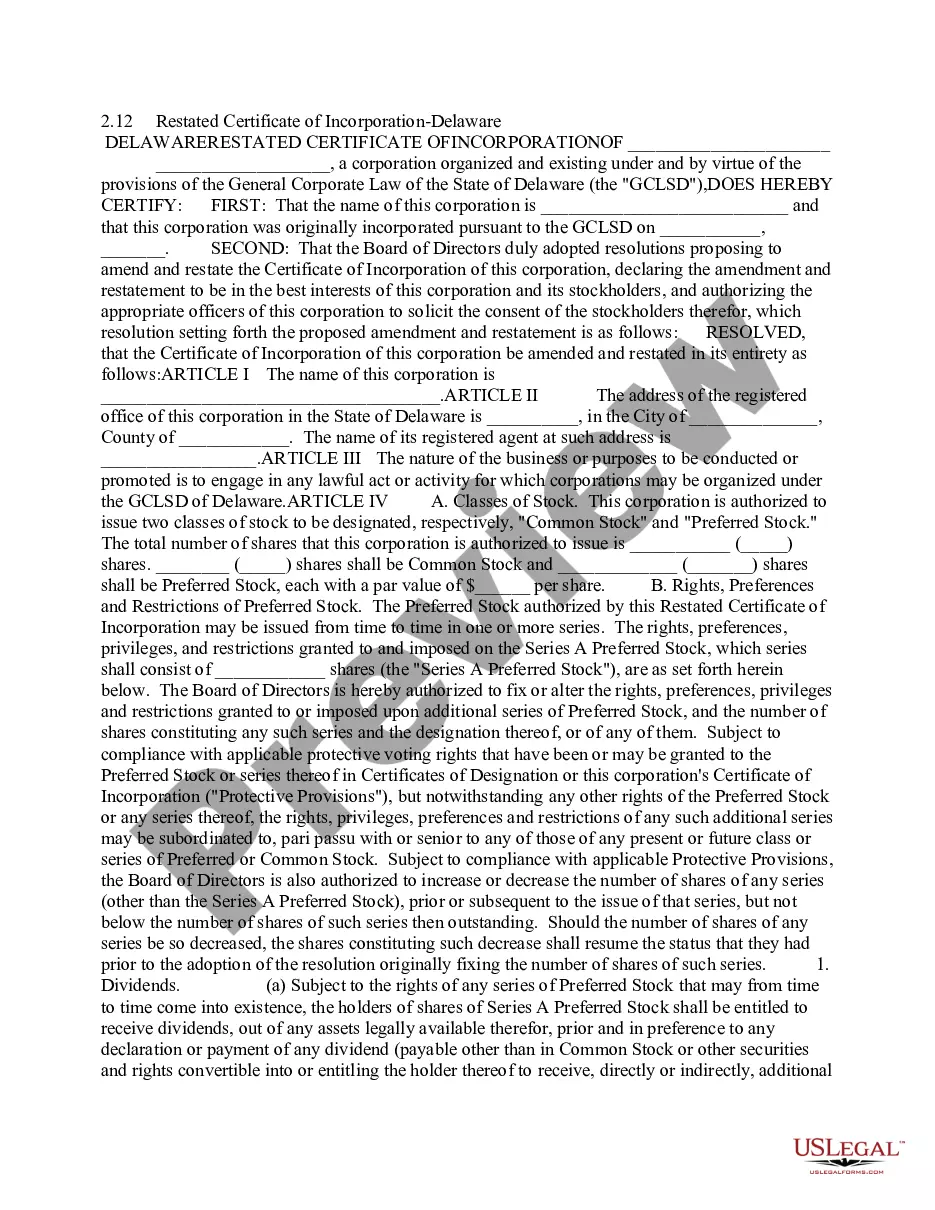
Georgia Waiver and Release From Liability For Minor Child for Scuba Diving and Skin Diving
Description
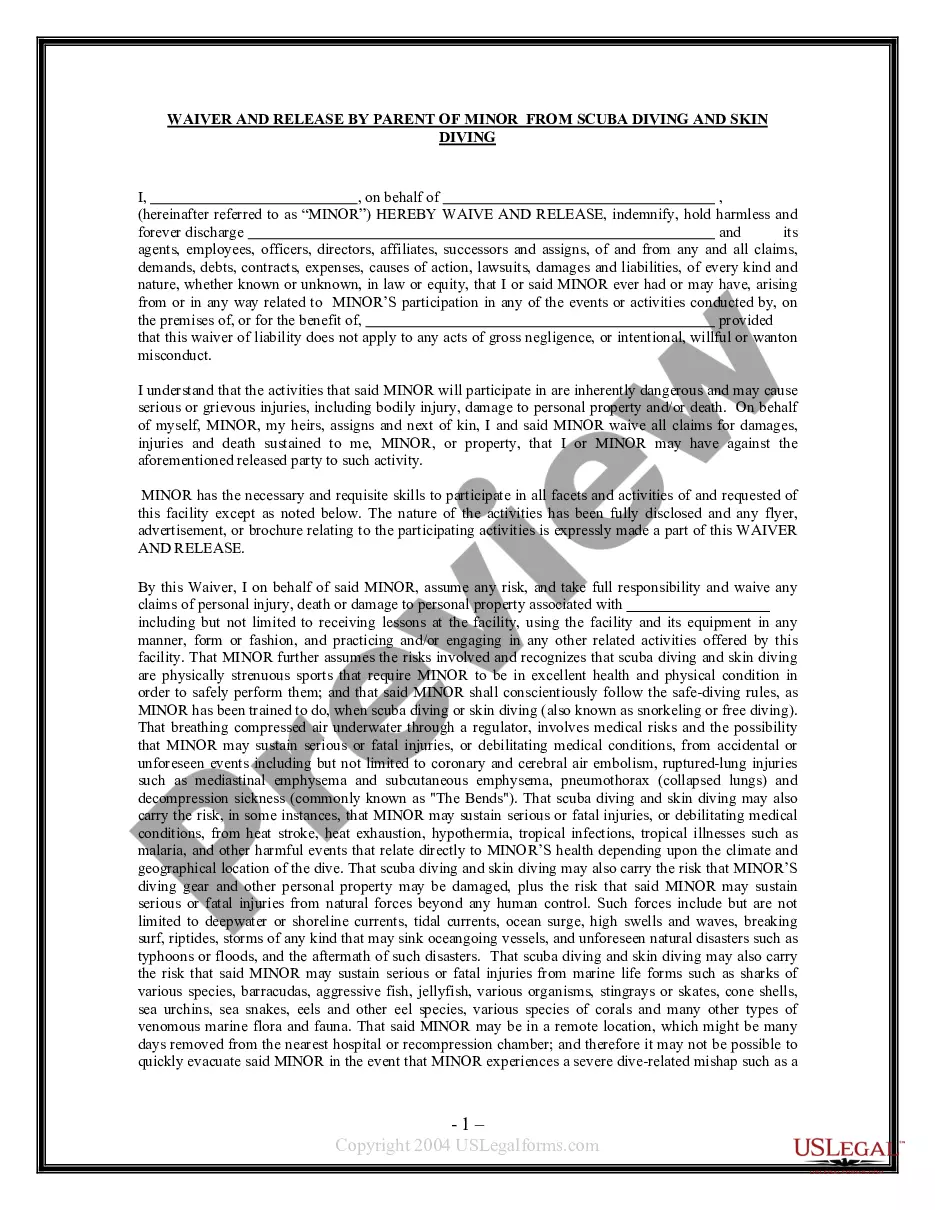
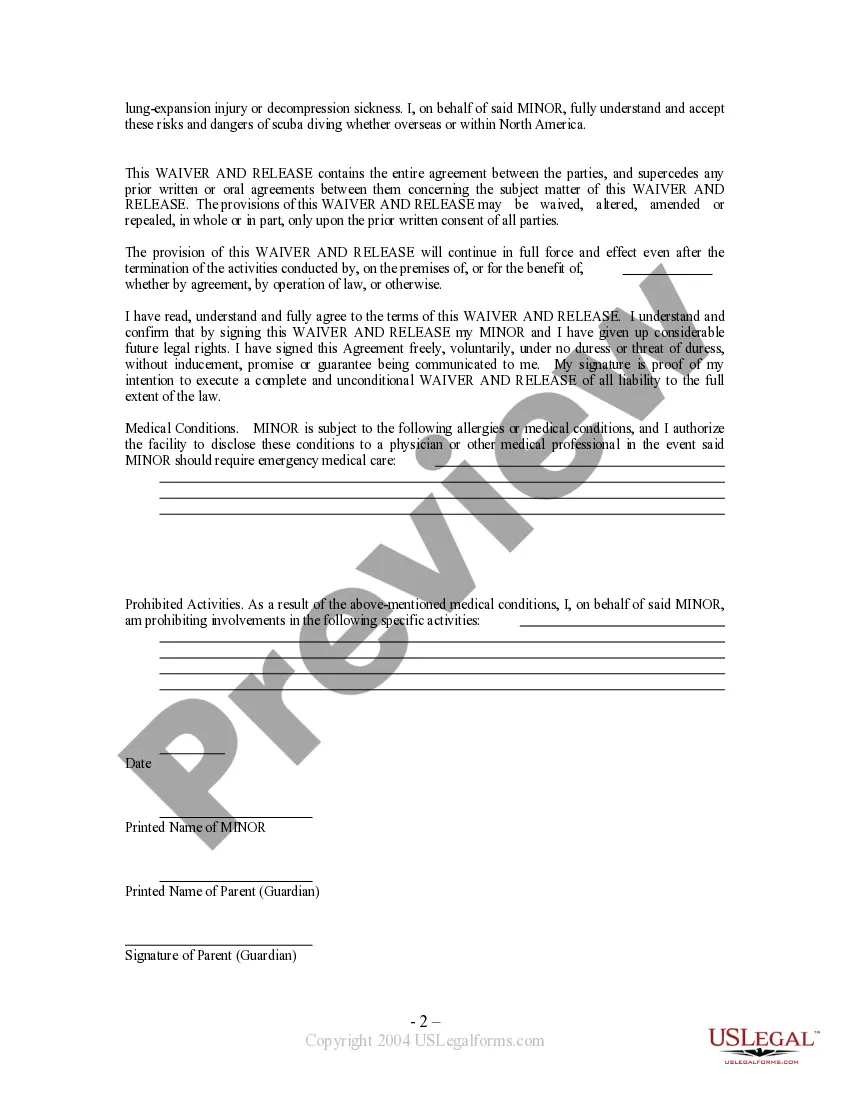
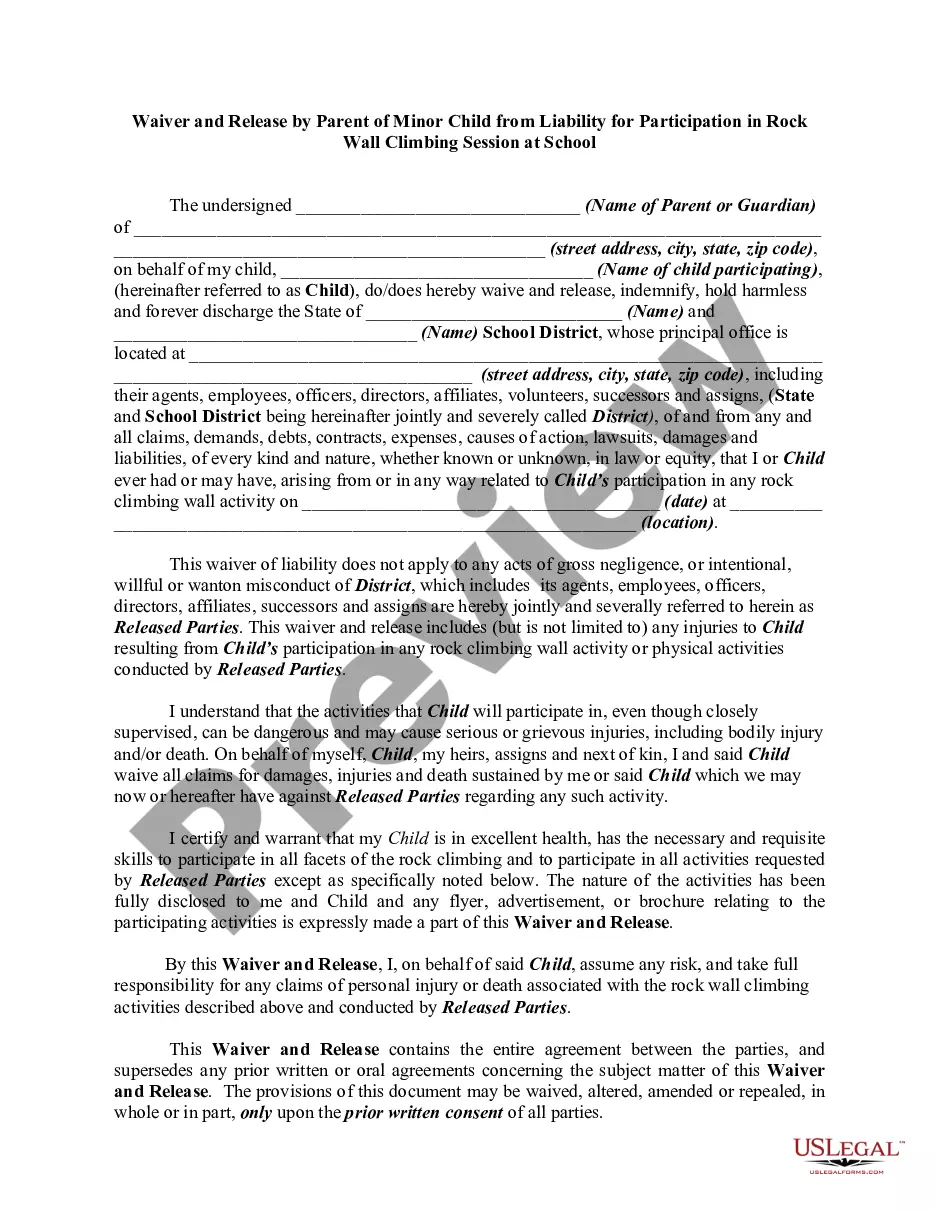
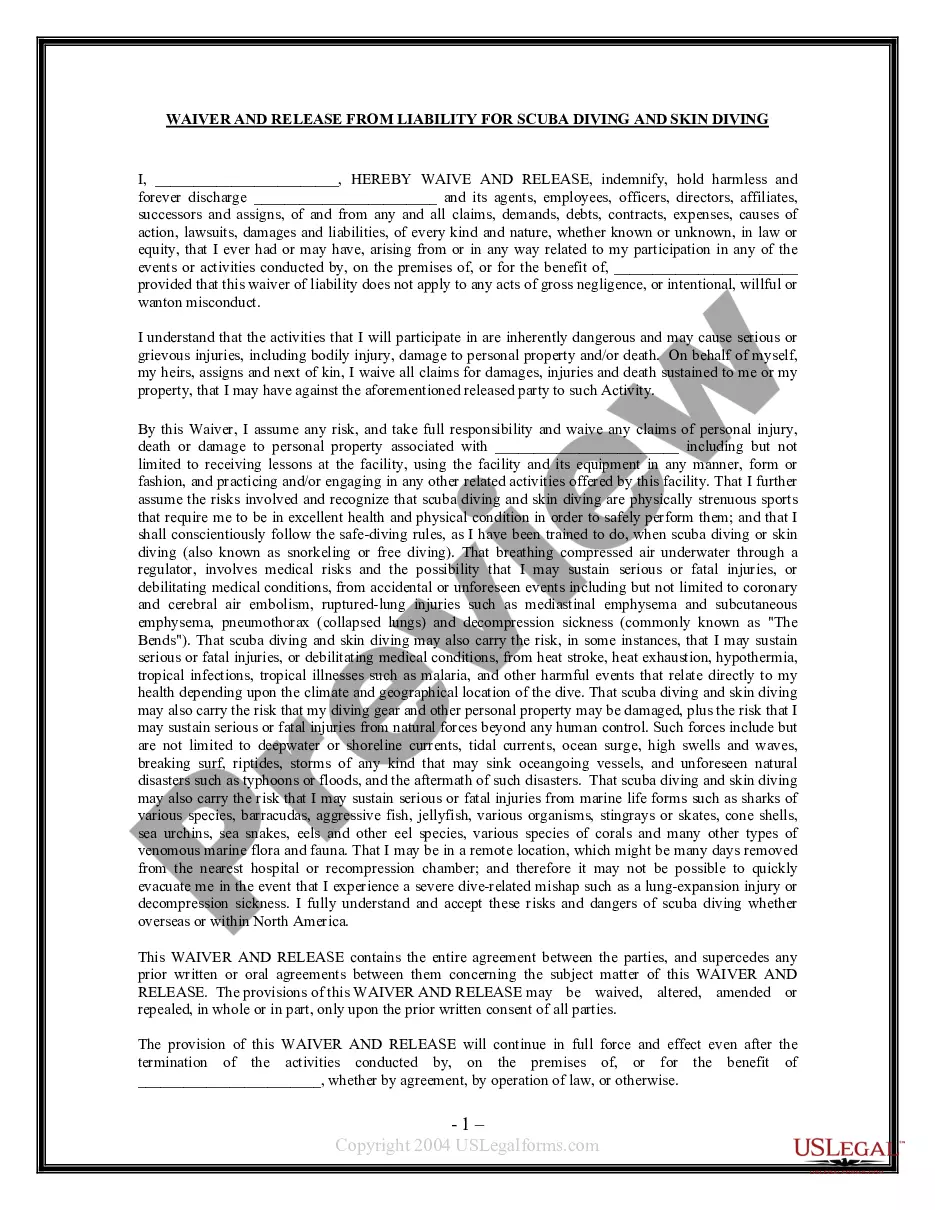
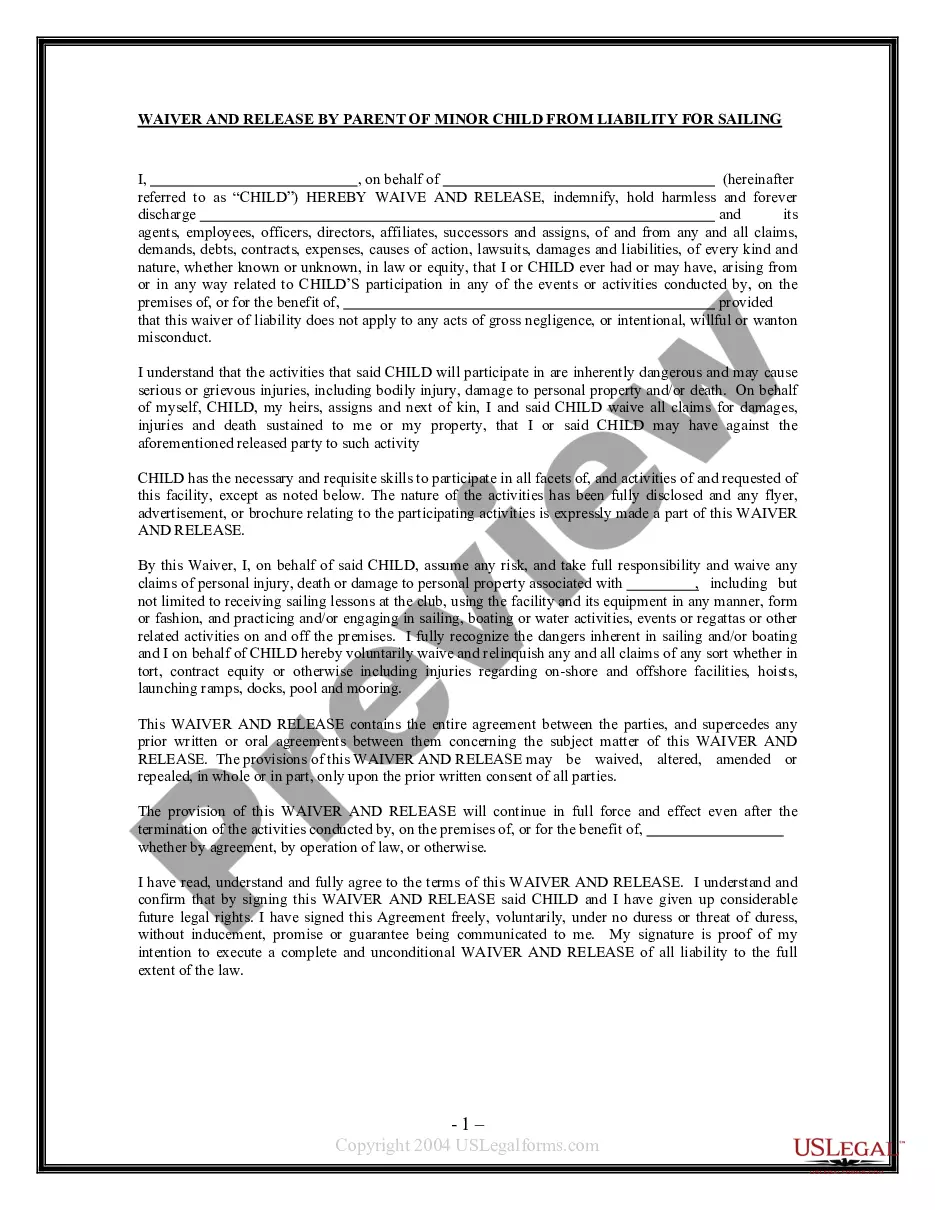
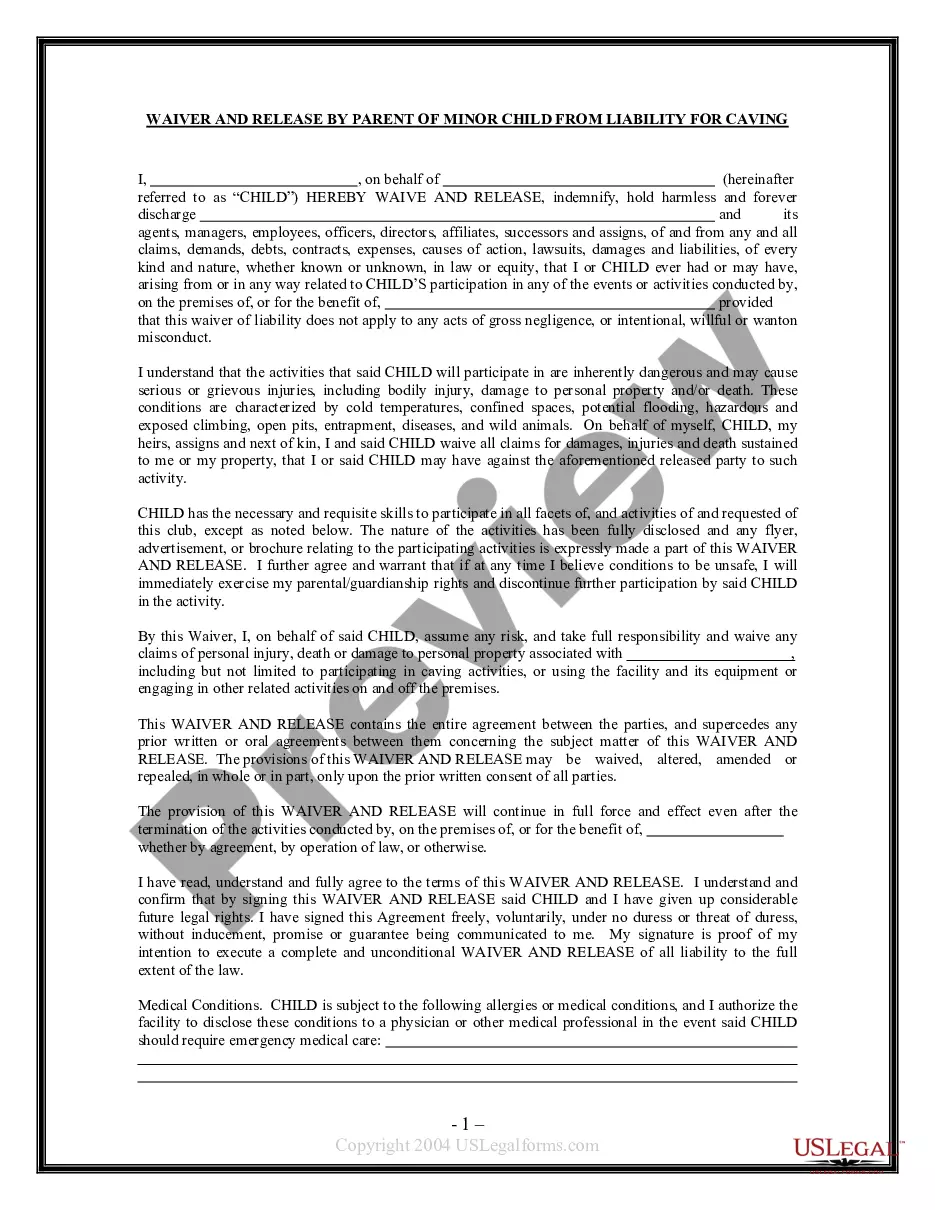
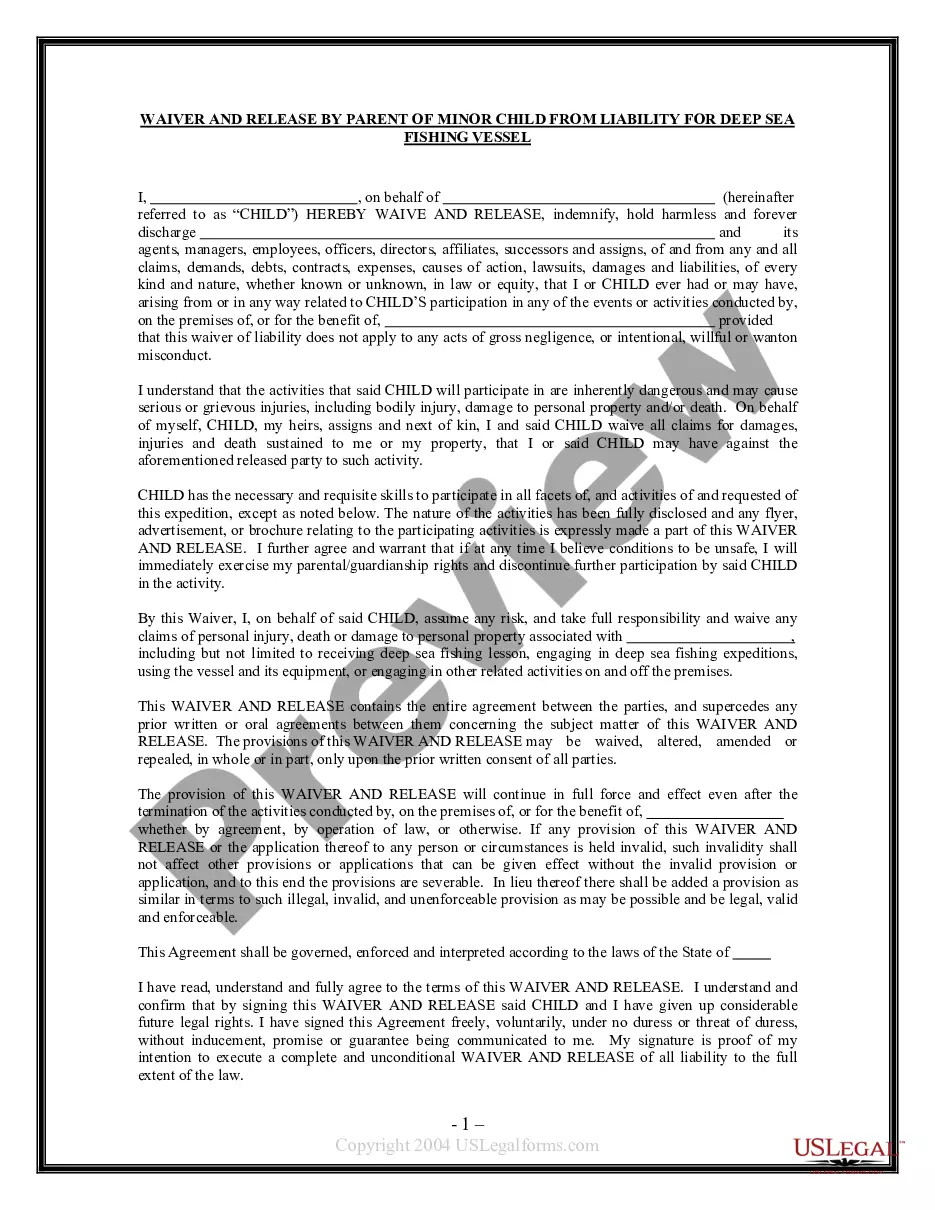

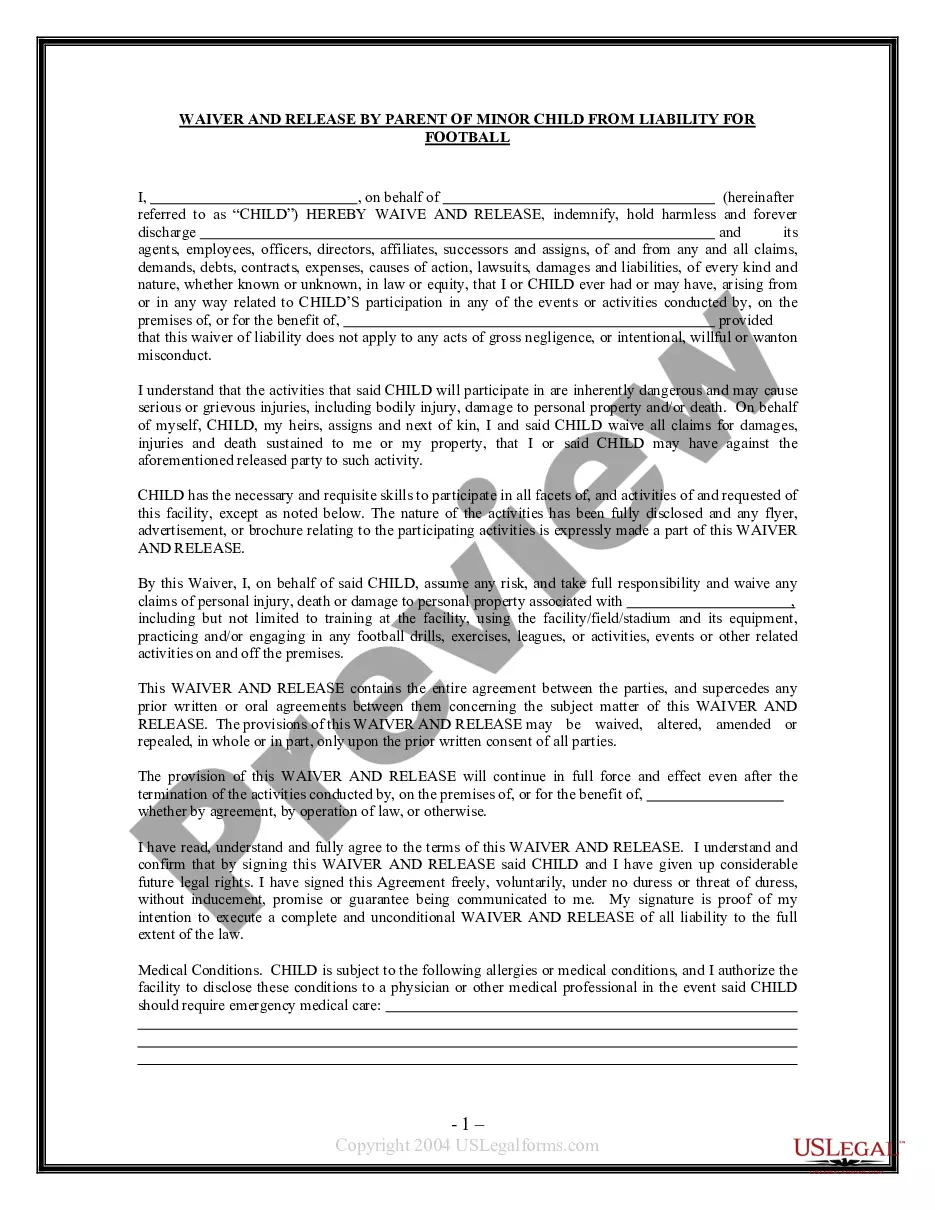
How to fill out Waiver And Release From Liability For Minor Child For Scuba Diving And Skin Diving?
Are you currently in a position where you need documents for both business or personal reasons every day.
There are numerous legal document templates available online, but locating ones you can trust is not simple.
US Legal Forms provides a vast array of form templates, such as the Georgia Waiver and Release From Liability For Minor Child for Scuba Diving and Skin Diving, which can be tailored to meet federal and state regulations.
Once you find the appropriate form, click Acquire now.
Select the pricing plan you prefer, enter the necessary information to create your account, and pay for the order using your PayPal or credit card.
- If you are already familiar with the US Legal Forms website and have your account, simply Log In.
- Then, you can download the Georgia Waiver and Release From Liability For Minor Child for Scuba Diving and Skin Diving template.
- If you do not have an account and wish to start using US Legal Forms, follow these steps.
- Obtain the form you need and ensure it is for the correct area/region.
- Utilize the Preview button to review the form.
- Check the description to confirm you have selected the correct form.
- If the form is not what you need, use the Search area to find the form that suits your needs.
Form popularity
FAQ
In Georgia, individuals must be at least 10 years old to obtain scuba certification. This age requirement ensures that young divers have the maturity to understand safety protocols and the potential risks of diving. A Georgia Waiver and Release From Liability For Minor Child for Scuba Diving and Skin Diving is required for minors, providing legal protection and peace of mind for parents. Dive centers often provide tailored training for younger participants, ensuring they are well-prepared for underwater adventures.
To qualify for an open water diver certificate in Georgia, a child must be at least 10 years old. This certification allows them to dive independently, but it still requires a Georgia Waiver and Release From Liability For Minor Child for Scuba Diving and Skin Diving. This waiver protects both the diving facility and the minor, ensuring all parties are aware of the inherent risks. Training programs are designed to equip young divers with essential skills and safety knowledge.
In Georgia, a child can begin scuba diving as young as 10 years old, provided they have the necessary supervision and training. It is crucial to have a Georgia Waiver and Release From Liability For Minor Child for Scuba Diving and Skin Diving signed by a parent or guardian. This document ensures that the risks associated with scuba diving are understood by the guardians, promoting safety for young divers. Always consult with a certified diving instructor to ensure a child's readiness.
A waiver is a demonstration, usually in written form, of a party's intent to relinquish a legal right or claim. The key point to note is that the relinquishment is voluntary, and can apply to a variety of legal situations. Essentially, a waiver removes a real or potential liability for the other party in the agreement.
A release of liability, also known as a liability waiver or a hold harmless agreement, is a contract in which one party agrees not to hold another party liable for damages or injury. These contracts are common in fields that involve some risk to property, finances, or health.
A waiver explainedA release form or a waiver is simply a legal document containing an agreement between two parties. The first party is the releasor (person promising not to sue) and the releasee (the party that is reliable).
A minor usually cannot legally release his or her rights. Only the minor's parent or guardian can do so. So, a release signed only by the minor is not enforceable. In addition, the release must be signed before any injury has occurred.
A release form, or general release form, is a legal document that serves as consent in writing to release the legal liability of a releasee by a releasor.
An agreement of release will only be enforceable if it is valid. Generally, release agreements are valid and enforceable under circumstances such as: When the attempt to excuse one party from liability is expressed in clear, definite, and unambiguous language in the agreement.
So, if an accident happens and injury occurs, is a Waiver effective in protecting the institution from liability and preventing a lawsuit from the injured party? The answer is that, if properly worded and signed, the Waiver is likely valid and will preclude legal claims for injuries.