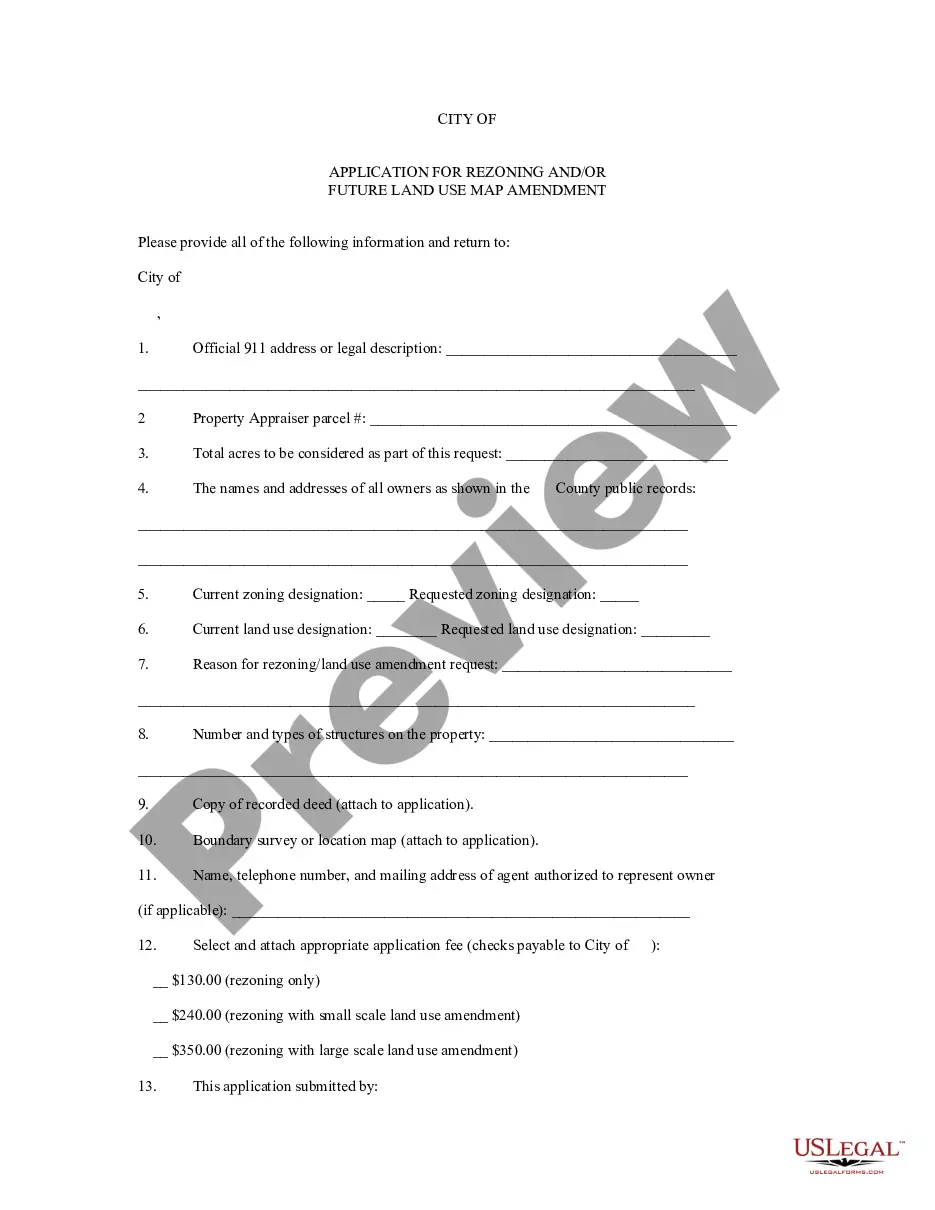
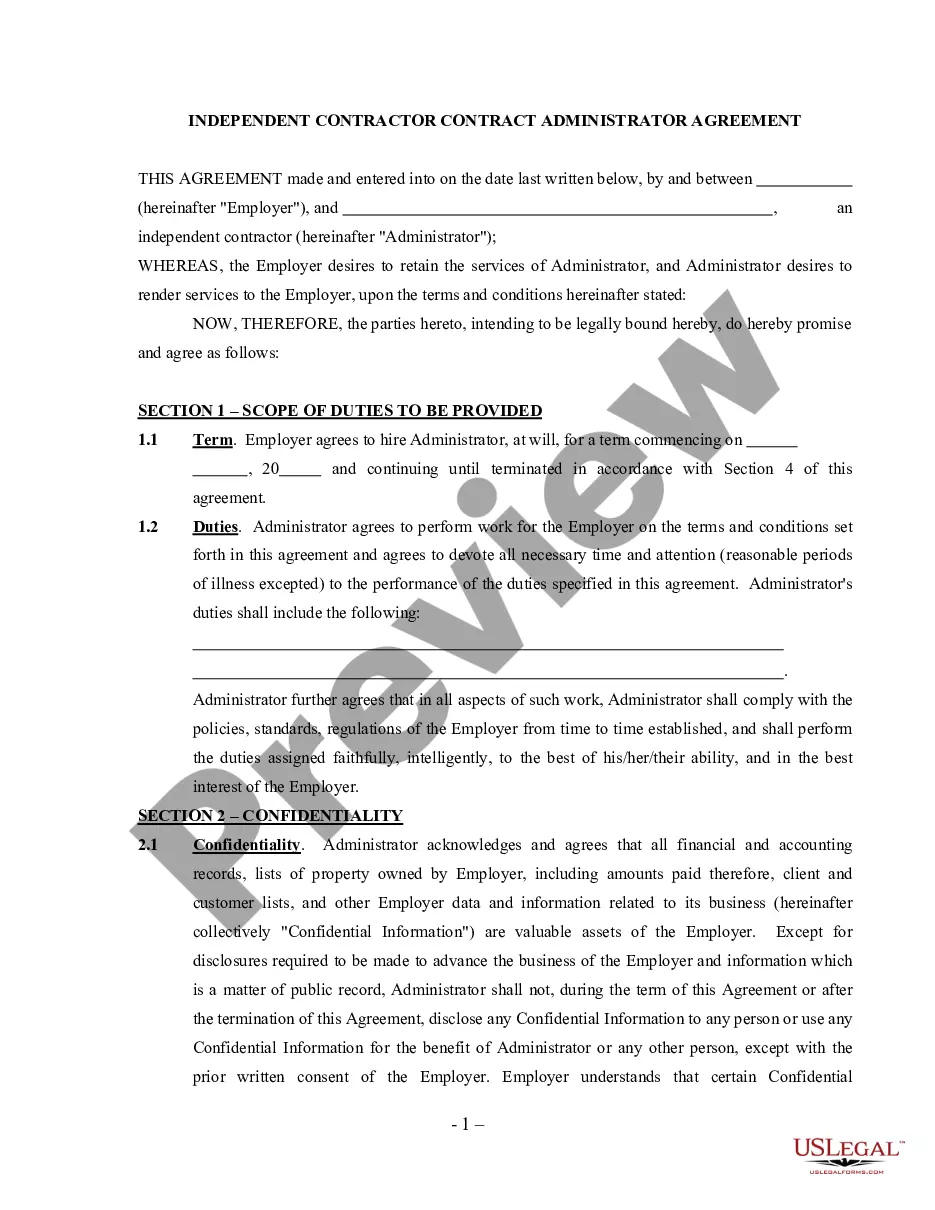
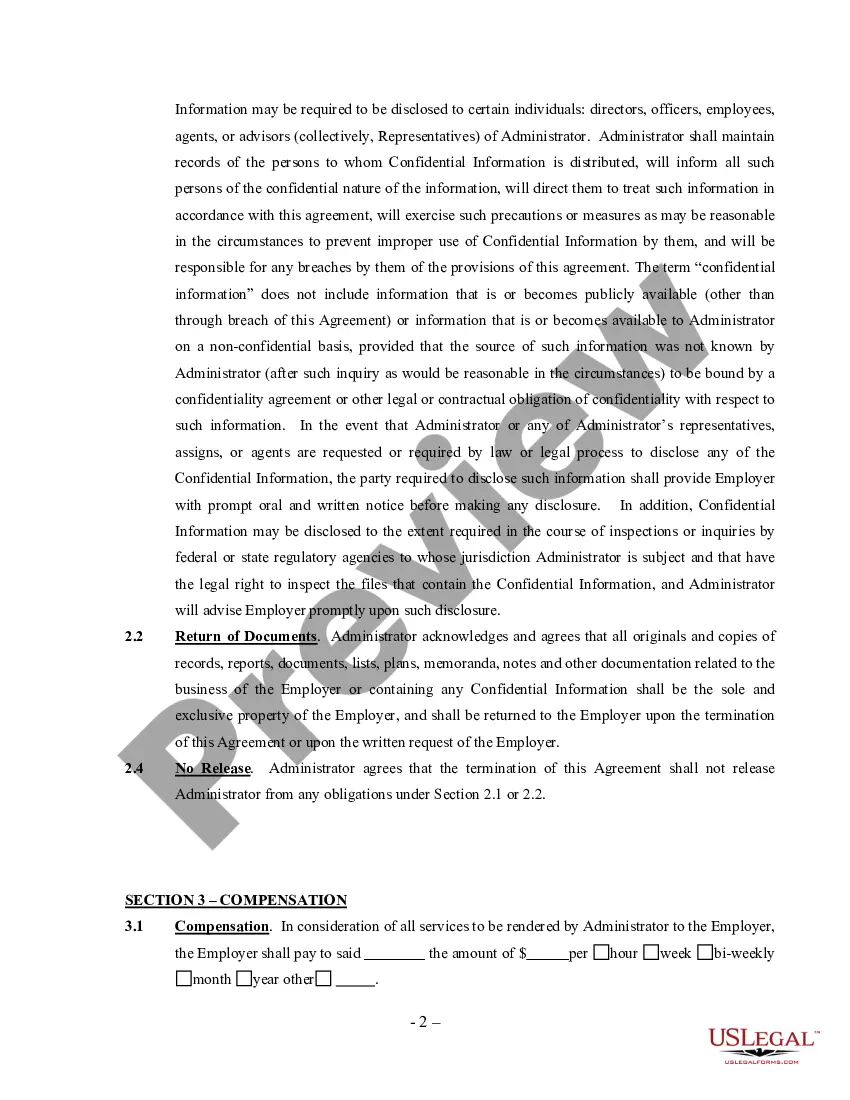
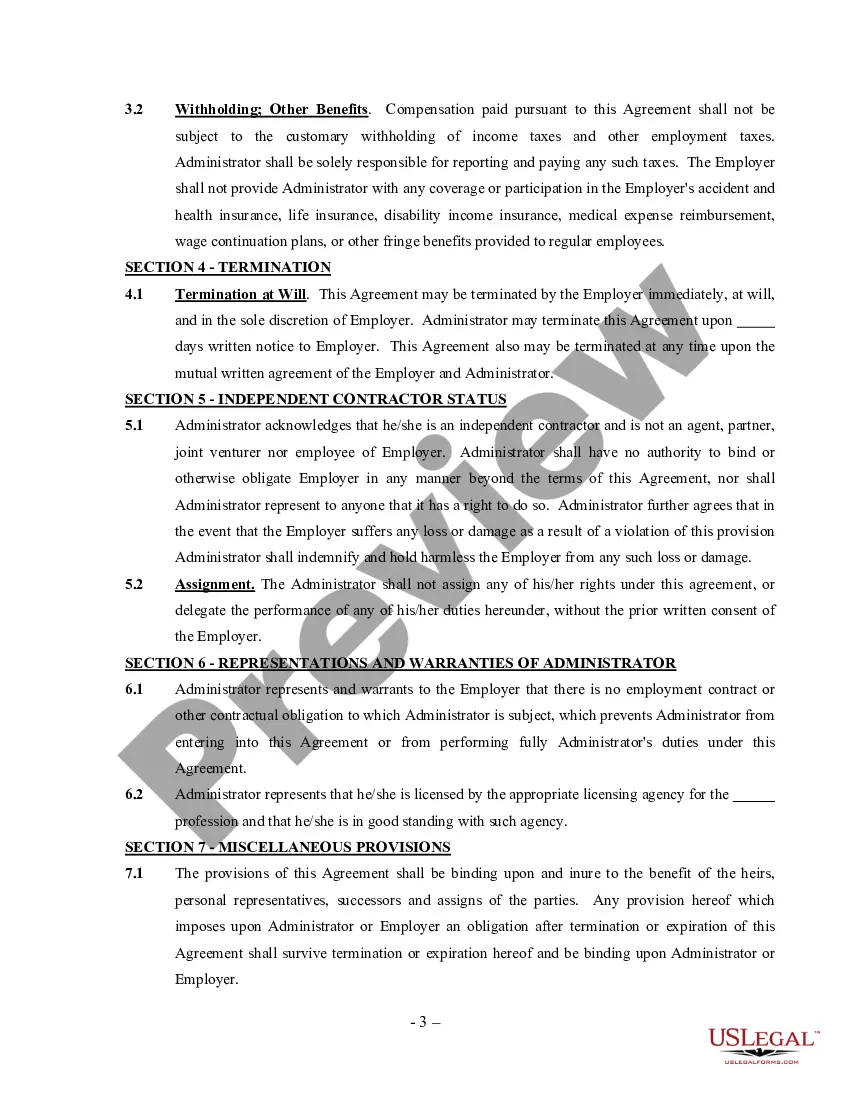
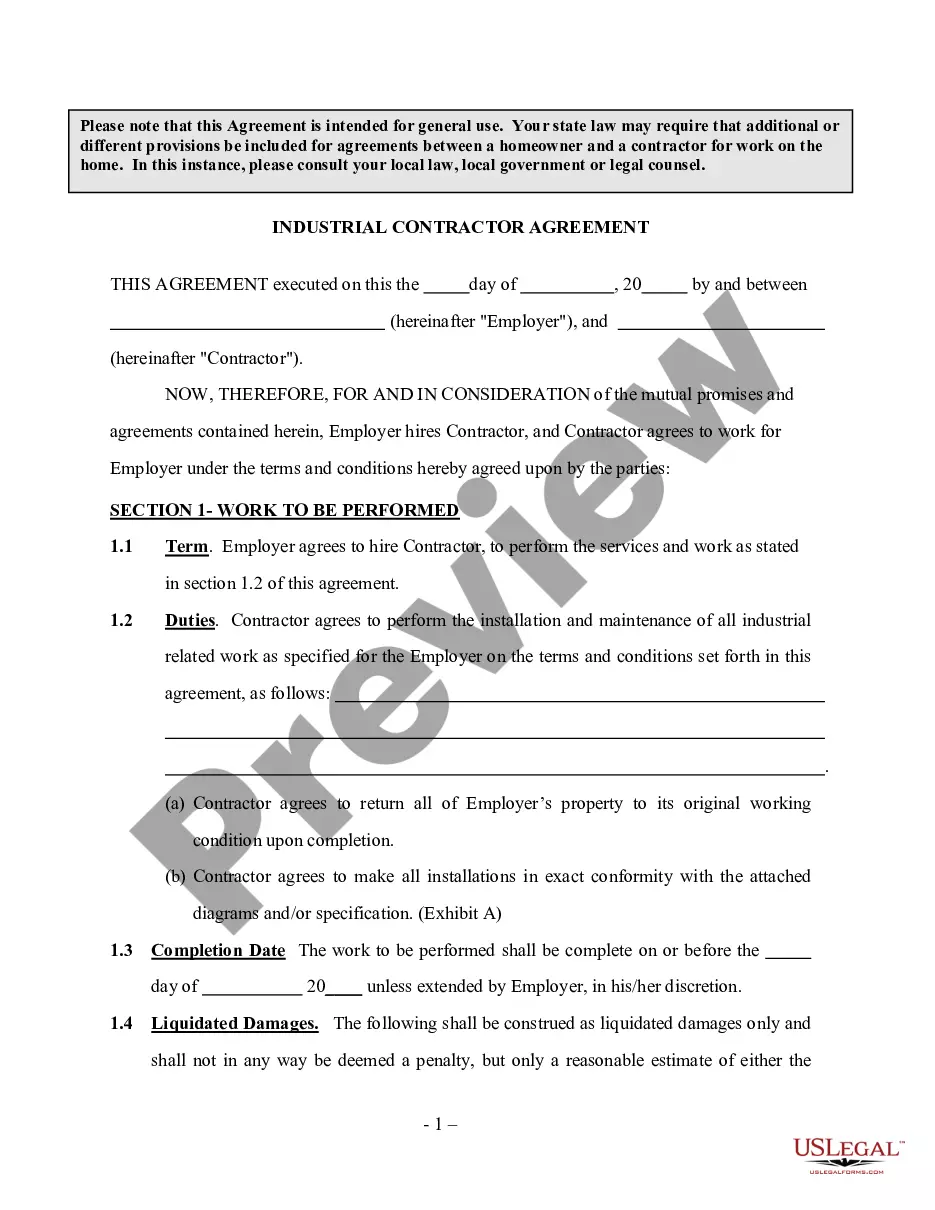
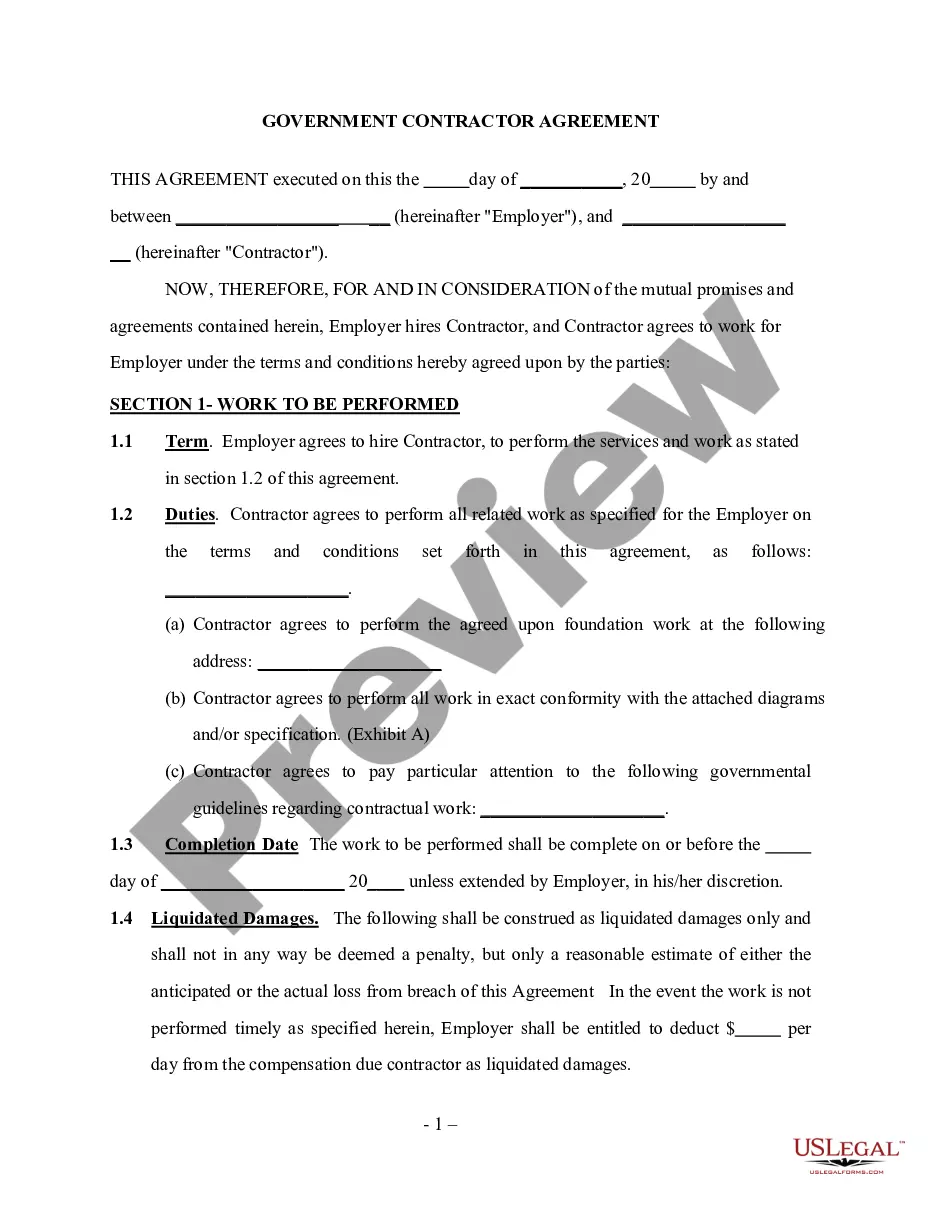
Employer hires an independent contractor to function as a contract administrator as specified in the contract.
Georgia Contract Administrator Agreement - Self-Employed Independent Contractor
State:
Multi-State
Control #:
US-INDC-207
Format:
Word;
Rich Text
Instant download
Description
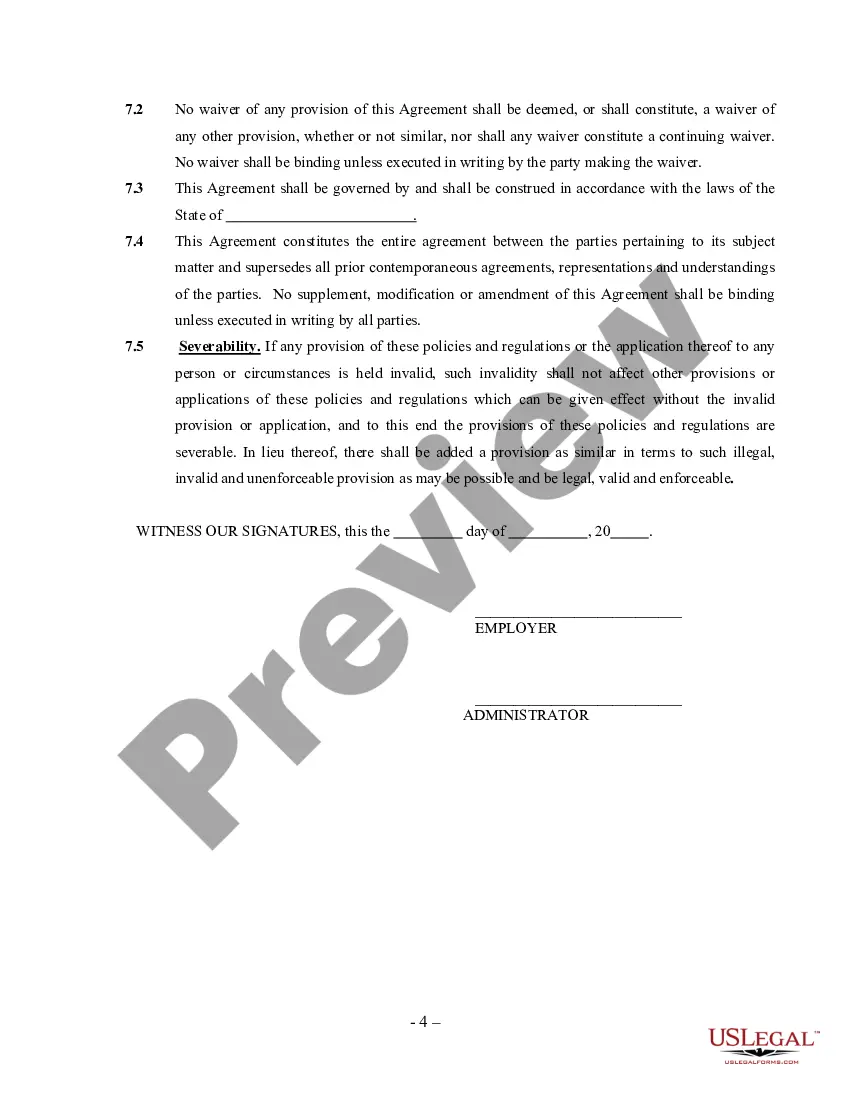
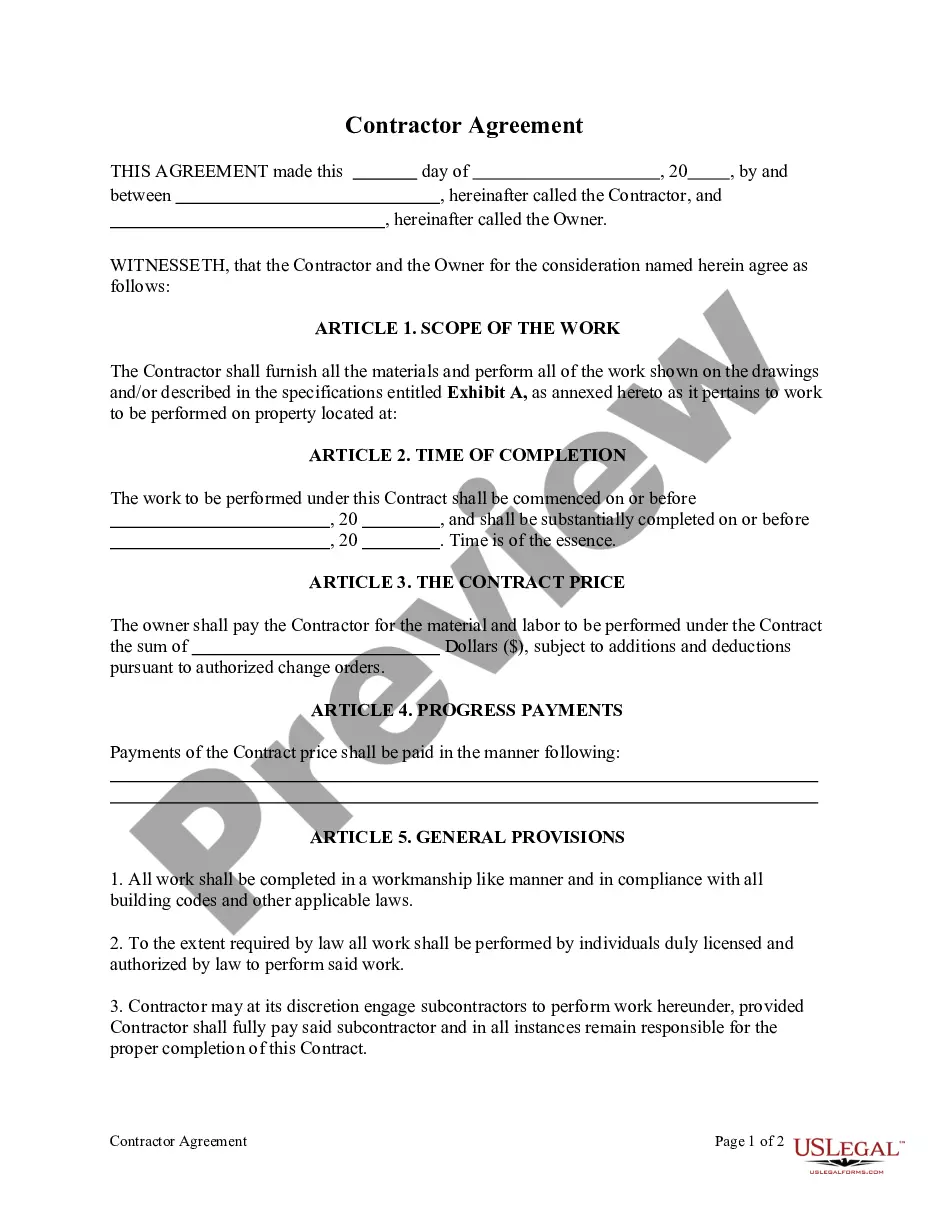
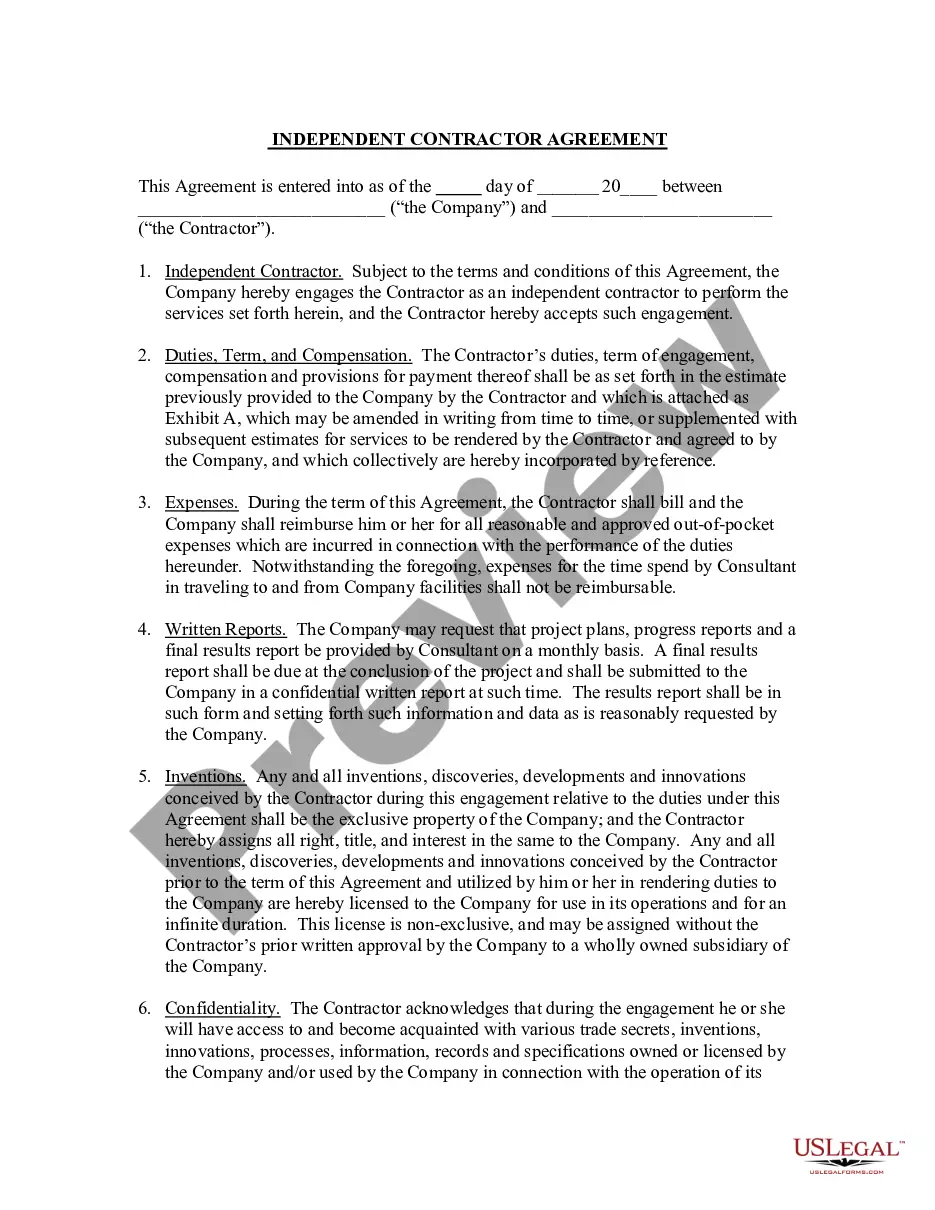
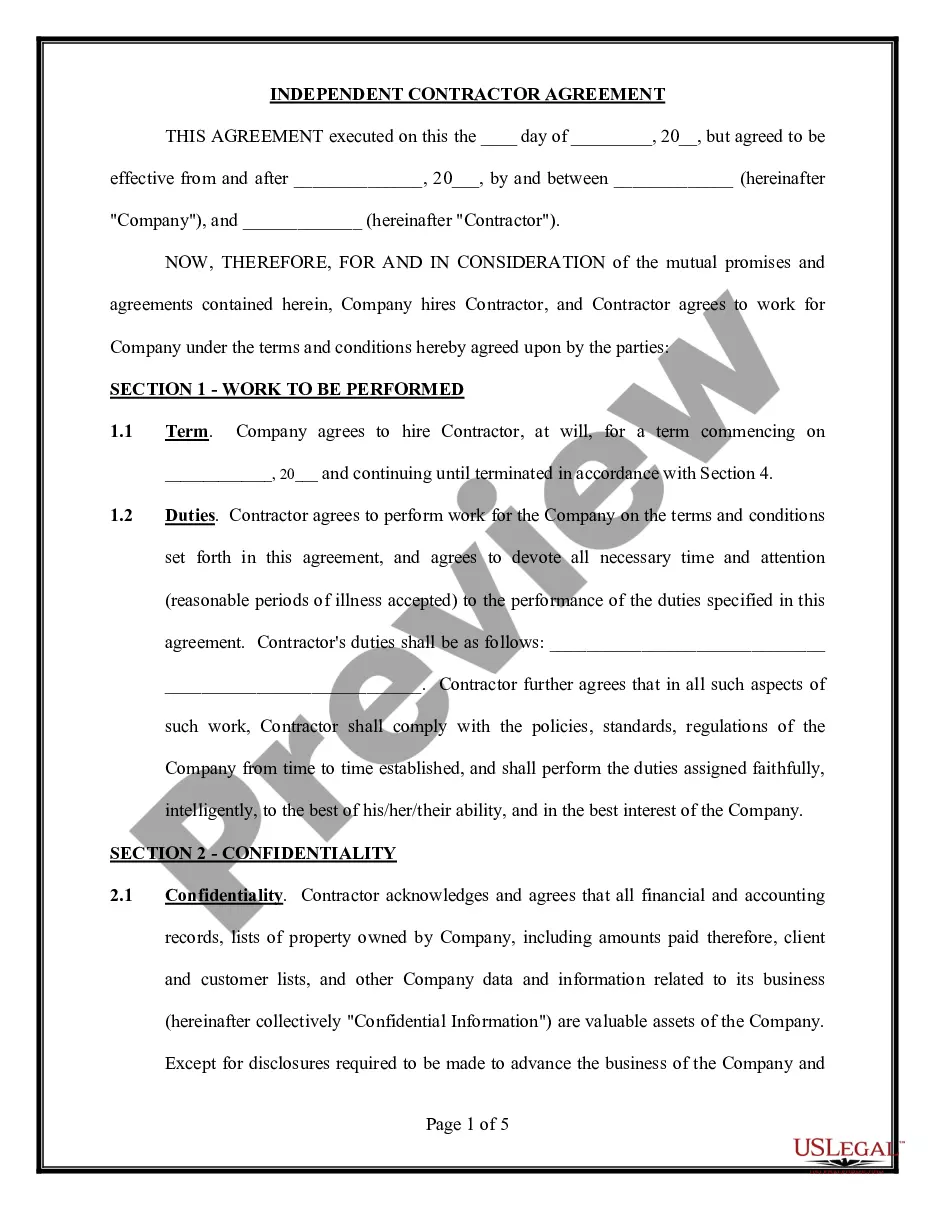
Free preview
Get your form ready online
Our built-in tools help you complete, sign, share, and store your documents in one place.
Built-in online Word editor
Make edits, fill in missing information, and update formatting in US Legal Forms—just like you would in MS Word.
Export easily
Download a copy, print it, send it by email, or mail it via USPS—whatever works best for your next step.
E-sign your document
Sign and collect signatures with our SignNow integration. Send to multiple recipients, set reminders, and more. Go Premium to unlock E-Sign.
Notarize online 24/7
If this form requires notarization, complete it online through a secure video call—no need to meet a notary in person or wait for an appointment.
Store your document securely
We protect your documents and personal data by following strict security and privacy standards.

Make edits, fill in missing information, and update formatting in US Legal Forms—just like you would in MS Word.

Download a copy, print it, send it by email, or mail it via USPS—whatever works best for your next step.

Sign and collect signatures with our SignNow integration. Send to multiple recipients, set reminders, and more. Go Premium to unlock E-Sign.

If this form requires notarization, complete it online through a secure video call—no need to meet a notary in person or wait for an appointment.

We protect your documents and personal data by following strict security and privacy standards.
Looking for another form?

How to fill out Contract Administrator Agreement - Self-Employed Independent Contractor?
If you wish to completely, download, or print valid document templates, utilize US Legal Forms, the largest collection of legal forms available online.
Employ the site’s straightforward and user-friendly search feature to find the documents you require.
Various templates for business and personal purposes are categorized by types and regions, or keywords.
Step 4. Once you have located the form you need, click on the Buy now button. Select the payment plan you prefer and enter your details to register for an account.
Step 5. Process the transaction. You may utilize your credit card or PayPal account to complete the purchase.
- Use US Legal Forms to acquire the Georgia Contract Administrator Agreement - Self-Employed Independent Contractor with just a few clicks.
- If you are already a US Legal Forms user, Log In to your account and hit the Download button to obtain the Georgia Contract Administrator Agreement - Self-Employed Independent Contractor.
- You can also access documents you previously acquired from the My documents section of your account.
- If you are using US Legal Forms for the first time, follow the instructions below.
- Step 1. Ensure you have selected the form for the right city/state.
- Step 2. Utilize the Review option to browse the form’s content. Don’t forget to read the details.
- Step 3. If you are not satisfied with the form, use the Search field at the top of the screen to find alternative versions in the legal document template.
Form popularity
FAQ
Yes, having a contract is essential for self-employed individuals. It provides clarity on the expectations and responsibilities of both parties in the working relationship. A well-drafted agreement, such as the Georgia Contract Administrator Agreement - Self-Employed Independent Contractor, helps protect your rights and can prevent misunderstandings. In addition, it serves as legal proof of the terms agreed upon, making it a valuable tool for freelancers and contractors alike.
Creating an independent contractor agreement involves clearly outlining the terms of your working relationship. Start by defining both parties, including the independent contractor and the hiring entity. Next, specify the services to be performed, payment details, and any deadlines. Utilizing a template like the Georgia Contract Administrator Agreement - Self-Employed Independent Contractor from uslegalforms can streamline this process and ensure all necessary elements are included.
Independent contractor law in Georgia defines the legal relationship between contractors and clients, focusing on the contractors' classifications for tax and liability purposes. This law ensures compliance with both state and federal regulations while empowering independent contractors to operate freely in the market. Familiarizing yourself with these laws is beneficial when drafting a Georgia Contract Administrator Agreement - Self-Employed Independent Contractor, as it protects both parties' rights.
In Georgia, whether an independent contractor needs a business license depends on the type of services provided and the local jurisdiction. Some counties and cities require contractors to hold a business license, while others may not. If you are entering into a Georgia Contract Administrator Agreement - Self-Employed Independent Contractor, it's wise to check local regulations to ensure compliance and avoid potential penalties.
Yes, an independent contractor is indeed considered self-employed. By definition, they operate their own business and provide services to clients under their terms. Understanding this classification is crucial for individuals entering into a Georgia Contract Administrator Agreement - Self-Employed Independent Contractor, as it impacts tax obligations and legal responsibilities.
A basic independent contractor agreement outlines the terms of the working relationship between a contractor and a client. This document typically includes details on payment, responsibilities, deadlines, and ownership of work products. For anyone considering a Georgia Contract Administrator Agreement - Self-Employed Independent Contractor, having a clear agreement ensures both parties understand their roles and expectations.
Filling out an independent contractor agreement involves several key steps. Start with your personal information and the client's details, followed by a comprehensive description of the work to be performed. Ensure you detail payment terms and deadlines, referencing the Georgia Contract Administrator Agreement - Self-Employed Independent Contractor for guidance on potential clauses and provisions.
The independent contractor agreement in Georgia is a legal document that defines the relationship between a contractor and a client. This agreement outlines the specific terms of service, including payments and responsibilities. It's crucial to have a Georgia Contract Administrator Agreement - Self-Employed Independent Contractor to ensure that both parties are protected and on the same page.
Writing an independent contractor agreement requires a clear understanding of the project. Begin with essential elements such as project description, payment structure, and timeline. Incorporating the Georgia Contract Administrator Agreement - Self-Employed Independent Contractor format can guide you in creating a well-structured document that meets legal requirements.
Independent contractors often need to fill out a W-9 form to provide their taxpayer information. They may also require a Georgia Contract Administrator Agreement - Self-Employed Independent Contractor to outline the terms of their work. Utilizing platforms like uslegalforms can help streamline the process and ensure all necessary forms are provided.