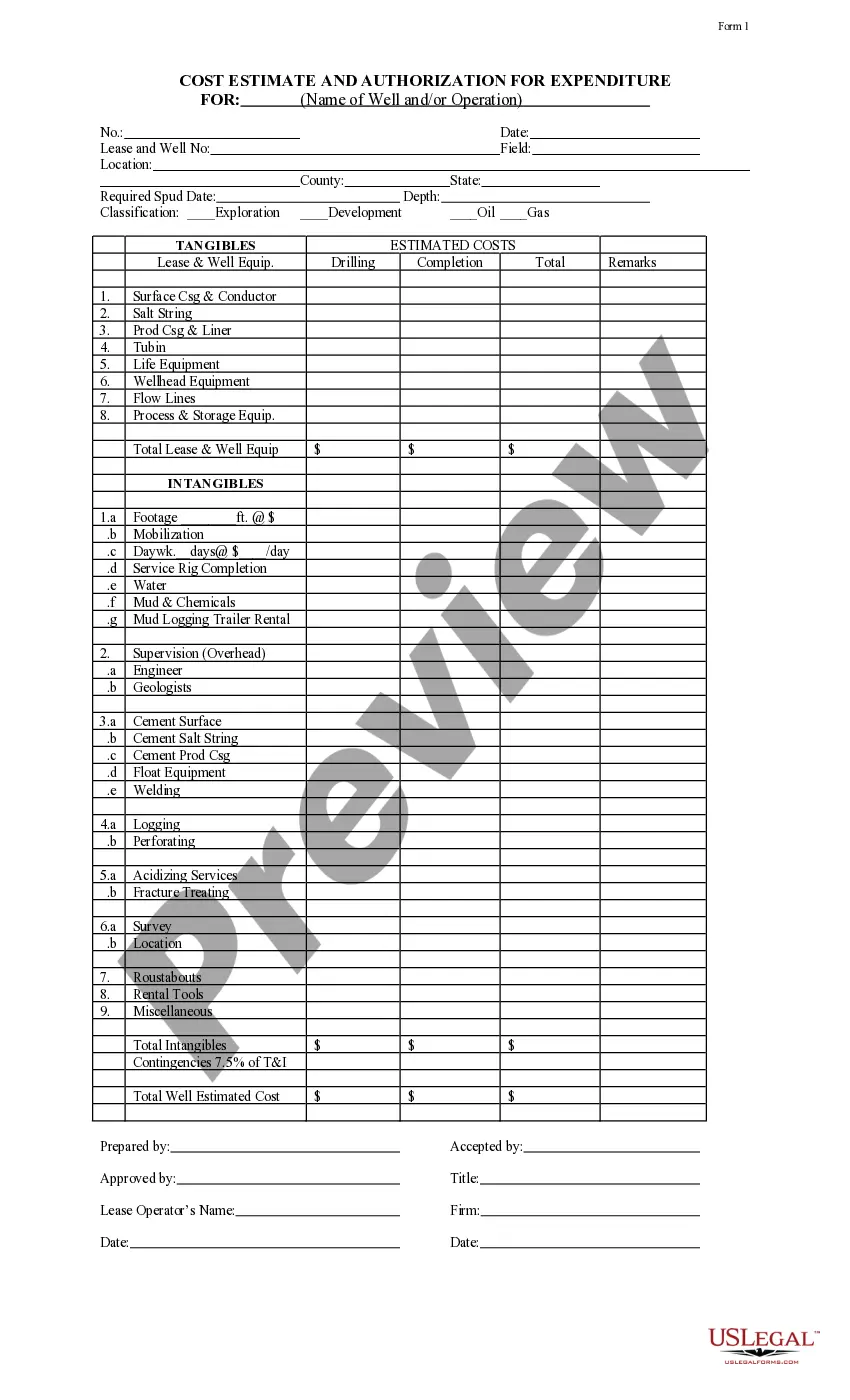
Georgia Contractor Agreement
Description
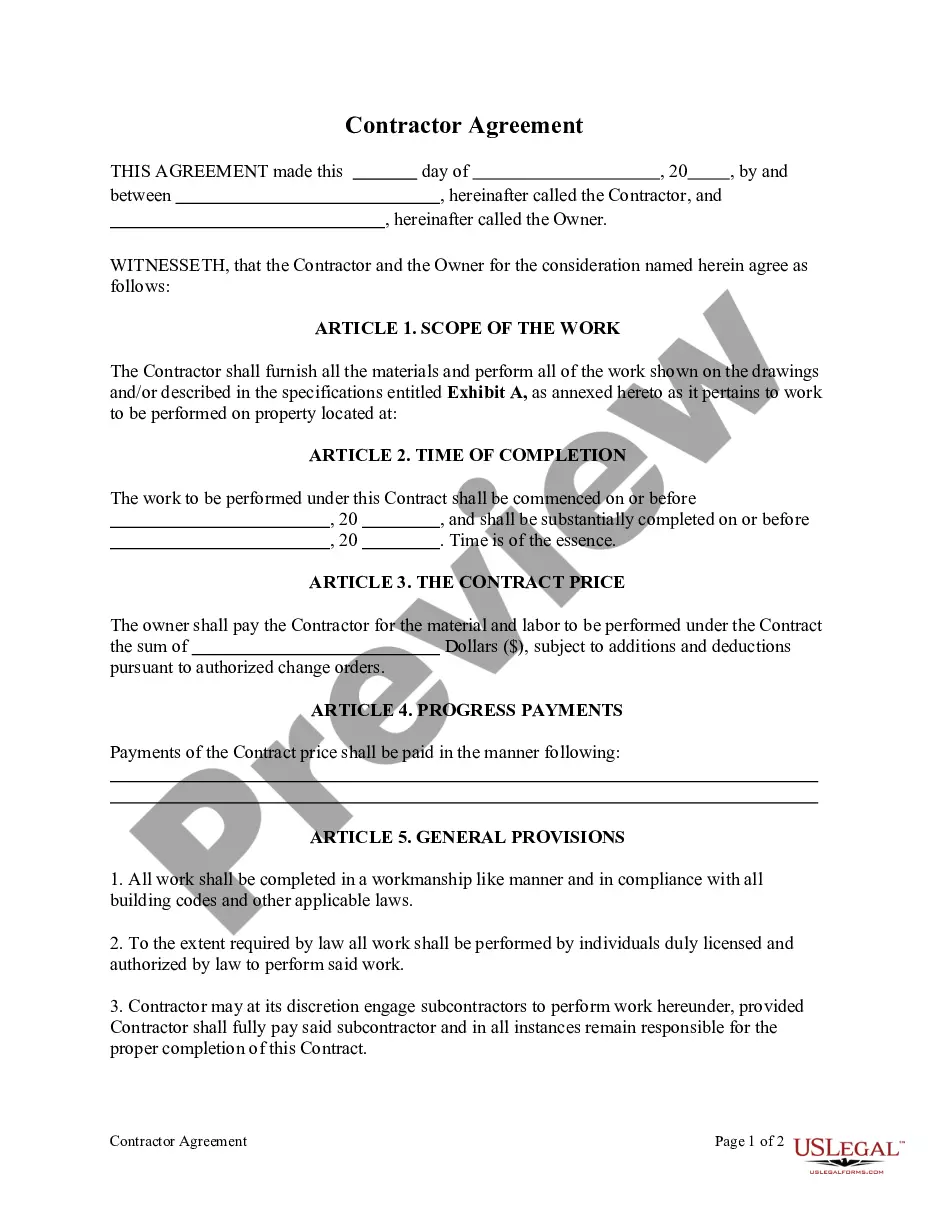
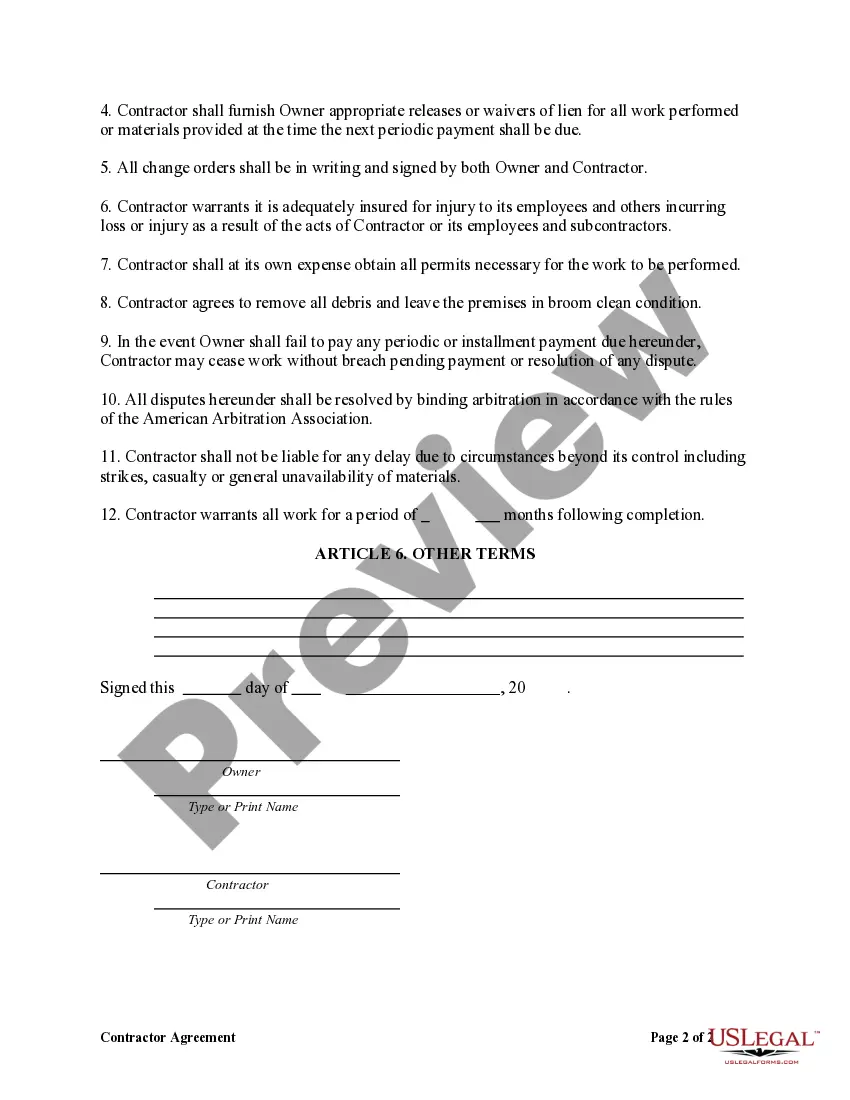
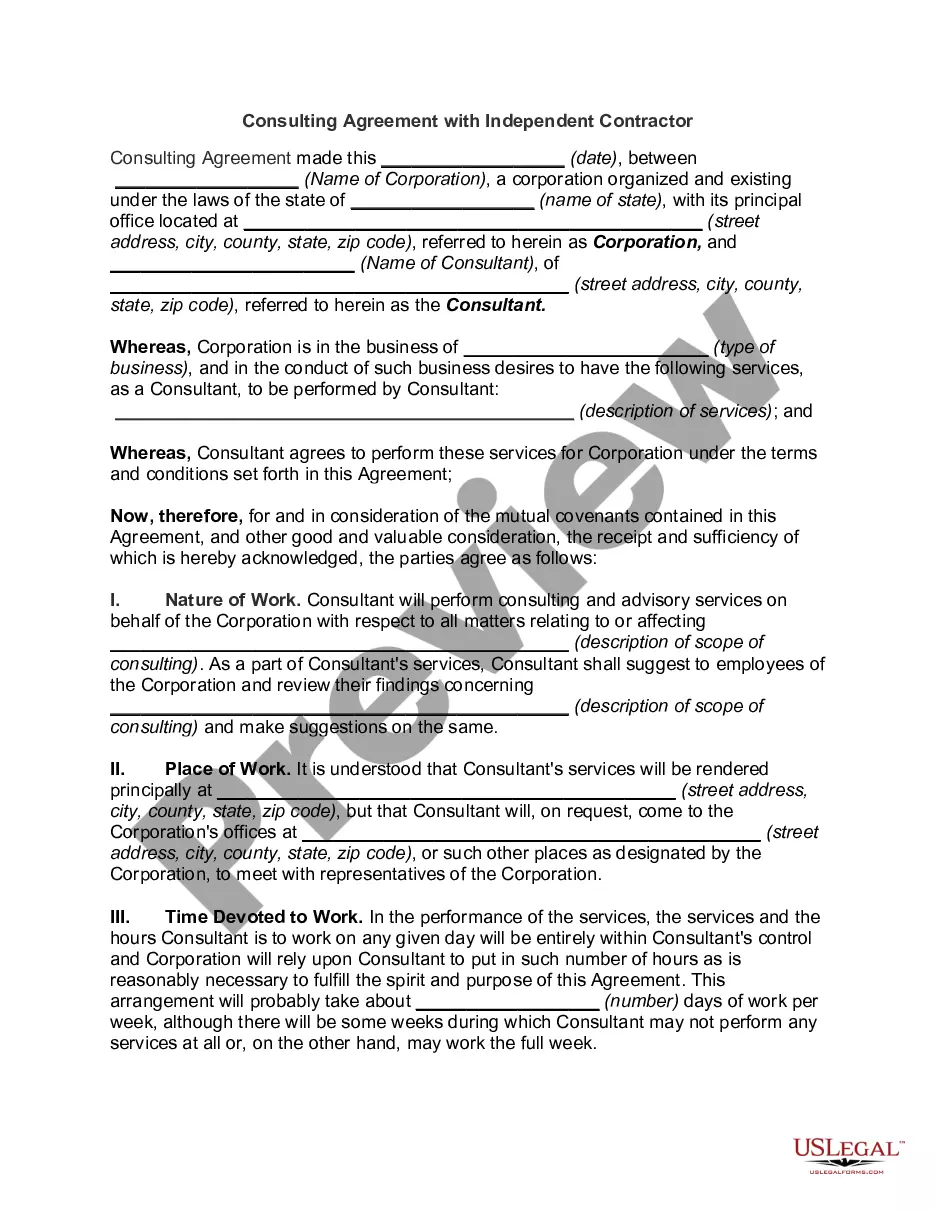
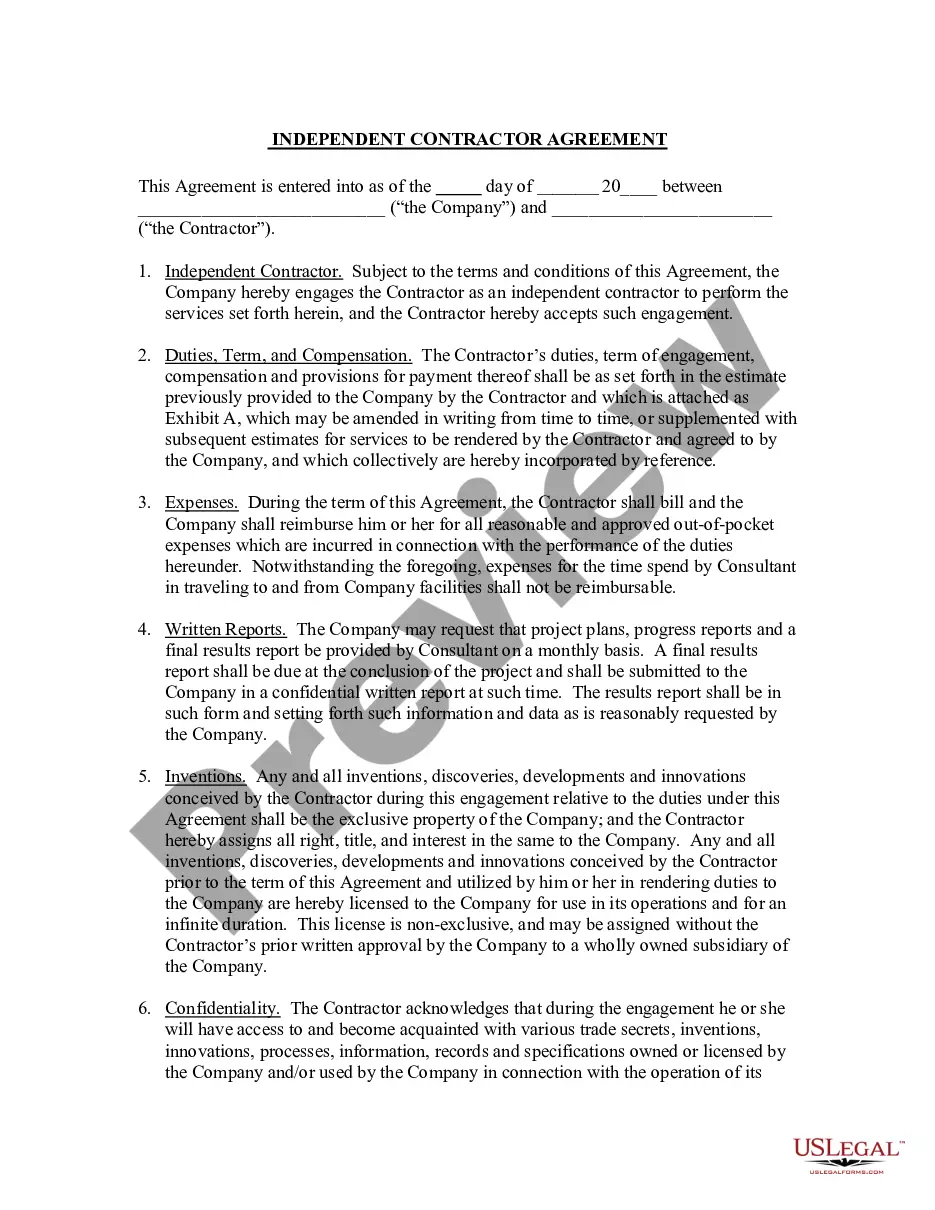
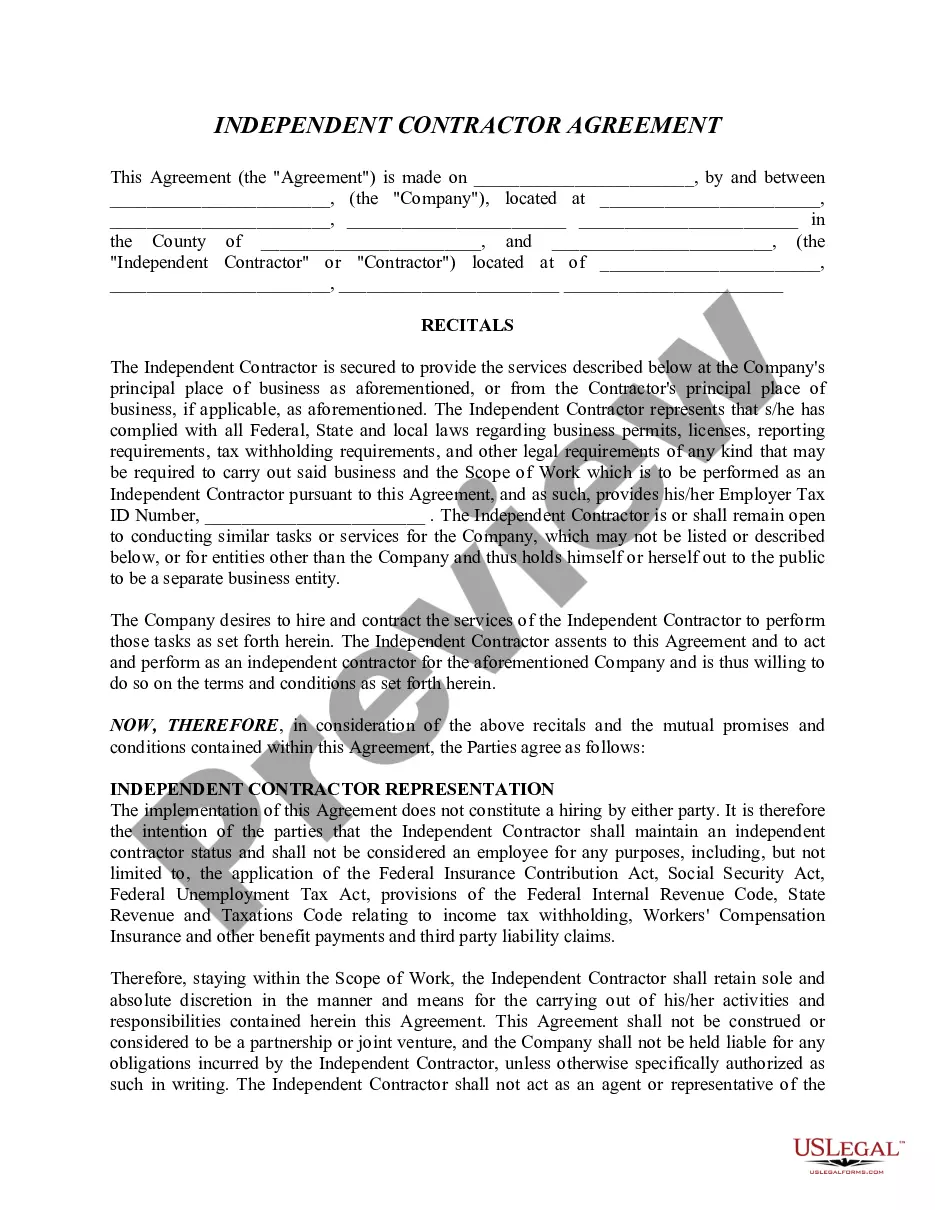
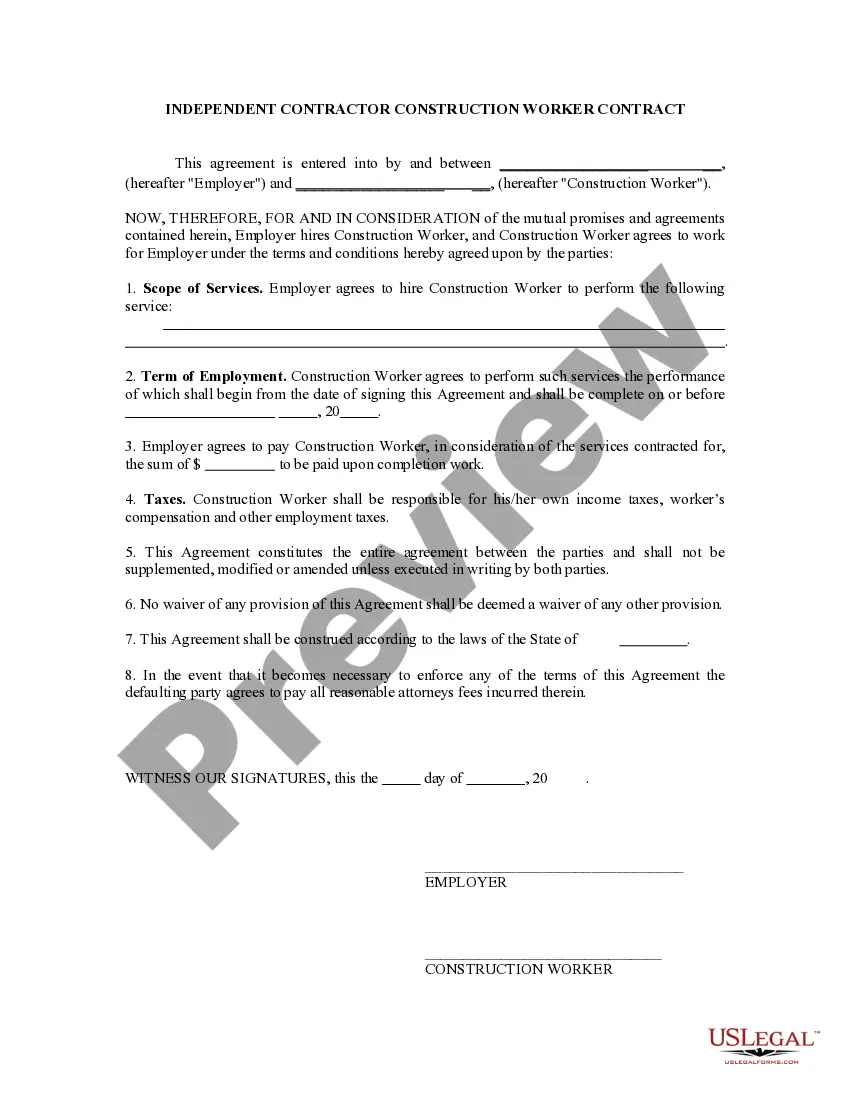





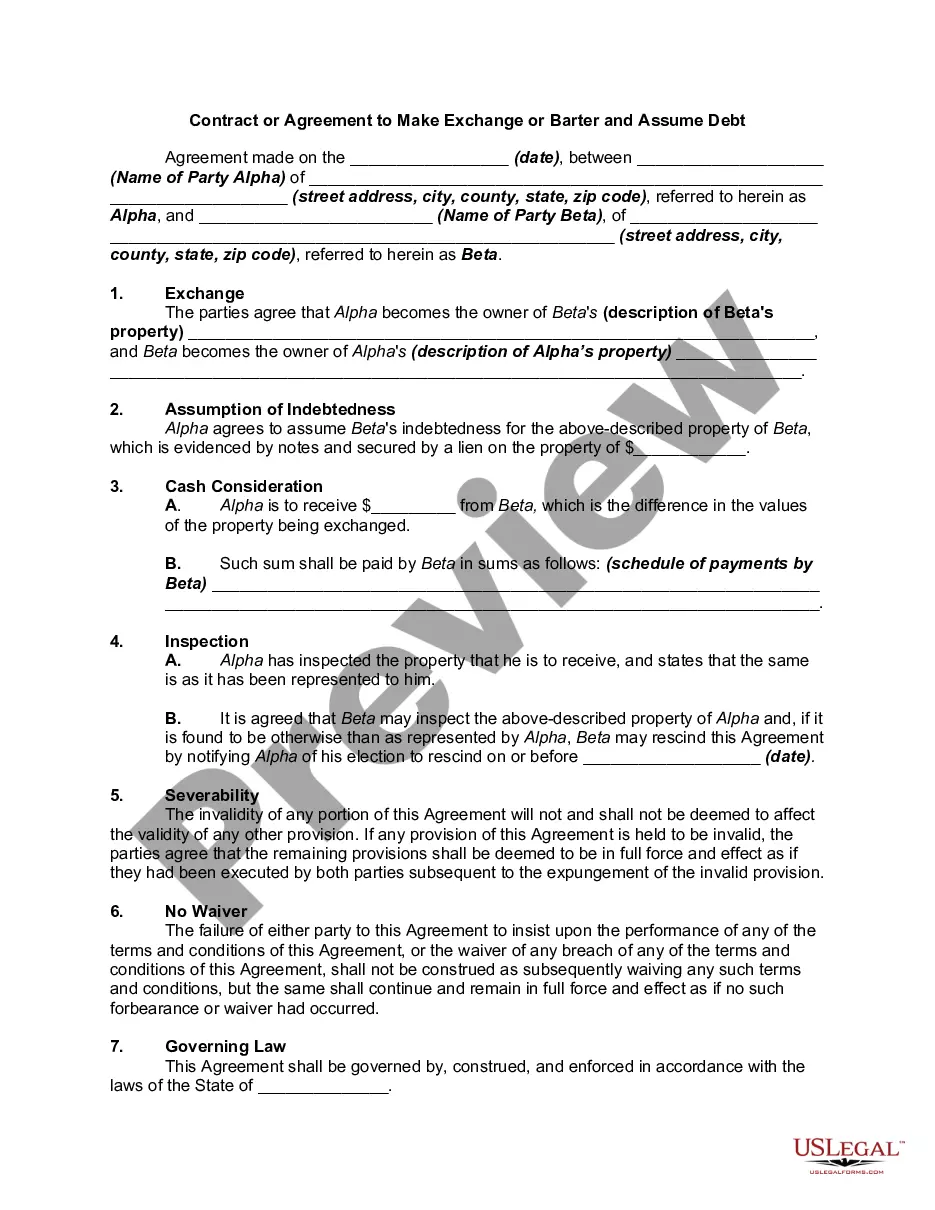

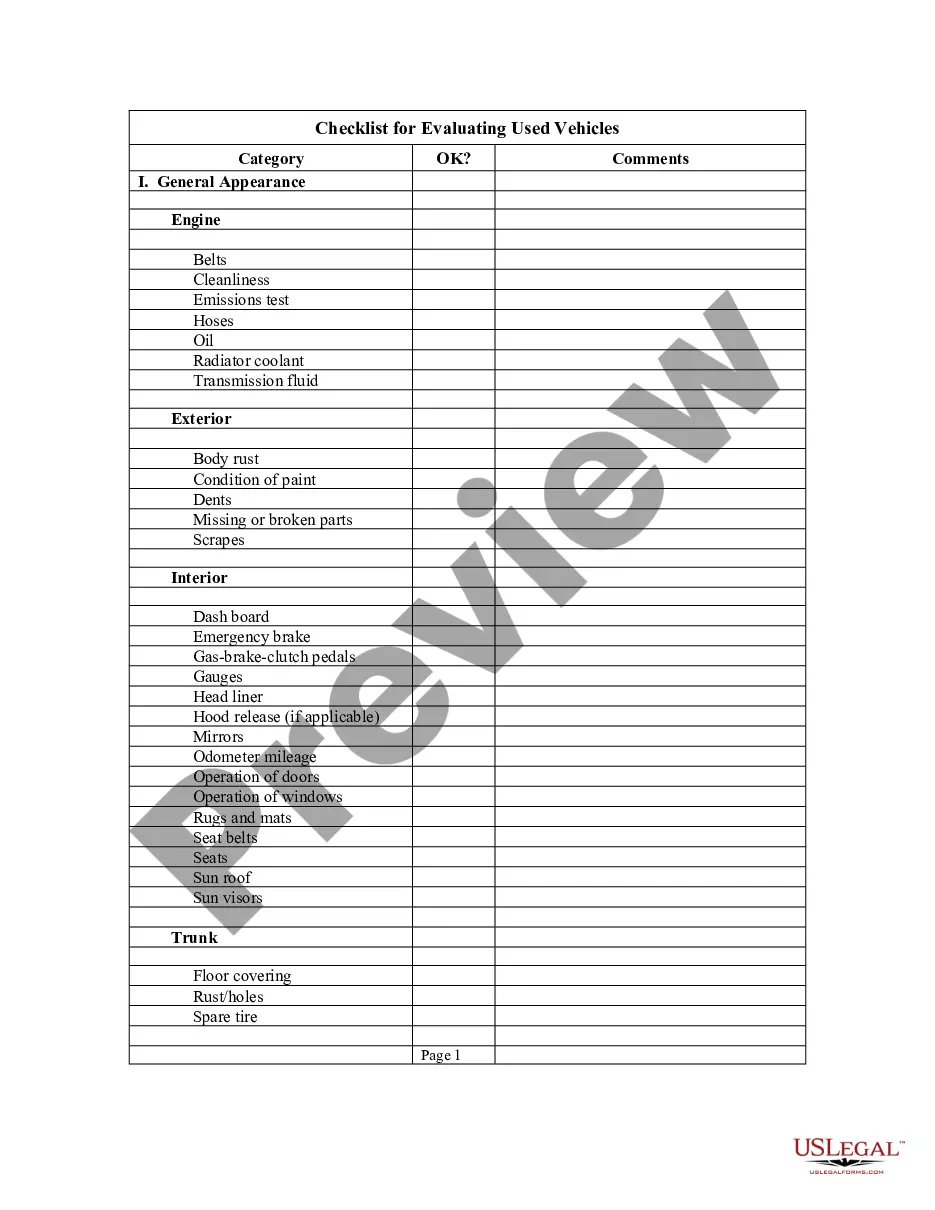
How to fill out Contractor Agreement?
You might spend time online trying to locate the legal document template that meets the state and federal requirements you require.
US Legal Forms offers a wide range of legal forms that are evaluated by professionals.
You can easily download or print the Georgia Contractor Agreement from the platform.
If you want to find another version of the document, use the Search field to find the template that suits you and your needs.
- If you already have a US Legal Forms account, you can Log In and click the Acquire button.
- After that, you can fill out, modify, print, or sign the Georgia Contractor Agreement.
- Each legal document template you obtain is yours permanently.
- To get another copy of the purchased document, head over to the My documents tab and click the corresponding button.
- If you’re using the US Legal Forms website for the first time, follow the basic instructions below.
- First, ensure you have selected the correct document template for the region/city of your preference.
- Review the document description to confirm you have chosen the right form.
Form popularity
FAQ
Creating a contract for a contractor begins with identifying the essential elements like scope of work, payment schedule, and termination clauses. Use a template to streamline the process, ensuring that all legal requirements are met. The Georgia Contractor Agreement can serve as an excellent starting point, providing clear language and structure. This preparation will protect both parties and establish a professional working relationship.
To set up an independent contractor agreement, start by defining the scope of work, payment terms, and deadlines. You will want to clearly outline the relationship between the client and the contractor to avoid any misunderstandings. Utilizing templates, such as those available on US Legal Forms, ensures that your Georgia Contractor Agreement includes all necessary legal provisions tailored to your needs.
Contractors typically secure contracts through a mix of networking, referrals, and online marketing. Joining local trade organizations can also help in connecting with businesses in need of contracting services. Showcasing past successful projects can attract clients looking for reliable contractors. Having a well-drafted Georgia Contractor Agreement can further inspire confidence in potential clients.
As a contractor, building relationships with clients and networking in your local area are essential. You can promote your services through online platforms and social media. Additionally, offering value through unique expertise will help you stand out from the competition. Finally, having a Georgia Contractor Agreement template ready will streamline the contract process with potential clients.
To get bids from contractors, start by providing a clear project description and scope of work. Distributing your request to multiple contractors will increase your chances of receiving competitive bids. You can use online platforms to connect with contractors who specialize in your area. Once you receive bids, you can compare them and choose the one that fits your project needs best.
Filling out a contractor agreement involves entering pertinent information such as the names of each party, project details, and payment terms. Review the document carefully to ensure accuracy and clarity, making any necessary edits for your specific situation. Utilizing a Georgia Contractor Agreement available on US Legal Forms makes this process straightforward and helps you create a legally binding document with ease.
To write a simple contract agreement, start by listing the names and contact information of all parties. Next, define the services to be provided and specify compensation details. Include start and end dates, along with any conditions for termination. Utilizing a Georgia Contractor Agreement template from US Legal Forms can simplify the process and ensure you cover all essential elements.
A contractor contract should clearly outline the scope of work, payment terms, and deadlines. It typically includes details such as the parties involved, project description, and any necessary legal requirements. A well-structured Georgia Contractor Agreement ensures both parties understand their responsibilities and protects their interests. Using platforms like US Legal Forms can help you create a comprehensive agreement effortlessly.
Georgia does not require a specific handyman license for most small repairs or home maintenance tasks. Nevertheless, if the work exceeds a value of $2,500 or involves specialized trades like electrical or plumbing work, a license is necessary. To ensure compliance, include handyman scope limitations in your Georgia Contractor Agreement.
Yes, Georgia requires a contractor's license for multiple trades, including general contracting, electrical, and plumbing work. Each type of work has its own licensing requirements and regulations. It's vital to address licensing in your Georgia Contractor Agreement to ensure compliance with state laws.