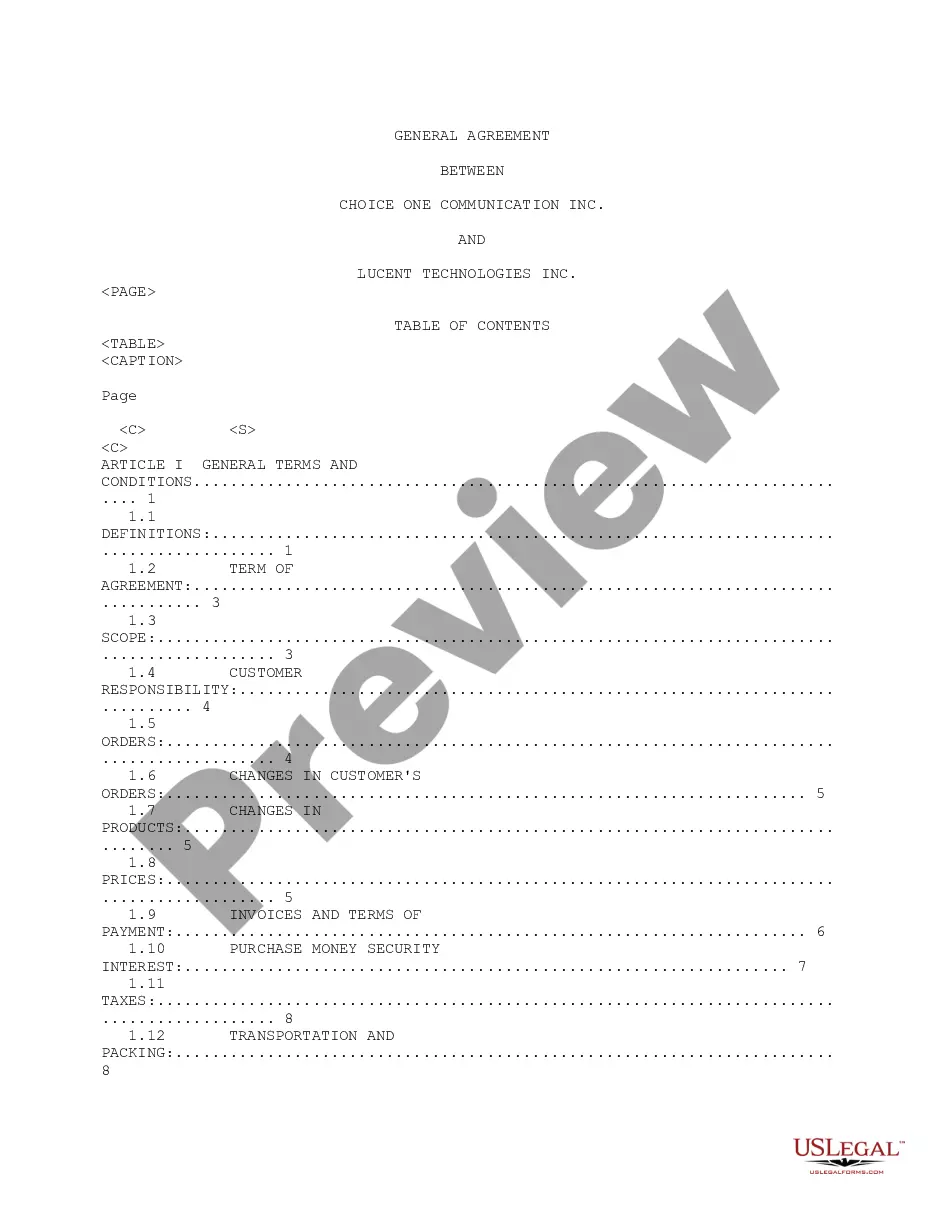
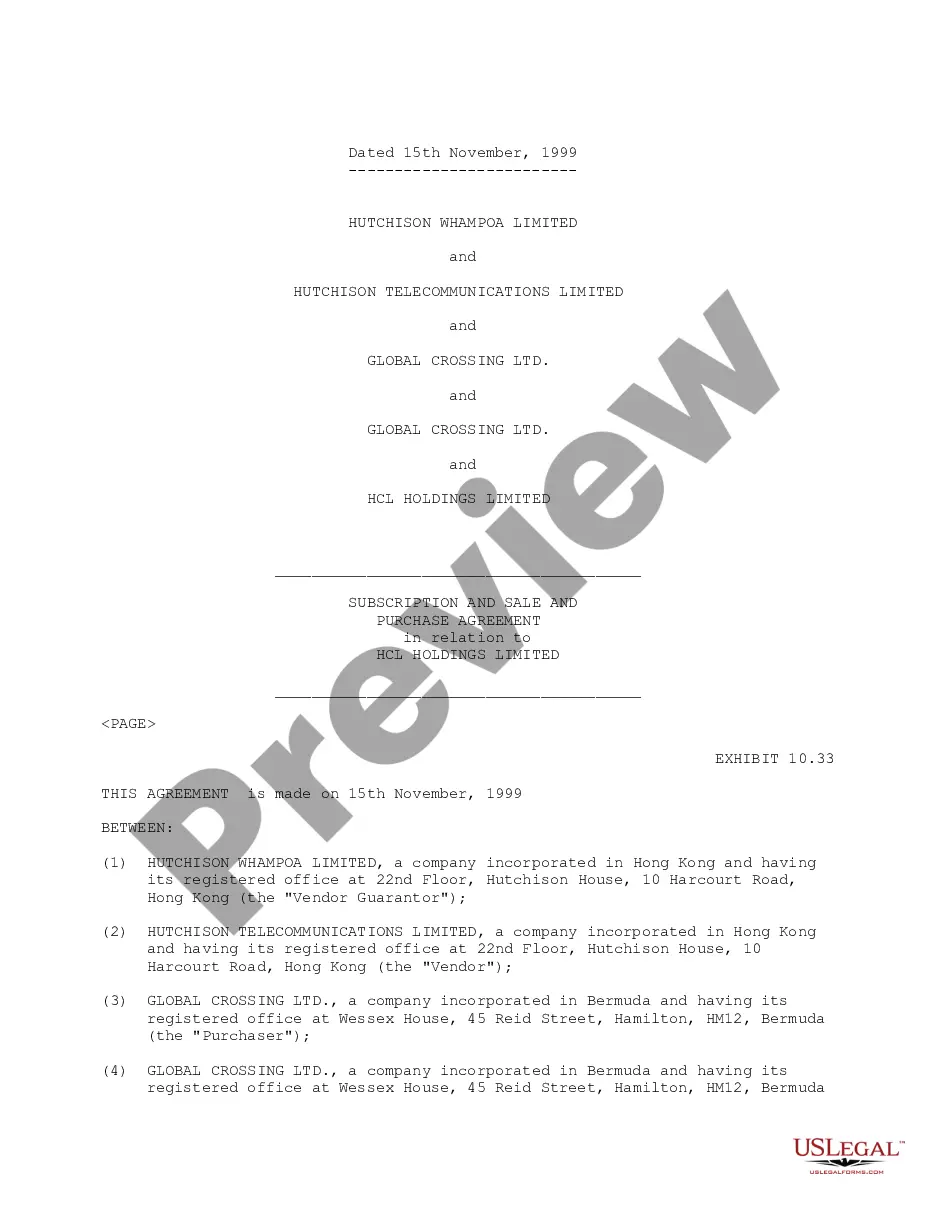
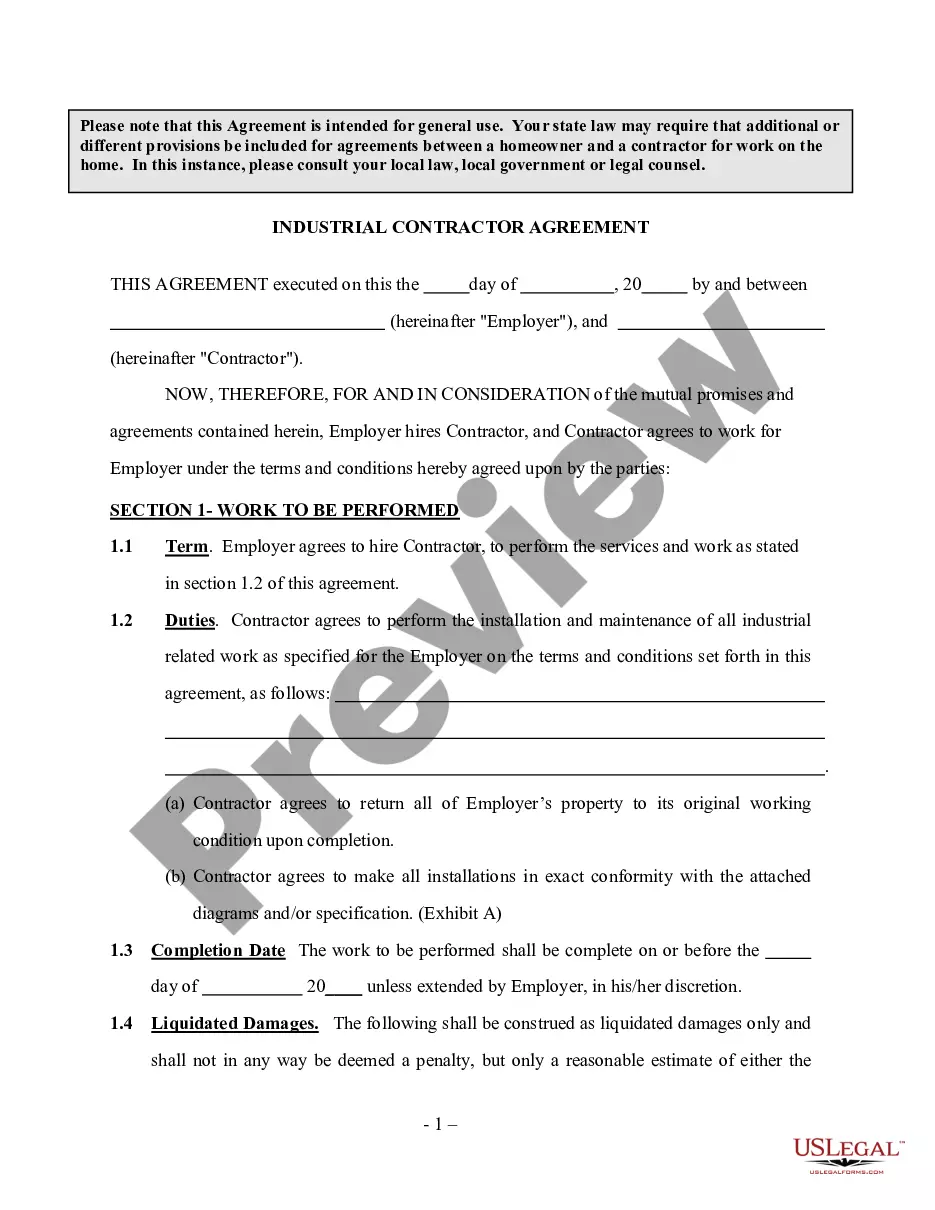
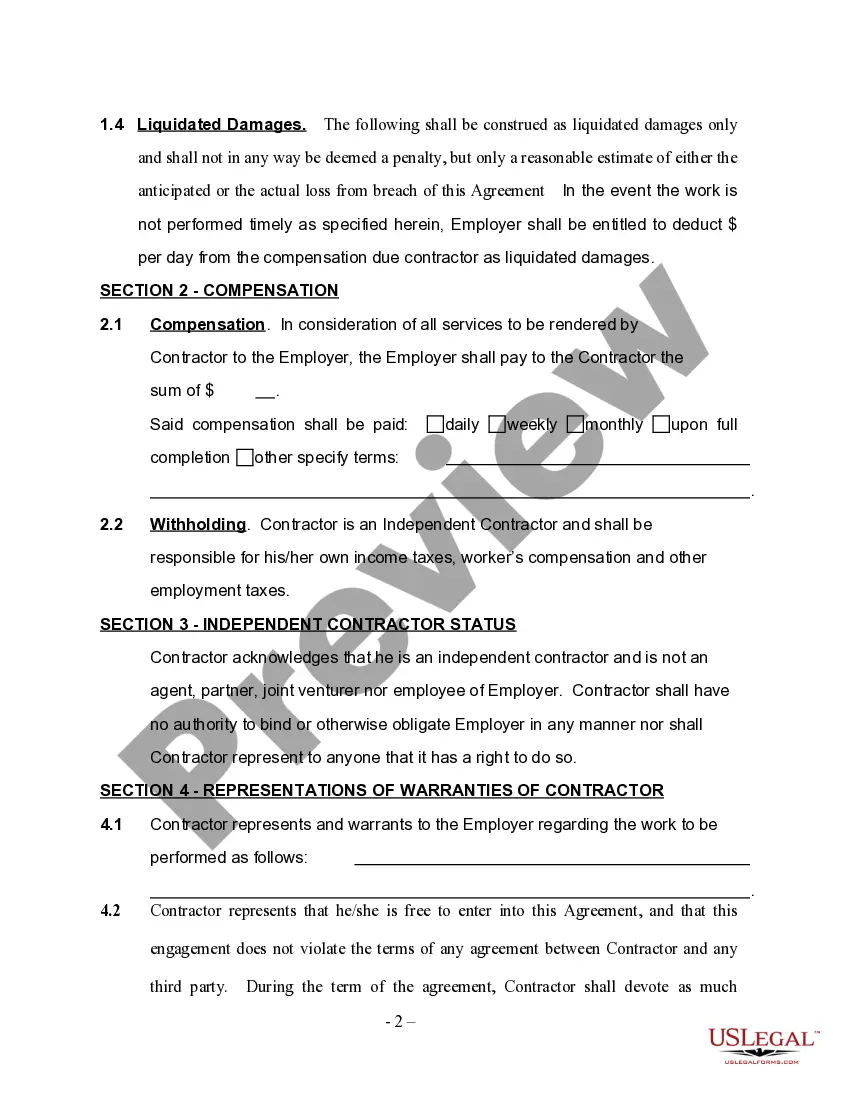
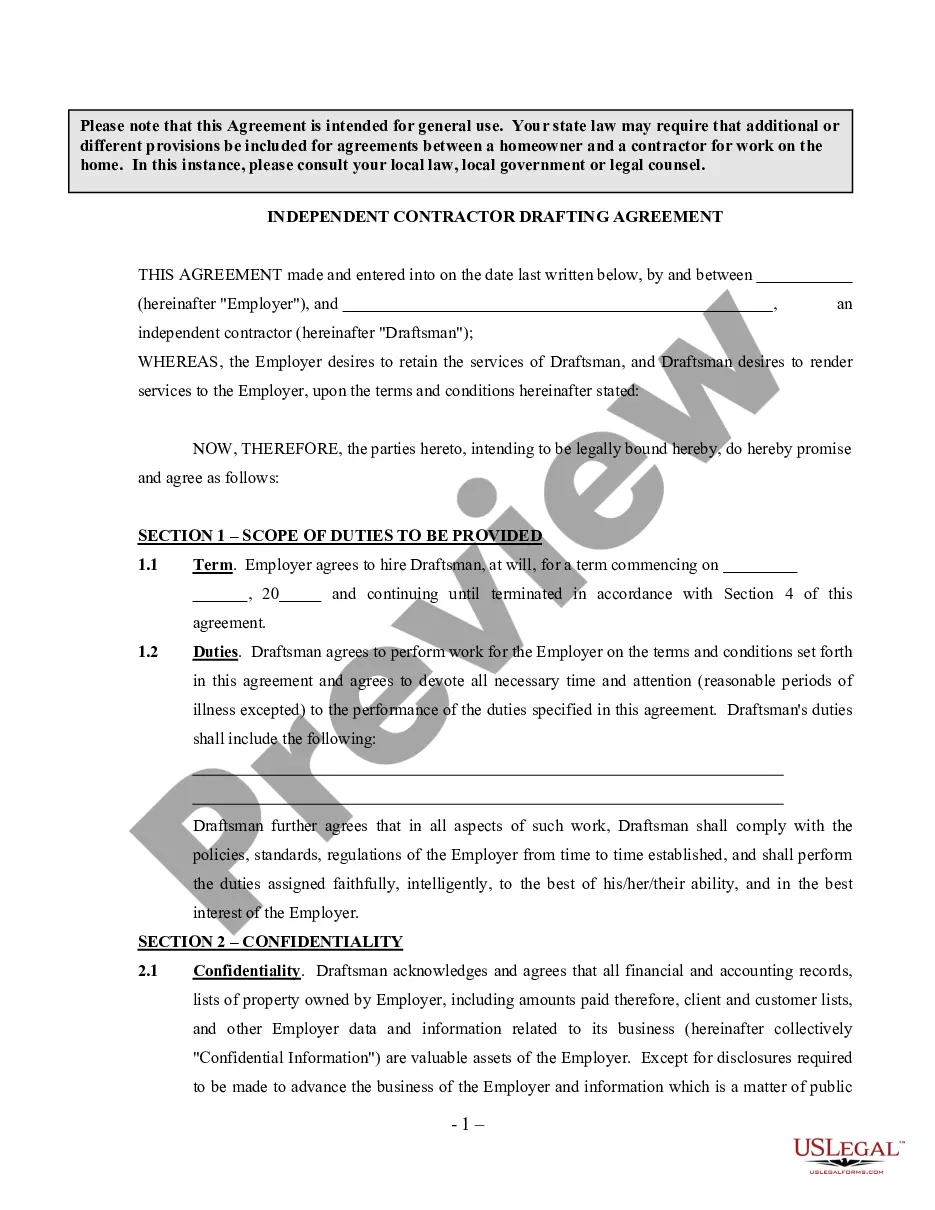
Employer contracts with an independent contractor to provide industrial contractor services as specified and agreed upon in the contract.
Georgia Industrial Contractor Agreement - Self-Employed
State:
Multi-State
Control #:
US-INDC-110
Format:
Word;
Rich Text
Instant download
Description
Free preview
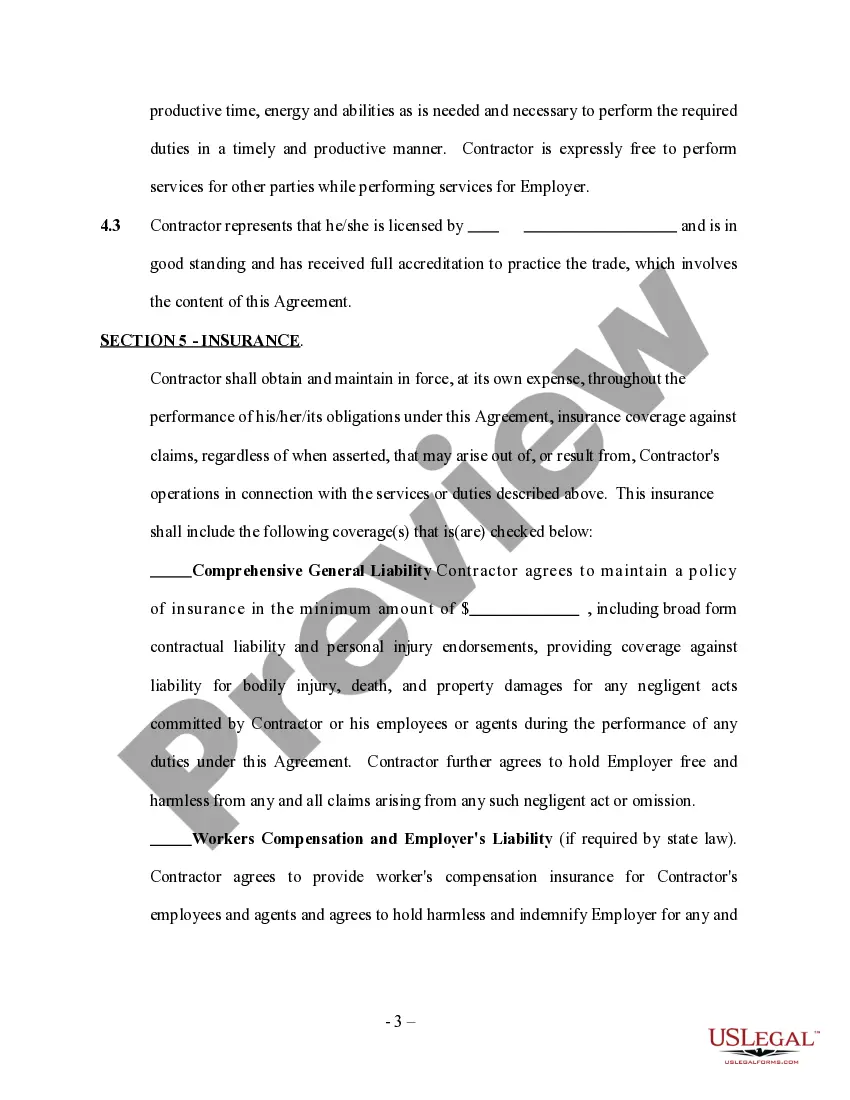
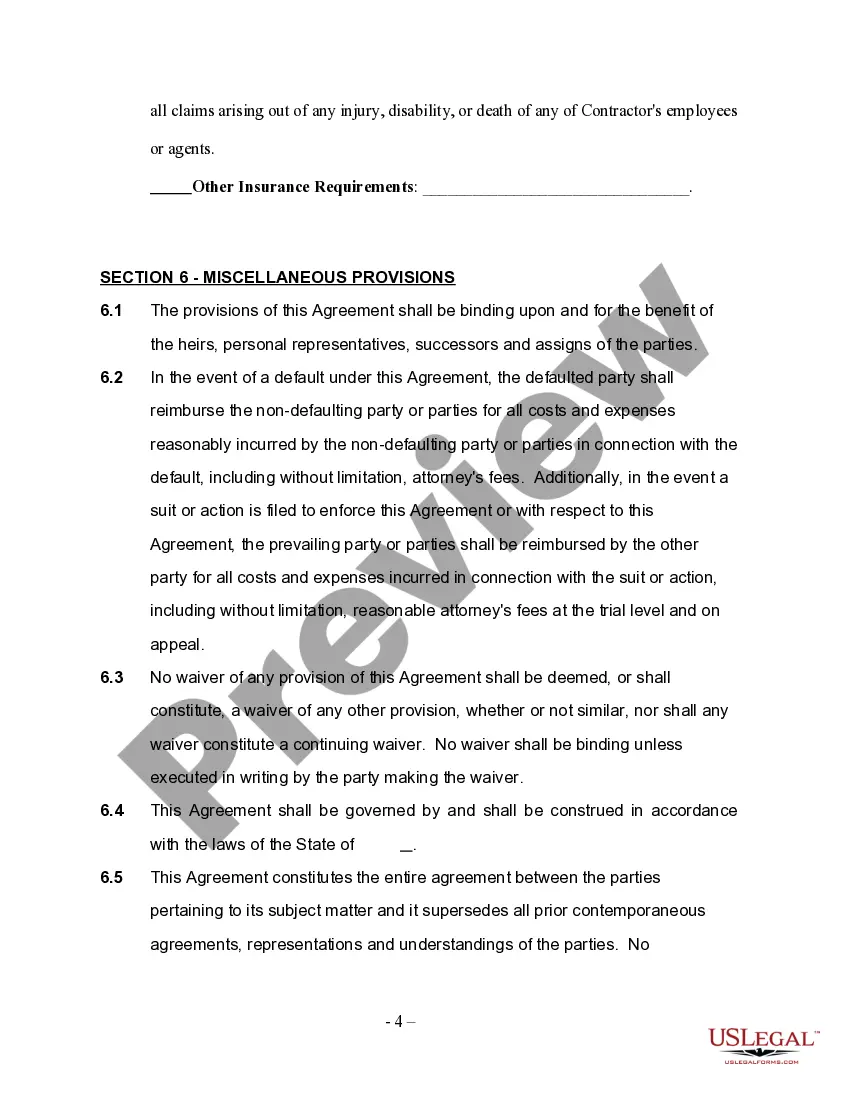
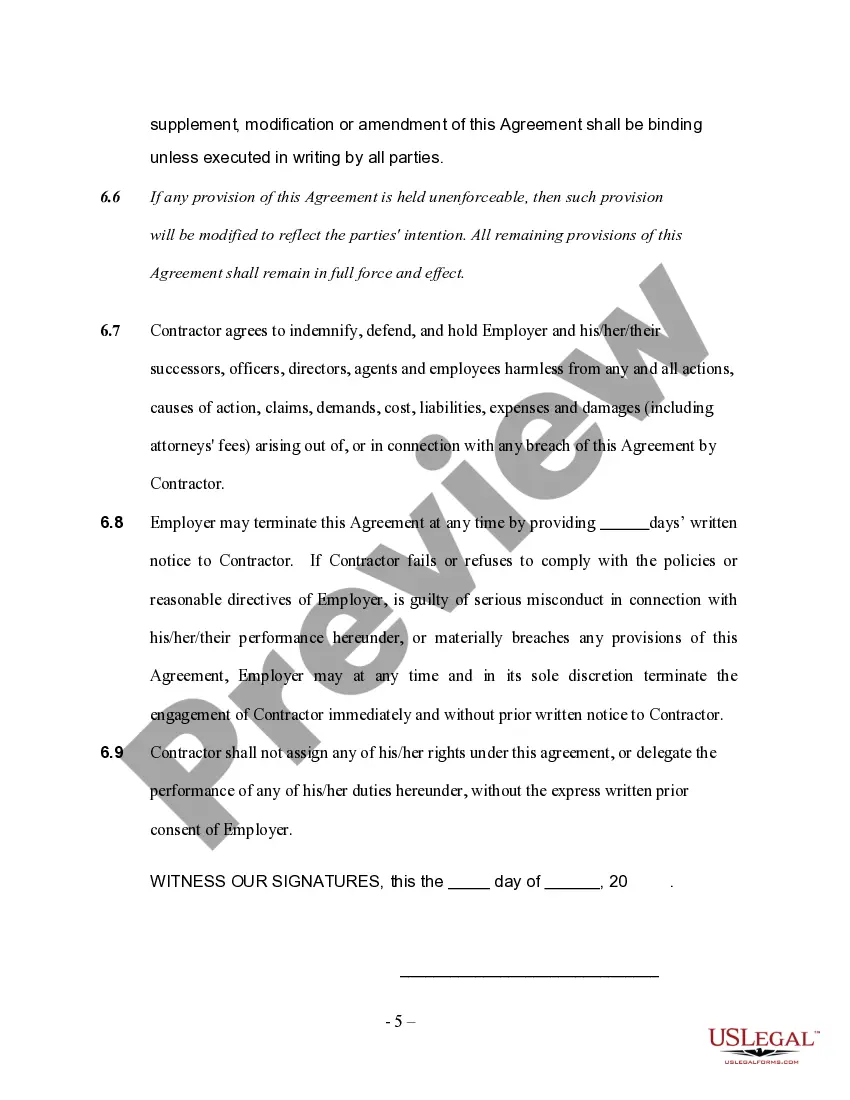
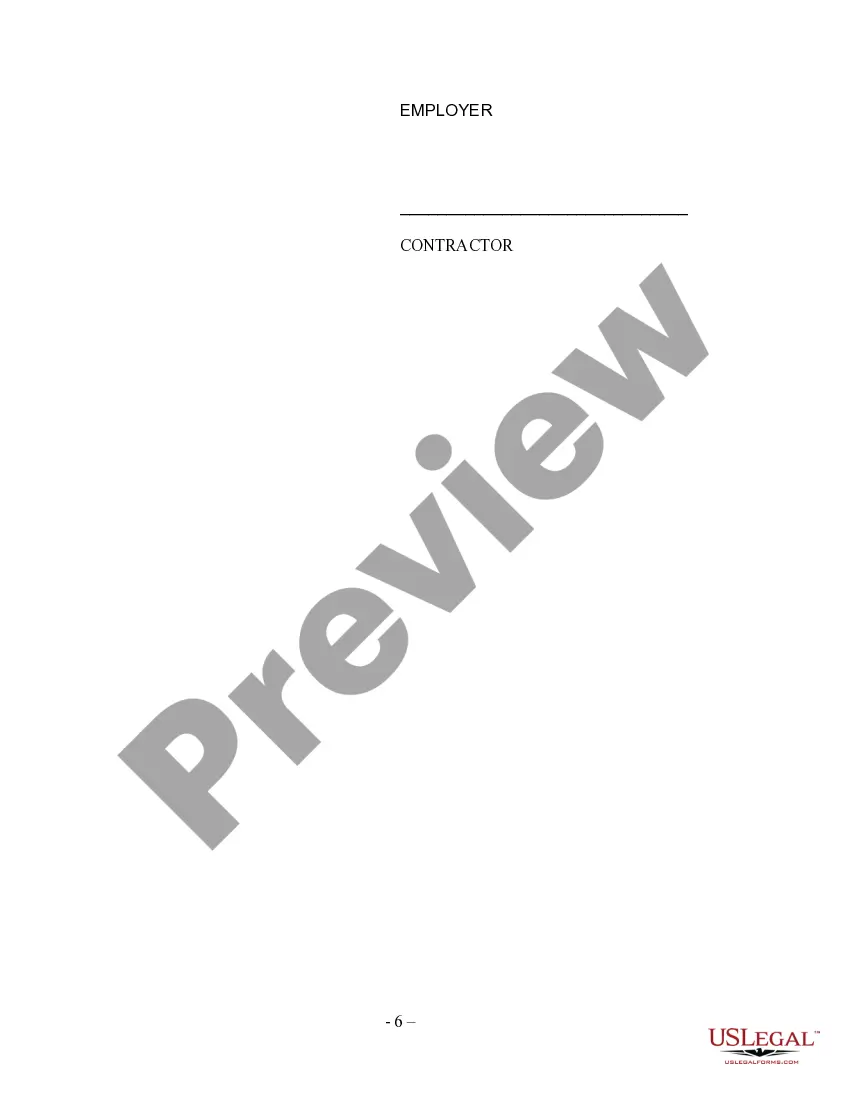
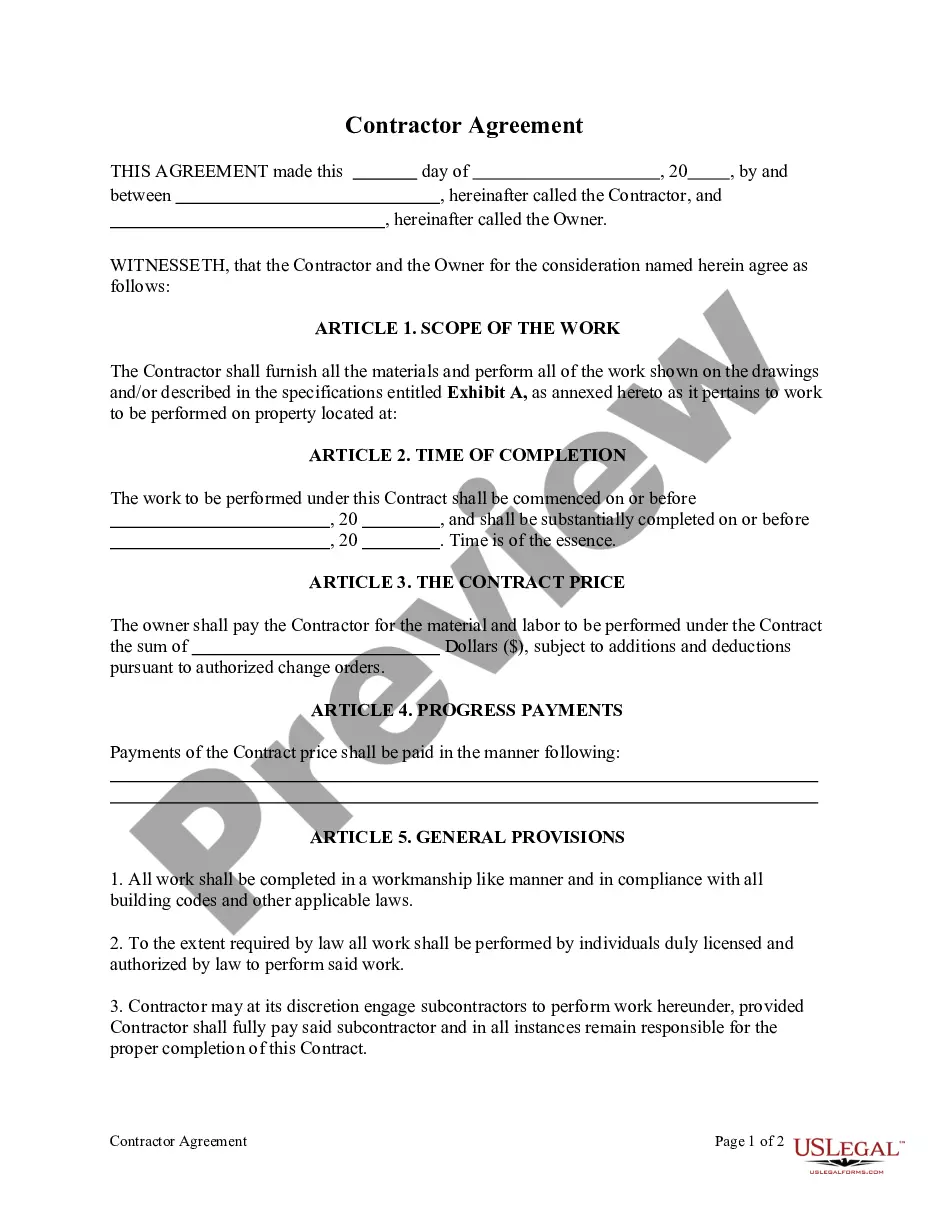
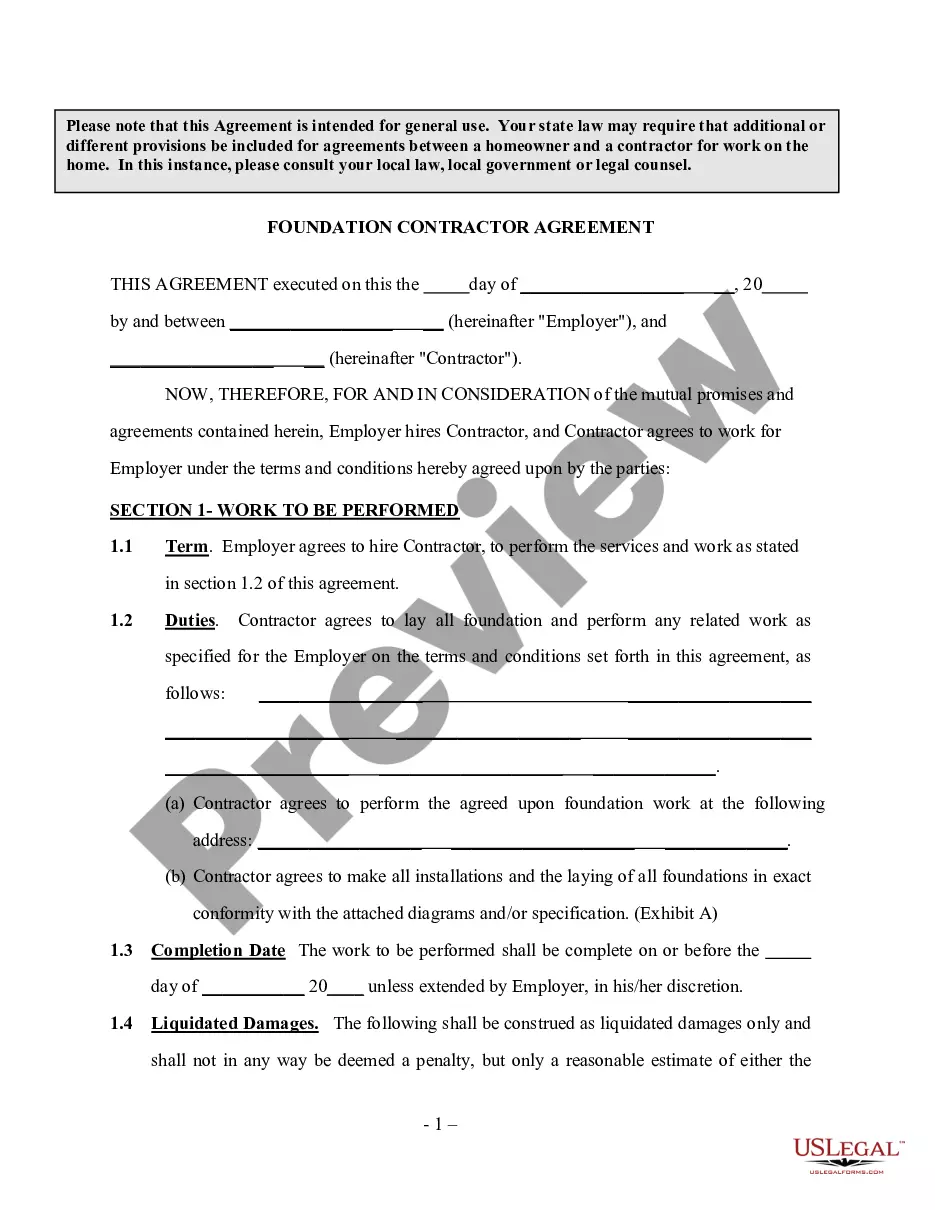
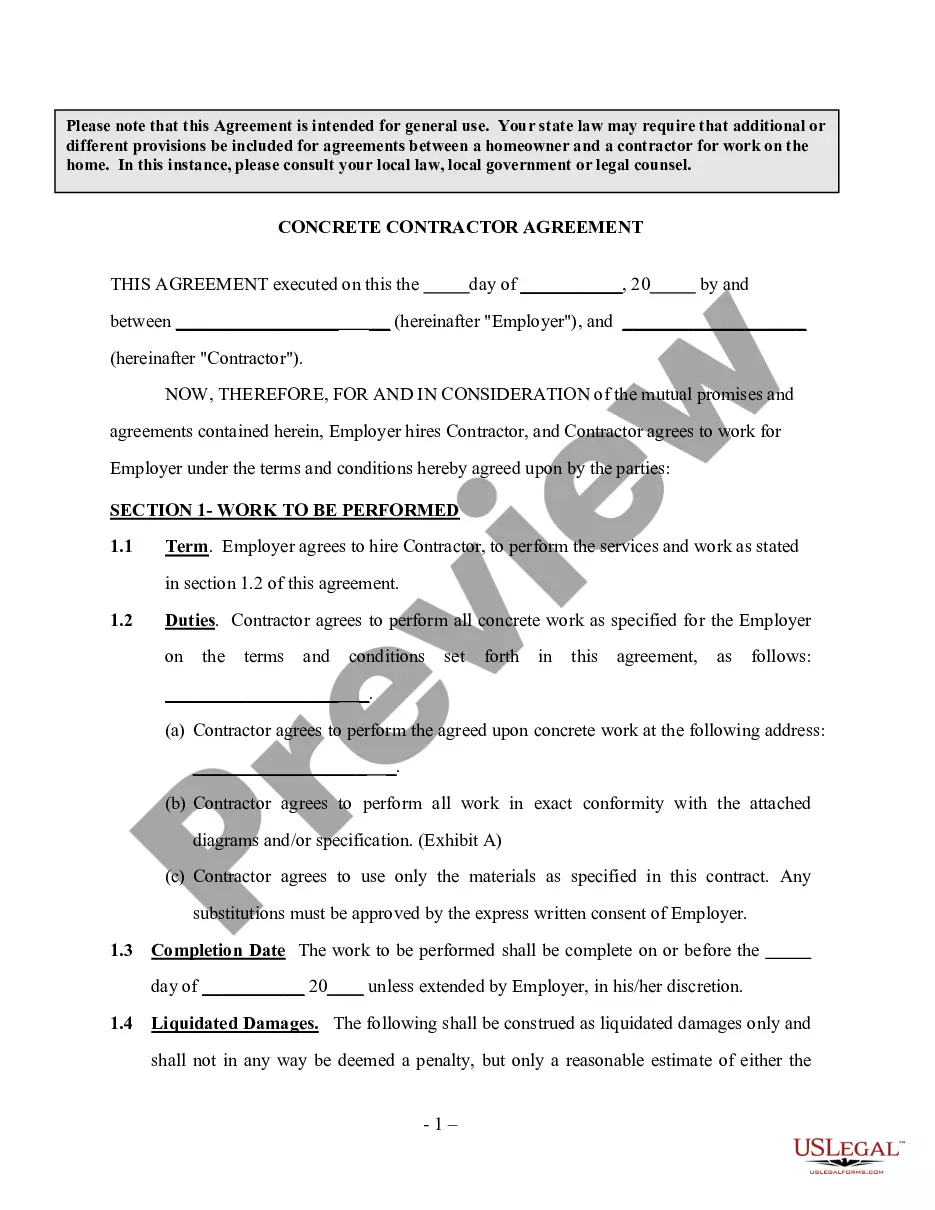
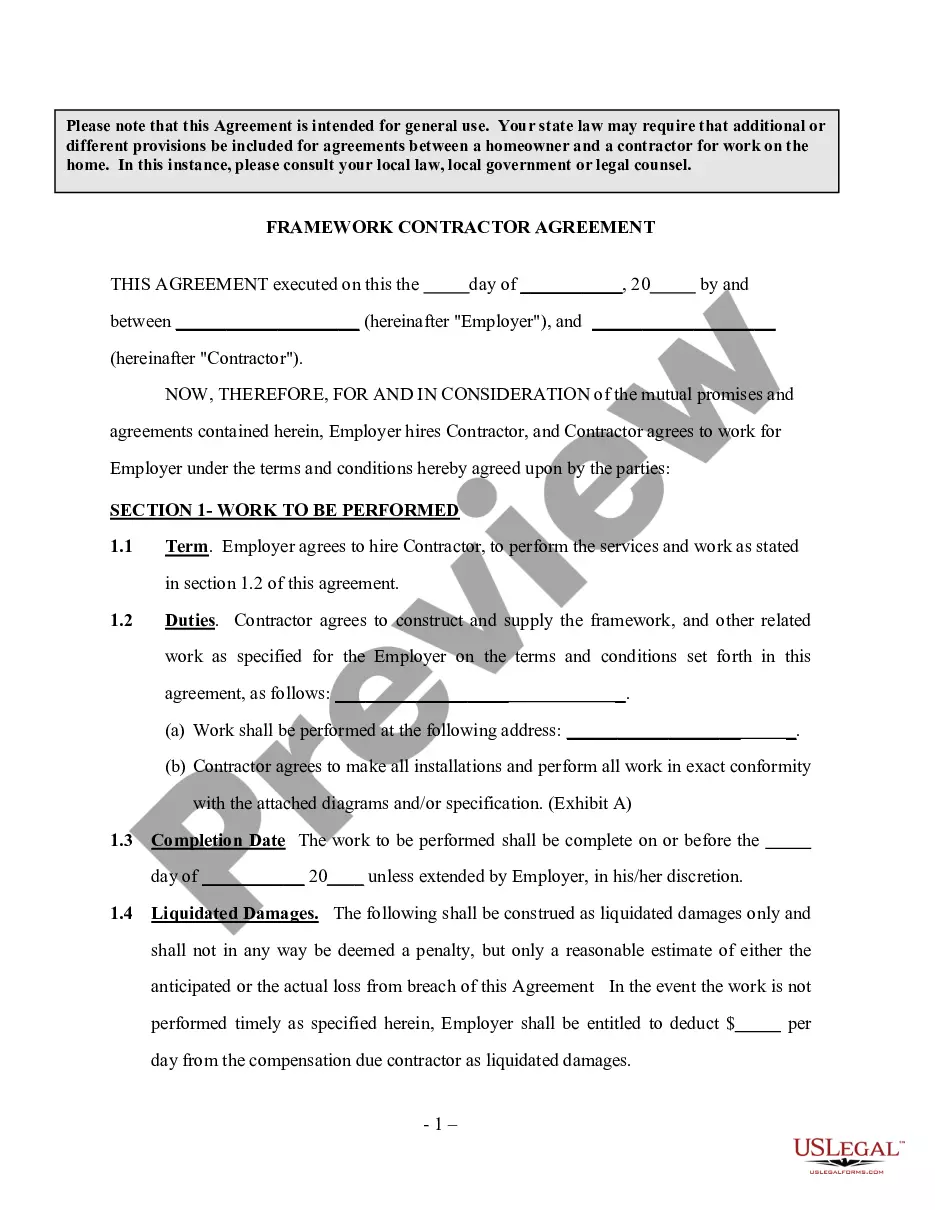
Get your form ready online
Our built-in tools help you complete, sign, share, and store your documents in one place.
Built-in online Word editor
Make edits, fill in missing information, and update formatting in US Legal Forms—just like you would in MS Word.
Export easily
Download a copy, print it, send it by email, or mail it via USPS—whatever works best for your next step.
E-sign your document
Sign and collect signatures with our SignNow integration. Send to multiple recipients, set reminders, and more. Go Premium to unlock E-Sign.
Notarize online 24/7
If this form requires notarization, complete it online through a secure video call—no need to meet a notary in person or wait for an appointment.
Store your document securely
We protect your documents and personal data by following strict security and privacy standards.

Make edits, fill in missing information, and update formatting in US Legal Forms—just like you would in MS Word.

Download a copy, print it, send it by email, or mail it via USPS—whatever works best for your next step.

Sign and collect signatures with our SignNow integration. Send to multiple recipients, set reminders, and more. Go Premium to unlock E-Sign.

If this form requires notarization, complete it online through a secure video call—no need to meet a notary in person or wait for an appointment.

We protect your documents and personal data by following strict security and privacy standards.
Looking for another form?

How to fill out Industrial Contractor Agreement - Self-Employed?
US Legal Forms - one of the most important collections of legal documents in the United States - provides a range of legal form templates that you can download or print.
By utilizing the website, you can find thousands of forms for business and personal uses, sorted by categories, states, or keywords.
You can discover the latest versions of forms such as the Georgia Industrial Contractor Agreement - Self-Employed in just minutes.
Review the form description to ensure you have chosen the correct one.
If the form doesn’t meet your requirements, utilize the Search field at the top of the screen to find one that does.
- If you already have a monthly subscription, Log In to access and download the Georgia Industrial Contractor Agreement - Self-Employed from your US Legal Forms library.
- The Download button will be available for every form you view.
- You can access all previously stored forms in the My documents section of your account.
- If you're using US Legal Forms for the first time, here are some simple steps to help you get started.
- Make sure you have selected the correct form for your area/state. Click the Preview button to check the form’s details.
Form popularity
FAQ
employed contract, like the Georgia Industrial Contractor Agreement SelfEmployed, should cover essential details like the scope of work, payment terms, and deadlines. It should also outline responsibilities, confidentiality clauses, and conditions for termination. Additionally, including any necessary insurance requirements protects both parties. Using platforms like uslegalforms can help you draft a comprehensive contract that meets your legal needs.
Writing an independent contractor agreement requires attention to key elements. Start by clearly defining the parties involved and outlining the project scope, payment terms, and deadlines. It’s also essential to include clauses that cover confidentiality and termination. By utilizing a platform like uslegalforms, you can access templates tailored to a Georgia Industrial Contractor Agreement - Self-Employed, ensuring compliance and clarity.
Filling out an independent contractor form is straightforward. First, gather all necessary personal and business information, such as your legal name, address, and business structure. Next, enter details about the specific project, including the scope of work and payment terms. Lastly, ensure you review the form for accuracy, as this will help you create a solid Georgia Industrial Contractor Agreement - Self-Employed.
Creating an independent contractor agreement involves several key steps. Begin by defining the scope of work, payment terms, and deadlines. Incorporate necessary details like the type of services provided and how disputes will be resolved. Utilizing a platform like uslegalforms can simplify the process of drafting a Georgia Industrial Contractor Agreement - Self-Employed, as it offers templates that can be tailored to meet your specific needs.
Yes, a self-employed person can have a contract. In fact, having a formal agreement, such as a Georgia Industrial Contractor Agreement - Self-Employed, helps outline the terms of work, payment, and responsibilities. This agreement protects both the contractor and the client by ensuring that all parties are clear about expectations. It is essential to have such contracts in place to avoid misunderstandings down the road.
Independent contractors file taxes as self-employed individuals. This requires reporting all income earned and deducting eligible business expenses. Maintaining good records of earnings and IRS forms is vital for compliance. Those using the Georgia Industrial Contractor Agreement - Self-Employed benefit from understanding this process for accurate tax obligations.
Yes, an independent contractor is indeed considered self-employed. This classification means they work for themselves rather than being an employee of a company. For those working under a Georgia Industrial Contractor Agreement - Self-Employed, knowing your status is crucial for tax filing and legal compliance. Being self-employed gives you the freedom to choose your projects and clients.
Choosing between self-employed and independent contractor depends on context, but both terms generally describe similar situations. Self-employed conveys a broader concept of ownership over your work, while independent contractor specifies the nature of the relationship with clients. For clarity in business dealings, especially in legal documents like the Georgia Industrial Contractor Agreement - Self-Employed, consider using independent contractor.
The independent contractor agreement in Georgia defines the working relationship between a contractor and client. This document outlines expectations, payment terms, and deliverables. Following this agreement is essential for those classified as self-employed, ensuring protection and clear legal guidelines. Utilizing the Georgia Industrial Contractor Agreement - Self-Employed template simplifies this process significantly.
Being self-employed means you operate your own business, providing services to clients without employer oversight. You report your income on tax filings and manage your own expenses. In Georgia, self-employed individuals often establish contracts that align with the Georgia Industrial Contractor Agreement - Self-Employed. This classification allows for greater flexibility and control over your work.