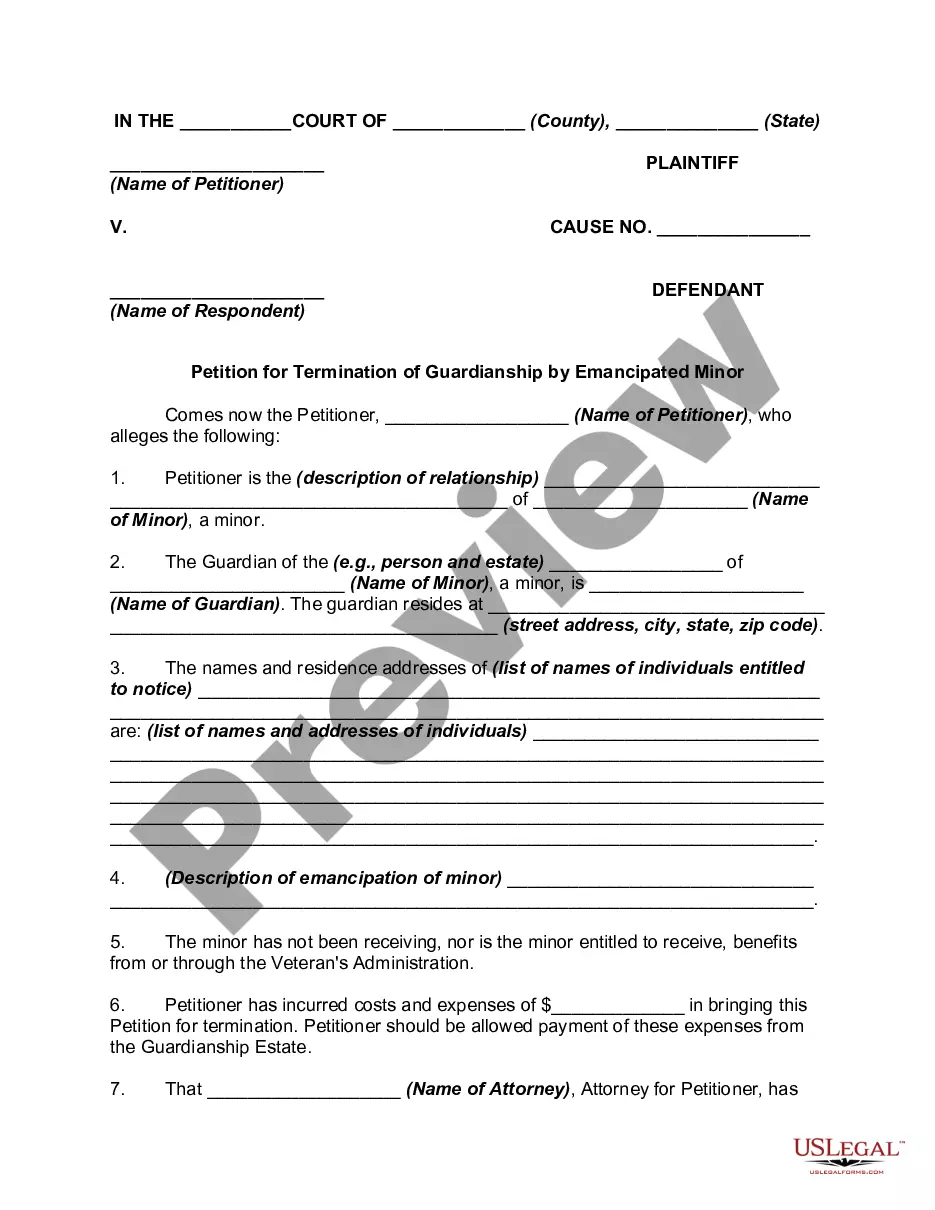
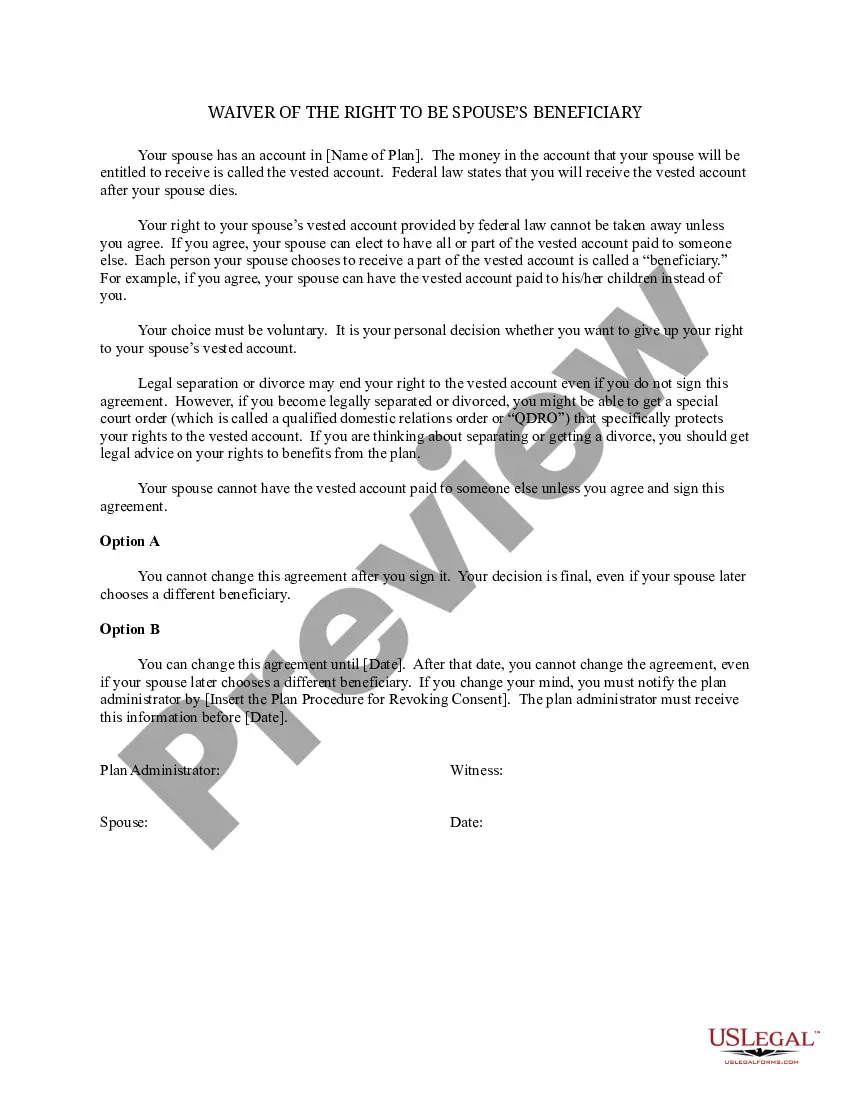
Georgia Waiver of the Right to be Spouse's Beneficiary
Description
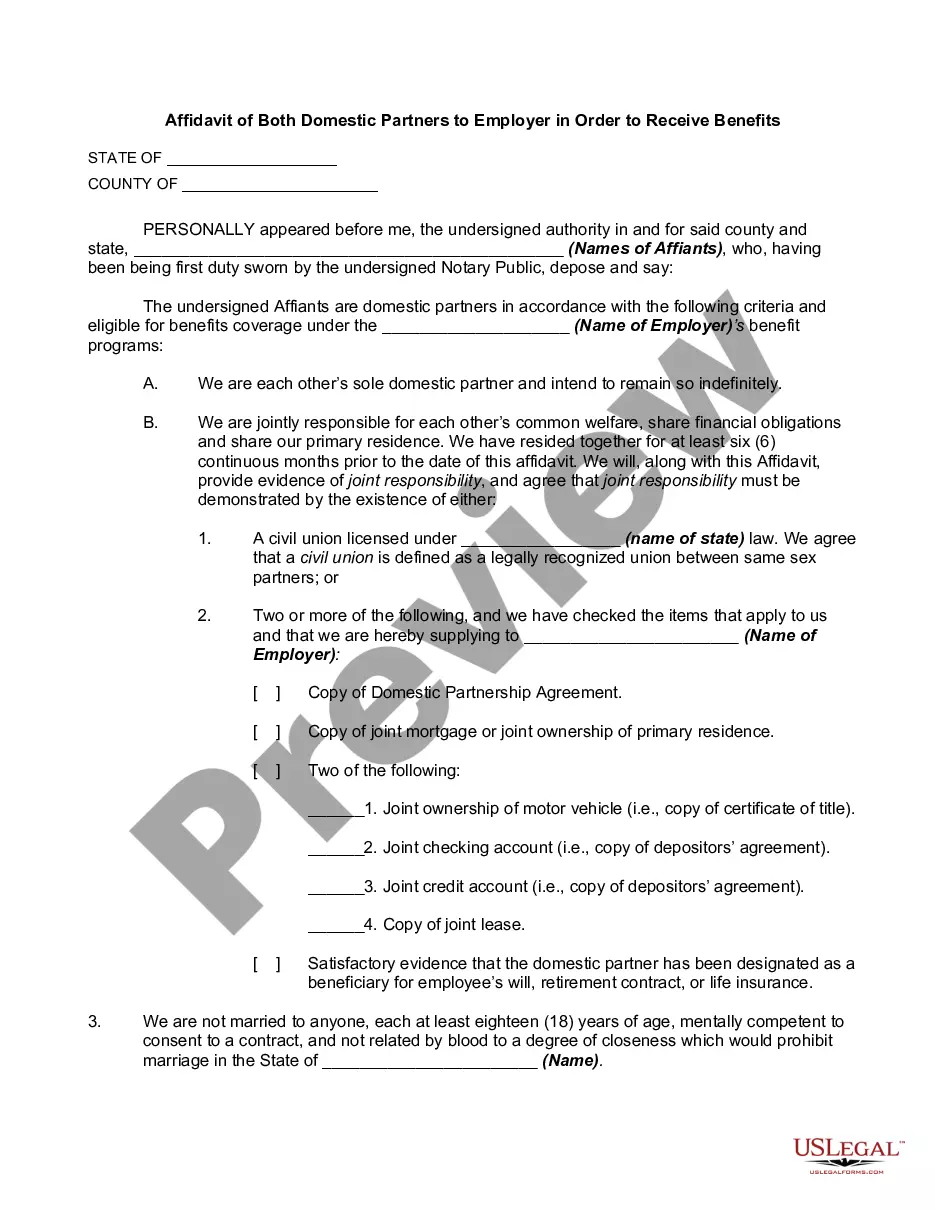
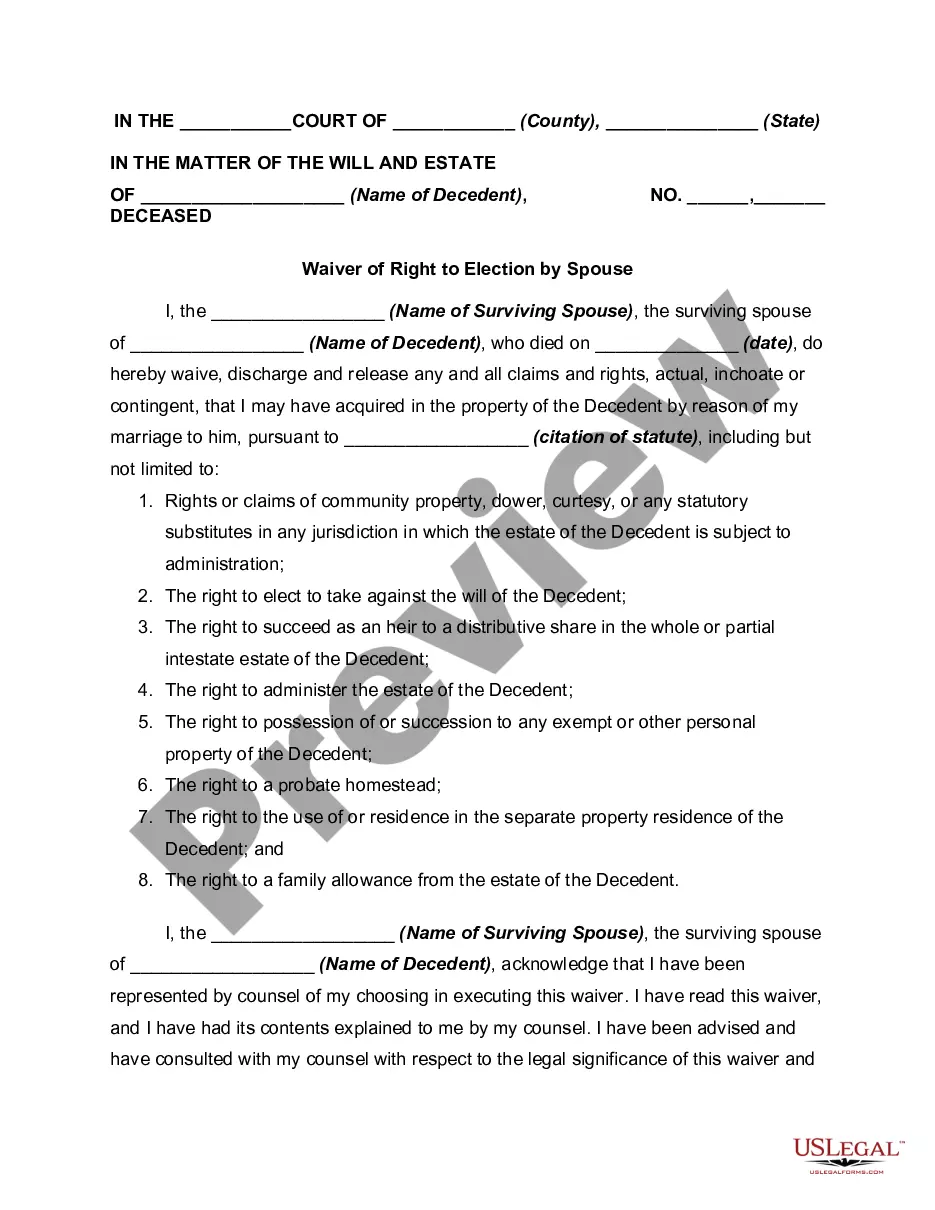
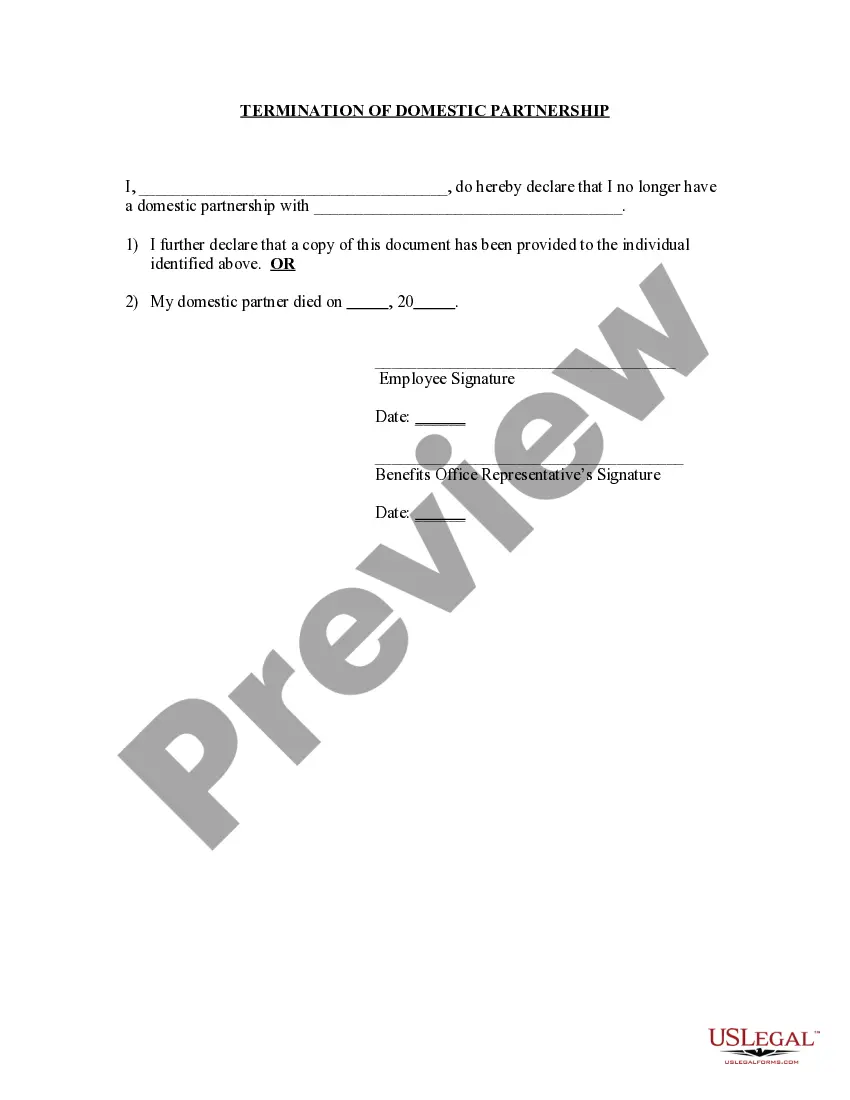
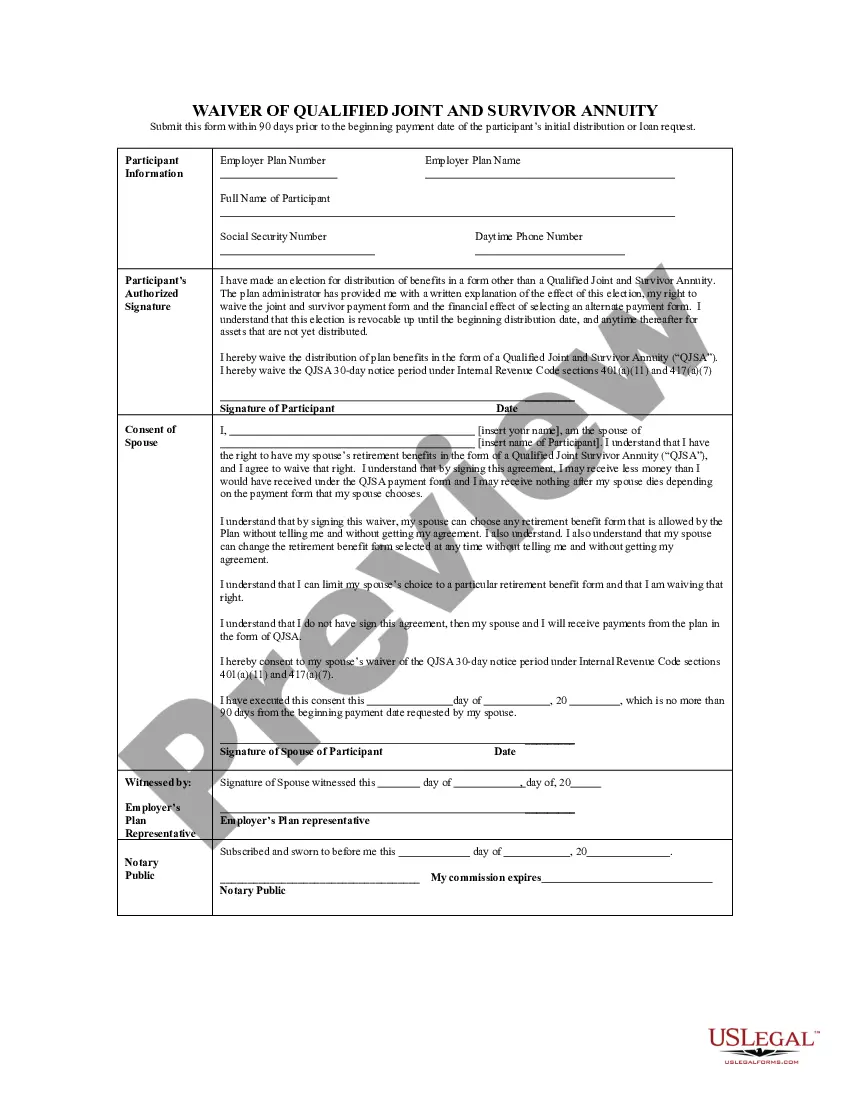
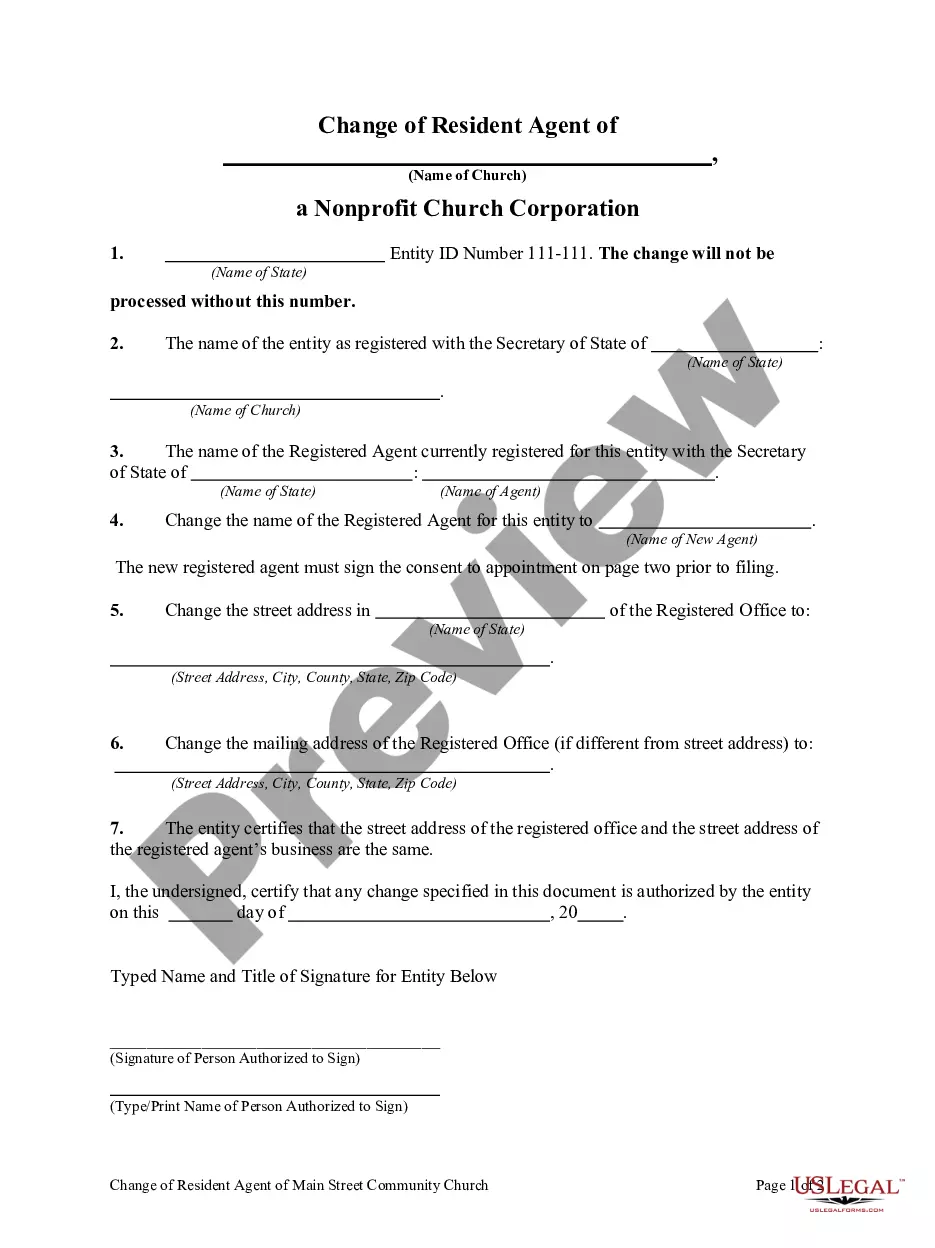

How to fill out Waiver Of The Right To Be Spouse's Beneficiary?
If you wish to finalize, obtain, or print legitimate document formats, utilize US Legal Forms, the premier selection of legal forms, which can be accessed online.
Take advantage of the site's simple and user-friendly search feature to acquire the documents you require.
A range of templates for business and personal purposes are organized by categories and states, or keywords.
Step 3. If you are not satisfied with the form, use the Search box at the top of the screen to find alternative versions of the legal form template.
Step 4. Once you have found the form you need, click on the Get now button. Choose the pricing plan you prefer and provide your details to register for the account.
- Utilize US Legal Forms to secure the Georgia Waiver of the Right to be Spouse's Beneficiary in just a few clicks.
- If you are already a US Legal Forms customer, Log In to your account and then click the Download button to locate the Georgia Waiver of the Right to be Spouse's Beneficiary.
- You can also access forms you previously downloaded in the My documents section of your account.
- If this is your first time using US Legal Forms, follow the steps below.
- Step 1. Make sure you have selected the form for the correct city/state.
- Step 2. Use the Review option to examine the form’s content. Be sure to read the instructions.
Form popularity
FAQ
A spouse but no children, your spouse will inherit your entire estate. Children but no spouse, your children will split everything equally. This includes biological and adopted children. Both a spouse and one child, they will divide the estate equally.
The answer is, in Georgia, yes. You are not required to leave any percentage of your estate to your spouse. That is different than a lot of other states where there is a requirement and you cannot disinherit your spouse.
Surviving Spouse Has the Right To Petition for One Year Of Support. Pursuant to Section 53-3-3 if a surviving spouse is left minimal or no property in the decedent's will, the surviving spouse has the right to elect a financial support for one year following the decedent's death.
When the decedent is survived by both their spouse and children, his or her estate is shared equally between the spouse and all of their living children. However, a surviving spouse is entitled to a minimum of one-third of the estate despite how it may impact the even property split.
A spouse but no children, your spouse will inherit your entire estate. Children but no spouse, your children will split everything equally. This includes biological and adopted children. Both a spouse and one child, they will divide the estate equally.
The answer is yes. The technical term is "disclaiming" it. If you are considering disclaiming an inheritance, you need to understand the effect of your refusalknown as the "disclaimer"and the procedure you must follow to ensure that it is considered qualified under federal and state law.
A beneficiary may also choose to disclaim only a percentage of the inherited assets. This is acceptable if the disclaimer meets certain requirements, in which case the asset will be treated as though it never were the property of the original beneficiary.
Jointly Owned PropertyWhen one spouse dies, the surviving spouse automatically receives complete ownership of the property. This distribution cannot be changed by Will. Many people erroneously believe that this type of ownership precludes the need for the parties to have a Will.
You can also disclaim an inheritance if you're the named beneficiary of a financial account or instrument, such as an individual retirement account (IRA), 401(k) or life insurance policy. Disclaiming means that you give up your rights to receive the inheritance.
When the decedent is survived by both their spouse and children, his or her estate is shared equally between the spouse and all of their living children. However, a surviving spouse is entitled to a minimum of one-third of the estate despite how it may impact the even property split.