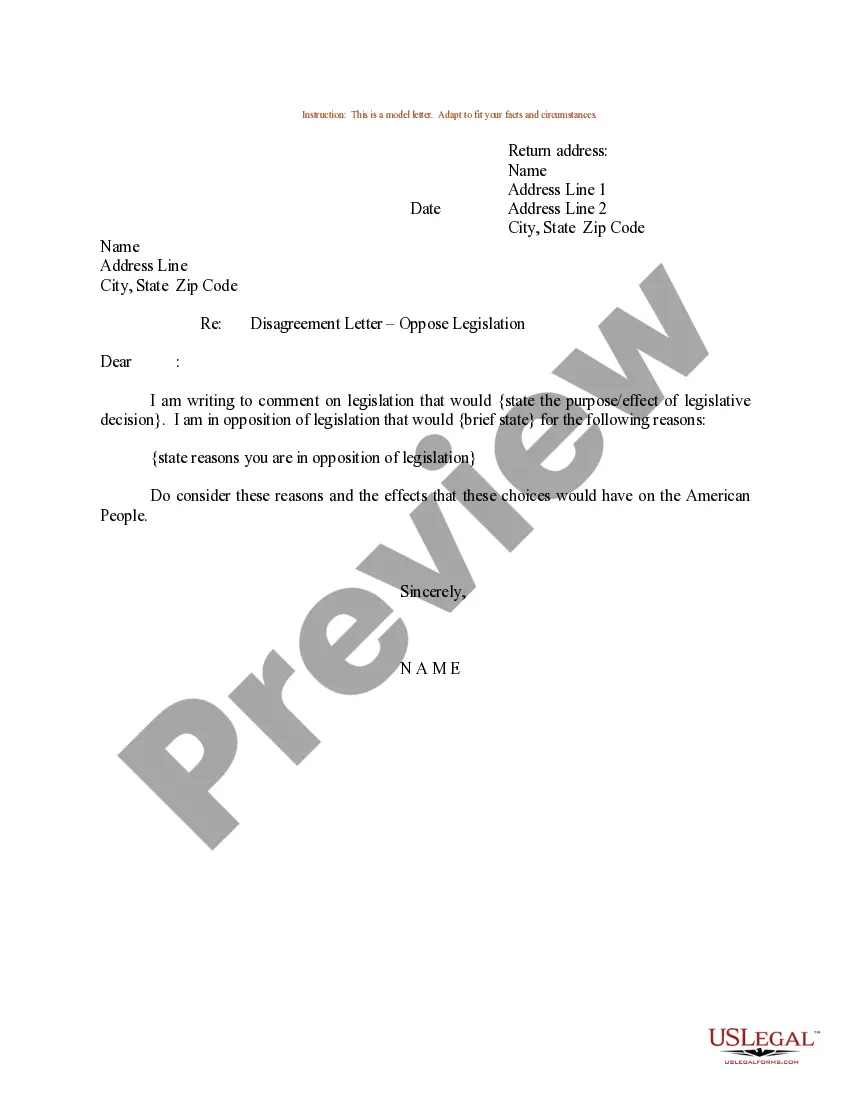
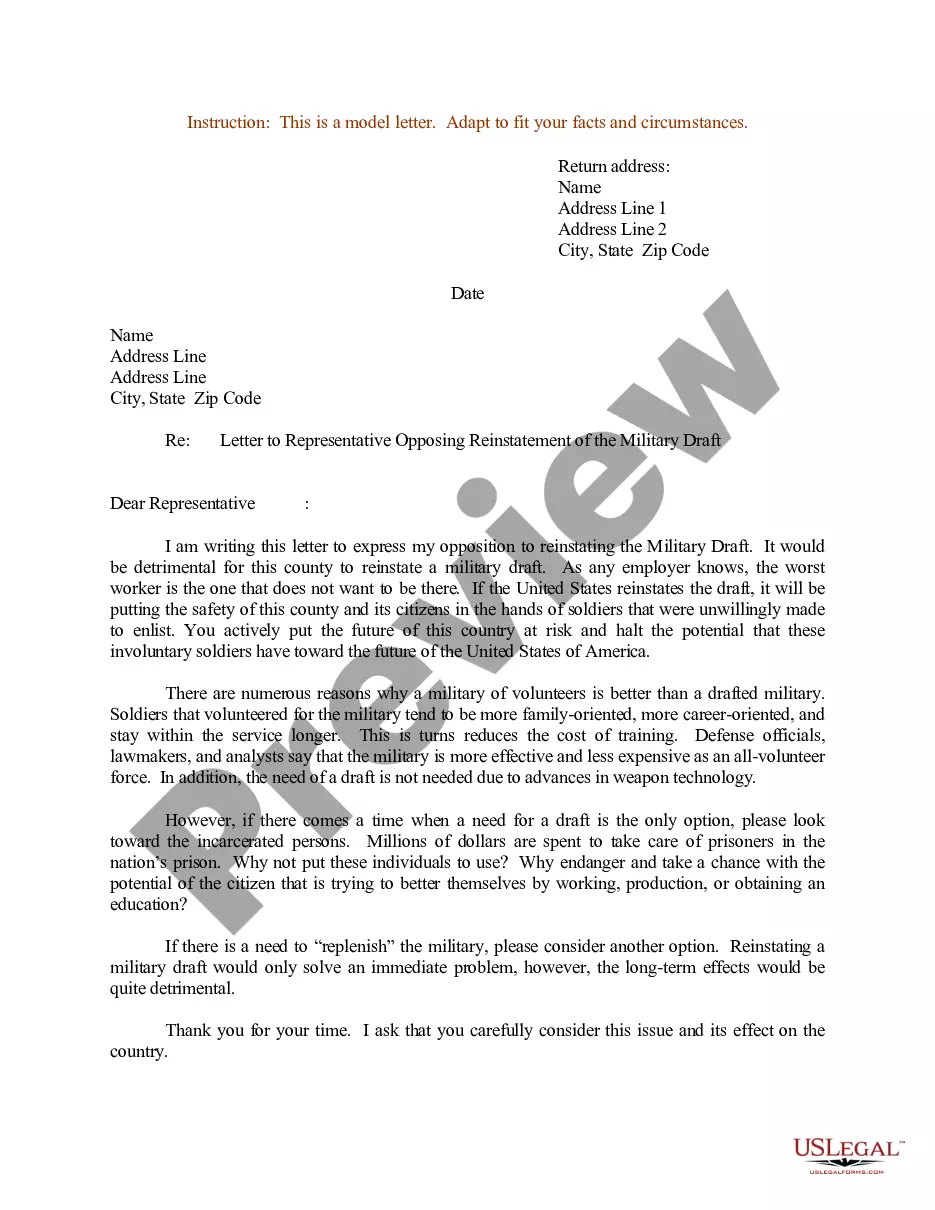
Georgia Sample Letter for Opposition to Legislation
Description
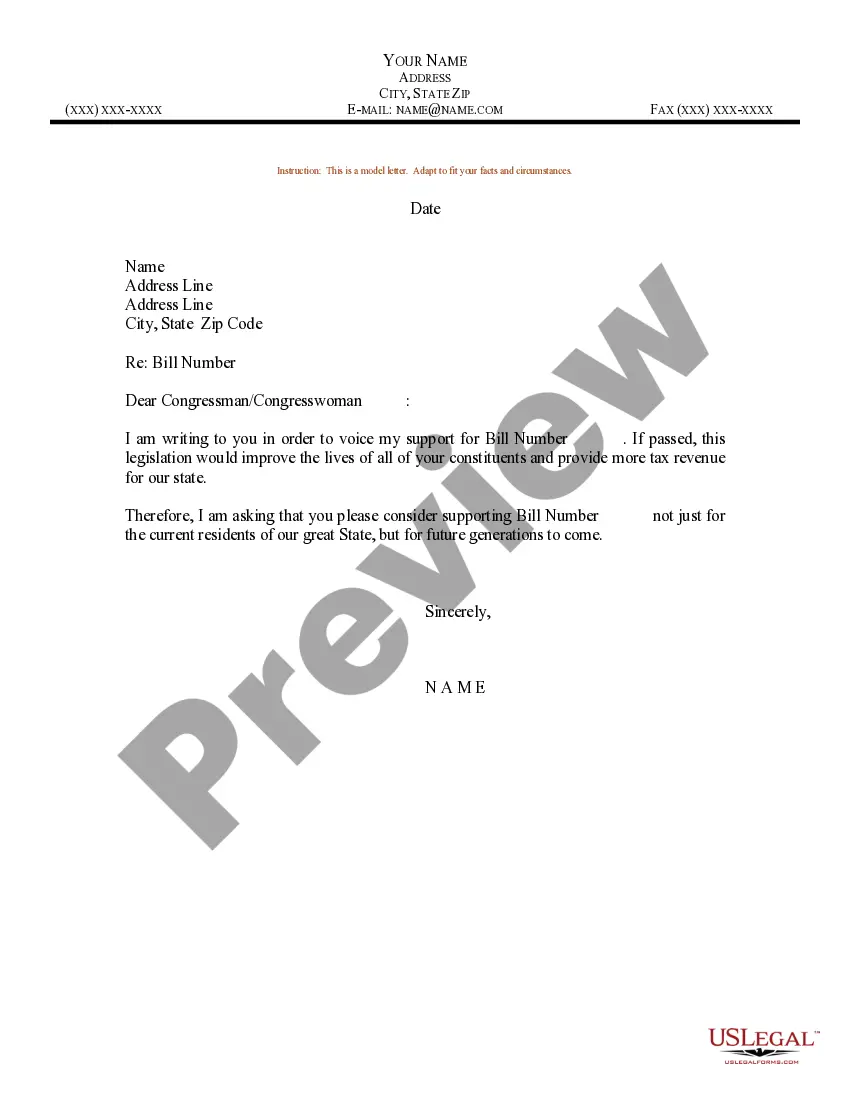
Get your form ready online
Our built-in tools help you complete, sign, share, and store your documents in one place.
Make edits, fill in missing information, and update formatting in US Legal Forms—just like you would in MS Word.
Download a copy, print it, send it by email, or mail it via USPS—whatever works best for your next step.
Sign and collect signatures with our SignNow integration. Send to multiple recipients, set reminders, and more. Go Premium to unlock E-Sign.
If this form requires notarization, complete it online through a secure video call—no need to meet a notary in person or wait for an appointment.
We protect your documents and personal data by following strict security and privacy standards.

Make edits, fill in missing information, and update formatting in US Legal Forms—just like you would in MS Word.

Download a copy, print it, send it by email, or mail it via USPS—whatever works best for your next step.

Sign and collect signatures with our SignNow integration. Send to multiple recipients, set reminders, and more. Go Premium to unlock E-Sign.

If this form requires notarization, complete it online through a secure video call—no need to meet a notary in person or wait for an appointment.

We protect your documents and personal data by following strict security and privacy standards.
Looking for another form?

How to fill out Sample Letter For Opposition To Legislation?
It is feasible to spend hours online attempting to locate the approved document template that fulfills the state and federal requirements you need.
US Legal Forms provides thousands of legal documents which can be reviewed by professionals.
You can effortlessly download or print the Georgia Sample Letter for Opposition to Legislation from my services.
If available, utilize the Preview button to review the document template simultaneously. If you wish to find another version of the form, use the Search field to locate the template that matches your needs and requirements. Once you have identified the template you want, simply click Purchase now to continue. Select the pricing plan you prefer, enter your information, and register for your account on US Legal Forms. Complete the transaction. You may use your Visa or Mastercard or PayPal account to buy the legal document. Choose the format of the document and download it to your device. Make alterations to the document if necessary. You can complete, modify, sign, and print the Georgia Sample Letter for Opposition to Legislation. Download and print thousands of document templates using the US Legal Forms website, which offers the most extensive range of legal forms. Utilize professional and state-specific templates to address your organizational or personal needs.
- If you already have a US Legal Forms account, you may sign in and click the Download button.
- Subsequently, you may complete, modify, print, or sign the Georgia Sample Letter for Opposition to Legislation.
- Each legal document template you receive is yours permanently.
- To obtain another copy of any acquired form, visit the My documents section and click the corresponding button.
- If you are accessing the US Legal Forms website for the first time, follow the simple instructions below.
- First, ensure that you have selected the correct document template for the state/city of your choice.
- Review the form details to verify that you have chosen the right form.
Form popularity
FAQ
The salutation for a complaint letter typically starts with 'Dear Recipient's Name or Title.' If you do not know the recipient's name, you can use 'Dear Sir or Madam.' Referencing a 'Georgia Sample Letter for Opposition to Legislation' may provide additional context for addressing your letter appropriately.
Date.Representative's Address.Salutation.Introduce yourself: your name, address and school to identify that you are a constituent.Why are you writing your Representative?Ask for a response.Thank your Representative for his/her time.Closing with your name.
Here are some important tips for your letter:Use letterhead.Verify the correct spelling of the legislator's name.Verify the correct title to use when addressing the legislator.Keep it short (one page maximum).Identify the issue.If the issue is a particular bill, verify the full name and bill number.More items...
How do you write letters to public officials?Open the letter in an official manner.Explain the purpose for your letter.Summarize your understanding of the issue/decision being considered.Explain your position on this issue.Describe what any changes will mean to you, and to others.More items...
Below are some simple tips that you can use to write more effective letters: Use Proper Salutation. The salutation should be "Dear Representative Smith" or Dear Senator Smith" or "Dear Assemblyman Smith" depending on the office held. The address should read: Honorable Jim Smith, Address, City, State, Zip.
Writing a letter to a legislatorDear (Assembly Member / Senator) (last name) Be courteous and informative in your communication. State the purpose of the letter in the opening sentence and if you are referring to a bill, include the bill number, author and topic.
Use your personal or. business address.Address your. legislator properly.State your. relafionship to the.Be factual. Be personal.Request a response. Include your fitle.Concentrate on a. single issue.Be specific about. what you want.Keep your letter. to one page.
The first paragraph: Opening: Your pitch should be in your first paragraph, if not your opening sentence. Introduce yourself and why you are qualified to speak on this issue. Choose three important points to focus on: 2022 Flesh out the most persuasive points likely to gain support for your position.
Each letter should be:Direct. State your subject clearly in the email subject line or first sentence of the letter.Informative. Identify yourself as a constituent.Inquiring.Factual & Courteous.Constructive.Specific.Helpful.Appreciative.More items...
First Paragraph: My name is Your Name and I'm writing to ask that you Action.Establish the relationship. Introduce yourself and how you're related to the recipient.State your what and your why. Limit yourself to one specific action so as to not draw attention away from the issues you may find more important!