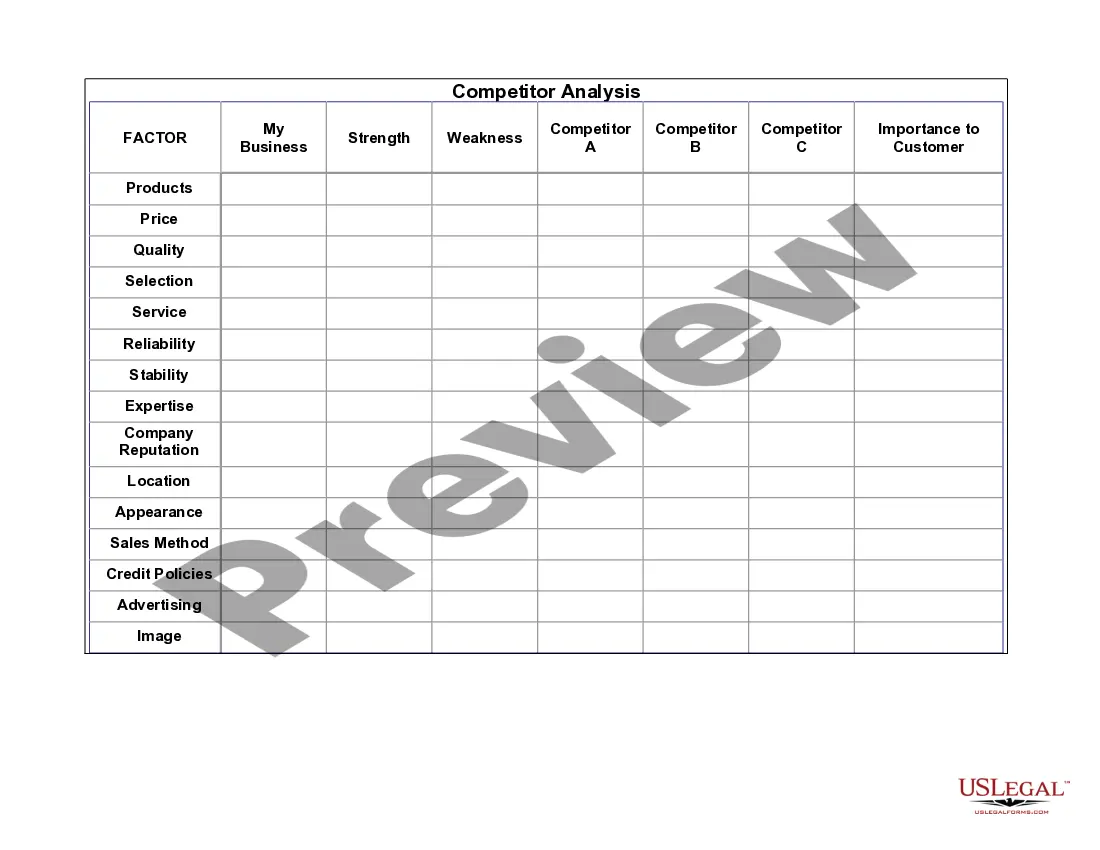
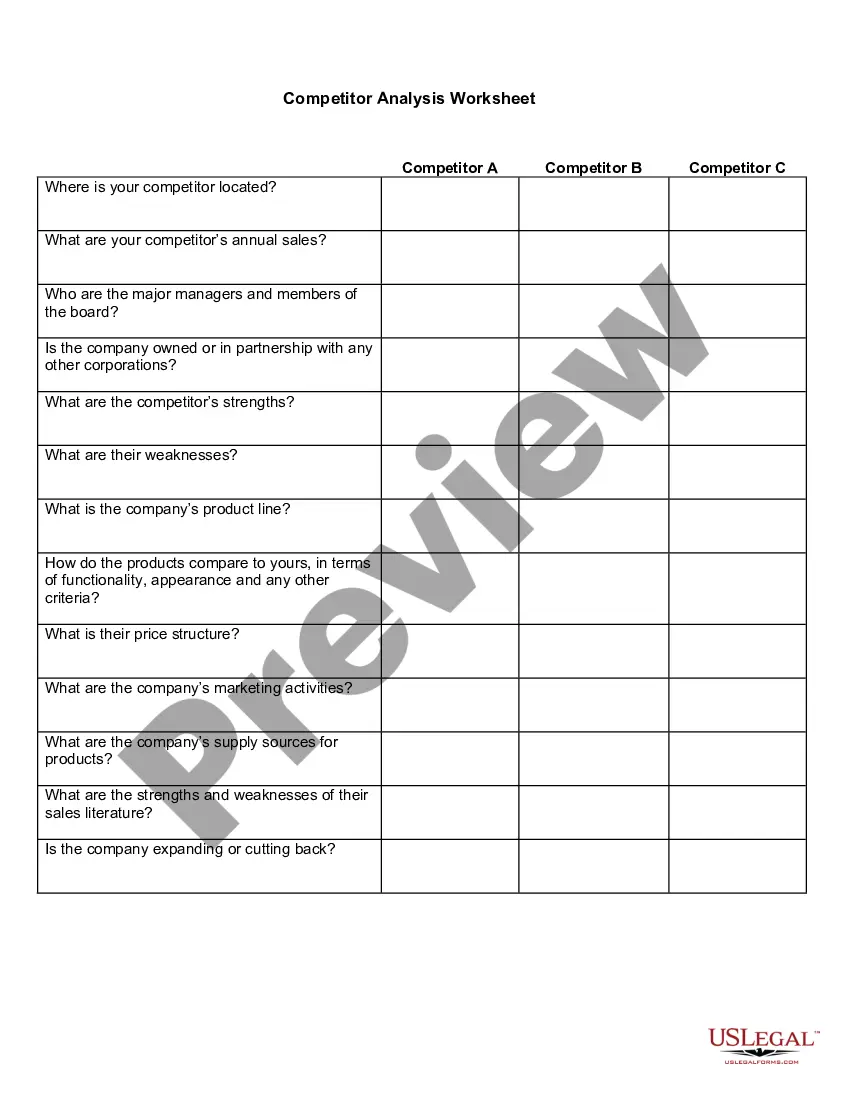
Georgia Competitor Analysis
Description
Get your form ready online
Our built-in tools help you complete, sign, share, and store your documents in one place.
Make edits, fill in missing information, and update formatting in US Legal Forms—just like you would in MS Word.
Download a copy, print it, send it by email, or mail it via USPS—whatever works best for your next step.
Sign and collect signatures with our SignNow integration. Send to multiple recipients, set reminders, and more. Go Premium to unlock E-Sign.
If this form requires notarization, complete it online through a secure video call—no need to meet a notary in person or wait for an appointment.
We protect your documents and personal data by following strict security and privacy standards.

Make edits, fill in missing information, and update formatting in US Legal Forms—just like you would in MS Word.

Download a copy, print it, send it by email, or mail it via USPS—whatever works best for your next step.

Sign and collect signatures with our SignNow integration. Send to multiple recipients, set reminders, and more. Go Premium to unlock E-Sign.

If this form requires notarization, complete it online through a secure video call—no need to meet a notary in person or wait for an appointment.

We protect your documents and personal data by following strict security and privacy standards.
Looking for another form?
How to fill out Competitor Analysis?
You can spend time online attempting to locate the legal document template that satisfies the state and federal requirements you need.
US Legal Forms offers thousands of legal templates that can be assessed by professionals.
You can conveniently obtain or create the Georgia Competitor Analysis through our service.
If available, use the Review button to preview the document template as well.
- If you already have a US Legal Forms account, you can Log In and click the Download button.
- Afterward, you can complete, edit, create, or sign the Georgia Competitor Analysis.
- Every legal document template you purchase is yours permanently.
- To obtain an additional copy of any purchased form, visit the My documents tab and click the corresponding button.
- If you are using the US Legal Forms website for the first time, follow the simple instructions below.
- First, ensure that you have selected the correct document template for the county/area of your choice.
- Review the form details to confirm you have chosen the right document.
Form popularity
FAQ
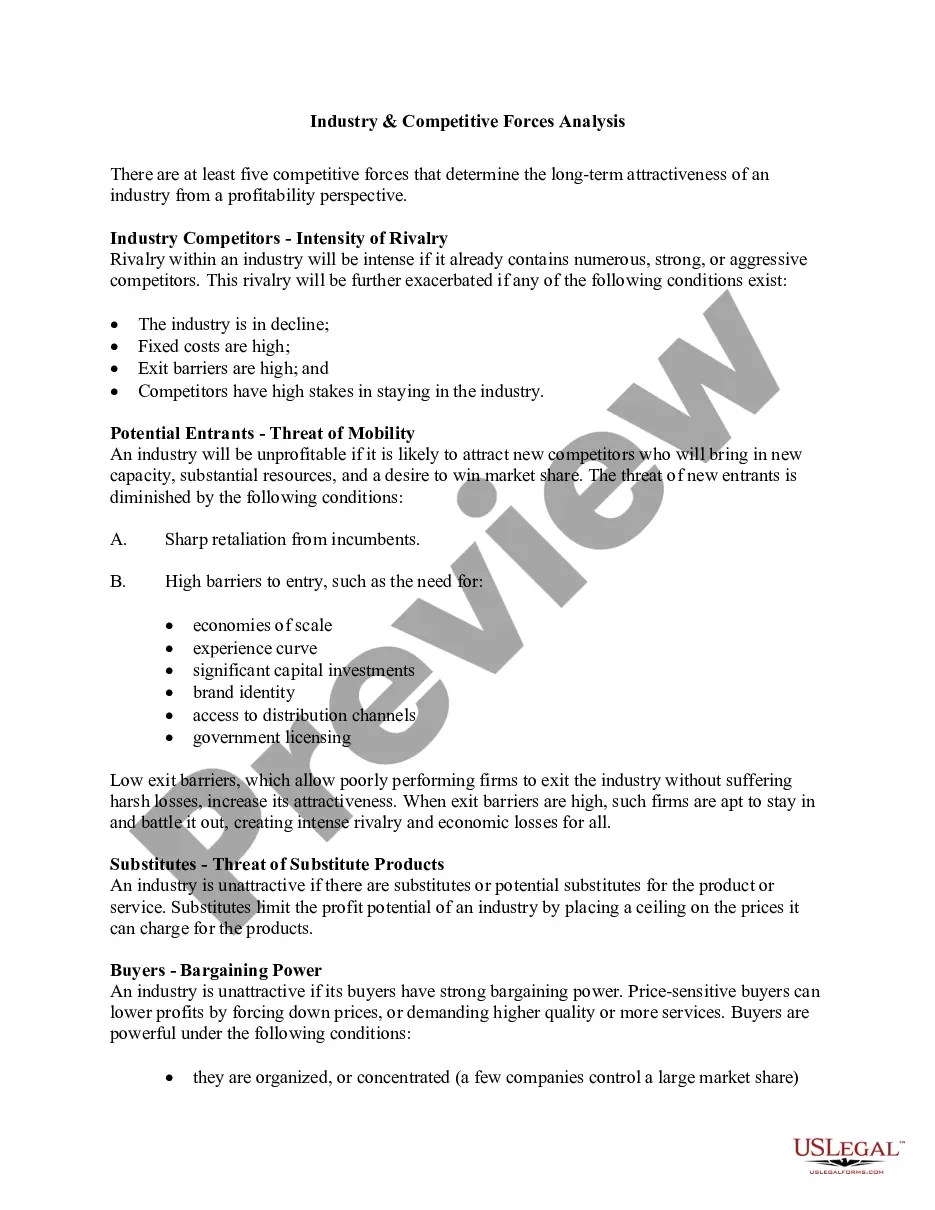
The four types of competitor analyses include market position analysis, benchmarking, SWOT analysis, and strategic group analysis. Each type serves a unique purpose in providing insights into your competition, which is vital for a successful Georgia Competitor Analysis. By employing these analytical tools, businesses can evaluate their competitors thoroughly. This strategic understanding enables you to make informed decisions that enhance your competitive advantage.
6 Steps to Performing a Competitive AnalysisIdentify competitors. Get the one tech tool your startup really needs2026 for free.Analyze competitors' online presence. Subscribe to our newsletter, Midnight Oil.Check online reviews.Talk to competitors' customers.Identify their strengths and weaknesses.Use research tools.
A competitive analysis involves four key steps:Identify your competitors. This sounds straightforward, but in fact there are different kinds of competitors to consider.Gather information about your competitors.Analyze your competitors' strengths and weaknesses.Determine your competitive advantage.
A competitive analysis should examine your competitors' features, market share, pricing, marketing, differentiators, strengths, weaknesses, geography, culture and customer reviews. This article is for new and established small business owners who want to analyze their competition to improve their products or services.
5 Step Market Analysis PlaybookDefine. The first step is to identify all of the key players in your target market.Analyze. Analyze the activities of competitors, customers, etc. to identify commonalities & key characteristics.Trend.Share.Measure.27 Sept 2019
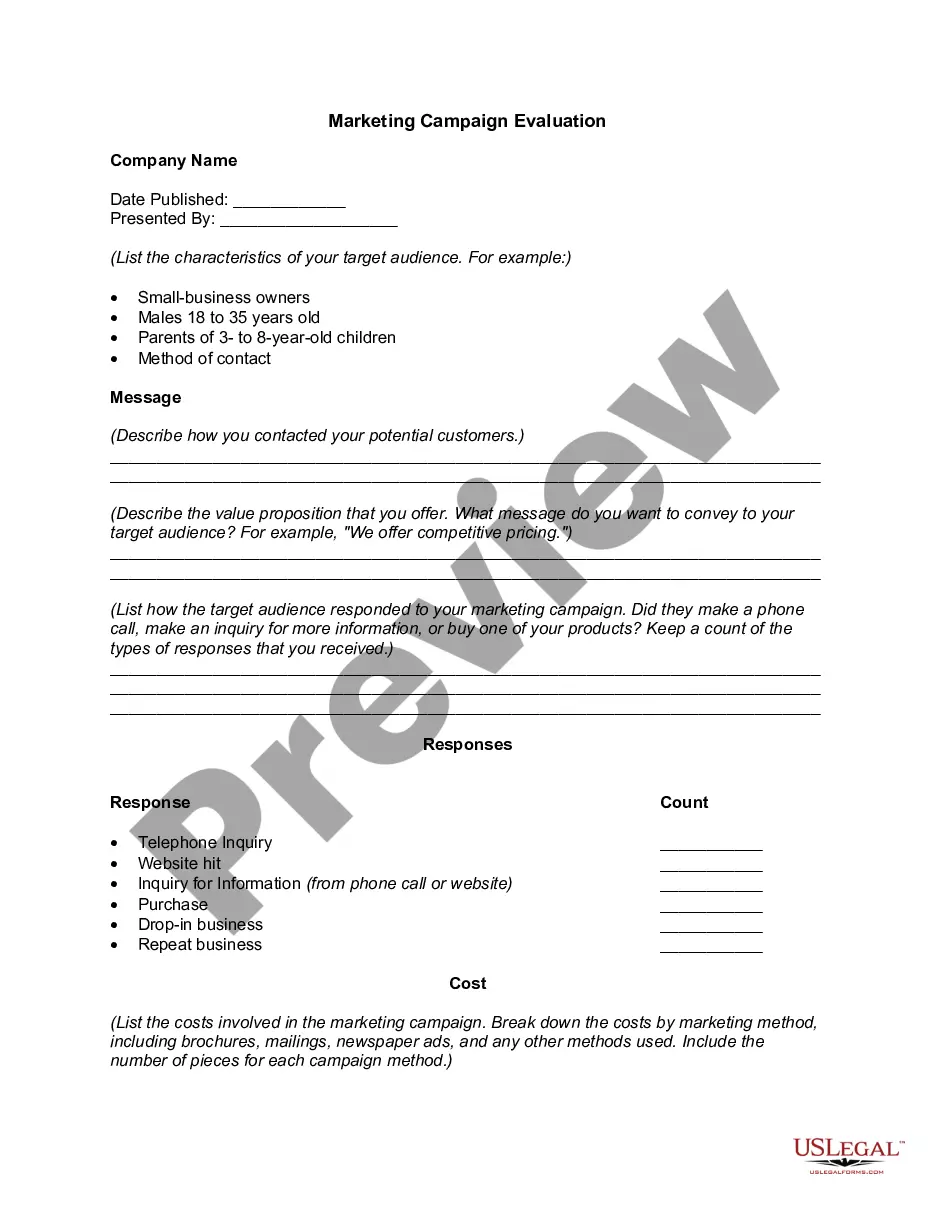
A competitive analysis should examine your competitors' features, market share, pricing, marketing, differentiators, strengths, weaknesses, geography, culture and customer reviews.
How to Do a Competitive Analysis - 8 Simple StepsStep 1 - Choose your Top Competitors.Step 2 - Describe Each Competitor.Step 3 - Describe Their Competitive Offering.Step 4 - Summarize Their Online Presence.Step 5 - List Their Strengths.Step 6 - List Their Weaknesses.Step 7 - Identify Your Opportunities.More items...?
Here is a step-by-step process for writing a competitor analysis report:Write down your competitors.Write what you know about them already.Discover who their target customers are.Discover their pricing methods.Investigate their marketing strategy.Figure out their competitive advantage.
The following are examples of things that are commonly included in a competitor analysis.Brand Awareness. The percentage of your target market that are familiar with the competitor's brand.Costs.Products.Customer Experience.Capabilities.Financials.Organizational Culture.Intellectual Property.More items...?