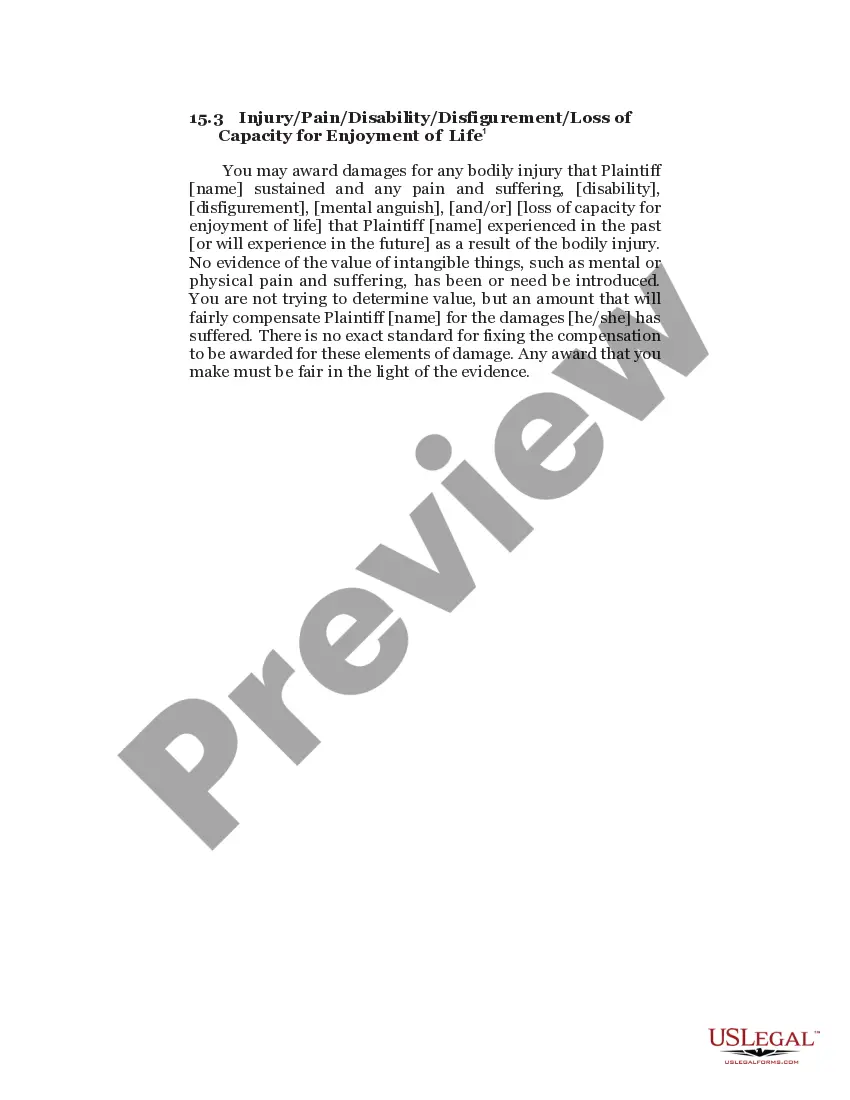
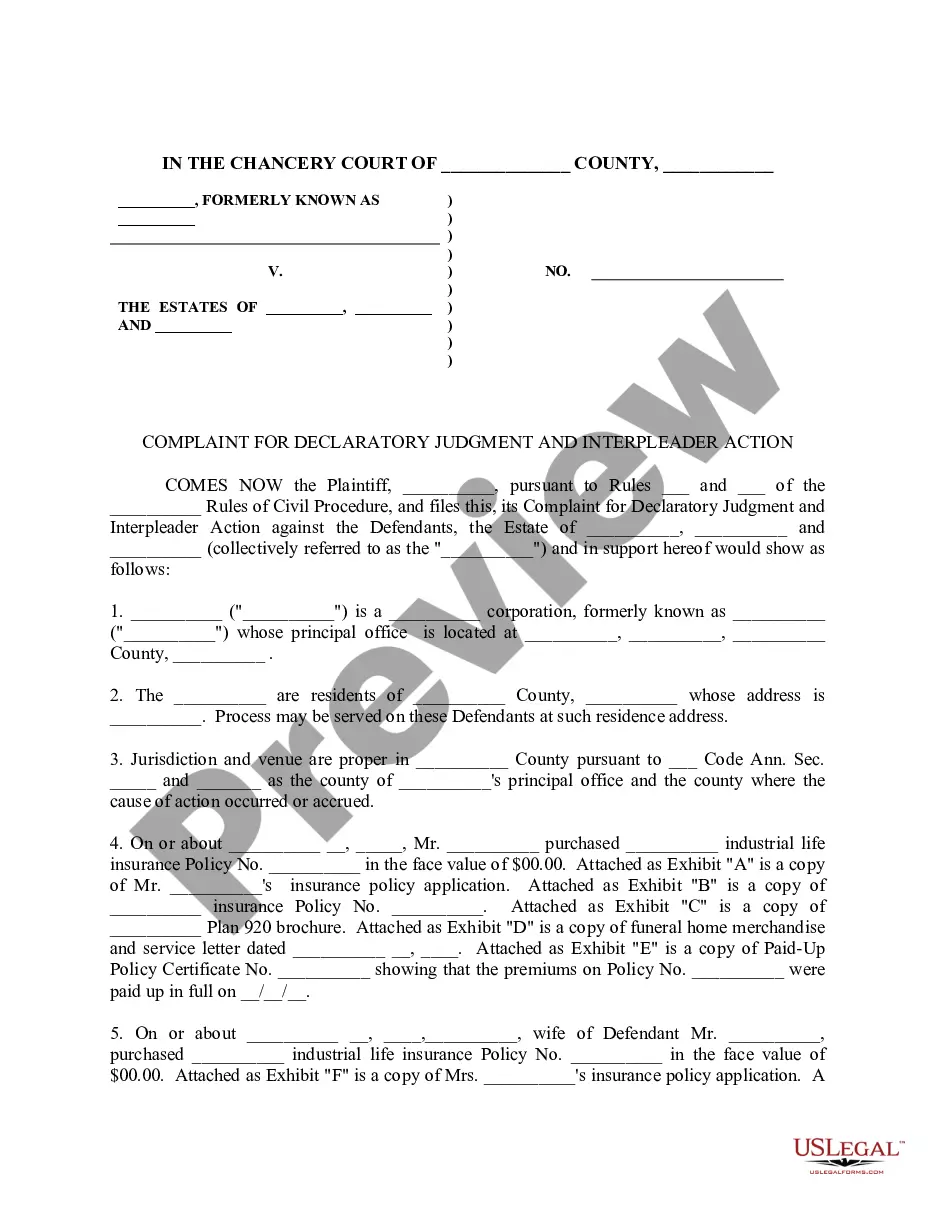
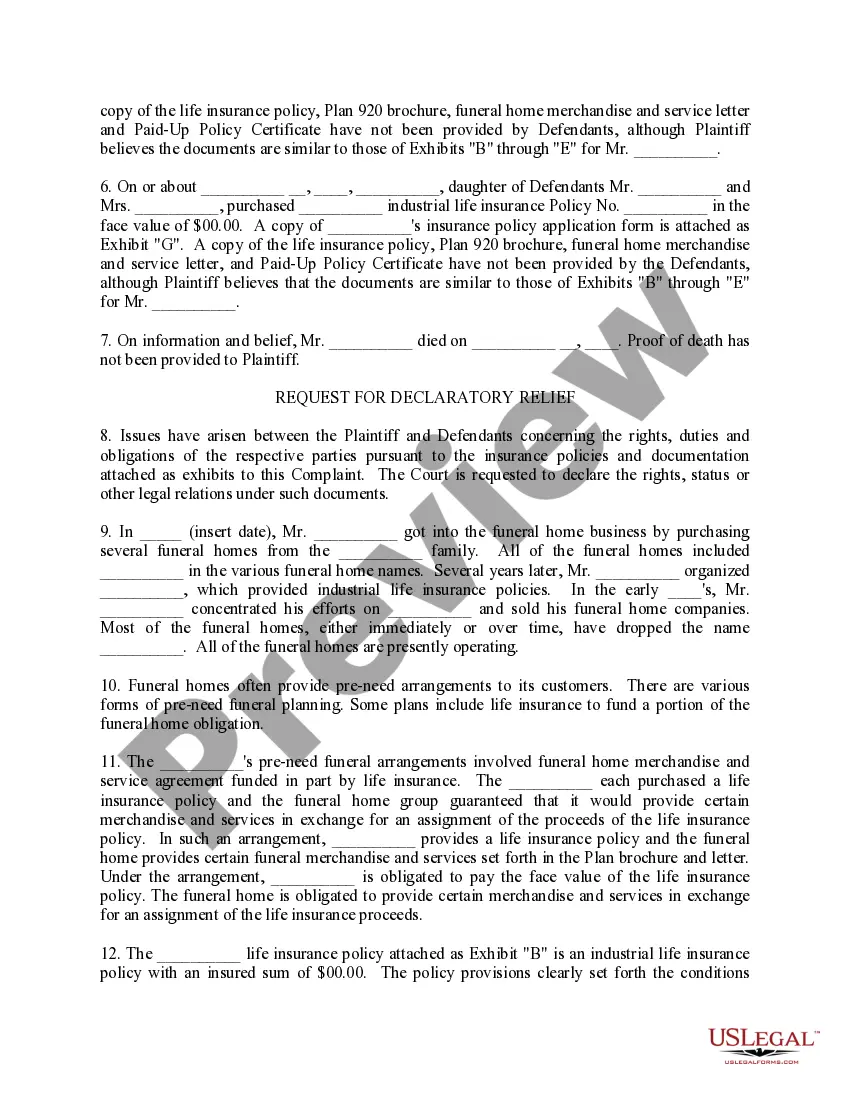
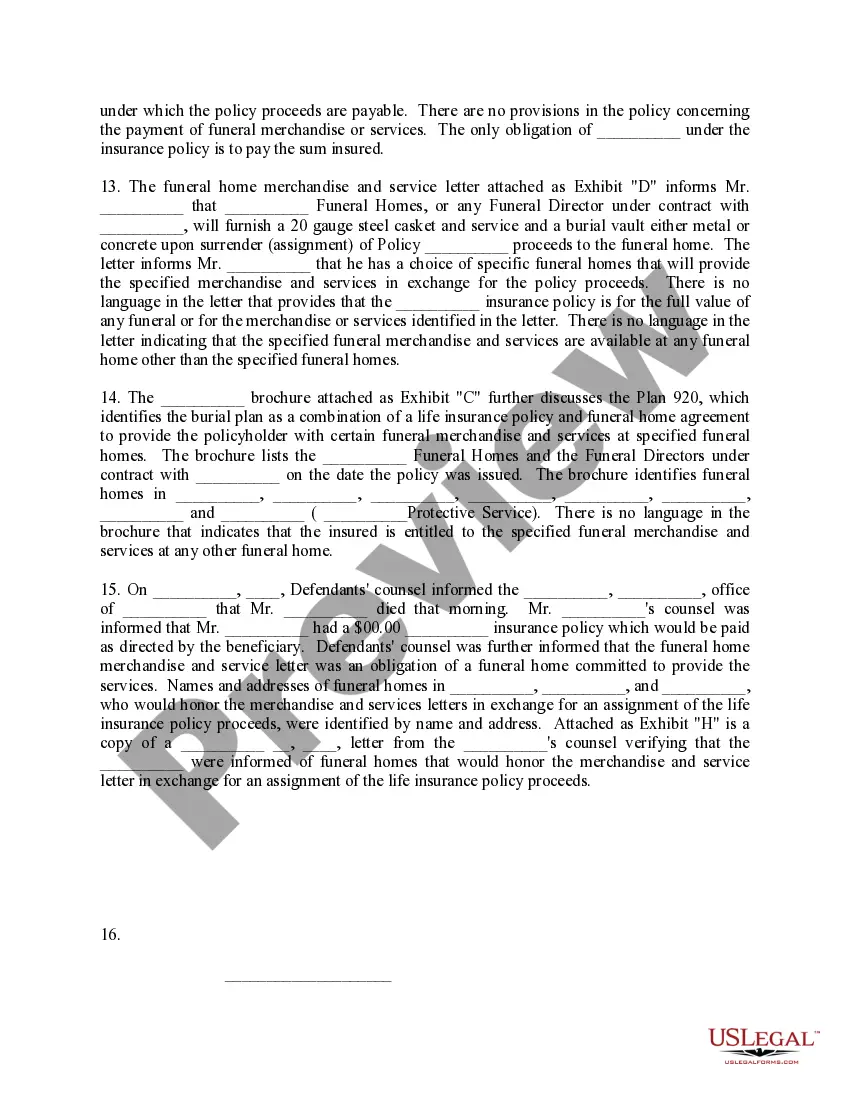
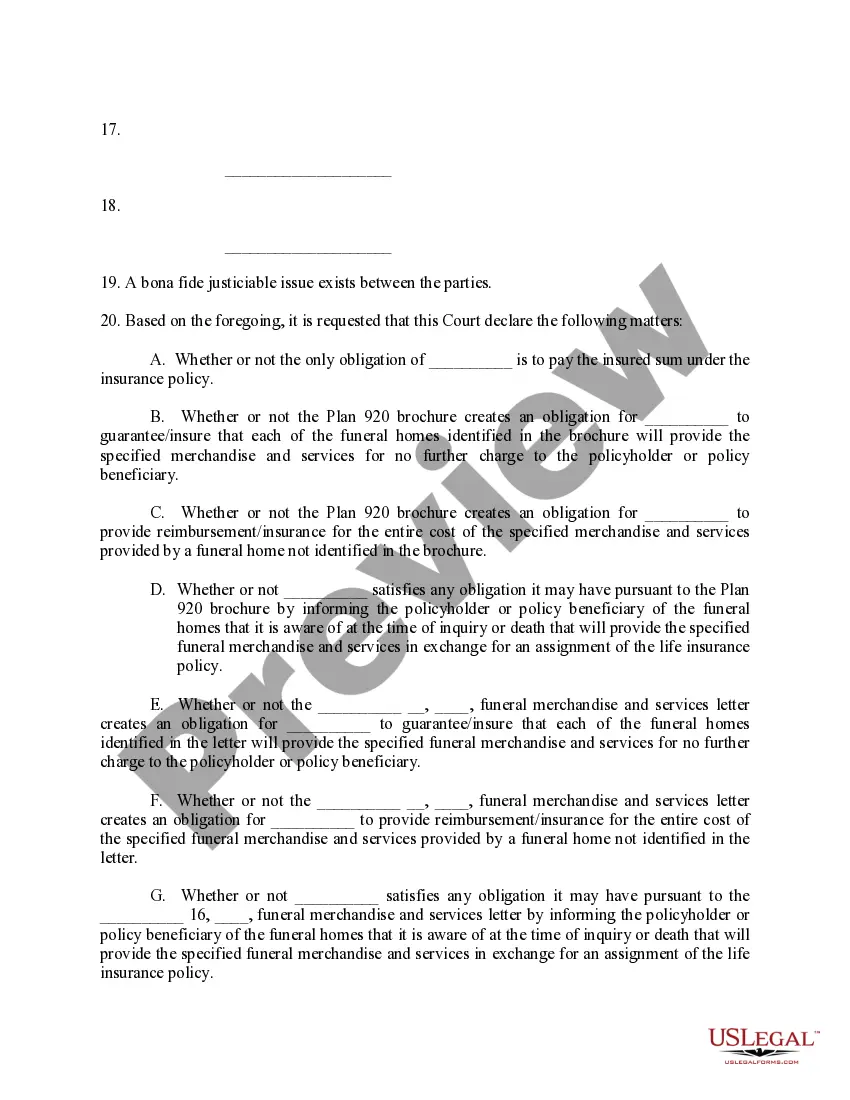
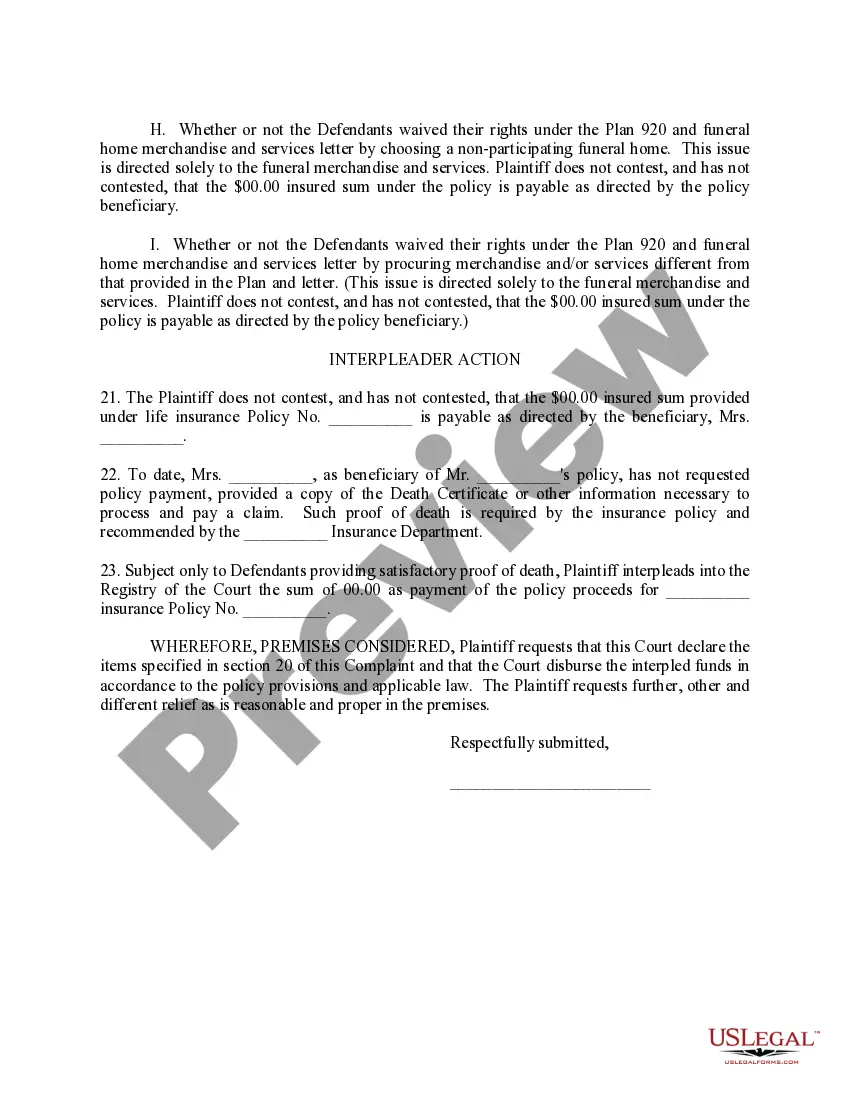
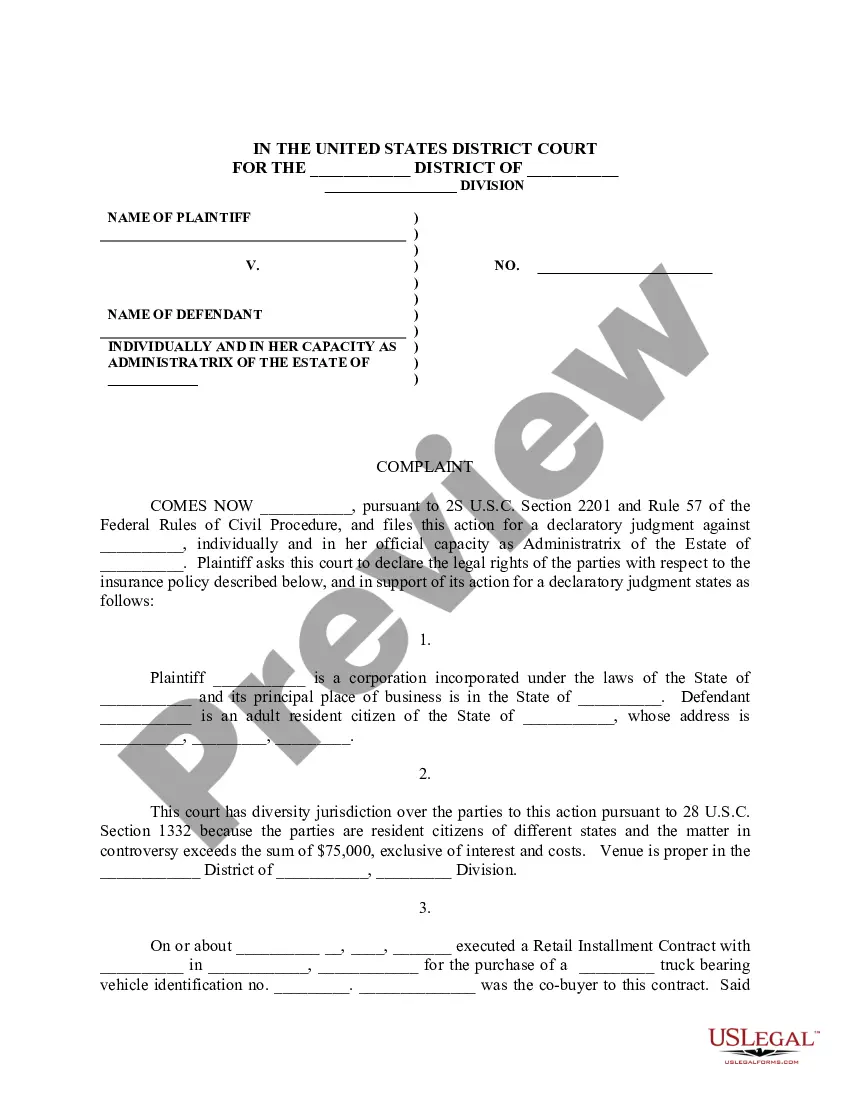
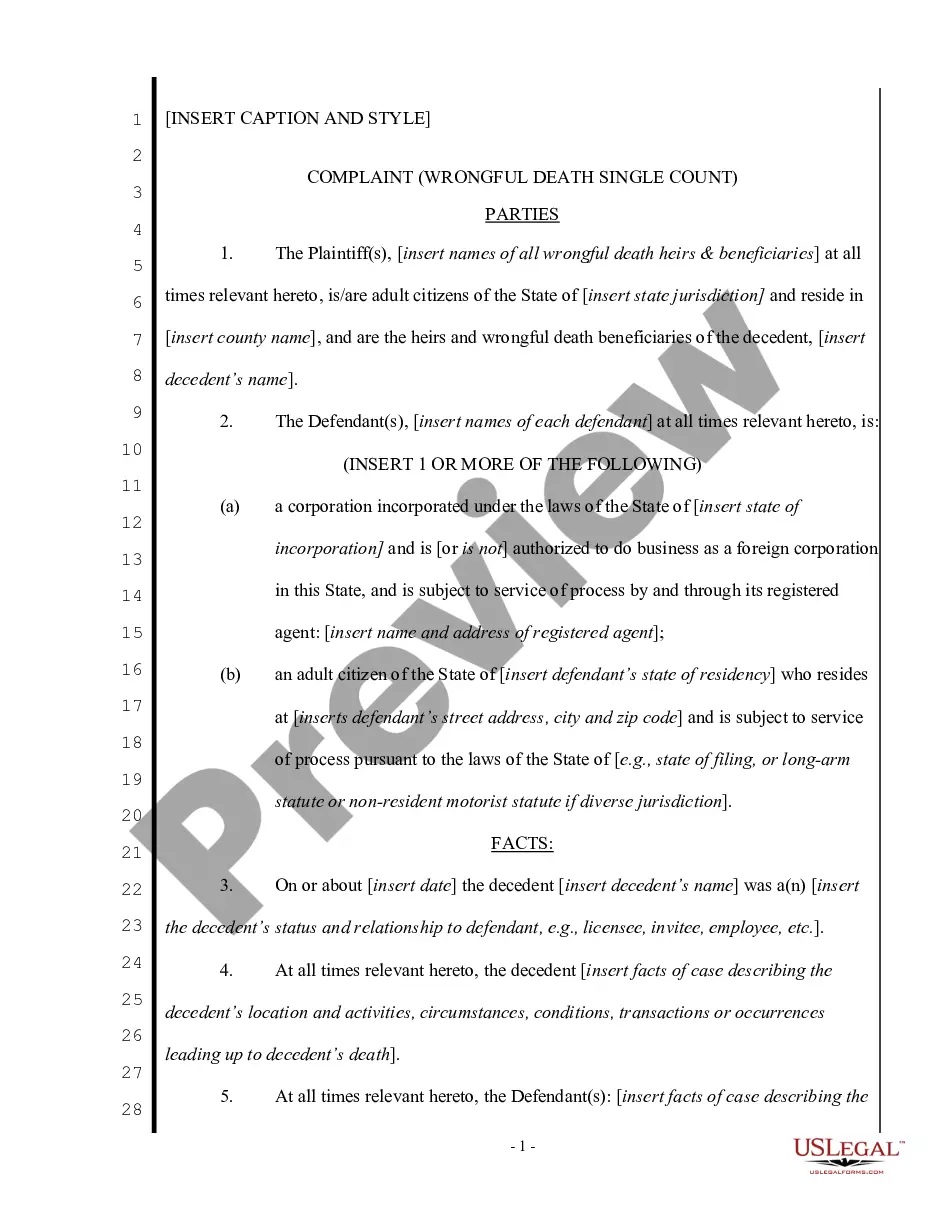
Georgia Complaint for Declaratory Judgment and Interpleader Action or Burial Policy
Description


Get your form ready online
Our built-in tools help you complete, sign, share, and store your documents in one place.
Make edits, fill in missing information, and update formatting in US Legal Forms—just like you would in MS Word.
Download a copy, print it, send it by email, or mail it via USPS—whatever works best for your next step.
Sign and collect signatures with our SignNow integration. Send to multiple recipients, set reminders, and more. Go Premium to unlock E-Sign.
If this form requires notarization, complete it online through a secure video call—no need to meet a notary in person or wait for an appointment.
We protect your documents and personal data by following strict security and privacy standards.

Make edits, fill in missing information, and update formatting in US Legal Forms—just like you would in MS Word.

Download a copy, print it, send it by email, or mail it via USPS—whatever works best for your next step.

Sign and collect signatures with our SignNow integration. Send to multiple recipients, set reminders, and more. Go Premium to unlock E-Sign.

If this form requires notarization, complete it online through a secure video call—no need to meet a notary in person or wait for an appointment.

We protect your documents and personal data by following strict security and privacy standards.
Looking for another form?

How to fill out Complaint For Declaratory Judgment And Interpleader Action Or Burial Policy?
US Legal Forms - one of the top libraries of legal documents in the United States - offers a range of legal document templates that you can download or create. By using the site, you can access thousands of forms for business and personal purposes, organized by categories, states, or keywords.
You can find the most recent forms such as the Georgia Complaint for Declaratory Judgment and Interpleader Action or Burial Policy in seconds. If you have an account, Log In to download the Georgia Complaint for Declaratory Judgment and Interpleader Action or Burial Policy from the US Legal Forms database. The Download button will appear on each form you view. You can access all previously downloaded forms in the My documents section of your account.
If you are using US Legal Forms for the first time, here are simple steps to help you get started: Make sure you have selected the correct form for your city/state. Click the Preview button to review the form's content. Read the form description to ensure you have selected the right one. If the form does not meet your needs, use the Search field at the top of the screen to find the one that does.
Access the Georgia Complaint for Declaratory Judgment and Interpleader Action or Burial Policy with US Legal Forms, one of the largest collections of legal document templates. Utilize thousands of professional and state-specific templates that meet your business or personal needs and requirements.
- If you are satisfied with the form, confirm your choice by clicking the Get now button.
- Then, choose the pricing plan you prefer and provide your credentials to register for the account.
- Process the payment. Use your credit card or PayPal account to complete the transaction.
- Select the format and download the form to your device.
- Make modifications. Fill out, edit, print, and sign the downloaded Georgia Complaint for Declaratory Judgment and Interpleader Action or Burial Policy.
- Every template you add to your account has no expiration date and is yours permanently. So, if you wish to download or print another copy, just go to the My documents section and click on the form you need.
Form popularity
FAQ
Essence of a motion for summary judgment is that there is no genuine issue of material fact to be resolved by the trier of facts, and that the movant is entitled to judgment on the law applicable to the established fact. McCarty v. National Life & Accident Ins. Co., 107 Ga.
Unless otherwise ordered by the judge or as provided by law, each party opposing a motion shall serve and file a response, reply memorandum, affidavits, or other responsive material not later than 30 days after service of the motion.
Ga. 2001). Under these circumstances, the court's guidance through a declaratory judgment tells the litigant whether its proposed course of conduct or business will subject them to future damages. This procedure assists in relieving the insecurity or uncertainty associated with a proposed course of action.
A summary judgment is a decision made based on statements and evidence without going to trial. It's a final decision by a judge and is designed to resolve a lawsuit before going to court.
When a motion for summary judgment is denied, the nonmoving party achieves a form of premium that enables a case to settle for an additional amount. Put simply, the settlement value of a case increases when a motion for summary judgment is denied. Thus, denials of summary judgment up the ante in the litigation game.
Essence of a motion for summary judgment is that there is no genuine issue of material fact to be resolved by the trier of facts, and that the movant is entitled to judgment on the law applicable to the established fact. McCarty v. National Life & Accident Ins. Co., 107 Ga.
If the defendant fails to answer the plaintiff's claims or fails to appear at the hearing, the judge may, upon the plaintiff's request, hear and decide the case without hearing the defendant's side. This is called a default judgment.
Georgia's Service of Process Rules In fact, only after the defendant has been properly served does the court have proper jurisdiction over the case. Should a plaintiff fail to properly serve the lawsuit upon the defendant, the lawsuit must be dismissed due to the court's lack of jurisdiction over the matter.