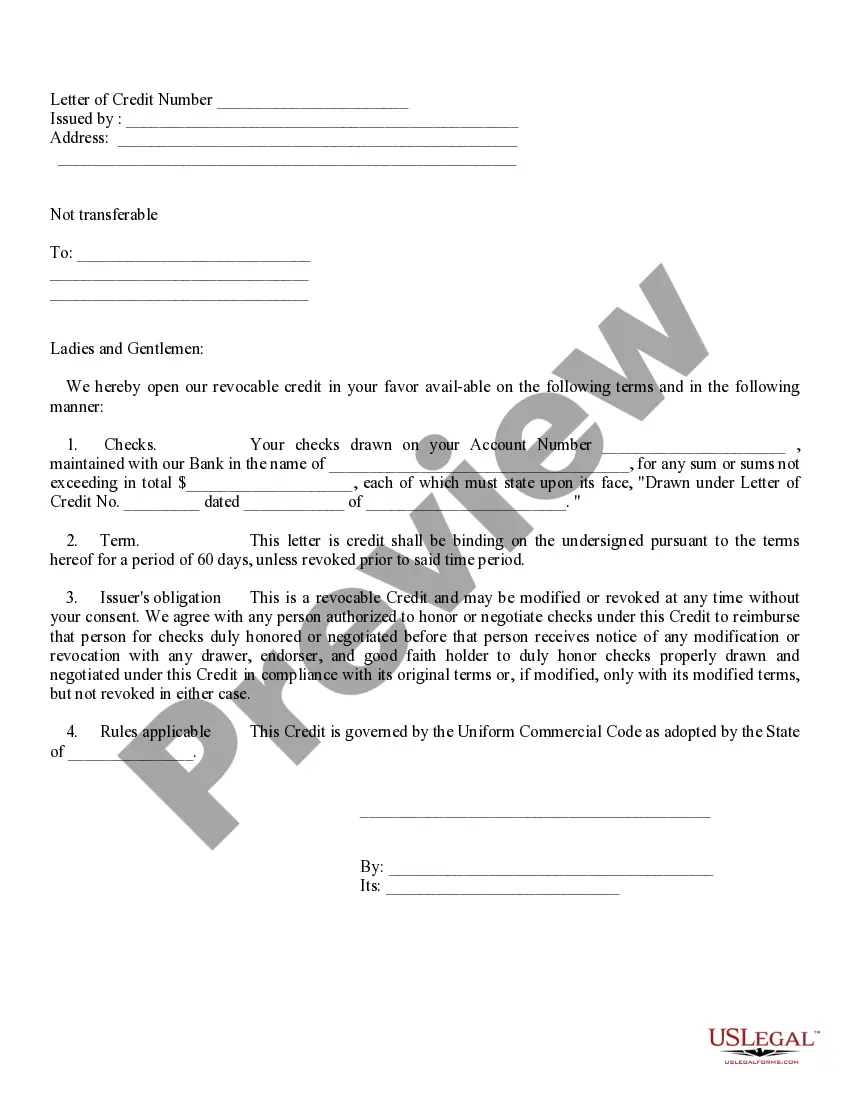
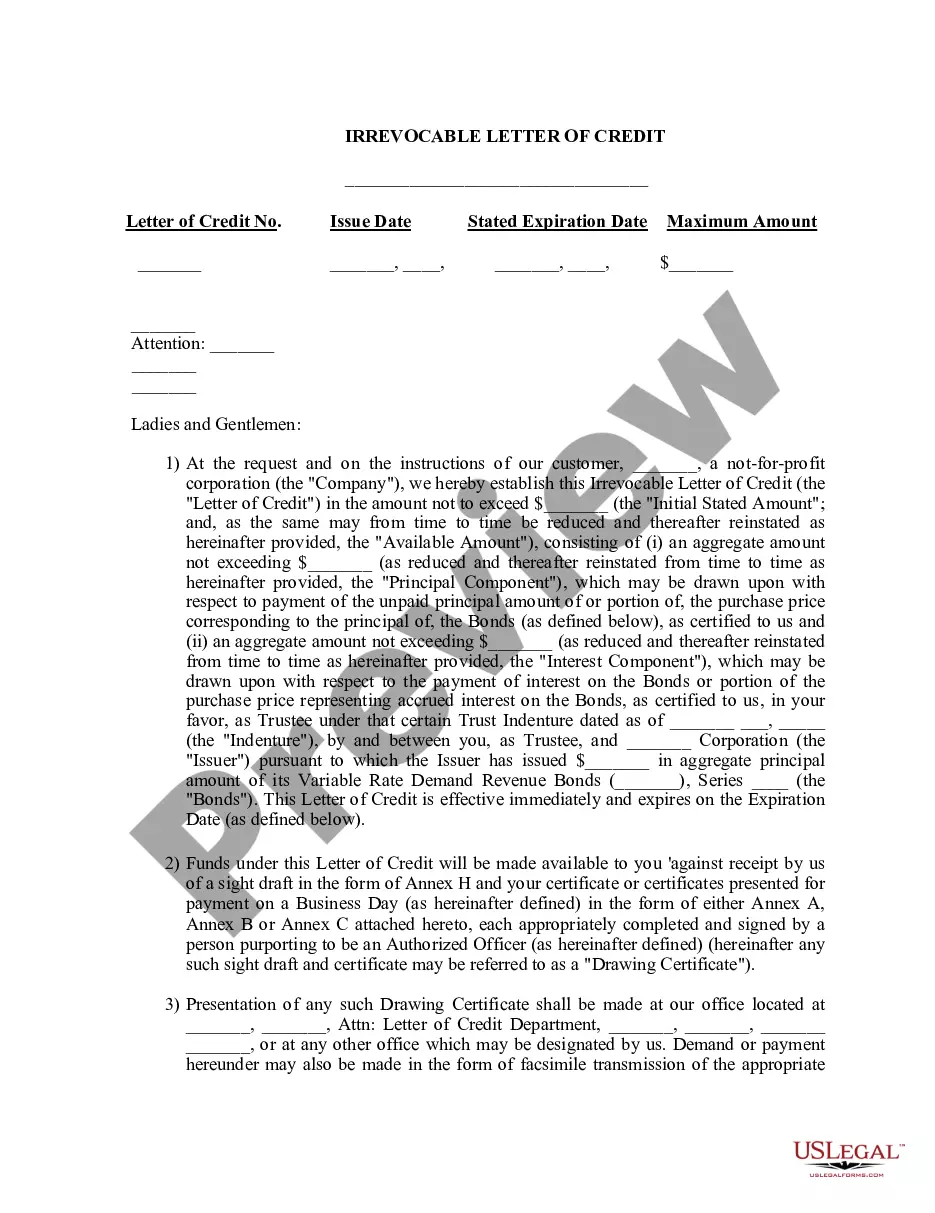
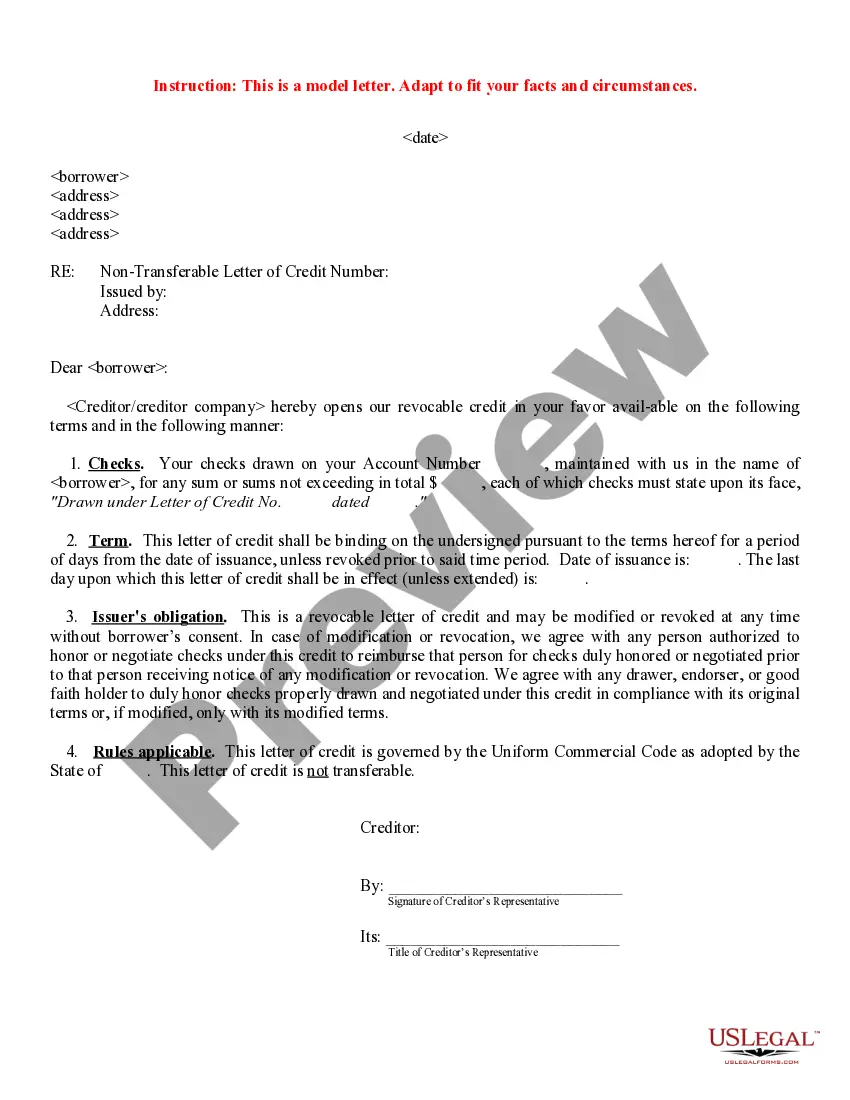
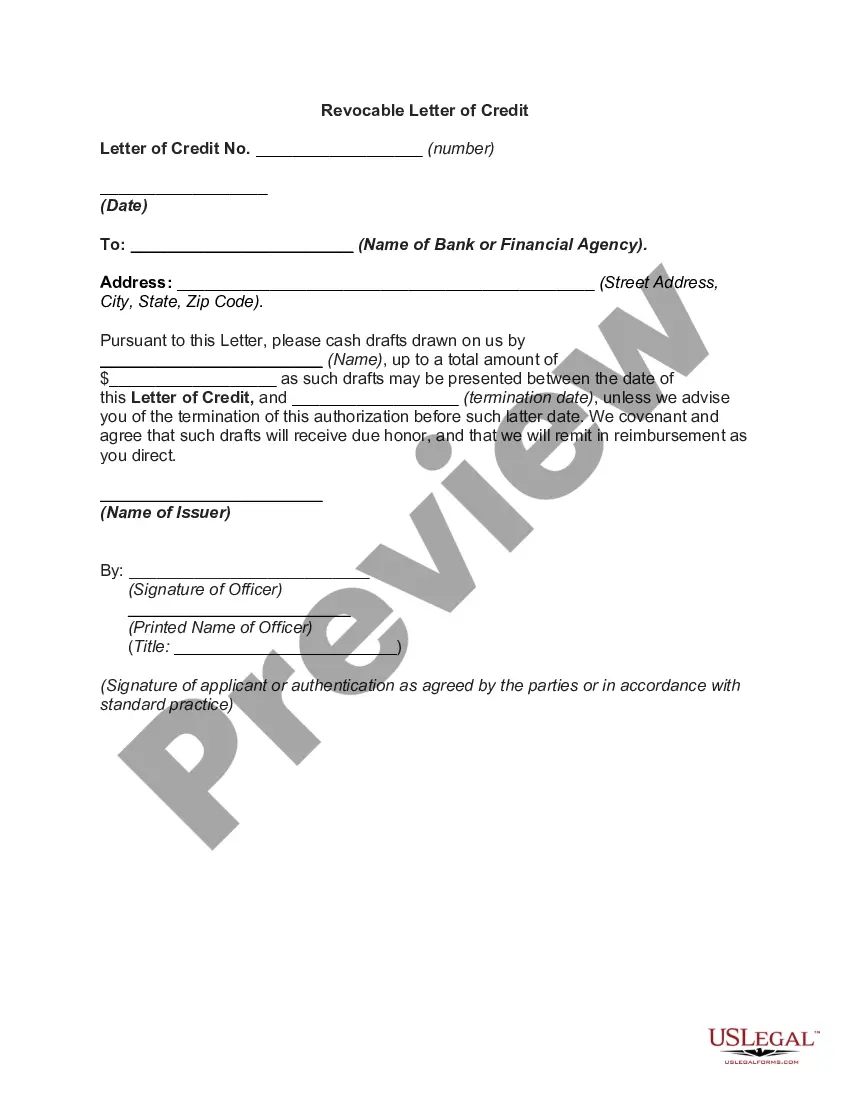
Georgia Letter of Credit
Description
Get your form ready online
Our built-in tools help you complete, sign, share, and store your documents in one place.
Make edits, fill in missing information, and update formatting in US Legal Forms—just like you would in MS Word.
Download a copy, print it, send it by email, or mail it via USPS—whatever works best for your next step.
Sign and collect signatures with our SignNow integration. Send to multiple recipients, set reminders, and more. Go Premium to unlock E-Sign.
If this form requires notarization, complete it online through a secure video call—no need to meet a notary in person or wait for an appointment.
We protect your documents and personal data by following strict security and privacy standards.

Make edits, fill in missing information, and update formatting in US Legal Forms—just like you would in MS Word.

Download a copy, print it, send it by email, or mail it via USPS—whatever works best for your next step.

Sign and collect signatures with our SignNow integration. Send to multiple recipients, set reminders, and more. Go Premium to unlock E-Sign.

If this form requires notarization, complete it online through a secure video call—no need to meet a notary in person or wait for an appointment.

We protect your documents and personal data by following strict security and privacy standards.
Looking for another form?
How to fill out Letter Of Credit?
Have you found yourself in a scenario where you require documents for both business or personal purposes almost daily.
There are numerous legal document templates accessible online, but locating reliable versions can be challenging.
US Legal Forms provides a vast collection of form templates, including the Georgia Letter of Credit, which can be filled out to comply with state and federal regulations.
Access all the document templates you have purchased in the My documents section.
You can obtain an additional copy of the Georgia Letter of Credit anytime if needed. Just select the desired form to download or print the document template.
- If you are already familiar with the US Legal Forms website and possess an account, simply Log In.
- After that, you can download the Georgia Letter of Credit template.
- If you do not have an account and wish to start using US Legal Forms, follow these steps.
- Find the form you need and ensure it is for the correct city/county.
- Utilize the Preview button to view the form.
- Read the description to confirm that you have chosen the right form.
- If the form is not what you are looking for, use the Lookup section to find the form that suits your needs and requirements.
- Once you have the correct form, click on Acquire now.
- Choose the pricing plan you prefer, complete the required information to create your account, and pay for the transaction using your PayPal or Visa or Mastercard.
- Select a convenient file format and download your copy.
Form popularity
FAQ
What is a Letter of Credit? A Letter of Credit is a contractual commitment by the foreign buyer's bank to pay once the exporter ships the goods and presents the required documentation to the exporter's bank as proof. As a trade finance tool, Letters of Credit are designed to protect both exporters and importers.
A letter of credit, or a credit letter, is a letter from a bank guaranteeing that a buyer's payment to a seller will be received on time and for the correct amount. If the buyer is unable to make a payment on the purchase, the bank will be required to cover the full or remaining amount of the purchase.
An acceptance credit is a type of letter of credit that is paid by a time draft authorizing payment on or after a specific date, if the terms of the letter of credit have been complied with. The bank "accepts" bills of exchange drawn on the bank by the debtor, discounts them and agrees to pay for them when they mature.
Types of letters of credit include commercial letters of credit, standby letters of credit, and revocable letters of credit.
Several risks could relate to the parties of the applicant themselves. These may include situations where there is a non-delivery of Goods, Short shipment, the goods are of inferior quality, are damaged, or are late. The applicant is also exposed to the failure of the bank to make payment.
A letter of credit is a document sent from a bank or financial institute that guarantees that a seller will receive a buyer's payment on time and for the full amount. Letters of credit are often used within the international trade industry.
Aside from trade credit insurance, there are other alternatives to a letter of credit. Those include: Purchase order financing: Purchase order financing provides you cash up front to complete a purchase order. Under this agreement, a financing company pays your supplier for goods you need to fulfill a purchase order.
It reduces the risk of non-paying buyers In the event that a foreign buyer changes or cancels an order for example, a letter of credit ensures that the seller will still get paid by the buyer's bank for the shipped goods, thus reducing production risk.