Georgia Rural Post Roads - Right of Way Deed
What is this form?
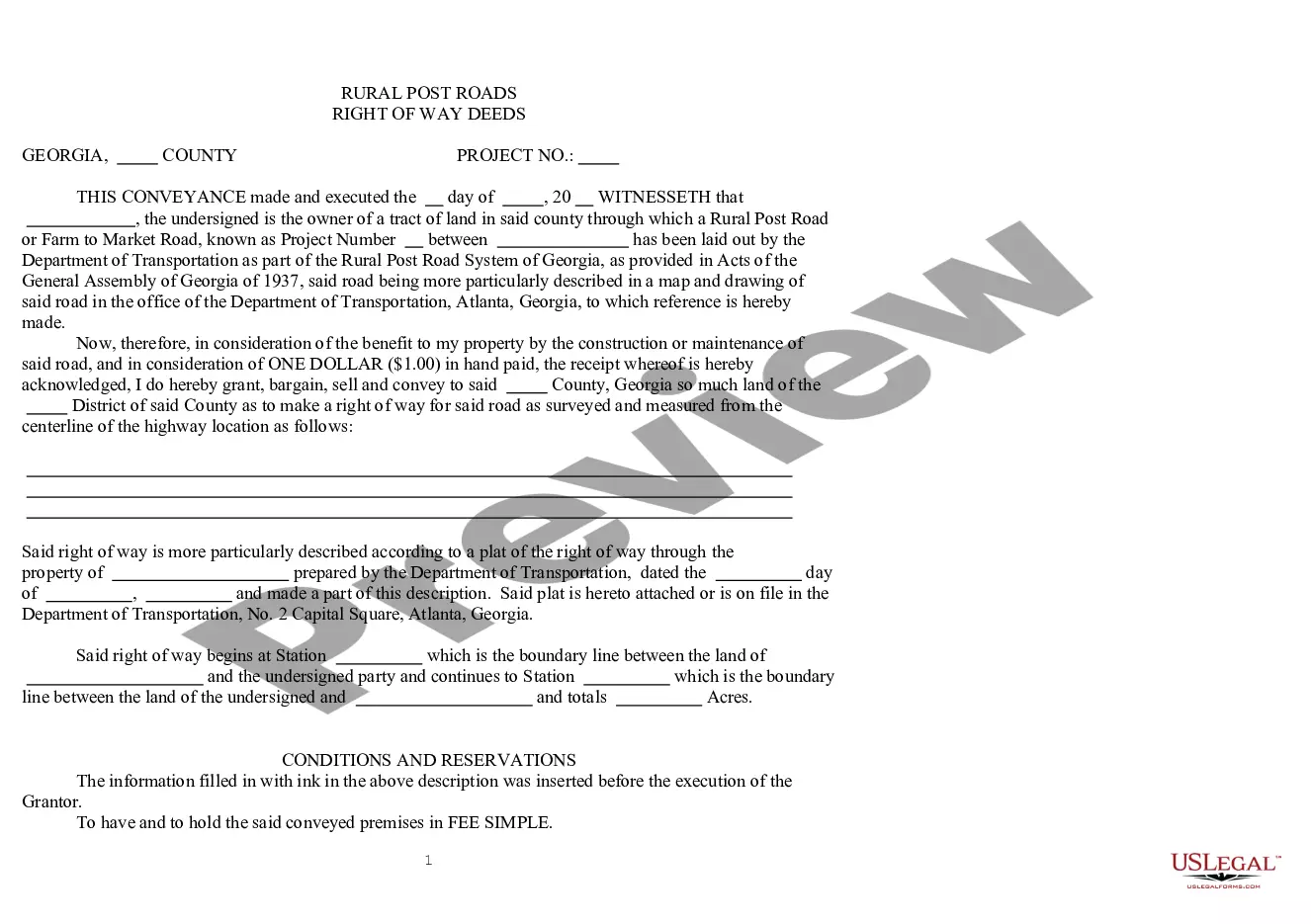
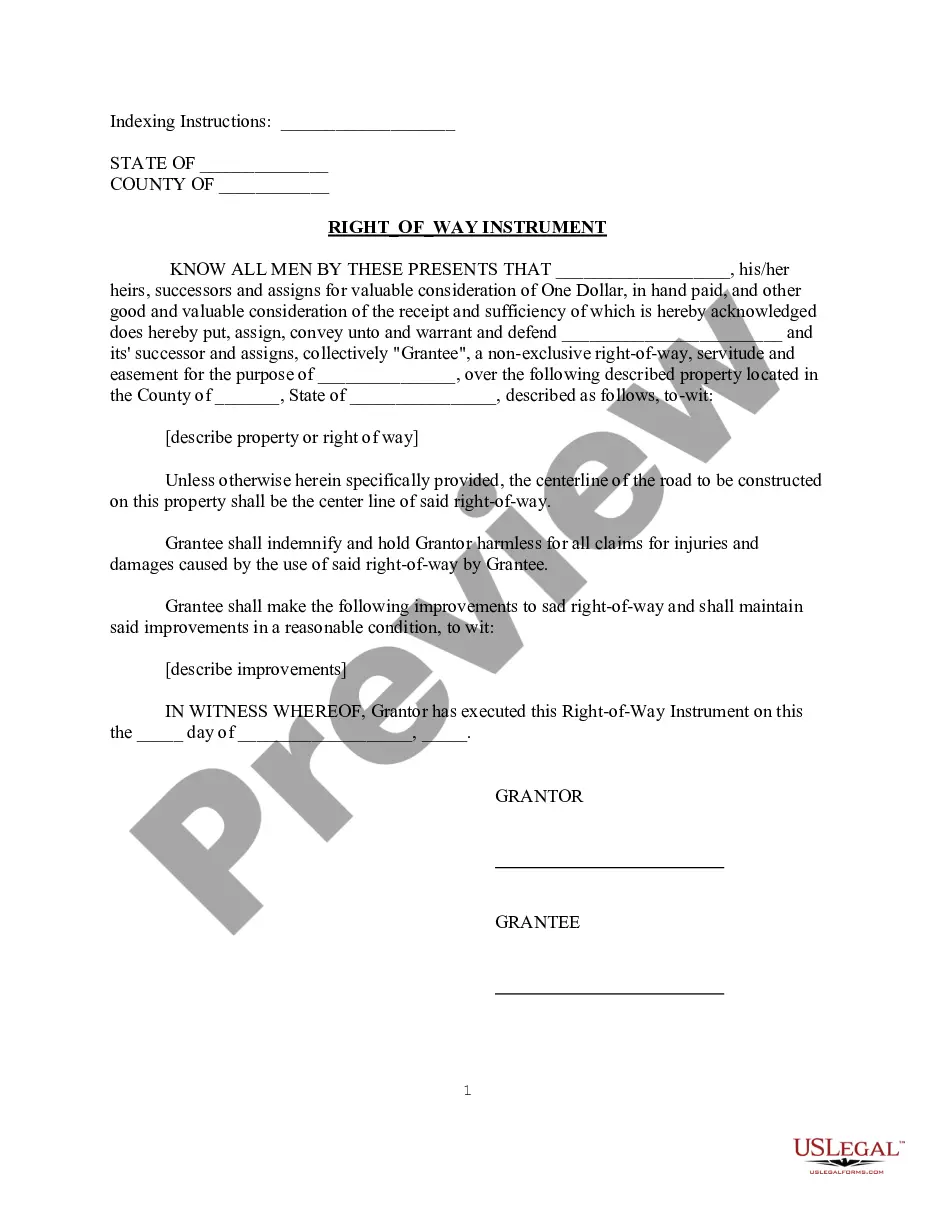
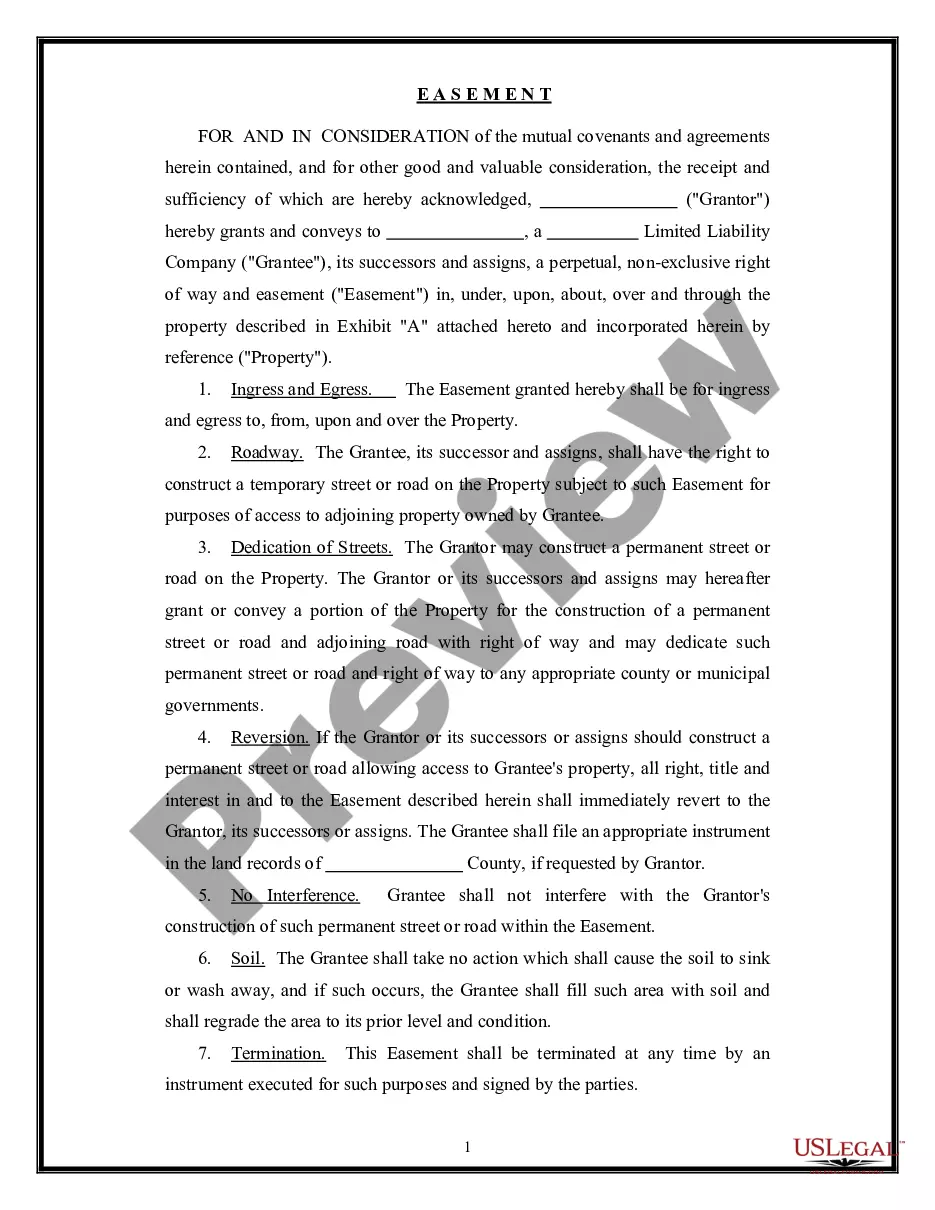
The Rural Post Roads - Right of Way Deed is a legal document that grants a government entity the right to use land for the construction and maintenance of a rural road. This form differs from other easements in that it specifically applies to rural road systems and is established by state legislation. By using this form, landowners can formally convey the necessary land rights while ensuring proper documentation of the transaction.
Form components explained
- Identification of the parties involved, including the landowner and the county or state authority.
- Description of the property and the specific area designated for the right of way.
- Consideration for the transaction, typically represented in a nominal monetary amount.
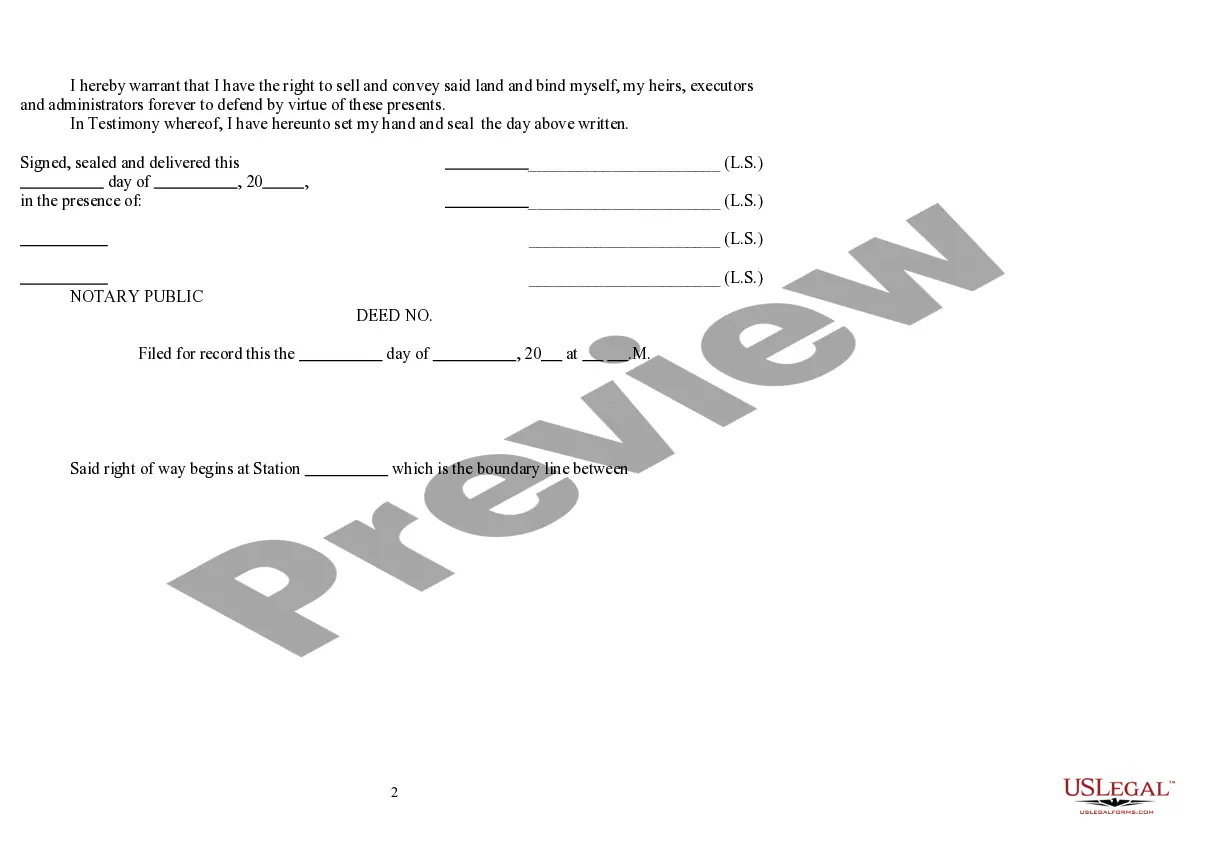
- Legal assurances that the seller has the right to convey the property.
- Notarization and witness requirements to ensure validity.

Situations where this form applies
Use the Rural Post Roads - Right of Way Deed when a government entity, such as a county or state department of transportation, requires access to private land for the purpose of building or maintaining a rural road. This form is essential to formalize the arrangement and prevent disputes related to land use and access in the future.
Who needs this form
- Landowners whose property is affected by the construction or maintenance of a rural road.
- Government agencies or departments responsible for rural road projects.
- Attorneys representing landowners in negotiating easement agreements.
- Real estate professionals involved in transactions relating to easements or land use.
How to prepare this document
- Identify the parties: Enter the names and addresses of both the landowner and the government entity.
- Specify the property: Clearly describe the land being affected, including maps or plats if available.
- Enter dates: Fill in the date of execution and any other necessary dates specified in the form.
- Signatures: Ensure all required parties sign the document in the presence of a notary.
- Record the deed: File the completed deed with the appropriate county office for public record.
Notarization guidance
This form needs to be notarized to ensure legal validity. US Legal Forms provides secure online notarization powered by Notarize, allowing you to complete the process through a verified video call, available anytime.
Get your form ready online
Our built-in tools help you complete, sign, share, and store your documents in one place.
Make edits, fill in missing information, and update formatting in US Legal Forms—just like you would in MS Word.
Download a copy, print it, send it by email, or mail it via USPS—whatever works best for your next step.
Sign and collect signatures with our SignNow integration. Send to multiple recipients, set reminders, and more. Go Premium to unlock E-Sign.
If this form requires notarization, complete it online through a secure video call—no need to meet a notary in person or wait for an appointment.
We protect your documents and personal data by following strict security and privacy standards.

Make edits, fill in missing information, and update formatting in US Legal Forms—just like you would in MS Word.

Download a copy, print it, send it by email, or mail it via USPS—whatever works best for your next step.

Sign and collect signatures with our SignNow integration. Send to multiple recipients, set reminders, and more. Go Premium to unlock E-Sign.

If this form requires notarization, complete it online through a secure video call—no need to meet a notary in person or wait for an appointment.

We protect your documents and personal data by following strict security and privacy standards.
Mistakes to watch out for
- Failing to accurately describe the property boundaries.
- Not ensuring all parties sign the document in the presence of a notary.
- Leaving out necessary details such as project numbers or relevant dates.
- Not filing the document with the appropriate governmental body after completion.
Why use this form online
- Convenience of downloading and completing the form at your own pace.
- Editable templates that simplify the process of customizing the deed to meet specific needs.
- Access to legally vetted documents ensures reliability and accuracy.
What to keep in mind
- The Rural Post Roads - Right of Way Deed is essential for formalizing easements for rural roads.
- It is specific to Georgia and follows state statutes established for rural infrastructure.
- Proper completion and notarization are critical to avoid legal disputes.
- Understanding the key components and requirements can simplify the process for landowners.
Looking for another form?

Form popularity
FAQ
Easement widths in Georgia can differ based on usage but commonly range from 10 to 30 feet. For Georgia Rural Post Roads - Right of Way Deeds, the exact width may depend on the local road standards and the agreement between parties. These easements facilitate safe and efficient access to properties and resources. To find the precise width applicable to your situation, reviewing local regulations and consulting the specific rights outlined in your deed is essential.
On a right-of-way easement, you can typically utilize the space for its intended purpose, such as installation and maintenance of utilities, and even occasional access by vehicles. However, it is important to remember that certain activities might be restricted to preserve safety and access rights outlined in the Georgia Rural Post Roads - Right of Way Deed. It’s wise to consult the deed for specific activities allowed. Ensuring compliance helps avoid disputes with property owners.
The width of a right-of-way in Georgia generally varies depending on the type of road and jurisdiction, but typical widths range from 20 to 60 feet. For Georgia Rural Post Roads - Right of Way Deeds, this width supports safe access and travel. Local authorities usually determine the exact dimensions to ensure clear passage. Always check with local regulations to confirm the specific requirements for your area.
In Georgia, an easement of right-of-way allows a person or entity to access or cross over someone else's property for specific purposes, such as roads or utility access. The Georgia Rural Post Roads - Right of Way Deed provides a legal framework for these easements. This deed grants permission for the designated use while outlining responsibilities and limitations. Understanding the specifics of easements simplifies property rights and usage for all parties involved.
The minimum width for a right-of-way can be as narrow as 30 feet; however, specific requirements may differ based on the type of road and local statutes. Maintaining the correct width is vital for both legal compliance and safe access. When dealing with a Georgia Rural Post Roads - Right of Way Deed, precise measurement of right-of-way can protect your rights and avoid future disputes. Using platforms like US Legal Forms can simplify these processes with their comprehensive resources.
A county road easement generally varies in width but often falls between 20 to 50 feet. This width allows for the necessary space for maintenance and access to the road. If you are navigating the complexities of a Georgia Rural Post Roads - Right of Way Deed, being aware of these widths ensures that easements fit legal and practical requirements. Consulting with an attorney can help clarify any specific easement conditions.
In Georgia, the width of the right-of-way on a county road typically ranges from 50 to 80 feet. However, specific measurements can vary based on local regulations and the classification of the road. Understanding the exact width is essential when dealing with Georgia Rural Post Roads - Right of Way Deed, as it impacts property rights and land usage. It's advisable to consult with local authorities or legal experts for definitive guidelines.
The right of way law in Georgia governs how landowners and the government can use and manage public roadways. It addresses topics such as property access, liability, and maintenance responsibilities. Familiarity with these laws is crucial for resolving issues related to Georgia Rural Post Roads - Right of Way Deed. By using resources like uslegalforms, you can obtain the necessary legal documents to protect your rights efficiently.
In Georgia, an easement is a broader legal term that allows one party to use another's land, while a right of way is a specific type of easement dedicated primarily to transportation purposes. A right of way typically grants access to roads, paths, or trails. Understanding these distinctions is vital for anyone involved with Georgia Rural Post Roads - Right of Way Deed matters, as it influences property rights and responsibilities.
A right of way becomes legal when it is properly documented through a deed and adheres to local laws. Essential elements include clear definitions of the scope, duration, and purpose of the use. For Georgia Rural Post Roads - Right of Way Deed, ensuring the deed is recorded with the county helps establish clear ownership and usage rights, minimizing conflicts.