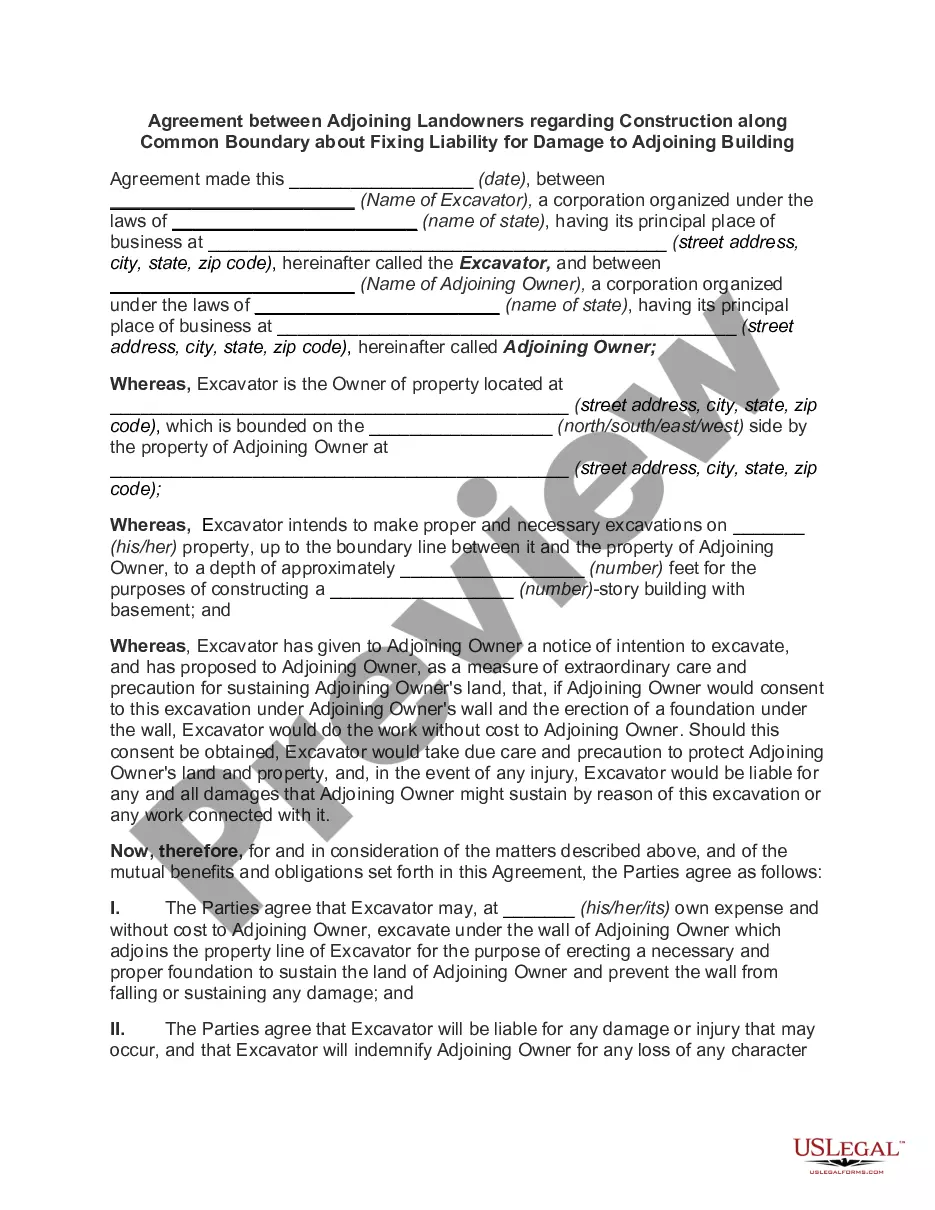
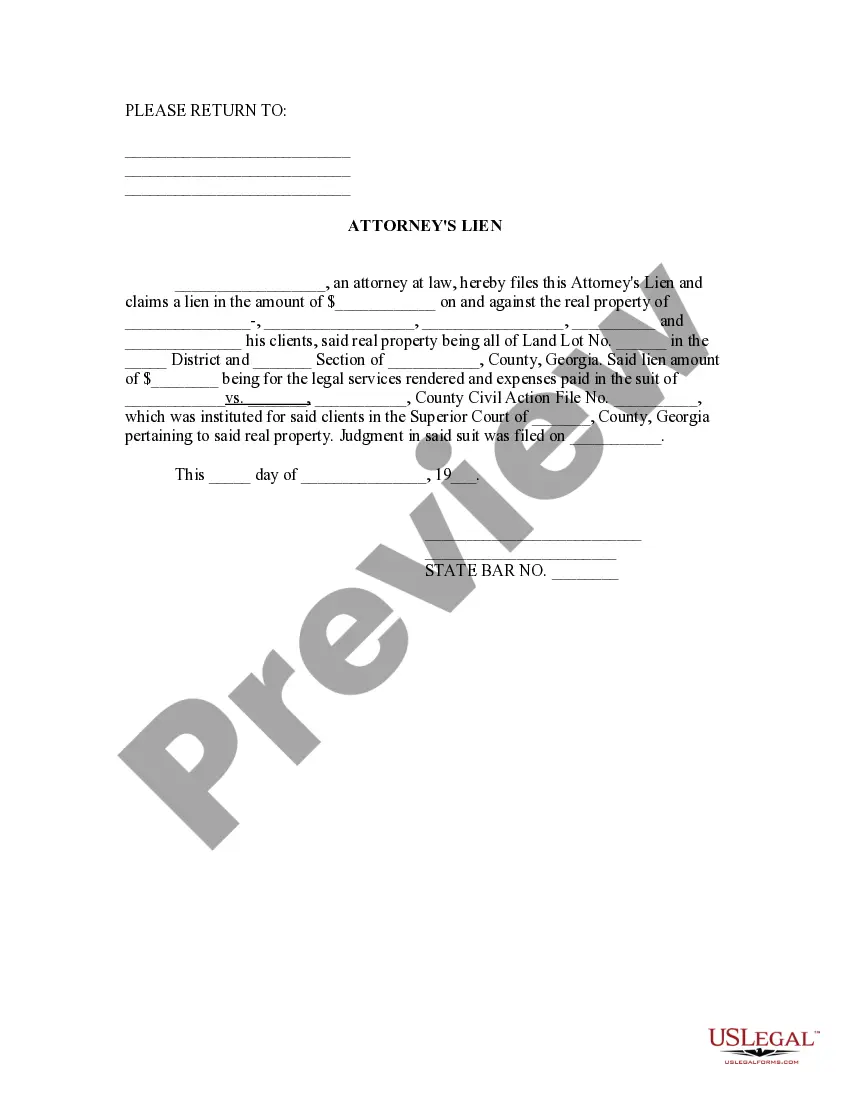
Georgia Attorney's Lien Notice
What this document covers
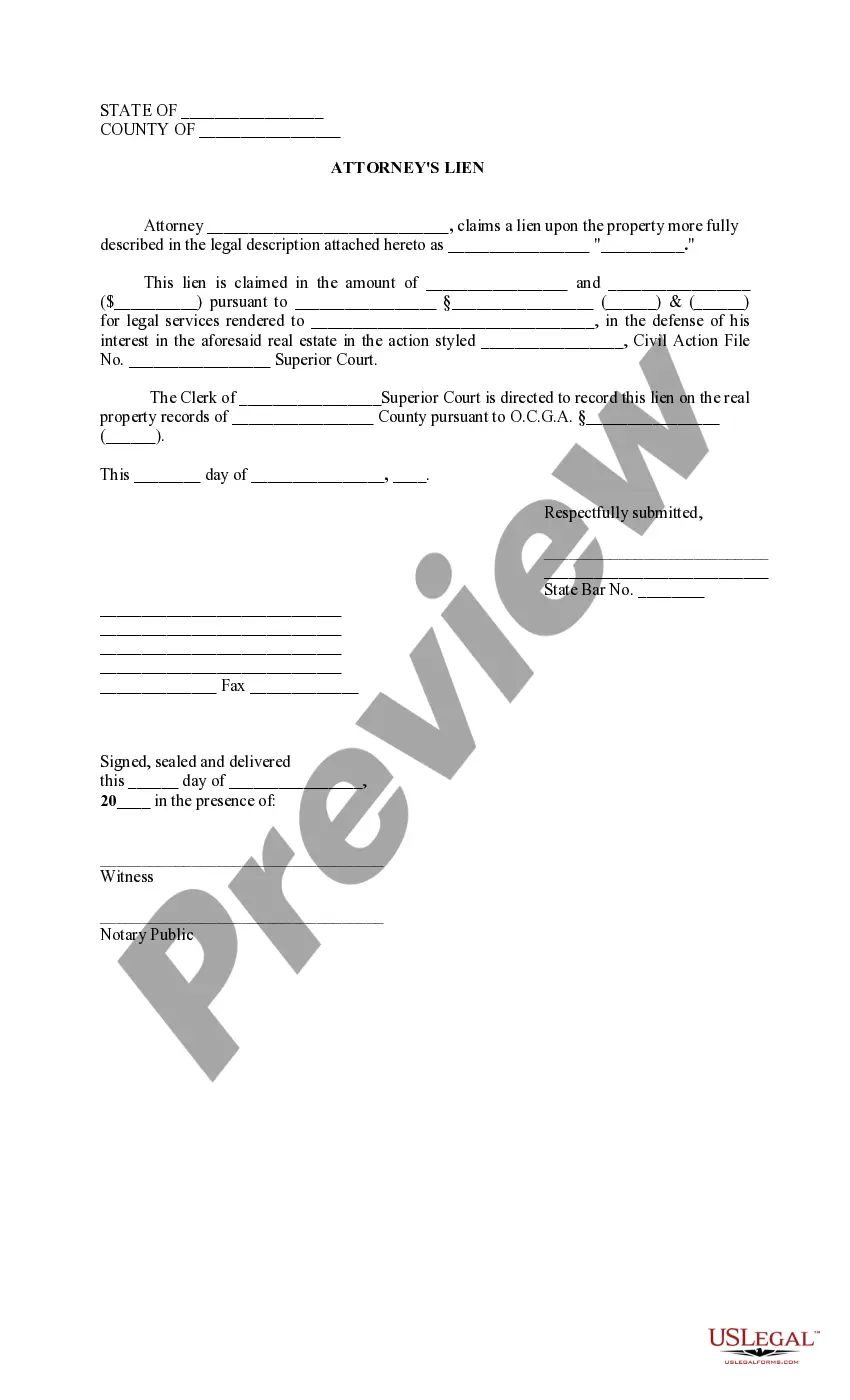
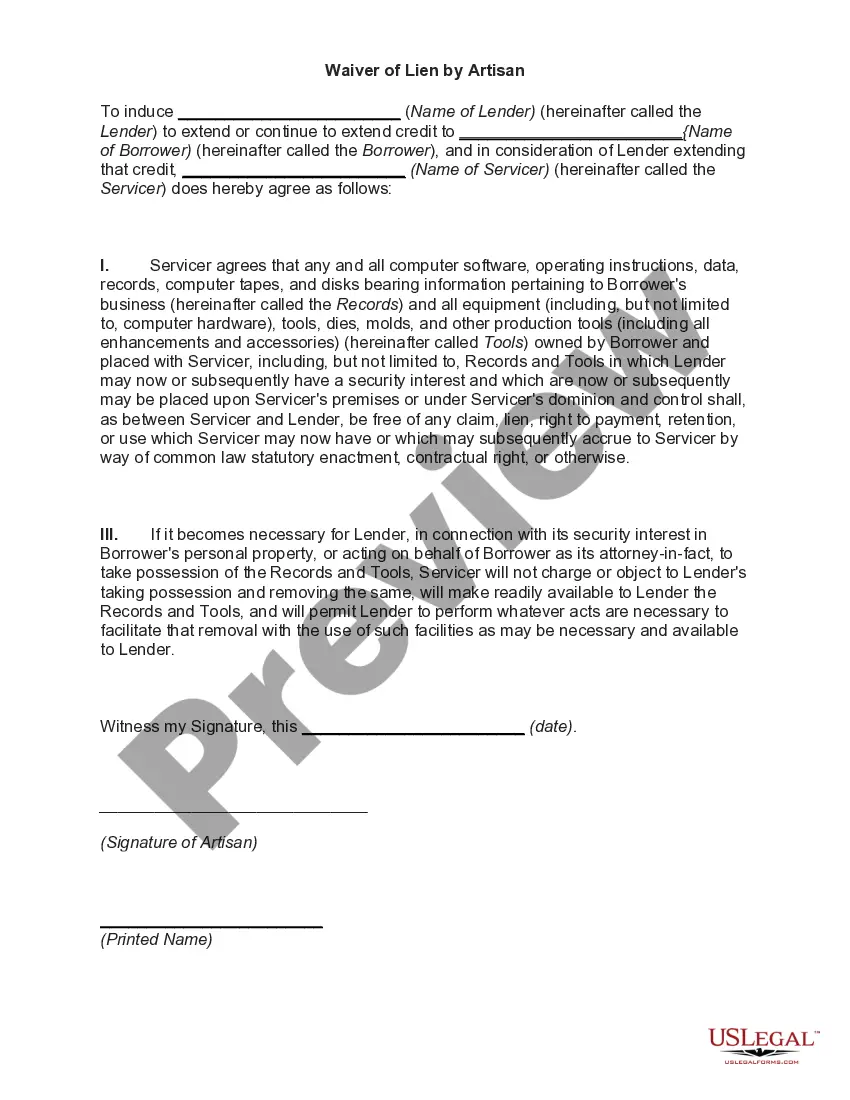
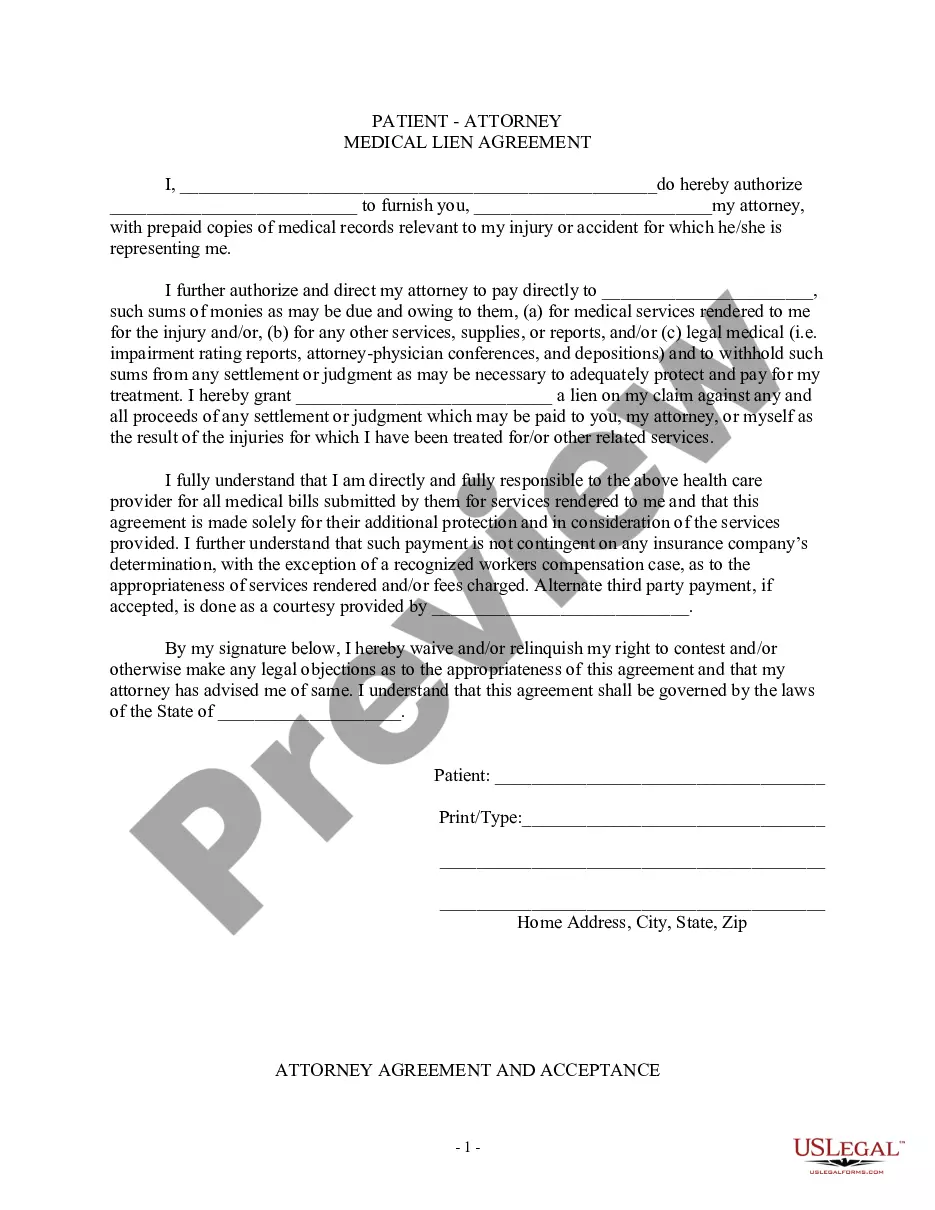
The Attorney's Lien Notice is a legal document filed by an attorney to assert a lien against a clientâs property for unpaid legal fees. This notice notifies interested parties that the attorney has a claim to a portion of the property value until the client has settled their financial obligations. Unlike other real estate liens, this specific form focuses on legal fees related to the attorney-client relationship.
Key components of this form
- Attorney's name and bar number: identifies the individual filing the lien.
- Amount of lien: total dollar amount claiming unpaid legal services.
- Client's property details: includes specific land lot and district information.
- Case information: identifies the legal case associated with the lien.
- Judgment date: indicates when a judgment was filed for the legal matter.
When to use this document
This form should be used when an attorney has provided legal services to a client who has not paid for those services. The Attorney's Lien Notice serves as a formal way to secure the attorney's claim against the client's property in order to recover unpaid legal fees. Scenarios may include divorce cases, civil lawsuits, or property disputes where legal representation has been provided but payment is still outstanding.
Who needs this form
- Attorneys seeking to secure payment for services rendered.
- Clients who have retained legal help but have yet to fulfill their payment obligations.
- Property owners involved in legal matters where liens may be applicable.
How to prepare this document
- Enter the attorney's name and state bar number in the designated fields.
- Specify the total amount of the lien for unpaid services.
- Provide details about the client's property, including land lot and location.
- Fill in the case information, including the names of parties involved and the civil action file number.
- Input the date the judgment was filed in the court.
- Sign and date the document to make it legally binding.
Notarization guidance
This form does not typically require notarization unless specified by local law. It is advisable to verify local requirements to ensure compliance.
Get your form ready online
Our built-in tools help you complete, sign, share, and store your documents in one place.
Make edits, fill in missing information, and update formatting in US Legal Forms—just like you would in MS Word.
Download a copy, print it, send it by email, or mail it via USPS—whatever works best for your next step.
Sign and collect signatures with our SignNow integration. Send to multiple recipients, set reminders, and more. Go Premium to unlock E-Sign.
If this form requires notarization, complete it online through a secure video call—no need to meet a notary in person or wait for an appointment.
We protect your documents and personal data by following strict security and privacy standards.

Make edits, fill in missing information, and update formatting in US Legal Forms—just like you would in MS Word.

Download a copy, print it, send it by email, or mail it via USPS—whatever works best for your next step.

Sign and collect signatures with our SignNow integration. Send to multiple recipients, set reminders, and more. Go Premium to unlock E-Sign.

If this form requires notarization, complete it online through a secure video call—no need to meet a notary in person or wait for an appointment.

We protect your documents and personal data by following strict security and privacy standards.
Common mistakes
- Forgetting to include the attorney's bar number.
- Failing to properly describe the property, leading to disputes over the lien.
- Not specifying the correct amount due, which can affect enforceability.
- Missing the signature and date, making the notice invalid.
Why complete this form online
- Convenience of filling out the form at your own pace.
- Easy access to downloadable templates that fit your needs.
- Guidance provided by forms drafted by licensed attorneys ensures reliability.
Legal use & context
- Establishes a legal claim on property until fees are paid.
- Aids in recovery efforts for unpaid legal services.
- Can serve as a deterrent against nonpayment for legal representation.
Quick recap
- The Attorney's Lien Notice secures attorneys' rights for unpaid services.
- It should clearly outline the claim, amount, and property involved.
- Understanding this form is critical for both attorneys and clients in ensuring clear communication and legal protection.
Looking for another form?
Form popularity
FAQ
The Georgia Attorney's Lien Notice is a legal document filed by an attorney to assert a lien against a client’s property for unpaid fees. It notifies interested parties that the attorney claims a portion of the property's value until payment is received. The form lists the attorney’s name and bar number, lien amount, property details, case information, and judgment date.
Georgia allows an attorney to assert a lien on a client's property for unpaid fees. This form supports that process by documenting the key details needed to perfect the claim, including the attorney’s name and bar number, the lien amount, the client’s property details, the related case information, and the judgment date. It helps secure payment when fees remain unpaid.
An attorney lien letter is a written notice used to claim a lien on a client’s property for unpaid legal fees. This form gathers the essential details—attorney’s name and bar number, lien amount, client’s property details, case information, and judgment date—to document and support the lien.
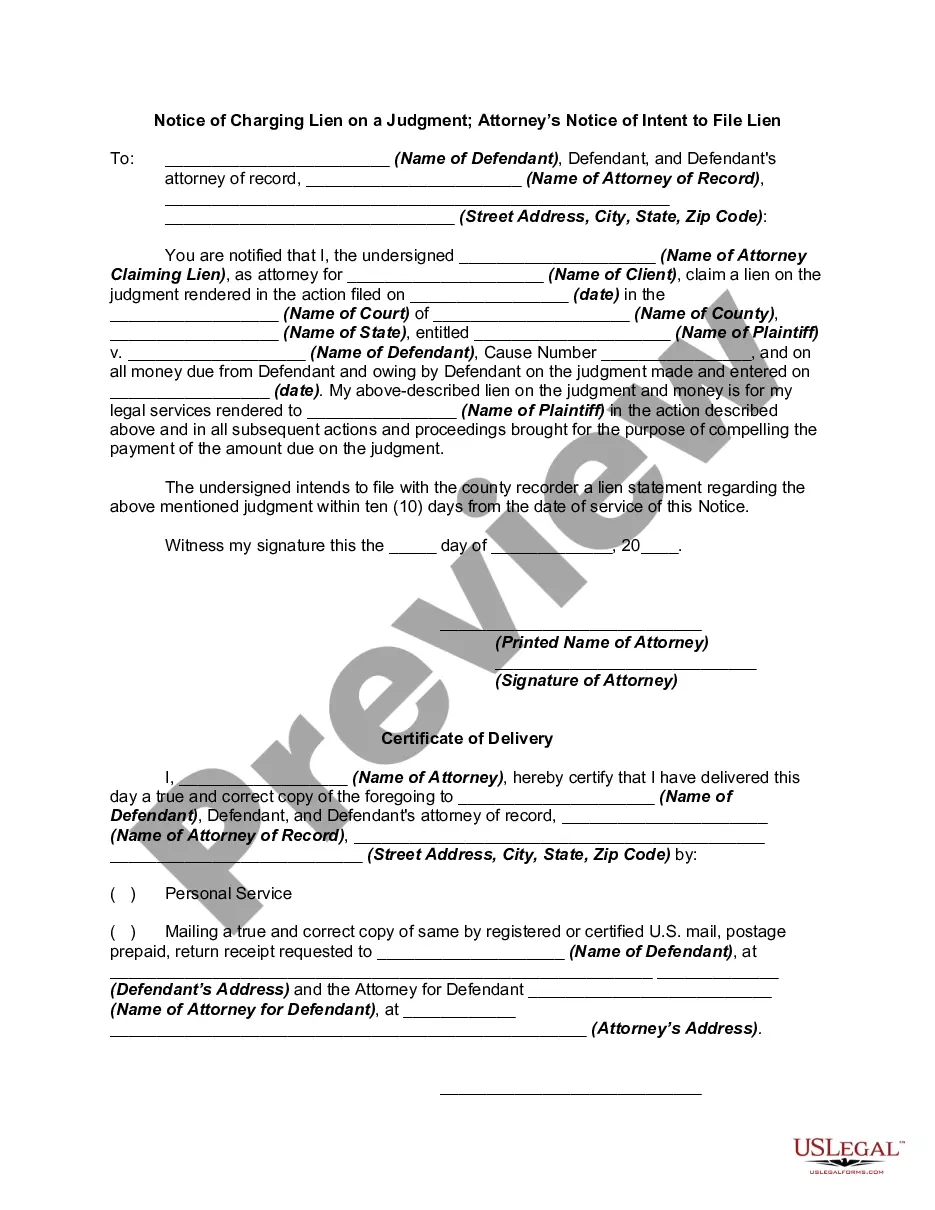
A notice of intent to lien is a preliminary notice signaling that a lien may be filed for unpaid fees. The Georgia Attorney's Lien Notice is the actual lien filing that asserts the claim against the client’s property and includes the key details listed in the form.
Attorneys seeking to secure payment for services and clients who have retained counsel but not paid, as well as property owners involved in related matters, should use this notice. It is filed when legal services were provided but payment remains outstanding to formalize and protect the attorney's lien against the client's property.
The Georgia Attorney's Lien Notice is the actual lien filing that asserts a claim against the client's property for unpaid fees and lists the specific details: attorney’s name and bar number, lien amount, property details, case information, and judgment date. A notice of intent to lien is a separate pre-filing notice signaling possible future action.