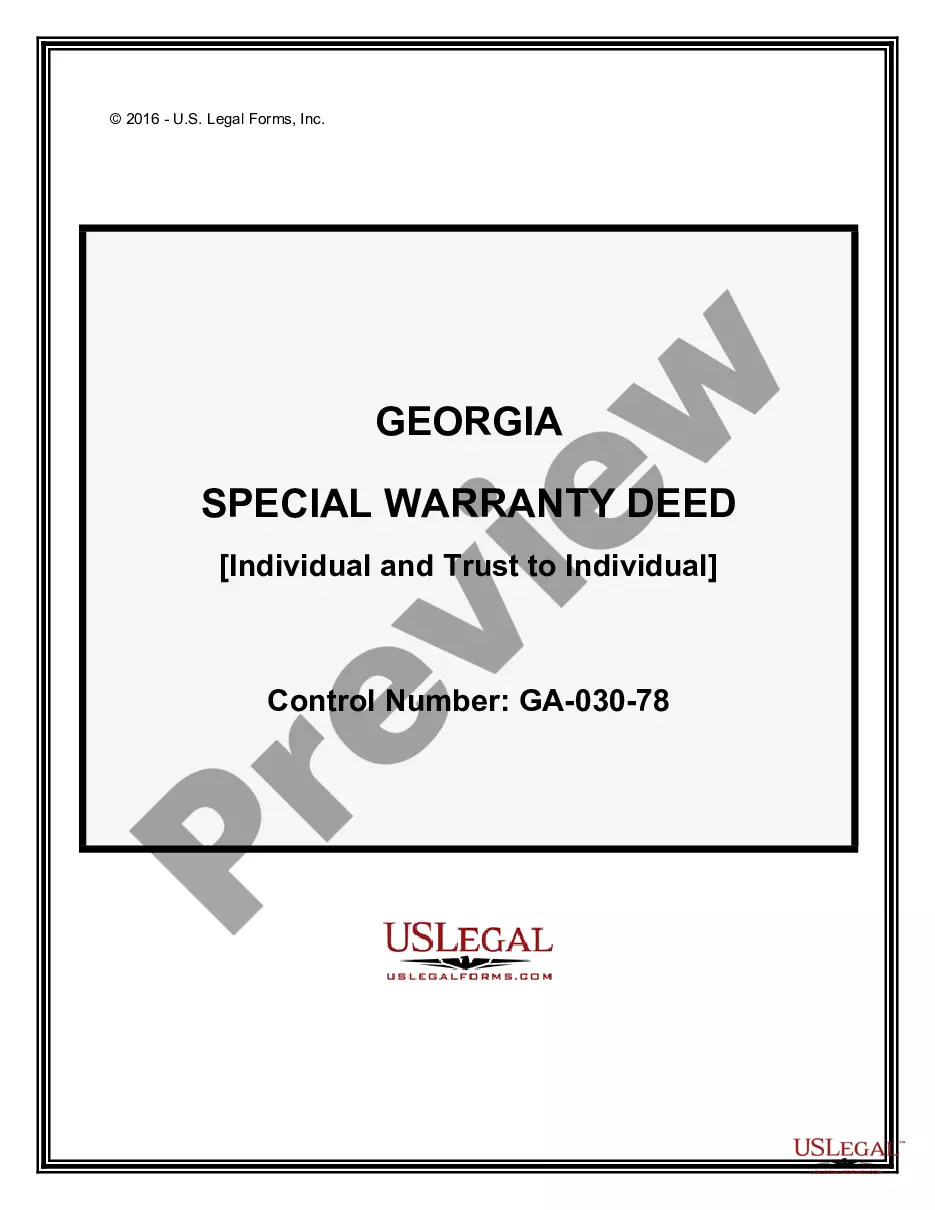
Georgia Special Warranty Deed - Individual and Trust to Individual
What this document covers
A Special Warranty Deed is a legal document used to transfer ownership of real property from a Grantor, which can be either an individual or a Trust, to a Grantee who is an individual. This form specifically guarantees that the Grantors will defend the title against claims made by individuals who may have claims through the Grantors, but does not offer broader protections. It is important because it provides limited warranties compared to general warranty deeds, making it a preferred choice in certain real estate transactions.
Key components of this form
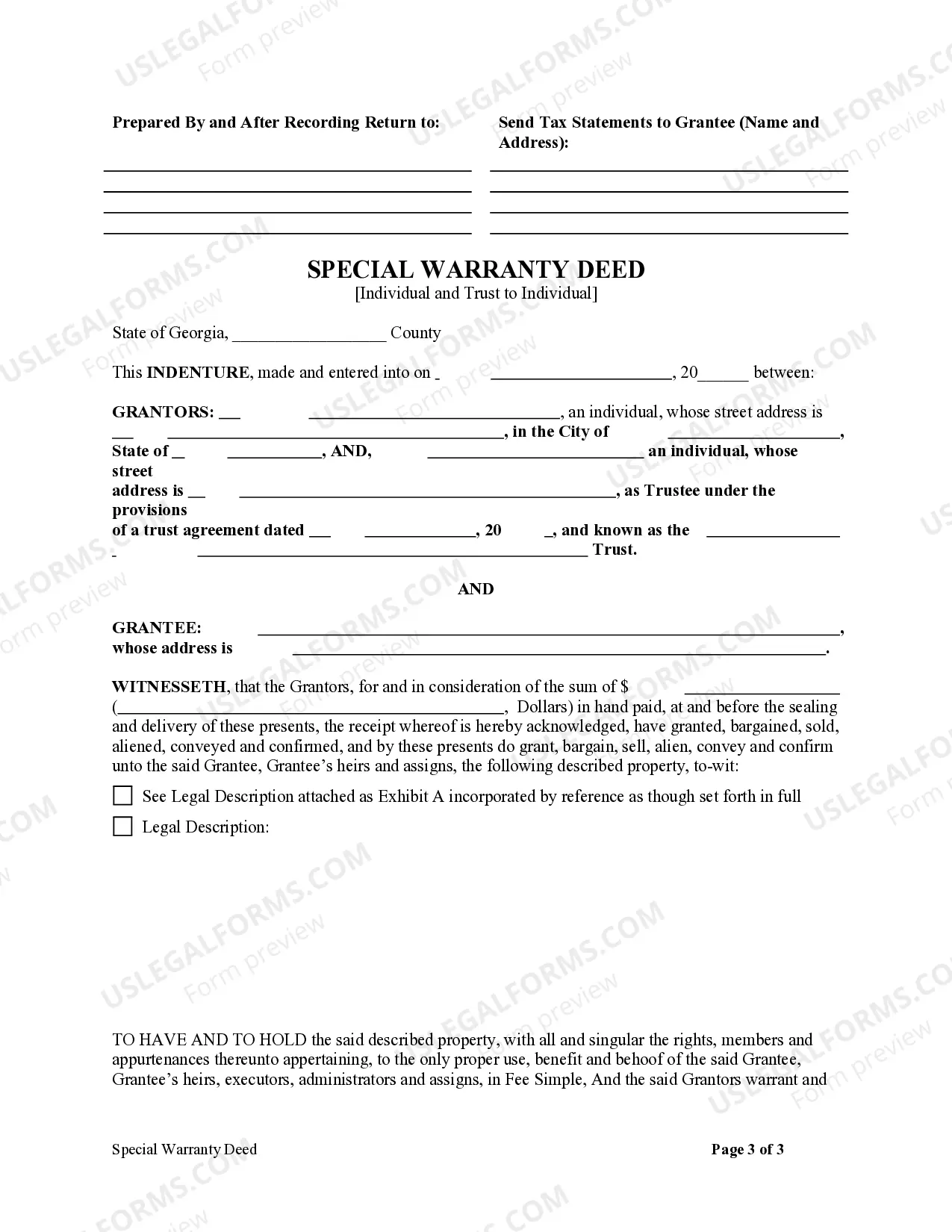
- Identification of Grantors and Grantee: Clearly states who is transferring the property and who is receiving it.
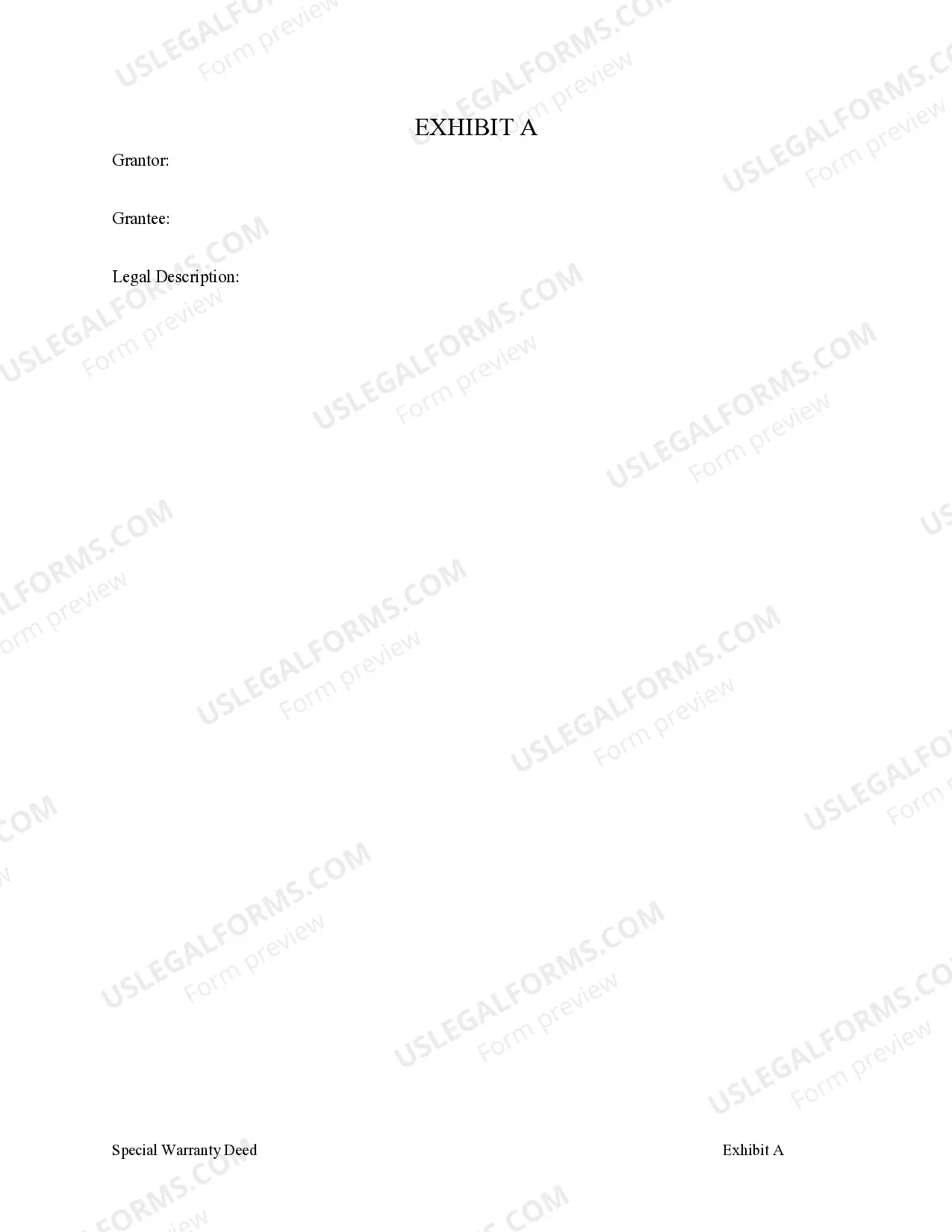
- Description of the property: A detailed description of the property being conveyed, which is essential for legal clarity.
- Warranties: Includes the limited warranty clause, detailing the scope of protection offered by the Grantors.
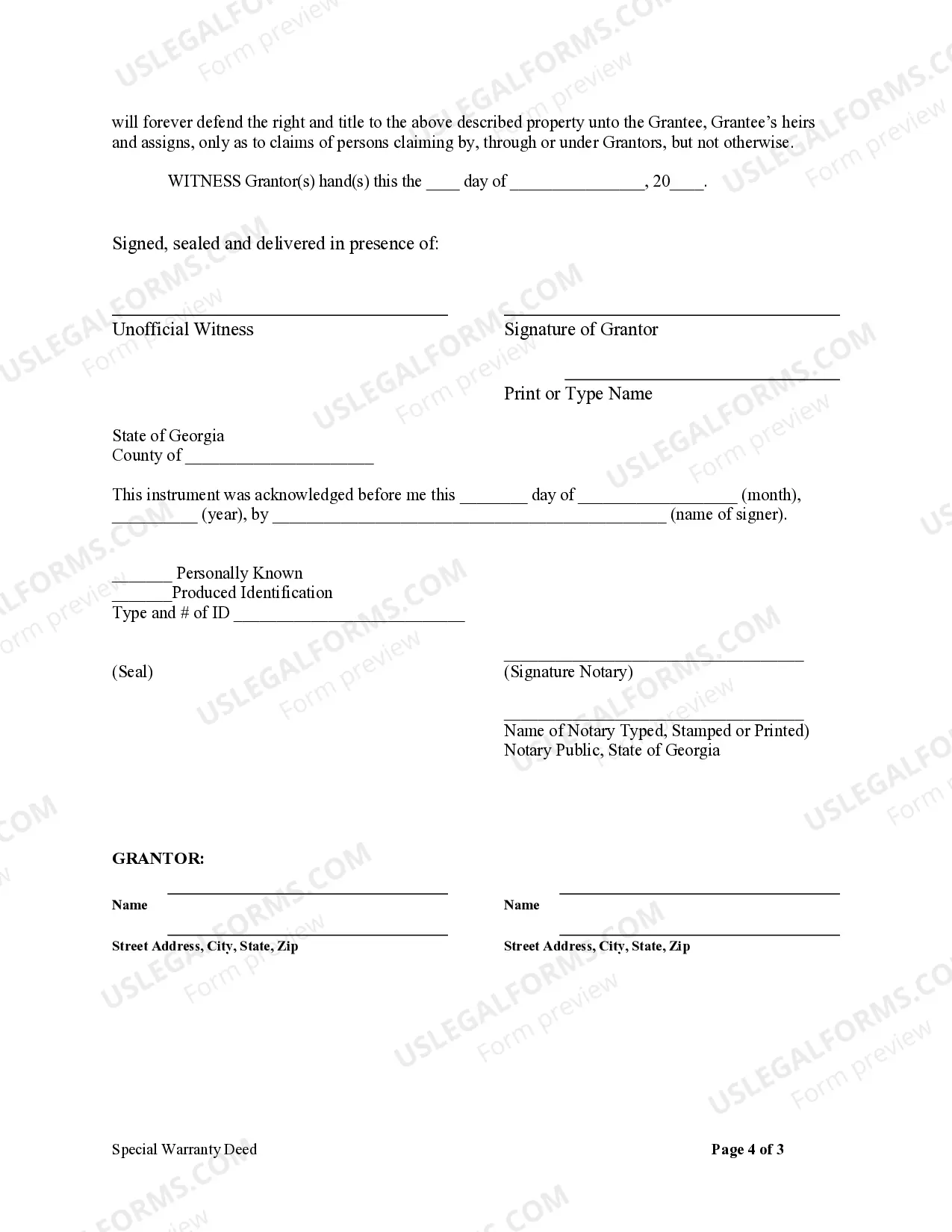
- Signatures: Requires signatures from the Grantors, acknowledging their consent to the transfer.
- Date of execution: Specifies when the deed is effective, which is critical for determining the timing of ownership transfer.
When to use this document
This form is commonly used when an individual and a Trust wish to transfer property to another individual. It is ideal for situations where the Grantors want to provide limited assurances regarding the title of the property, particularly in transactions involving investment properties or when property is held within a trust. It's also suitable when the estate plan includes such transfers, allowing for smooth transitions of ownership without involving more comprehensive warranty clauses.
Intended users of this form
This form is appropriate for:
- Individuals acting as Grantors transferring property they own.
- Trustees of a Trust who are authorized to convey property held in the Trust.
- Individuals receiving property through a transfer from a Trust or another individual.
How to complete this form
Follow these steps to complete the Special Warranty Deed:
- Identify the parties involved: Clearly indicate the names of the Grantors (Trust and individual) and the Grantee (individual).
- Specify the property: Include a detailed legal description of the property being transferred.
- Enter the warranted clause: Ensure the limited warranty clause is correctly filled in to reflect the protections offered.
- Sign the deed: The Grantors must sign the deed in the presence of a witness if required by state law.
- Record the deed: Submit the completed deed to the appropriate county office to establish official ownership.
Does this document require notarization?
This form does not typically require notarization unless specified by local law. However, it is advisable to check state-specific regulations to ensure compliance.
Get your form ready online
Our built-in tools help you complete, sign, share, and store your documents in one place.
Make edits, fill in missing information, and update formatting in US Legal Forms—just like you would in MS Word.
Download a copy, print it, send it by email, or mail it via USPS—whatever works best for your next step.
Sign and collect signatures with our SignNow integration. Send to multiple recipients, set reminders, and more. Go Premium to unlock E-Sign.
If this form requires notarization, complete it online through a secure video call—no need to meet a notary in person or wait for an appointment.
We protect your documents and personal data by following strict security and privacy standards.

Make edits, fill in missing information, and update formatting in US Legal Forms—just like you would in MS Word.

Download a copy, print it, send it by email, or mail it via USPS—whatever works best for your next step.

Sign and collect signatures with our SignNow integration. Send to multiple recipients, set reminders, and more. Go Premium to unlock E-Sign.

If this form requires notarization, complete it online through a secure video call—no need to meet a notary in person or wait for an appointment.

We protect your documents and personal data by following strict security and privacy standards.
Mistakes to watch out for
- Not providing a complete legal description of the property, which may lead to disputes.
- Failing to include all Grantors' signatures, which could invalidate the deed.
- Neglecting to check state-specific notarization requirements, leading to potential legal issues.
- Leaving out the date of execution, which is vital for determining the effective transfer of ownership.
Advantages of online completion
- Easy online access: Conveniently download and fill out the form from any device.
- Editable format: Complete the form using your computer, ensuring accuracy and legibility.
- Legally reviewed: Forms are drafted by licensed attorneys to meet legal standards.
Looking for another form?
Form popularity
FAQ
In Georgia, for a deed to record effectively, it must be in writing and signed by the parties involved. The property description should be clear and accurate, plus it must include the names of both the grantor and the grantee. Don’t forget, recording your Georgia Special Warranty Deed – Individual and Trust to Individual involves submitting it to the local county clerk's office with the appropriate fees.
While a warranty deed provides significant protection, it does come with some disadvantages. The grantor is liable for any claims against the property, which can pose risks, especially if there were previous ownership issues. Additionally, dealing with the complexities of the Georgia Special Warranty Deed – Individual and Trust to Individual may require legal assistance, as errors can lead to future disputes.
You can obtain your property warranty deed through your local county's clerk of court. They maintain public records related to property ownership. If you need a copy of the Georgia Special Warranty Deed – Individual and Trust to Individual, visit their office or check if they offer online access. Alternatively, US Legal Forms can assist you in retrieving and understanding the necessary documents.
Filling out a special warranty deed involves a few key steps. Start by entering the property description, then include the grantor's name and the grantee's name. Ensure you clarify the specific limitations of the warranty. For precise guidelines tailored to the Georgia Special Warranty Deed – Individual and Trust to Individual, consider using platforms like US Legal Forms.
To create a warranty deed in Georgia, first ensure you have the necessary forms. You need to provide property details, grantor and grantee information, and any relevant consideration. Once filled out, sign the deed in front of a notary. It's essential to record the Georgia Special Warranty Deed – Individual and Trust to Individual with your local county clerk's office to ensure its validity.
To put your property in a trust in Georgia, first establish a trust agreement detailing how you want to manage your assets. After creating this document, you will need to execute a new deed—like a Georgia Special Warranty Deed – Individual and Trust to Individual—to officially transfer ownership to the trust. It’s recommended to work with a qualified attorney to navigate the legal requirements.
To transfer your property into a trust in Georgia, you need to create a trust document that outlines the terms and beneficiaries of the trust. Once established, you will execute a new deed, such as a Georgia Special Warranty Deed – Individual and Trust to Individual, to transfer ownership of the property to the trust. Consider consulting with a legal professional to ensure a smooth process.
To obtain a home warranty deed, you'll usually need to draft the deed using the correct legal language, ensuring it meets Georgia's requirements. You can work with a real estate professional to ensure accuracy and compliance. Utilize US Legal Forms for templates and step-by-step guidance in creating a Georgia Special Warranty Deed – Individual and Trust to Individual tailored to your needs.
One disadvantage of a special warranty deed is that it only protects the buyer against claims that arose during the seller’s ownership, leaving potential risks from prior ownership. This limited protection may not be sufficient in certain situations. Using US Legal Forms can provide clarity on the implications of a Georgia Special Warranty Deed – Individual and Trust to Individual, allowing for informed decision-making.
To locate your warranty deed online, start by visiting your county's property records website, where you can use the property owner's name or address as search parameters. Most counties offer user-friendly databases for this purpose. Alternatively, US Legal Forms can guide you through the process of securing a Georgia Special Warranty Deed – Individual and Trust to Individual if you encounter challenges.