Georgia Concrete Mason Contract for Contractor
Understanding this form
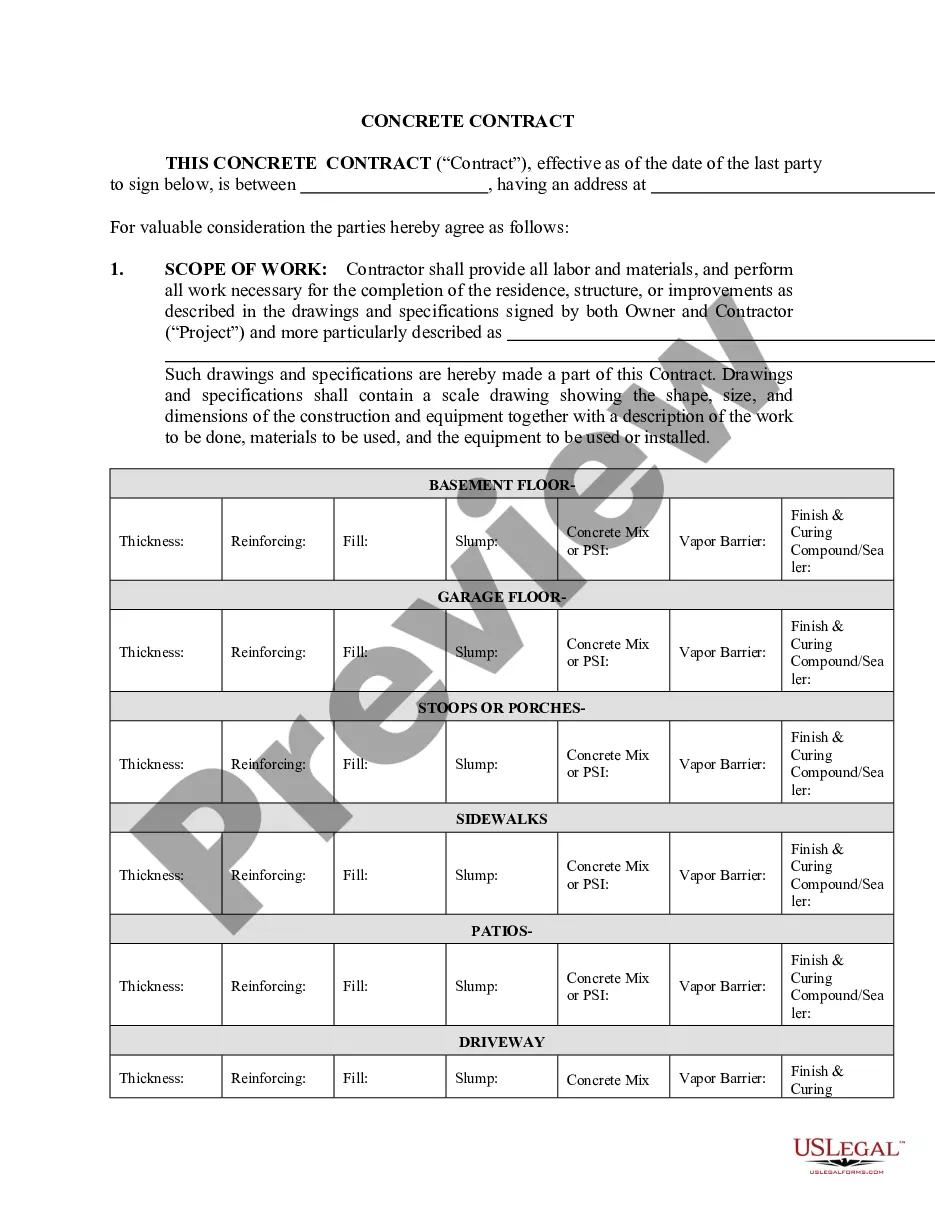
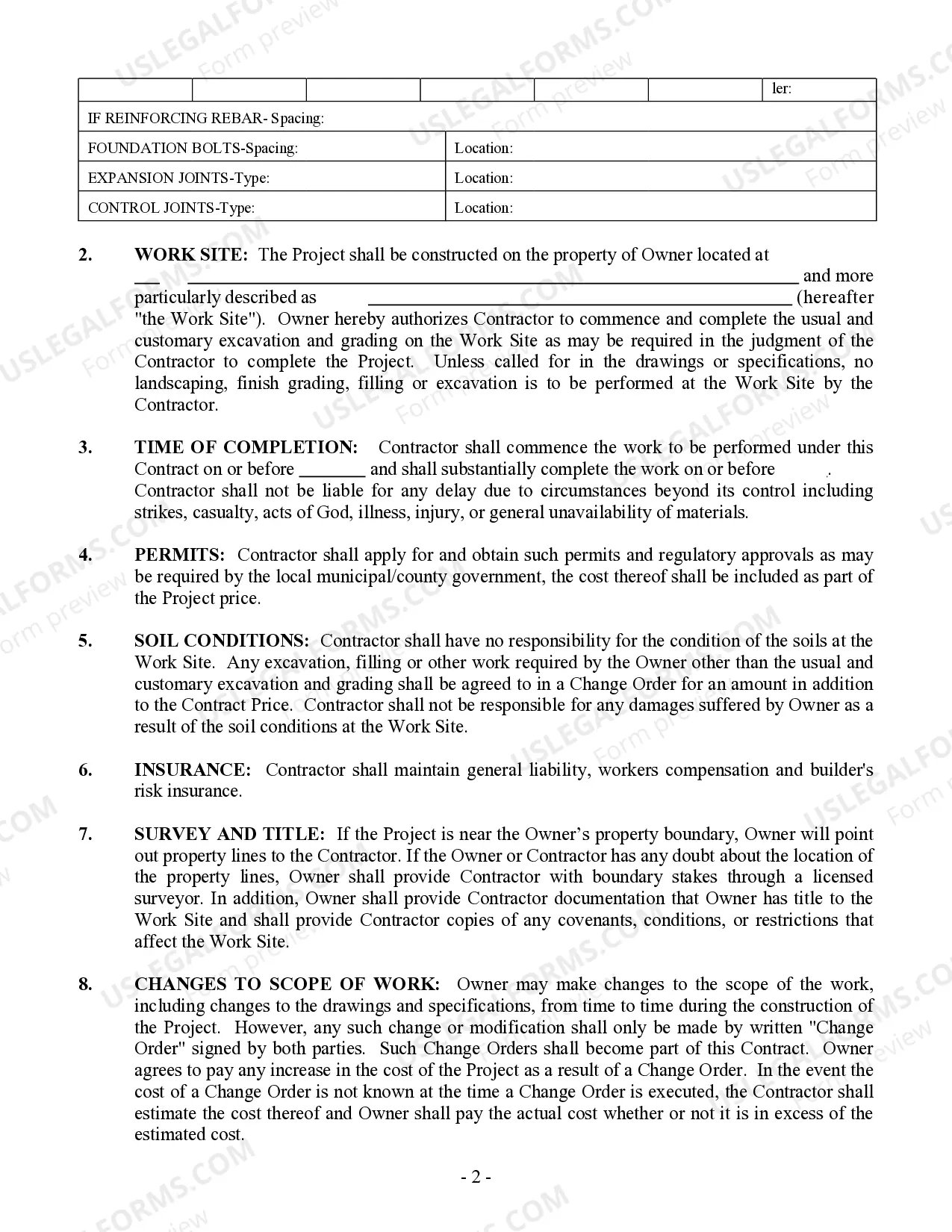
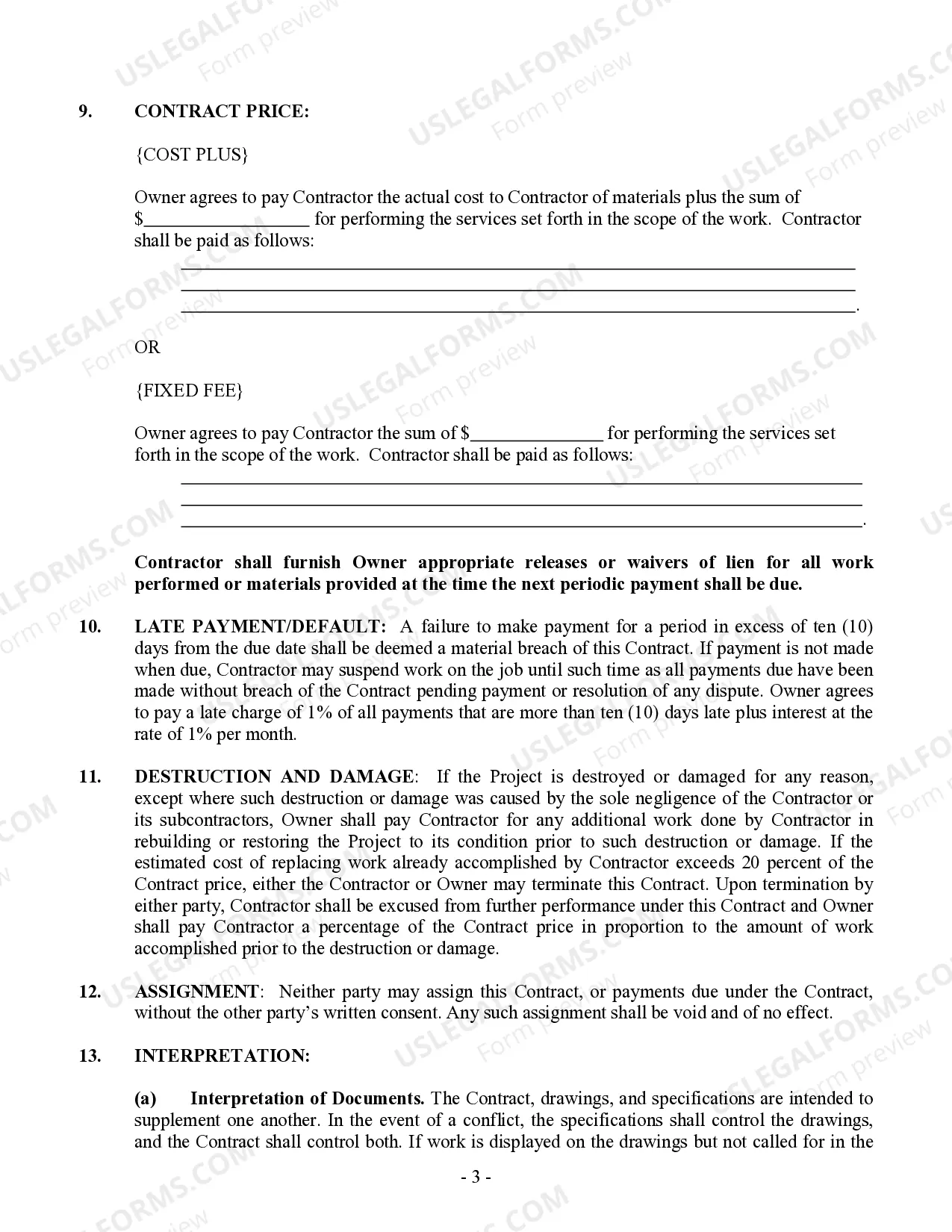
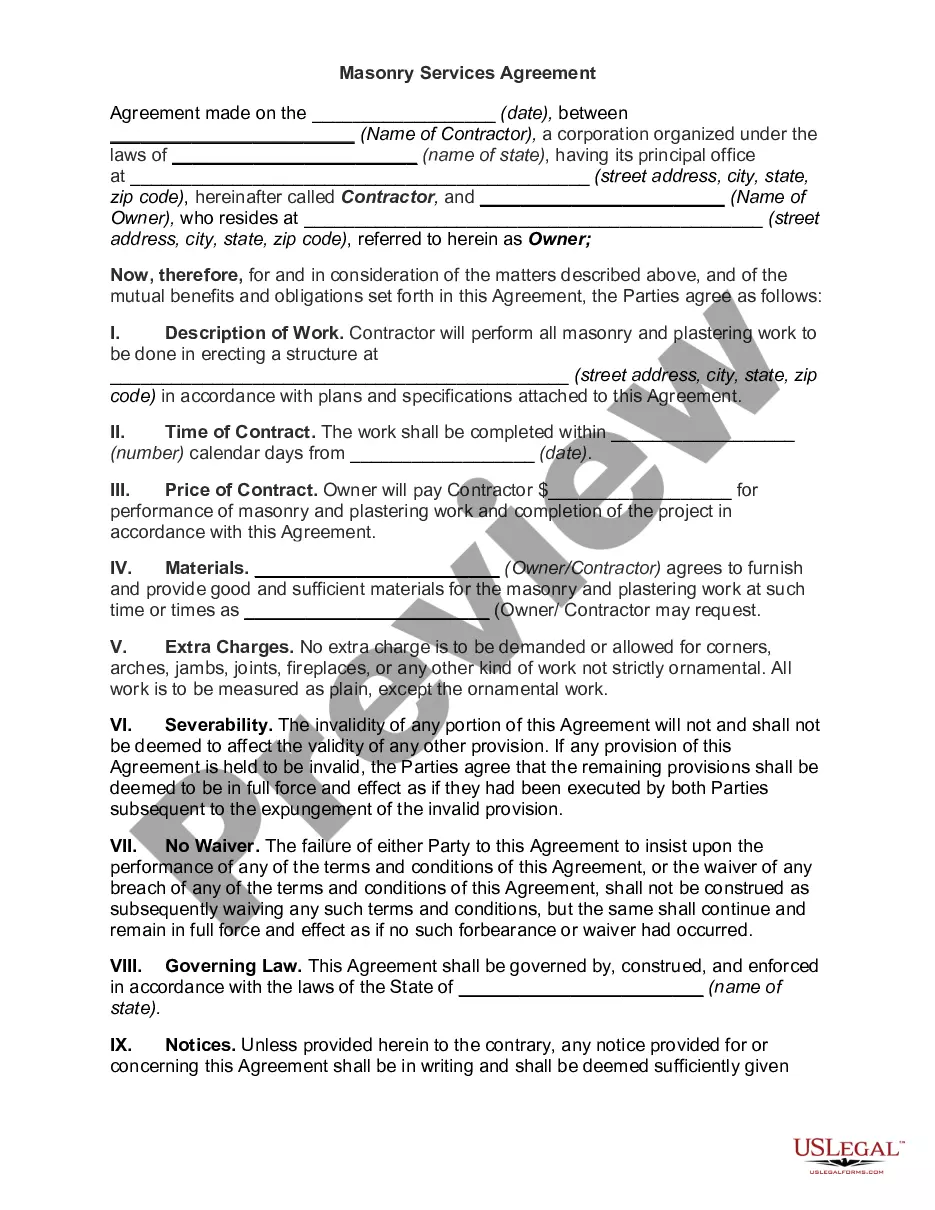
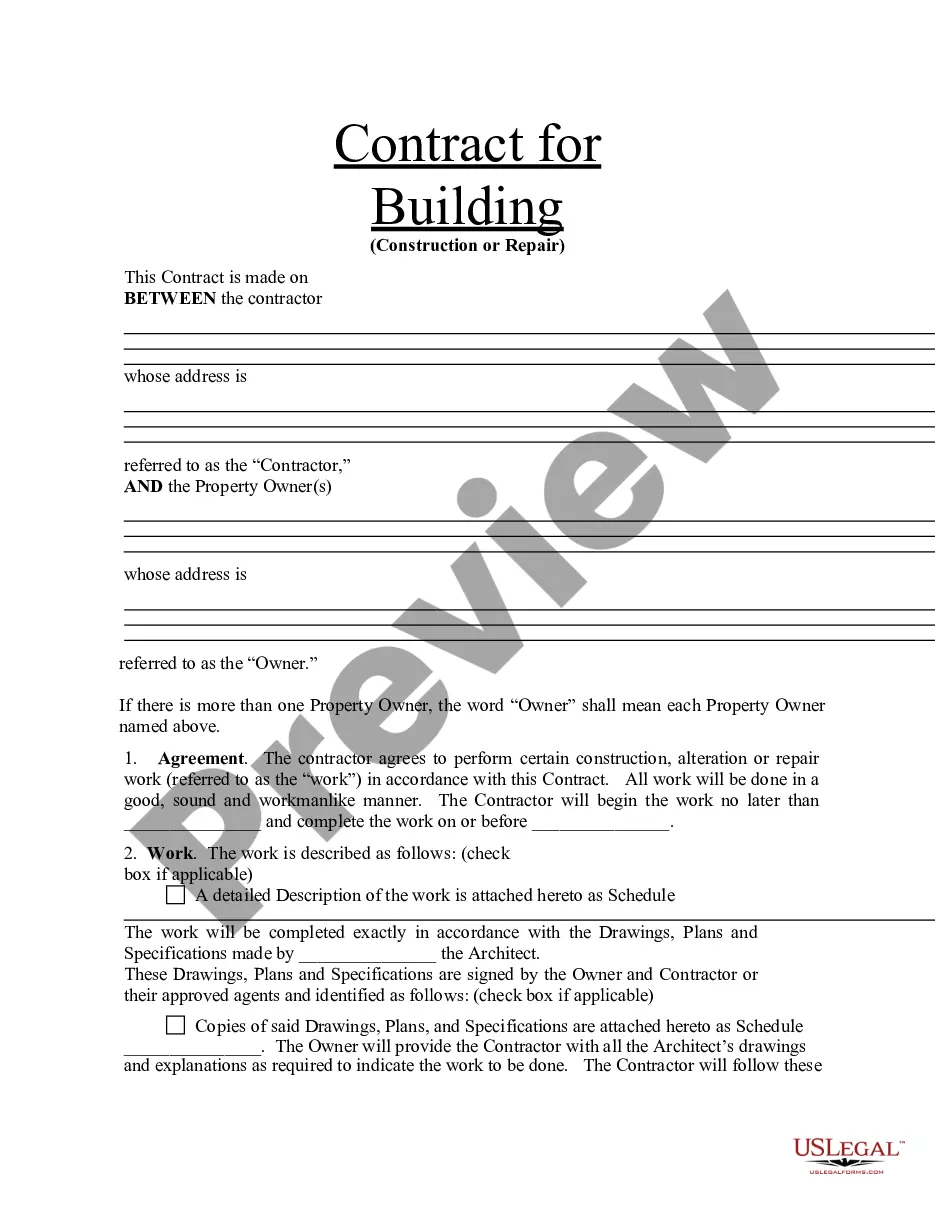
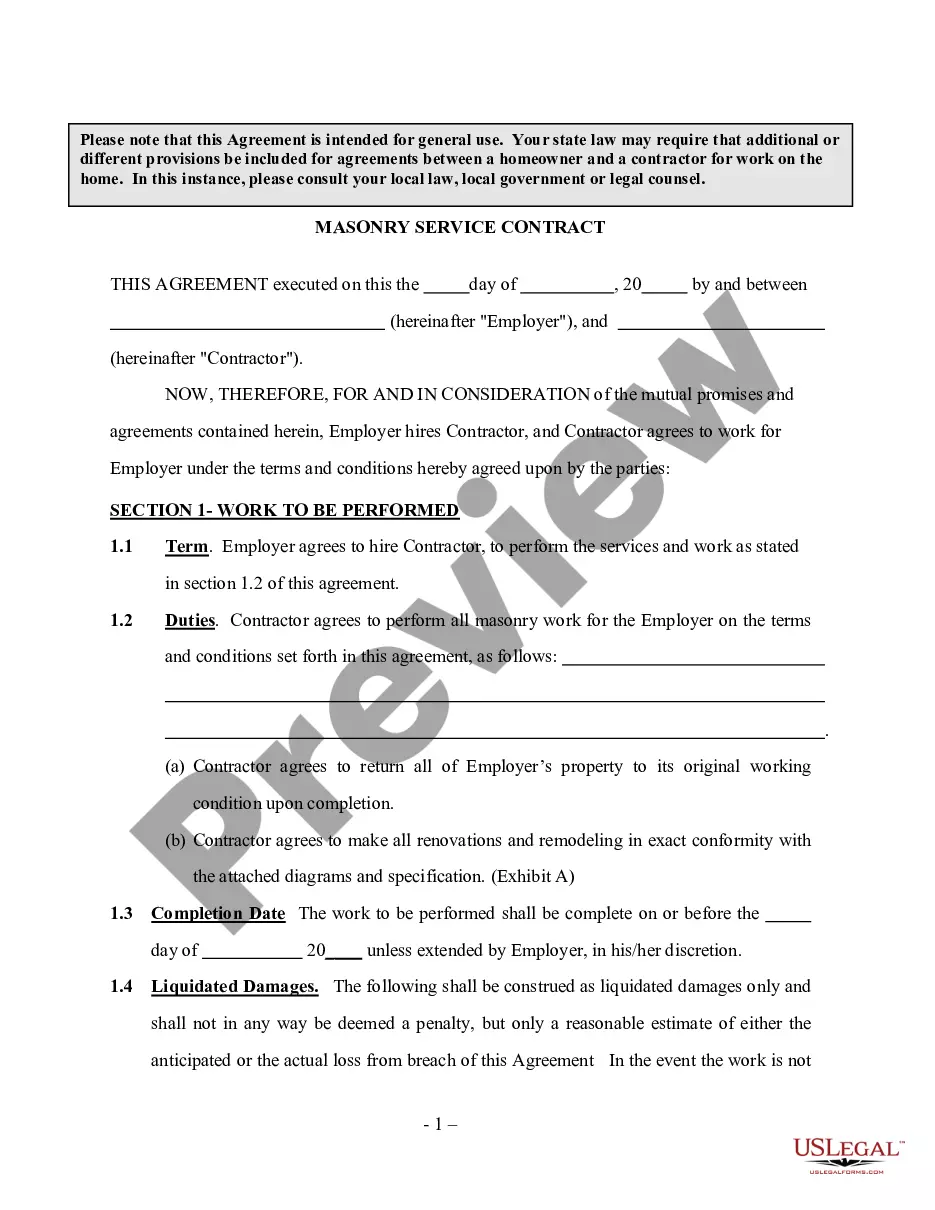
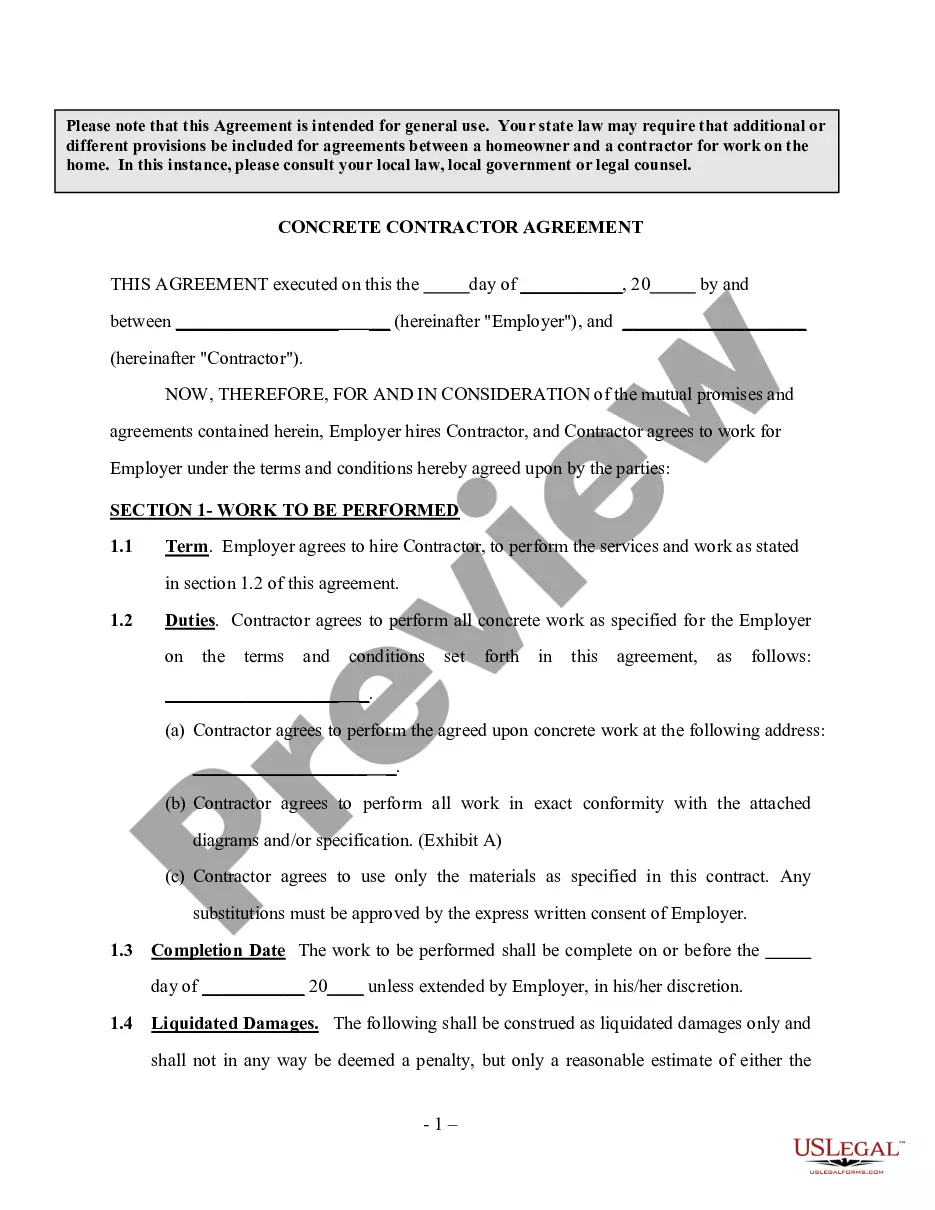
This Concrete Mason Contract for Contractor is a legal document designed for use between concrete mason contractors and property owners. It lays out the terms of engagement, including payment structures, responsibilities, warranties, and insurance provisions. This contract is particularly important for ensuring clarity and protecting the rights of both parties involved in concrete-related projects, setting it apart from general construction contracts by focusing specifically on masonry work.
Main sections of this form
- Definition of payment arrangements (cost plus or fixed fee).
- Responsibilities regarding permits and regulatory approvals.
- Clauses addressing soil conditions and excavation responsibilities.
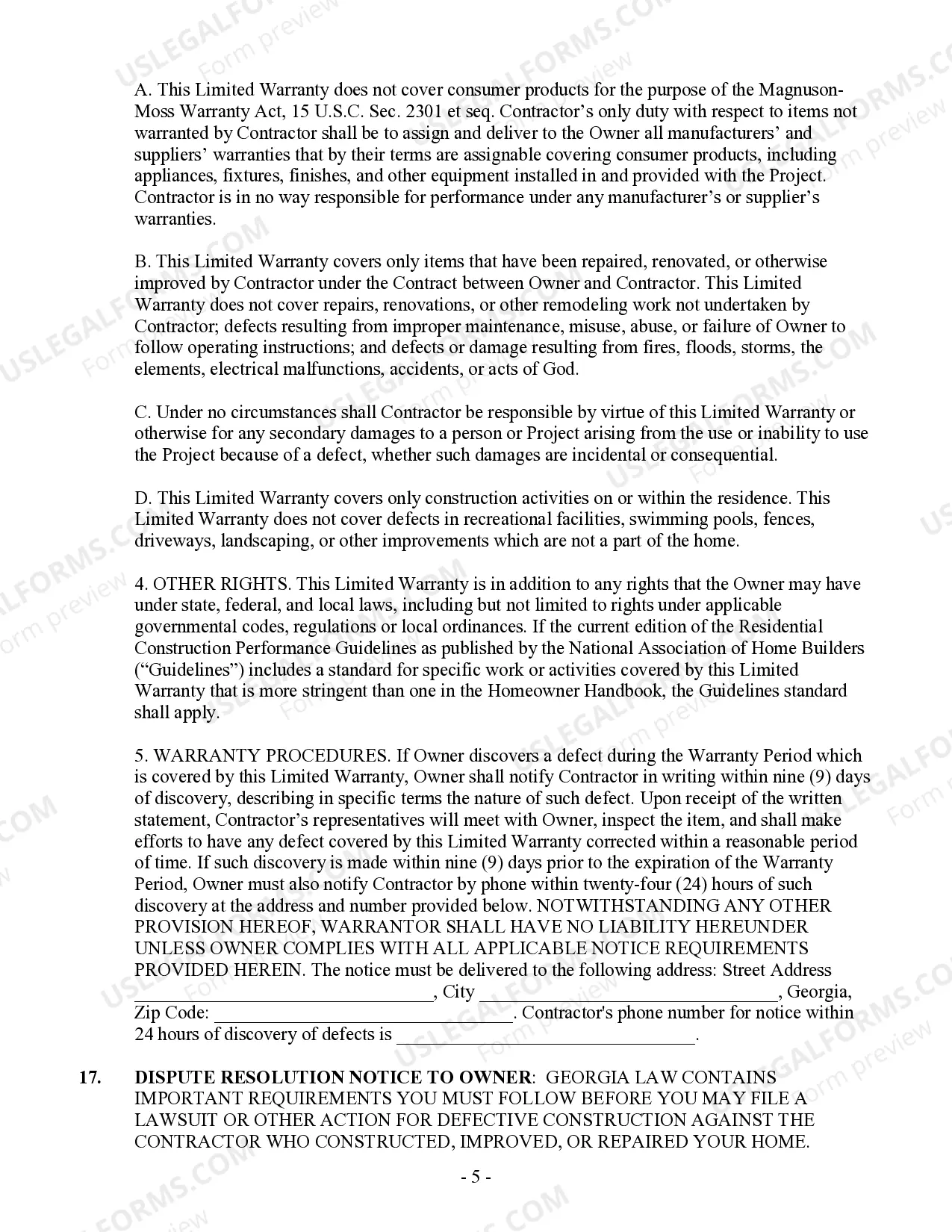
- Insurance requirements for liability and workers compensation.
- Change order procedures for modifications in scope of work.
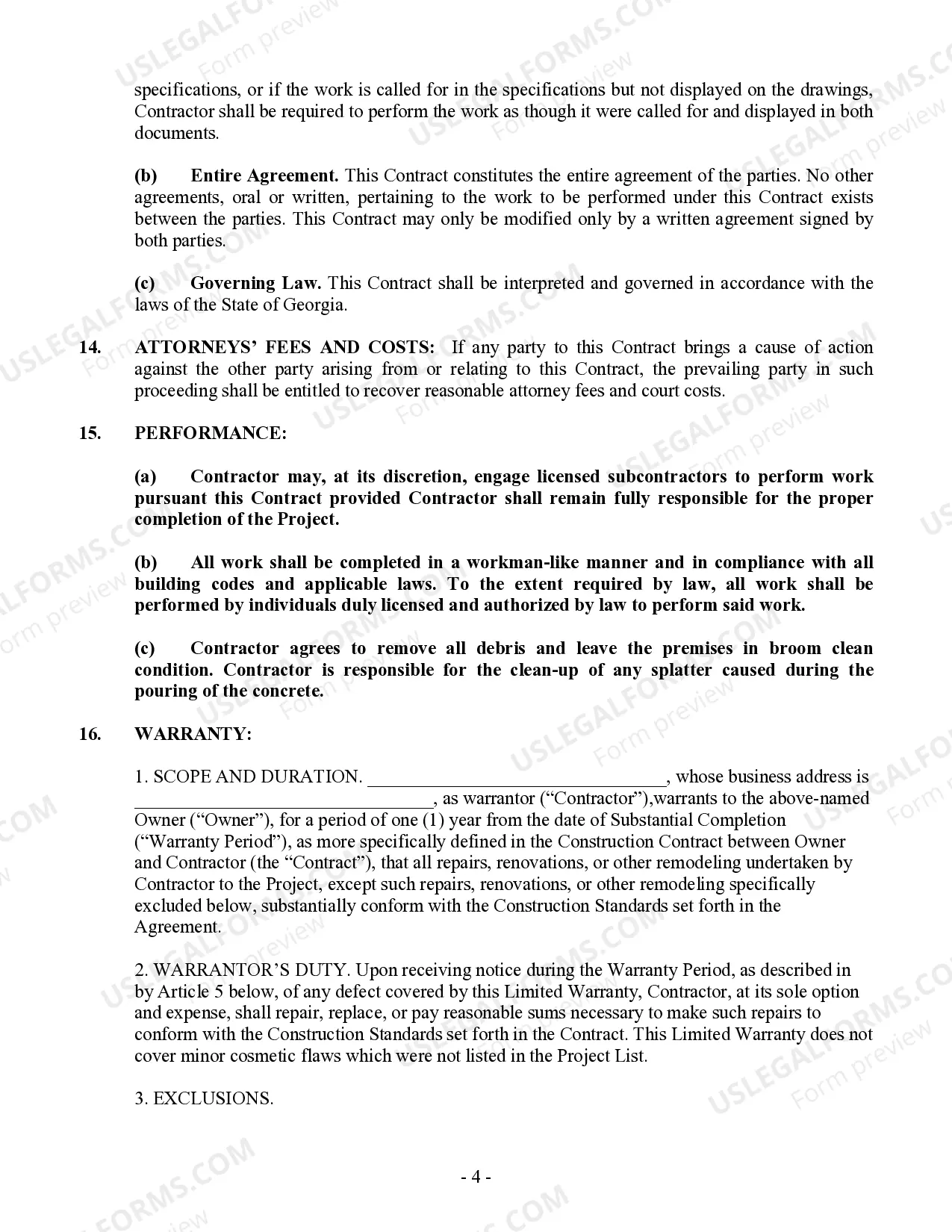
- Warranty provisions covering the scope and duration of work performed.
Common use cases
This form should be used when a property owner engages a concrete mason contractor for a specific project. It is essential in situations where the contractor's work involves significant concrete work such as foundations, driveways, and structural reinforcements. Utilizing this contract mitigates misunderstandings and legal disputes that may arise from project changes or issues with quality and compliance.
Who should use this form
- Property owners seeking to hire a concrete mason contractor.
- Concrete mason contractors looking to formalize agreements with clients.
- Individuals or businesses undertaking concrete-related construction projects.
How to prepare this document
- Identify the parties involved, ensuring accurate legal names and addresses.
- Specify the scope of the project clearly, including detailed descriptions of the work to be performed.
- Fill in the payment arrangement section with the chosen method, either cost plus or fixed fee.
- Complete the warranty information section, noting the duration and conditions of the warranty.
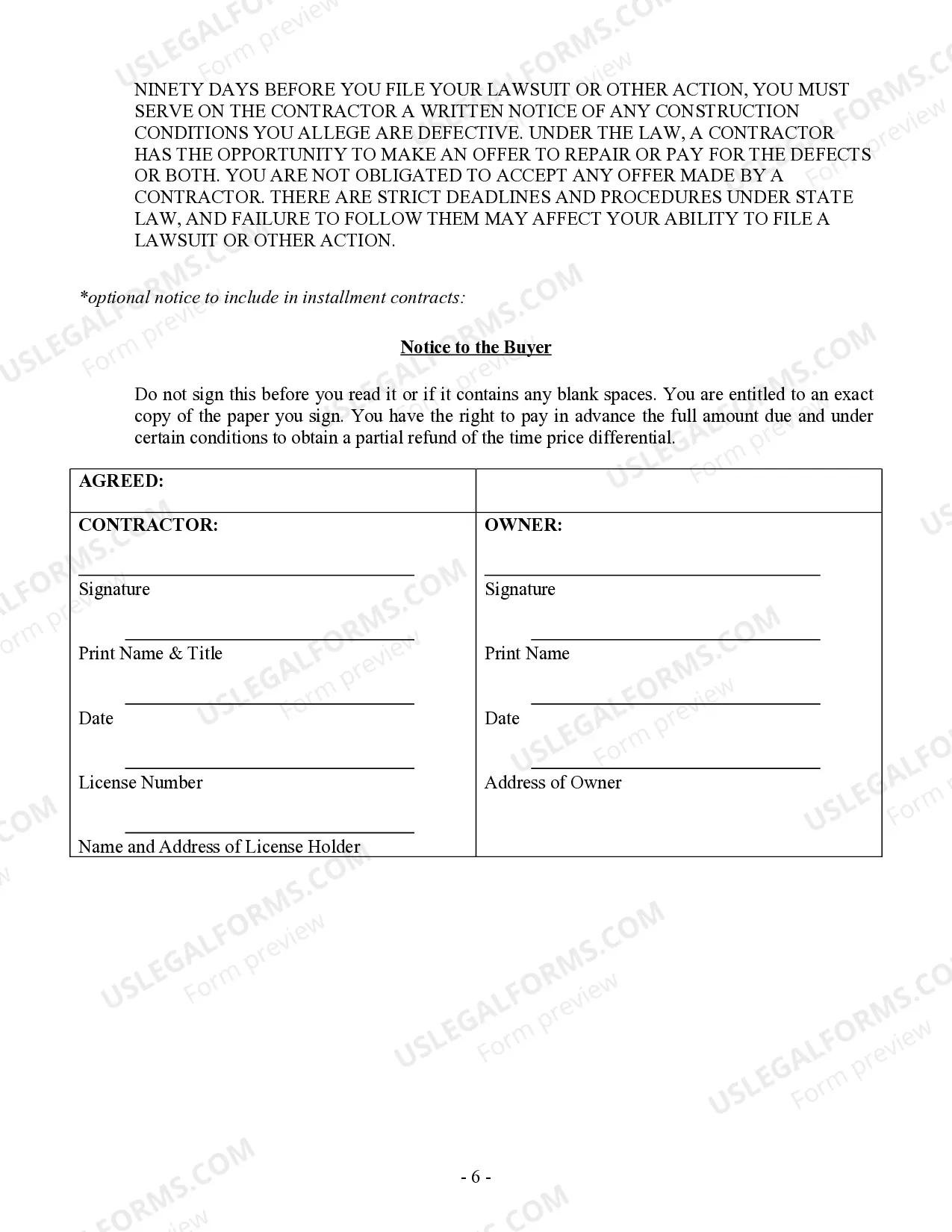
- Both parties should sign and date the contract in designated areas to finalize the agreement.
Does this document require notarization?
Notarization is not commonly needed for this form. However, certain documents or local rules may make it necessary. Our notarization service, powered by Notarize, allows you to finalize it securely online anytime, day or night.
Get your form ready online
Our built-in tools help you complete, sign, share, and store your documents in one place.
Make edits, fill in missing information, and update formatting in US Legal Forms—just like you would in MS Word.
Download a copy, print it, send it by email, or mail it via USPS—whatever works best for your next step.
Sign and collect signatures with our SignNow integration. Send to multiple recipients, set reminders, and more. Go Premium to unlock E-Sign.
If this form requires notarization, complete it online through a secure video call—no need to meet a notary in person or wait for an appointment.
We protect your documents and personal data by following strict security and privacy standards.

Make edits, fill in missing information, and update formatting in US Legal Forms—just like you would in MS Word.

Download a copy, print it, send it by email, or mail it via USPS—whatever works best for your next step.

Sign and collect signatures with our SignNow integration. Send to multiple recipients, set reminders, and more. Go Premium to unlock E-Sign.

If this form requires notarization, complete it online through a secure video call—no need to meet a notary in person or wait for an appointment.

We protect your documents and personal data by following strict security and privacy standards.
Mistakes to watch out for
- Failing to specify the exact scope of work, leading to misunderstandings.
- Not including change order procedures, which can result in disputes over project modifications.
- Overlooking insurance requirements, potentially exposing parties to liability risks.
Benefits of completing this form online
- Convenience: Access and download the contract from anywhere, anytime.
- Editability: Modify the form to meet specific project needs directly online.
- Reliability: Use templates drafted by licensed attorneys, ensuring legal compliance.
Legal use & context
- The contract serves as a legally binding agreement, outlining all terms between the contractor and property owner.
- Both parties must adhere to the responsibilities and conditions outlined to avoid legal complications.
- Warranties and insurance clauses provide additional protection for both parties in case of unforeseen issues.
Summary of main points
- A Concrete Mason Contract is essential for defining the terms of engagement in masonry projects.
- Understanding the key components helps prevent disputes and ensures compliance with legal standards.
- Proper completion of the form safeguards both parties and clarifies expectations throughout the project.
Looking for another form?

Form popularity
FAQ
A Georgia Concrete Mason Contract for Contractor can be poorly written in several ways, such as using unclear language that leads to misinterpretation. Failing to specify payment terms, timelines, or project details can also create significant issues. Additionally, neglecting to address contingencies and liability can leave parties vulnerable. Lastly, omitting essential clauses related to dispute resolution may provoke unnecessary conflicts down the line.
One of the most commonly overlooked clauses in a Georgia Concrete Mason Contract for Contractor is the dispute resolution clause. Many contractors neglect to outline how disputes will be handled, which can lead to costly misunderstandings and litigation. It's essential to include clear procedures for both mediation and arbitration, as this can save time and resources in the event of conflict. A well-defined process helps maintain positive relationships between parties.
Filling out a Georgia Concrete Mason Contract for Contractor involves several important steps. Start by clearly identifying both parties and outlining the scope of work to be performed. Next, establish payment terms, including amounts due and payment schedules. Finally, don’t forget to include timelines, project milestones, and any necessary legal clauses to protect all parties involved.
A Georgia Concrete Mason Contract for Contractor can become invalid due to several factors, including lack of mutual consent, illegal subject matter, or failure to meet legal requirements. Contracts that involve coercion or misrepresentation can also be deemed invalid. If one party does not have the legal capacity to enter into a contract, that can invalidate the agreement as well. Ensure clarity and honesty to maintain contract validity.
prepared Georgia Concrete Mason Contract for Contractor must include five essential elements: the parties involved, a clear description of the work, payment terms, timelines, and provisions for dispute resolution. Each element plays a crucial role in defining expectations and protecting all parties. By including these elements, you enhance the clarity and enforceability of your agreement. Remember, contracts without these elements can lead to complications.
Yes, subcontractors typically need a license in Georgia, especially if their work requires specialized skills or trades. If you're considering hiring subcontractors for a Georgia Concrete Mason Contract for Contractor, verify the necessary licenses before making any agreements. Ensuring that all subcontractors have proper licenses can prevent legal issues and bolster the overall quality of your project. This proactive step fosters a successful working relationship and enhances project outcomes.
To contract a contractor, start by outlining your project requirements and budget. Use clear communication and draft a Georgia Concrete Mason Contract for Contractor that includes payment terms, timelines, and scope of work. Review the contractor's credentials and past work to ensure their suitability for your project. A well-defined contract helps protect both parties and establishes mutual expectations.
In Georgia, a 1099 contractor typically does not need a business license, but specific local regulations may apply. For those working under a Georgia Concrete Mason Contract for Contractor, it's important to verify any licensing requirements. Engaging with local authorities can clarify these obligations and ensure compliance. Ultimately, having the proper licensing helps build credibility and trust with clients.
Several trades in Georgia require a license, including general contracting, electrical, plumbing, and HVAC work. Concrete work falls under the umbrella of general contracting, necessitating a valid license. If you are looking to finalize a Georgia Concrete Mason Contract for Contractor, always confirm that the contractor holds the appropriate licenses. This helps protect you and ensures that your project adheres to local regulations.
Yes, in Georgia, you generally need a license to perform concrete work, especially when it involves significant projects. The state requires contractors to meet certain criteria and pass exams to ensure they have the proper knowledge and skills. If you are exploring a Georgia Concrete Mason Contract for Contractor, ensure that the contractor has the necessary licensing. This not only assures job quality but also compliance with state regulations.