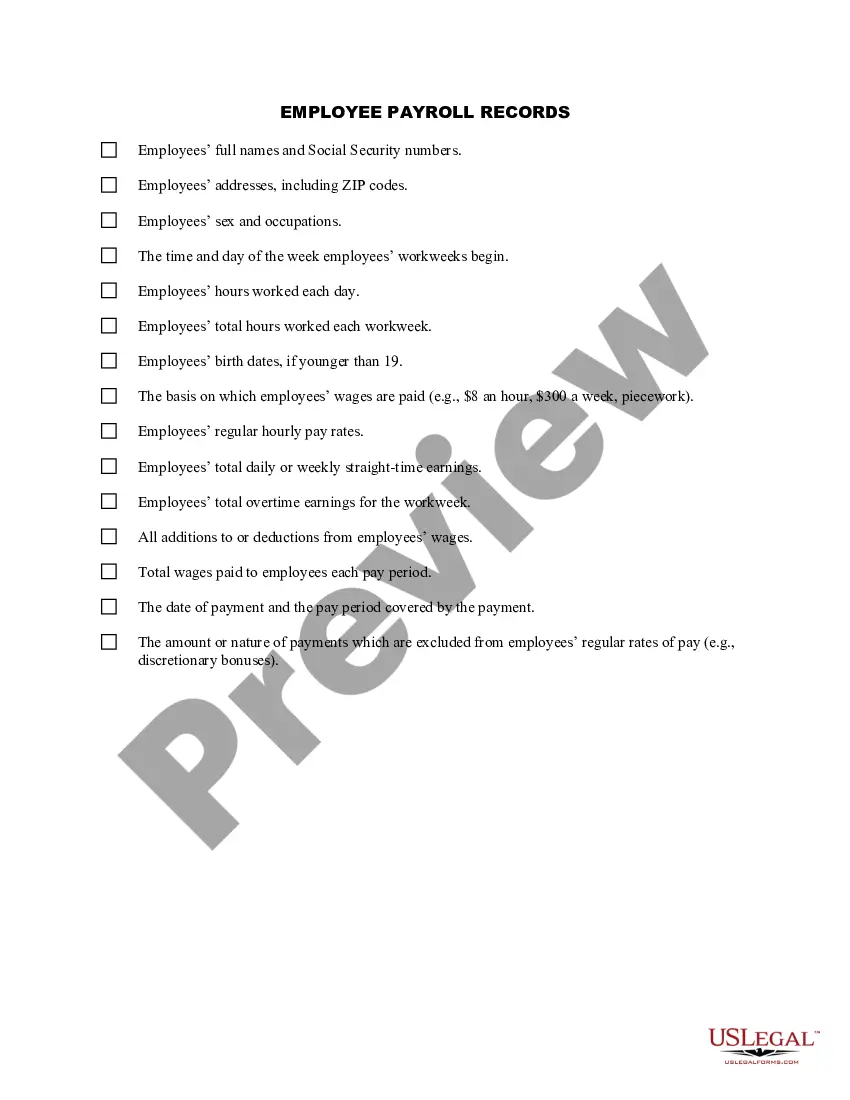
Florida Employee Payroll Records Checklist
Description
Get your form ready online
Our built-in tools help you complete, sign, share, and store your documents in one place.
Make edits, fill in missing information, and update formatting in US Legal Forms—just like you would in MS Word.
Download a copy, print it, send it by email, or mail it via USPS—whatever works best for your next step.
Sign and collect signatures with our SignNow integration. Send to multiple recipients, set reminders, and more. Go Premium to unlock E-Sign.
If this form requires notarization, complete it online through a secure video call—no need to meet a notary in person or wait for an appointment.
We protect your documents and personal data by following strict security and privacy standards.

Make edits, fill in missing information, and update formatting in US Legal Forms—just like you would in MS Word.

Download a copy, print it, send it by email, or mail it via USPS—whatever works best for your next step.

Sign and collect signatures with our SignNow integration. Send to multiple recipients, set reminders, and more. Go Premium to unlock E-Sign.

If this form requires notarization, complete it online through a secure video call—no need to meet a notary in person or wait for an appointment.

We protect your documents and personal data by following strict security and privacy standards.
Looking for another form?

How to fill out Employee Payroll Records Checklist?
Selecting the appropriate legal document template can be quite a challenge.
Certainly, there are numerous templates available online, but how do you find the legal form you need.
Utilize the US Legal Forms website. The service offers thousands of templates, including the Florida Employee Payroll Records Checklist, which can be applied for both business and personal purposes.
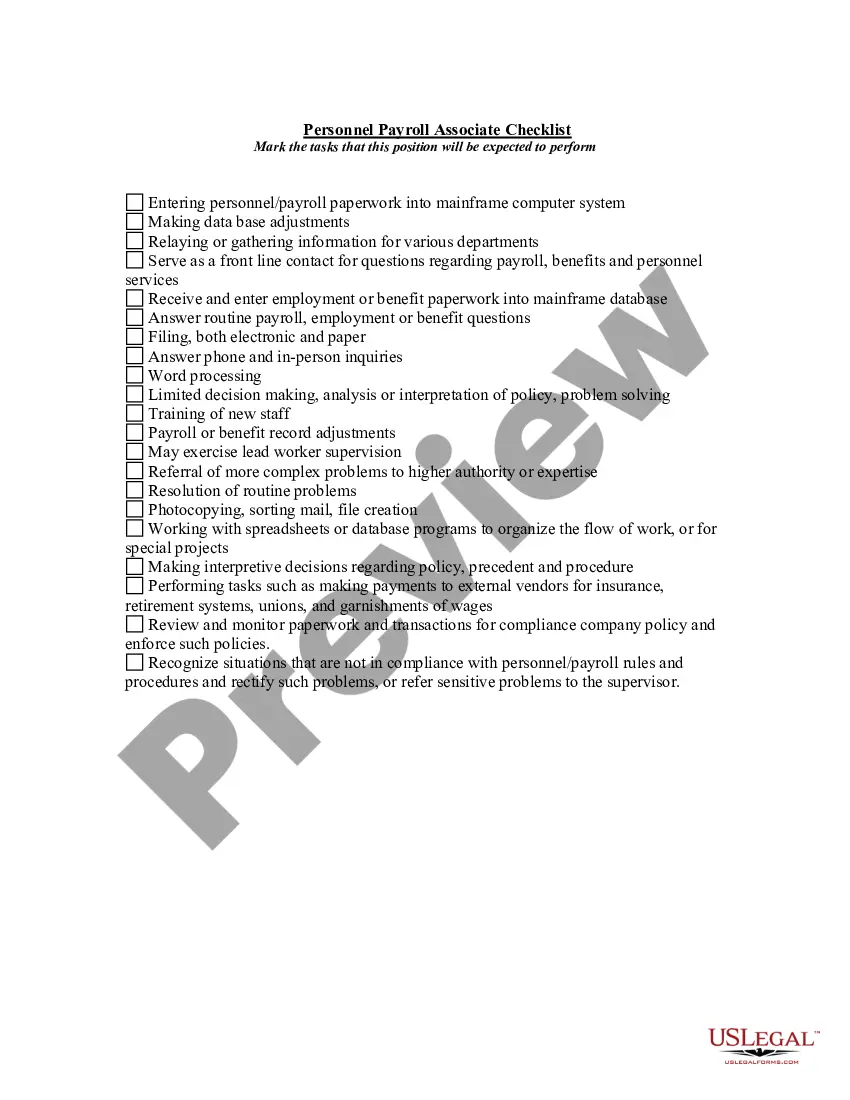
You can review the template using the Preview button and examine the document outline to confirm it is the right one for you.
- All of the forms are reviewed by experts and comply with state and federal regulations.
- If you are already registered, Log In to your account and click on the Download button to obtain the Florida Employee Payroll Records Checklist.
- Use your account to browse the legal forms you may have purchased previously.
- Proceed to the My documents section of your account to download another copy of the documents you need.
- If you are a new user of US Legal Forms, here are simple instructions you should follow.
- First, ensure you have selected the correct form for your city/state.
Form popularity
FAQ
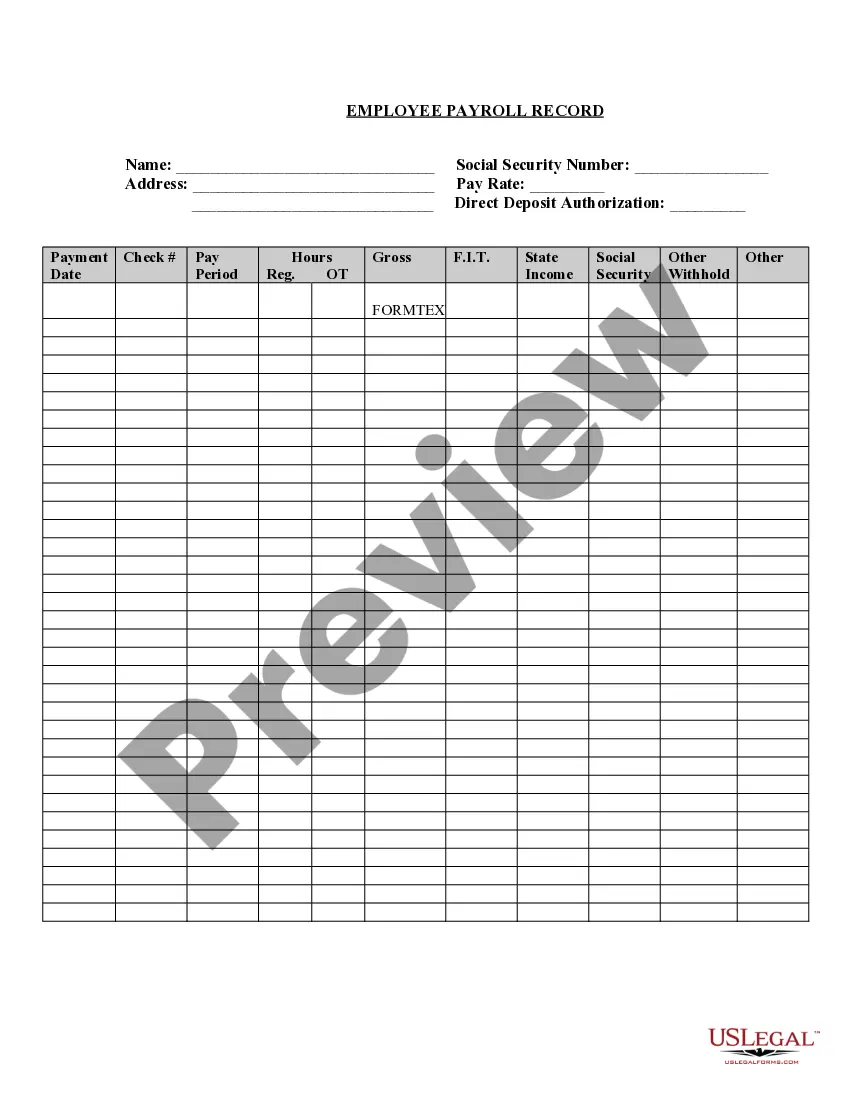
Payroll records contain information about the compensation paid to employees and any deductions from their pay. These records are needed by the payroll staff to calculate gross pay and net pay for employees. Payroll records typically include information about the following items: Bereavement pay. Bonuses.
Generally, here are the documents you should include in each employee's payroll record:General information. Employee name. Address.Tax withholding forms. Form W-4. State W-4 form.Time and attendance records. Time cards.Payroll records. Pay rate.Termination/separation documents, if applicable. Final paycheck information.
A payroll register is tool that records wage payment information about each employee gross pay, deductions, tax withholding, net pay and other payroll-related information for each pay period and pay date.
What do employee payroll records include?General information. Employee name. Address.Tax withholding forms. Form W-4. State W-4 form.Time and attendance records. Time cards. Total hours worked each day and week.Payroll records. Pay rate.Termination/separation documents, if applicable. Final paycheck information.09-Jun-2021
Employers should keep all job-related documentation such as hiring records, performance reviews, disciplinary actions and job descriptions in an employee's general personnel file. Consider whether the document would be relevant to a supervisor who may review this file when making employment decisions.
Payroll records are the combined documents pertaining to payroll that businesses must maintain for each individual that they employ. This includes pay rates, total compensation, tax deductions, hours worked, benefit contributions and more.
The documents commonly need for payroll recordkeeping include but are not limited to:Employee personal information.Employment information.Timesheets.Pay information.Tax documents.Deduction information.Paid and unpaid leave records.Direct deposit information.More items...
The payroll register summarizes the payroll for one pay period and shows total earnings, payroll withholding's and net pay of all employees.
You can store payroll records via paper or online files. Develop a recordkeeping system that works best for you. With paper-based recordkeeping, you can store files in locked cabinets. Be sure to label each of your folders so you can easily access your records.
Seven Types of Records an Employer Should Keep Under Fair Work LegislationGeneral Records.Wages & Pay Records.Payslip Records.Hours of Work Records.Leave Records.Superannuation Records.Termination Records.Recordkeeping with Cloud Payroll.