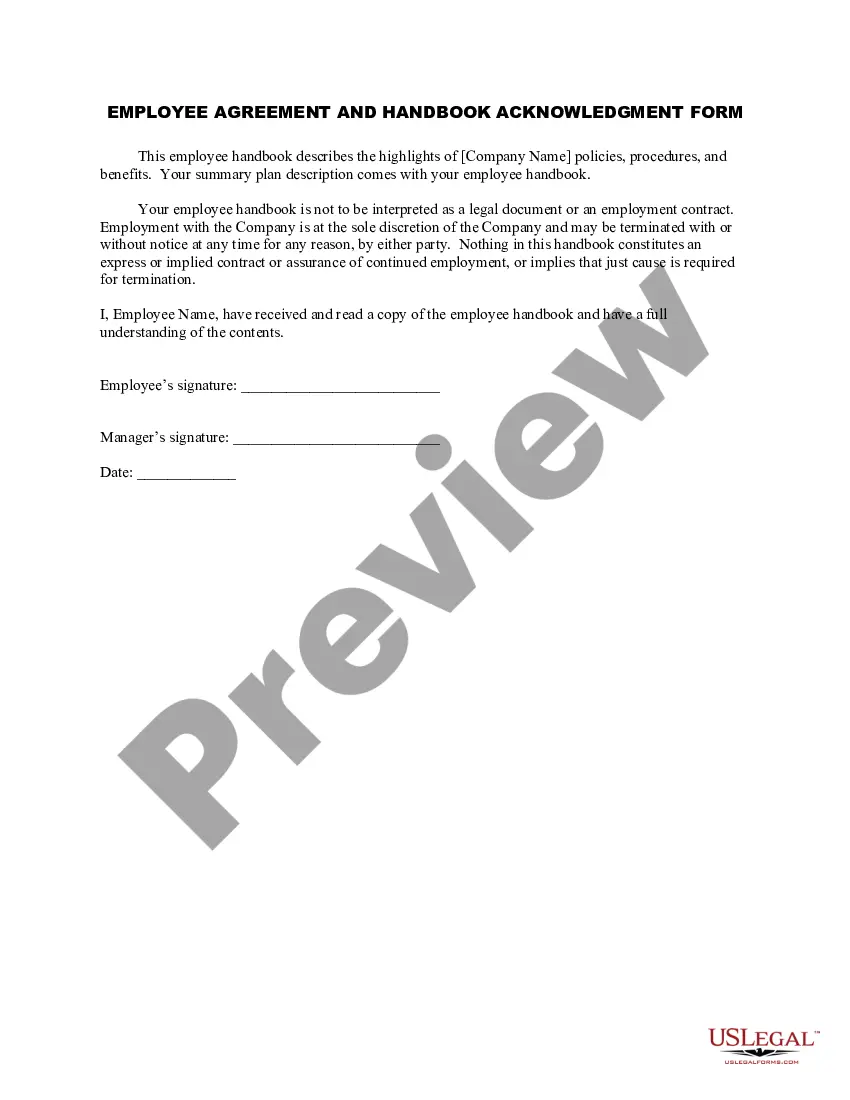
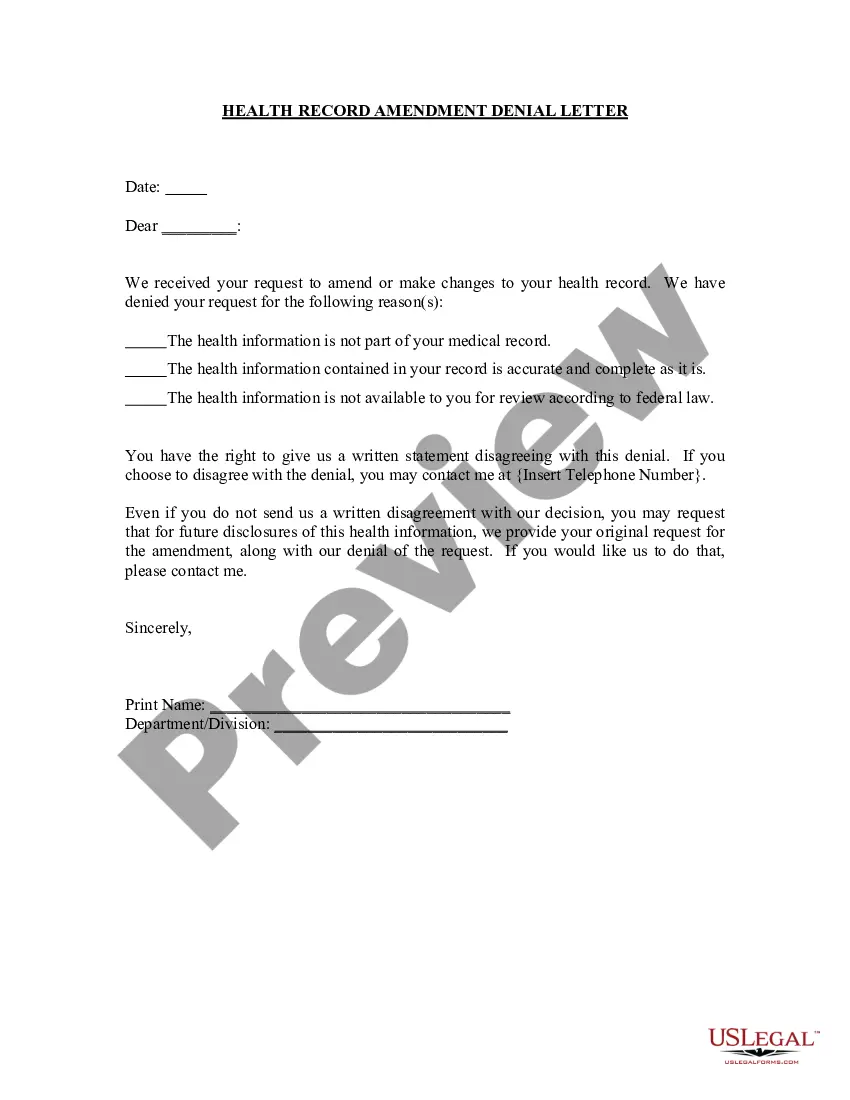
Florida Health Record Amendment Denial Letter
Description
Get your form ready online
Our built-in tools help you complete, sign, share, and store your documents in one place.
Make edits, fill in missing information, and update formatting in US Legal Forms—just like you would in MS Word.
Download a copy, print it, send it by email, or mail it via USPS—whatever works best for your next step.
Sign and collect signatures with our SignNow integration. Send to multiple recipients, set reminders, and more. Go Premium to unlock E-Sign.
If this form requires notarization, complete it online through a secure video call—no need to meet a notary in person or wait for an appointment.
We protect your documents and personal data by following strict security and privacy standards.

Make edits, fill in missing information, and update formatting in US Legal Forms—just like you would in MS Word.

Download a copy, print it, send it by email, or mail it via USPS—whatever works best for your next step.

Sign and collect signatures with our SignNow integration. Send to multiple recipients, set reminders, and more. Go Premium to unlock E-Sign.

If this form requires notarization, complete it online through a secure video call—no need to meet a notary in person or wait for an appointment.

We protect your documents and personal data by following strict security and privacy standards.
Looking for another form?





How to fill out Health Record Amendment Denial Letter?
Are you currently in a position where you need documents for either business or personal purposes almost every day.
There are numerous legal document templates available online, but locating reliable versions isn’t easy.
US Legal Forms provides thousands of template forms, including the Florida Health Record Amendment Denial Letter, which are crafted to fulfill state and federal standards.
Once you find the appropriate form, click Buy now.
Select the pricing option you prefer, fill out the required information to create your account, and pay for the transaction using your PayPal or credit card. Choose a convenient document format and download your copy. Access all the templates you have purchased in the My documents section. You can obtain an additional copy of the Florida Health Record Amendment Denial Letter at any time, if needed. Simply select the necessary form to download or print the document template. Utilize US Legal Forms, the largest collection of legal forms, to save time and avoid errors. The service offers well-crafted legal document templates that can be used for various purposes. Create an account on US Legal Forms and start making your life a little easier.
- If you are already familiar with the US Legal Forms website and have an account, simply Log In.
- After that, you can download the Florida Health Record Amendment Denial Letter template.
- If you don’t have an account and wish to start using US Legal Forms, follow these steps.
- Find the form you need and ensure it is for your correct city/county.
- Use the Review button to examine the template.
- Read the description to confirm that you have chosen the correct form.
- If the form isn’t what you are looking for, use the Research field to find the form that suits your needs and requirements.
Form popularity
FAQ
Under the HIPAA Privacy Rule, covered entities must honor certain patient requests to amend protected health information (PHI). Generally, a patient has the right to amend PHI or a record about the individual in a designated record set, for as long as the PHI is in a designated record set.
Changing a medical record to correct an error is anything but an easy process. Under federal HIPAA rules, patients have the right to request that doctors fix errors, but the provider has up to 60 days to respond, and can ask for a 30-day extension. The provider also can refuse, but must specify the reason in writing.
Under the Privacy Act, individuals have the right to request amendments of their records contained in a system of records.
Any corrected record submitted must make clear the specific change made, the date of the change and the identity of the person making that entry. Note that only the attending providerthat is, the provider who saw the patient and documented the initial note for the visit in questionmay amend the medical record.
An individual has the right to have a covered entity amend protected health information or a record about the individual in a designated record set for as long as the protected health information is maintained in the designated record set. (iv) Is accurate and complete. (1) Individual's request for amendment.
No. A patient's record should be complete and accurate to ensure they receive appropriate care. Patients can question the content of their records, but not on the basis that it is upsetting or that they disagree with it.
As long as your organization maintains a patient's information, the patient has the right to request that you make changes to (or amend) their information in a designated record set. Your organization is responsible for responding to the amendment request.
Reasons for Denial.The provider who received the amendment request had not created the original record. The record was created at another office. There is an exception if the creator is no longer available and the mistake in the record is apparent.
Proper Error Correction ProcedureDraw line through entry (thin pen line). Make sure that the inaccurate information is still legible.Initial and date the entry.State the reason for the error (i.e. in the margin or above the note if room).Document the correct information.
The covered entity may deny the request if it determines that the PHI or record that is the subject of the request: Was not created by the covered entity (unless the originator is no longer available to act on the request; 45 CFR §164.526 (a)(2)(i)