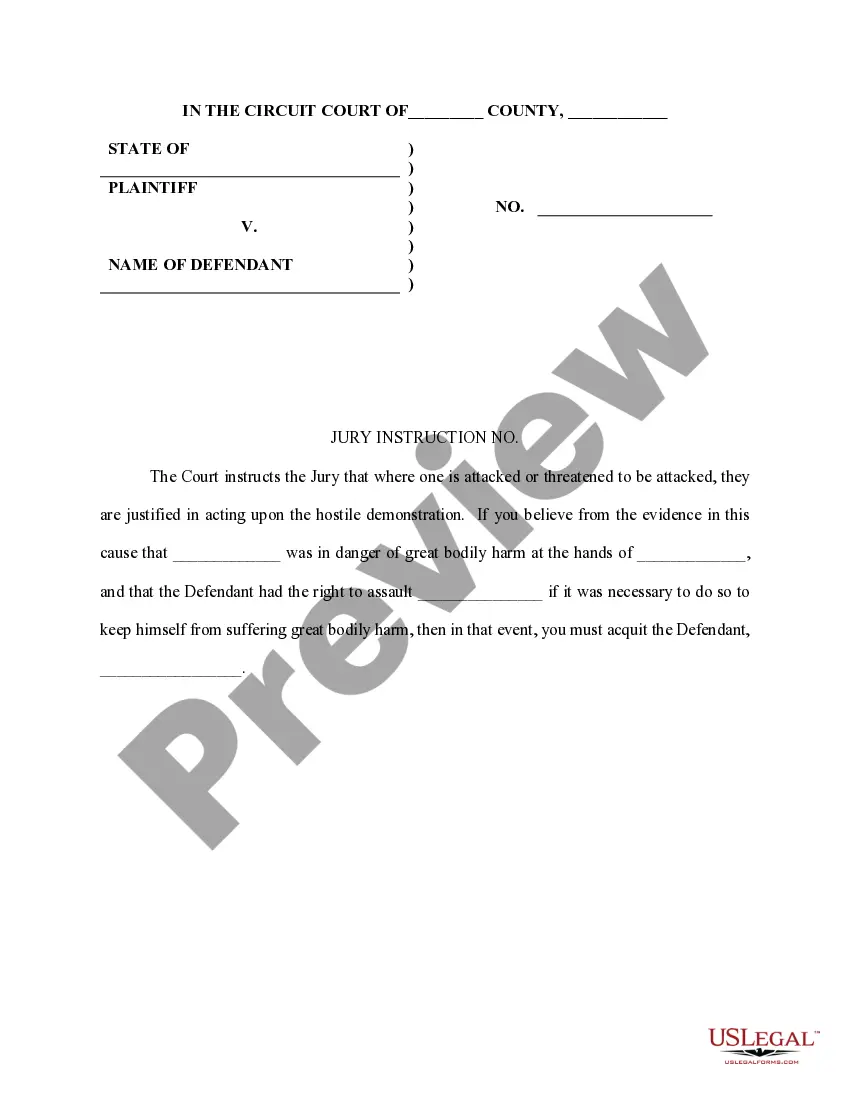
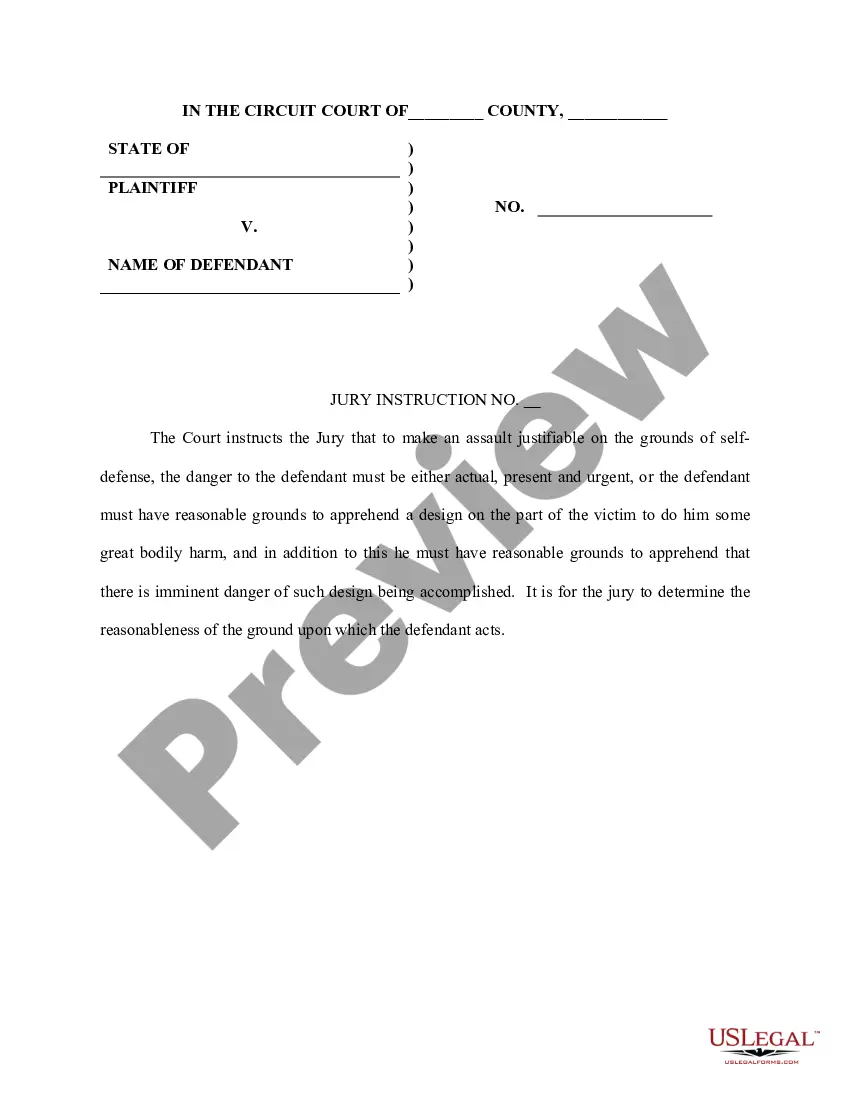
Florida Self-Defense
Description
Get your form ready online
Our built-in tools help you complete, sign, share, and store your documents in one place.
Make edits, fill in missing information, and update formatting in US Legal Forms—just like you would in MS Word.
Download a copy, print it, send it by email, or mail it via USPS—whatever works best for your next step.
Sign and collect signatures with our SignNow integration. Send to multiple recipients, set reminders, and more. Go Premium to unlock E-Sign.
If this form requires notarization, complete it online through a secure video call—no need to meet a notary in person or wait for an appointment.
We protect your documents and personal data by following strict security and privacy standards.

Make edits, fill in missing information, and update formatting in US Legal Forms—just like you would in MS Word.

Download a copy, print it, send it by email, or mail it via USPS—whatever works best for your next step.

Sign and collect signatures with our SignNow integration. Send to multiple recipients, set reminders, and more. Go Premium to unlock E-Sign.

If this form requires notarization, complete it online through a secure video call—no need to meet a notary in person or wait for an appointment.

We protect your documents and personal data by following strict security and privacy standards.
Looking for another form?

How to fill out Self-Defense?
If you want to thorough, obtain, or generate official document templates, utilize US Legal Forms, the largest assortment of legal forms that are available online.
Leverage the website's straightforward and user-friendly search to find the documents you require.
A range of templates for business and personal use are organized by categories and states, or keywords. Use US Legal Forms to acquire the Florida Self-Defense in just a few clicks.
Each legal document template you purchase belongs to you indefinitely. You have access to every form you downloaded in your account. Navigate to the My documents section and select a form to print or download again.
Be proactive and obtain, and print the Florida Self-Defense with US Legal Forms. There are countless professional and state-specific forms you can use for your personal or business needs.
- If you are currently a US Legal Forms user, sign in to your account and click the Get button to obtain the Florida Self-Defense.
- You can also access forms you previously downloaded from the My documents tab of your account.
- If you are using US Legal Forms for the first time, follow the instructions below.
- Step 1. Ensure you have chosen the form for the correct city/state.
- Step 2. Use the Preview option to review the form's content. Don’t forget to check the summary.
- Step 3. If you are not satisfied with the form, use the Search box at the top of the screen to find other forms in the legal form template.
- Step 4. After locating the form you need, click the Purchase now button. Choose the payment plan you prefer and enter your information to register for an account.
- Step 5. Complete the transaction. You can use your credit card or PayPal account to finalize the payment.
- Step 6. Select the format of the legal form and download it to your device.
- Step 7. Fill out, modify, and print or sign the Florida Self-Defense.
Form popularity
FAQ
It shall be unlawful and a class D offense for a person, while in a public place, to engage in a fight or mutual combat with another person or persons; provided, that this Section shall not apply to duly authorized or licensed boxing or wrestling contests.
In Florida, mutual combat is a recognized defense because both parties consent to being touched as an understood consequence of that altercation. Both parties must be at fault, and the defendant must not be the primary aggressor or initiate the fight.
Defendants in Domestic Violence Cases Can Argue Self-Defense but Must Have Evidence. Florida is well known for its strong ?stand your ground? laws. Under these laws, citizens are justified in using force to protect themselves from an imminent threat.
Affrays and riots. (1) A person commits an affray if he or she engages, by mutual consent, in fighting with another person in a public place to the terror of the people. A person who commits an affray commits a misdemeanor of the first degree, punishable as provided in s. 775.082 or s.
Florida Self-Defense Law Florida is one of more than 30 states recognizing the ?Castle Doctrine,? which means that residents may use force, including deadly force, to protect their ?castle.?
Under Section 776.012, Florida Statutes, a person is justified in the use of non-deadly force in self-defense where the person reasonably believes that such conduct is necessary to defend himself or herself or another against such other's imminent use of unlawful force.
(1) A person commits an affray if he or she engages, by mutual consent, in fighting with another person in a public place to the terror of the people. A person who commits an affray commits a misdemeanor of the first degree, punishable as provided in s. 775.082 or s. 775.083.
(1) A person is justified in using or threatening to use force, except deadly force, against another when and to the extent that the person reasonably believes that such conduct is necessary to defend himself or herself or another against the other's imminent use of unlawful force.