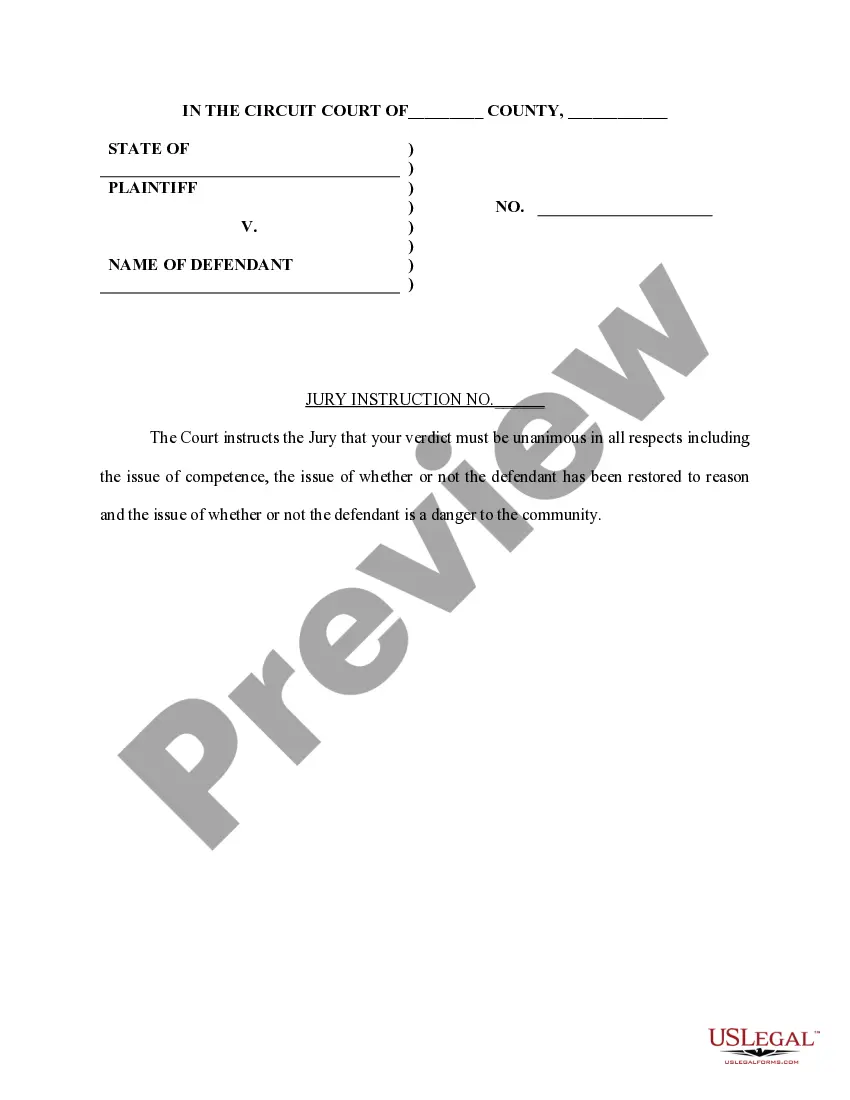
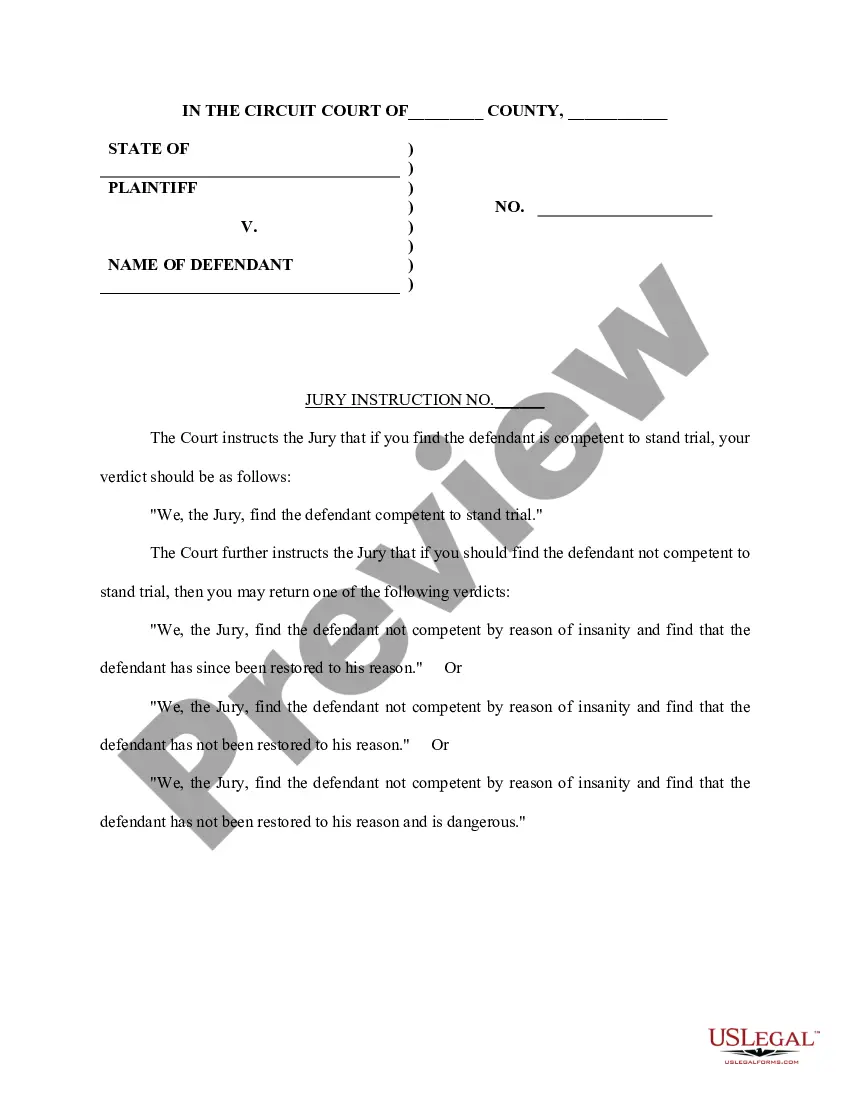
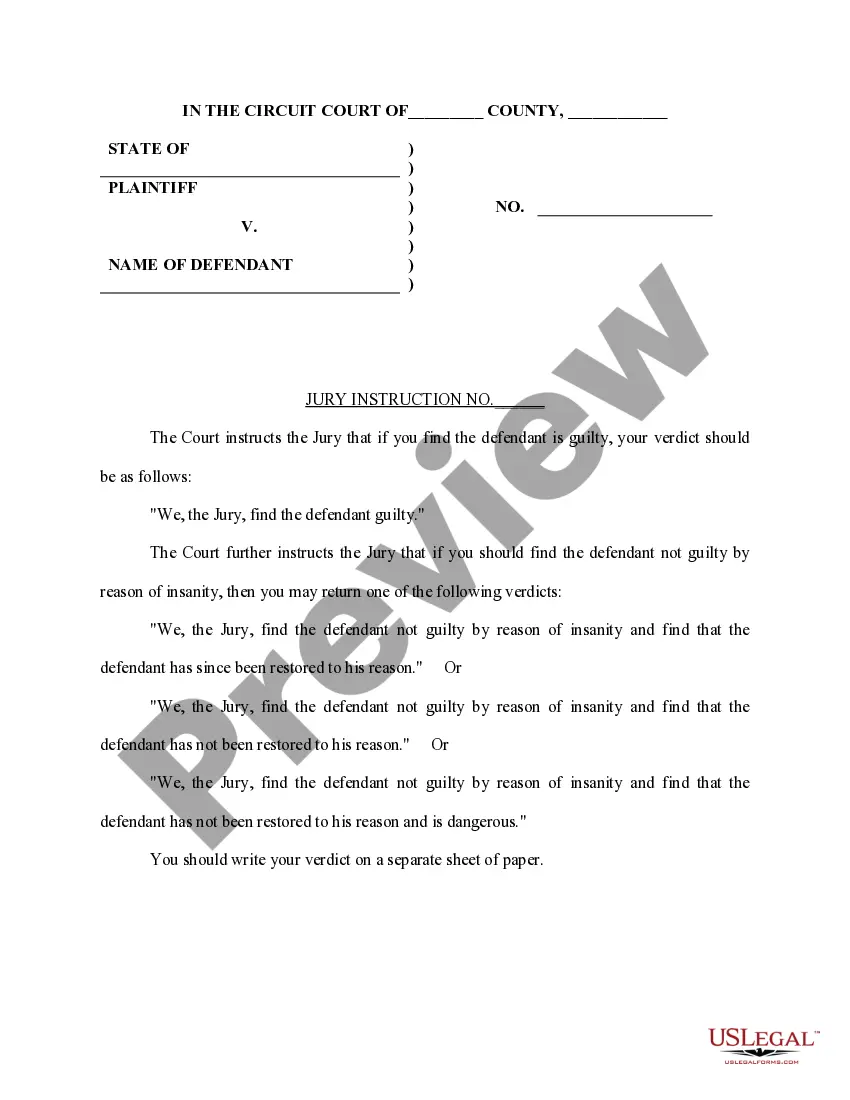
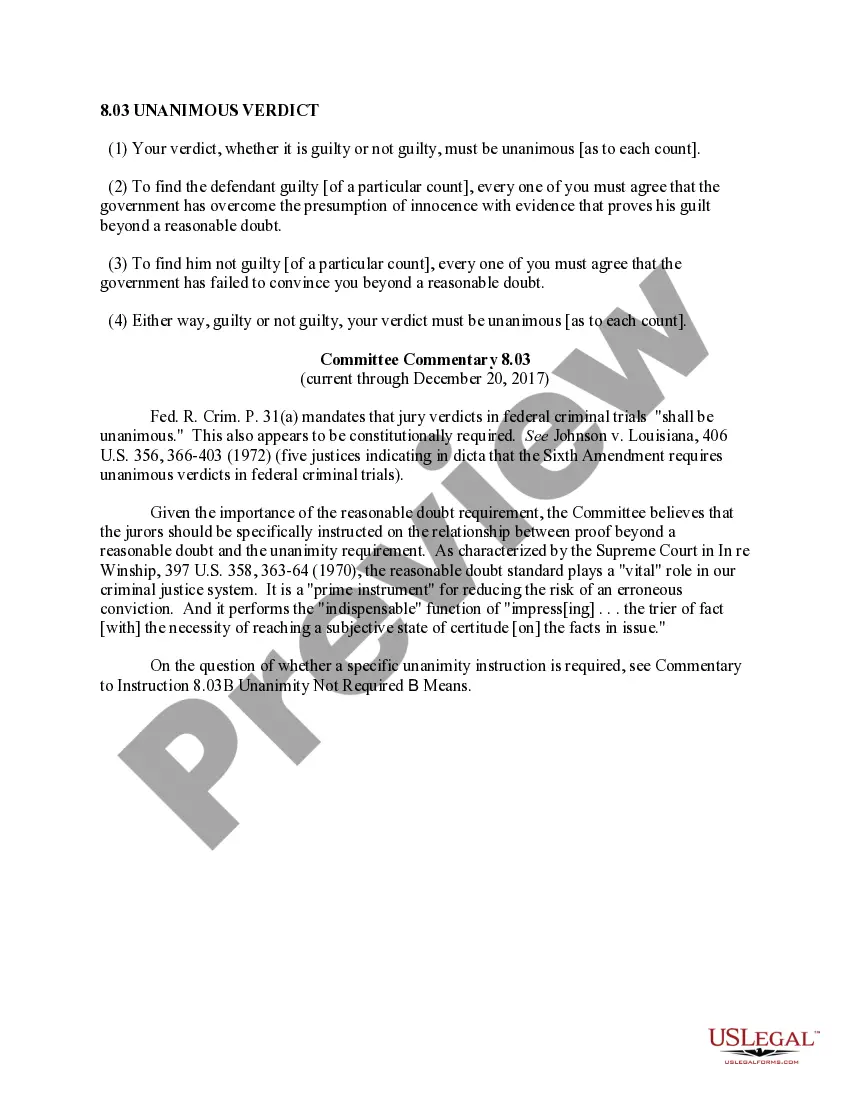
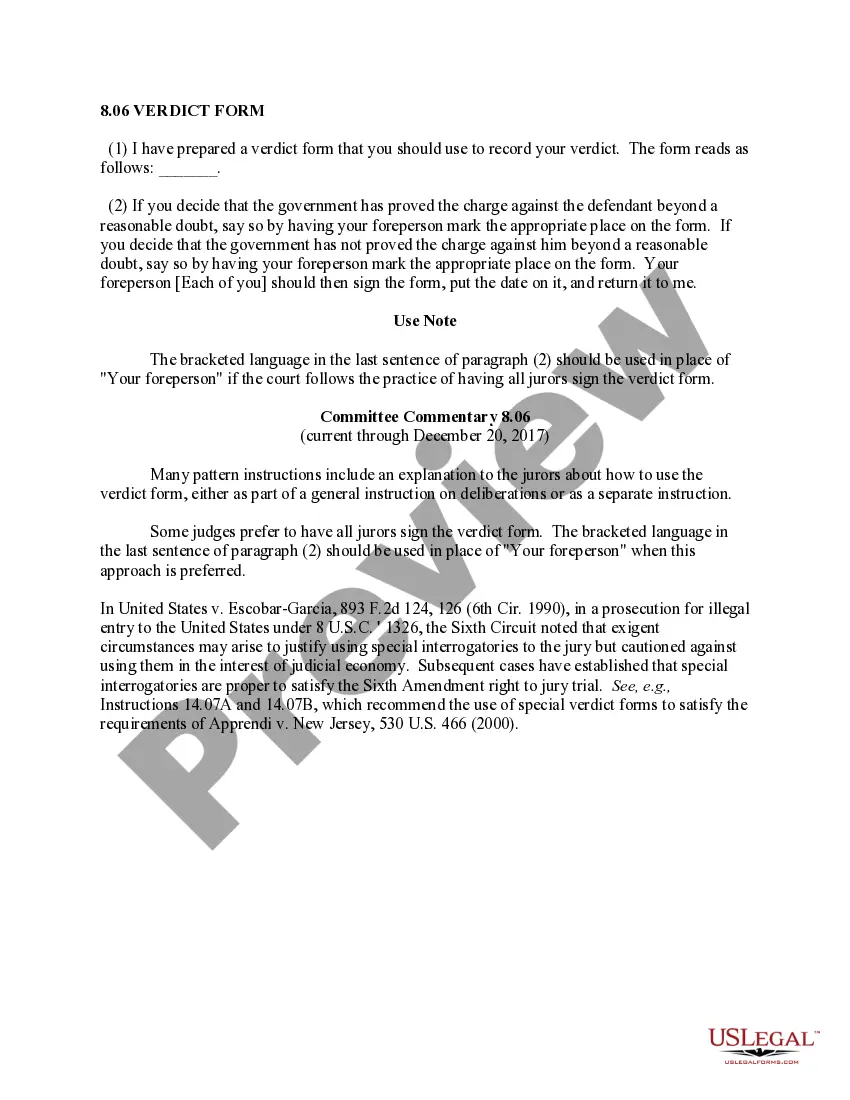
Florida Competence - Unanimous Verdict
Description
Get your form ready online
Our built-in tools help you complete, sign, share, and store your documents in one place.
Make edits, fill in missing information, and update formatting in US Legal Forms—just like you would in MS Word.
Download a copy, print it, send it by email, or mail it via USPS—whatever works best for your next step.
Sign and collect signatures with our SignNow integration. Send to multiple recipients, set reminders, and more. Go Premium to unlock E-Sign.
If this form requires notarization, complete it online through a secure video call—no need to meet a notary in person or wait for an appointment.
We protect your documents and personal data by following strict security and privacy standards.

Make edits, fill in missing information, and update formatting in US Legal Forms—just like you would in MS Word.

Download a copy, print it, send it by email, or mail it via USPS—whatever works best for your next step.

Sign and collect signatures with our SignNow integration. Send to multiple recipients, set reminders, and more. Go Premium to unlock E-Sign.

If this form requires notarization, complete it online through a secure video call—no need to meet a notary in person or wait for an appointment.

We protect your documents and personal data by following strict security and privacy standards.
Looking for another form?


How to fill out Competence - Unanimous Verdict?
Have you found yourself needing documentation for both business or personal reasons nearly every day.
There are numerous legal document templates available online, but locating reliable ones isn't easy.
US Legal Forms offers thousands of form templates, including the Florida Competence - Unanimous Verdict, which can be customized to comply with federal and state regulations.
Utilize US Legal Forms, the most comprehensive collection of legal documents, to save time and prevent mistakes.
The service provides professionally crafted legal document templates that can be used for various purposes. Create an account on US Legal Forms and start simplifying your life.
- If you are already familiar with the US Legal Forms website and possess an account, simply Log In.
- Afterward, you can download the Florida Competence - Unanimous Verdict template.
- If you do not have an account and wish to start using US Legal Forms, follow these steps.
- Find the form you need and make sure it is for the correct city/county.
- Use the Preview button to review the form.
- Check the description to ensure you have chosen the correct form.
- If the form isn't what you're looking for, utilize the Search box to find the form that suits your needs and requirements.
- Once you locate the right form, click Acquire now.
- Select the pricing plan you prefer, fill in the necessary information to create your account, and complete your purchase using PayPal or a credit card.
- Choose a convenient file format and download your copy.
- Access all of the document templates you have purchased in the My documents list. You can download an additional copy of Florida Competence - Unanimous Verdict anytime if needed. Click the required form to download or print the document template.
Form popularity
FAQ
Unanimous juries are no longer required for Florida death penalty sentences. Florida Gov. Ron DeSantis speaks as he announces a proposal for Digital Bill of Rights, Wednesday, Feb.
United States, 333 U.S. 740, 748 (1948) ( ?Unanimity in jury verdicts is required where the Sixth and Seventh Amendments apply. In criminal cases this requirement of unanimity extends to all issues?character or degree of the crime, guilt and punishment?which are left to the jury.? ); Maxwell v.
Although the singer Meatloaf has said that ?two out of three ain't bad,? under Wisconsin law, five-sixths of the jurors (10 out of 12 jurors on a 12-person jury)1 must agree on all issues necessary to support a judgment in a civil case.
Six (6) qualified jurors shall try circuit or county civil cases. In addition, one alternate is typically selected. Authority: Section 69.071, Florida Statutes. Peremptory Challenges: Each party shall be entitled to 3 peremptory challenges plus 1 peremptory challenge in the selection of the alternate.
Rule 1.431 - TRIAL JURY (a) Questionnaire. (1) The circuit court may direct the authority charged by law with the selection of prospective jurors to furnish each prospective juror with a questionnaire in the form approved by the supreme court from time to time to assist the authority in selecting prospective jurors.
They may determine liability and issue damages, but the judge can alter the total damages and make other adjustments before entering the final order. It is important to note that, unlike in criminal cases, a civil jury does not need to make a unanimous decision. In Florida, only four jurors need to agree.
The law requires twelve (12) jurors to be seated in a criminal case, only eight (8) jurors are required in a civil case. In a criminal trial, the jury must find a litigant ?guilty? or ?not guilty? by unanimous vote. In civil cases the law requires a vote of at least three-fourths of the jury to reach a verdict.
In most states, a death sentence may only be imposed by a jury in unanimous agreement. But in two recent cases, defendants faced the possibility of a death sentence despite the objections of jurors. Under Missouri law, a judge may impose a death sentence when the jury deadlocks in the penalty phase.