Florida Writ of Execution
About this form
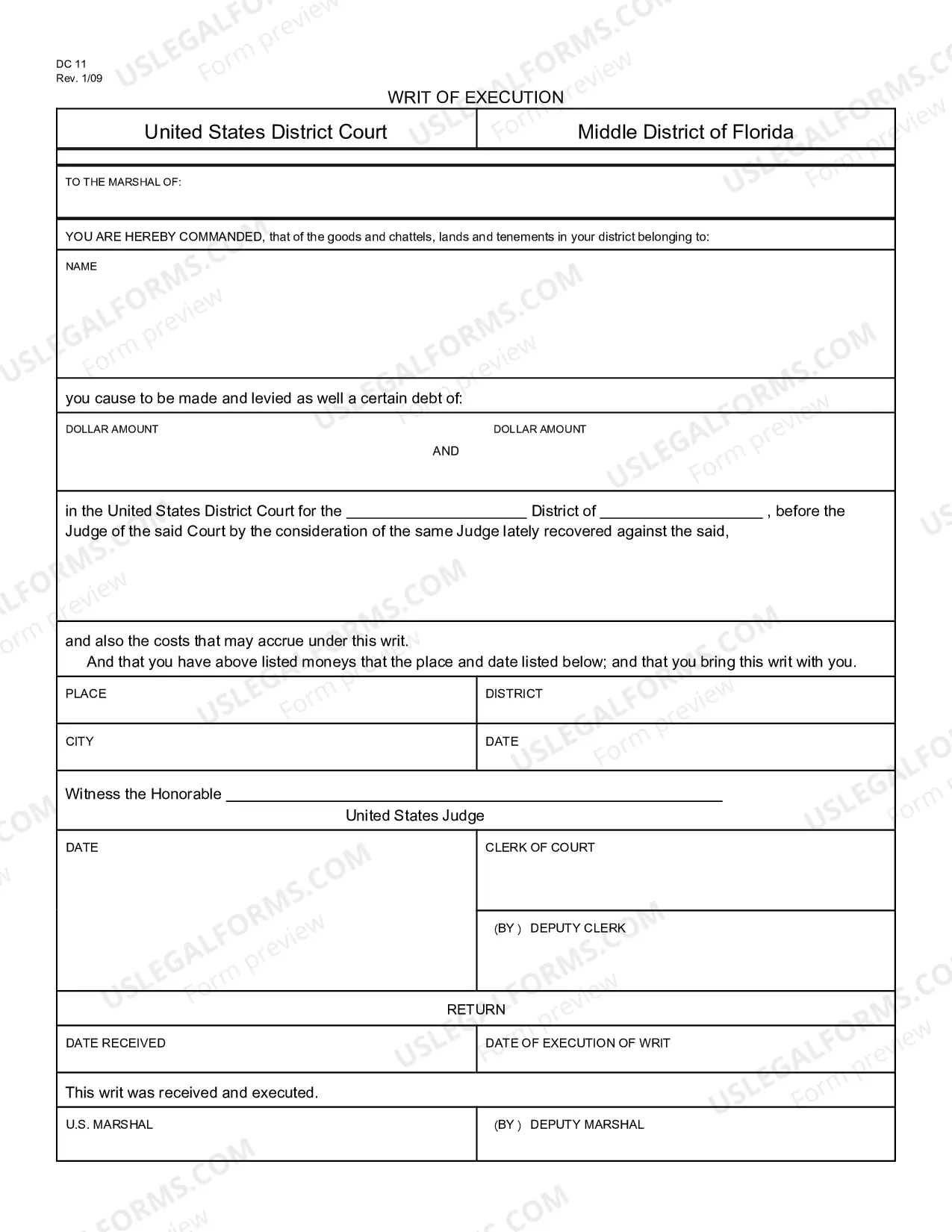
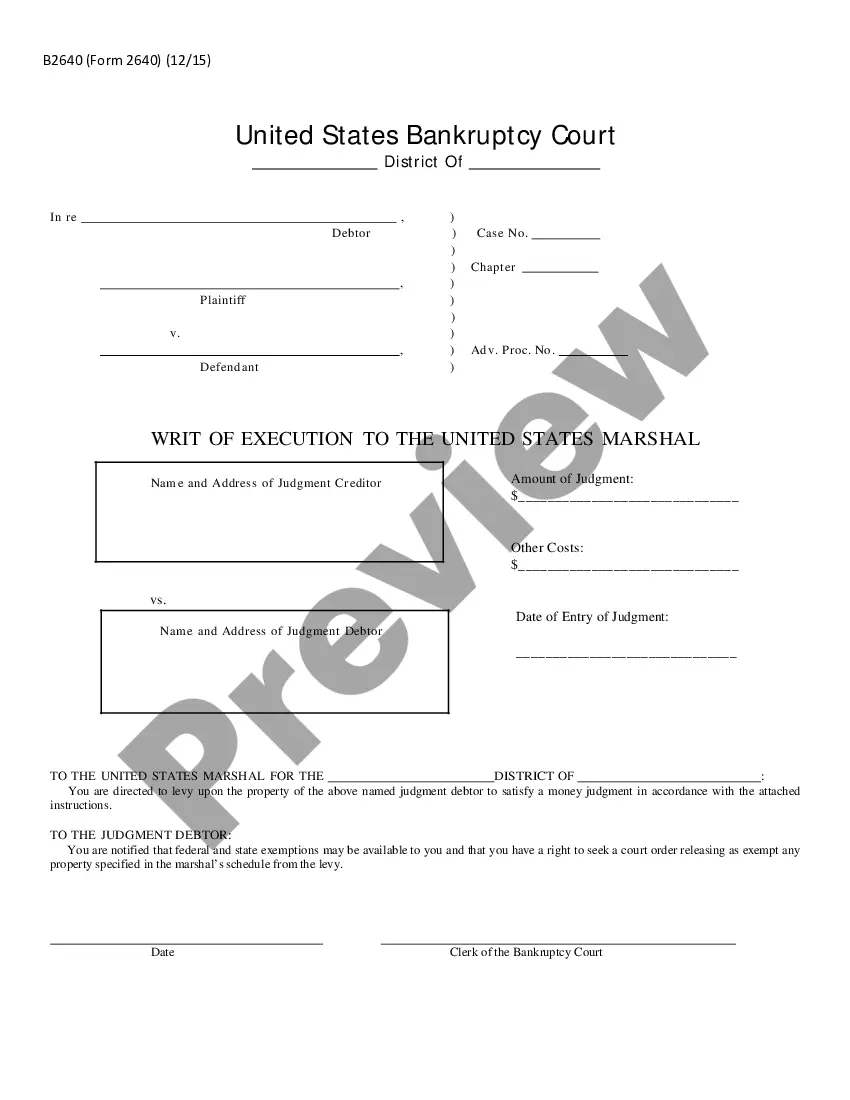
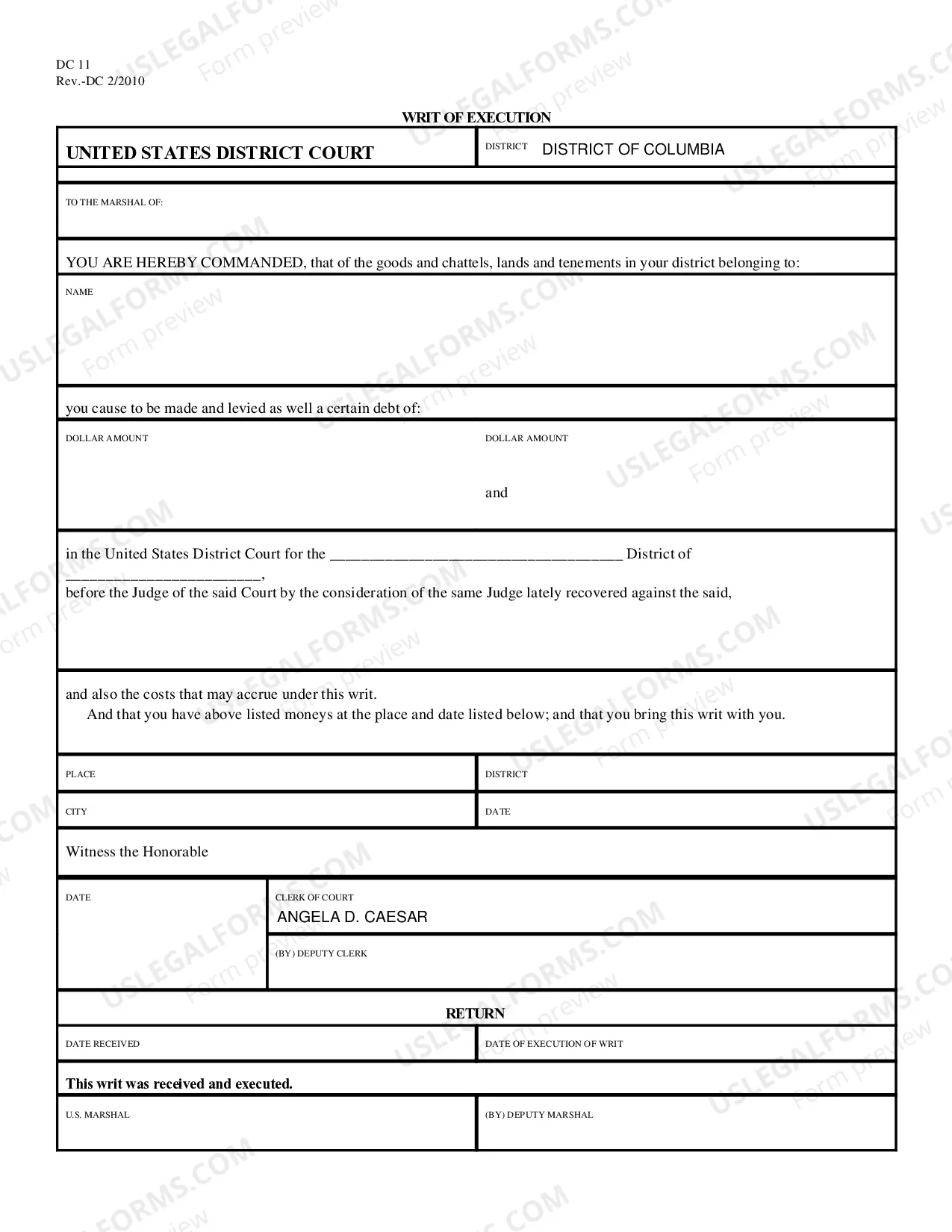
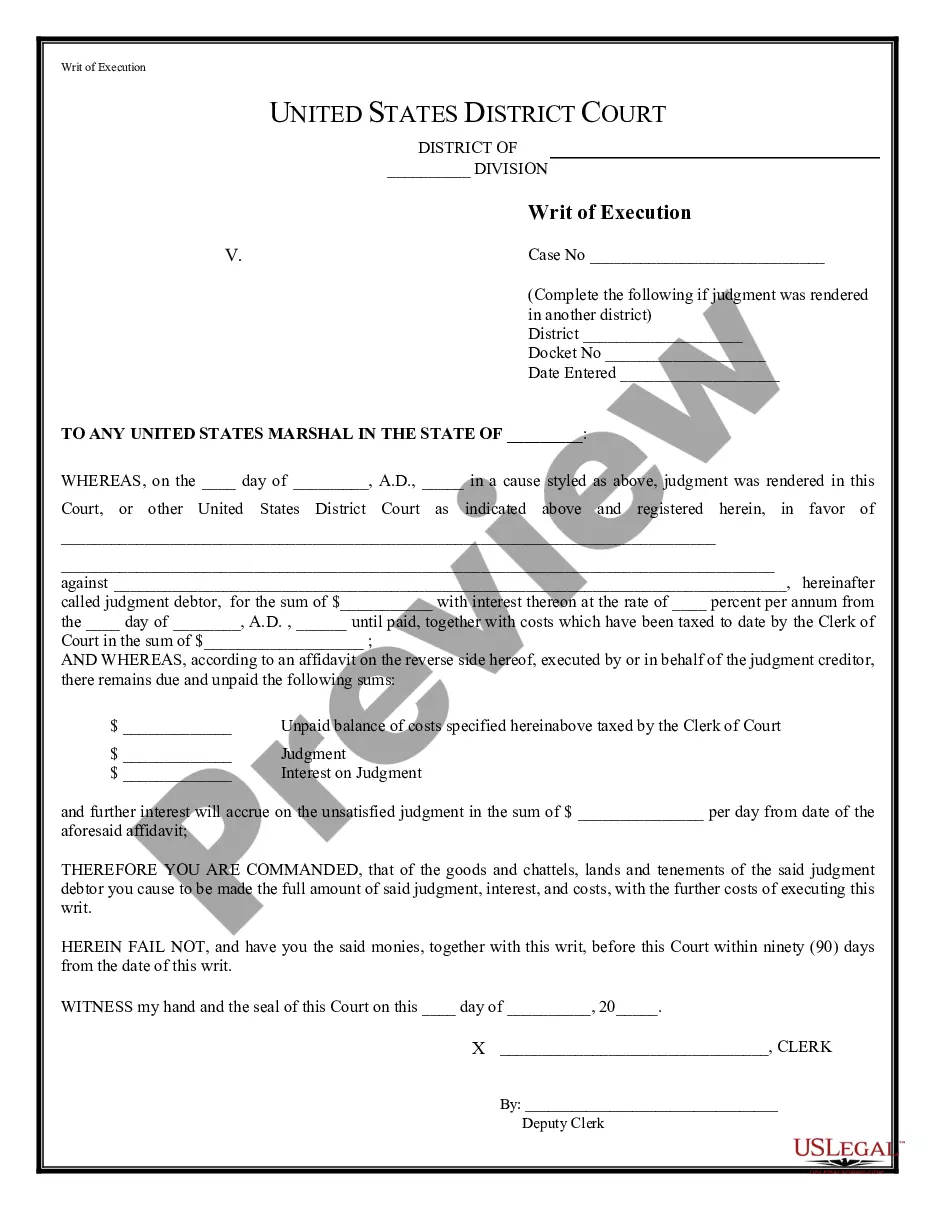
The Writ of Execution is a legal document issued by a court that authorizes the enforcement of a judgment. It specifically empowers a marshal or sheriff to seize and sell the property of a debtor to satisfy a court-ordered debt. This form differs from other enforcement documents as it directly mandates the removal of assets to fulfill financial obligations established in a court ruling.
Key parts of this document
- Party Information: The name of the debtor whose property will be seized.
- Debt Details: Specifies the amount owed, including any accrued costs.
- Court Information: Includes details about the court that issued the judgment.
- Marshal's Command: Directs the marshal to execute the writ and seize the debtor's property.
- Witness Signatures: Required signatures from the presiding judge and the clerk of court to validate the order.
- Execution Dates: Dates relevant to the receipt and execution of the writ.
Situations where this form applies
This form is used when a creditor has obtained a judgment in court for a monetary debt and wishes to enforce that judgment by reclaiming property from the debtor. Situations may include unpaid loans, court-imposed fines, or judgments resulting from lawsuits where the debtor has not paid the awarded amount.
Who this form is for
- Creditors seeking to enforce a court judgment against a debtor.
- Judgments awarded in civil cases where financial compensation was mandated.
- Legal representatives or attorneys managing debt recovery processes.
Instructions for completing this form
- Identify the debtor: Write the full name of the individual or entity against whom the judgment has been made.
- Specify the debt: Clearly indicate the total dollar amount owed as a result of the judgment.
- Fill in court information: Include the name of the court and district that issued the judgment.
- Provide the execution details: Note the city, date of issuance, and judge's name as well as the name of the clerk.
- Sign where indicated: Ensure the form is signed by the appropriate court representatives to authenticate it.
Notarization guidance
This form does not typically require notarization to be legally valid. However, some jurisdictions or document types may still require it. US Legal Forms provides secure online notarization powered by Notarize, available 24/7 for added convenience.
Get your form ready online
Our built-in tools help you complete, sign, share, and store your documents in one place.
Make edits, fill in missing information, and update formatting in US Legal Forms—just like you would in MS Word.
Download a copy, print it, send it by email, or mail it via USPS—whatever works best for your next step.
Sign and collect signatures with our SignNow integration. Send to multiple recipients, set reminders, and more. Go Premium to unlock E-Sign.
If this form requires notarization, complete it online through a secure video call—no need to meet a notary in person or wait for an appointment.
We protect your documents and personal data by following strict security and privacy standards.

Make edits, fill in missing information, and update formatting in US Legal Forms—just like you would in MS Word.

Download a copy, print it, send it by email, or mail it via USPS—whatever works best for your next step.

Sign and collect signatures with our SignNow integration. Send to multiple recipients, set reminders, and more. Go Premium to unlock E-Sign.

If this form requires notarization, complete it online through a secure video call—no need to meet a notary in person or wait for an appointment.

We protect your documents and personal data by following strict security and privacy standards.
Avoid these common issues
- Failing to accurately record the debtor's information, potentially rendering the writ ineffective.
- Not including the total amount of debt owed or miscalculating additional costs.
- Omitting necessary signatures from the judge or court clerk, which can invalidate the form.
- Using outdated versions of the writ that do not comply with current legal standards.
Benefits of completing this form online
- Convenience: Easily download the writ of execution from anywhere at any time.
- Editability: Modify the form as needed to fit specific circumstances without hassle.
- Reliability: Access a form drafted by licensed attorneys, ensuring it meets legal standards.
Legal use & context
- A Writ of Execution is enforceable as long as it complies with court rules and is correctly served.
- Property seized can include personal belongings and real estate as stipulated by the law.
- Failure to comply with the writ may lead to further legal action against the debtor.
Quick recap
- The Writ of Execution allows creditors to enforce legal judgments by seizing property.
- Correct completion and submission of the writ is crucial for legal enforcement.
- Always verify local jurisdiction rules for compliance when utilizing this form.
Looking for another form?

Form popularity
FAQ
Another name for a writ of possession is a 'writ of restitution.' This document allows a property owner to regain possession of their property from a tenant or occupant. In Florida, a writ of restitution effectively restores the rightful owner’s control and can be essential in eviction cases. With tools from US Legal Forms, you can easily navigate through the necessary paperwork to secure a writ of possession.
No, a writ of execution is not the same as a writ of possession, although they are related. A Florida Writ of Execution focuses on the collection of monetary judgments, while a writ of possession pertains to repossessing property. Both serve important roles within legal proceedings, but they target different outcomes. Understanding these differences can be crucial, and resources like US Legal Forms can help clarify these terms.
The purpose of a Florida Writ of Execution is to enforce a judgment awarded by a court. This legal document authorizes law enforcement to seize the debtor's assets, such as property or bank accounts, to satisfy a monetary judgment. Essentially, it transforms a court's ruling into tangible action, ensuring that creditors can recover what they are owed. If you need assistance with this process, consider using US Legal Forms for clear documentation and guidance.
To obtain a Writ of Possession in Florida, you need to start by securing a judgment in your favor for possession of the property in question. Once you have the judgment, file a request with the court for the writ. Having the right forms and understanding the filing process is where platforms like US Legal Forms can provide significant assistance, ensuring you complete the necessary steps correctly.
A Florida Writ of Execution allows a creditor to execute against a debtor's property to satisfy a monetary judgment, while a Writ of Possession pertains to reclaiming possession of property. Essentially, the writ of execution is about enforcing financial judgment, whereas the writ of possession focuses on reclaiming physical property. Understanding the distinction is crucial for pursuing the correct legal avenue.
The time it takes for the Sheriff to serve a Writ of Possession in Florida can vary based on several factors, including the Sheriff's current workload and the specifics of your case. Typically, the service can occur within a few days to a couple of weeks. Once served, you will receive notice of the action taken by the Sheriff.
Getting a Writ of Possession in Florida begins by filing a motion after obtaining a judgment for possession. You must present your case to the court, clearly demonstrating your right to possession of the property. Once the court issues the writ, you can then request the Sheriff to enforce it.
To obtain a Florida Writ of Execution, you must first obtain a judgment from the court. After securing the judgment, you can file a motion for a writ of execution with the court clerk. It is essential to ensure that the judgment you received is final, as only final judgments can lead to the issuance of this writ.
Stopping an eviction after a writ of possession in Florida is challenging but not impossible. You may seek relief by filing an appeal or a motion to vacate the judgment that led to the writ. Engaging with legal services like UsLegalForms can provide valuable insights and resources to explore your options effectively and potentially find a resolution.
Once a writ of possession is issued in Florida, the landlord receives the legal authority to regain possession of the rental property. The sheriff's office will execute the writ, which may include physically removing any occupants who remain. Understanding the process of the Florida Writ of Execution is essential, as it directly impacts your housing situation and future rental prospects.