Florida Order Granting Leave to Withdraw as Attorney of Record
Understanding this form
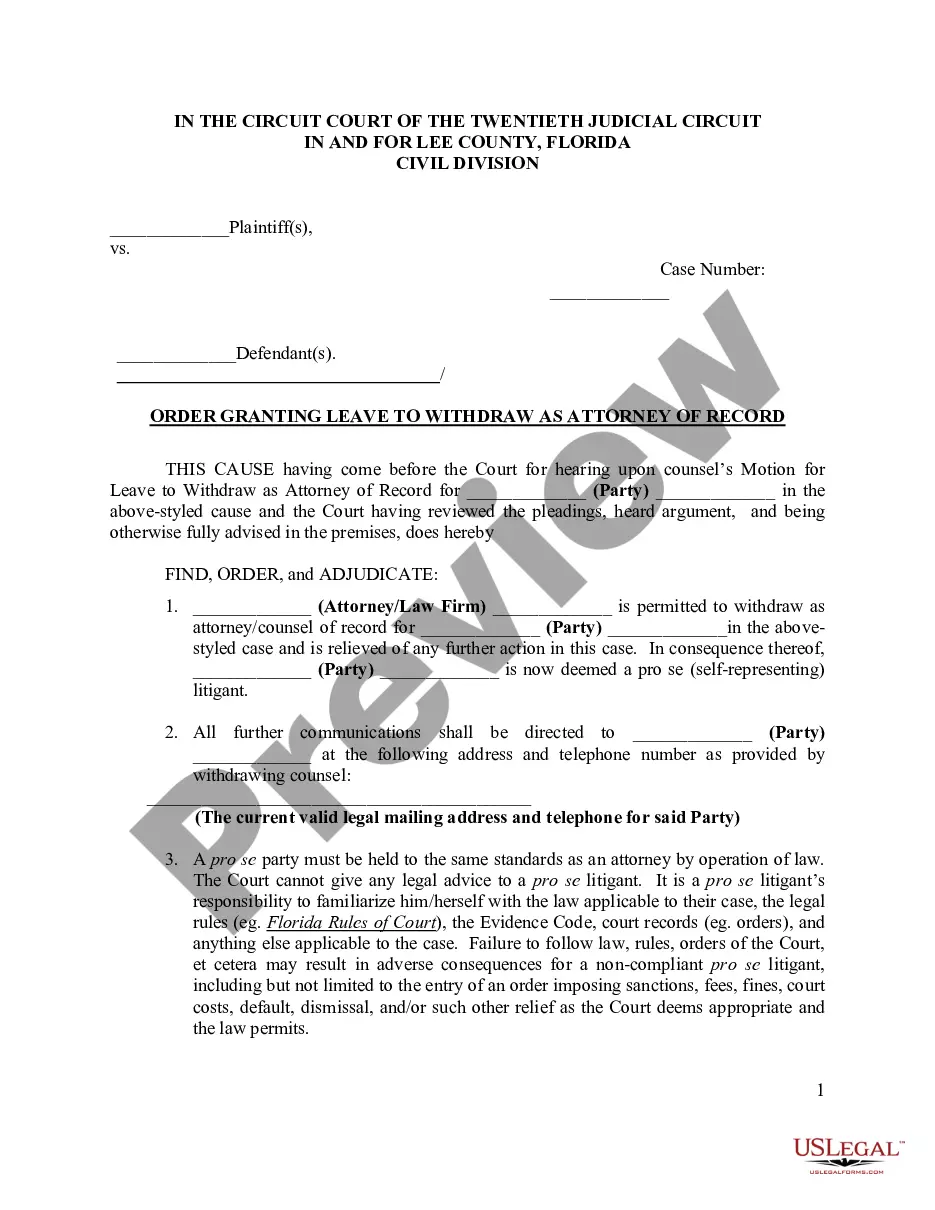
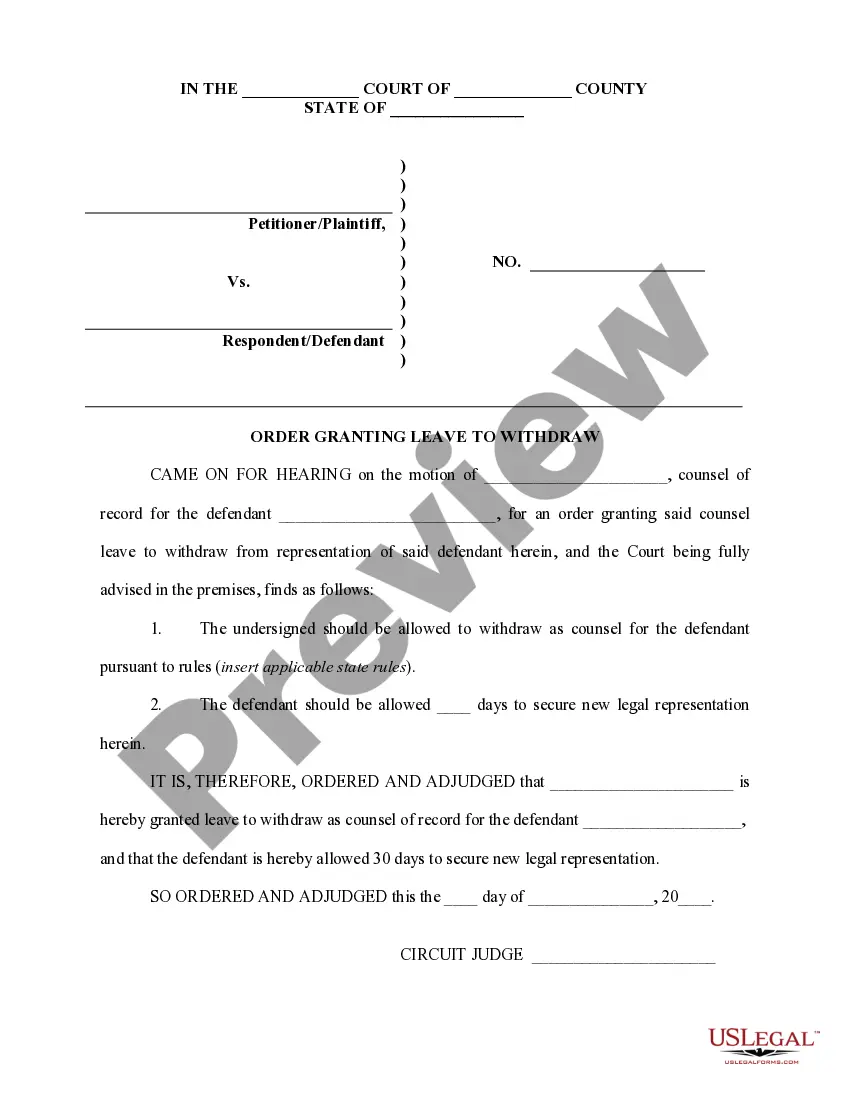
The Order Granting Leave to Withdraw as Attorney of Record is a legal document that allows an attorney to formally withdraw from representing a client in a court case. This form is crucial when an attorney wishes to terminate their professional relationship with a client, ensuring that the court is properly informed and that the client understands their status as a self-representing litigant.
What’s included in this form
- Title identifying the order and the court jurisdiction.
- Case number to associate the order with the specific case.
- Sections for the attorney and party details, confirming the attorney's withdrawal.
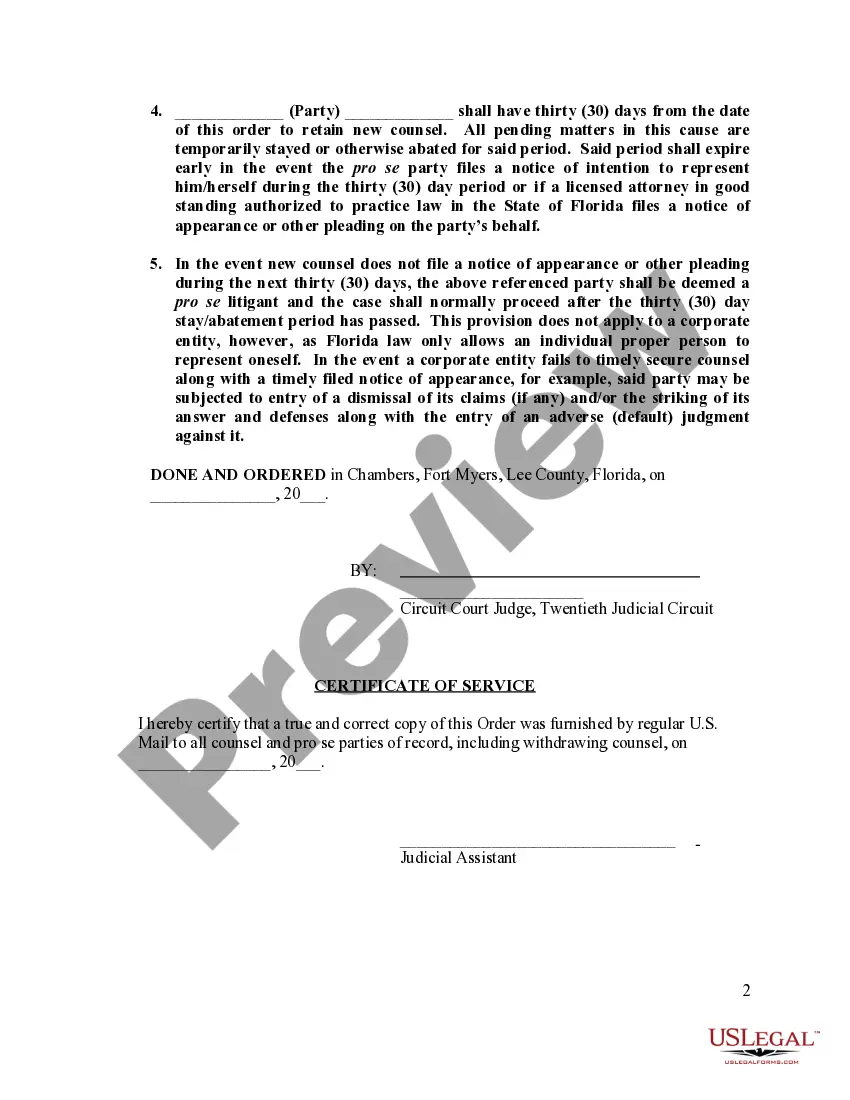
- Provision stating the timeline for the party to find new representation.
- Instructions for the pro se litigant regarding their responsibilities.
When to use this form
This form should be used when an attorney wishes to withdraw from a case they are handling. Situations may include conflicts of interest, inability to represent the client adequately, or when a client chooses to represent themselves. Completing this form ensures the court acknowledges the withdrawal and clarifies the client's status moving forward.
Who can use this document
- Attorneys seeking to formally withdraw from a case.
- Clients who intend to represent themselves (pro se) after their attorney withdraws.
- Individuals or entities involved in legal proceedings where attorney representation is shifting.
Instructions for completing this form
- Identify the parties involved by filling in the plaintiff's and defendant's names.
- Enter the case number associated with your case.
- Specify the attorney or law firm withdrawing from representing the party.
- Provide the current valid legal mailing address and telephone number for the party now representing themselves.
- Ensure to include the date and signature of the Circuit Court Judge.
Does this document require notarization?
This form does not typically require notarization unless specified by local law. Ensure you check local requirements to verify if notarization is necessary.
Get your form ready online
Our built-in tools help you complete, sign, share, and store your documents in one place.
Make edits, fill in missing information, and update formatting in US Legal Forms—just like you would in MS Word.
Download a copy, print it, send it by email, or mail it via USPS—whatever works best for your next step.
Sign and collect signatures with our SignNow integration. Send to multiple recipients, set reminders, and more. Go Premium to unlock E-Sign.
If this form requires notarization, complete it online through a secure video call—no need to meet a notary in person or wait for an appointment.
We protect your documents and personal data by following strict security and privacy standards.

Make edits, fill in missing information, and update formatting in US Legal Forms—just like you would in MS Word.

Download a copy, print it, send it by email, or mail it via USPS—whatever works best for your next step.

Sign and collect signatures with our SignNow integration. Send to multiple recipients, set reminders, and more. Go Premium to unlock E-Sign.

If this form requires notarization, complete it online through a secure video call—no need to meet a notary in person or wait for an appointment.

We protect your documents and personal data by following strict security and privacy standards.
Common mistakes
- Failing to include the case number, leading to confusion about which case the withdrawal pertains to.
- Not providing a valid address for the pro se litigant, which can result in communication issues.
- Inadequate notice period for the party to find new representation, which may lead to legal complications.
Why complete this form online
- Convenience of downloading the form from home without needing to visit a legal office.
- Editability allows users to fill in the necessary details at their own pace.
- Access to reliable legal language crafted by attorneys, ensuring compliance with court standards.
Summary of main points
- The form is essential for attorneys wishing to withdraw from a case, formalizing the transition.
- Pro se litigants must be aware of their responsibilities after their attorney withdraws.
- Filling out the form correctly avoids complications in legal representation and court proceedings.
Looking for another form?

Form popularity
FAQ
If you wish to object to an attorney's withdrawal, you can file a written response with the court, detailing your reasons for the objection. It's important to express any concerns you may have, particularly regarding the representation of your case. The court will then review your objection and make a decision based on the legal standards, potentially resulting in a Florida Order Granting Leave to Withdraw as Attorney of Record. For assistance with this process, consider utilizing the resources available on the US Legal Forms platform.
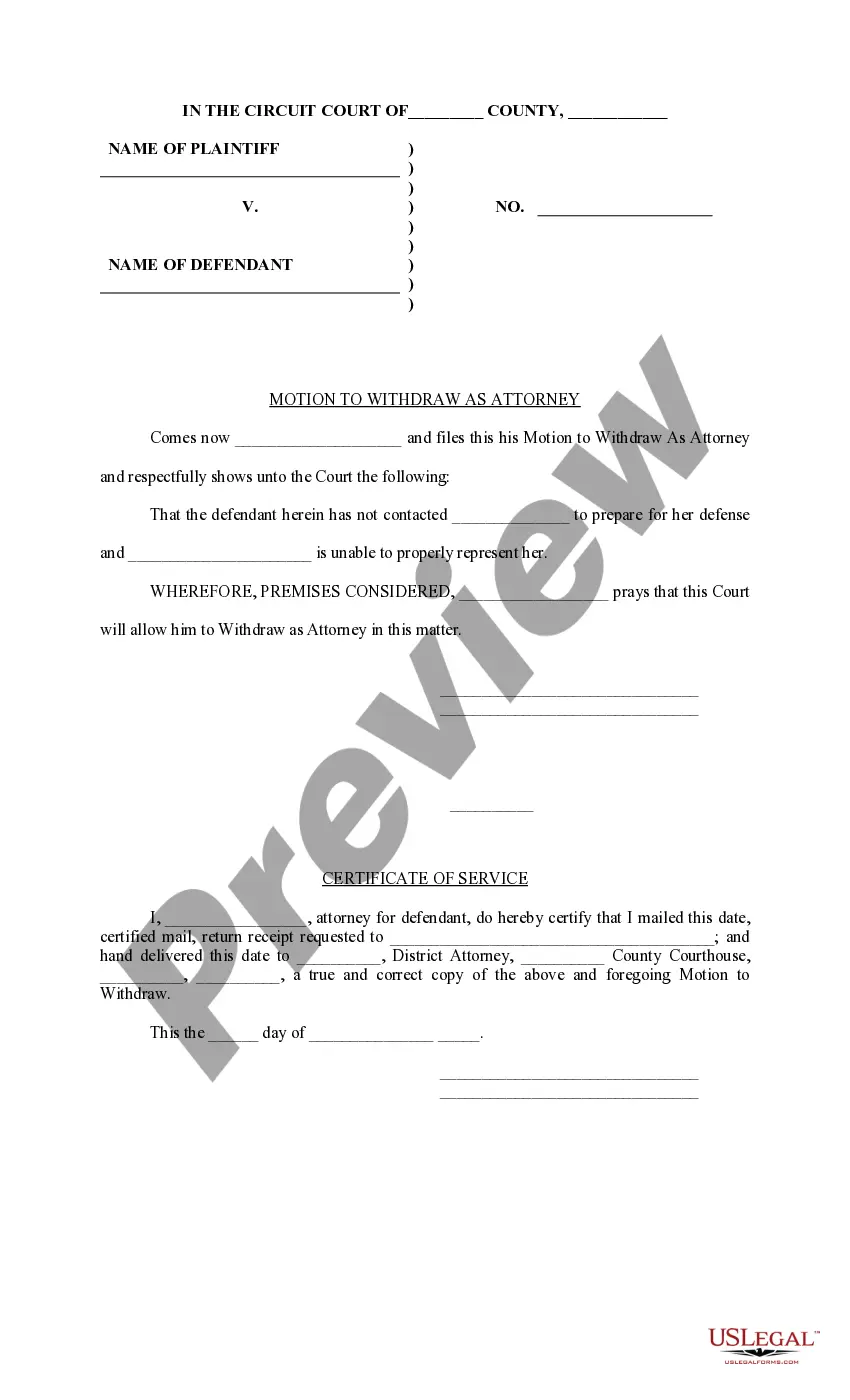
A motion for leave to withdraw is a formal request made by an attorney to the court, seeking permission to stop representing a client. This typically occurs when an attorney can no longer fulfill their professional duties, such as due to a breakdown in communication or ethical concerns. In Florida, this process requires a Florida Order Granting Leave to Withdraw as Attorney of Record, which ensures that the client's interests are protected during the transition. Understanding this motion is crucial for both clients and attorneys alike.
Requesting your attorney to withdraw is a crucial step that requires clear communication. You can do this by providing a letter or a conversation that specifies your reasons and references the Florida Order Granting Leave to Withdraw as Attorney of Record. Clarity in your request can prevent misunderstandings, ensuring that both parties are aligned on the next steps. Utilizing tools from platforms like uslegalforms can help guide you through drafting the necessary documents.
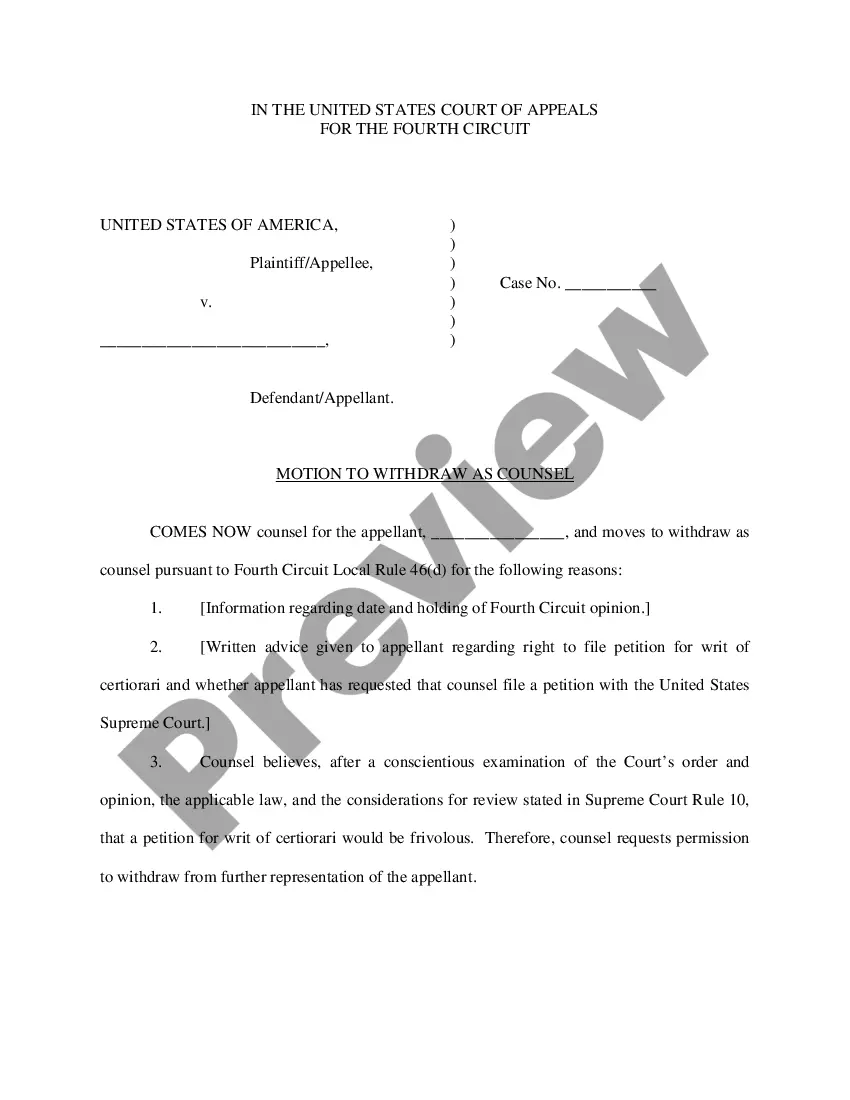
The federal rule for motion to withdraw as counsel outlines the necessary steps for an attorney to exit a case. Typically, an attorney must file a formal motion, detailing the rationale for withdrawal while adhering to the Florida Order Granting Leave to Withdraw as Attorney of Record, if applicable. It is crucial for the attorney to ensure that the withdrawal does not adversely impact the client’s interests. Therefore, it’s wise to consult legal resources or platforms like uslegalforms to understand procedural requirements better.
Asking your attorney to withdraw involves a straightforward yet formal approach. You should draft a request detailing your reasons and reference the Florida Order Granting Leave to Withdraw as Attorney of Record. Ensure you communicate this request clearly, whether in writing or during a conversation. This openness fosters a clearer understanding and lays the groundwork for necessary legal steps.
To inform your lawyer that you no longer require their services, you should write a formal letter or have a direct conversation. Clearly express your decision and mention the Florida Order Granting Leave to Withdraw as Attorney of Record for appropriate legal context. Be honest about your reasons, yet respectful in tone. This ensures a smooth transition and helps keep professional ties intact.
A sample letter to withdraw from representation should clearly state your intention to terminate the attorney-client relationship. It is important to reference the Florida Order Granting Leave to Withdraw as Attorney of Record, ensuring compliance with legal protocols. You should include your name, the attorney's name, the case number, and a brief explanation for your decision. This formal approach helps maintain professionalism and clarity.
The rule for withdrawal of plea in Florida allows a defendant to request to withdraw their plea of guilty or no contest. This typically requires filing a motion with the court, substantiated by valid reasons, often within a specified timeframe. In some cases, obtaining a Florida Order Granting Leave to Withdraw as Attorney of Record may also be necessary if legal representation is being changed at that time. Ensuring you understand this process can help protect your legal rights.
Withdrawal of attorney of record refers to the formal process by which an attorney ceases to represent a client in a legal case. This process requires filing a motion for a Florida Order Granting Leave to Withdraw as Attorney of Record. Once this order is obtained, the attorney's obligations to the client end, and the client must secure new representation if desired. Understanding this term helps clarify the changes in legal representation.
The attorney withdrawal rule in Florida requires attorneys to follow a specific process to withdraw from a case. This usually involves filing a motion and obtaining a Florida Order Granting Leave to Withdraw as Attorney of Record. The rule helps ensure that clients are aware of their attorney's withdrawal, allowing them to make informed decisions about their representation. Knowing these rules can assist both clients and attorneys in managing expectations during a case.