Delaware Codicil to Will Form for Amending Your Will - Will Changes or Amendments
What this document covers
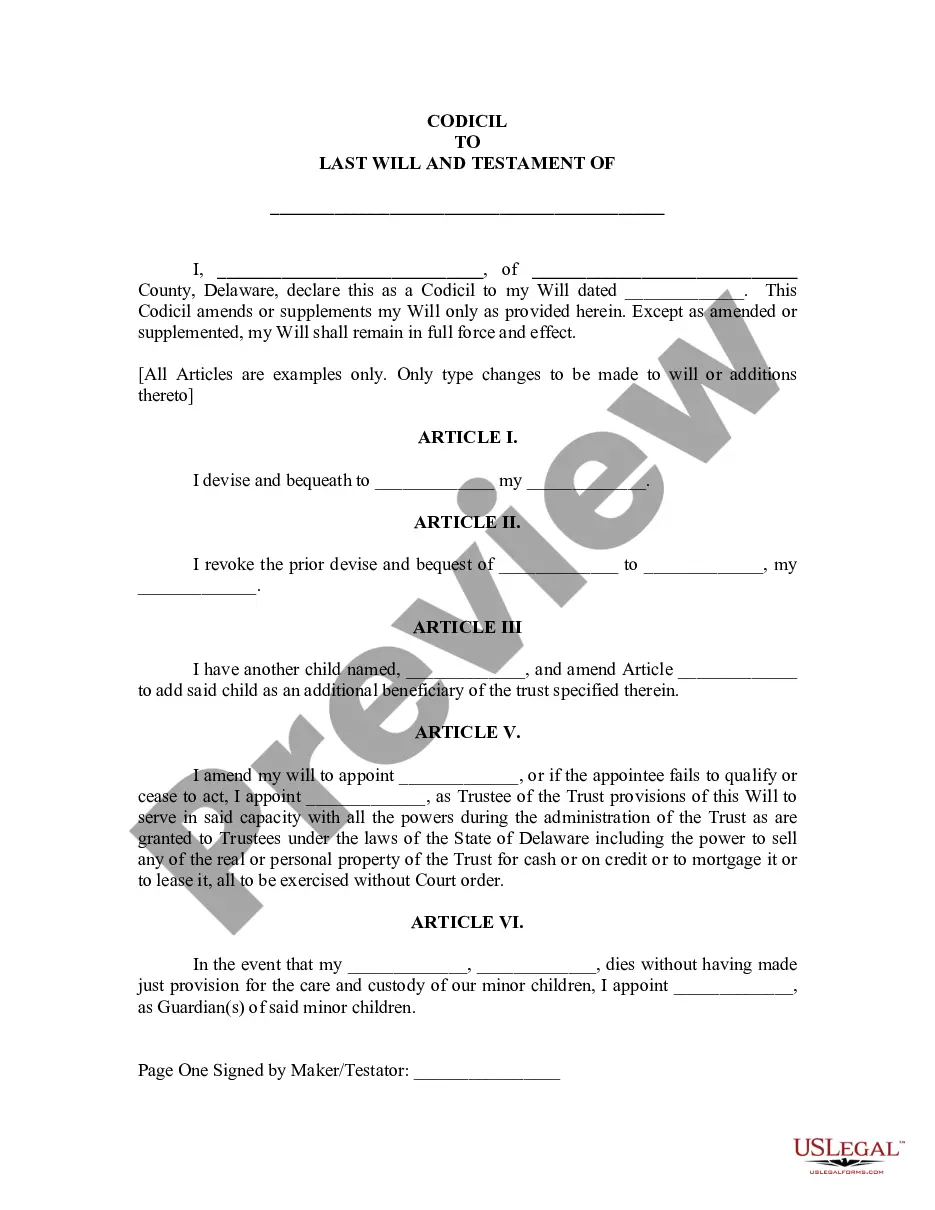
The Delaware Codicil to Will form allows you to amend an existing will without the need to create an entirely new document. This form specifically indicates that the previous will remains valid, except for the changes outlined in the codicil. Unlike a complete rewrite of a will, a codicil can address specific alterations more conveniently, facilitating streamlined updates to your estate planning documents.
Main sections of this form
- Declaration of the testator's name and date of the existing will.
- Article sections for bequeathing assets to specific individuals.
- Provisions for adding or revoking beneficiaries.
- Appointment of guardians for minor children, if applicable.
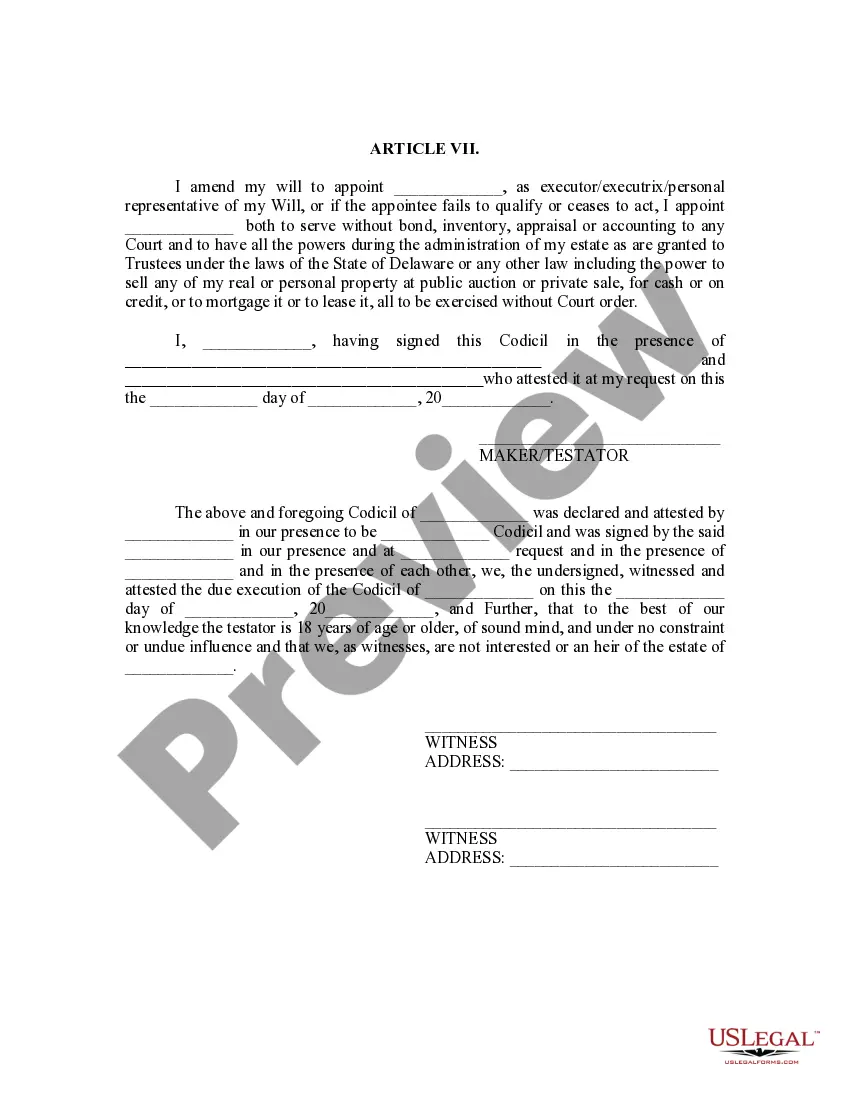
- Designation of an executor or personal representative for the estate.
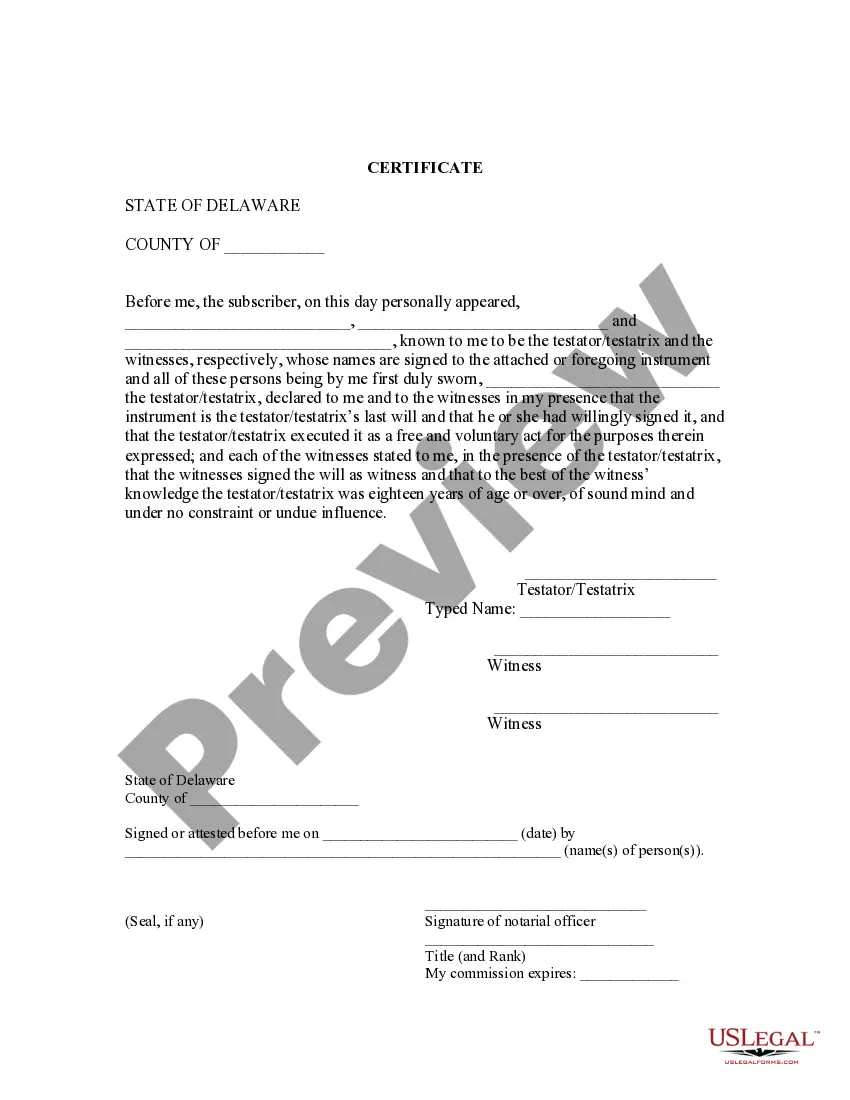
- Execution and attestation clauses to ensure legal validity.
Common use cases
You should use the Delaware Codicil to Will when you need to make specific changes to your will, such as adding or removing beneficiaries, altering asset distributions, or appointing a different executor. This form is particularly useful if you want to quickly update your will without going through the process of drafting a completely new document.
Who needs this form
This form is ideal for:
- Individuals with an existing will wishing to make amendments.
- People who have had significant life changes, such as marriage, divorce, or the birth of a child.
- Those looking to add or modify beneficiaries in their estate plan.
- Anyone needing to appoint a new executor or personal representative.
How to prepare this document
- Start by entering your full name and the date of your existing will.
- Specify any assets you wish to bequeath and name the beneficiaries.
- Indicate any revocations of prior bequests.
- Appoint a guardian for your minor children, if applicable.
- Designate an executor or personal representative for your estate.
- Ensure you sign the document in the presence of witnesses and comply with the attestation requirements.
Does this document require notarization?
This form does not typically require notarization unless specified by local law. However, it is advisable to consult with an attorney for your specific situation to ensure compliance with Delaware laws regarding wills and codicils.
Get your form ready online
Our built-in tools help you complete, sign, share, and store your documents in one place.
Make edits, fill in missing information, and update formatting in US Legal Forms—just like you would in MS Word.
Download a copy, print it, send it by email, or mail it via USPS—whatever works best for your next step.
Sign and collect signatures with our SignNow integration. Send to multiple recipients, set reminders, and more. Go Premium to unlock E-Sign.
If this form requires notarization, complete it online through a secure video call—no need to meet a notary in person or wait for an appointment.
We protect your documents and personal data by following strict security and privacy standards.

Make edits, fill in missing information, and update formatting in US Legal Forms—just like you would in MS Word.

Download a copy, print it, send it by email, or mail it via USPS—whatever works best for your next step.

Sign and collect signatures with our SignNow integration. Send to multiple recipients, set reminders, and more. Go Premium to unlock E-Sign.

If this form requires notarization, complete it online through a secure video call—no need to meet a notary in person or wait for an appointment.

We protect your documents and personal data by following strict security and privacy standards.
Typical mistakes to avoid
- Failing to properly sign the codicil in front of witnesses.
- Neglecting to include specific details about asset changes.
- Not indicating which provisions of the existing will are being amended.
Why complete this form online
- Convenient and easy access to legal forms that save you time.
- Editable templates that allow you to customize according to your specific needs.
- Reliability in using forms drafted by licensed attorneys, ensuring compliance with legal standards.
Legal use & context
The Delaware Codicil to Will is a legally recognized method for altering an existing will. It must be executed according to Delaware state law to maintain its legal integrity, ensuring that the testatorâs intentions are honored while complying with local regulations.
Quick recap
- The codicil allows for specific changes to be made to an existing will without starting over.
- Use this form to add or remove beneficiaries, change trustees, or adjust guardianship terms.
- Follow Delaware's specific legal requirements for execution to ensure validity.
Looking for another form?


Form popularity
FAQ
You should consider using a Delaware Codicil to Will Form for Amending Your Will - Will Changes or Amendments when you need to make small adjustments to your existing will. If you want to add new beneficiaries, alter your executor, or change specific bequests, a codicil is an effective solution. This option allows you to amend your will without starting from scratch, saving you time and effort. Always ensure that any changes align with your current wishes and legal requirements.
No, you do not necessarily need a lawyer to write a codicil. Many individuals successfully use the Delaware Codicil to Will Form for Amending Your Will - Will Changes or Amendments without legal assistance. However, consulting a lawyer is advisable if you have complex amendments or specific questions about your estate. Our resources can help you navigate this process and make informed decisions.
Yes, you can write a codicil yourself using the Delaware Codicil to Will Form for Amending Your Will - Will Changes or Amendments. While it is possible to create one without professional assistance, it is essential to follow legal guidelines to ensure validity. Our platform provides a clear template to help you craft a legally sound document. You can include the necessary amendments to your will confidently.
Yes, you can download a Delaware Codicil to Will Form for Amending Your Will - Will Changes or Amendments directly from our platform. This ensures you have access to a legally compliant document that is easy to fill out. With our user-friendly interface, you can get the form you need quickly and efficiently. Once downloaded, you can customize it to fit your specific requirements.
An example of a codicil could be a document that states, 'I, Your Name, revoke Article 2 of my Last Will and Testament dated Original Will Date.' This codicil serves to amend specific provisions while keeping the rest of the will intact. Using the Delaware Codicil to Will Form for Amending Your Will - Will Changes or Amendments ensures that your example maintains clarity and complies with legal requirements, thus effectively communicating your intentions.
To write a simple codicil, start by clearly stating your name and the date, followed by a reference to your original will. Then, outline the specific changes or additions you desire. Utilizing the Delaware Codicil to Will Form for Amending Your Will - Will Changes or Amendments can guide you in structuring this document correctly, making the process straightforward and compliant with legal standards.
Filling out a codicil form involves a few simple steps. First, gather your current will and the Delaware Codicil to Will Form for Amending Your Will - Will Changes or Amendments. Clearly indicate the changes you want to make, ensuring that you include specific details about the amendments. Follow the instructions carefully to ensure that the document meets legal requirements, enhancing the clarity of your intentions.
To illustrate a codicil to a will, you can create a document that clearly states your intentions. Begin with a title like 'Codicil to Last Will and Testament.' In this document, specify which parts of your original will you wish to amend or revoke. By using the Delaware Codicil to Will Form for Amending Your Will - Will Changes or Amendments, you can provide a clear example that follows the necessary legal format.
Yes, you can download a codicil form through various resources, including uslegalforms. They offer a Delaware Codicil to Will Form for Amending Your Will - Will Changes or Amendments that you can easily access and complete on your own. This convenient option ensures you have a reliable template while allowing you to make your wishes known clearly.
One disadvantage of a codicil is that it can create confusion if not drafted or executed properly, potentially leading to disputes among beneficiaries. Additionally, having multiple documents can complicate the interpretation of your final wishes. To avoid these issues, consider using a Delaware Codicil to Will Form for Amending Your Will - Will Changes or Amendments, which provides a clear, organized way to make amendments.