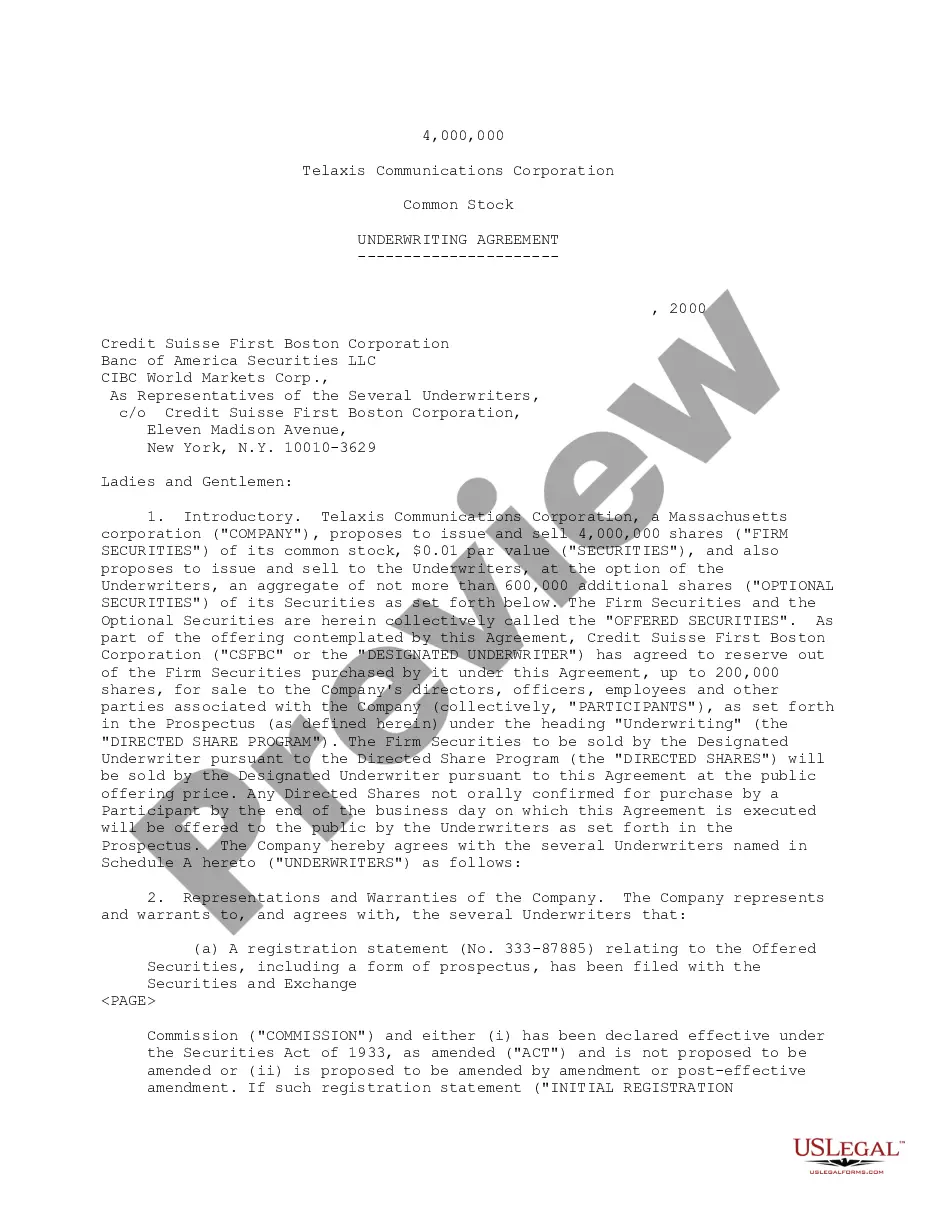
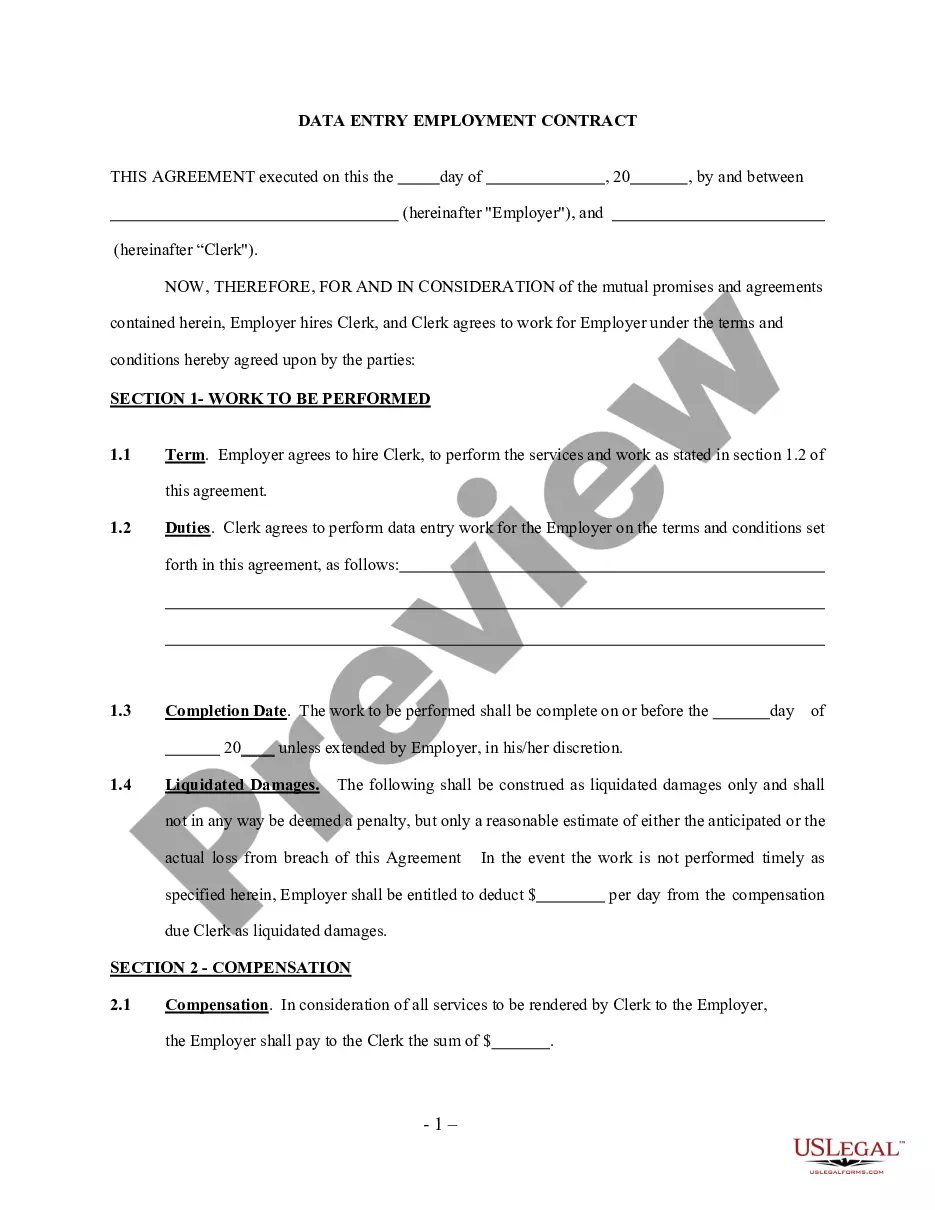
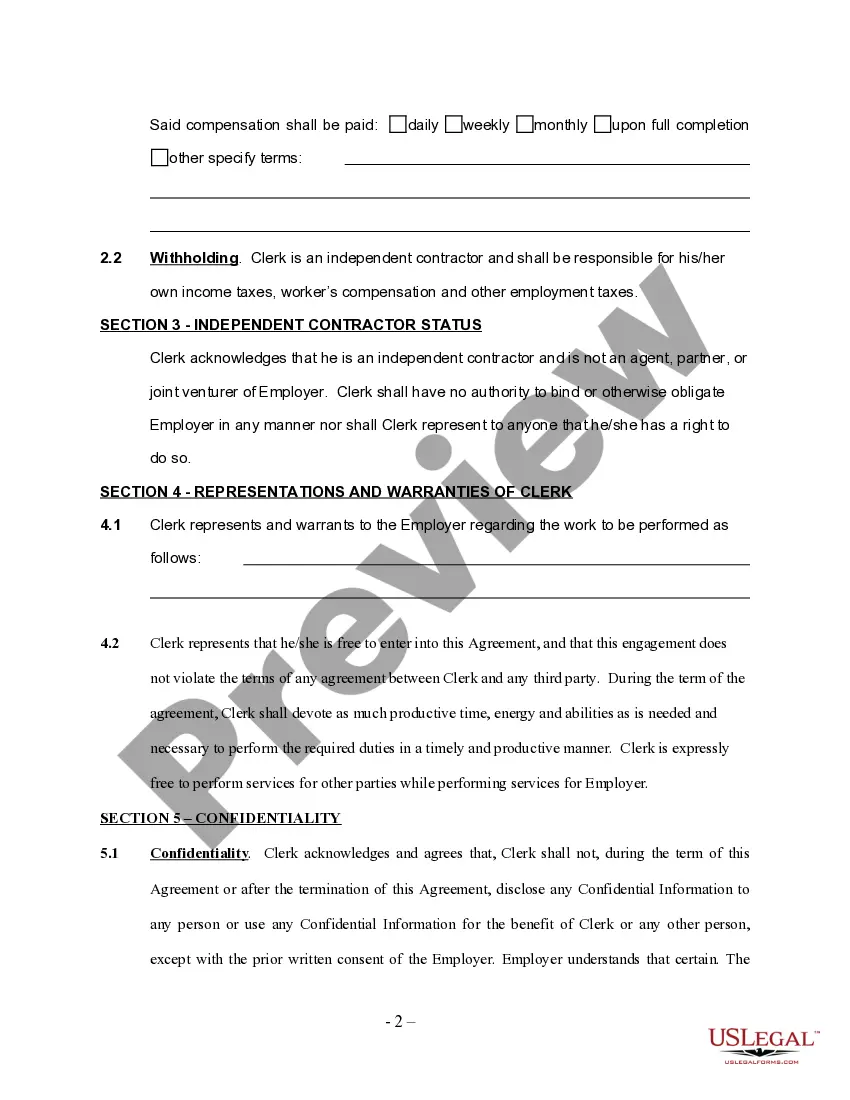
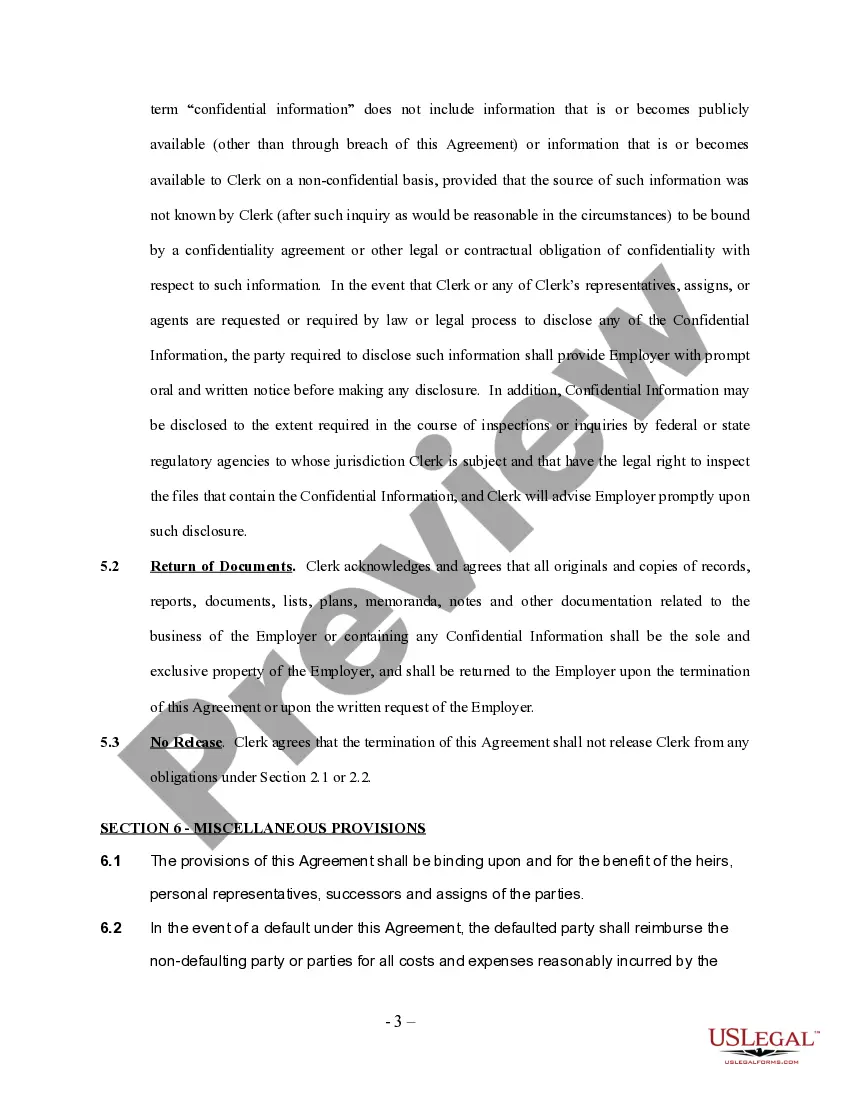
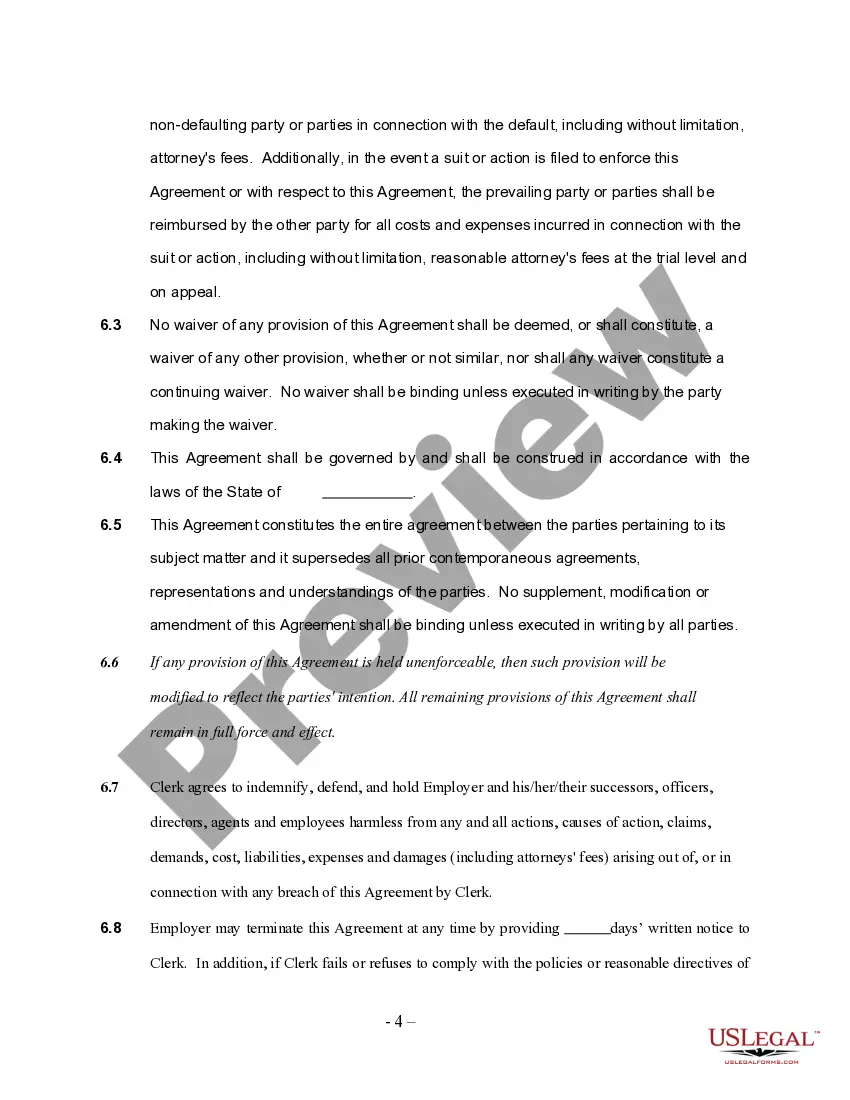
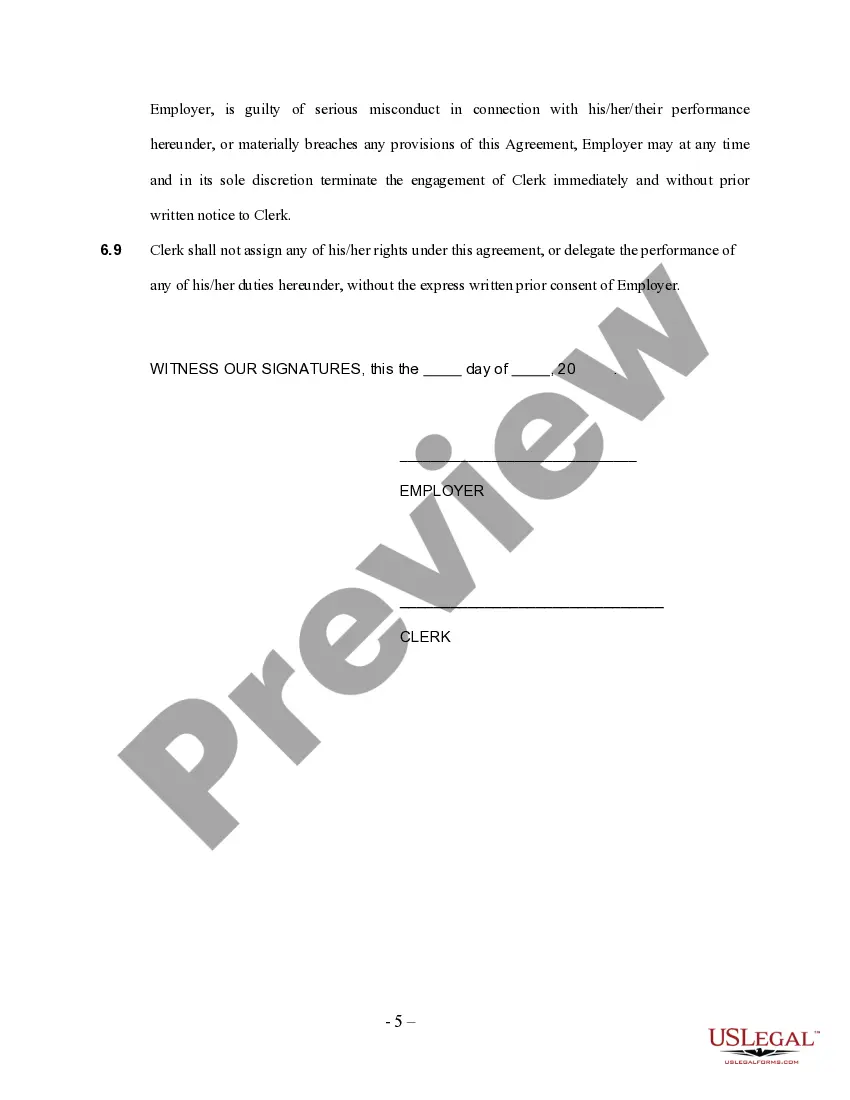
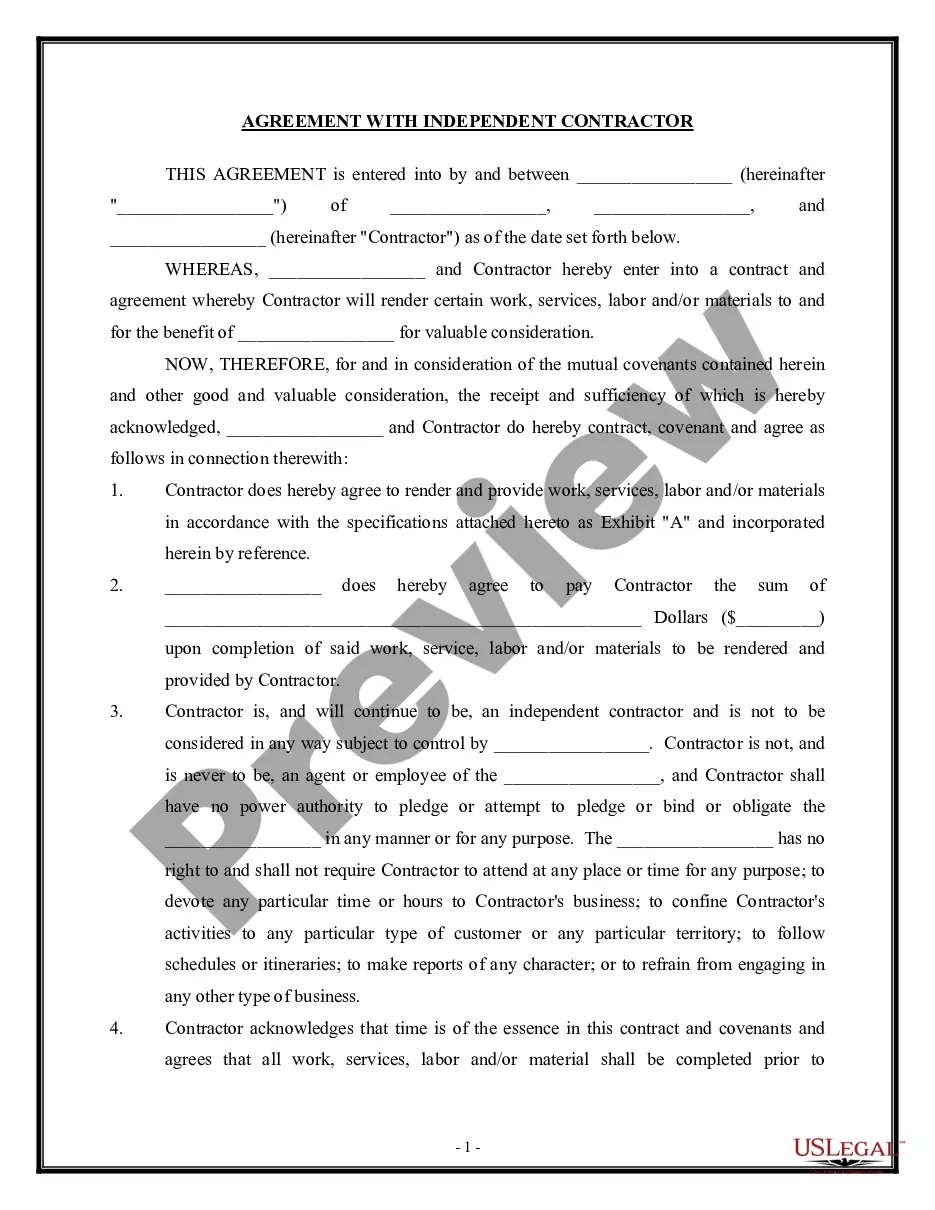
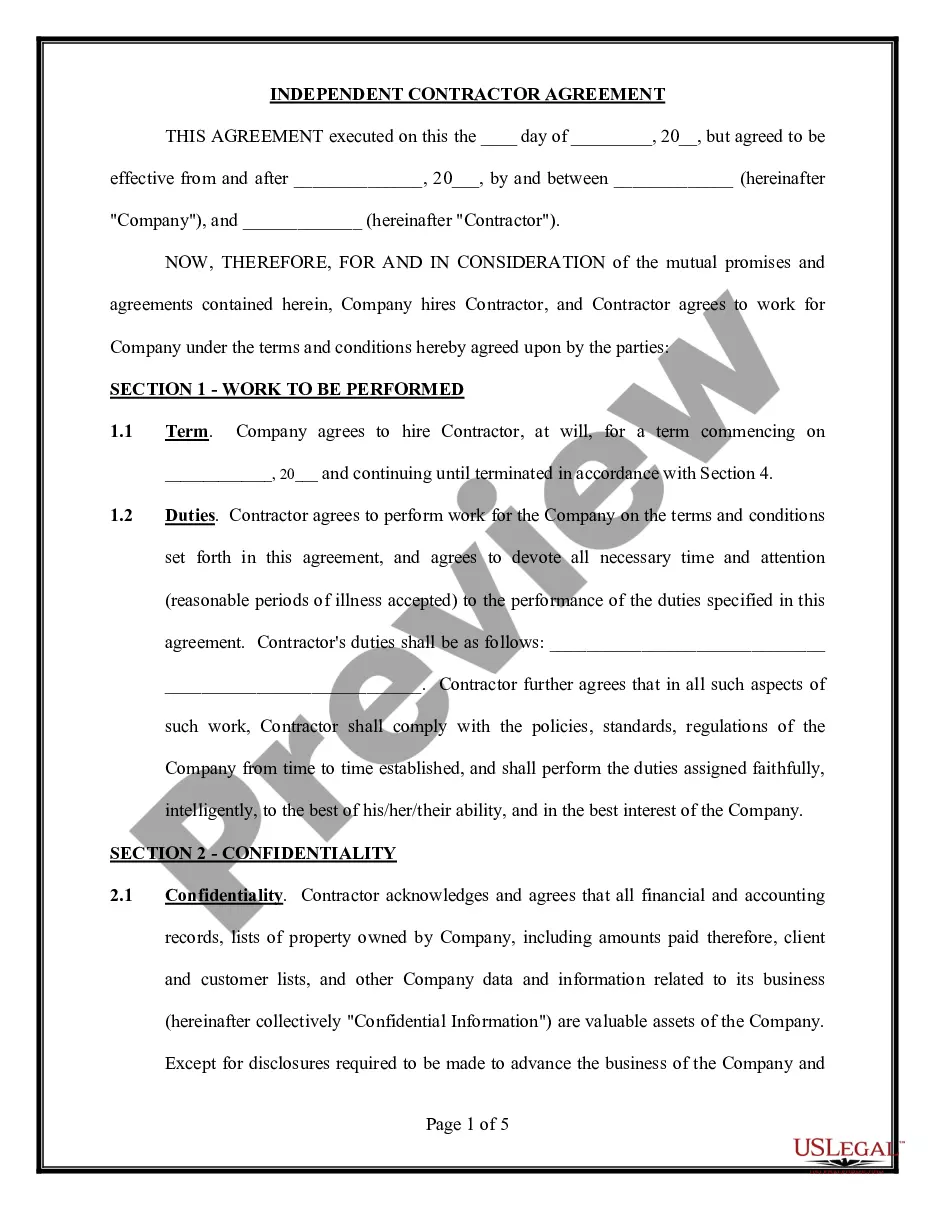
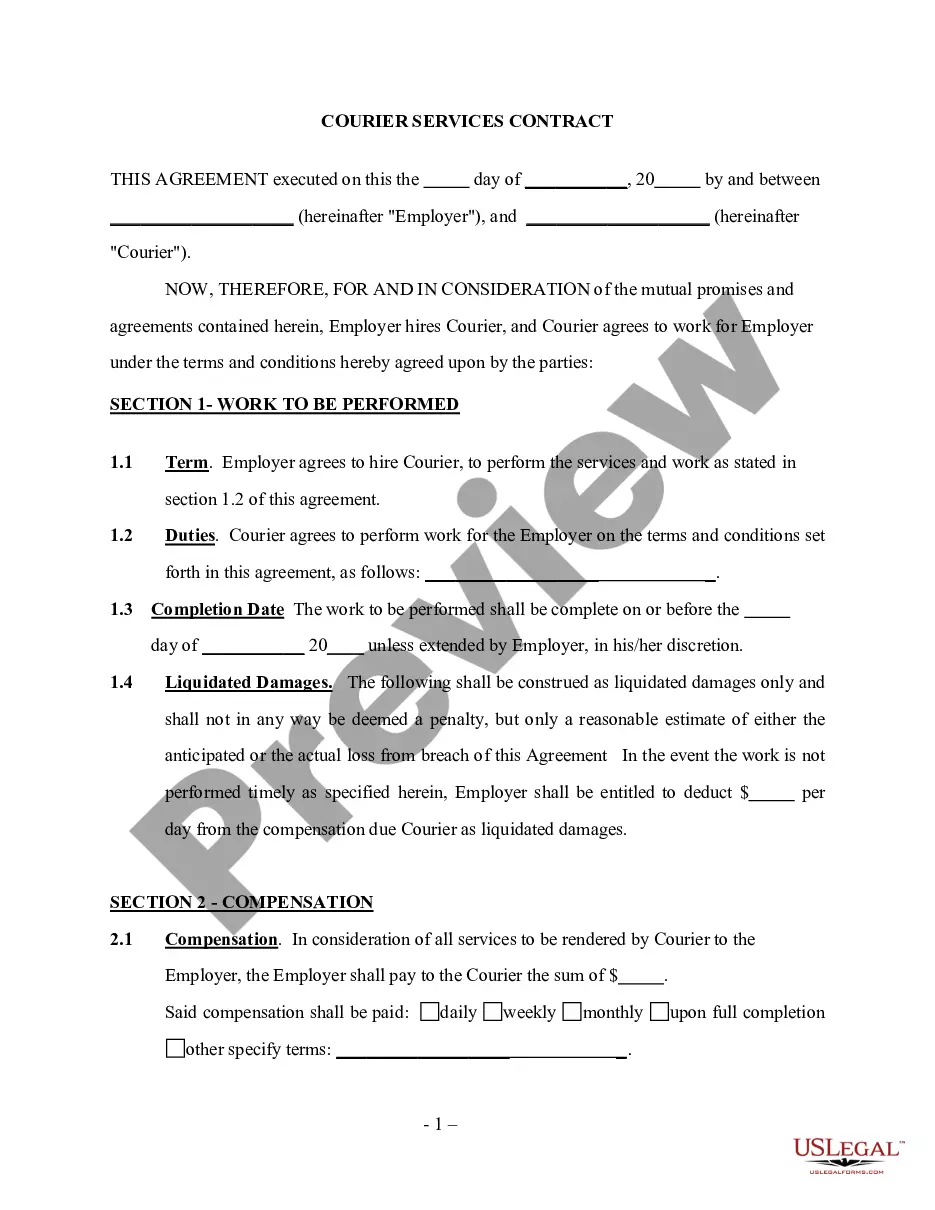
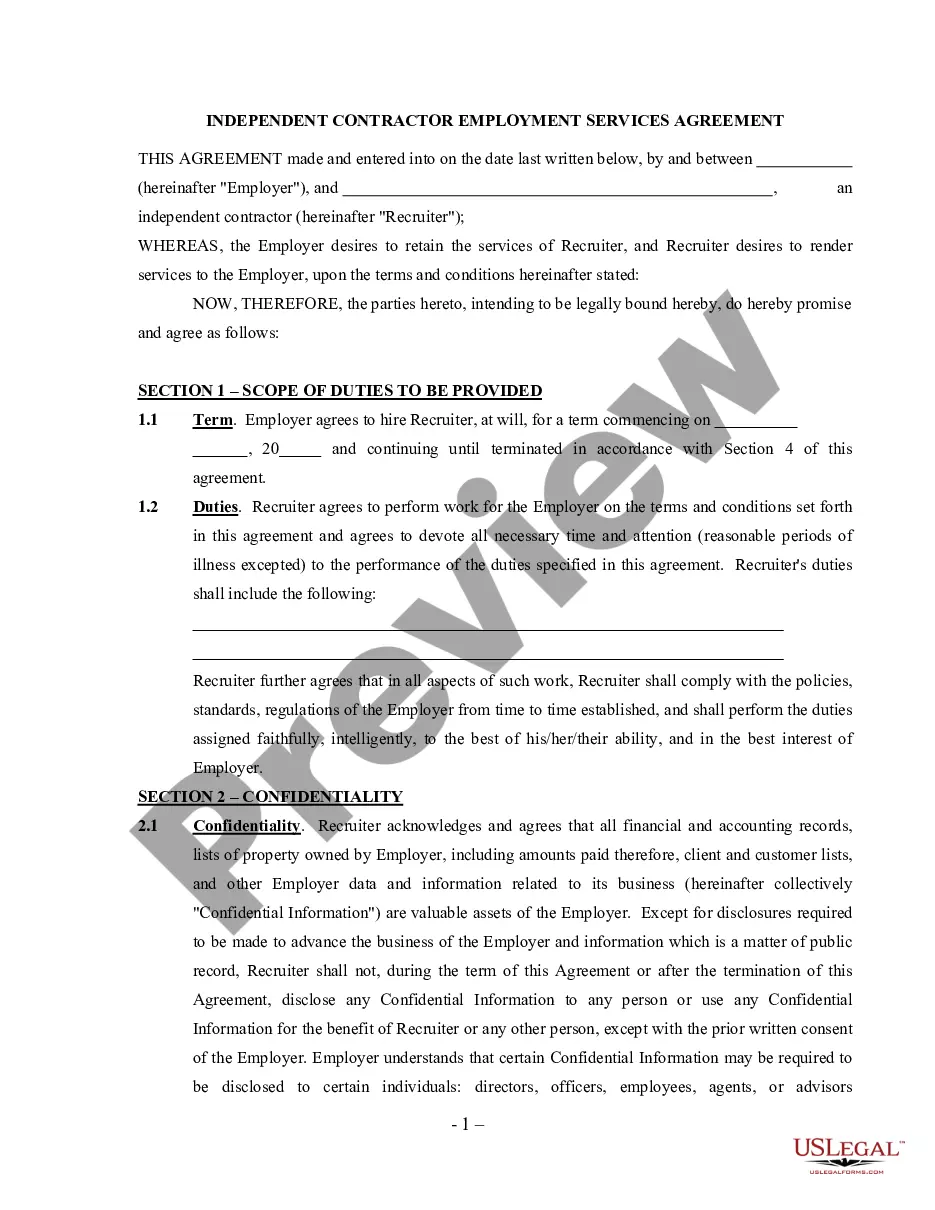
This is contract between an employer and an independent contractor to perform data entry services for employer.
Delaware Data Entry Employment Contract - Self-Employed Independent Contractor
State:
Multi-State
Control #:
US-INDC-10
Format:
Word;
Rich Text
Instant download
Description
Free preview

Get your form ready online
Our built-in tools help you complete, sign, share, and store your documents in one place.
Built-in online Word editor
Make edits, fill in missing information, and update formatting in US Legal Forms—just like you would in MS Word.
Export easily
Download a copy, print it, send it by email, or mail it via USPS—whatever works best for your next step.
E-sign your document
Sign and collect signatures with our SignNow integration. Send to multiple recipients, set reminders, and more. Go Premium to unlock E-Sign.
Notarize online 24/7
If this form requires notarization, complete it online through a secure video call—no need to meet a notary in person or wait for an appointment.
Store your document securely
We protect your documents and personal data by following strict security and privacy standards.

Make edits, fill in missing information, and update formatting in US Legal Forms—just like you would in MS Word.

Download a copy, print it, send it by email, or mail it via USPS—whatever works best for your next step.

Sign and collect signatures with our SignNow integration. Send to multiple recipients, set reminders, and more. Go Premium to unlock E-Sign.

If this form requires notarization, complete it online through a secure video call—no need to meet a notary in person or wait for an appointment.

We protect your documents and personal data by following strict security and privacy standards.
Looking for another form?



How to fill out Data Entry Employment Contract - Self-Employed Independent Contractor?
If you desire to be thorough, acquire, or create legal document templates, utilize US Legal Forms, the largest collection of legal documents available online.
Employ the website's user-friendly and efficient search to locate the documents you require.
Various templates for business and individual use are organized by categories and states, or keywords.
Every legal document template you purchase is yours indefinitely. You will have access to each form you have downloaded in your account. Visit the My documents section to select a document to print or download again.
Be proactive and download, and print the Delaware Data Entry Employment Contract - Self-Employed Independent Contractor with US Legal Forms. There are numerous professional and state-specific forms available for your business or personal needs.
- Utilize US Legal Forms to obtain the Delaware Data Entry Employment Contract - Self-Employed Independent Contractor in just a few clicks.
- If you are already a US Legal Forms user, Log In to your account and click the Download button to obtain the Delaware Data Entry Employment Contract - Self-Employed Independent Contractor.
- You can also access forms you have previously downloaded in the My documents section of your account.
- If this is your initial time using US Legal Forms, adhere to the guidelines below.
- Step 1. Ensure you have selected the form for the correct city/state.
- Step 2. Utilize the Preview option to review the form’s contents. Be sure to read the description.
- Step 3. If you are dissatisfied with the form, use the Search field at the top of the screen to find other versions of the legal document template.
- Step 4. After you have found the form you need, click the Get now button. Choose the payment plan you prefer and enter your credentials to sign up for an account.
- Step 5. Complete the transaction. You may use a credit card or PayPal account to finalize the transaction.
- Step 6. Select the format of the legal document and download it to your device.
- Step 7. Complete, edit, and print or sign the Delaware Data Entry Employment Contract - Self-Employed Independent Contractor.
Form popularity
FAQ
Yes, being self-employed does not prevent you from having a contract. In fact, a Delaware Data Entry Employment Contract - Self-Employed Independent Contractor can formalize your agreement with clients and ensure all parties understand their rights and obligations. This legal framework is beneficial as it protects your interests while providing a clear overview of the tasks and payments involved. Such contracts help foster professionalism and trust in your working relationships.
Independent contractors are required to comply with specific rules that govern their work status. For instance, a Delaware Data Entry Employment Contract - Self-Employed Independent Contractor typically clarifies the scope of work and payment terms. Additionally, you must maintain control over how you complete your tasks without intervention from clients. Understanding these rules can help you navigate your responsibilities successfully.
Yes, 1099 contract work falls under the category of self-employment. When you work as an independent contractor using a Delaware Data Entry Employment Contract - Self-Employed Independent Contractor, you are responsible for paying your own taxes. This arrangement allows you greater flexibility and autonomy in your work. However, it also means you must manage your finances and keep track of your income diligently.
Independent contractors and self-employed workers typically file a Schedule C along with their personal income tax return, Form 1040. This form allows you to report income, expenses, and deductions from your work. When you operate under a Delaware Data Entry Employment Contract - Self-Employed Independent Contractor, keeping accurate records will simplify completing your tax forms. It's smart to stay organized throughout the year to reduce stress during tax season.
Some individuals may be exempt from self-employment tax, including certain religious groups and specific low-income workers. Additionally, workers earning less than $400 in self-employment income in a year typically do not owe this tax. If you work under a Delaware Data Entry Employment Contract - Self-Employed Independent Contractor, it's essential to understand your tax obligations. Consulting a tax expert can help clarify your situation and ensure compliance.
Recent federal regulations have aimed to clarify the classification of independent contractors. These rules help determine whether a worker is an independent contractor or an employee based on various factors, including the nature of the work and the level of control exerted by the employer. Understanding these changes is crucial for anyone operating under a Delaware Data Entry Employment Contract - Self-Employed Independent Contractor. Ensuring compliance with these rules can safeguard your business and income.
Yes, if you receive a 1099 form as compensation, it is likely subject to self-employment tax. This tax applies to your net income from your work as an independent contractor. When you engage with clients using a Delaware Data Entry Employment Contract - Self-Employed Independent Contractor, it's wise to calculate your taxes to remain compliant with federal and state requirements. Always consider working with a tax professional to navigate your specific situation.
The terms self-employed and independent contractor are often used interchangeably. However, self-employed generally refers to anyone who runs their own business, while independent contractor specifies a broader category of self-employed individuals. Using the term Delaware Data Entry Employment Contract - Self-Employed Independent Contractor clarifies your status in agreements with clients. Ultimately, choose the term that best represents your work situation for clear communication.
In general, independent contractors must earn at least $600 in a calendar year to receive a 1099 form from a client. This form plays a crucial role in how you report your income as a self-employed individual. By using a Delaware Data Entry Employment Contract - Self-Employed Independent Contractor, you can set terms that may help you reach this income threshold. Keeping accurate records of your earnings can simplify tax season for you.
Absolutely, self-employed individuals can and should have contracts. A contract helps define your relationship with clients and services provided. A Delaware Data Entry Employment Contract - Self-Employed Independent Contractor is a perfect example of an agreement that ensures clarity in your freelance engagements. Utilizing the right contract fosters professional trust and establishes boundaries in your work.