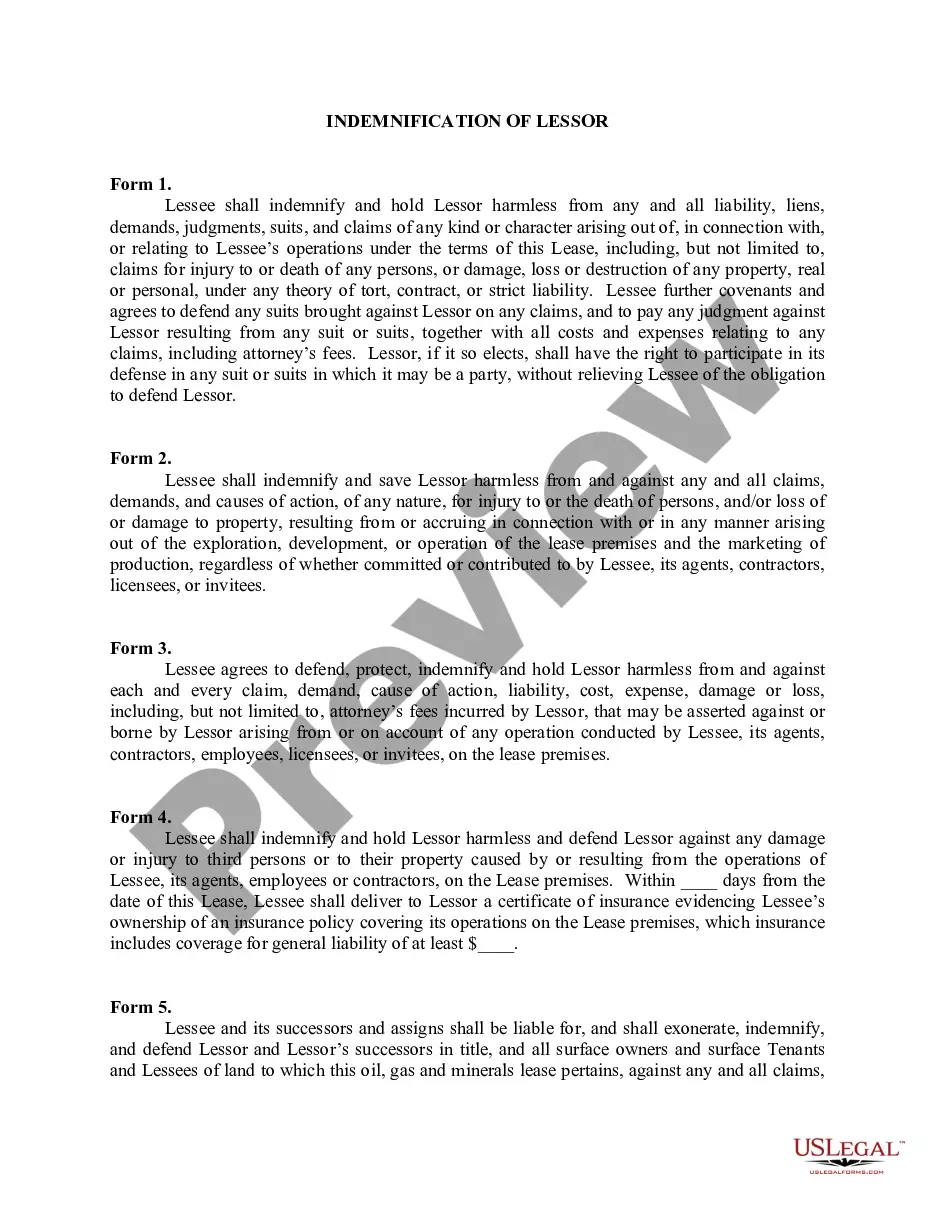
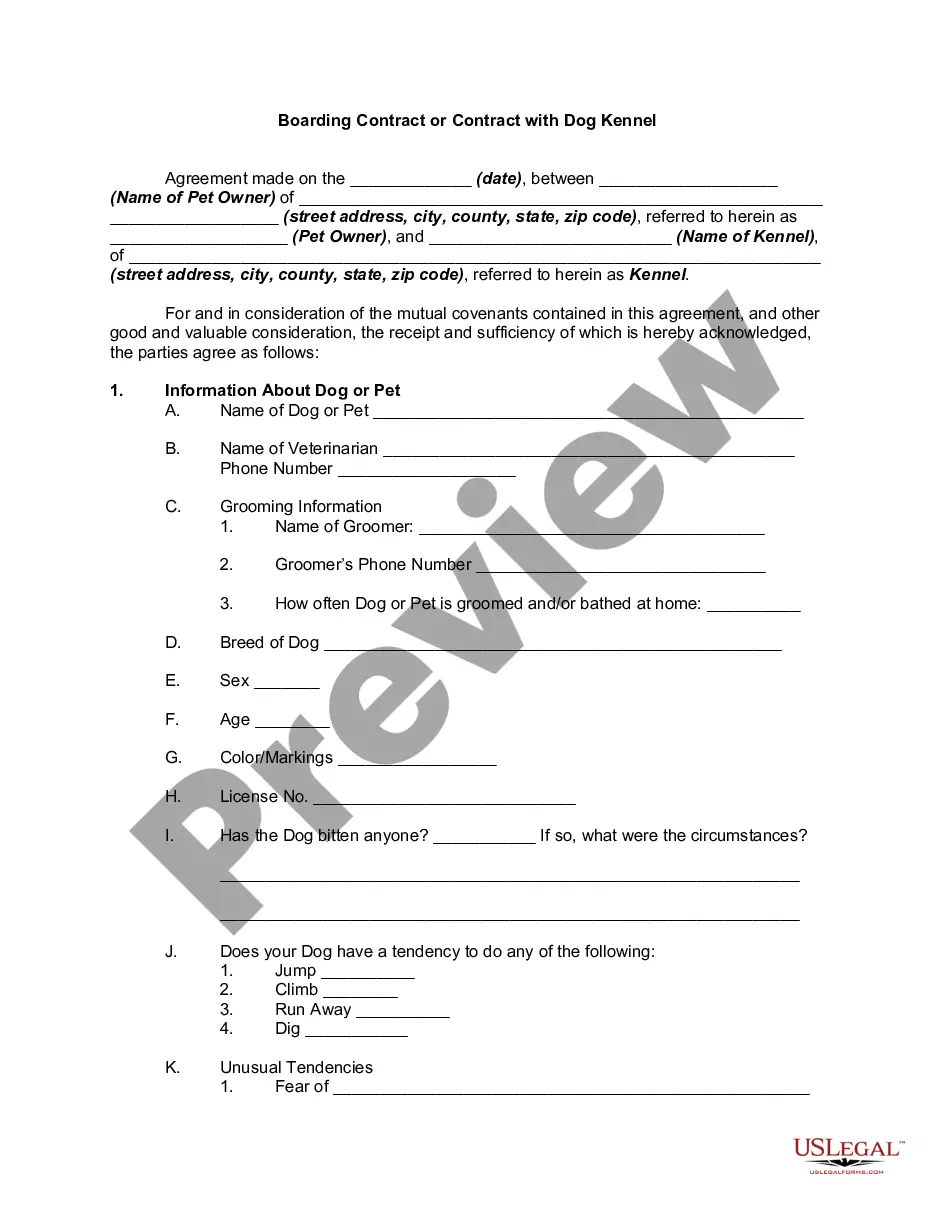
This form is an agreement between a pet owner and a boarder.
Delaware Pet Boarding Agreement
Category:
State:
Multi-State
Control #:
US-PET-3
Format:
Word;
Rich Text
Instant download
Description
Free preview
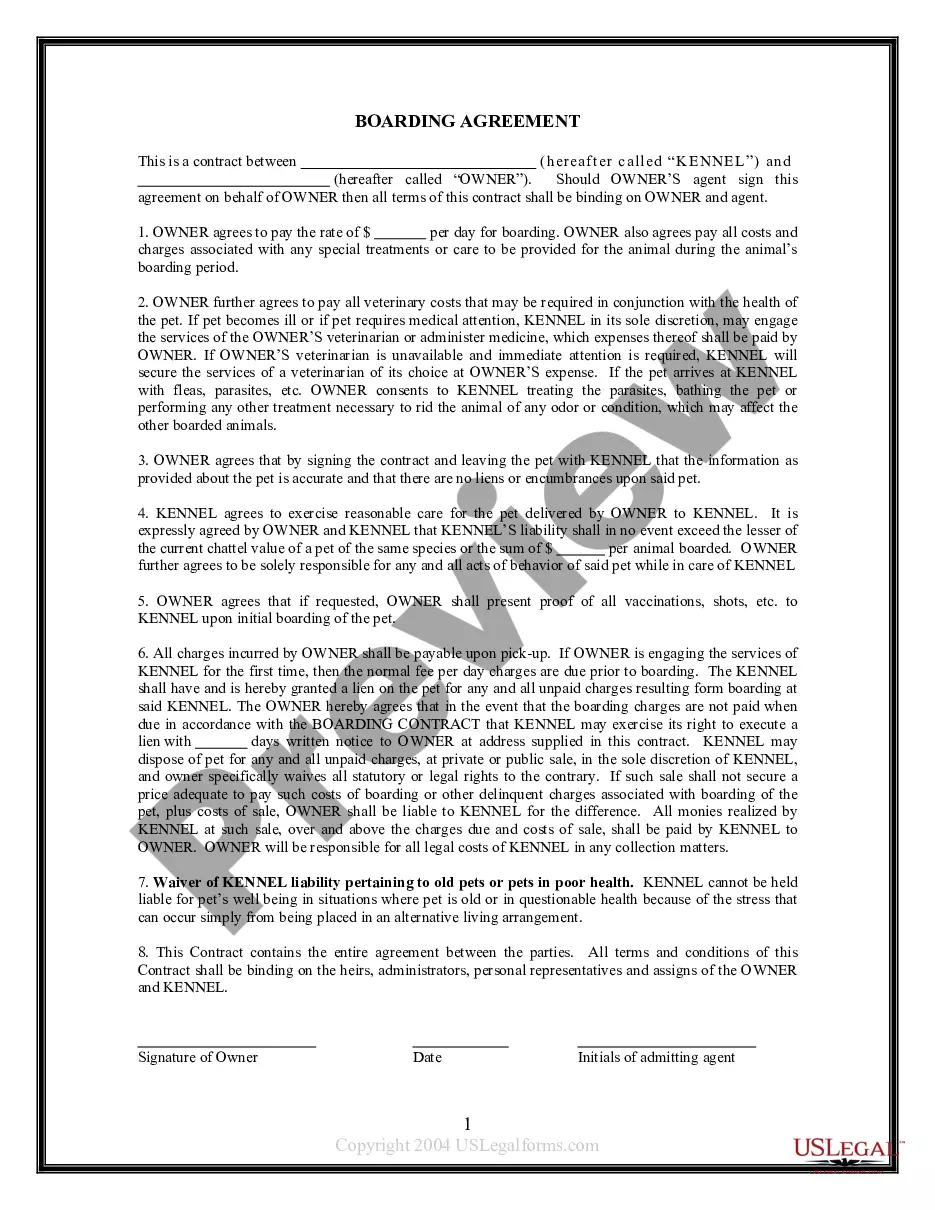
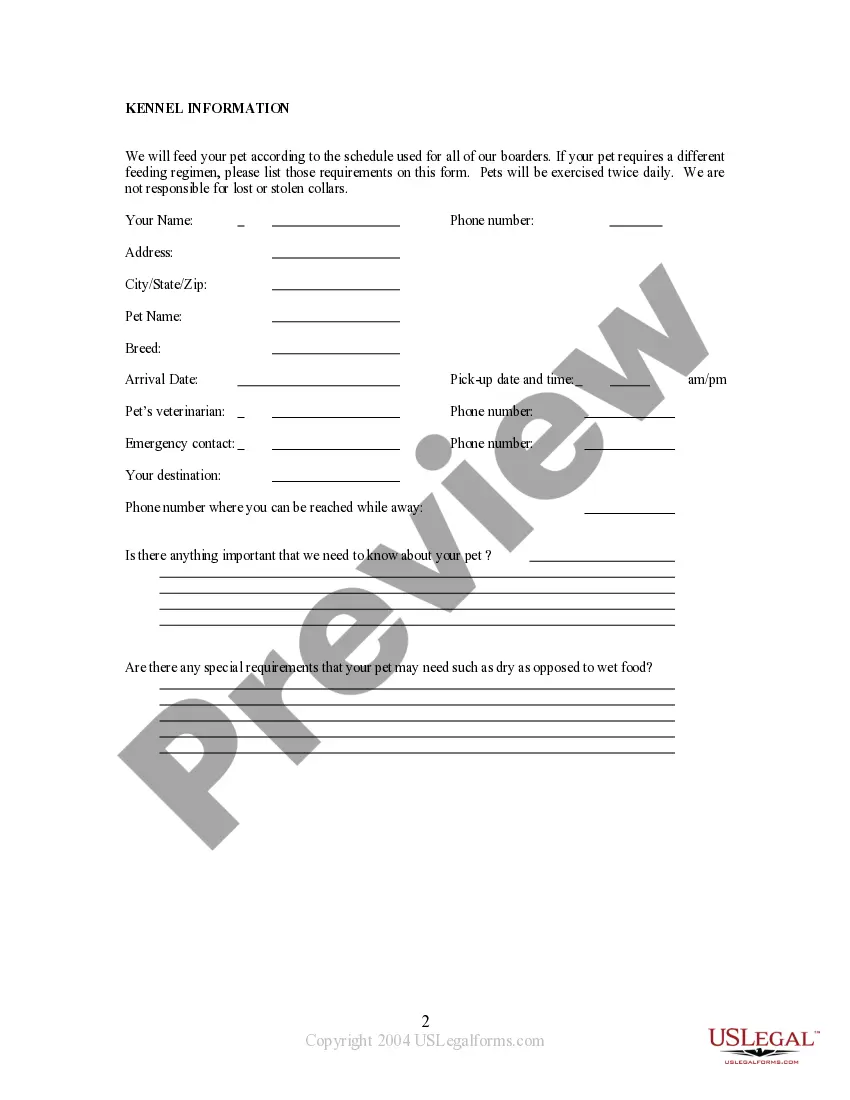

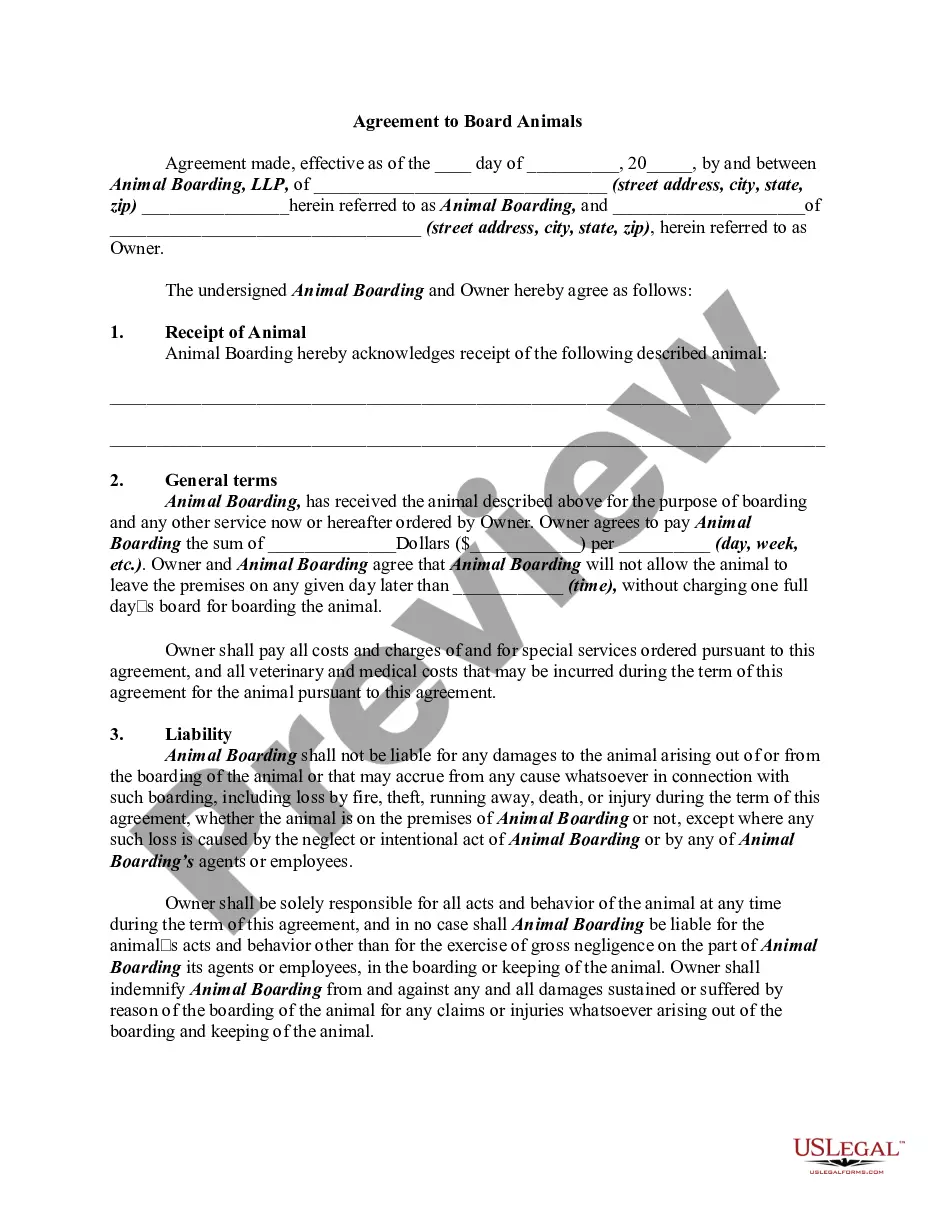
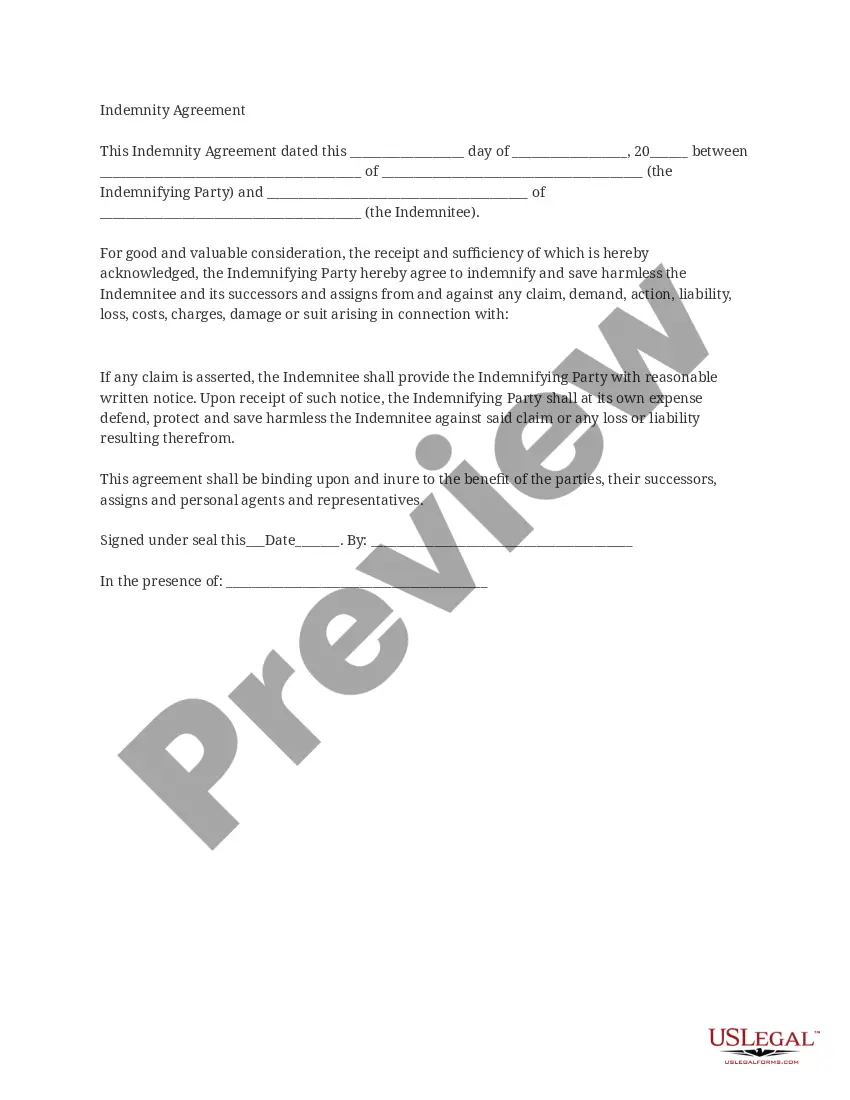

How to fill out Pet Boarding Agreement?
If you intend to finish, obtain, or create valid document templates, utilize US Legal Forms, the largest variety of valid forms available online.
Take advantage of the site's straightforward and convenient search feature to find the documents you need. Numerous templates for business and personal purposes are categorized by groups and jurisdictions, or keywords.
Use US Legal Forms to access the Delaware Pet Boarding Agreement in just a few clicks.
Step 5. Complete the transaction. You can use your credit card or PayPal account to finalize the purchase.
Step 6. Select the format of the legal form and download it to your device. Step 7. Fill out, modify, and print or sign the Delaware Pet Boarding Agreement. Each legal document format you purchase is yours indefinitely. You have access to every form you acquired with your account. Go to the My documents section and choose a form to print or download again. Complete and download, and print the Delaware Pet Boarding Agreement with US Legal Forms. There are numerous professional and state-specific forms you can utilize for your business or personal needs.
- If you are currently a US Legal Forms user, sign in to your account and click the Obtain button to locate the Delaware Pet Boarding Agreement.
- You can also access forms you previously acquired in the My documents section of your account.
- If you are using US Legal Forms for the first time, follow the instructions below.
- Step 1. Ensure you have selected the form for your specific state/country.
- Step 2. Use the Preview feature to review the form's details. Remember to read the description.
- Step 3. If you are not satisfied with the form, use the Search field at the top of the screen to find other types of the legal form template.
- Step 4. Once you have located the form you need, click on the Buy now button. Choose the pricing plan you prefer and enter your information to register for an account.
Form popularity
FAQ
The number of dogs allowed on one property can depend on local zoning laws and regulations. Many areas do not have a specific cap but may impose restrictions based on property size or other factors. If you are considering starting a pet boarding business, using a Delaware Pet Boarding Agreement can clarify the expectations and responsibilities regarding the number of dogs you can accommodate.
The legal number of dogs you can have in one household varies based on local laws rather than state law. Some municipalities may have regulations that limit ownership to a certain number of dogs. Understanding these local laws is essential for anyone drafting a Delaware Pet Boarding Agreement, as it helps ensure that you're compliant with the relevant rules.
As mentioned earlier, Delaware does not impose a strict limit on dog ownership at the state level. However, it is important to be aware of specific regulations in your locality that may restrict the number of dogs per household. If you're considering a pet boarding business, being knowledgeable about these limits can help you create an effective Delaware Pet Boarding Agreement.
Starting a pet boarding business requires a solid business plan, appropriate licenses, and a suitable location. You will also need to invest in insurance and create a Delaware Pet Boarding Agreement to protect both your business and your clients. Utilizing platforms like US Legal Forms can simplify the process of drafting legal documents to ensure compliance with state regulations.
In Delaware, there is no specific limit on the number of dogs you can own, but local ordinances may impose restrictions. It is crucial to check your county or city regulations to ensure compliance. If you are planning to start a pet boarding business, having a clear understanding of these rules will help you draft a comprehensive Delaware Pet Boarding Agreement.
The new law regarding dogs in Delaware focuses on the responsibilities of pet owners and the welfare of animals. It emphasizes proper care, handling, and living conditions for dogs. Understanding this law is essential for anyone looking to create a Delaware Pet Boarding Agreement, as it outlines the obligations pet boarding businesses must adhere to for the safety and well-being of the animals in their care.
5 Ways to Prepare Your Dog for BoardingConsider a Boarding Trial. If your dog is particularly nervous or prone to separation anxiety, it's a good idea to plan a trial boarding stay.Adjust Your Dog's Sleeping Habits.Keep Your Dog Comfortable.Drop Off Your Dog in the Morning.Visit Your Dog's Veterinarian.
How To Write a Pet Sitter ContractStep 1 Identify the Pet Owner and Pet Sitter.Step 2 Provide Pet Information.Step 3 Write Down Service Provided.Step 4 Add in Emergency Information.Step 5 Date and Sign the Agreement.
It doesn't matter if you run a boarding kennels or if you look after other people's dogs in your own home, from October 2018 UK law says you MUST have a license. The regulations apply to boarding kennels, boarding catteries, caring for other people's dogs in your own home, dog day care, pet sales and dog breeding.
If you are boarding dogs in your home then, just like a kennel, you must have a animal boarding licence issued by your local council. The requirement for licensing is set out in the Animal Boarding Establishments Act 1963, which applies to kennels as well as those "working from a private dwelling".