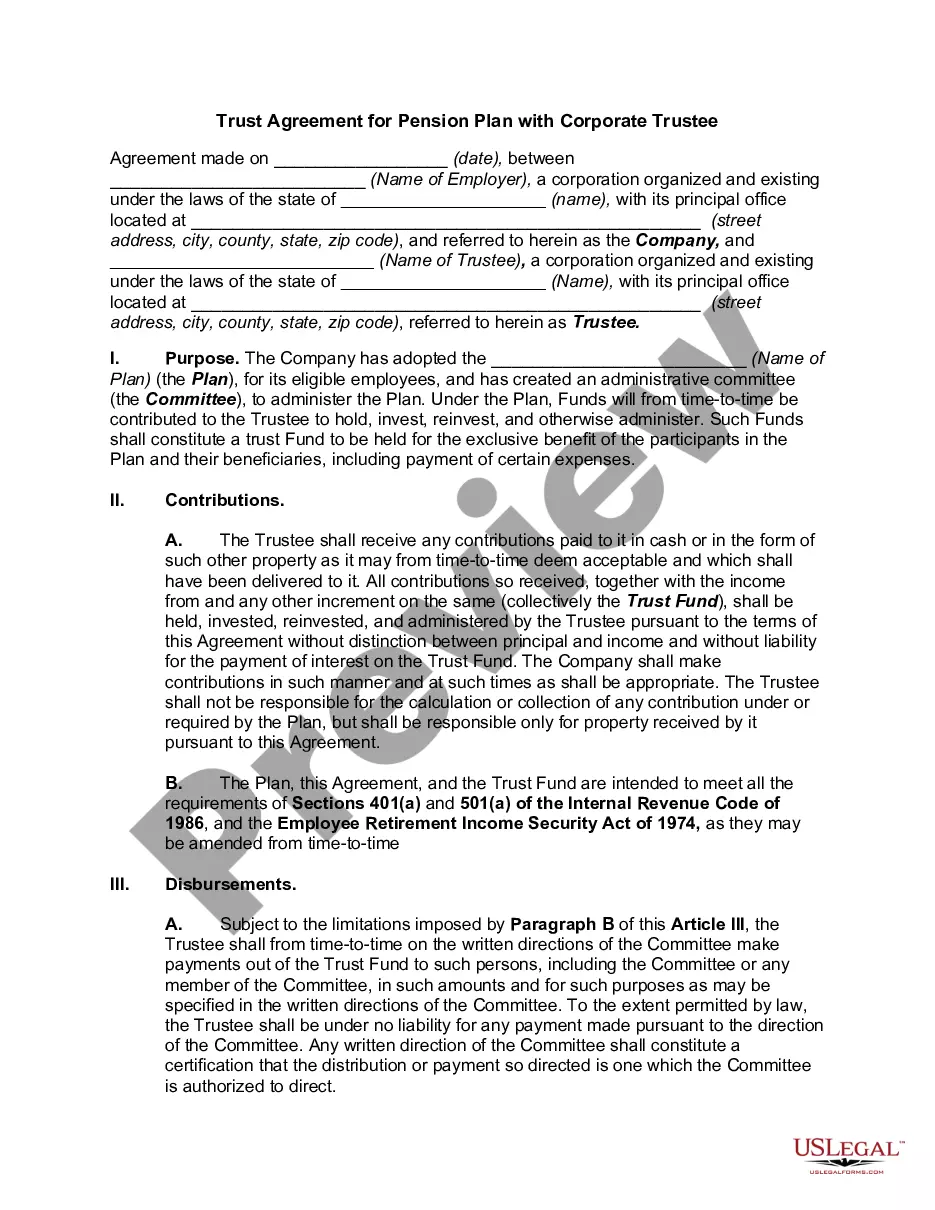
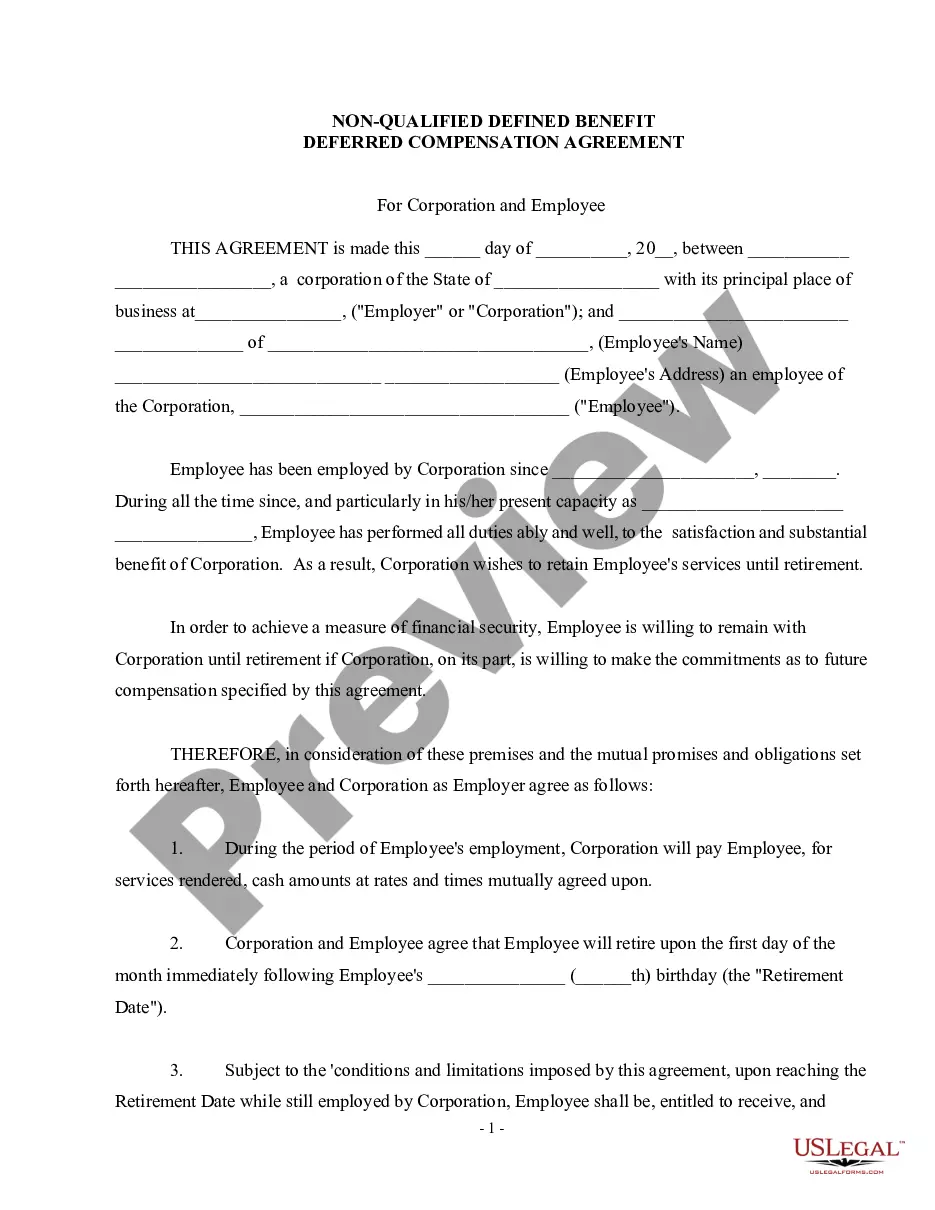
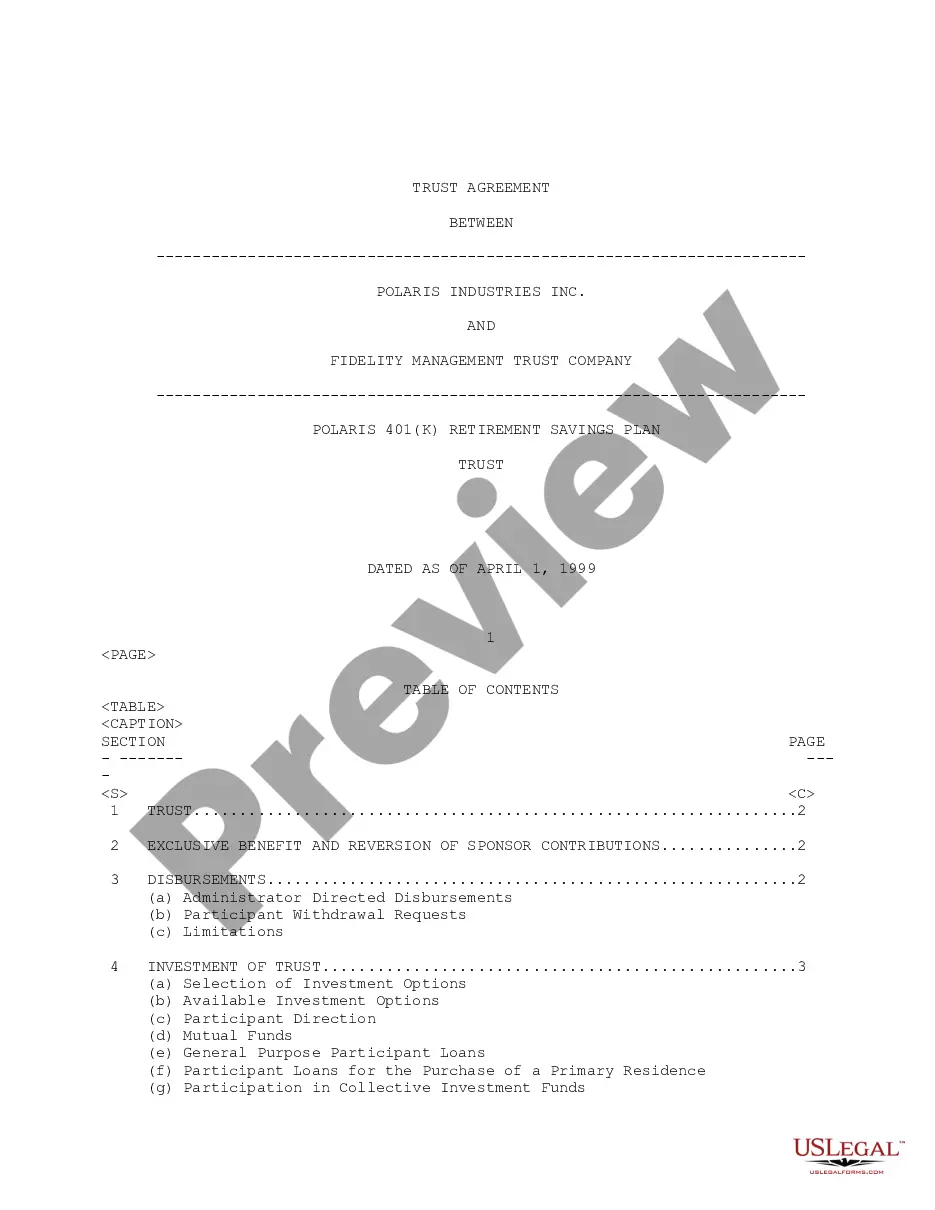
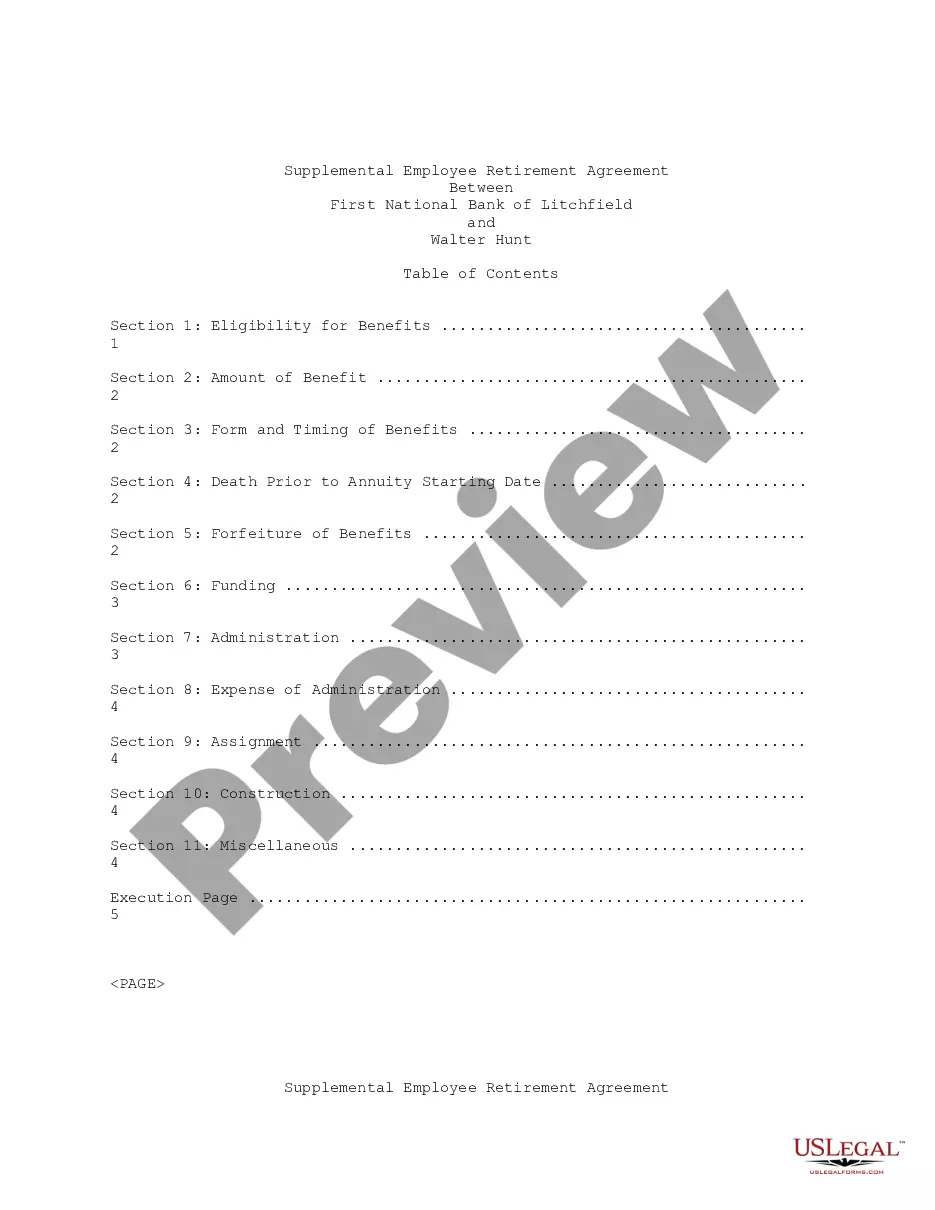
Delaware Defined-Benefit Pension Plan and Trust Agreement
Description
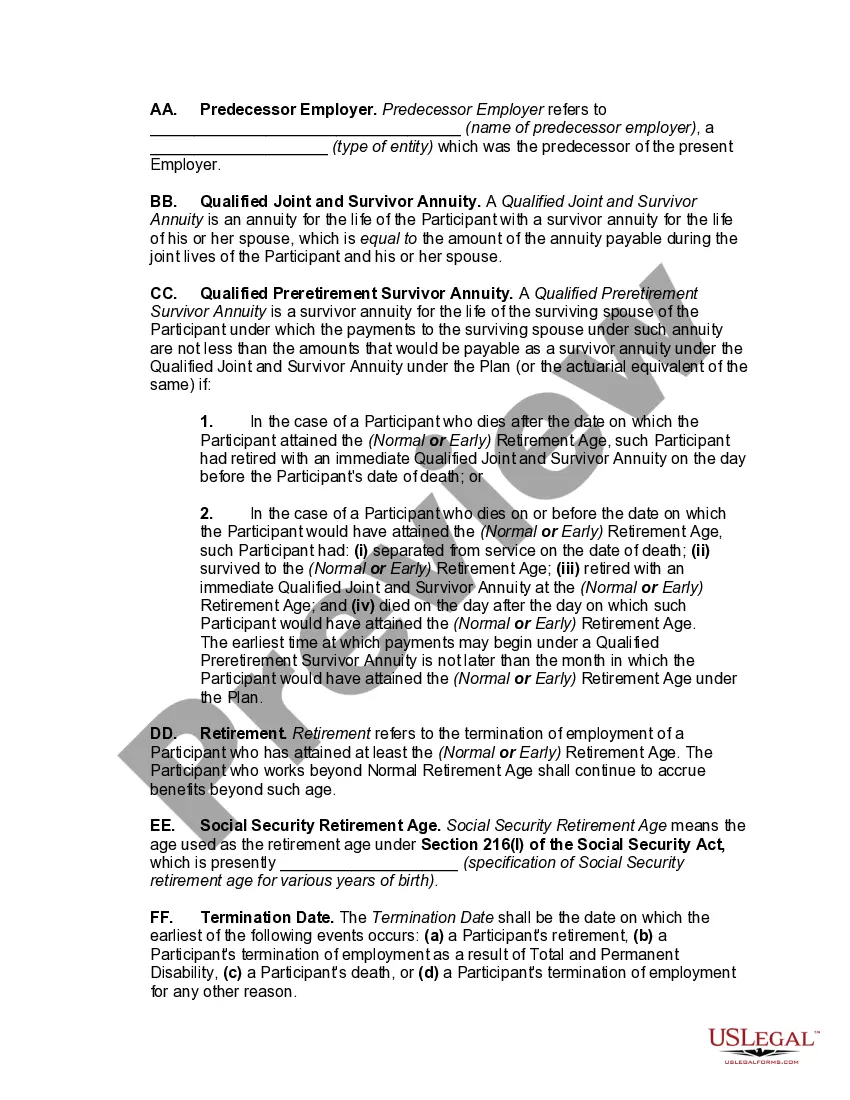
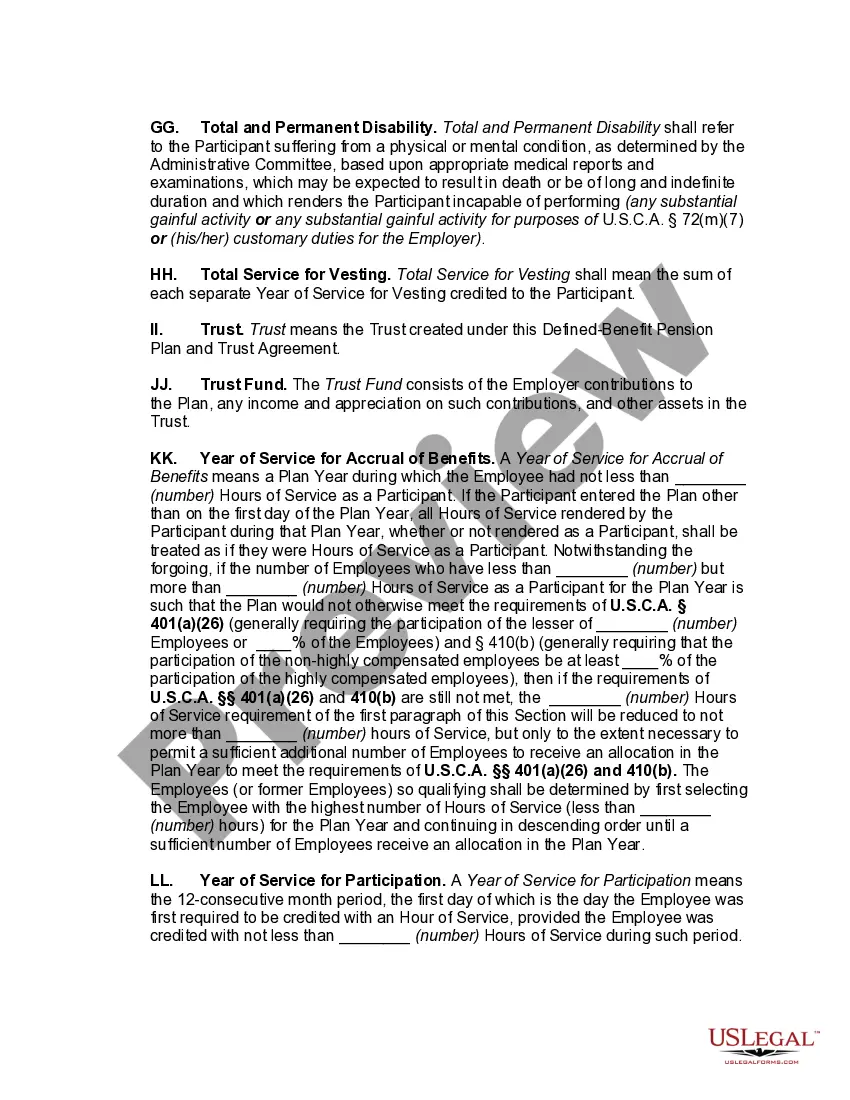
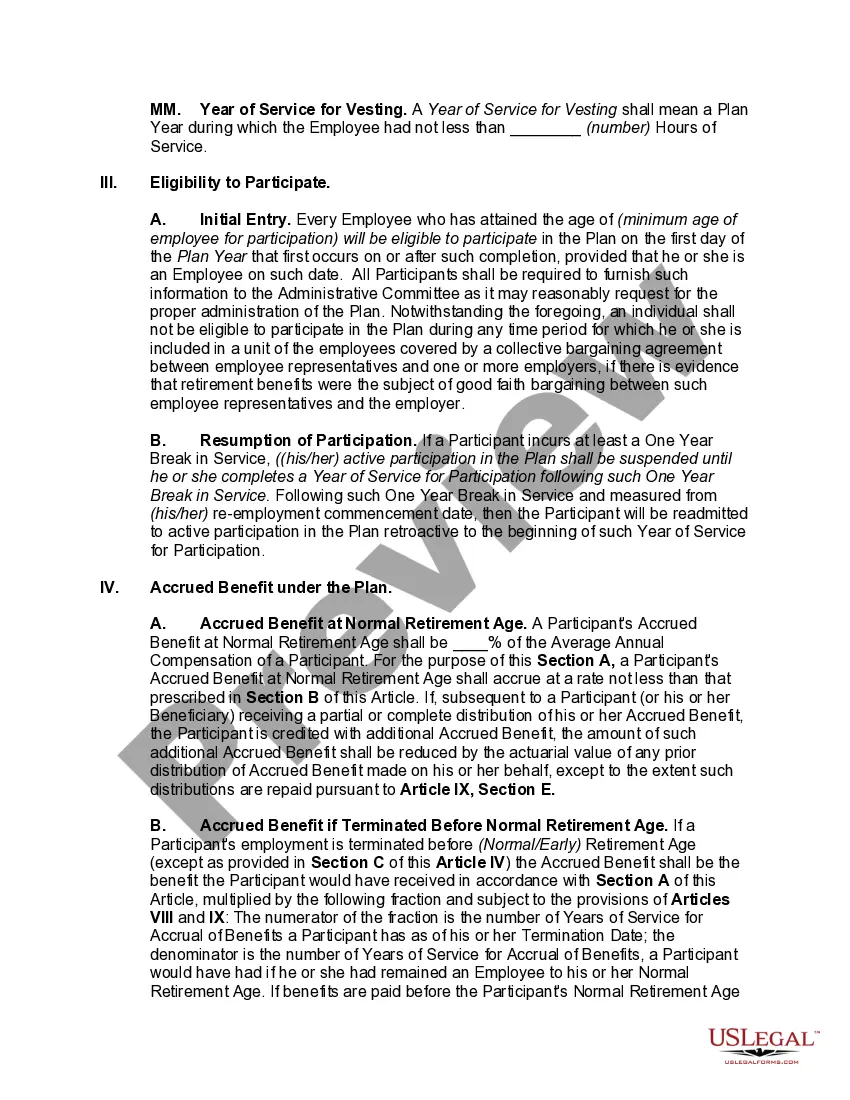

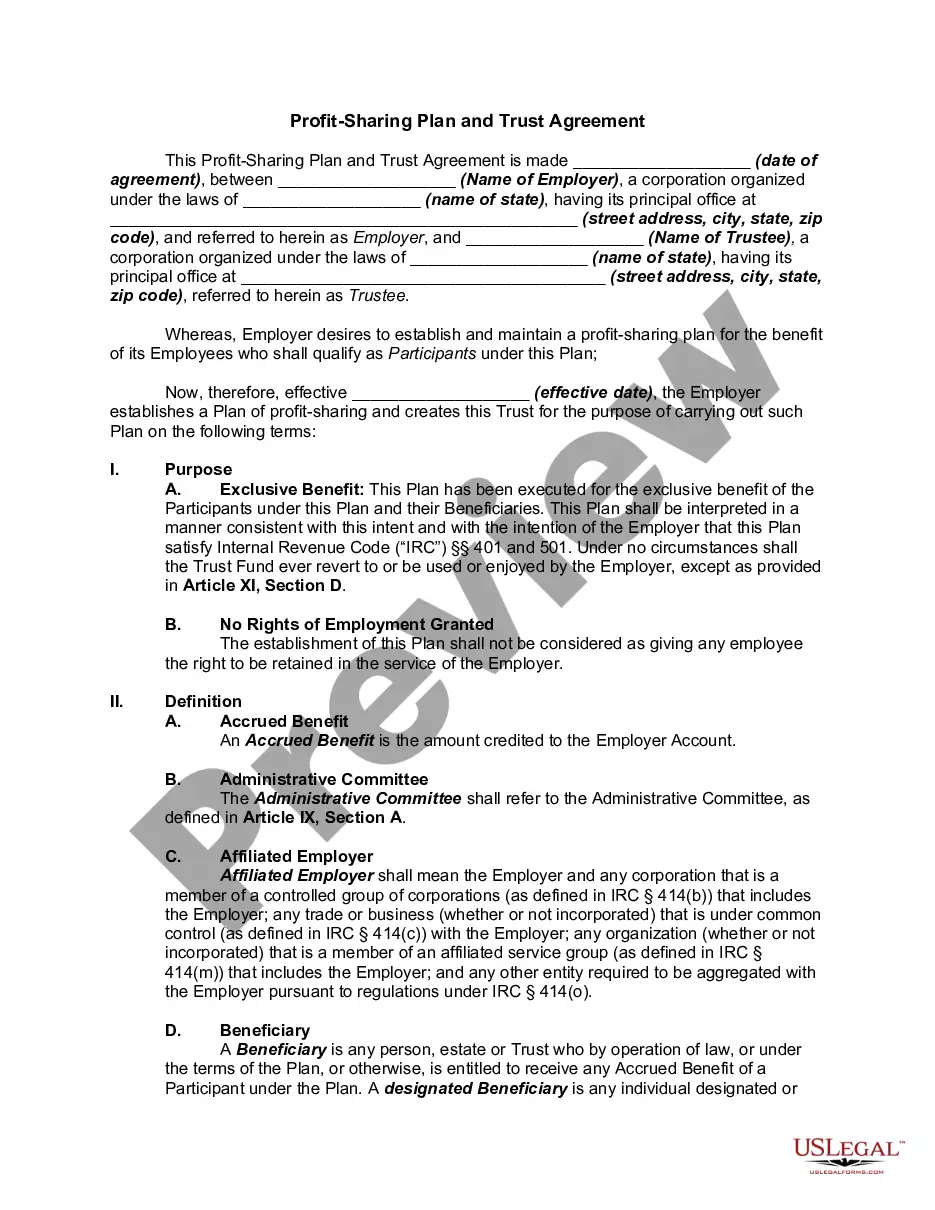
Get your form ready online
Our built-in tools help you complete, sign, share, and store your documents in one place.
Make edits, fill in missing information, and update formatting in US Legal Forms—just like you would in MS Word.
Download a copy, print it, send it by email, or mail it via USPS—whatever works best for your next step.
Sign and collect signatures with our SignNow integration. Send to multiple recipients, set reminders, and more. Go Premium to unlock E-Sign.
If this form requires notarization, complete it online through a secure video call—no need to meet a notary in person or wait for an appointment.
We protect your documents and personal data by following strict security and privacy standards.

Make edits, fill in missing information, and update formatting in US Legal Forms—just like you would in MS Word.

Download a copy, print it, send it by email, or mail it via USPS—whatever works best for your next step.

Sign and collect signatures with our SignNow integration. Send to multiple recipients, set reminders, and more. Go Premium to unlock E-Sign.

If this form requires notarization, complete it online through a secure video call—no need to meet a notary in person or wait for an appointment.

We protect your documents and personal data by following strict security and privacy standards.
Looking for another form?

How to fill out Defined-Benefit Pension Plan And Trust Agreement?
Are you currently situated in a location where you need paperwork for either business or personal purposes each day.
There are numerous legal document templates accessible online, but finding forms you can trust is not easy.
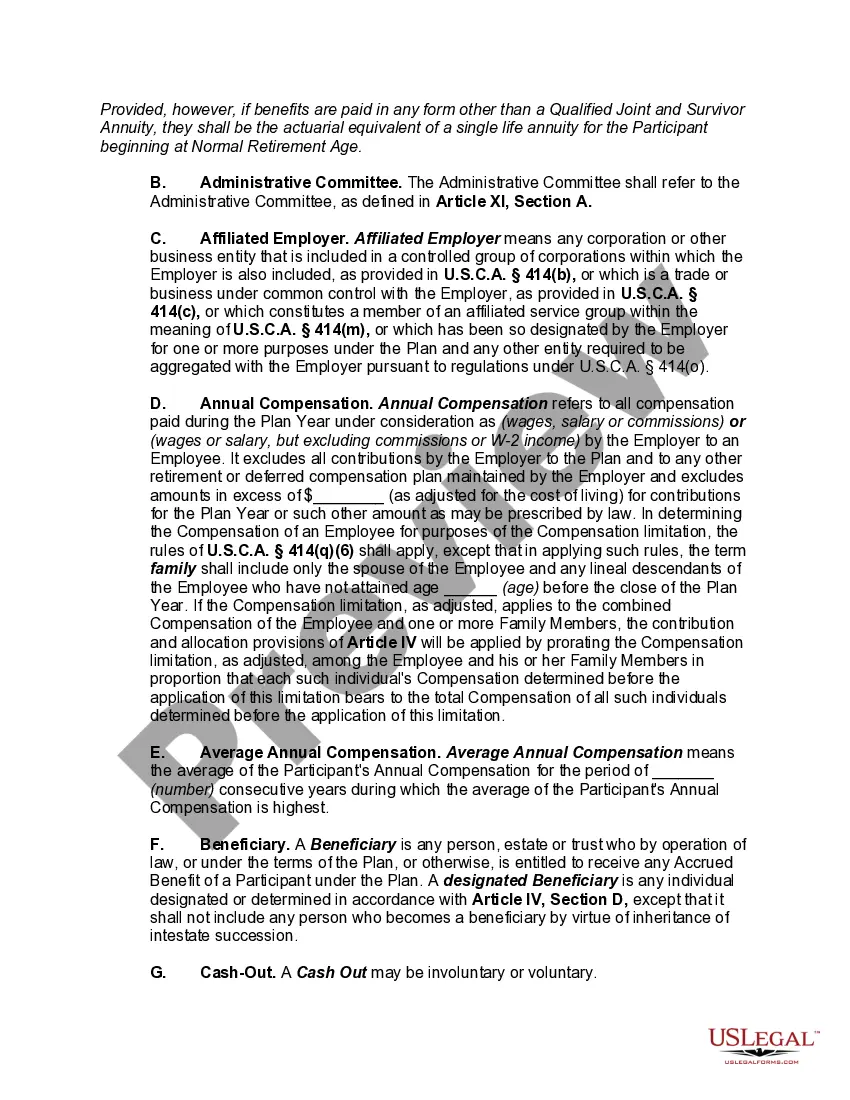
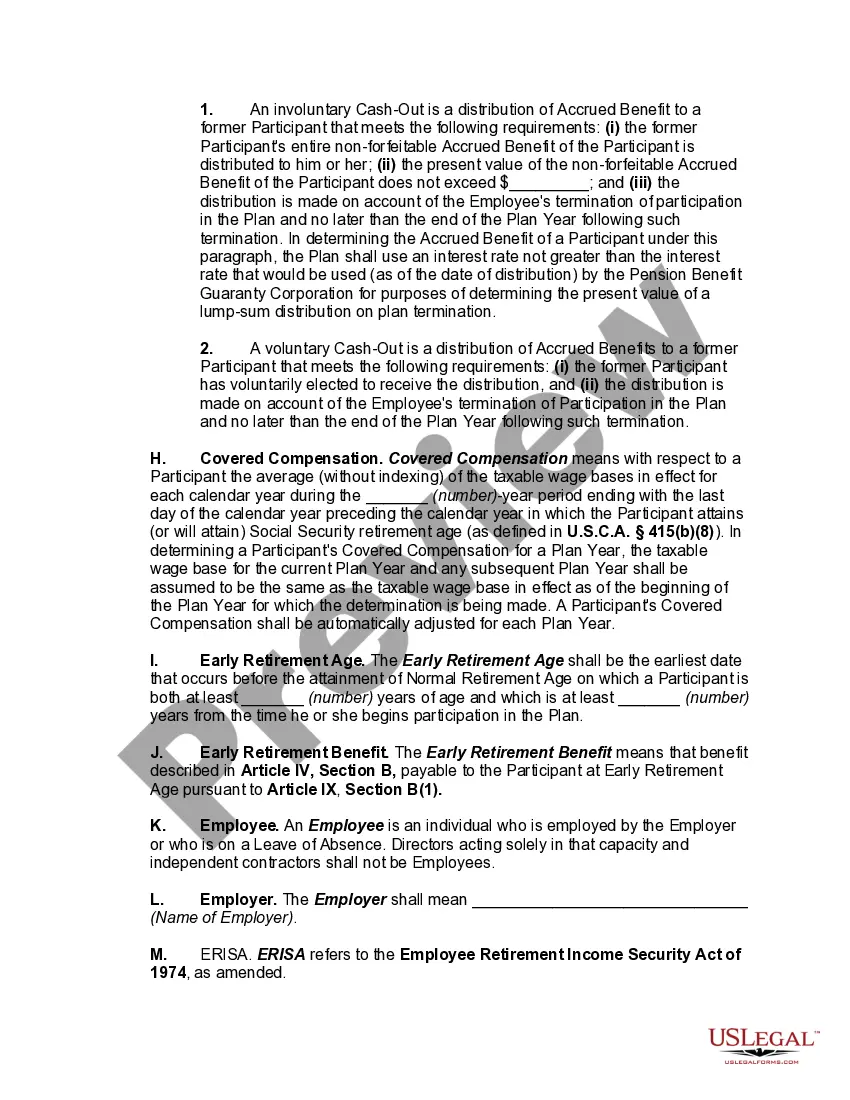
US Legal Forms provides thousands of form templates, including the Delaware Defined-Benefit Pension Plan and Trust Agreement, which are designed to meet federal and state regulations.
Once you find the right form, click on Purchase now.
Choose the pricing plan you prefer, fill out the necessary information to create your account, and pay for the order using your PayPal or credit card.
- If you are already familiar with the US Legal Forms website and have an account, simply Log In.
- Next, you can download the Delaware Defined-Benefit Pension Plan and Trust Agreement template.
- If you do not have an account and wish to begin using US Legal Forms, follow these steps.
- Locate the form you need and verify that it is for the correct city/state.
- Use the Preview button to review the form.
- Check the details to ensure that you have selected the correct form.
- If the form is not what you are looking for, utilize the Search area to find the form that suits your needs.
Form popularity
FAQ
Essentially, they are a legal arrangement that lets a person place assets in a trust fund to benefit specific individuals or organizations. Trust funds also provide tax benefits and avoid the hassles of waiting for a probate court to distribute your assets.
Definition of pension trust : a trust established to provide financial administration of a pension or retirement fund.
A pension trust is an employee retirement fund that is funded by both the employer and the employee. The monetary contributions from both parties are handed over to a legal trustee who will follow the accounting standards of the United States.
An employee trust fund is a form of long-term savings plan established as a job benefit. The best-known forms of employee trust fund are the stock ownership plan and the pension plan. Both the employer and the employee may contribute to an employee trust fund.
A retirement trust is a strategy where you name your trust as the beneficiary of your retirement accounts. This offers the best of both worlds. The tax benefits of a retirement account and the protection of a trust.
Retirement plans themselves cannot be transferred into a trust; those assets must be distributed from the plan first, which triggers income tax on the distribution. If you are older than 72 when you die, money generally must come out of your retirement plan according to the schedule that was required before your death.
Defined benefit pension schemesYou're usually protected by the Pension Protection Fund if your employer goes bust and cannot pay your pension. The Pension Protection Fund usually pays: 100% compensation if you've reached the scheme's pension age. 90% compensation if you're below the scheme's pension age.
Typically, pension funds don't have to pay capital gains taxes. Because pension funds are exempt from paying capital gains taxes, assets in the funds can grow faster over time. While the pension fund does not pay capital gains taxes, distributions to the employee will be taxed at the employee's ordinary income rate.
A Pension Plan Trust Account is a subaccount that holds assets for a qualified pension. Pension Plan Trust client accounts are trust accounts containing assets beneficially owned by a number of underlying Pension Plan participants.
A number of situations could put your pension at risk, including underfunding, mismanagement, bankruptcy, and legal exemptions. Laws exist to protect you in such circumstances, but some laws provide better protection than others.