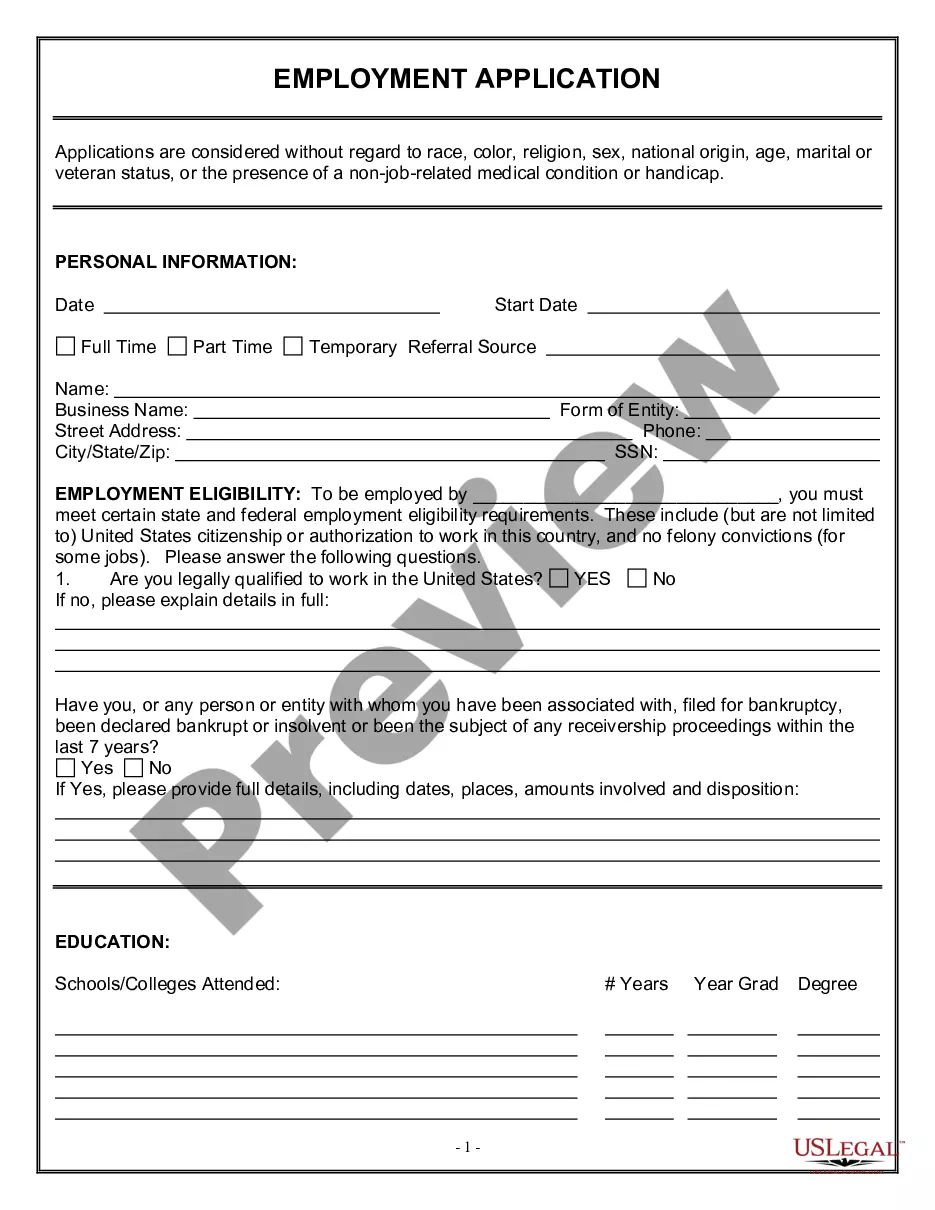
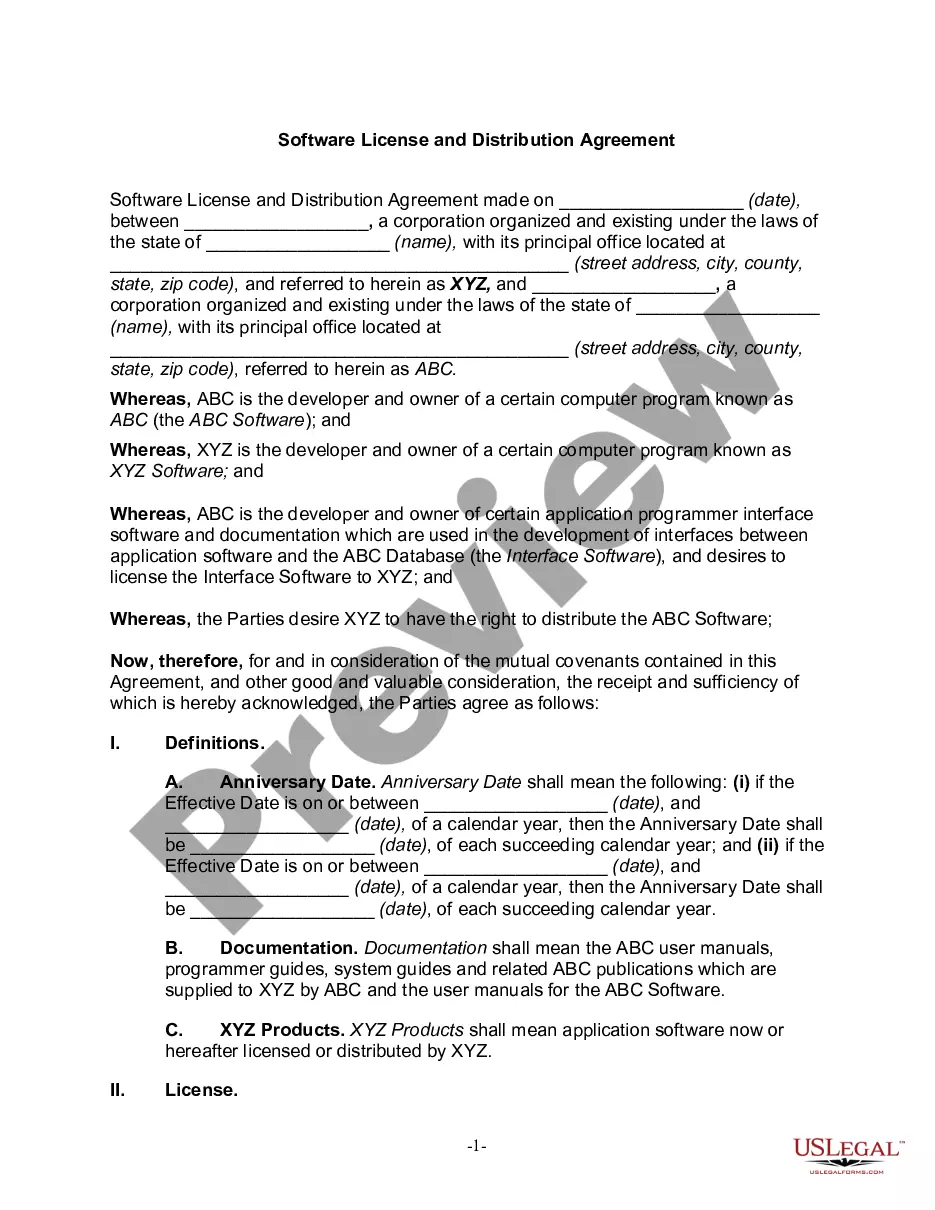
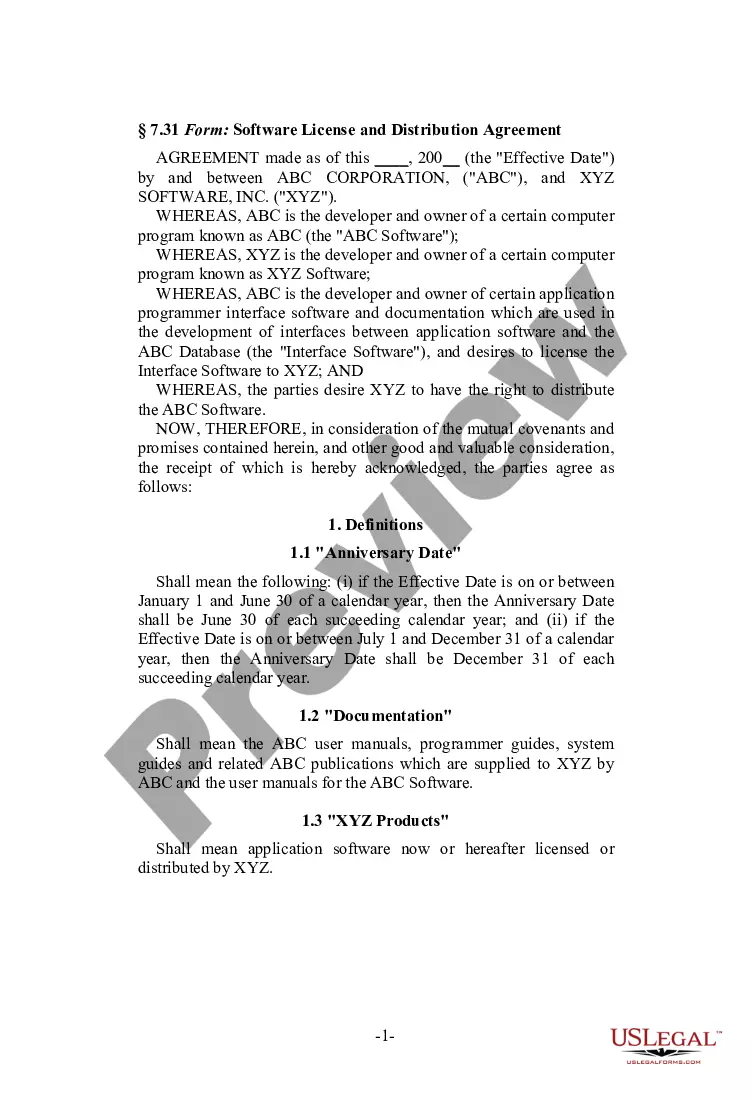
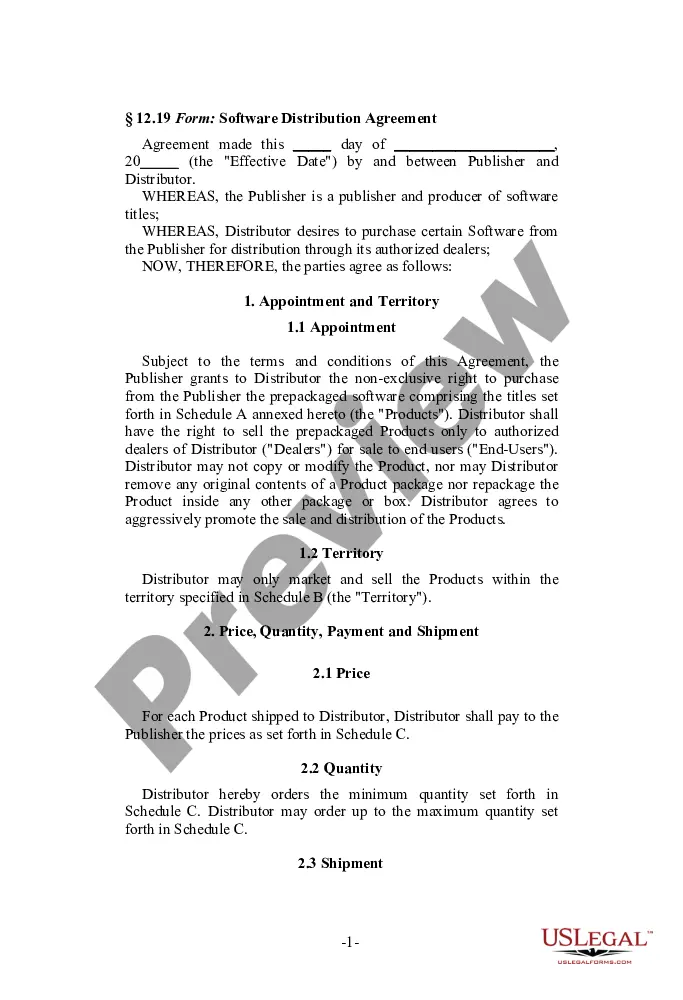
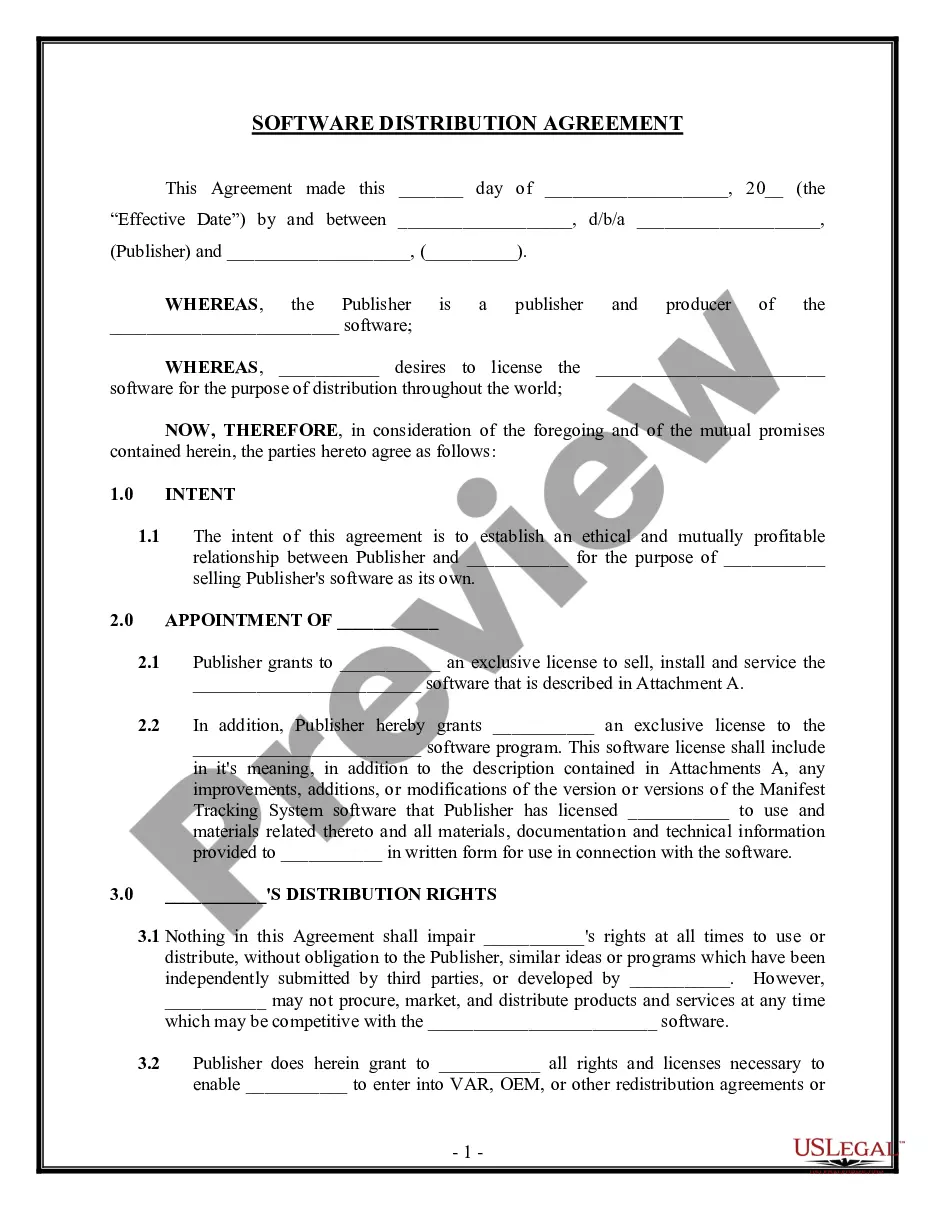
Delaware Software Distribution Agreement - Right to Provide and Market Software to End Users
Description
Get your form ready online
Our built-in tools help you complete, sign, share, and store your documents in one place.
Make edits, fill in missing information, and update formatting in US Legal Forms—just like you would in MS Word.
Download a copy, print it, send it by email, or mail it via USPS—whatever works best for your next step.
Sign and collect signatures with our SignNow integration. Send to multiple recipients, set reminders, and more. Go Premium to unlock E-Sign.
If this form requires notarization, complete it online through a secure video call—no need to meet a notary in person or wait for an appointment.
We protect your documents and personal data by following strict security and privacy standards.

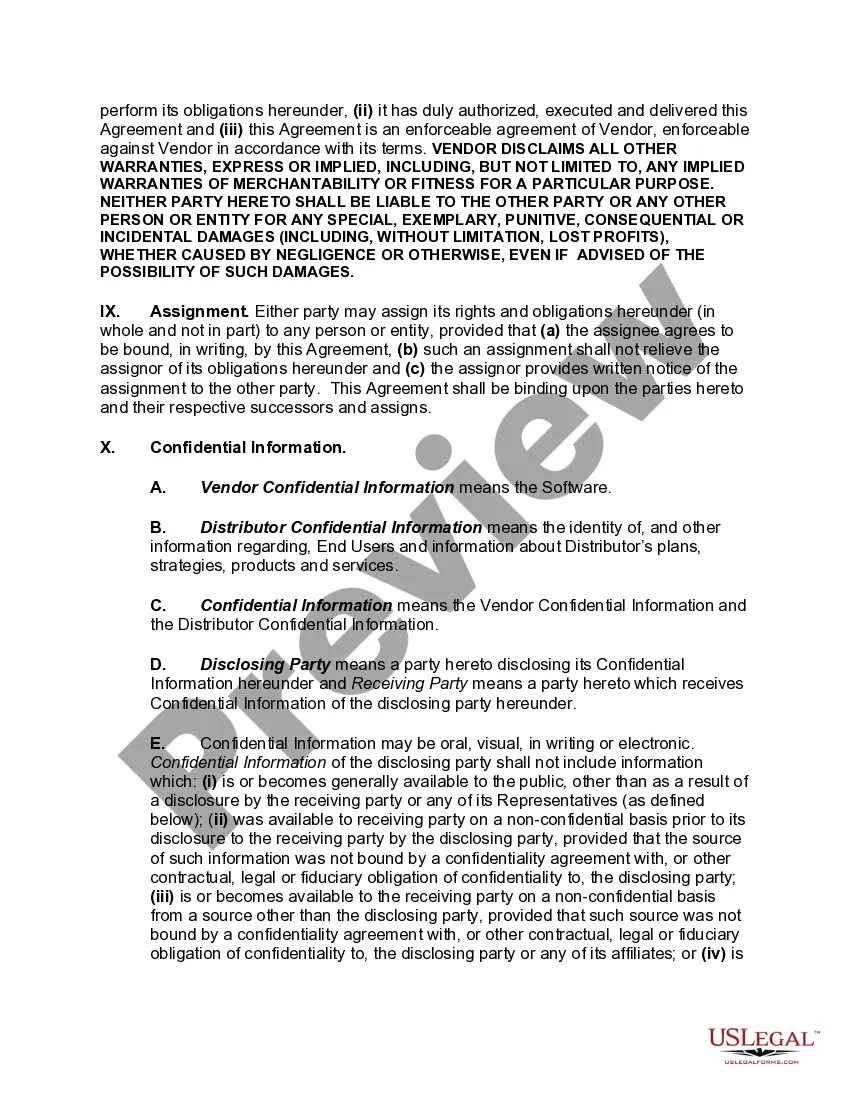
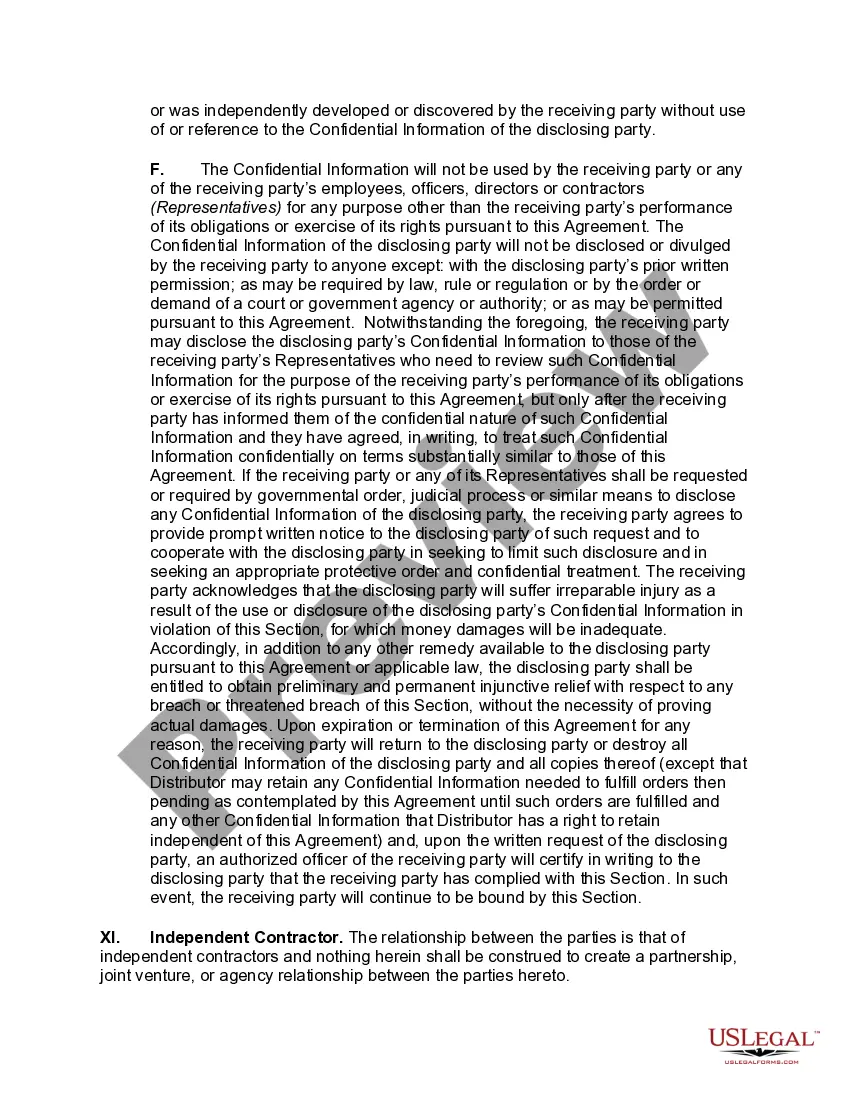
Make edits, fill in missing information, and update formatting in US Legal Forms—just like you would in MS Word.

Download a copy, print it, send it by email, or mail it via USPS—whatever works best for your next step.

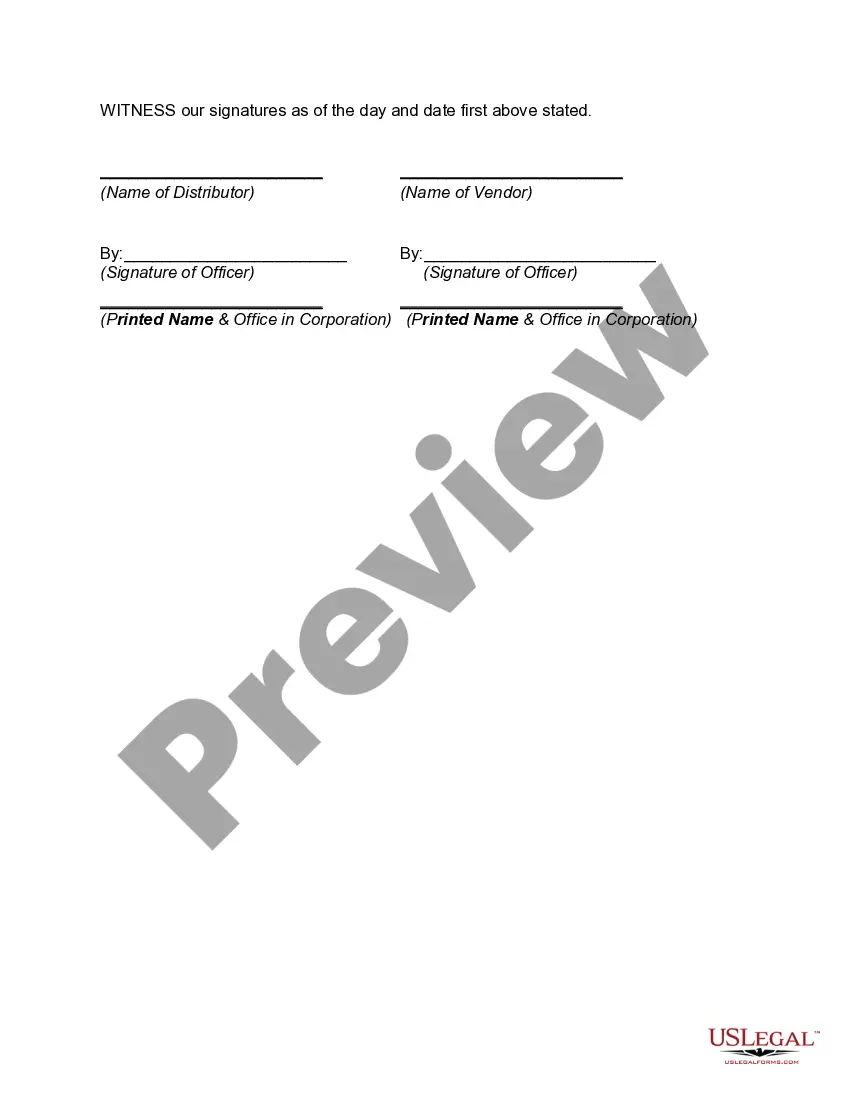
Sign and collect signatures with our SignNow integration. Send to multiple recipients, set reminders, and more. Go Premium to unlock E-Sign.

If this form requires notarization, complete it online through a secure video call—no need to meet a notary in person or wait for an appointment.

We protect your documents and personal data by following strict security and privacy standards.
Looking for another form?
How to fill out Software Distribution Agreement - Right To Provide And Market Software To End Users?
US Legal Forms - one of the most prominent collections of legal forms in the United States - offers a wide range of legal document templates that you can obtain or create.
By utilizing the website, you can access thousands of forms for business and personal use, categorized by types, states, or keywords.
You can find the latest versions of documents like the Delaware Software Distribution Agreement - Right to Provide and Market Software to End Users in mere moments.
Review the form's content by clicking the Review button.
Examine the form overview to confirm that you have selected the right form.
- If you possess a membership, Log In to obtain the Delaware Software Distribution Agreement - Right to Provide and Market Software to End Users from the US Legal Forms library.
- The Download button will appear on every type you view.
- You can access all previously downloaded forms in the My documents section of your profile.
- If you are using US Legal Forms for the first time, here are simple steps to begin.
- Ensure you have chosen the correct form for your area/county.
Form popularity
FAQ
A software license agreement details how and when the software can be used, and provides any restrictions that are imposed on the software. A software license agreement also defines and protects the rights of the parties involved in a clear and concise manner.
Software licensing terms and conditions usually include fair use of the software, the limitations of liability, warranties and disclaimers. They also specify protections if the software or its use infringes on the intellectual property rights of others. Software licenses typically are proprietary, free or open source.
An end-user license agreement (E.U.L.A.) is a legal contract entered into between a software developer or vendor and the user of the software, often where the software has been purchased by the user from an intermediary such as a retailer.
A software license agreement details how and when the software can be used, and provides any restrictions that are imposed on the software. A software license agreement also defines and protects the rights of the parties involved in a clear and concise manner.
Under the terms of a licence or distribution agreement a licensee is generally granted the right to use your intellectual property (including your trade mark) or to distribute your product within a defined territory.
A distribution deal (also known as distribution contract or distribution agreement) is a legal agreement between one party and another, to handle distribution of a product. There are various forms of distribution deals. There are exclusive and non-exclusive distribution agreements.
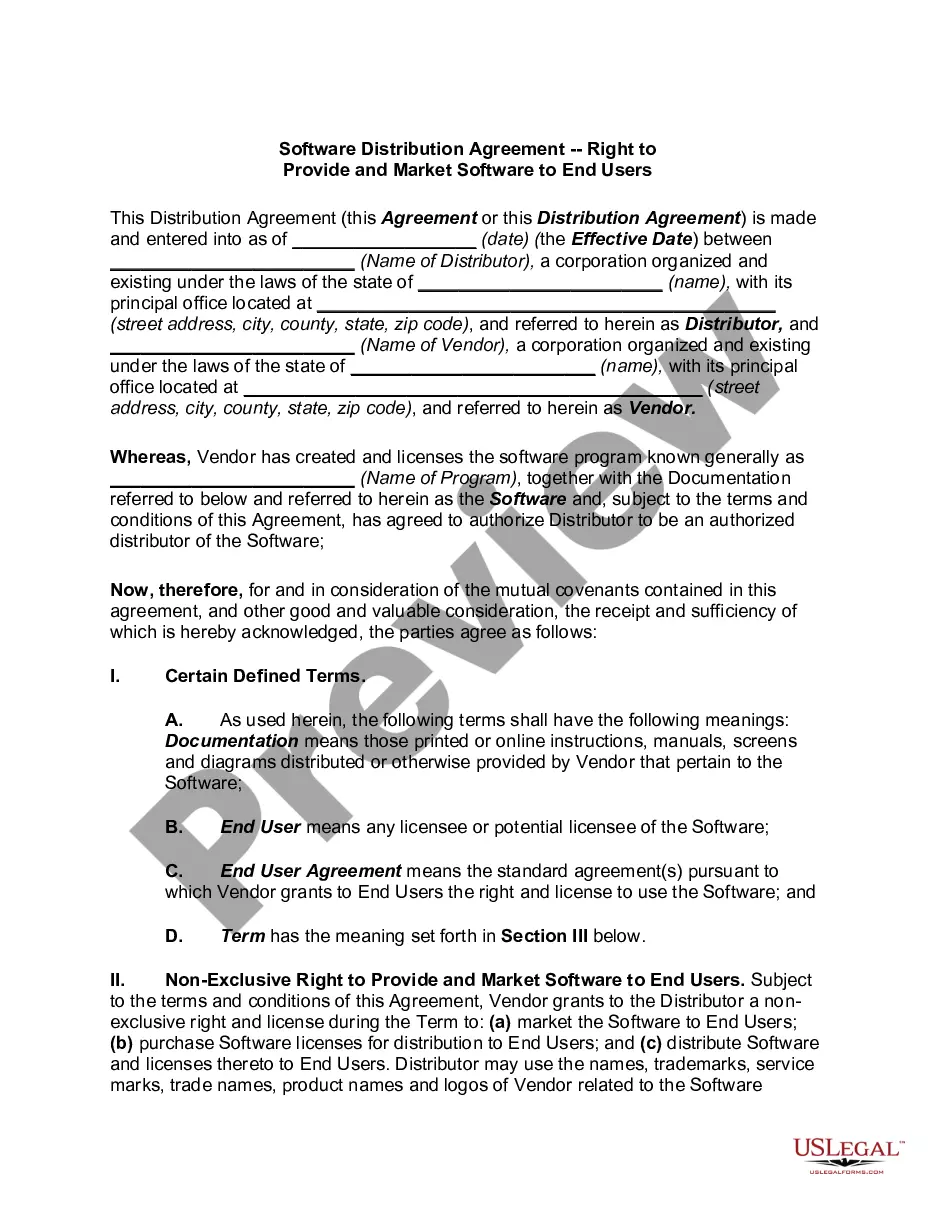
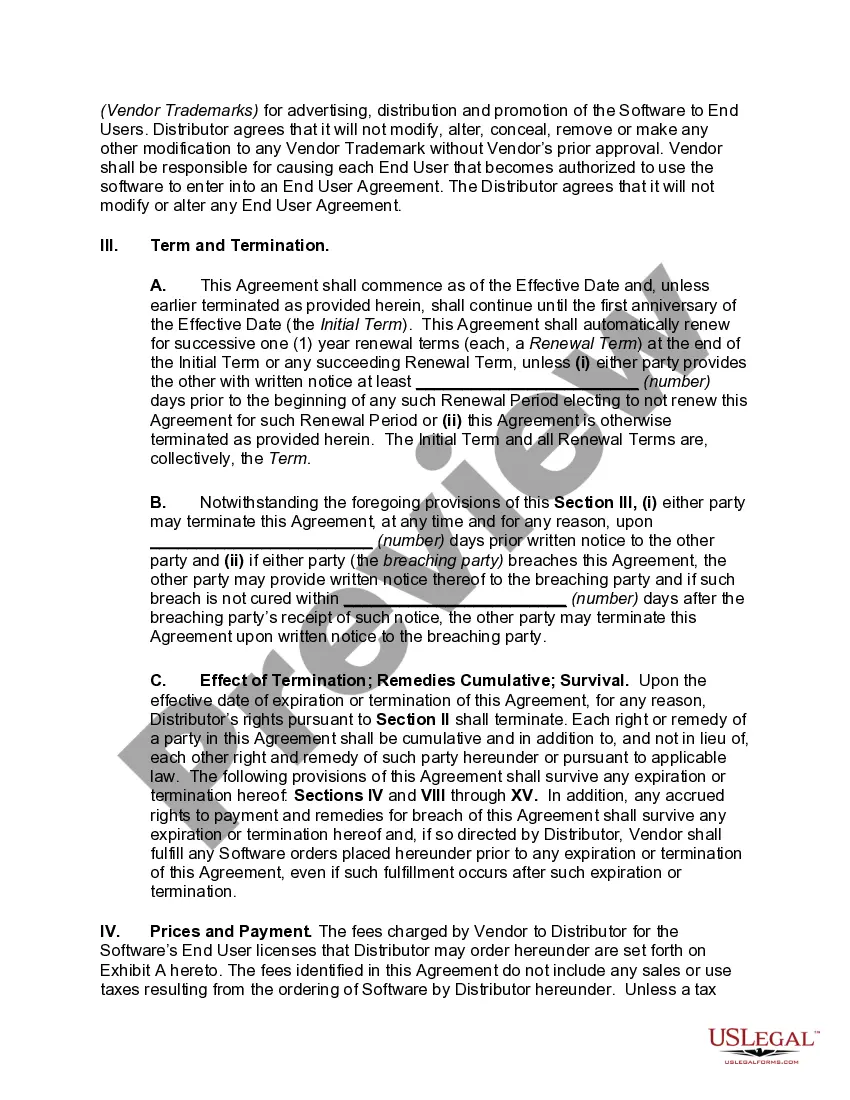
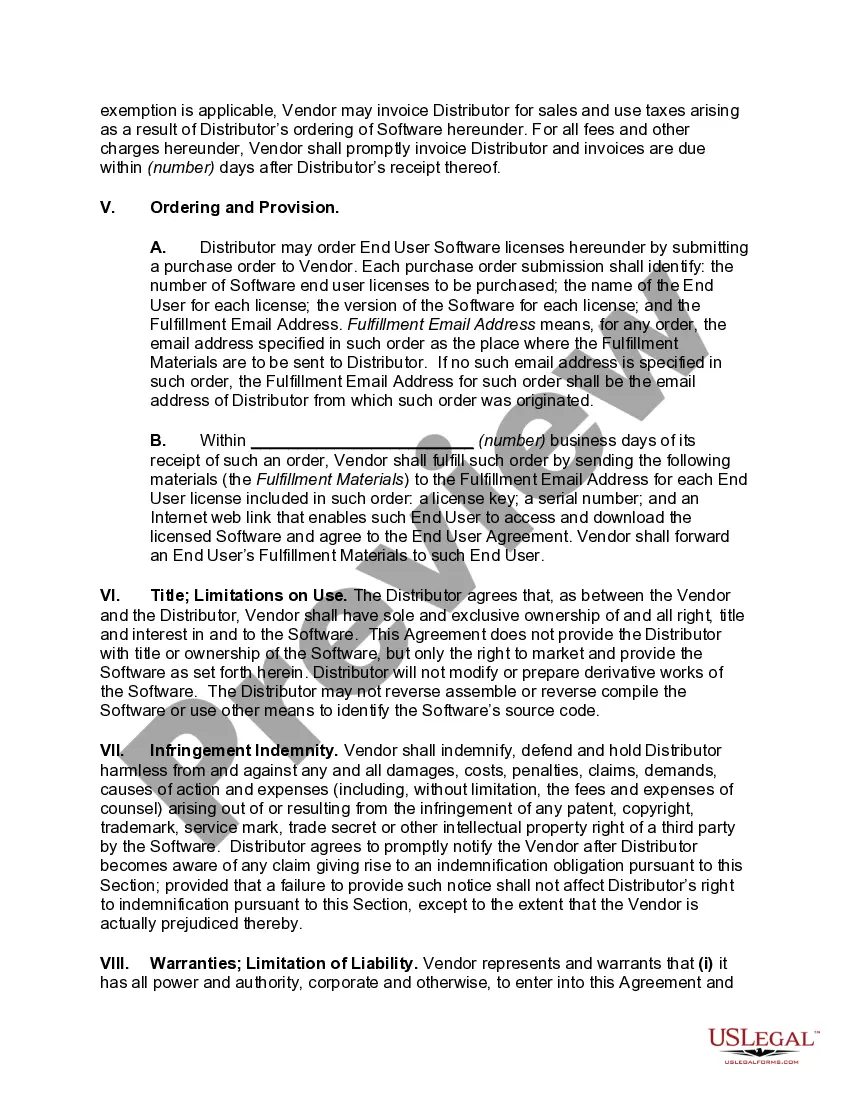
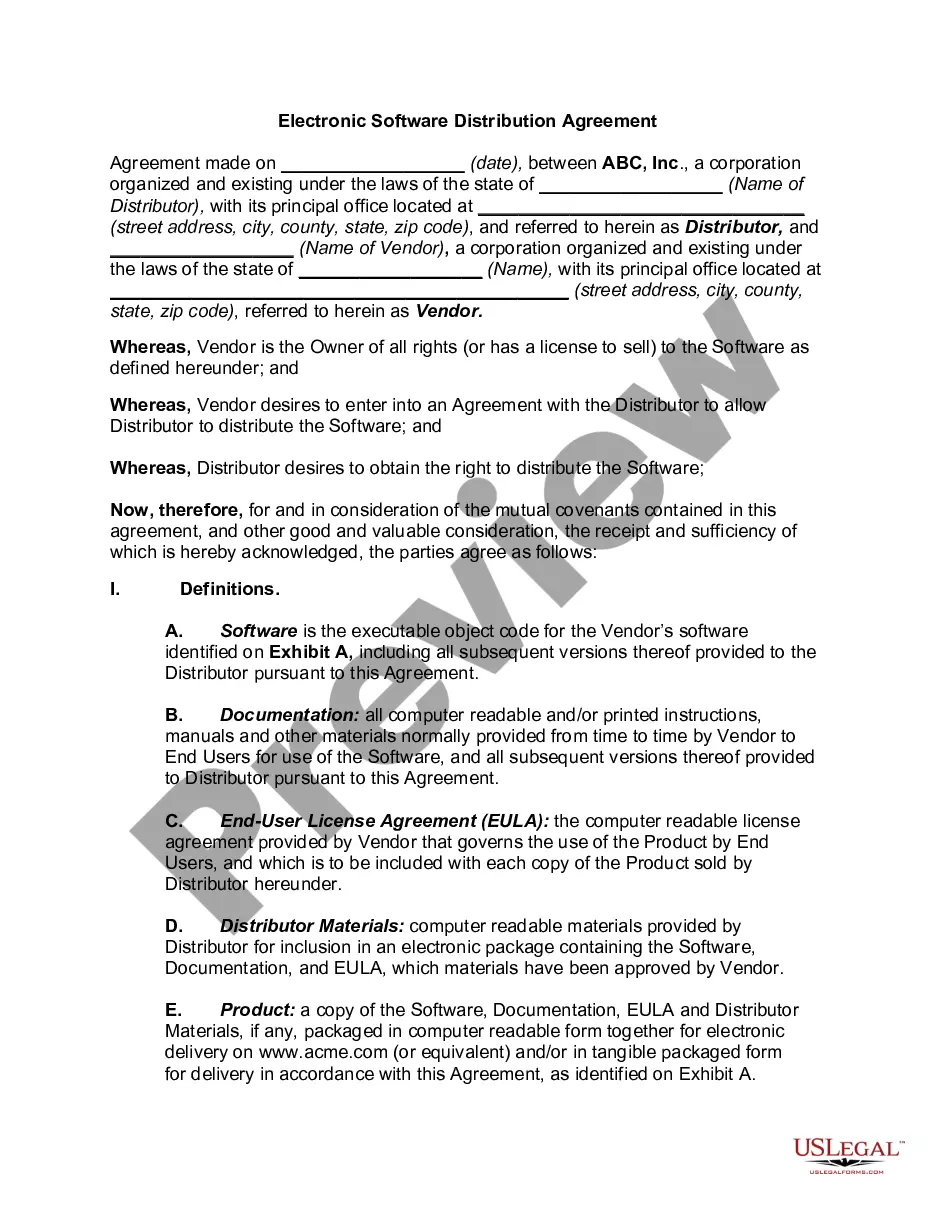
Software distribution agreements specifically allow distributors to market and sell the developer's software to end users. A software distribution agreement sets forth the rights and duties of both the developer and the distributor to avoid disputes later on.
Generally speaking, an EULA is a legally binding agreement between the owner of a product (often software) and the end-user more specifically a contract between the licensor of a product and the licensee.
A software license agreement details how and when the software can be used, and provides any restrictions that are imposed on the software. A software license agreement also defines and protects the rights of the parties involved in a clear and concise manner.
The EULA protects only the copyright owner. In fact, not only does the vendor own the license, but they also legally own any private data that the consumer entered into the software. These software owners can access, read, or share this private consumer data in any way they want.