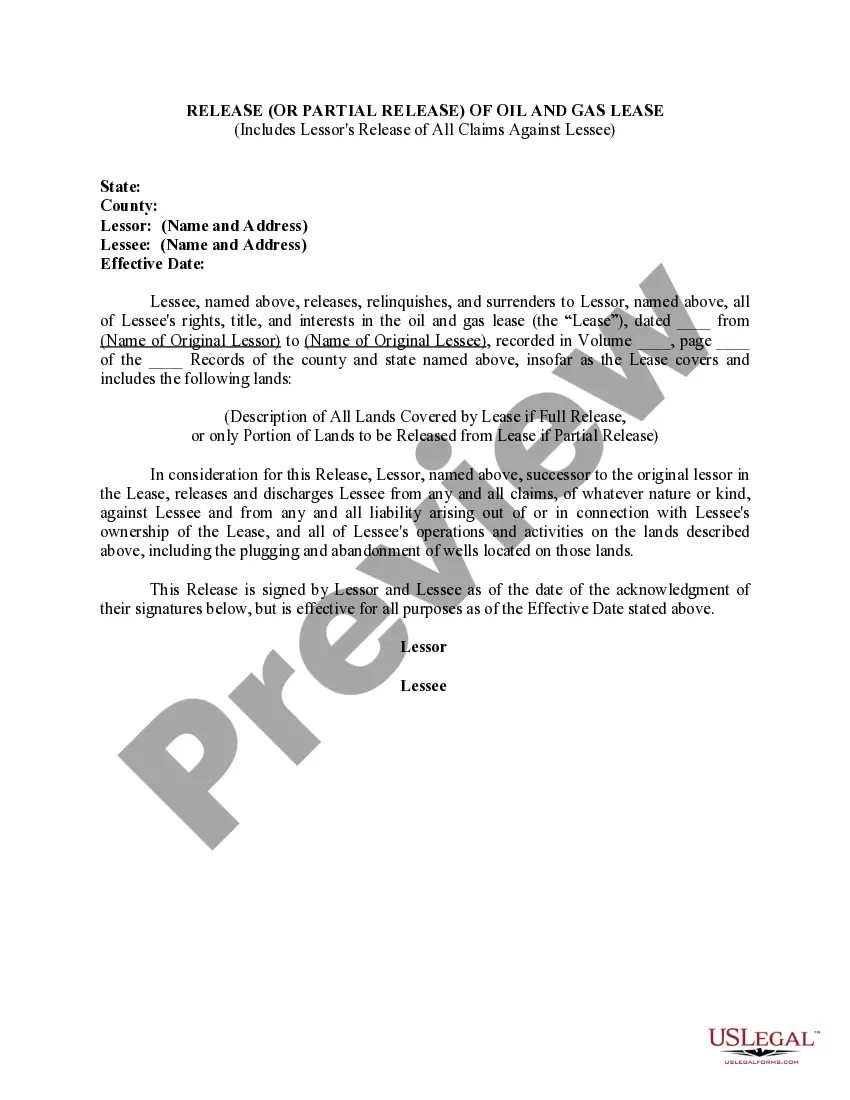
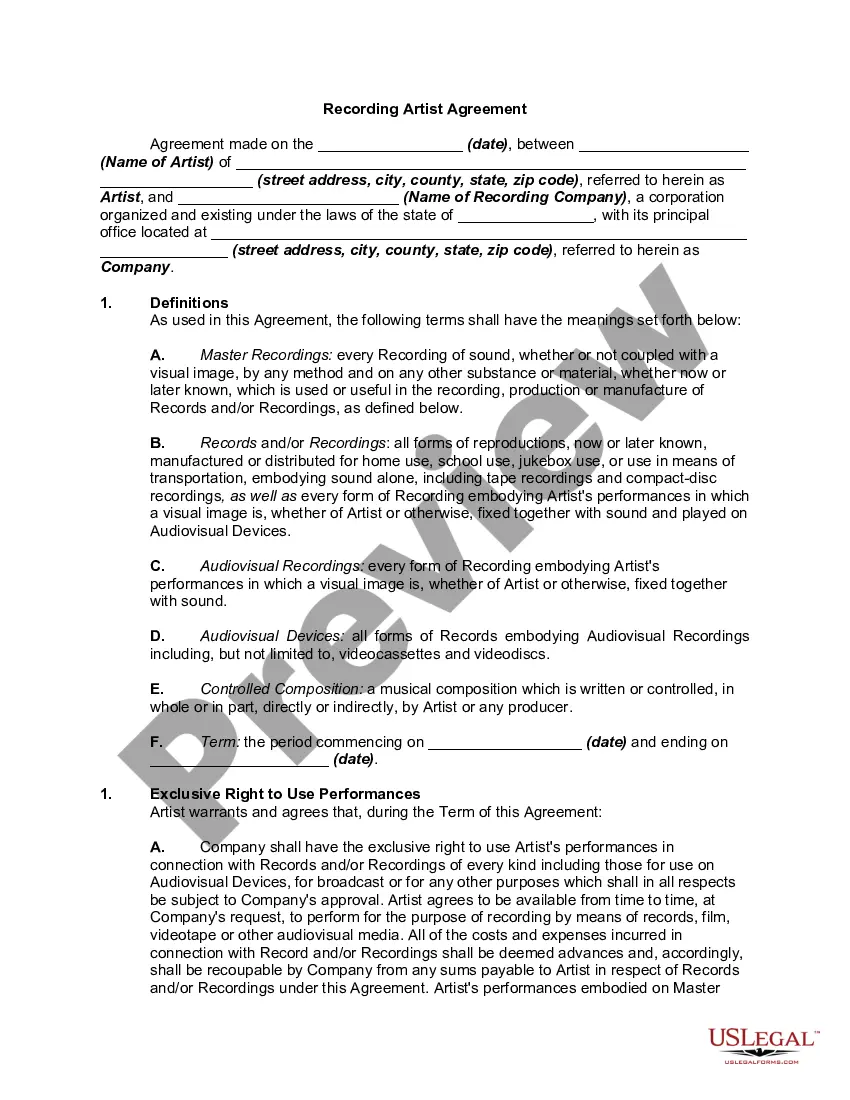
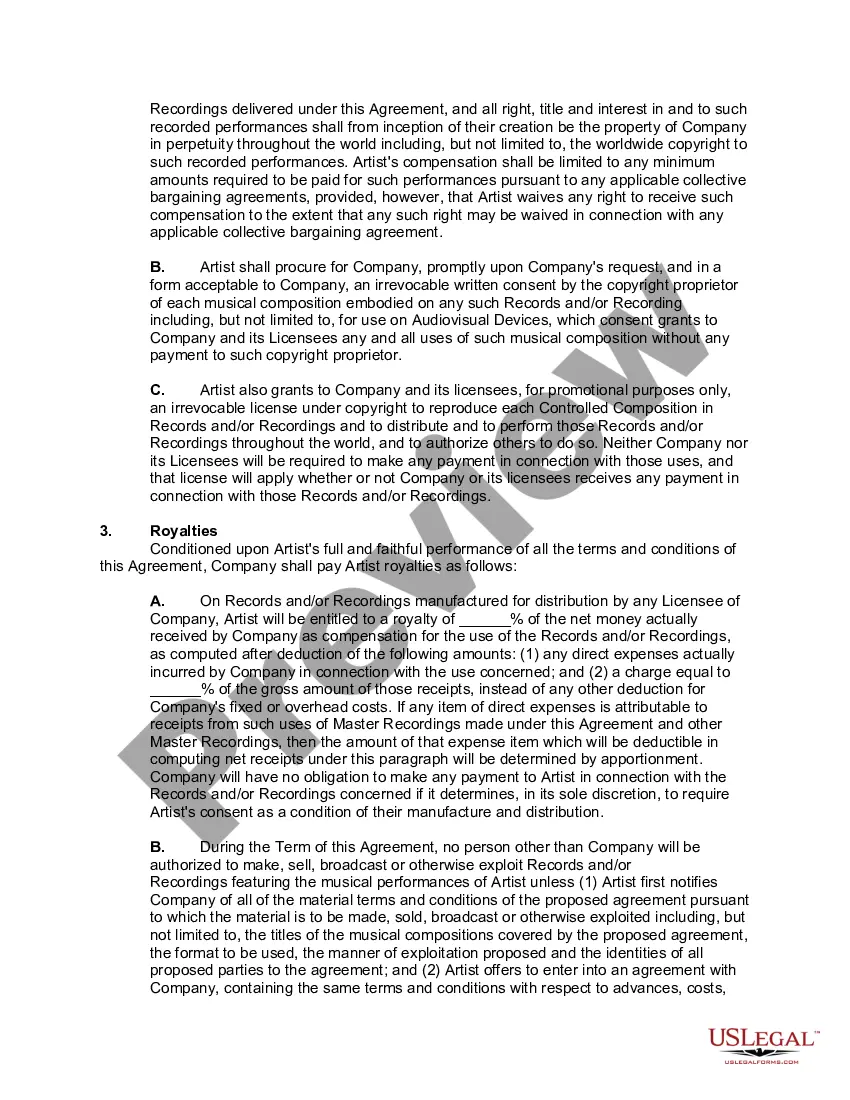
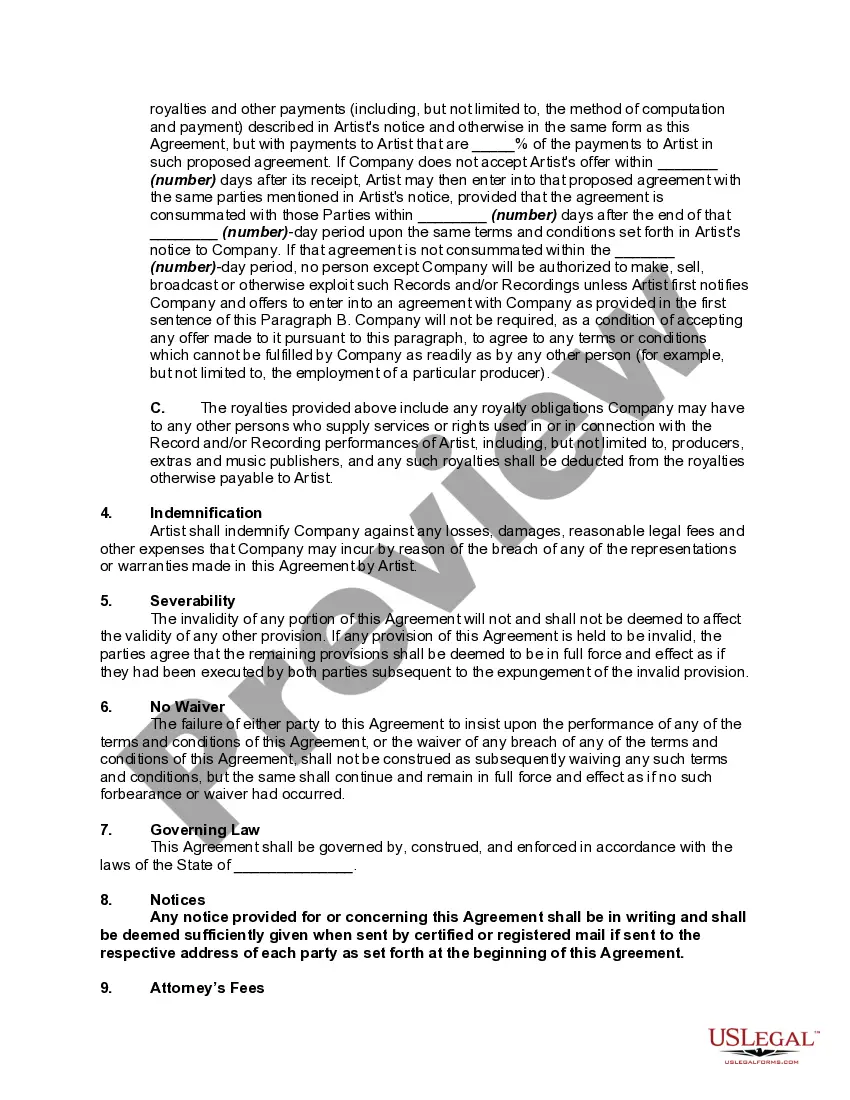
Delaware Recording Artist Agreement
Description
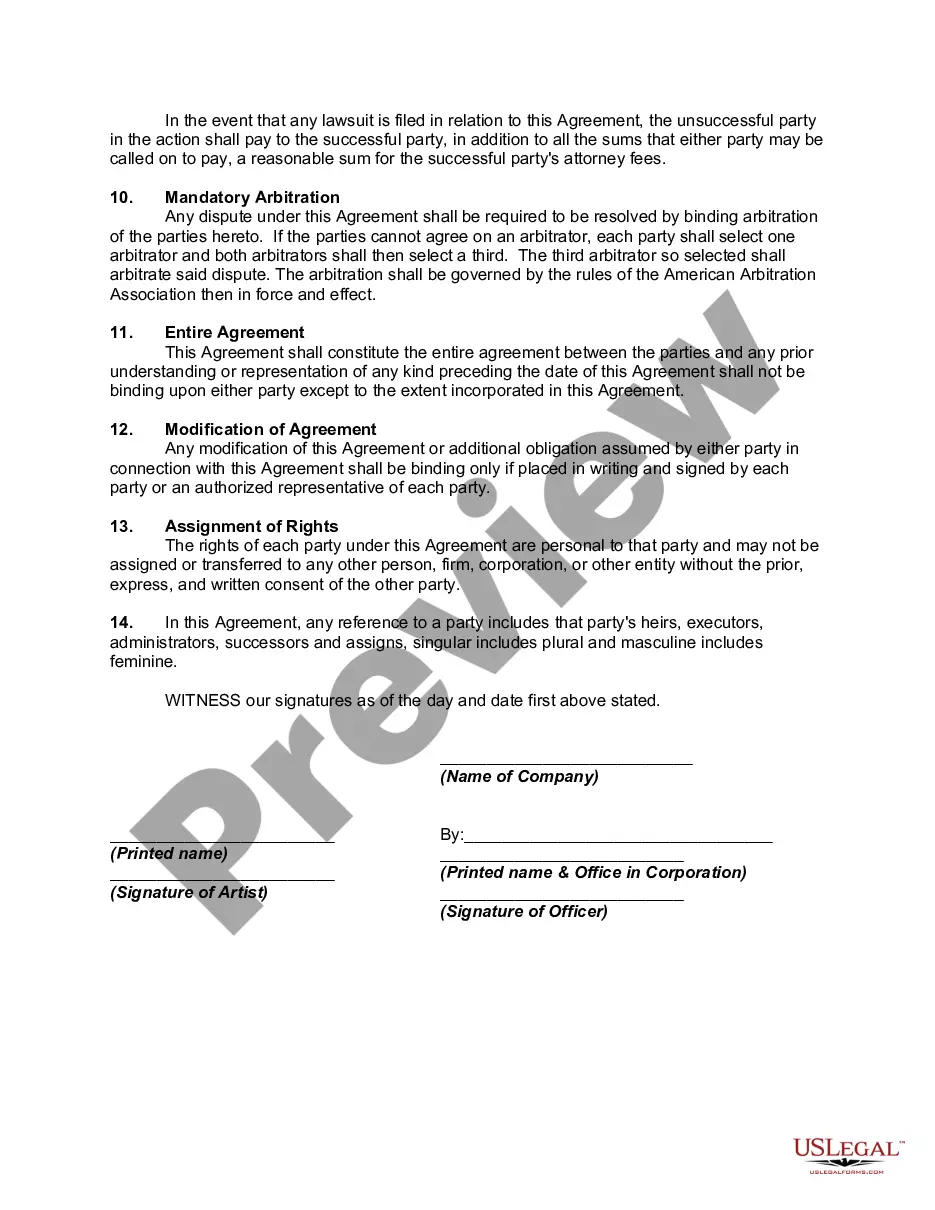
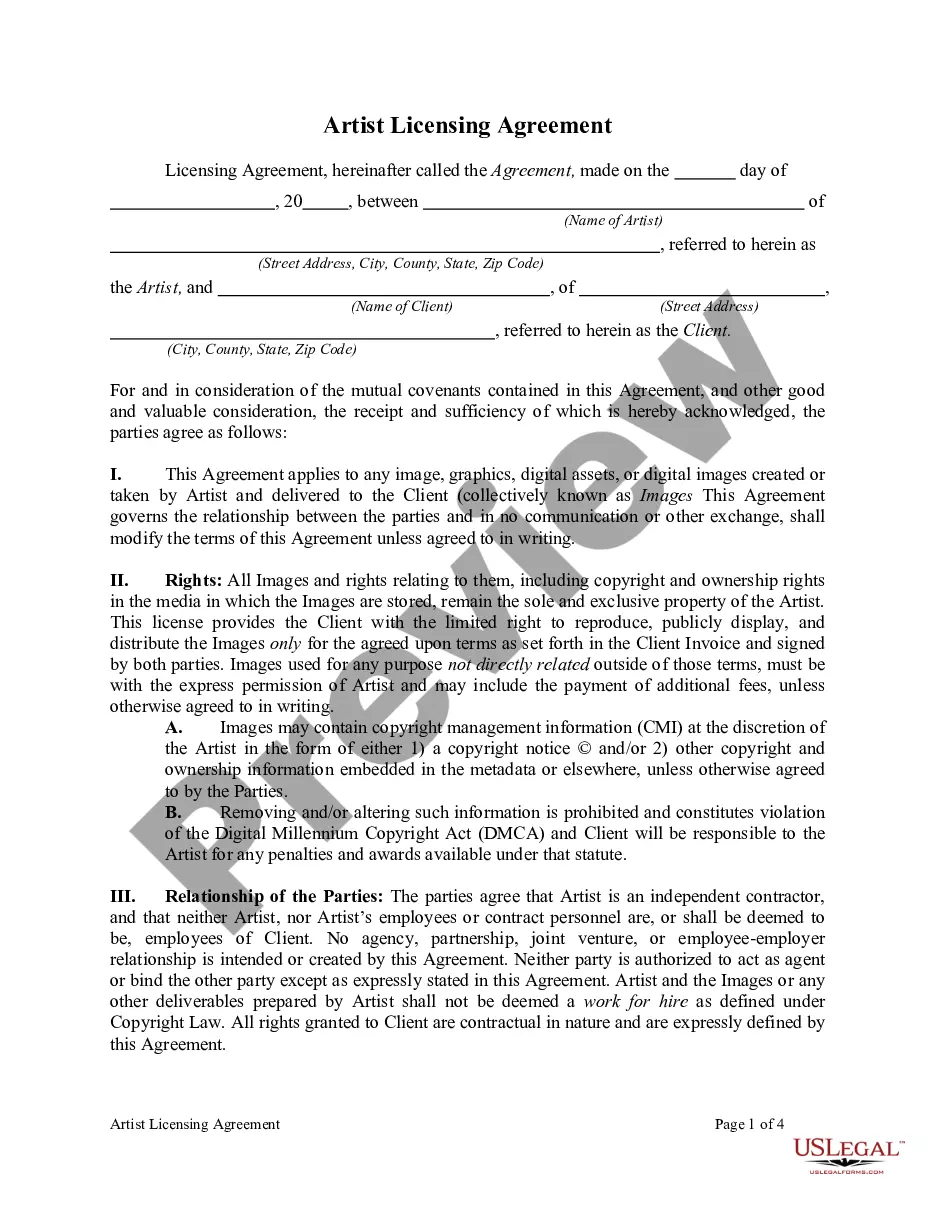
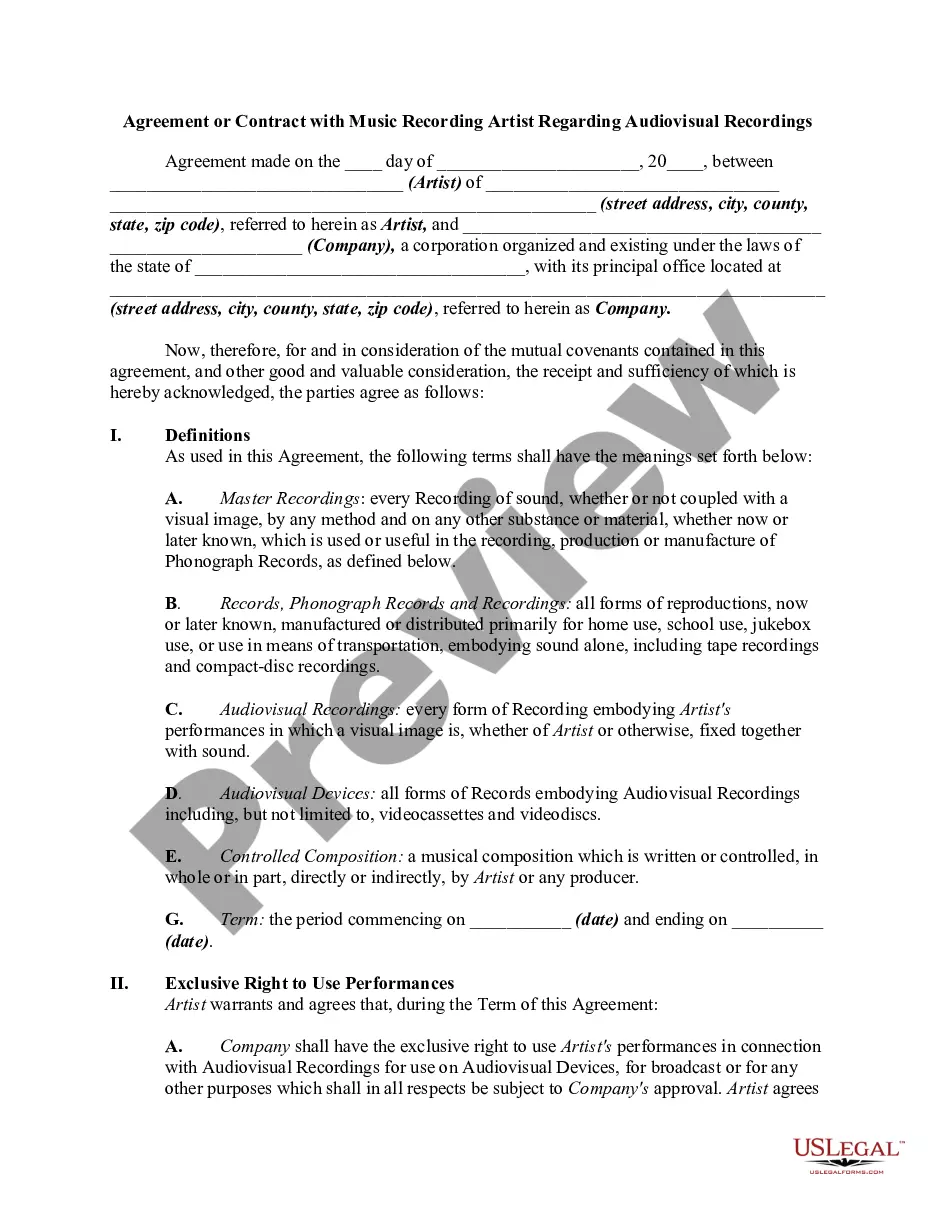
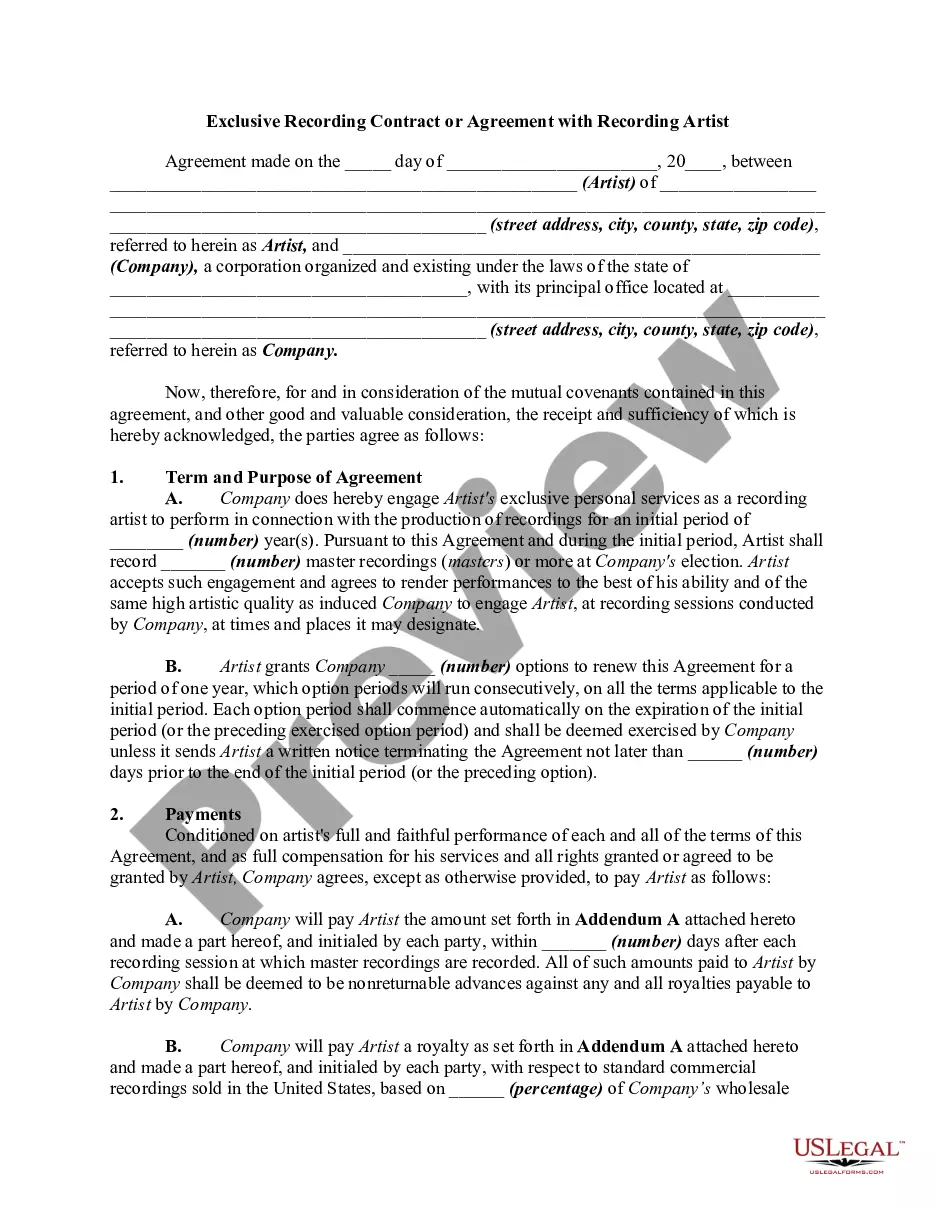
Get your form ready online
Our built-in tools help you complete, sign, share, and store your documents in one place.
Make edits, fill in missing information, and update formatting in US Legal Forms—just like you would in MS Word.
Download a copy, print it, send it by email, or mail it via USPS—whatever works best for your next step.
Sign and collect signatures with our SignNow integration. Send to multiple recipients, set reminders, and more. Go Premium to unlock E-Sign.
If this form requires notarization, complete it online through a secure video call—no need to meet a notary in person or wait for an appointment.
We protect your documents and personal data by following strict security and privacy standards.

Make edits, fill in missing information, and update formatting in US Legal Forms—just like you would in MS Word.

Download a copy, print it, send it by email, or mail it via USPS—whatever works best for your next step.

Sign and collect signatures with our SignNow integration. Send to multiple recipients, set reminders, and more. Go Premium to unlock E-Sign.

If this form requires notarization, complete it online through a secure video call—no need to meet a notary in person or wait for an appointment.

We protect your documents and personal data by following strict security and privacy standards.
Looking for another form?

How to fill out Recording Artist Agreement?
It is feasible to spend hours online searching for the legal document template that meets the requirements of state and federal regulations you need.
US Legal Forms offers a vast array of legal templates that have been reviewed by experts.
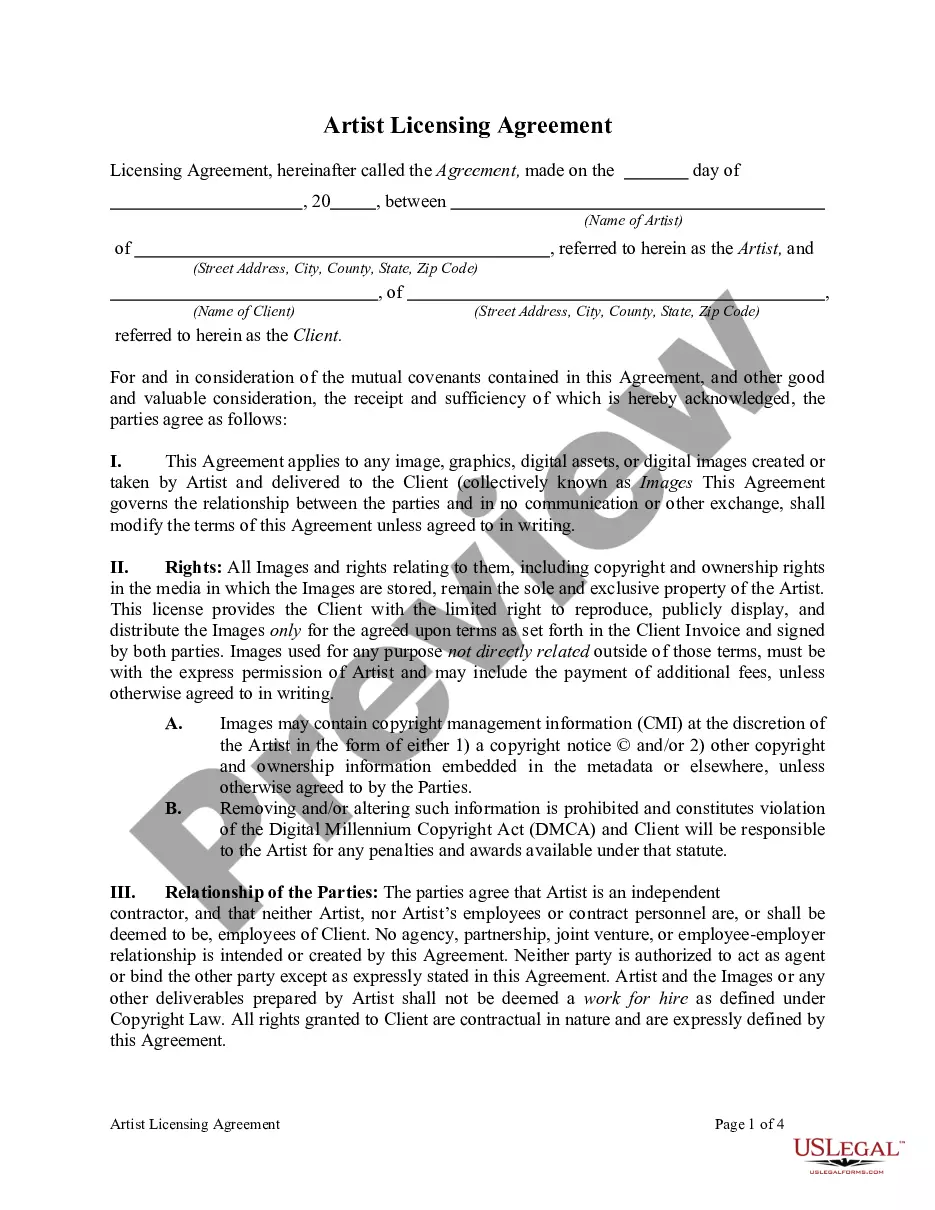
You can download or print the Delaware Recording Artist Agreement from my service.
If available, utilize the Preview option to review the document template as well.
- If you already have a US Legal Forms account, you can Log In and click the Download button.
- After that, you can complete, alter, print, or sign the Delaware Recording Artist Agreement.
- Every legal document template you purchase is yours indefinitely.
- To obtain another copy of a purchased form, navigate to the My documents tab and click the corresponding option.
- If you are using the US Legal Forms website for the first time, adhere to the simple instructions below.
- First, ensure you have chosen the correct document template for your county/city of preference.
- Review the form description to confirm you have selected the suitable form.
Form popularity
FAQ
A Delaware registered agent acts as your business's official point of contact. They receive legal documents, official government correspondence, and service of process on behalf of your corporation. This role ensures that you stay compliant with state laws while you focus on managing your business, including any Delaware Recording Artist Agreement needs. Utilizing USLegalForms can help you find a reliable registered agent and simplify your compliance requirements.
Setting up a Delaware C Corp typically takes about one to two weeks. This process involves filing the necessary documents with the state and obtaining essential approvals. If you need a Delaware Recording Artist Agreement as part of your business setup, it’s wise to prepare that documentation in advance to streamline the process. By using platforms like USLegalForms, you can efficiently create and manage your agreements.
To create an artist agreement, start by outlining the key terms, such as compensation, rights, and responsibilities. Using a Delaware Recording Artist Agreement template can streamline the process and ensure all important aspects are covered. Customizing the agreement to fit your specific situation is crucial for clarity. Consider platforms like uslegalforms to simplify creating effective agreements.
The 80 20 record deal refers to an arrangement where the artist receives 80% of the revenue, while the record label retains 20%. This model aligns closely with a Delaware Recording Artist Agreement that is designed to empower artists financially. It's a favorable deal that encourages artists to maximize their profits. Understanding such arrangements can help artists negotiate better terms.
An artist contract typically includes sections on rights, obligations, payment details, and project specifics. When you look at a Delaware Recording Artist Agreement, you'll notice a clear structure that covers all essential elements. This helps the parties involved to avoid misunderstandings. A well-drafted contract protects the interests of both the artist and the client.
The agreement between an artist and client defines the terms of their working relationship. A typical Delaware Recording Artist Agreement includes details about payment, deliverables, and timelines. Understanding these terms ensures that both the artist's and client's expectations align. This kind of clarity helps to foster a successful partnership.
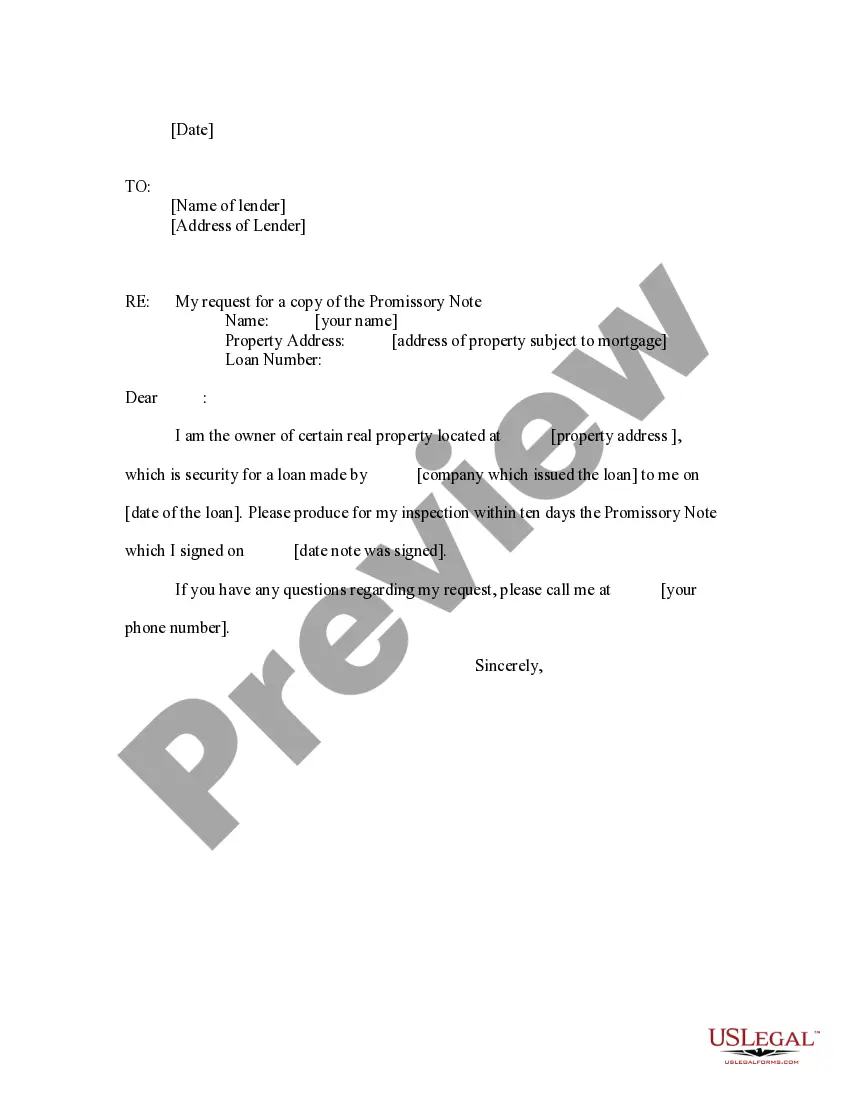
A licensing agreement allows an artist to grant permission to use their work while retaining ownership. In the context of a Delaware Recording Artist Agreement, it precisely outlines what rights the artist is giving up and what rights they keep. This clarity helps both parties understand their roles and protects the artist's creative output. Using the right template can enhance the agreement's effectiveness.
To secure a recording contract, start by honing your musical craft and building a solid online presence. Once you have a portfolio, consider reaching out to producers, managers, or labels to present your work. When you receive interest, make sure you thoroughly review the Delaware Recording Artist Agreement to ensure it aligns with your career goals and legal protections.
The number of followers you need to get signed can vary significantly based on genre and market trends. While some labels may look for artists with thousands of fans, others may focus more on the quality of your music and engagement. Ultimately, having a strong fan base can enhance your appeal, but understanding the legal implications of a Delaware Recording Artist Agreement is equally important as you negotiate.
Getting your music heard by a record label requires a strategic approach. Begin by leveraging online platforms and social media to create a buzz around your music. Also, attending industry events and reaching out to scouts can help bridge the gap. When pursuing this route, familiarize yourself with the Delaware Recording Artist Agreement to understand what you might expect from the label.