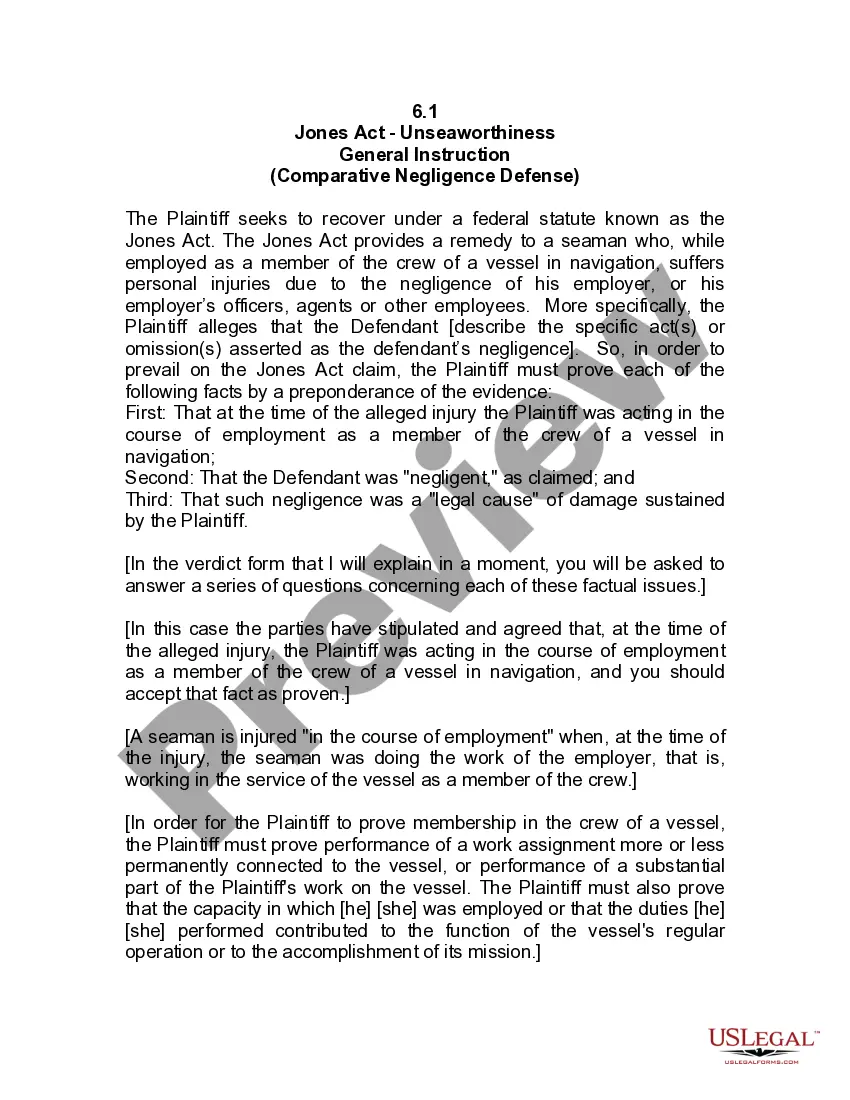
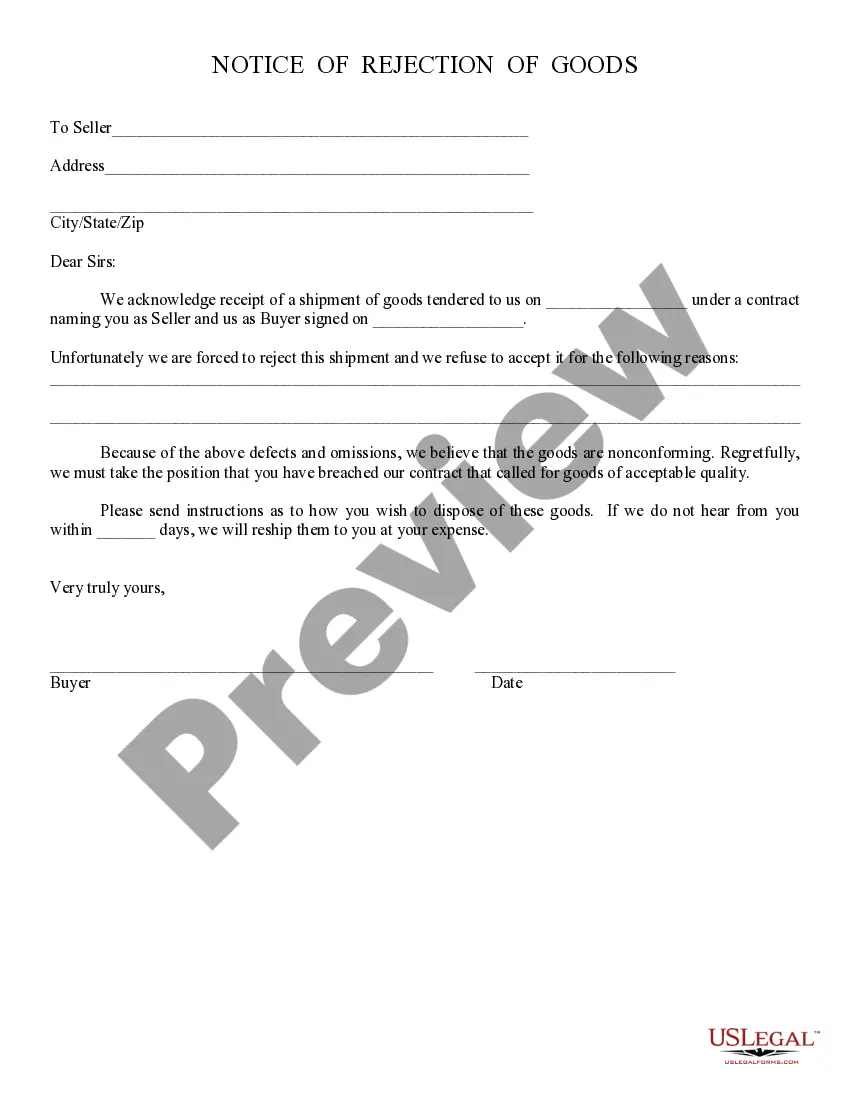
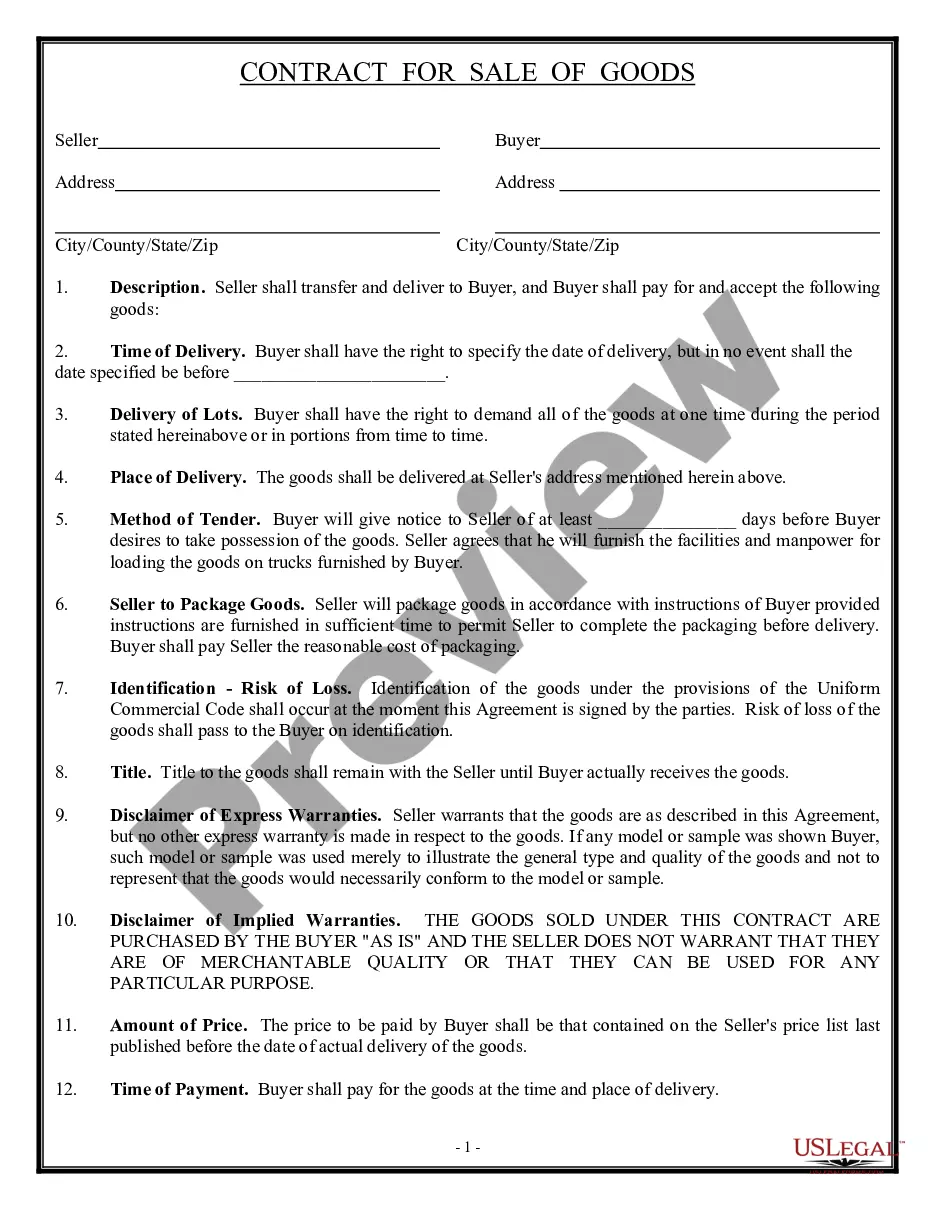
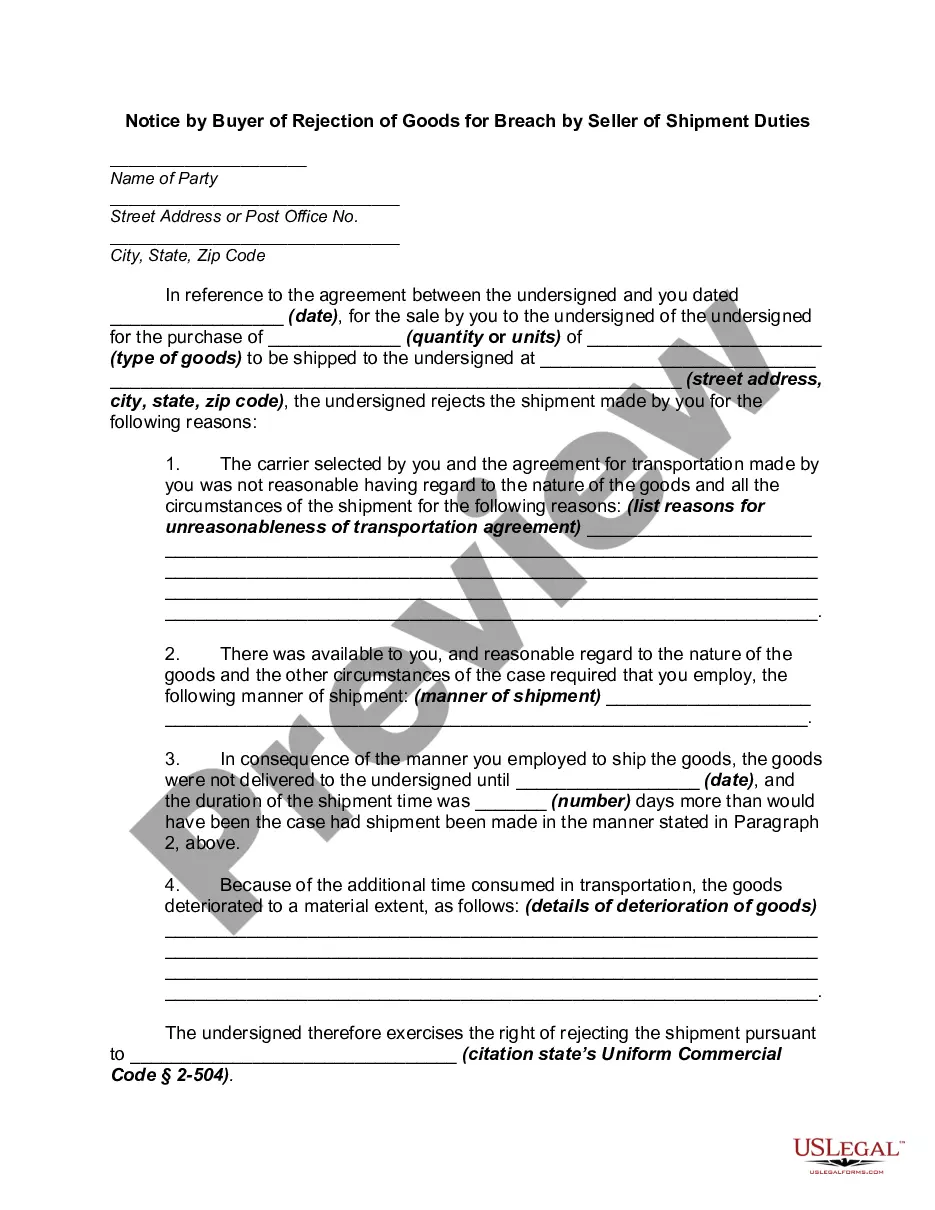
Delaware Rejection of Goods
Description
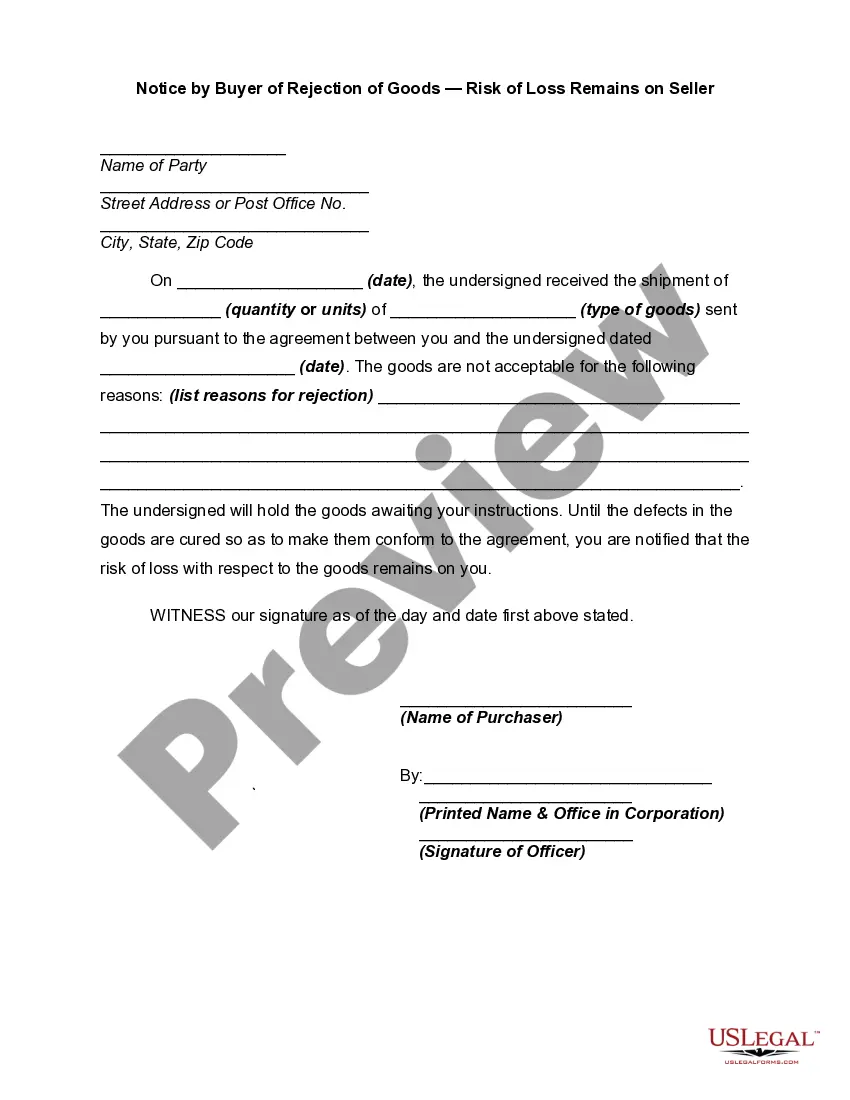
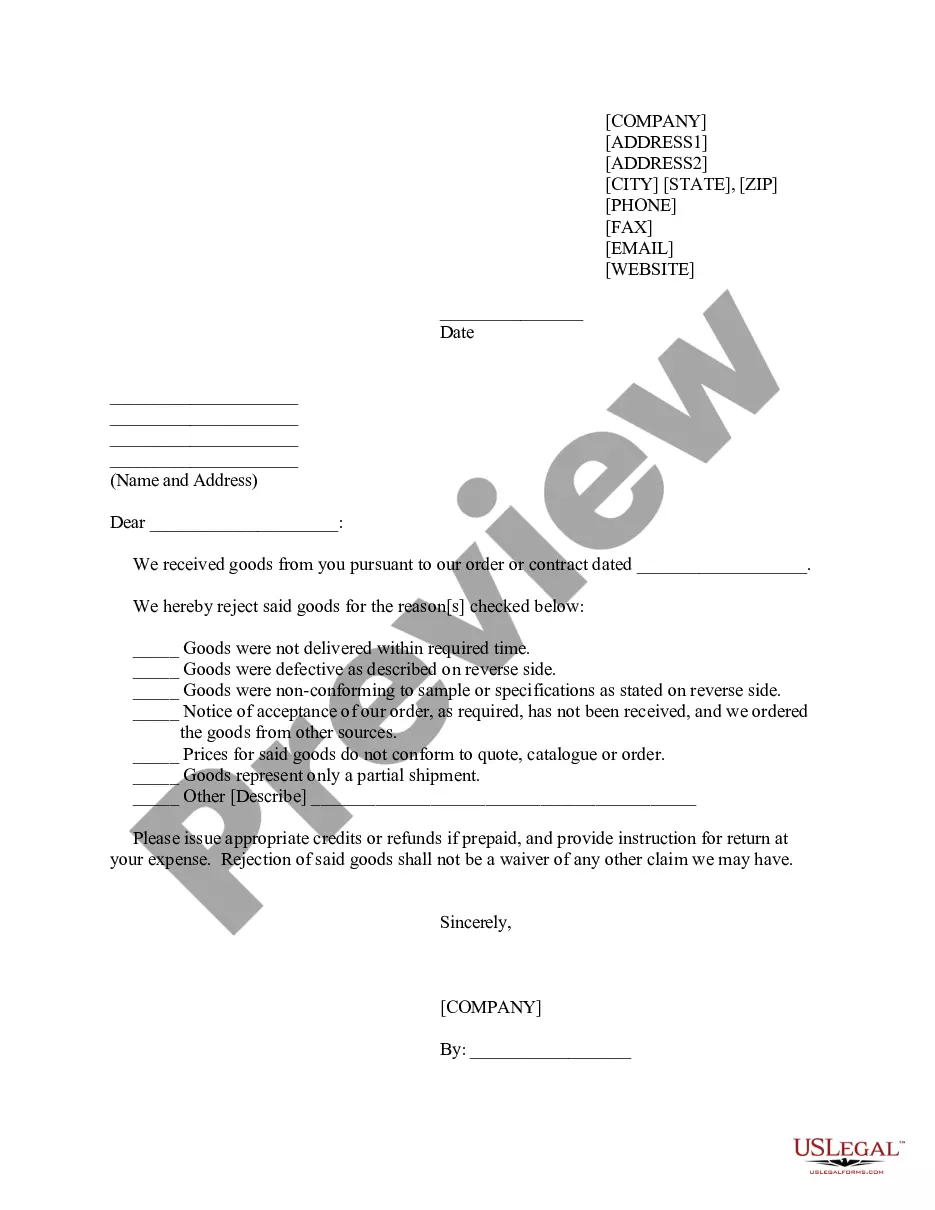
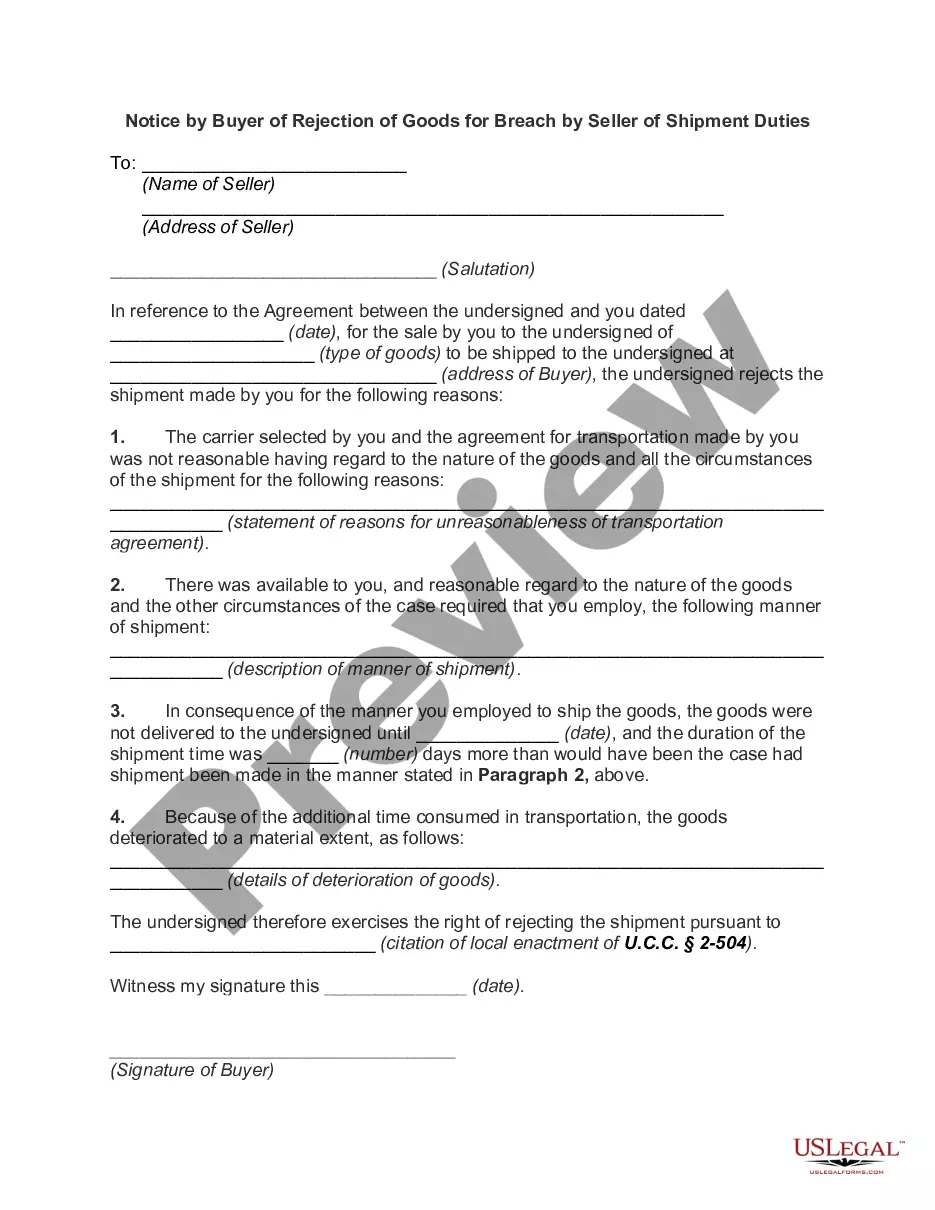
Get your form ready online
Our built-in tools help you complete, sign, share, and store your documents in one place.
Make edits, fill in missing information, and update formatting in US Legal Forms—just like you would in MS Word.
Download a copy, print it, send it by email, or mail it via USPS—whatever works best for your next step.
Sign and collect signatures with our SignNow integration. Send to multiple recipients, set reminders, and more. Go Premium to unlock E-Sign.
If this form requires notarization, complete it online through a secure video call—no need to meet a notary in person or wait for an appointment.
We protect your documents and personal data by following strict security and privacy standards.

Make edits, fill in missing information, and update formatting in US Legal Forms—just like you would in MS Word.

Download a copy, print it, send it by email, or mail it via USPS—whatever works best for your next step.

Sign and collect signatures with our SignNow integration. Send to multiple recipients, set reminders, and more. Go Premium to unlock E-Sign.

If this form requires notarization, complete it online through a secure video call—no need to meet a notary in person or wait for an appointment.

We protect your documents and personal data by following strict security and privacy standards.
Looking for another form?



How to fill out Rejection Of Goods?
Are you in a circumstance where you need documents for either professional or personal purposes almost every day.
There are numerous legitimate document templates accessible online, but finding versions that you can rely on is challenging.
US Legal Forms offers a wide array of form templates, including the Delaware Rejection of Goods, which are crafted to comply with federal and state regulations.
You can get an additional copy of the Delaware Rejection of Goods at any time, if necessary. Click on the required form to download or print the document template.
Use US Legal Forms, one of the largest collections of legitimate forms, to save time and avoid mistakes. The service provides properly crafted legal document templates that you can utilize for a variety of purposes. Create an account on US Legal Forms and start simplifying your life.
- If you are already familiar with the US Legal Forms website and have an account, simply Log In.
- After that, you can download the Delaware Rejection of Goods template.
- If you do not have an account and wish to start using US Legal Forms, follow these steps.
- Find the form you need and ensure it is for the correct city/state.
- Utilize the Review button to evaluate the form.
- Check the details to ensure you have selected the proper form.
- If the form isn’t what you seek, use the Search field to find the form that suits your requirements.
- Once you find the appropriate form, click on Get now.
- Select the pricing plan you want, provide the required information to create your account, and pay for the purchase using your PayPal or credit card.
- Choose a convenient document format and download your copy.
- Access all the document templates you have acquired in the My documents menu.
Form popularity
FAQ
The statute of limitations for contract claims in Delaware is three years. This means that if you have a dispute regarding a contract, such as issues arising from a Delaware Rejection of Goods, you need to file your claim within that timeframe. Failing to act timely can result in losing your right to seek legal recourse. To safeguard your interests, consider using US Legal Forms for legal documents and support tailored to your specific needs.
A breach of release in Delaware occurs when a party does not fulfill their obligations after a contract has been released. This could involve failing to return goods or complete promised actions. In the context of Delaware Rejection of Goods, buyers have specific rights and responsibilities if they reject goods due to quality or compliance issues. Understanding these terms can help both buyers and sellers navigate their agreements effectively.
For a breach of contract to occur, three main elements must be present: a valid contract, a breach of that contract, and resulting damages. Each of these elements must be demonstrably connected to form a solid case. The lessons from Delaware Rejection of Goods can highlight instances when goods fail to meet the specified standards, providing clarity and direction in resolving these disputes.
Delaware law outlines specific elements for a breach of contract, including the formation of a contract, a breach of that contract, the fulfillment of contractual duties on your side, and evidence of damages incurred. This framework is crucial for anyone dealing with contractual disputes. For those managing goods, knowing about Delaware Rejection of Goods is vital to ensure you’re following the legal requirements for rejecting non-conforming goods.
To successfully claim a breach of contract, you must prove that there was an agreement, the defendant did not perform as promised, you upheld your part of the deal, and that this failure caused you financial harm. Each element plays a critical role in demonstrating your case. Additionally, understanding Delaware Rejection of Goods assists in identifying how breaches can specifically arise regarding the quality or acceptance of goods under your contract.
In Delaware, a breach of contract occurs when one party fails to meet any of the agreed-upon terms. The four key elements include the existence of a legally binding agreement, a breach of that agreement, the party's performance of their obligations, and the resultant damages. Familiarizing yourself with cases of Delaware Rejection of Goods can provide insights into how these elements are evaluated in practice.
To establish a breach of contract claim, you need to show that a valid contract exists, the other party failed to fulfill their obligations, you performed your own duties under the contract, and you suffered damages as a result. In Delaware, particular emphasis is placed on the clear communication of the terms and expectations laid out in the contract. Understanding the concept of Delaware Rejection of Goods can be essential in these scenarios since it often involves the terms of delivery and acceptance in contracts.
The New Home Buyers Protection Act provides safeguards for new home buyers in Delaware, ensuring they receive quality construction and services. This act is significant when homeowners encounter issues with goods or services, emphasizing the importance of the Delaware Rejection of Goods in protecting consumer rights.
Repudiation of a contract in Delaware occurs when one party refuses to fulfill their contractual obligations. This can surface in various transactions, including those regarding goods. If you face issues related to repudiation, knowledge of the Delaware Rejection of Goods can support your defense.
The Delaware Buyers Property Protection Act aims to protect buyers during real estate transactions. It focuses on transparency in disclosures and protects buyers from unfair practices. If issues arise with real estate goods, understanding this act in conjunction with the Delaware Rejection of Goods can be highly beneficial.