Delaware Lease Subordination Agreement
About this form
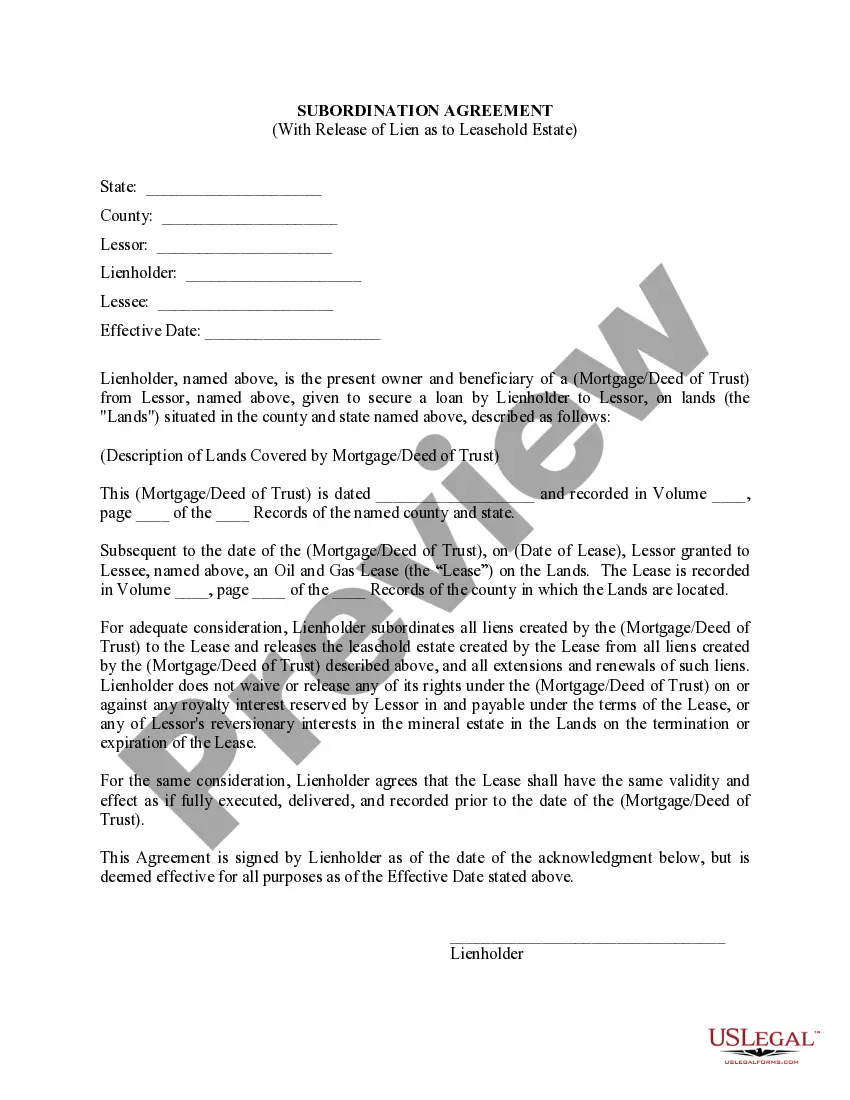
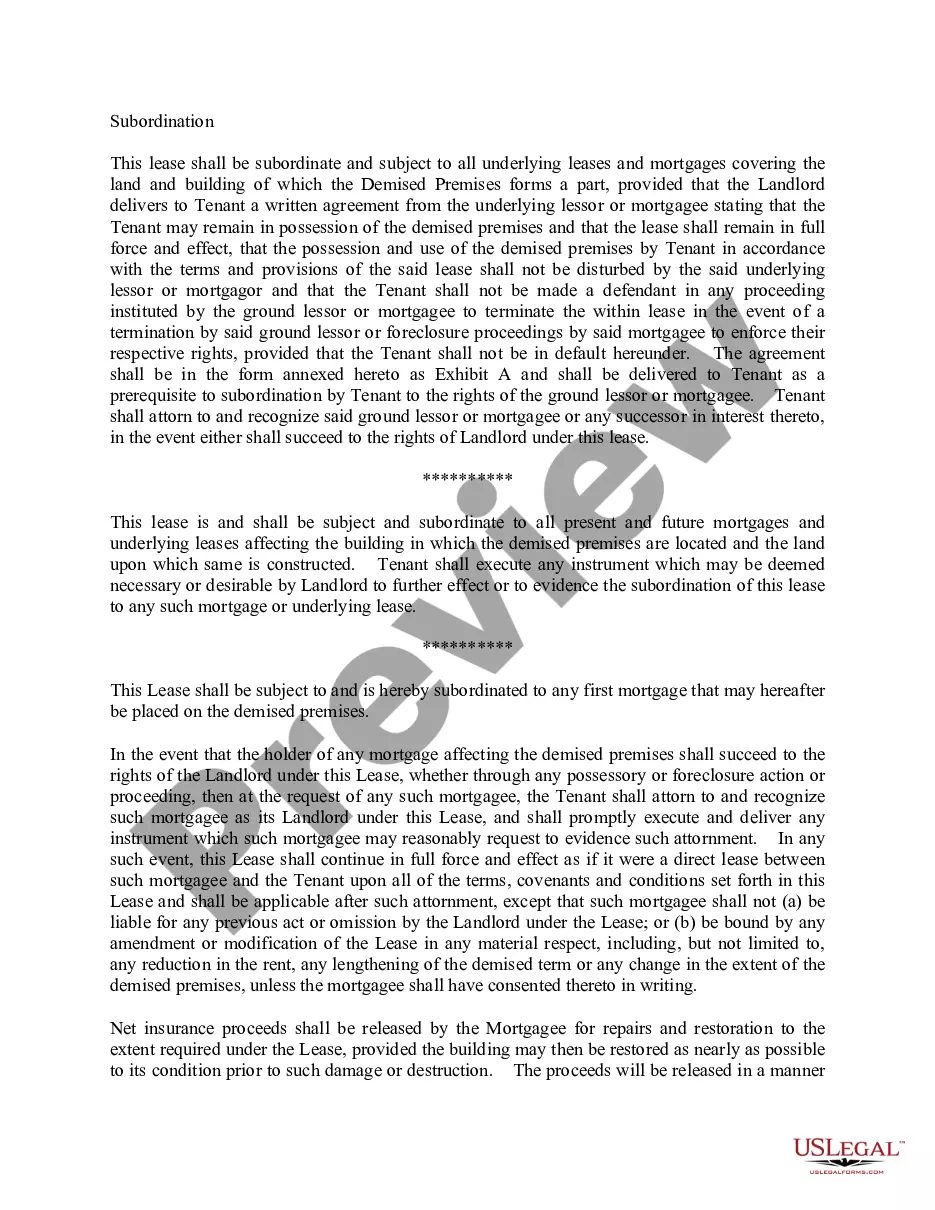
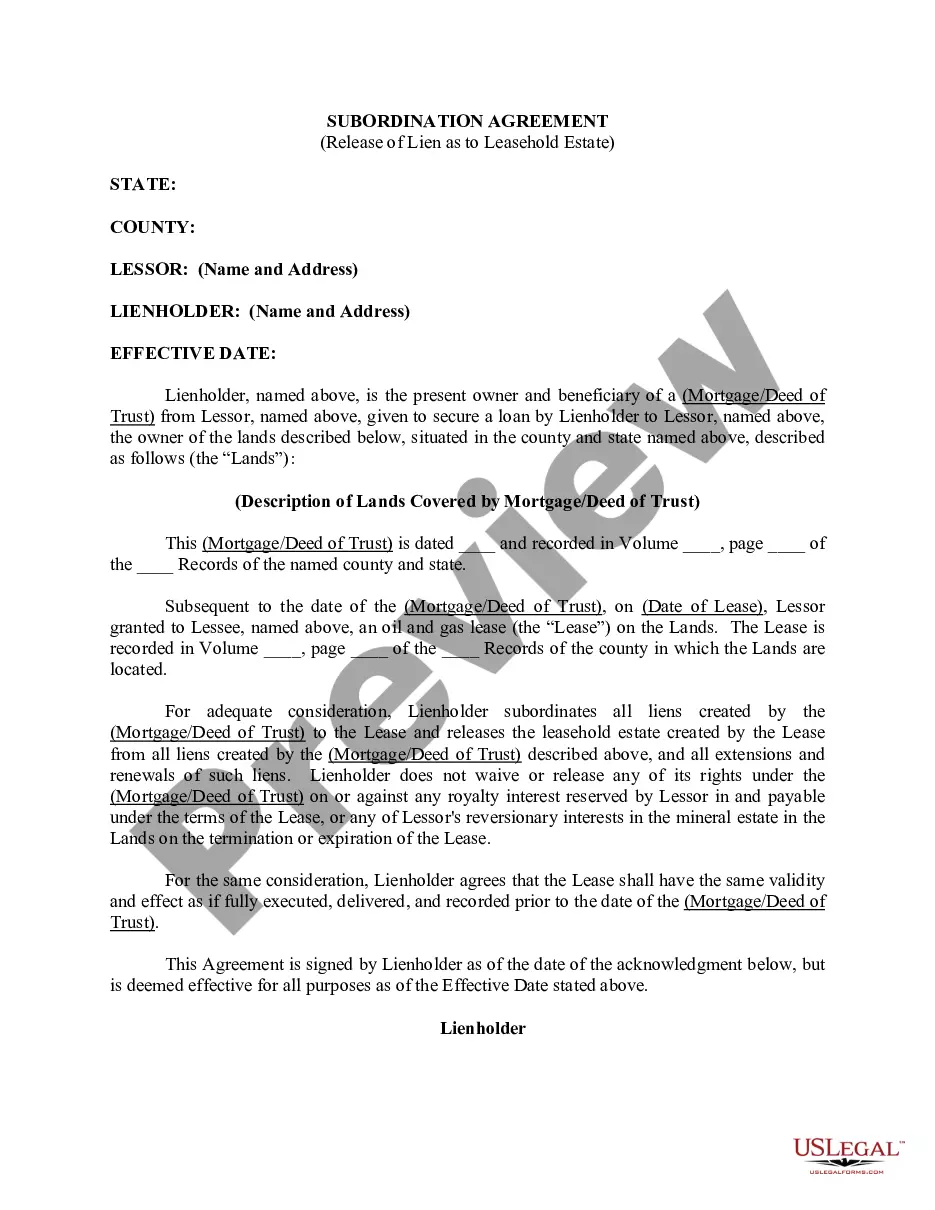
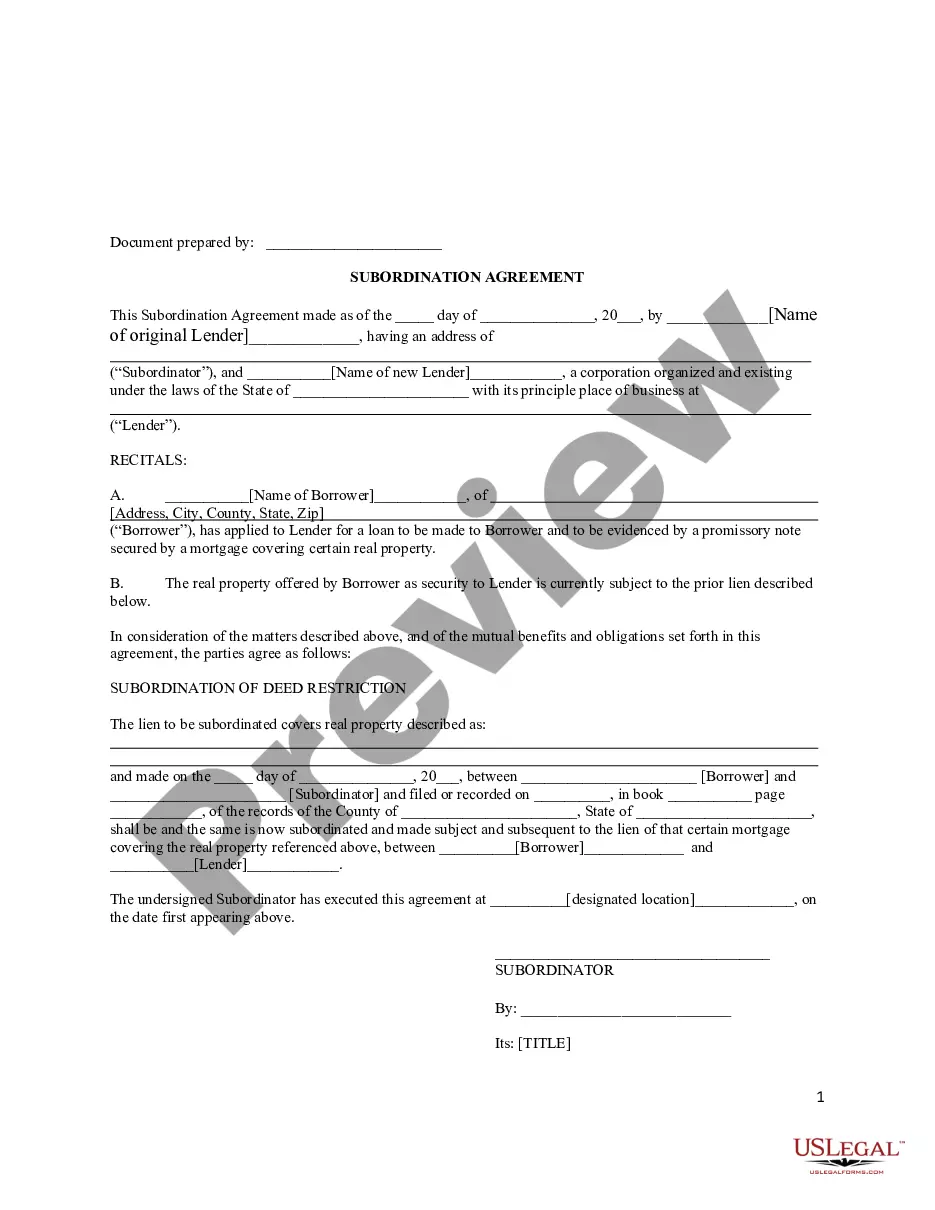
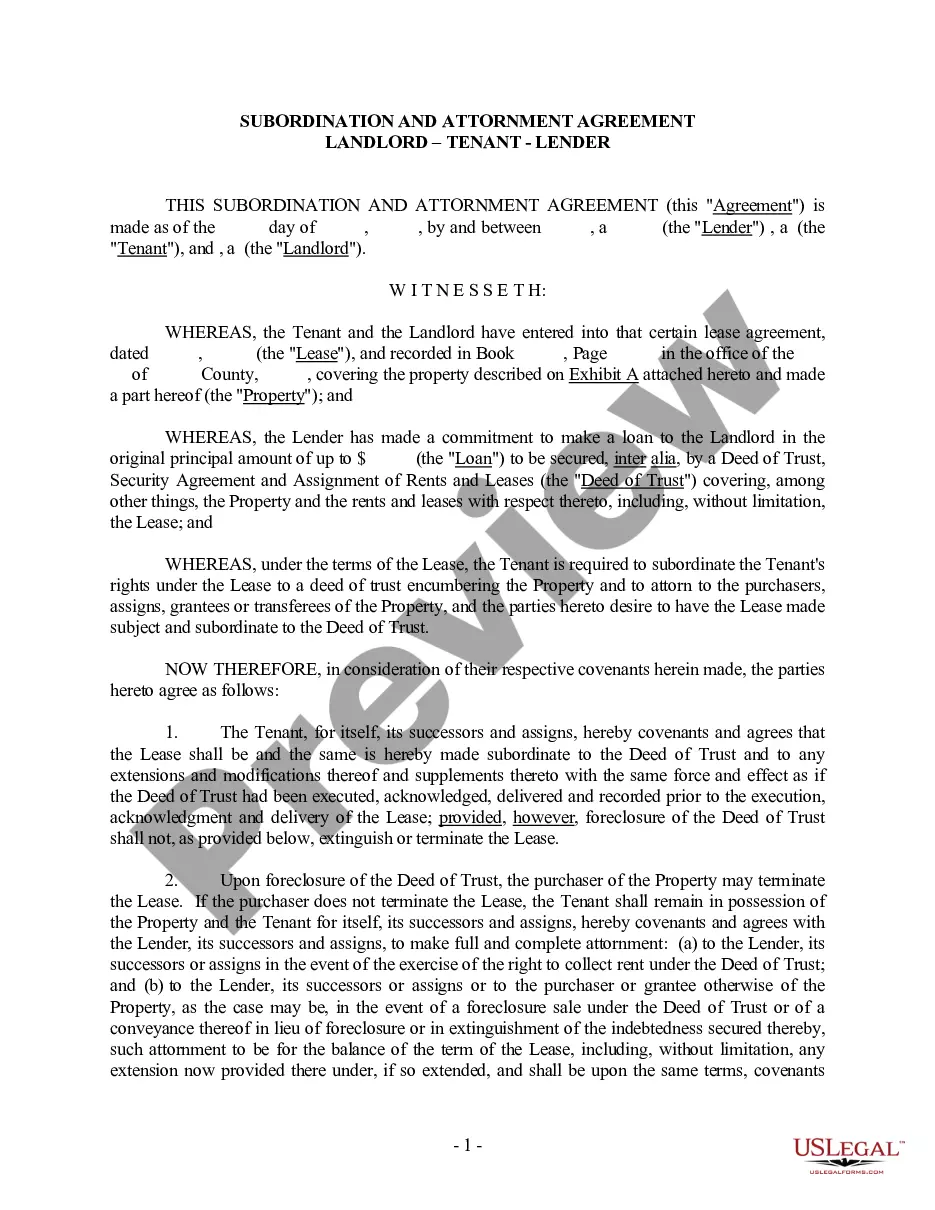
The Lease Subordination Agreement is a legal document that allows a lienholder to subordinate their mortgage or deed of trust to a mineral, oil, or gas lease. This agreement ensures that the lienholder's claim is placed in a lower priority compared to the lease, allowing the lease to take precedence in case of conflicts. It is particularly relevant for property owners seeking new financing that may affect existing liens and leases, ensuring that the new loan is prioritized over previous claims.
Key parts of this document
- Identification of parties involved: Lessor, Lienholder, and Lessee.
- Legal description of the property covered by the mortgage or deed of trust.
- Details of the oil and gas lease, including its recording information.
- Terms outlining the subordination of the lienholder's claims to the lease.
- Statement of lienholder's rights regarding royalty interests under the lease.
- The effective date of the agreement.
When this form is needed
This Lease Subordination Agreement should be used in situations where a property owner has an existing mortgage or deed of trust and wishes to enter into a mineral, oil, or gas lease. It is necessary when the property owner seeks to secure additional financing through a new loan, which requires confirmation that the new loan will take priority over current liens. This form is also applicable when the lessee needs assurance that their leasehold rights will not be jeopardized by existing debts.
Who needs this form
- Property owners who have an outstanding mortgage or deed of trust and want to lease their land for mineral rights.
- Lessee who wishes to ensure their lease takes precedence over any existing liens.
- Lienholders who need to formally release or subordinate their claims related to an oil and gas lease.
Completing this form step by step
- Identify the parties involved: clearly state the names of the Lessor, Lienholder, and Lessee.
- Provide the legal description and location of the property covered by the mortgage or deed of trust.
- Include the recording details of the mortgage or deed of trust as well as the oil and gas lease.
- Clearly state the subordination of all previous liens to the new lease agreement.
- Set an effective date for the agreement and ensure all parties sign the document.
Does this document require notarization?
This form does not typically require notarization unless specified by local law. However, it is advisable to check state-specific regulations to confirm any requirements regarding notarization.
Get your form ready online
Our built-in tools help you complete, sign, share, and store your documents in one place.
Make edits, fill in missing information, and update formatting in US Legal Forms—just like you would in MS Word.
Download a copy, print it, send it by email, or mail it via USPS—whatever works best for your next step.
Sign and collect signatures with our SignNow integration. Send to multiple recipients, set reminders, and more. Go Premium to unlock E-Sign.
If this form requires notarization, complete it online through a secure video call—no need to meet a notary in person or wait for an appointment.
We protect your documents and personal data by following strict security and privacy standards.

Make edits, fill in missing information, and update formatting in US Legal Forms—just like you would in MS Word.

Download a copy, print it, send it by email, or mail it via USPS—whatever works best for your next step.

Sign and collect signatures with our SignNow integration. Send to multiple recipients, set reminders, and more. Go Premium to unlock E-Sign.

If this form requires notarization, complete it online through a secure video call—no need to meet a notary in person or wait for an appointment.

We protect your documents and personal data by following strict security and privacy standards.
Common mistakes to avoid
- Failing to provide complete property details or accurate recording references.
- Not including all parties' signatures or missing the effective date.
- Overlooking the specific terms that preserve lienholder rights under the agreement.
Why use this form online
- Convenient access to legal forms tailored to your specific needs.
- Editable templates allow for personalization based on unique requirements.
- Reliable resources drafted by licensed attorneys to ensure compliance.
Looking for another form?


Form popularity
FAQ
An example of a subordination clause lease would detail that in the event a landlord defaults on their mortgage, the lender has the right to terminate leases without tenant consent. This provision often appears in commercial leases to secure the interests of the landlord’s creditors. By creating a Delaware Lease Subordination Agreement, all parties can better understand their legal standing and obligations.
A tenant subordination agreement is a specific type of subordination agreement where tenants agree that their lease rights will be subordinate to the claims of a lender. This means that in the case of foreclosure, the lender can enforce its rights to the property. Utilizing a Delaware Lease Subordination Agreement helps ensure clarity for landlords and tenants about their rights.
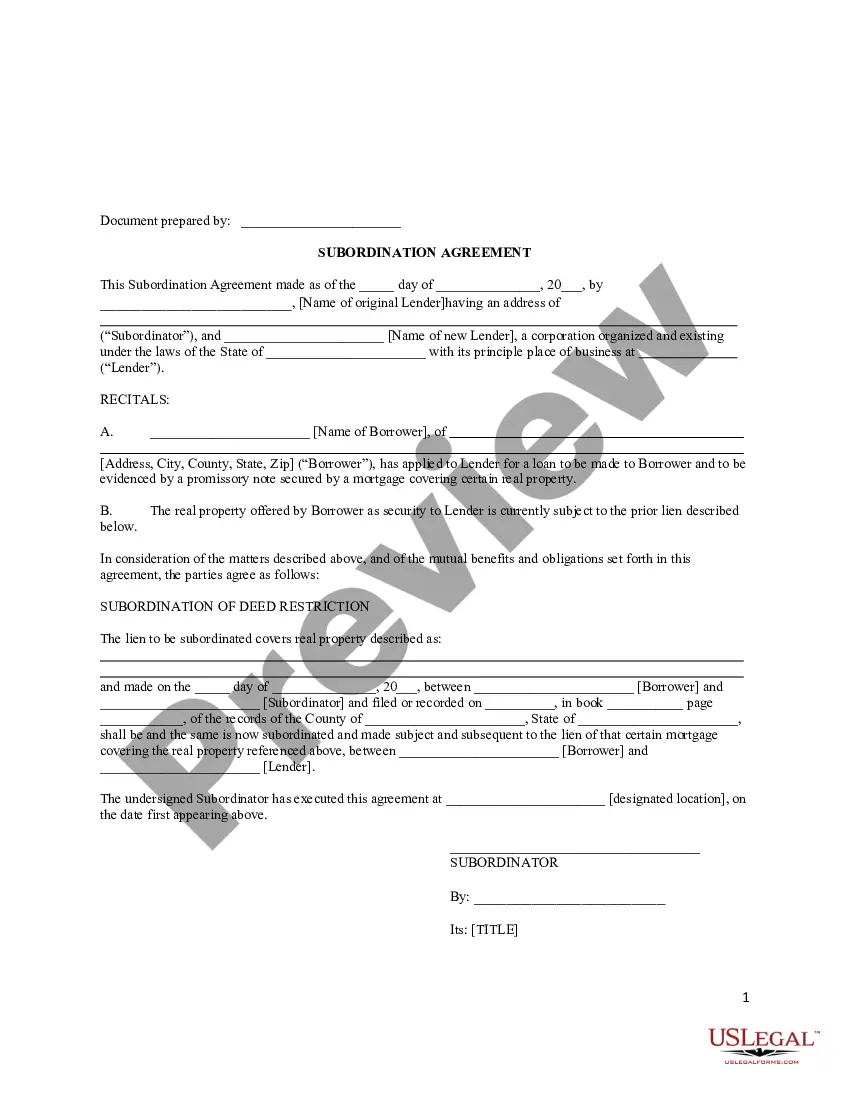
A subordination agreement is a legal document that clarifies the order of priority among creditors regarding a property. It is essential for landlords and tenants involved in financial transactions. In the context of a Delaware Lease Subordination Agreement, it establishes which lease rights come first and helps facilitate smoother real estate financing.
A subordination clause often appears in lease agreements, indicating that the lease will become subordinate to a mortgage. This may occur when a landlord signs a Delaware Lease Subordination Agreement with a lender, ensuring that if the property goes into foreclosure, the lender has the right to evict tenants. This helps streamline financing as it reassures lenders regarding their position.
To obtain a subordination agreement, you typically need to engage with your landlord and lender to negotiate terms. Having a clear understanding of your rights and obligations is crucial, so consider using resources like the US Legal Forms platform. They offer templates and guidance for creating a Delaware Lease Subordination Agreement, making the process easier for you.
A subordination of lease agreement is a legal document that alters the priority of a lease compared to other financial interests in a property. In simple terms, it allows a mortgage to take precedence over the lease, providing security to lenders. Utilizing a Delaware Lease Subordination Agreement can streamline this process, ensuring that tenants and lenders understand their responsibilities.
The purpose of a subordination agreement is to define the order of priority between different interests in a property, like a lease and a mortgage. Essentially, it allows a lender to take priority over existing leases, making the property more attractive to potential buyers. With a Delaware Lease Subordination Agreement, this process becomes clearer and ensures all parties know their rights.
A subordinate clause in a lease refers to a provision that allows a lease to remain in effect even if the property is sold or mortgaged. This clause generally ensures that the leaseholder's rights are protected. In the context of a Delaware Lease Subordination Agreement, this clause helps balance the interests of both tenants and lenders.
To create a valid subordination agreement, specific elements are required, including clear identification of the property, the parties involved, and the terms of subordination. In the context of a Delaware Lease Subordination Agreement, it must be signed by all relevant parties and should comply with local regulations. Consulting resources like uslegalforms can provide templates and guidance to simplify this process.
Yes, subordination agreements are typically recorded in the public records to provide notice to future lenders and buyers of the property's status. Recording a Delaware Lease Subordination Agreement is essential to preserve the priority of claims among different parties involved. This ensures transparency and clarity regarding the rights of tenants and lenders.