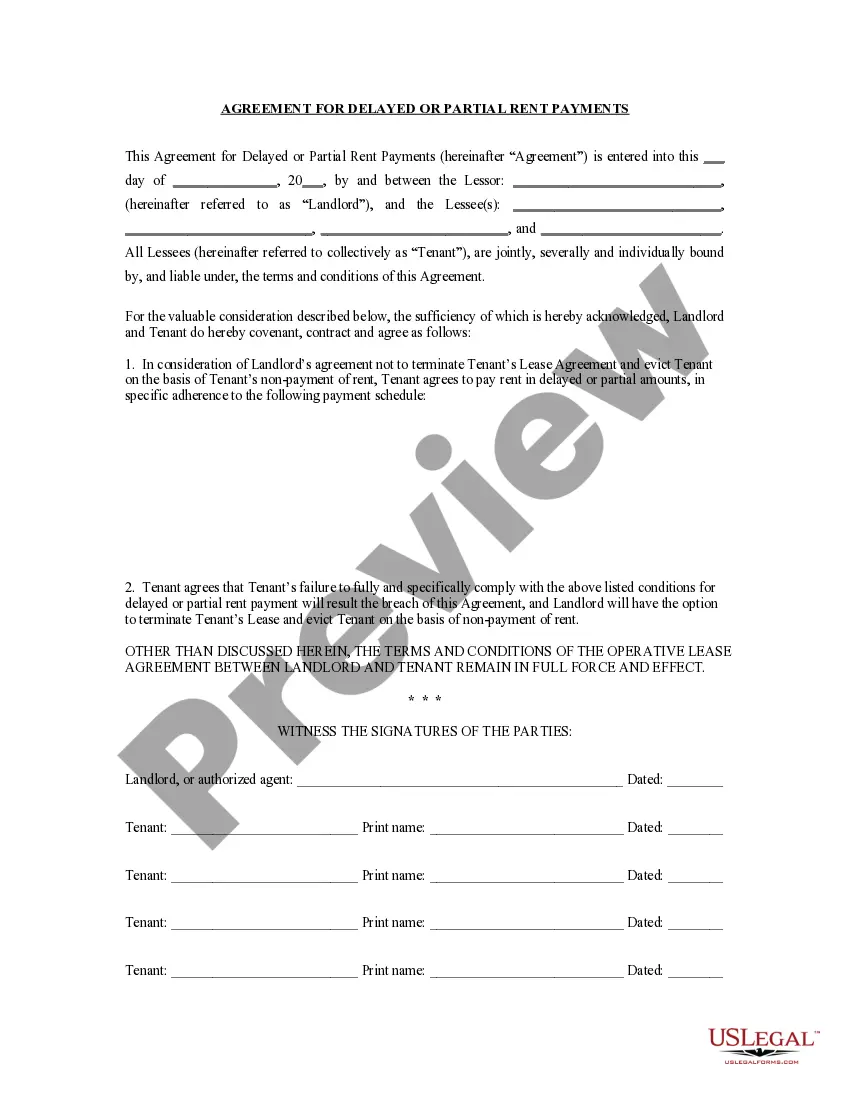
Delaware Agreement for Delayed or Partial Rent Payments
About this form
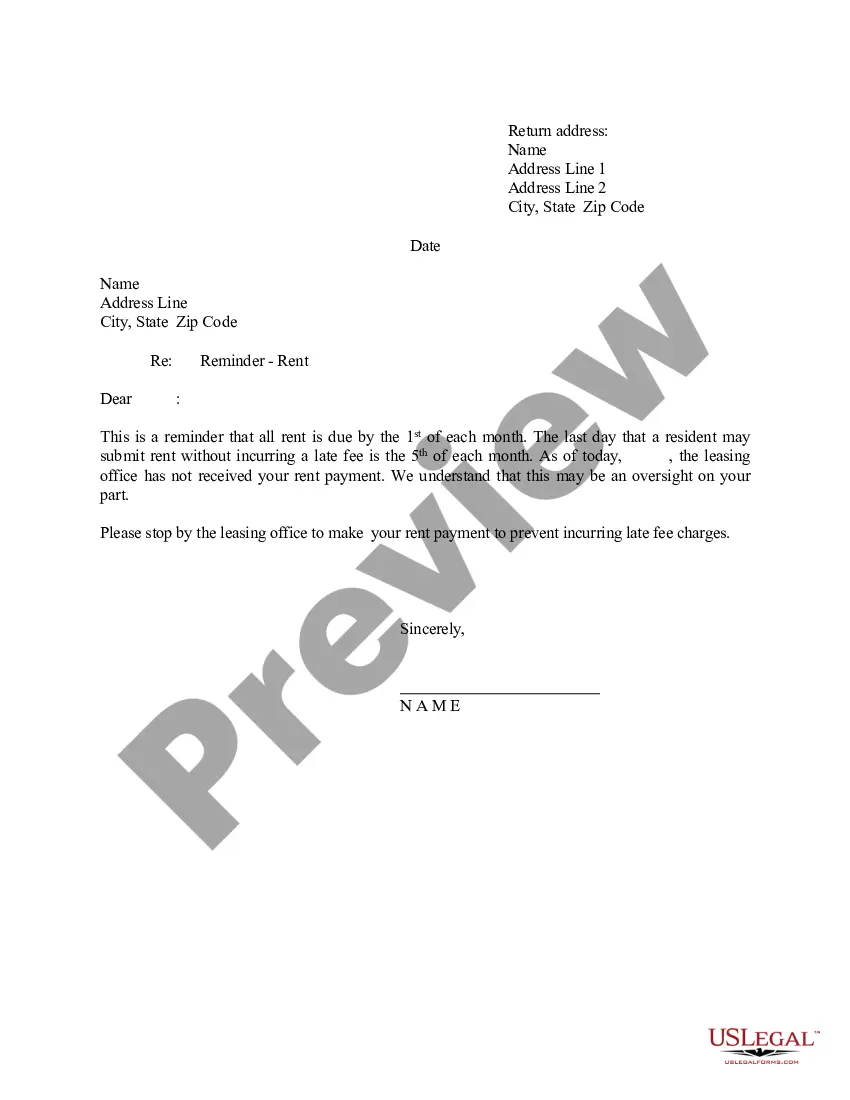
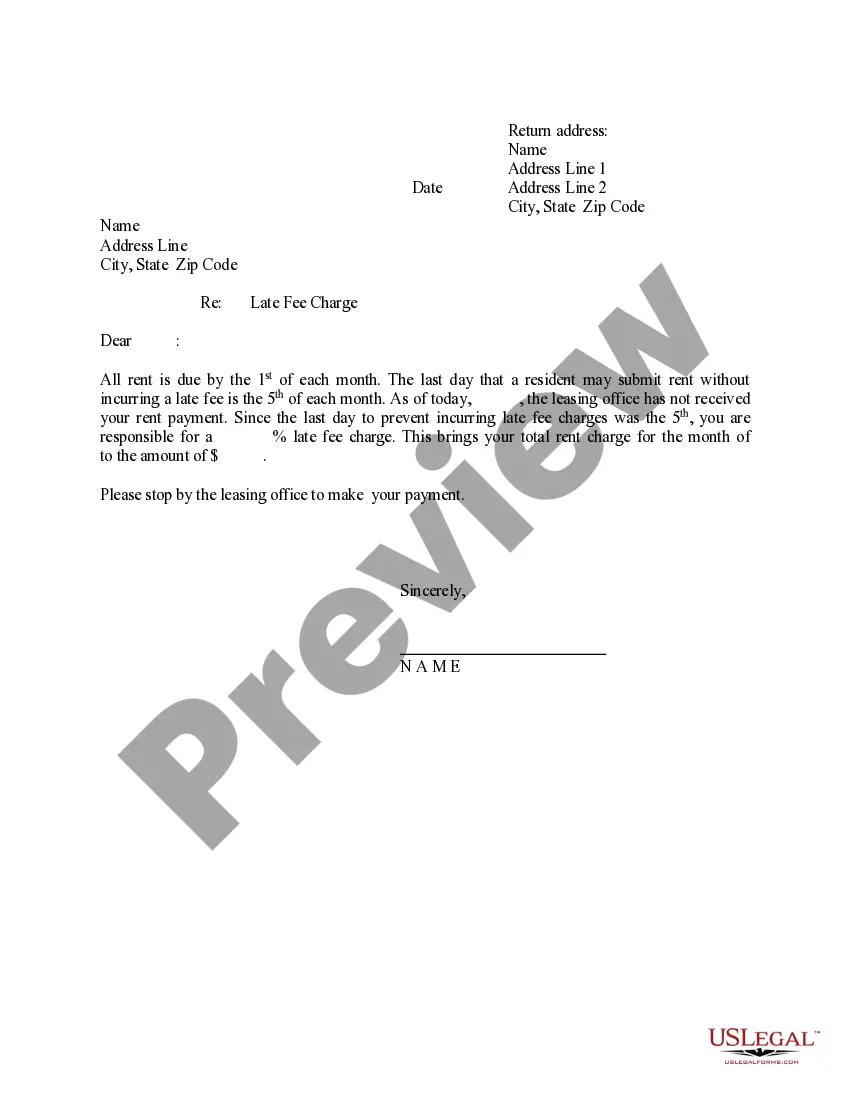
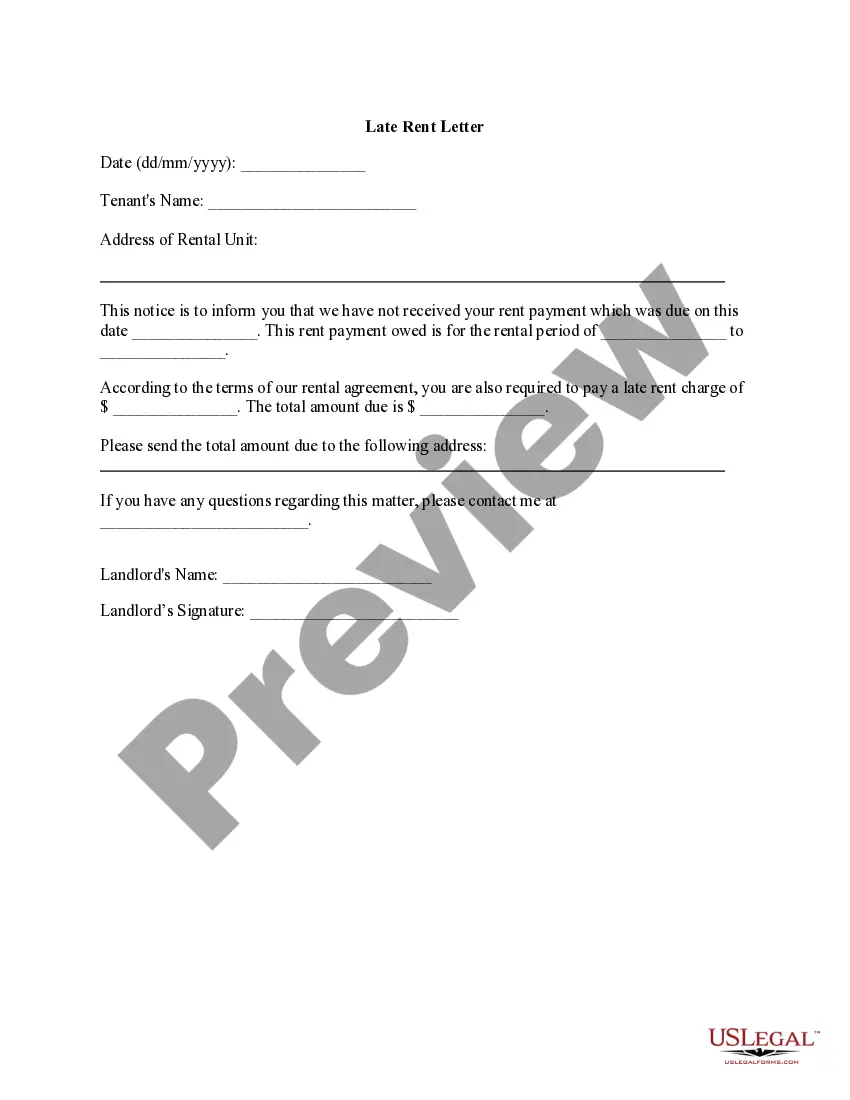
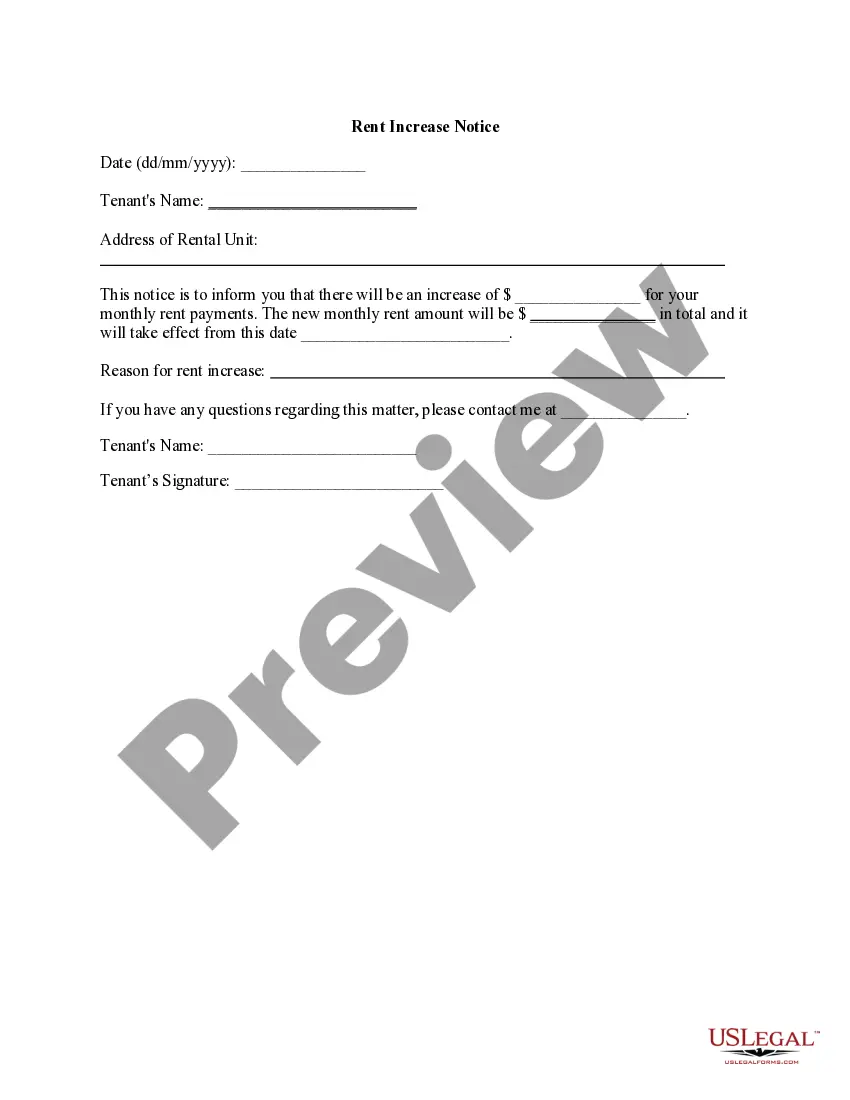
The Agreement for Delayed or Partial Rent Payments is a legal document that outlines the terms under which a landlord agrees to accept rent payments from a tenant in a delayed or partial manner. This agreement helps protect the tenant from eviction while ensuring the landlord receives some form of payment according to the specified schedule. It is essential for landlords and tenants who need to adjust payment terms due to financial difficulties or other extenuating circumstances.
What’s included in this form
- Identification of the landlord and tenant, including names and signatures.
- Details of the rent payment schedule, specifying amounts and due dates.
- Conditions under which the landlord will not terminate the lease agreement.
- Clarification that all other terms of the original lease remain in effect.
- Acknowledge receipt of consideration, confirming both parties' agreement to the terms.

When to use this document
This form is useful when a tenant is experiencing financial difficulties and needs to negotiate a modified rent payment schedule with the landlord. It allows the tenant to continue living in the property while making partial payments or delaying full payment without facing eviction. This agreement is particularly relevant in situations of temporary unemployment, medical expenses, or other unforeseen financial hardships.
Who can use this document
- Landlords who are willing to allow tenants to pay rent in a delayed or partial manner.
- Tenants facing temporary financial difficulties who need a formal arrangement to manage rent payments.
- Property managers who are responsible for overseeing lease agreements and tenant relations.
Steps to complete this form
- Identify the parties involved by filling in the names of the landlord and tenant(s).
- Specify the date of the agreement.
- Detail the payment schedule, including amounts and specific due dates.
- Ensure all parties sign and date the agreement to make it legally binding.
- Keep a copy of the signed agreement for your records.
Is notarization required?
This form usually doesn’t need to be notarized. However, local laws or specific transactions may require it. Our online notarization service, powered by Notarize, lets you complete it remotely through a secure video session, available 24/7.
Get your form ready online
Our built-in tools help you complete, sign, share, and store your documents in one place.
Make edits, fill in missing information, and update formatting in US Legal Forms—just like you would in MS Word.
Download a copy, print it, send it by email, or mail it via USPS—whatever works best for your next step.
Sign and collect signatures with our SignNow integration. Send to multiple recipients, set reminders, and more. Go Premium to unlock E-Sign.
If this form requires notarization, complete it online through a secure video call—no need to meet a notary in person or wait for an appointment.
We protect your documents and personal data by following strict security and privacy standards.

Make edits, fill in missing information, and update formatting in US Legal Forms—just like you would in MS Word.

Download a copy, print it, send it by email, or mail it via USPS—whatever works best for your next step.

Sign and collect signatures with our SignNow integration. Send to multiple recipients, set reminders, and more. Go Premium to unlock E-Sign.

If this form requires notarization, complete it online through a secure video call—no need to meet a notary in person or wait for an appointment.

We protect your documents and personal data by following strict security and privacy standards.
Avoid these common issues
- Failing to specify payment amounts and deadlines clearly.
- Not obtaining all necessary signatures from all tenants.
- Ignoring existing lease terms that may impact the new payment arrangement.
Advantages of online completion
- Instant access to legally vetted templates tailored for specific needs.
- Easy to fill out and modify according to individual circumstances.
- Secure storage and management of documents available through online services.
Looking for another form?

Form popularity
FAQ
While honesty is the best policy, if you need an explanation for late rent, you can mention unexpected circumstances like a medical emergency or job loss. It is crucial to back this up by showing your intention to resolve the payment issue quickly, perhaps by referencing the Delaware Agreement for Delayed or Partial Rent Payments. This agreement could show that you are proactive in seeking solutions rather than being negligent.
The length of time you can be late on rent depends on your lease agreement and state laws. Generally, most landlords will allow a grace period of a few days. However, if you find yourself frequently struggling to make timely payments, a Delaware Agreement for Delayed or Partial Rent Payments might be a beneficial option to discuss with your landlord. Always check your lease for specifics and ensure open lines of communication.
When informing your landlord about a late payment, be honest and direct. Explain your situation and mention your intention to make the payment as soon as possible. If applicable, refer to the Delaware Agreement for Delayed or Partial Rent Payments, as it may offer solutions for late rent situations. Maintaining open communication helps build trust and may lead to more understanding on their part.
The grace period for rent in Delaware is usually 5 days after the rent due date. During this time, landlords cannot impose late fees or initiate eviction proceedings. It’s beneficial for tenants to include this grace period in a Delaware Agreement for Delayed or Partial Rent Payments, allowing for a smoother process in case of late payments. Always check your specific lease for details, as agreements can vary.
In Delaware, the length of time you can be late on rent largely depends on your lease agreement. Typically, landlords may start the eviction process if rent is late by 5 days or more. However, establishing a Delaware Agreement for Delayed or Partial Rent Payments may allow for extended timelines and alleviate pressure. It is crucial to communicate with your landlord to understand the specific terms and conditions applicable to your situation.
In Delaware, there’s no specific law mandating how often landlords must replace carpets. It typically depends on the lease agreement and the property conditions. If carpet issues arise, discussing a Delaware Agreement for Delayed or Partial Rent Payments might be a proactive step if associated costs become an obstacle.
Section 5514 of the Delaware Landlord/Tenant Code focuses on the rental payment terms, including payment due dates and grace periods. This section can guide tenants and landlords in understanding their rights regarding late payments, helping to set a clear path towards a Delaware Agreement for Delayed or Partial Rent Payments if needed.
Section 5314 of the Delaware Residential Landlord Tenant Code addresses the consequences of late rent payments. This section outlines what landlords and tenants can expect when rent is delayed, and it can serve as a reference when discussing a Delaware Agreement for Delayed or Partial Rent Payments. Understanding this law can help you navigate potential situations with your landlord.
To negotiate late rent payments, first communicate openly with your landlord. Present your situation and suggest alternatives that could work for both parties, such as a Delaware Agreement for Delayed or Partial Rent Payments. This agreement may offer a structured plan to fulfill your rental obligations while managing your financial challenges.
In Delaware, landlords must provide tenants with a written notice before they can move out. Typically, the notice period is 60 days for month-to-month leases. It's crucial to understand your rights and responsibilities, including any applicable Delaware Agreement for Delayed or Partial Rent Payments that could impact your tenancy.