Delaware Seller's Information for Appraiser provided to Buyer
Understanding this form
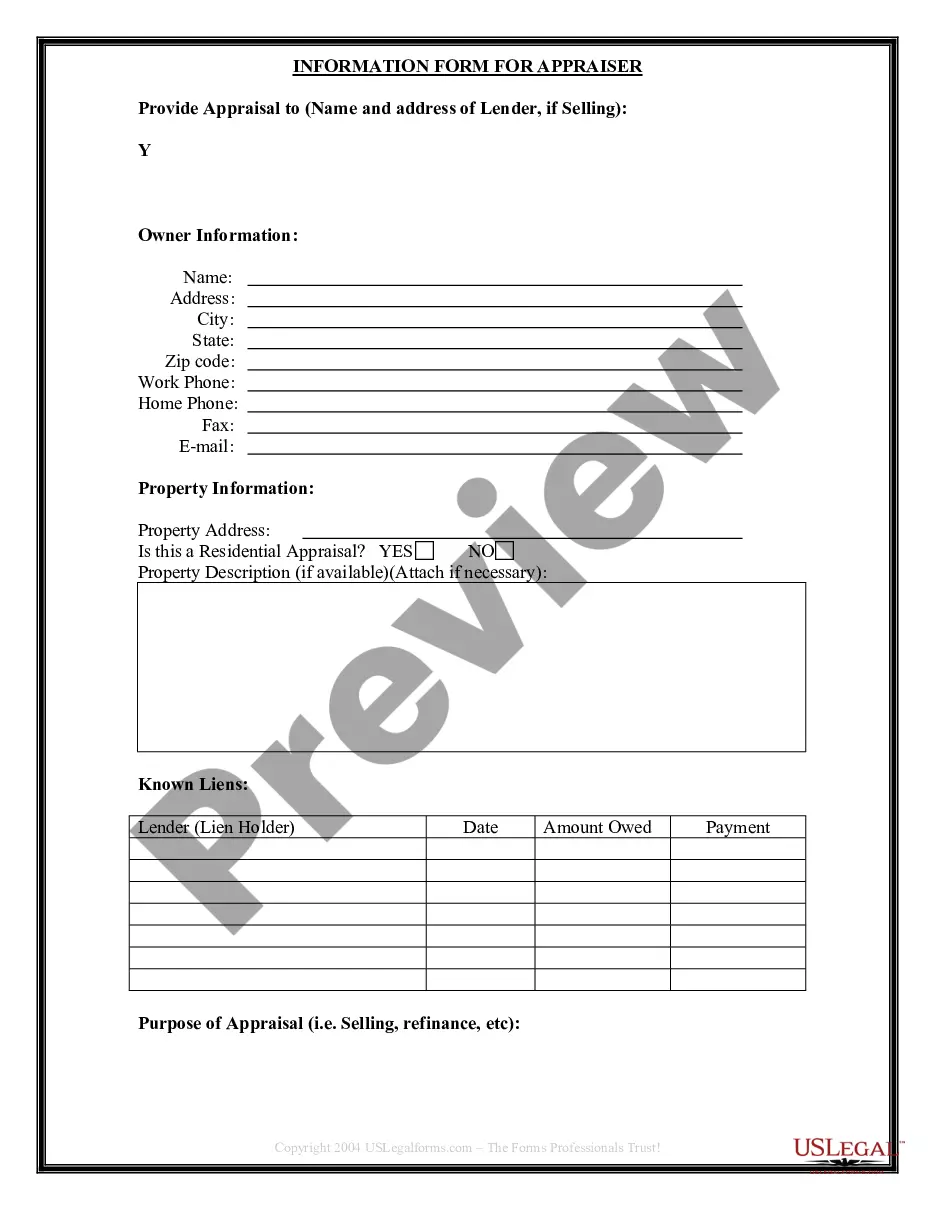
The Seller's Information for Appraiser provided to Buyer form is a crucial document in Delaware real estate transactions. This form enables the Seller to present necessary property information to the Buyer, who then submits it to an appraiser for valuation. This specific form helps streamline the appraisal process, ensuring that all relevant details are communicated effectively, which can facilitate a smoother home buying experience.
Form components explained
- Seller's contact information: Essential for the appraiser to reach the Seller.
- Property details: Includes the property address and specific features that may influence its value.
- Disclosure of any material defects: Important for transparency during the appraisal.
- Signature and date fields: Confirm the Seller's consent and accuracy of the information provided.
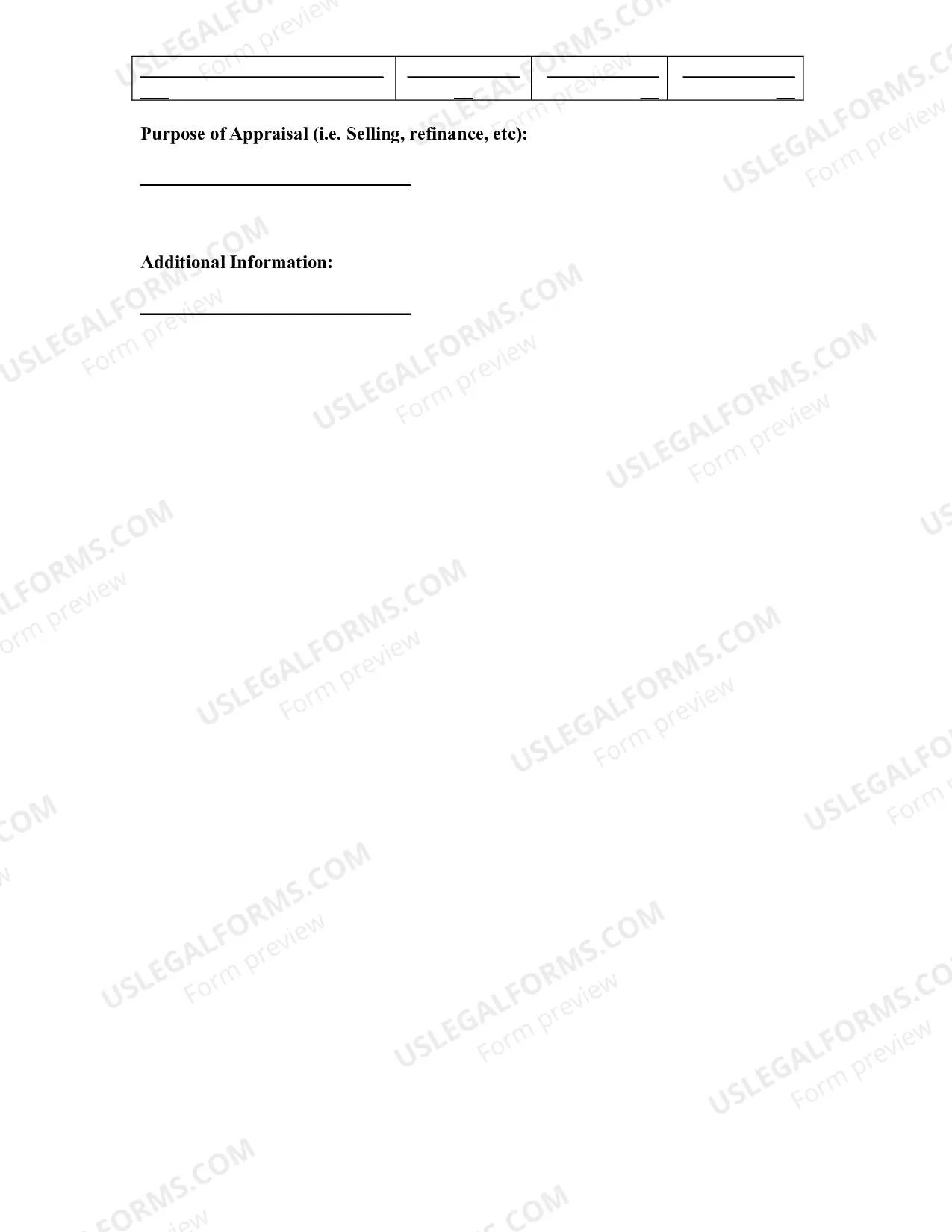
- Additional comments or information section: Allows the Seller to add any pertinent data that may assist in the appraisal.

Common use cases
This form should be used when a Buyer intends to purchase property in Delaware and an appraisal is required. It is especially important in scenarios where financing depends on the appraisal value, as lenders often require this assessment. Furthermore, it can be useful in cases where the Buyer wants to ensure a fair transaction based on the propertyâs market value.
Who can use this document
- Sellers of real estate seeking to provide accurate information to facilitate an appraisal.
- Buyers who want to ensure the appraiser has all necessary documentation for a thorough evaluation.
- Real estate agents involved in the transaction who wish to support their clients in the appraisal process.
How to complete this form
- Provide the Seller's contact information, including name, address, and phone number.
- Specify the property details, including complete address and any relevant features or improvements.
- Disclose any known material defects or issues with the property.
- Sign and date the form to confirm that the information is accurate and truthful.
- Optionally, include any additional comments that may assist the appraiser.
Notarization guidance
This form does not typically require notarization unless specified by local law. However, it is always recommended to check local regulations to ensure compliance.
Get your form ready online
Our built-in tools help you complete, sign, share, and store your documents in one place.
Make edits, fill in missing information, and update formatting in US Legal Forms—just like you would in MS Word.
Download a copy, print it, send it by email, or mail it via USPS—whatever works best for your next step.
Sign and collect signatures with our SignNow integration. Send to multiple recipients, set reminders, and more. Go Premium to unlock E-Sign.
If this form requires notarization, complete it online through a secure video call—no need to meet a notary in person or wait for an appointment.
We protect your documents and personal data by following strict security and privacy standards.

Make edits, fill in missing information, and update formatting in US Legal Forms—just like you would in MS Word.

Download a copy, print it, send it by email, or mail it via USPS—whatever works best for your next step.

Sign and collect signatures with our SignNow integration. Send to multiple recipients, set reminders, and more. Go Premium to unlock E-Sign.

If this form requires notarization, complete it online through a secure video call—no need to meet a notary in person or wait for an appointment.

We protect your documents and personal data by following strict security and privacy standards.
Avoid these common issues
- Failing to disclose material defects, which can lead to legal issues later.
- Not providing complete property details, potentially affecting the appraisal value.
- Omitting the Seller's signature or date, which can render the form invalid.
Benefits of completing this form online
- Convenience of completing the form from home at any time.
- Editable format allows for easy corrections and updates.
- Reliability of professionally drafted content ensures compliance with Delaware laws.
Legal use & context
- This form is important for ensuring transparency and compliance in real estate transactions.
- Failure to provide accurate information could lead to disputes over property valuation.
- Appraisal accuracy is vital for mortgage approval and securing financing.
What to keep in mind
- The Seller's Information for Appraiser provided to Buyer form is crucial for property appraisals in Delaware.
- Buyers and sellers both benefit from the accurate completion of this form to ensure a smooth transaction.
- Common mistakes can be avoided by thoroughly checking information before submission.
Looking for another form?

Form popularity
FAQ
Adjustments Based on Closing Cost Credits So how does the appraisal handle the closing cost credit on the final valuation? The simple answer is it varies. The purpose of the appraisal is to provide the lender with the current value of a property as accurately as possible.
Typically, the buyer pays for a home appraisal. The buyer can pay up front at the time of the appraisal or the appraiser's fee can be included in closing costs. Yet while the buyer usually pays for the appraisal, he or she doesn't order the appraisal.
Home sellers aren't entitled to copies of the appraisals mortgage lenders conduct on behalf of their borrowers. If a home seller wants a copy of an appraisal, she should consider asking for a copy from the buyer.However, a copy may come in handy if the appraisal comes in low and price negotiations must ensue.
A: An appraisal is generally considered a professional opinion of the market value of a property, not a fact. Although it's both legally and ethically necessary to disclose a material fact, the same requirement doesn't apply to an opinion.
Seller concessions are closing costs the seller agrees to pay. They can make a home more affordable for the buyer, and they can help the seller close the deal. Work with your real estate agent to decide whether you have a good opportunity to ask the seller for concessions.
Know How it Works: Remember that appraisers do not make adjustments if there are concessions in your listing they are appraising. They are only making adjustments to the comps if needed. Your seller can offer substantial credits back to the buyer for your listing, and no adjustment will be given because of that.
What happens if the appraisal comes in above the purchase price of the home? You're in a good situation if this happens. It simply means that you've agreed to pay the seller less than the home's market value. Your mortgage amount does not change because the selling price will not increase to meet the appraisal value.
Yes, the appraiser will actually visit the house during the home appraisal process. There is no specific rule that says buyers cannot attend, but the process is typically handled by the appraiser alone. You would have to contact him to see if you can be present when he visits the house.
Usually, but not always, the amount is added to the sale price and rolled into the loan. Since concessions raise the sale price and thus the loan amount, the home must appraise for the new amount. It can't appraise for lower because the lender can't loan over the appraisal amount.