Sample Annual Minutes for a Rhode Island Professional Service Corporation
What is this form?
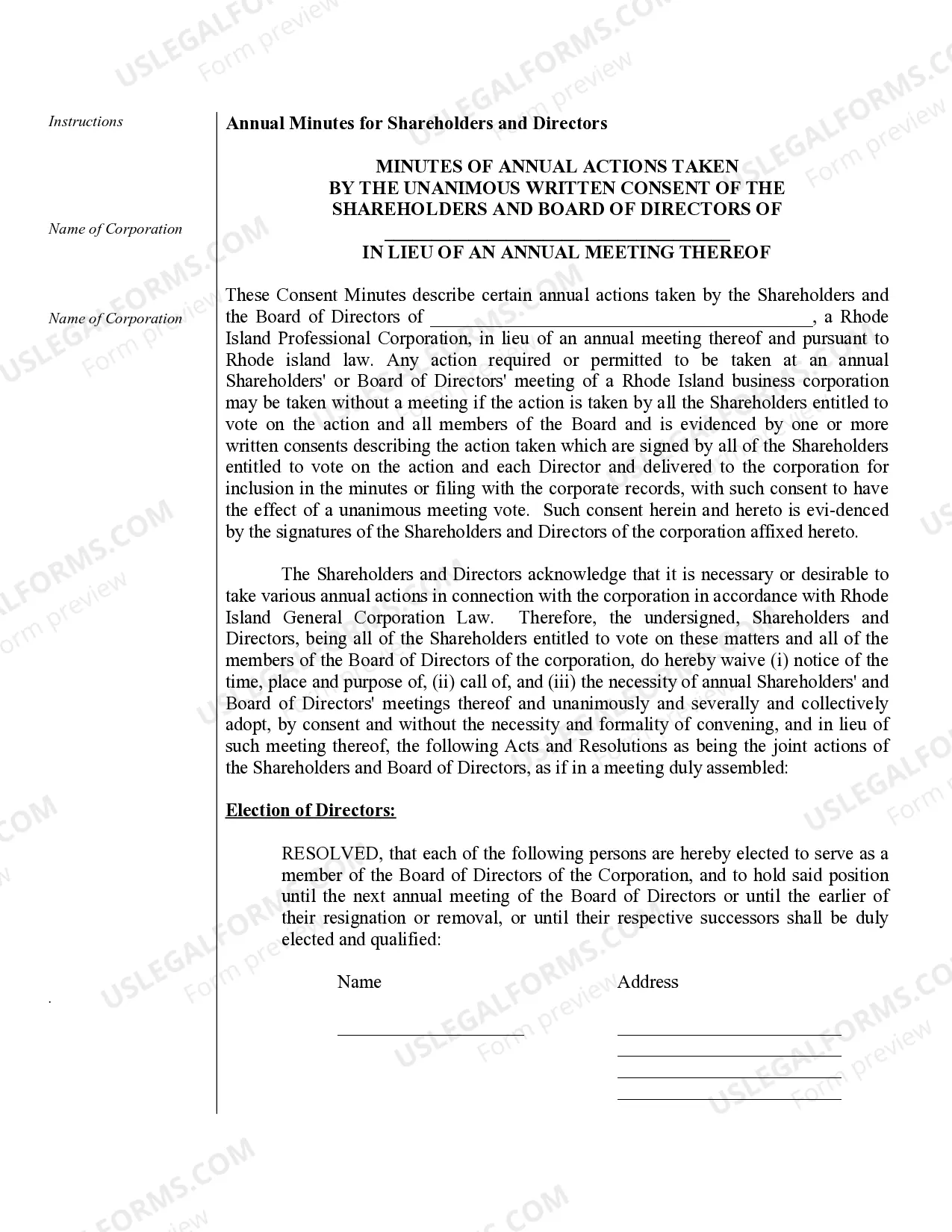
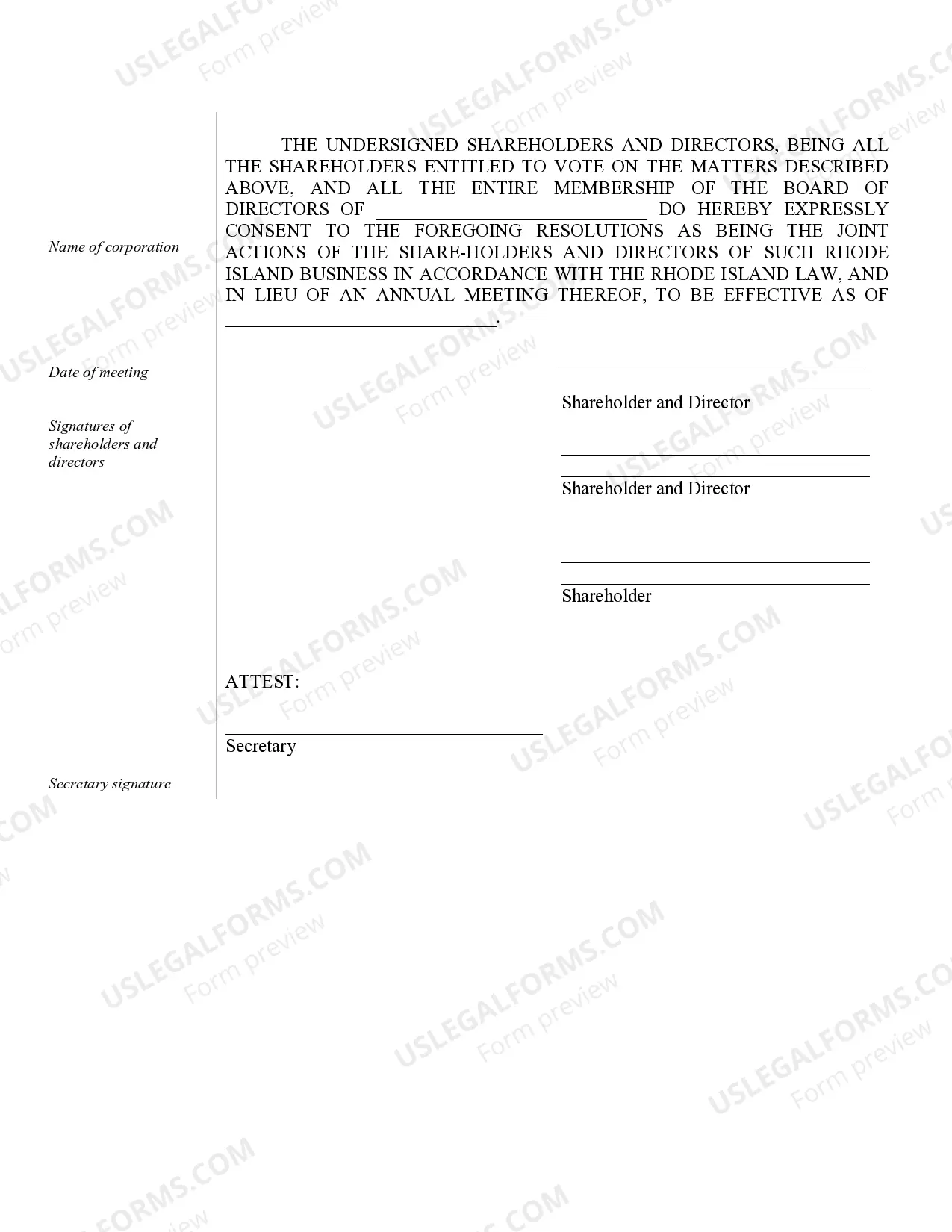
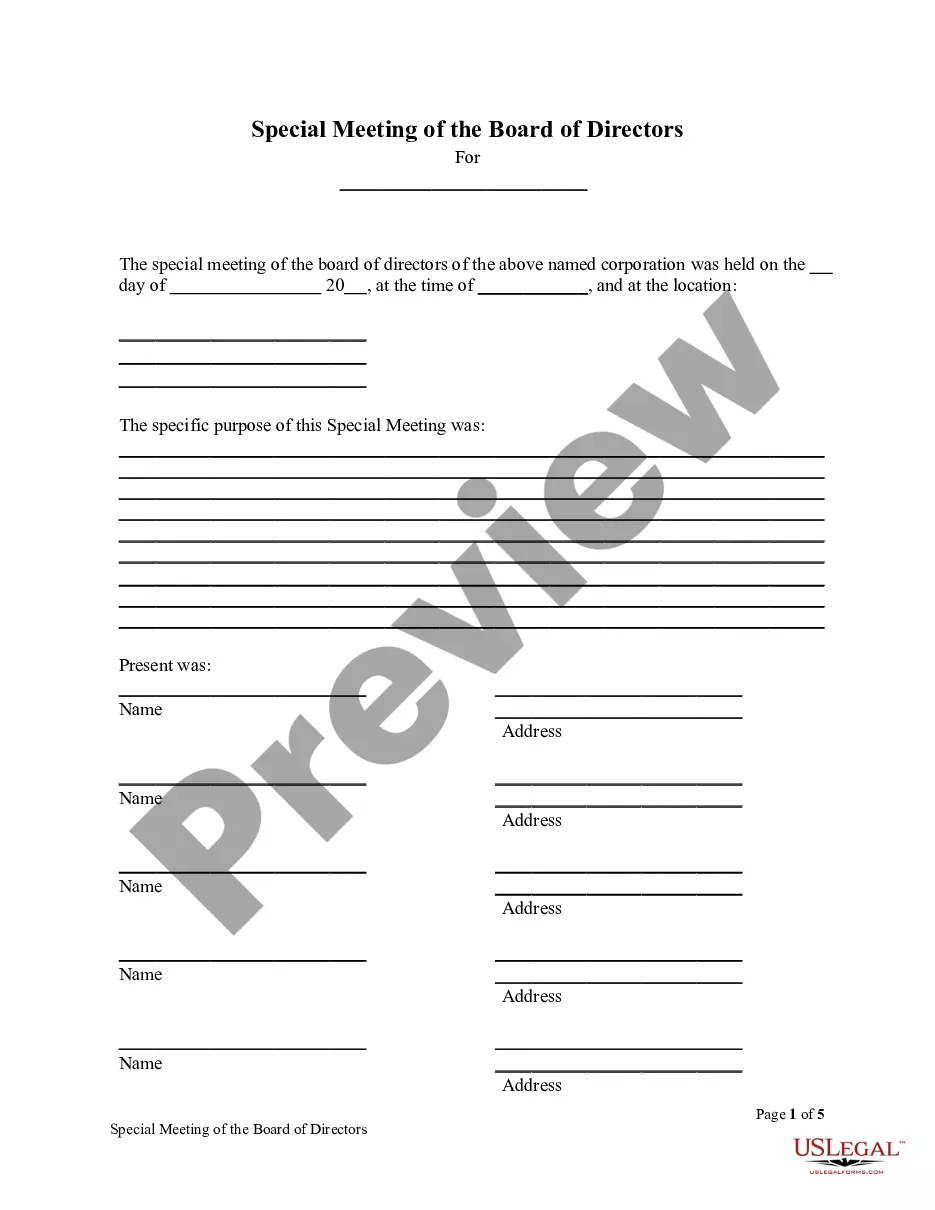
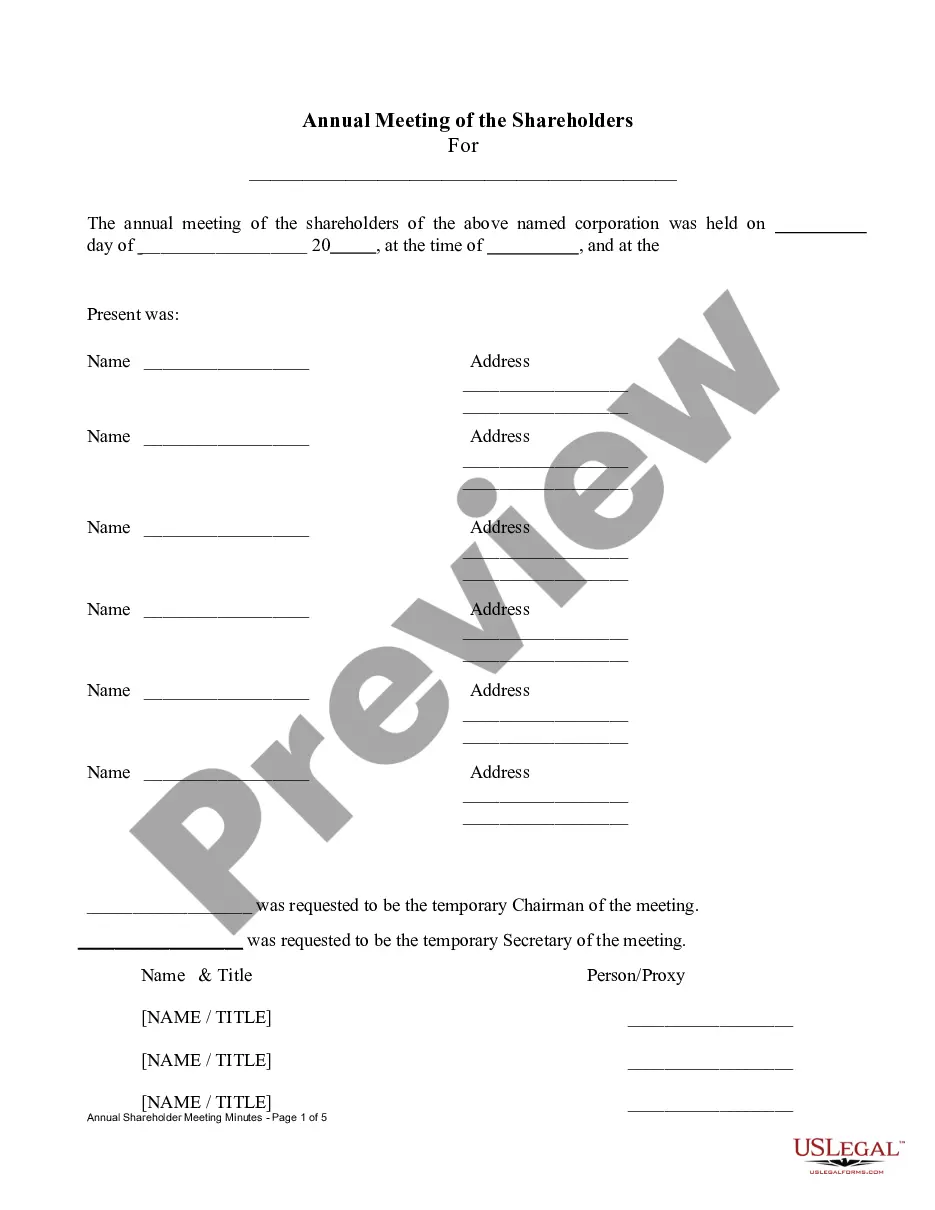
The Sample Annual Minutes for a Rhode Island Professional Service Corporation is a legal document that records the annual actions and decisions made by shareholders and directors of a professional corporation. This form differs from other corporate minute templates because it is specifically tailored to comply with Rhode Island law, allowing for unanimous written consent in lieu of an official meeting.
What’s included in this form
- Name of the corporation
- Date of the meeting
- Signatures of shareholders and directors
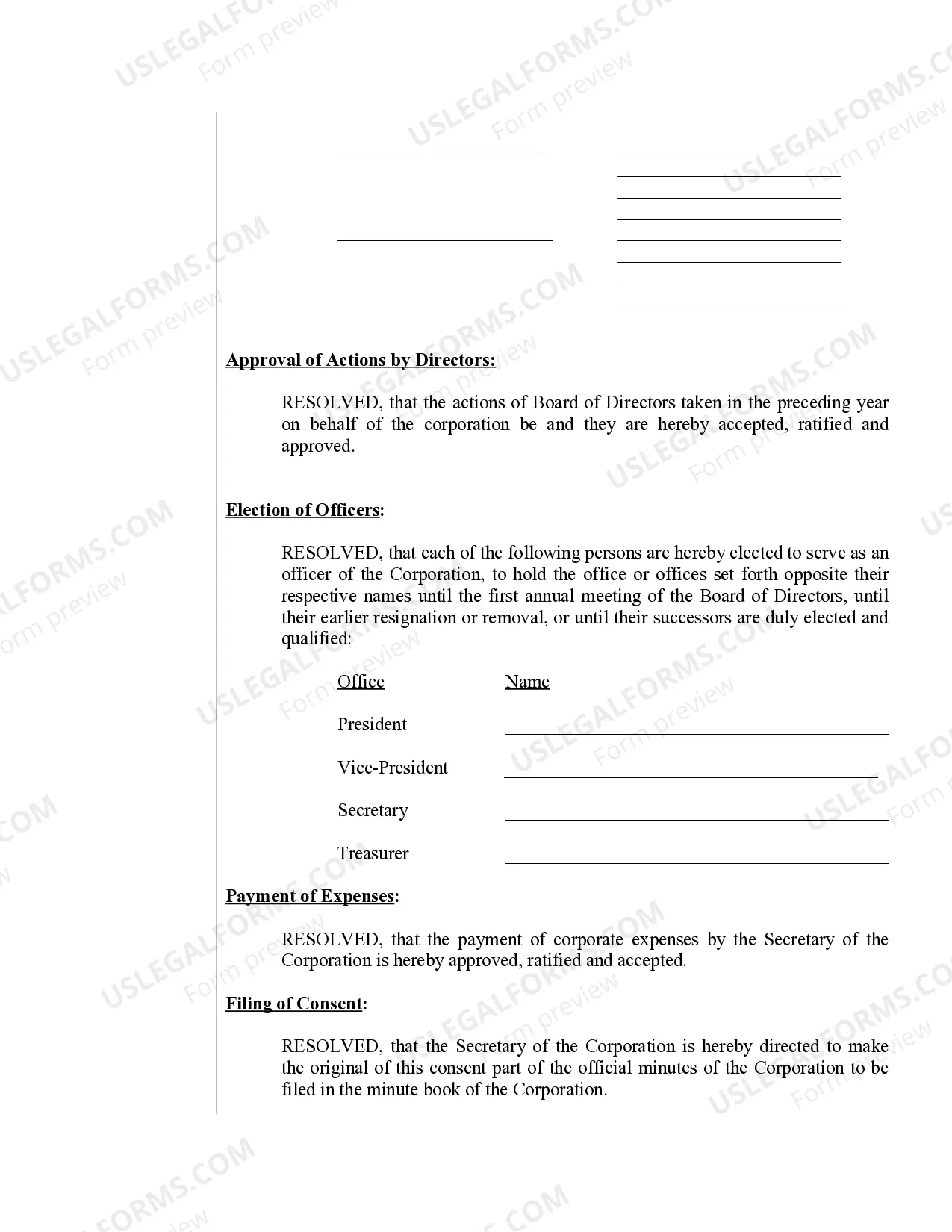
- Approval of actions taken by the board in the previous year
- Elections of directors and officers
- Payment of corporate expenses
- Filing of consent to be included in the official minutes
When to use this form
This form should be used annually by professional service corporations in Rhode Island to document essential decisions and changes to the corporate structure. It is suitable when all shareholders and directors are present and agree upon the actions taken, or when collecting written consents for actions traditionally covered in an annual meeting.
Intended users of this form
This form is intended for:
- Shareholders of Rhode Island Professional Service Corporations
- Directors of Rhode Island Professional Service Corporations
- Corporate secretaries responsible for maintaining corporate records
Instructions for completing this form
- Fill in the name of the corporation and the date of the meeting.
- Obtain signatures from all shareholders and directors to document their consent.
- Elected directors and officers should be listed, along with their corresponding roles.
- Document the approval of corporate actions from the previous year.
- Ensure the signatures are gathered in accordance with the provisions of Rhode Island law.
Notarization requirements for this form
This form does not typically require notarization unless specified by local law. However, ensuring that all signatures are authentic is essential for maintaining corporate records.
Get your form ready online
Our built-in tools help you complete, sign, share, and store your documents in one place.
Make edits, fill in missing information, and update formatting in US Legal Forms—just like you would in MS Word.
Download a copy, print it, send it by email, or mail it via USPS—whatever works best for your next step.
Sign and collect signatures with our SignNow integration. Send to multiple recipients, set reminders, and more. Go Premium to unlock E-Sign.
If this form requires notarization, complete it online through a secure video call—no need to meet a notary in person or wait for an appointment.
We protect your documents and personal data by following strict security and privacy standards.

Make edits, fill in missing information, and update formatting in US Legal Forms—just like you would in MS Word.

Download a copy, print it, send it by email, or mail it via USPS—whatever works best for your next step.

Sign and collect signatures with our SignNow integration. Send to multiple recipients, set reminders, and more. Go Premium to unlock E-Sign.

If this form requires notarization, complete it online through a secure video call—no need to meet a notary in person or wait for an appointment.

We protect your documents and personal data by following strict security and privacy standards.
Mistakes to watch out for
- Failing to secure all required signatures, which can invalidate the consent.
- Not documenting the names and roles of newly elected directors and officers properly.
- Skipping the approval of previous actions taken by the board.
Benefits of using this form online
- Convenience of downloading and editing from anywhere.
- Access to professionally drafted templates ensures compliance with legal standards.
- Ability to customize the form to meet your specific corporate needs.
Looking for another form?
Form popularity
FAQ
Use a template. Check off attendees as they arrive. Do introductions or circulate an attendance list. Record motions, actions, and decisions as they occur. Ask for clarification as necessary. Write clear, brief notes-not full sentences or verbatim wording.
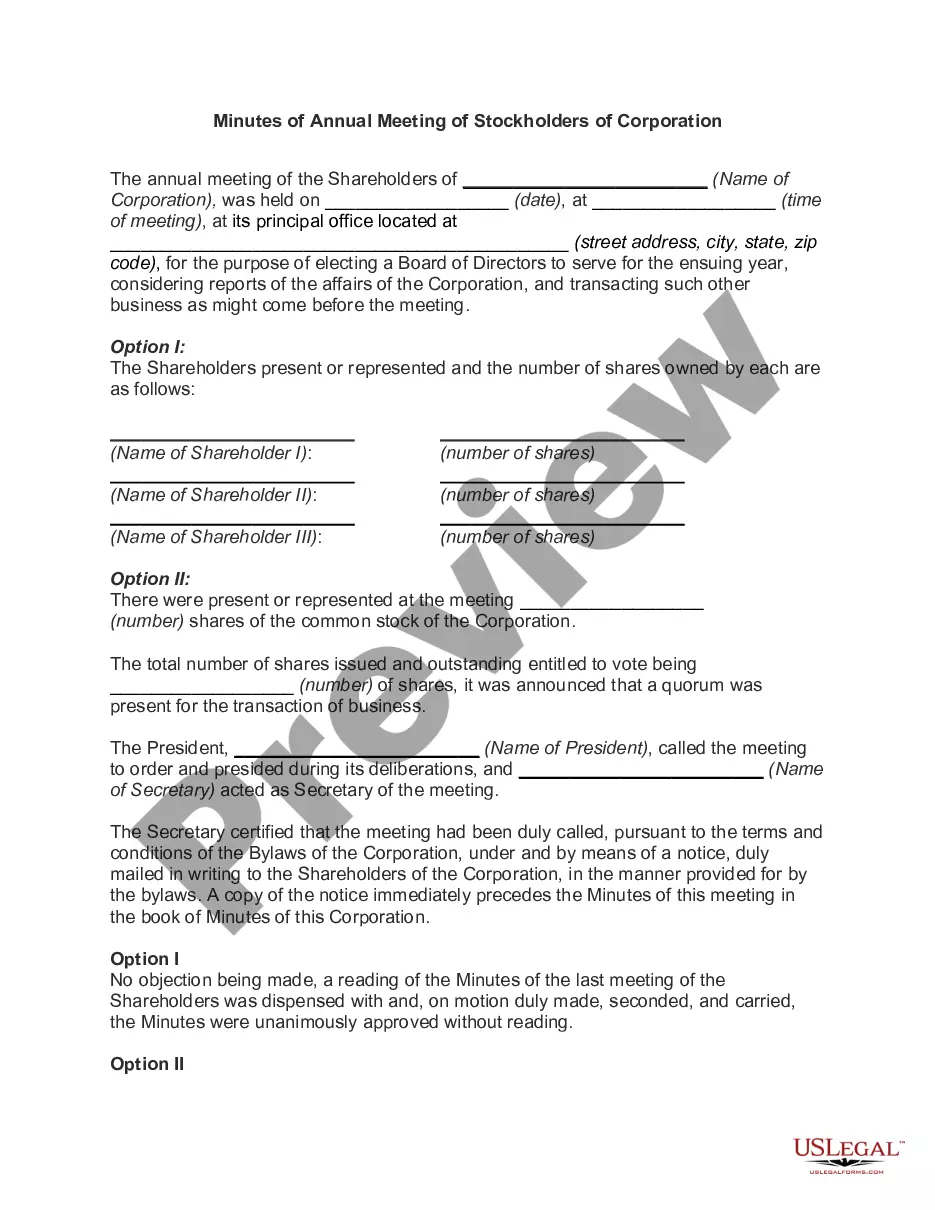
Corporate annual meeting minutes serve as a record of a business's annual meeting.Meeting agenda items with a brief description of each. Details about what was discussed during the meeting. Results of any voting actions taken. The time when the meeting adjourned.
The meeting's date, time, and location. Who wrote the minutes. The names of the members in attendance. Brief description of the meeting agenda. Details about what the members discussed. Decisions made or voting actions taken. The time that the meeting adjourned.
What's In. The minutes should include the title of the group that is meeting; the date, time, and venue; the names of those in attendance (including staff) and the person recording the minutes; and the agenda.
Meeting name and place. Date and time of the meeting. List of meeting participants. Purpose of the meeting. For each agenda items: decisions, action items, and next steps. Next meeting date and place. Documents to be included in the meeting report.
Date, time, and location of the meeting. Who attended and who was absent from the meeting. Meeting agenda items with a brief description of each. Details about what was discussed during the meeting.
Taking Meeting Notes. Type Meeting Notes - Type up a full version of the meeting minutes. Circulate a Draft - Follow your corporation's policy about who must review the draft notes. Distribute Minutes to Board - Usually in advance of the next meeting.
Minutes typically include: Meeting date, time, and location. Names of attendees and whether they missed any part of the meeting. List of those absent. Agenda items and brief descriptions. Any voting actions and how each individual voted. Time that meeting was adjourned.
Take notes during the meeting. Decide who should receive the email. Thank everyone for their time. List what was discussed in the meeting. Highlight action items or next steps. Attach supporting documents, if necessary. Include a reminder of the next meeting date.