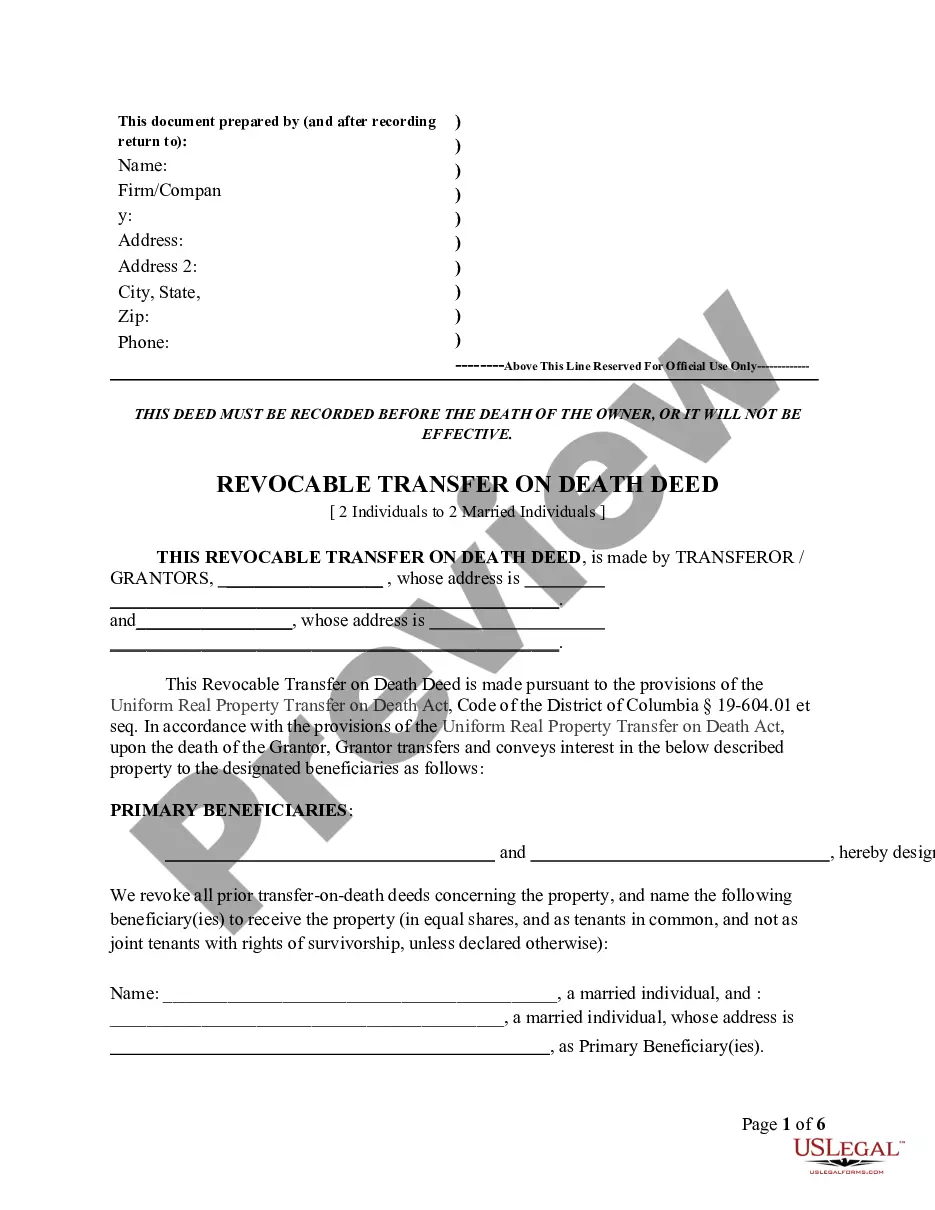
District of Columbia Transfer on Death Deed or TOD - Beneficiary Deed for Two Individuals to Husband and Wife Beneficiaries
About this form
The Transfer on Death Deed (TOD) is a legal document that allows individuals to transfer ownership of a parcel of land upon their death. It is distinct from a traditional deed because it does not transfer ownership while the Grantor is alive, making it revocable until the death occurs. This form ensures a smooth transition of property to designated beneficiaries without the need for probate, providing peace of mind about future property distribution.
Key components of this form
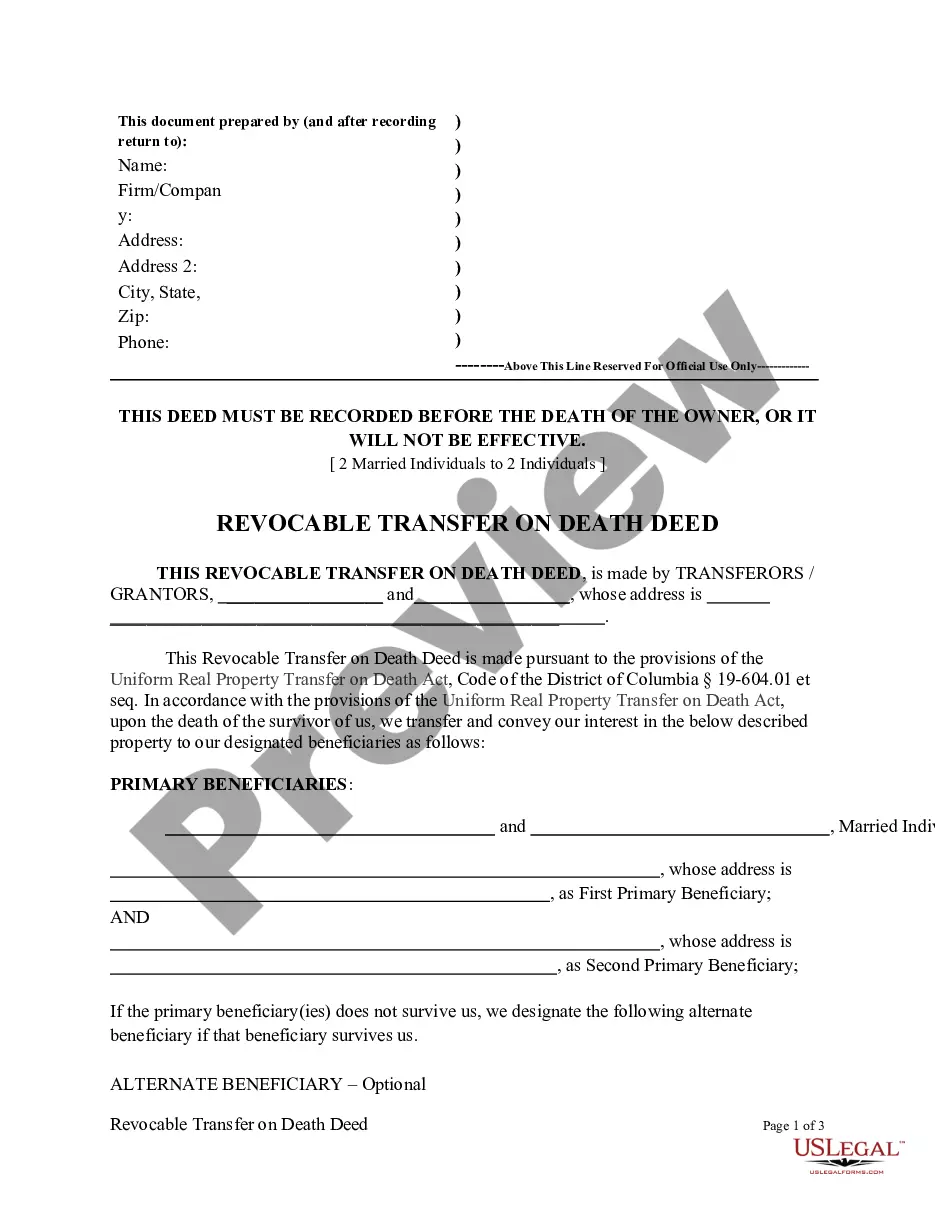
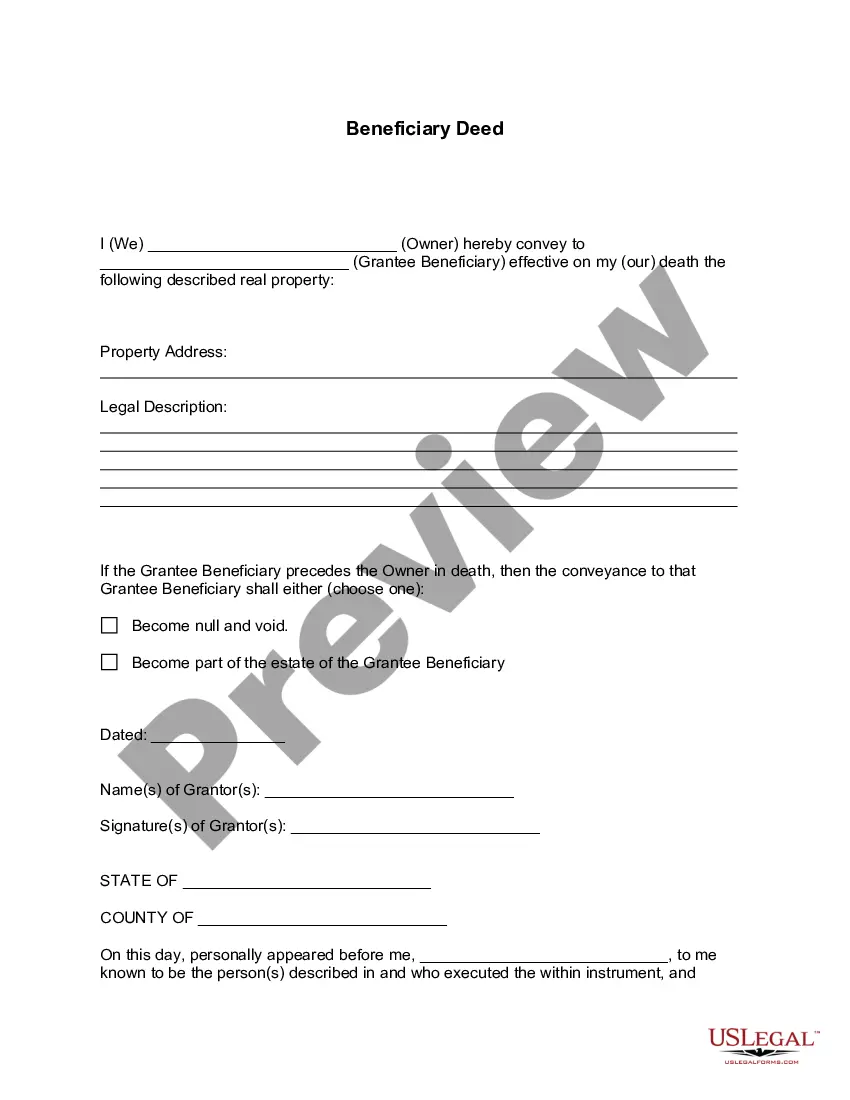
- Identification of Grantor(s) and Beneficiary(ies).
- Revocation clause for prior transfer-on-death deeds.
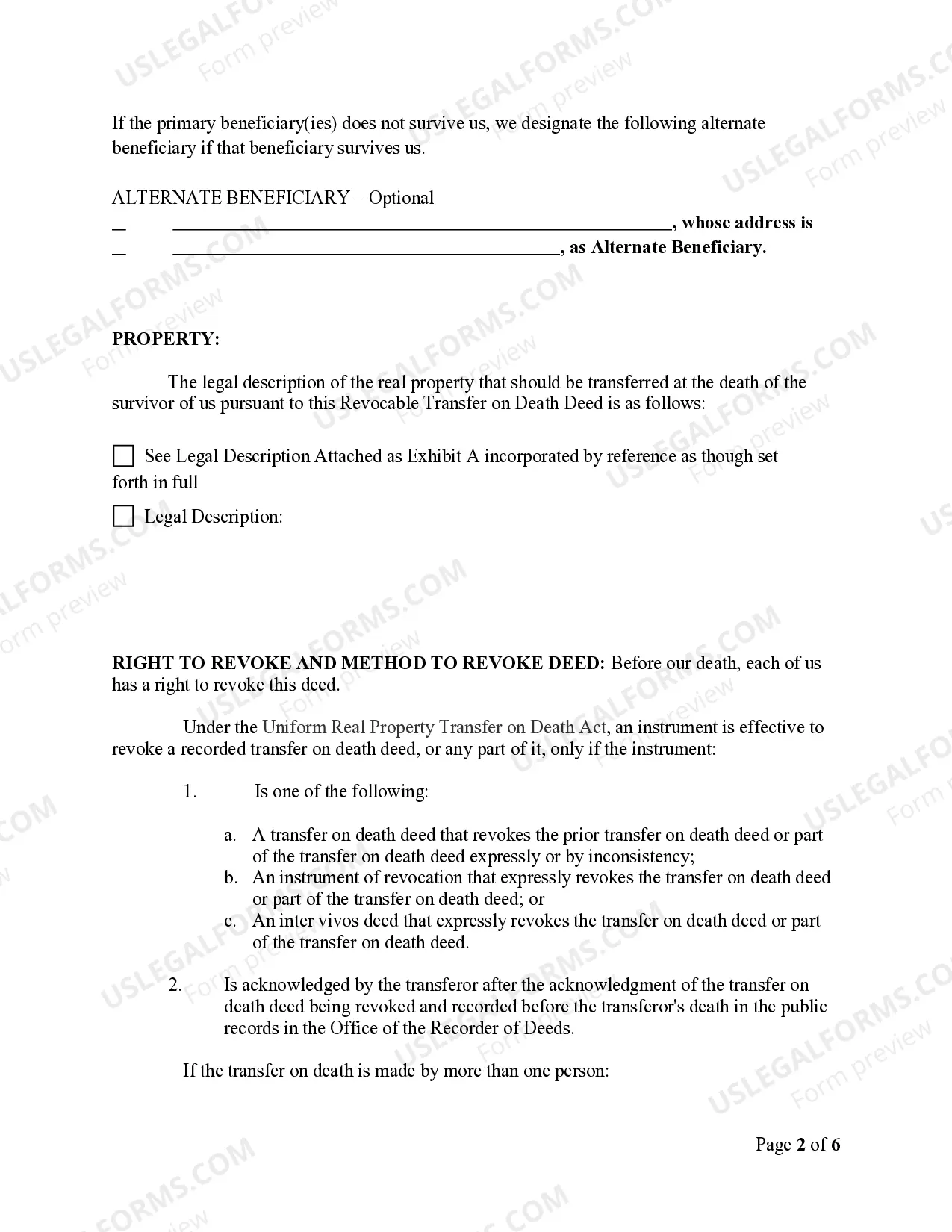
- Legal description of the property being transferred.
- Provisions for alternate beneficiaries in case primary beneficiaries do not survive the Grantor.
- Instructions for revoking the TOD deed if necessary.
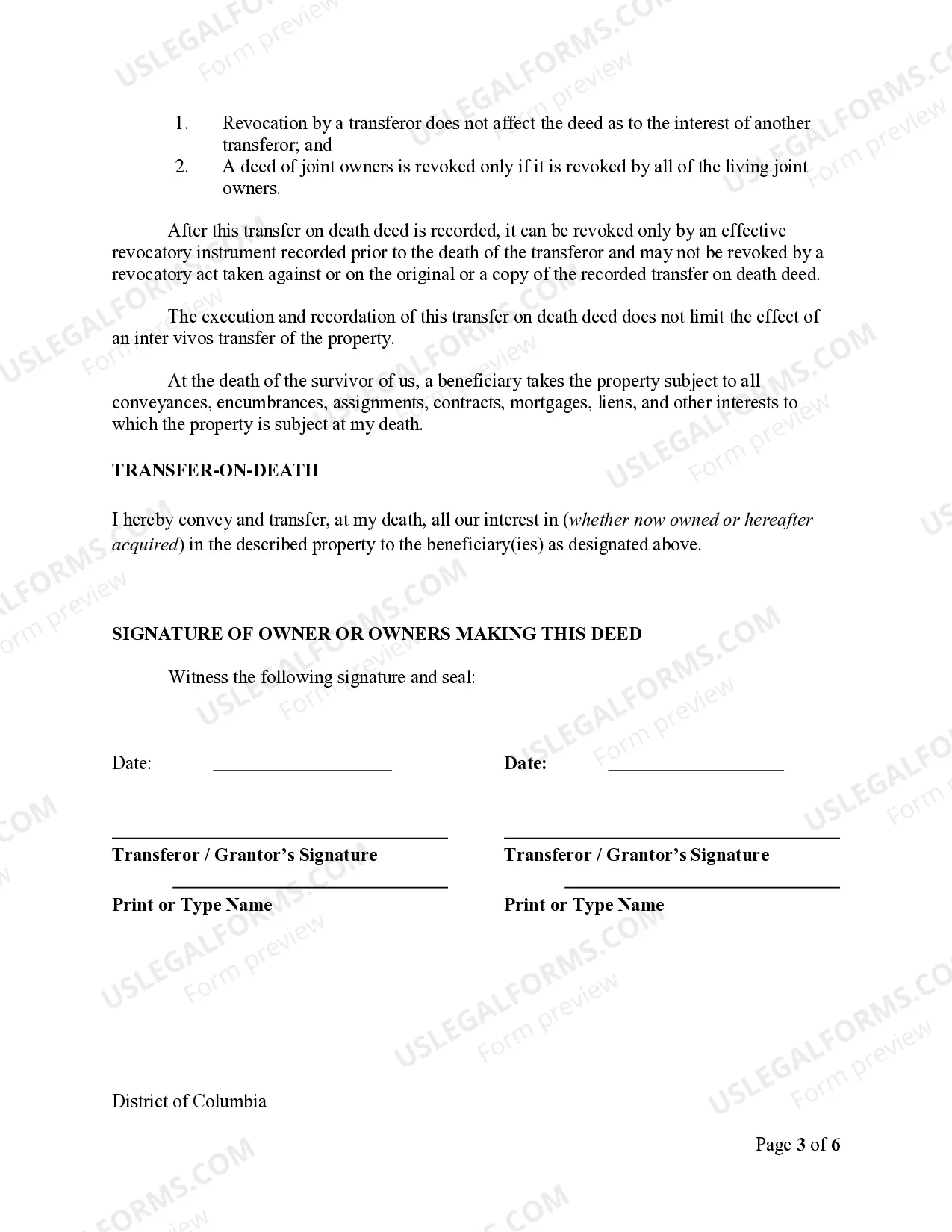
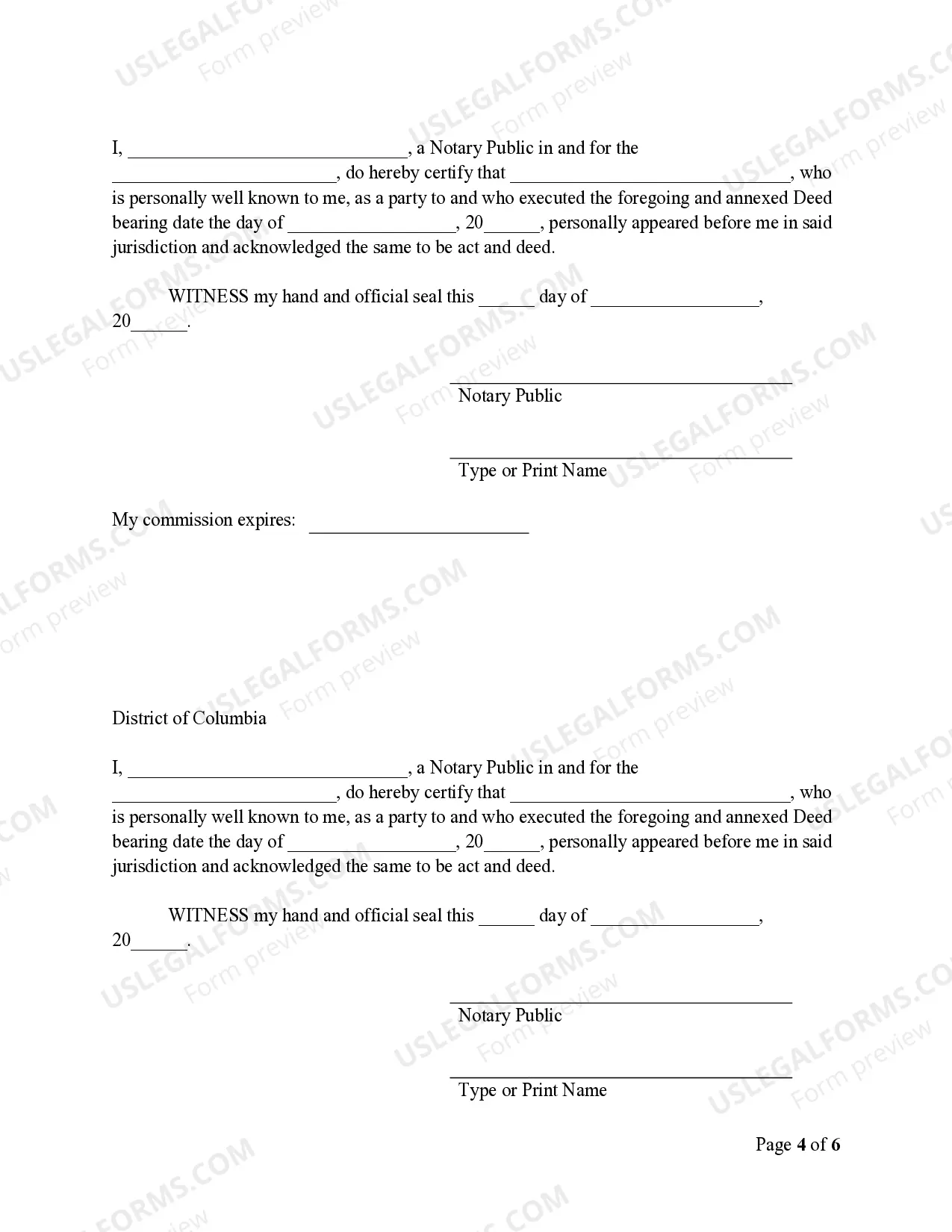
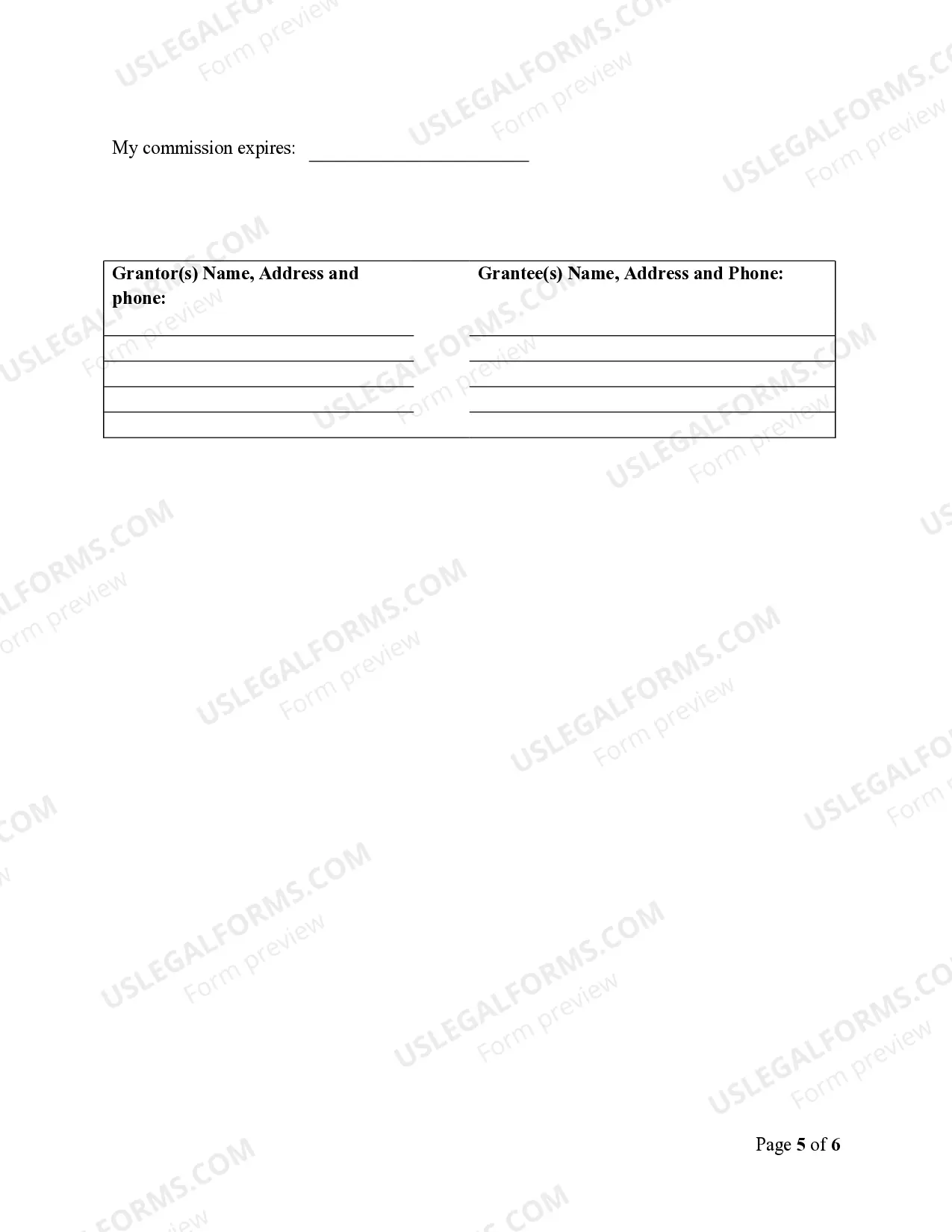
- Signature and notarization requirements for validity.




Common use cases
This form is ideal for homeowners who want to ensure their property passes directly to their spouse or another designated individual upon their death without undergoing the probate process. It is particularly useful for couples who wish to legally define their property distribution while retaining the ability to change their decisions during their lifetime.
Intended users of this form
- Homeowners looking to transfer real estate to their husband or wife.
- Individuals wanting to establish clear and efficient property transfer instructions for after their death.
- Couples who want to maintain control over their property until they pass away.
- Anyone wanting to avoid the complexities of property distribution during probate.
How to complete this form
- Fill in the names and addresses of all Grantors who are transferring the property.
- Designate primary and alternate beneficiaries with their addresses.
- Provide a legal description of the property to be transferred.
- Sign and date the deed in the presence of a notary public.
- Record the completed deed with the appropriate governmental office before the Grantor's death.
Notarization requirements for this form
Yes, this form must be notarized to be legally valid. US Legal Forms offers integrated online notarization services available 24/7, ensuring a secure and convenient process through video calls.
Get your form ready online
Our built-in tools help you complete, sign, share, and store your documents in one place.
Make edits, fill in missing information, and update formatting in US Legal Forms—just like you would in MS Word.
Download a copy, print it, send it by email, or mail it via USPS—whatever works best for your next step.
Sign and collect signatures with our SignNow integration. Send to multiple recipients, set reminders, and more. Go Premium to unlock E-Sign.
If this form requires notarization, complete it online through a secure video call—no need to meet a notary in person or wait for an appointment.
We protect your documents and personal data by following strict security and privacy standards.

Make edits, fill in missing information, and update formatting in US Legal Forms—just like you would in MS Word.

Download a copy, print it, send it by email, or mail it via USPS—whatever works best for your next step.

Sign and collect signatures with our SignNow integration. Send to multiple recipients, set reminders, and more. Go Premium to unlock E-Sign.

If this form requires notarization, complete it online through a secure video call—no need to meet a notary in person or wait for an appointment.

We protect your documents and personal data by following strict security and privacy standards.
Common mistakes to avoid
- Failing to record the deed before the Grantor's death.
- Leaving out crucial beneficiary information or legal property description.
- Not updating or revoking previous TOD deeds when necessary.
- Inadequately signing the document or lacking notarization.
Benefits of using this form online
- Convenience of immediate download and access from anywhere.
- Editability allows you to tailor the form to your specific needs easily.
- Reliability of using attorney-drafted templates that comply with current legal standards.
Looking for another form?
Form popularity
FAQ
Yes, a TOD account can have multiple beneficiaries. In a District of Columbia Transfer on Death Deed or TOD - Beneficiary Deed for Two Individuals to Husband and Wife Beneficiaries, you can list more than one beneficiary, allowing for shared ownership after your death. It's essential to specify each beneficiary's share clearly to avoid confusion or conflict later. Using a platform like uslegalforms can simplify the process and provide clarity in legal documentation.
There are several drawbacks to using a District of Columbia Transfer on Death Deed or TOD - Beneficiary Deed for Two Individuals to Husband and Wife Beneficiaries. For example, it does not allow for any management of the property during your lifetime, as it only transfers ownership upon death. Additionally, creditors may still claim the property before transferring it to beneficiaries, which could reduce their inheritance. Consider discussing these concerns with a legal professional to make an informed decision.
To transfer on death deed to two beneficiaries, specifically in a District of Columbia Transfer on Death Deed or TOD - Beneficiary Deed for Two Individuals to Husband and Wife Beneficiaries, you must clearly name both beneficiaries on the deed. You should include their full names and identify their relationship to you. After completing the deed, you must file it with the appropriate district office to ensure it takes effect upon your passing.
While you can complete a District of Columbia Transfer on Death Deed or TOD - Beneficiary Deed for Two Individuals to Husband and Wife Beneficiaries without an attorney, it's advisable to consult one. The process may involve complex legal language and requirements, and an attorney can help ensure that your deed complies with local regulations. Additionally, professional guidance can prevent potential disputes among beneficiaries in the future.
While it is not strictly necessary to hire a lawyer for a District of Columbia Transfer on Death Deed or TOD - Beneficiary Deed for Two Individuals to Husband and Wife Beneficiaries, doing so can be beneficial. A legal professional can help ensure that all documents are correctly prepared and executed according to DC laws. Additionally, they can provide guidance tailored to your specific situation and needs, enhancing overall confidence in the estate planning process.
Generally, a District of Columbia Transfer on Death Deed or TOD - Beneficiary Deed for Two Individuals to Husband and Wife Beneficiaries does not directly avoid capital gains tax. When the property is transferred, the beneficiaries inherit it at its current market value, which may set the stage for future capital gains if they decide to sell. It’s crucial to consider the potential tax implications and consult a financial advisor for tailored advice.
Yes, accounts that utilize a District of Columbia Transfer on Death Deed or TOD - Beneficiary Deed for Two Individuals to Husband and Wife Beneficiaries typically avoid probate. This means that the designated beneficiaries can directly receive assets without the delays and costs associated with court proceedings. This advantage can significantly ease the transition for your loved ones during an already difficult time.
A District of Columbia Transfer on Death Deed or TOD - Beneficiary Deed for Two Individuals to Husband and Wife Beneficiaries has some potential disadvantages. One notable concern is that the property transferred may not be distributed according to the owner’s wishes if the beneficiaries predecease them or if their needs change. Additionally, property owners retain no control over how the beneficiaries manage the property after the transfer, which might lead to conflicts.
While a District of Columbia Transfer on Death Deed or TOD - Beneficiary Deed for Two Individuals to Husband and Wife Beneficiaries offers many benefits, it does come with some drawbacks. The deed must be correctly executed and recorded; otherwise, it may be deemed invalid. Additionally, if the property owner incurs significant debts, creditors may still have claims against the property, which could affect the beneficiaries’ inheritance.
A District of Columbia Transfer on Death Deed or TOD - Beneficiary Deed for Two Individuals to Husband and Wife Beneficiaries can be a wise estate planning tool. It allows you to transfer property directly to your chosen beneficiaries upon your passing, avoiding the long and costly probate process. This option provides both efficiency and simplicity, making it a favorable choice for many couples. However, it’s essential to evaluate your specific circumstances and consult a professional if needed.