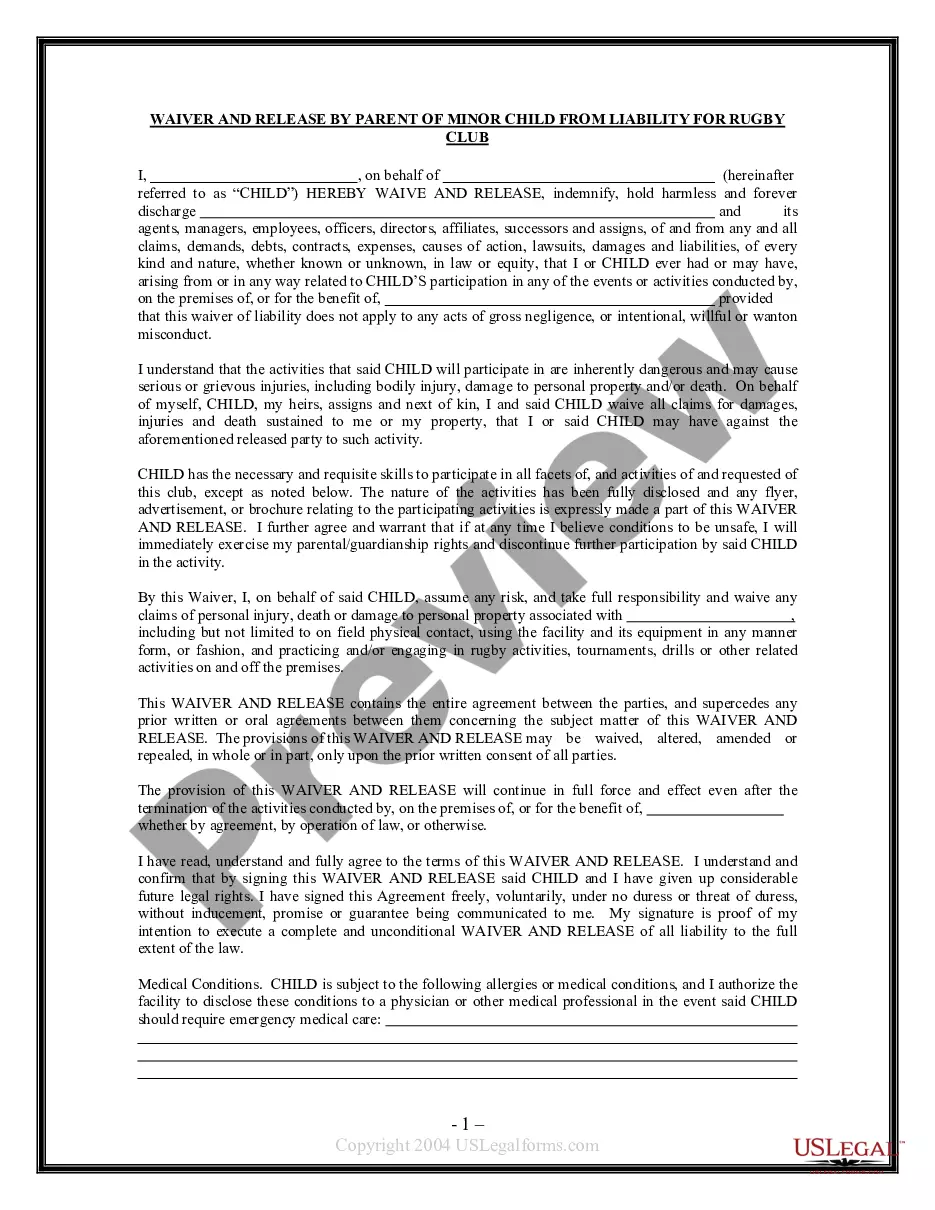
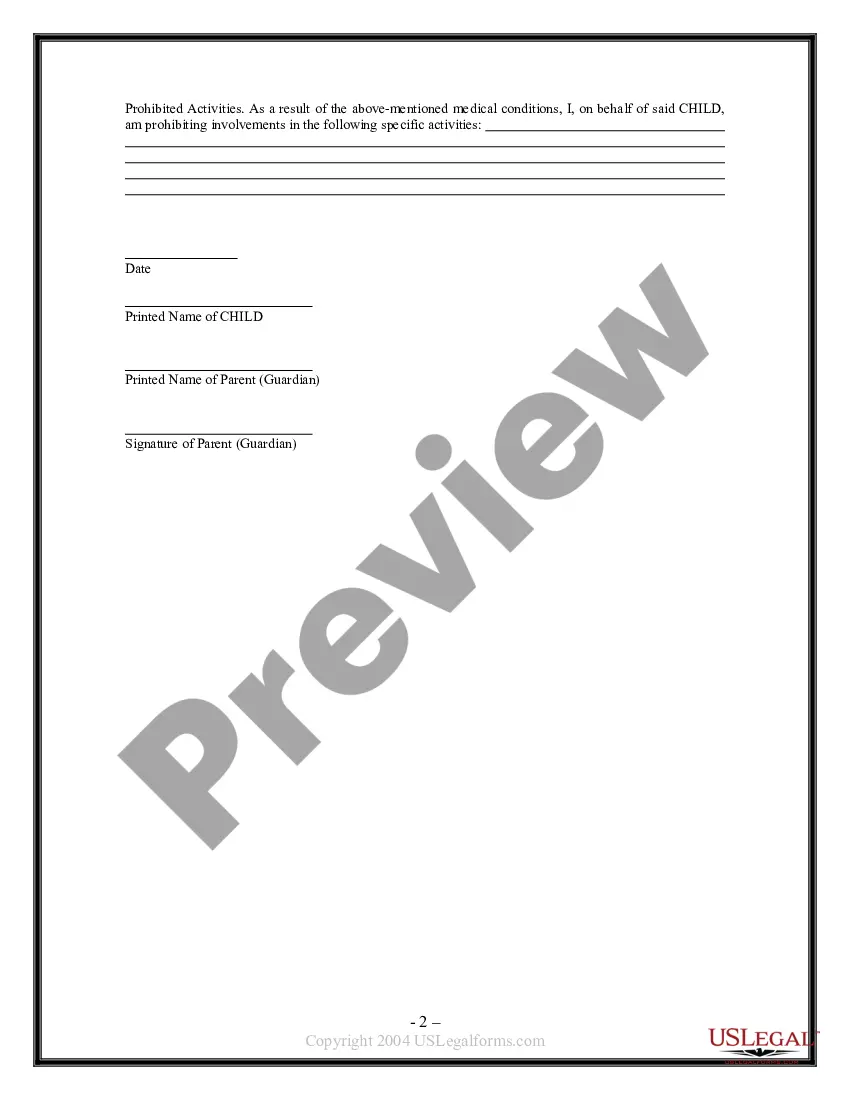
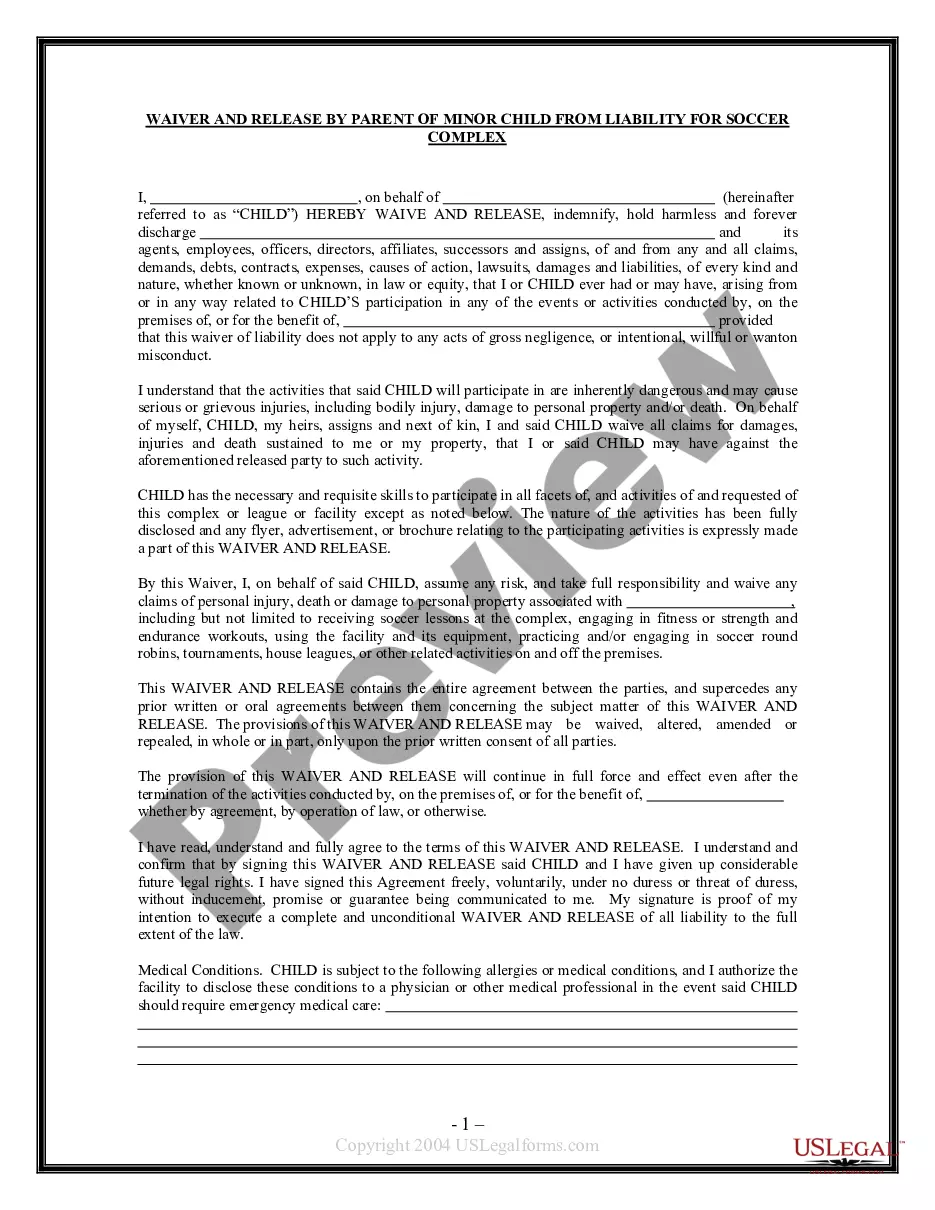
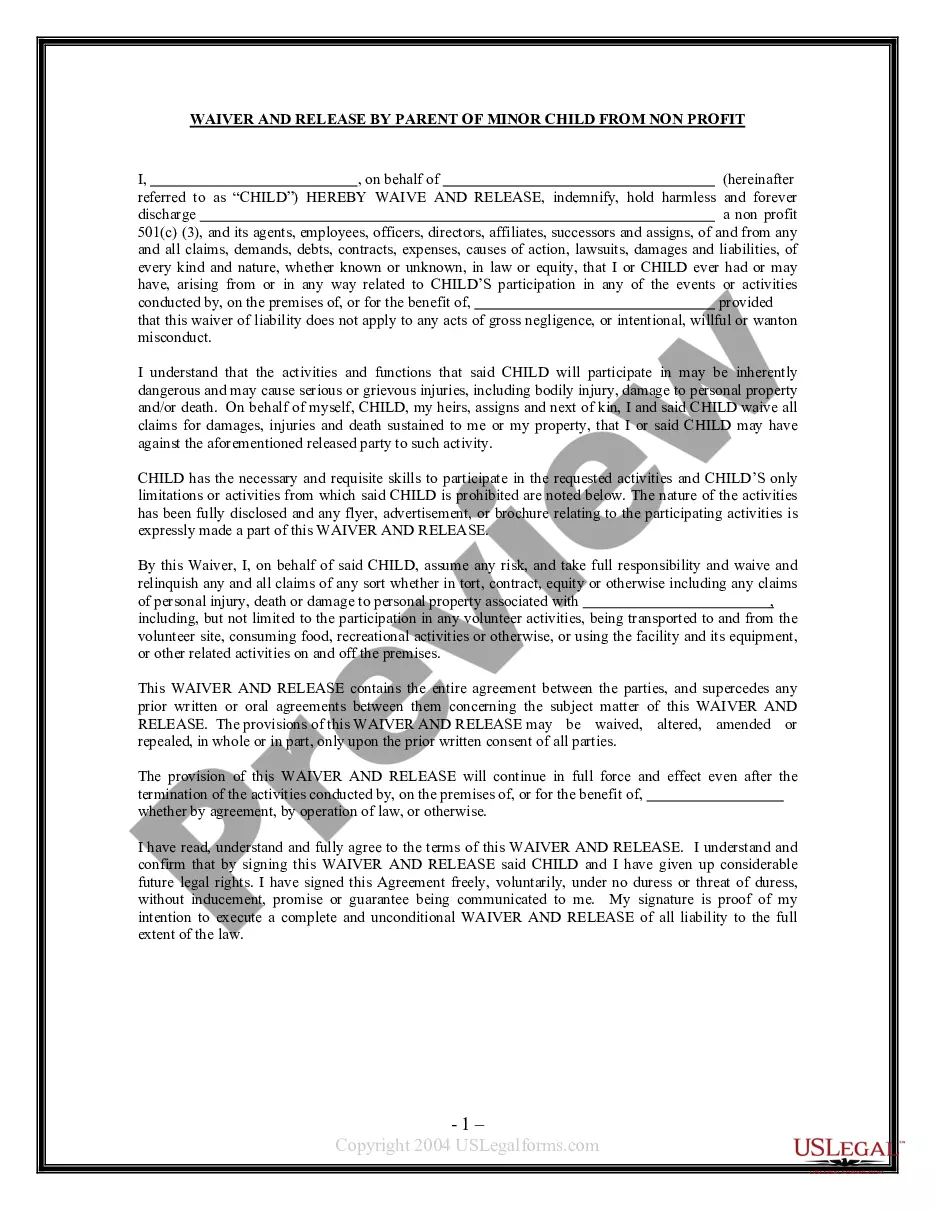
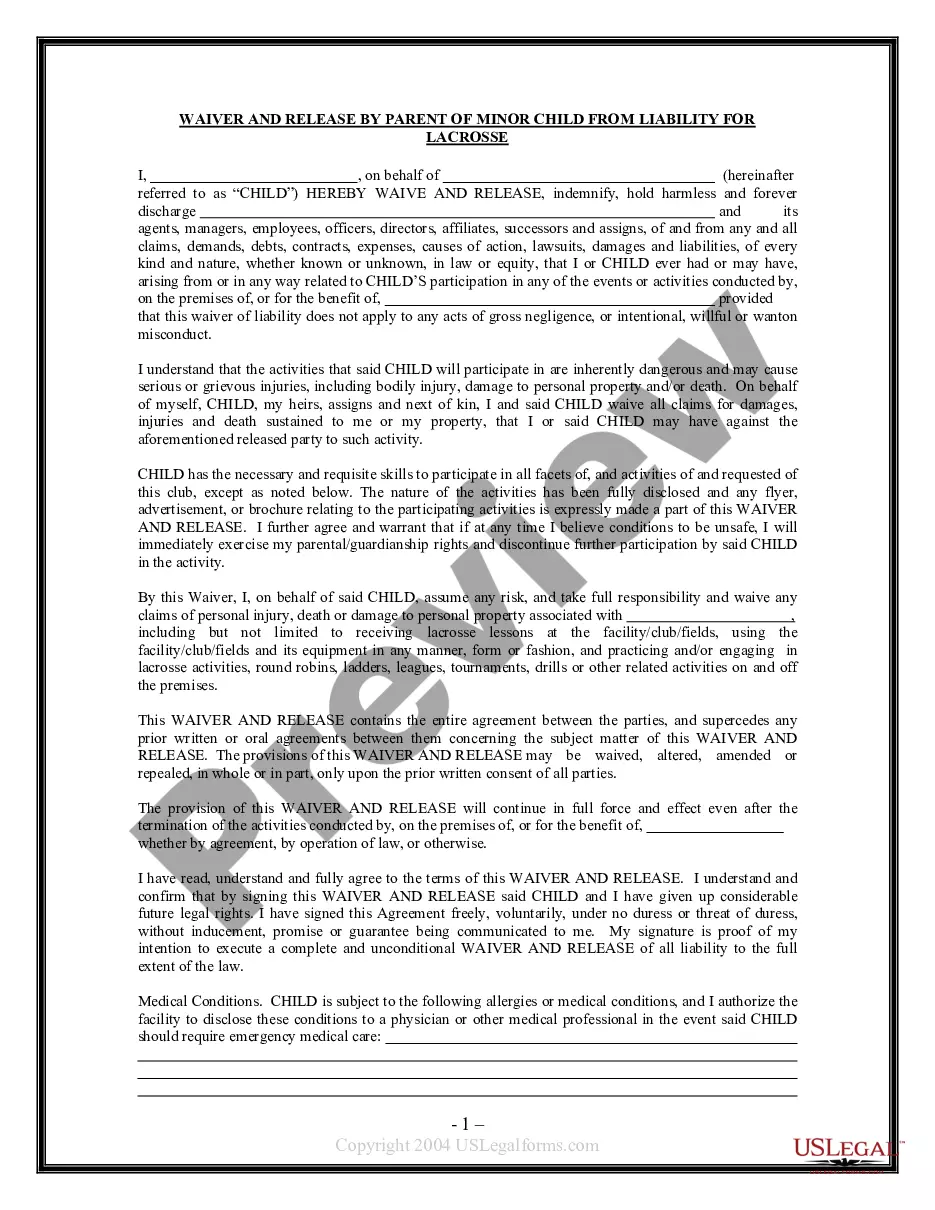
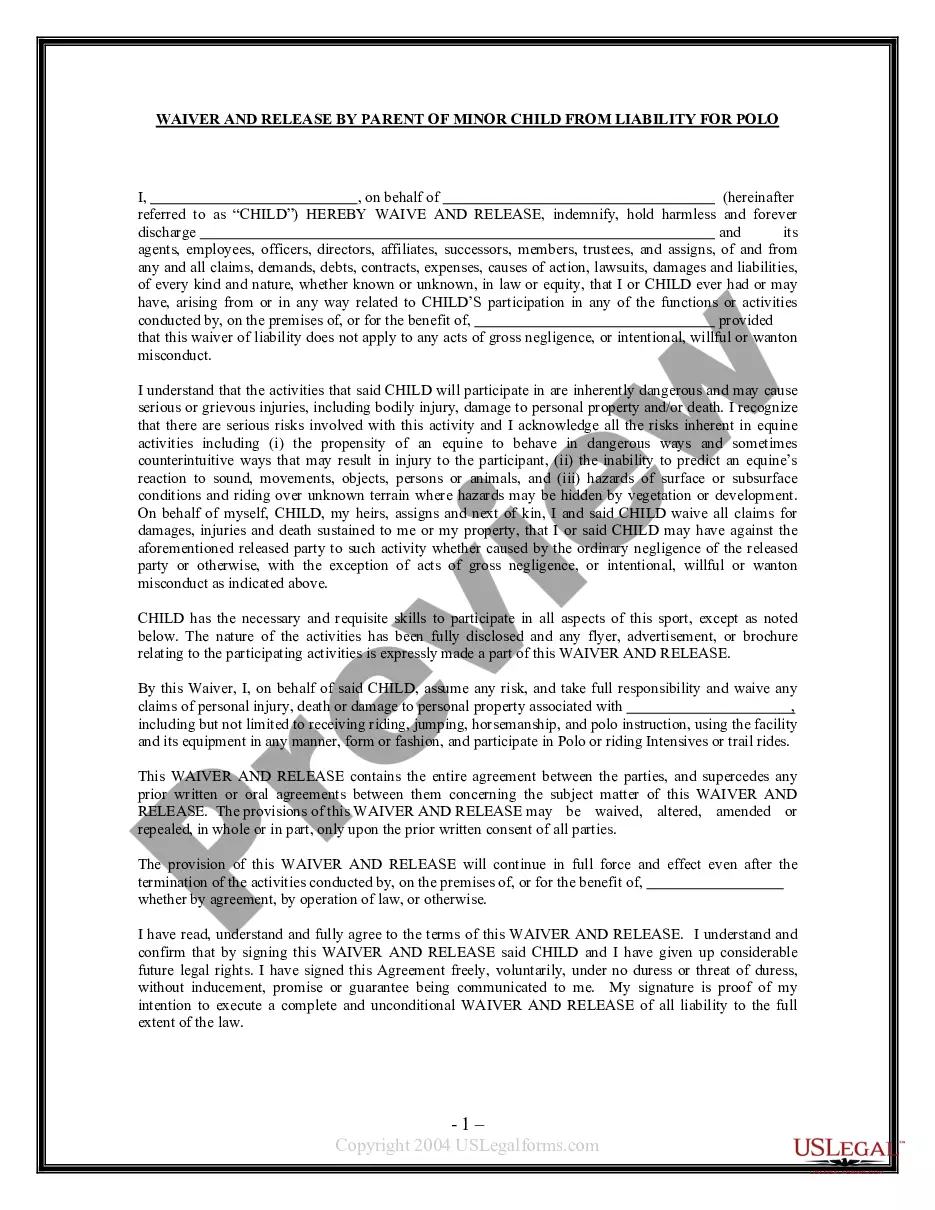
This form allows a parent or guardian to release a rugby club facility from liability for injuries which may be incurred by a minor child while on the premises, taking part in activities, etc.
District of Columbia Waiver and Release From Liability For Minor Child for Rugby Club
Category:
State:
Multi-State
Control #:
US-WAV-45M
Format:
Word;
Rich Text
Instant download
Description
Free preview
How to fill out Waiver And Release From Liability For Minor Child For Rugby Club?
Are you in a circumstance where you require documents for potentially business or personal purposes almost every day.
There is an abundance of legal document templates available online, but locating ones you can trust isn’t simple.
US Legal Forms provides thousands of form templates, such as the District of Columbia Waiver and Release From Liability For Minor Child for Rugby Club, that are designed to comply with federal and state standards.
When you find the right form, click on Get now.
Choose the pricing plan you prefer, complete the required information to create your account, and pay for your order using your PayPal or credit card.
- If you are already acquainted with the US Legal Forms website and have an account, simply Log In.
- Then, you can download the District of Columbia Waiver and Release From Liability For Minor Child for Rugby Club template.
- If you don’t have an account and need to start using US Legal Forms, follow these steps.
- Locate the form you need and ensure it is for the correct city/county.
- Utilize the Preview button to review the form.
- Check the details to confirm that you have chosen the correct form.
- If the form isn’t what you desire, use the Search field to find the form that meets your needs.
Form popularity
FAQ
A waiver is a document that relinquishes a person's right to make a claim against another party, typically in relation to potential future actions. On the other hand, a release is a more comprehensive agreement that not only waives future claims but also addresses any existing claims related to past incidents. In the context of the District of Columbia Waiver and Release From Liability For Minor Child for Rugby Club, both documents serve to protect the organization, but they vary in their scope and application. Understanding these differences can help parents make informed decisions about their child's participation.
A parental consent release and waiver of liability is a legal document that allows parents or guardians to give permission for their minor child to participate in activities, such as rugby, while acknowledging the inherent risks involved. This document helps protect the rugby club from legal claims related to injuries that may occur during participation. By signing the District of Columbia Waiver and Release From Liability For Minor Child for Rugby Club, parents confirm their understanding of these risks and agree not to hold the club liable for any accidents. It is an essential step in ensuring a safe and secure environment for all participants.
A hold harmless agreement is a legal provision that protects one party from liability for certain actions. In youth sports, particularly for rugby clubs, the District of Columbia Waiver and Release From Liability For Minor Child ensures that parents agree not to pursue legal claims against the club or its staff if their child is injured. This agreement is essential for fostering a safe environment for young athletes while allowing clubs to operate without the fear of constant legal challenges. Utilizing platforms like uslegalforms can simplify the creation of these necessary documents.
A waiver of release is a legal document that allows an individual to relinquish their right to sue for any injuries or damages that may occur during an activity. In the context of youth sports, such as rugby, the District of Columbia Waiver and Release From Liability For Minor Child for Rugby Club protects the organization and its coaches from future claims. This waiver helps ensure that parents understand the risks involved in their child's participation. By signing this document, parents acknowledge those risks and agree to not hold the club accountable.
So, do liability waivers hold up in court? if you are injured as a result of ordinary negligence, the liability waiver may fully protect the defendant and leave you without legal recourse. If you are injured as a result of gross negligence, then you may have a case.
To sum it up, customers can still sue business owners even when they've signed a waiver to use the business.
Generally, a liability waiver document is a legally binding agreement that relinquishes the right of one party to pursue legal remedy for injuries accrued on the property, regardless of fault involved.
Liability waivers are enforceable in California solely to the extent they shift to the customer the risk of ordinary negligence. Under California law, a liability waiver cannot excuse an injury caused by a defendant's gross negligence, recklessness or intentionally wrongful act.
A waiver is an exculpatory contract. That means it's used to excuse a party from responsibility when the other contracted party is injured by either known or unknown risks in a particular activity. This includes inherent risks and ordinary negligence.
Signing a waiver does not mean you automatically do not have the right to file a lawsuit after suffering a serious injury in California. Liability laws are complex and often require an attorney's assistance. If you signed a waiver before an activity that gave you an injury, speak to a lawyer about your rights.