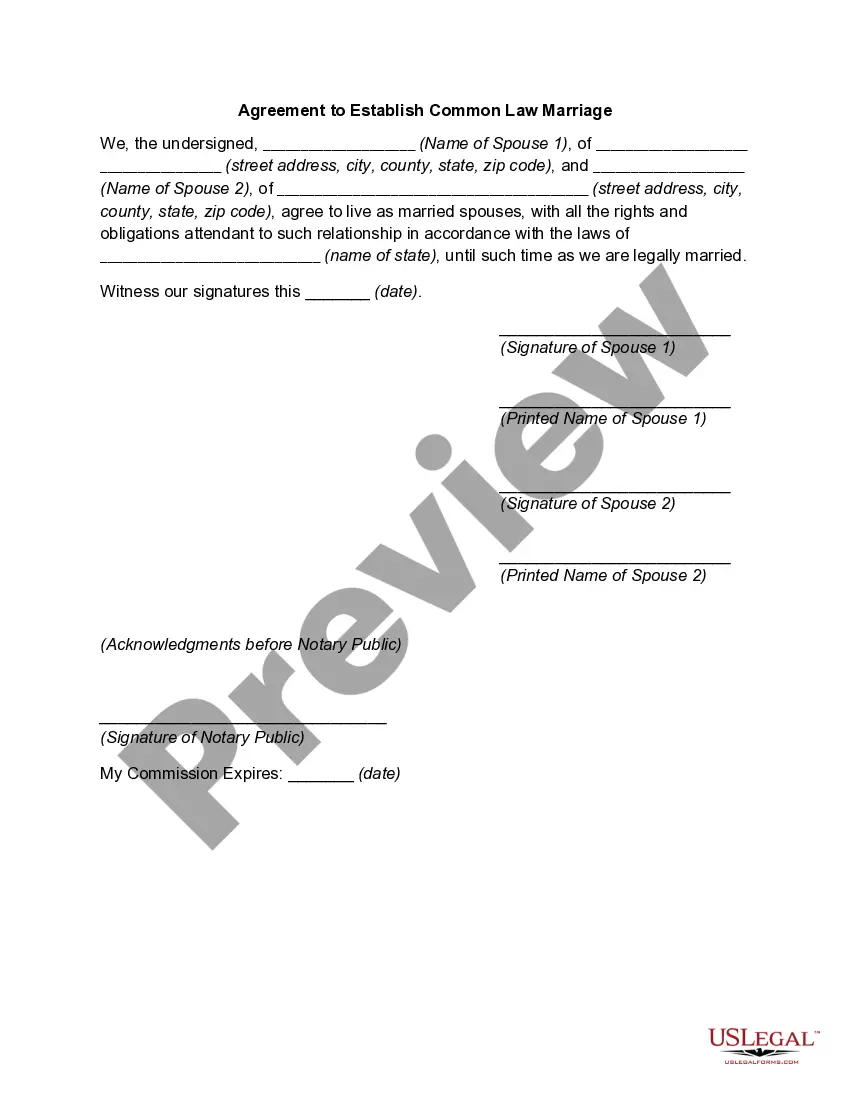
District of Columbia Occupancy Agreement Between Cooperative Housing Corporation and Member/Shareholder
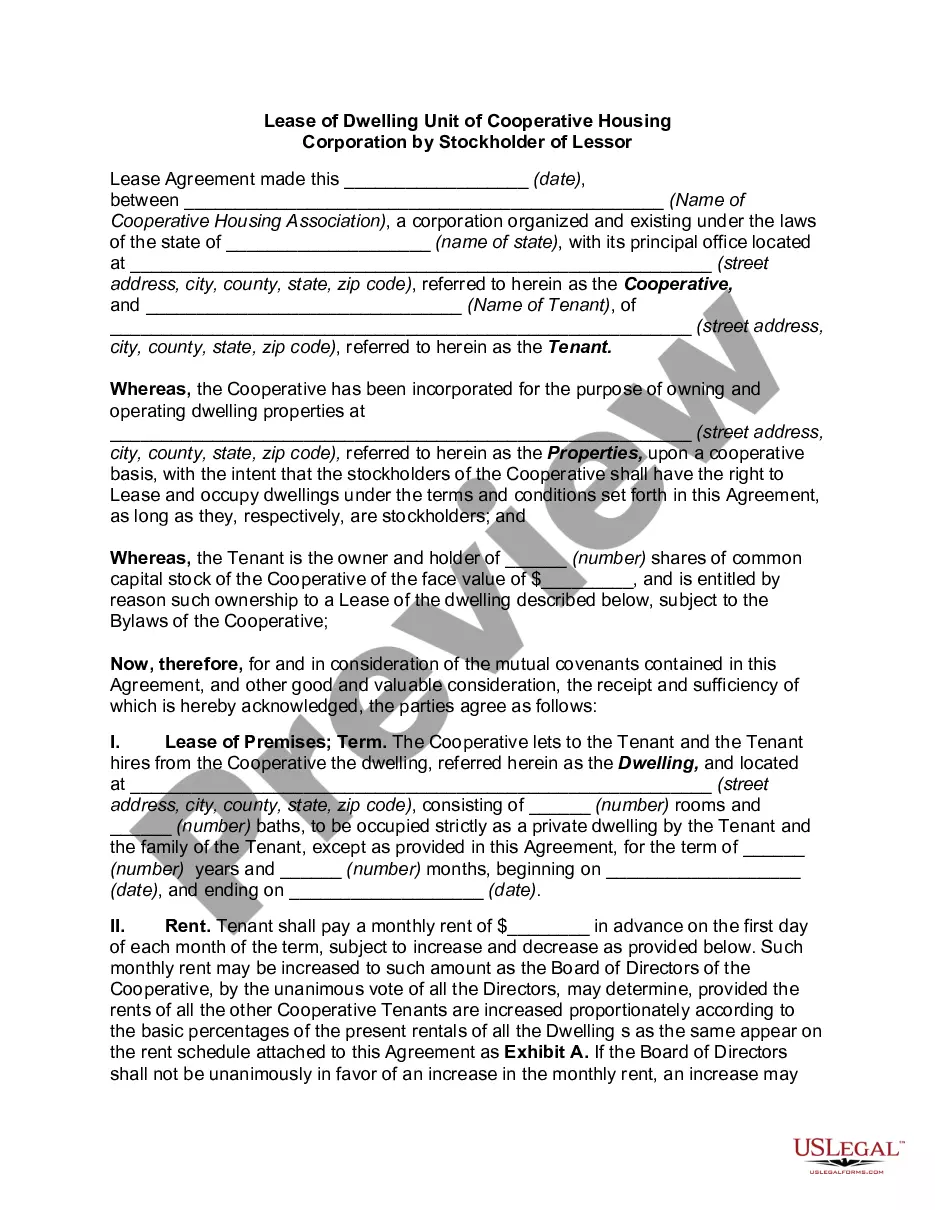
Description
Get your form ready online
Our built-in tools help you complete, sign, share, and store your documents in one place.
Make edits, fill in missing information, and update formatting in US Legal Forms—just like you would in MS Word.
Download a copy, print it, send it by email, or mail it via USPS—whatever works best for your next step.
Sign and collect signatures with our SignNow integration. Send to multiple recipients, set reminders, and more. Go Premium to unlock E-Sign.
If this form requires notarization, complete it online through a secure video call—no need to meet a notary in person or wait for an appointment.
We protect your documents and personal data by following strict security and privacy standards.

Make edits, fill in missing information, and update formatting in US Legal Forms—just like you would in MS Word.

Download a copy, print it, send it by email, or mail it via USPS—whatever works best for your next step.

Sign and collect signatures with our SignNow integration. Send to multiple recipients, set reminders, and more. Go Premium to unlock E-Sign.

If this form requires notarization, complete it online through a secure video call—no need to meet a notary in person or wait for an appointment.

We protect your documents and personal data by following strict security and privacy standards.
Looking for another form?


How to fill out Occupancy Agreement Between Cooperative Housing Corporation And Member/Shareholder?
Finding the appropriate authentic document format can be quite challenging. Naturally, there are numerous templates available online, but how do you find the authentic form you require.
Utilize the US Legal Forms website. The service offers a vast collection of templates, such as the District of Columbia Occupancy Agreement Between Cooperative Housing Corporation and Member/Shareholder, which you can utilize for business and personal needs. All of the forms are vetted by professionals and comply with federal and state regulations.
If you are currently registered, Log In to your account and then click the Download option to access the District of Columbia Occupancy Agreement Between Cooperative Housing Corporation and Member/Shareholder. Use your account to browse the legal forms you have purchased previously. Navigate to the My documents tab in your account and obtain another version of the document you need.
Select the file format and download the legal document template for your use. Complete, modify, and print, and sign the received District of Columbia Occupancy Agreement Between Cooperative Housing Corporation and Member/Shareholder. US Legal Forms is the premier repository of legal forms where you can find various document templates. Take advantage of the service to acquire professionally crafted documents that meet state requirements.
- First, ensure you have selected the correct form for your locality/region.
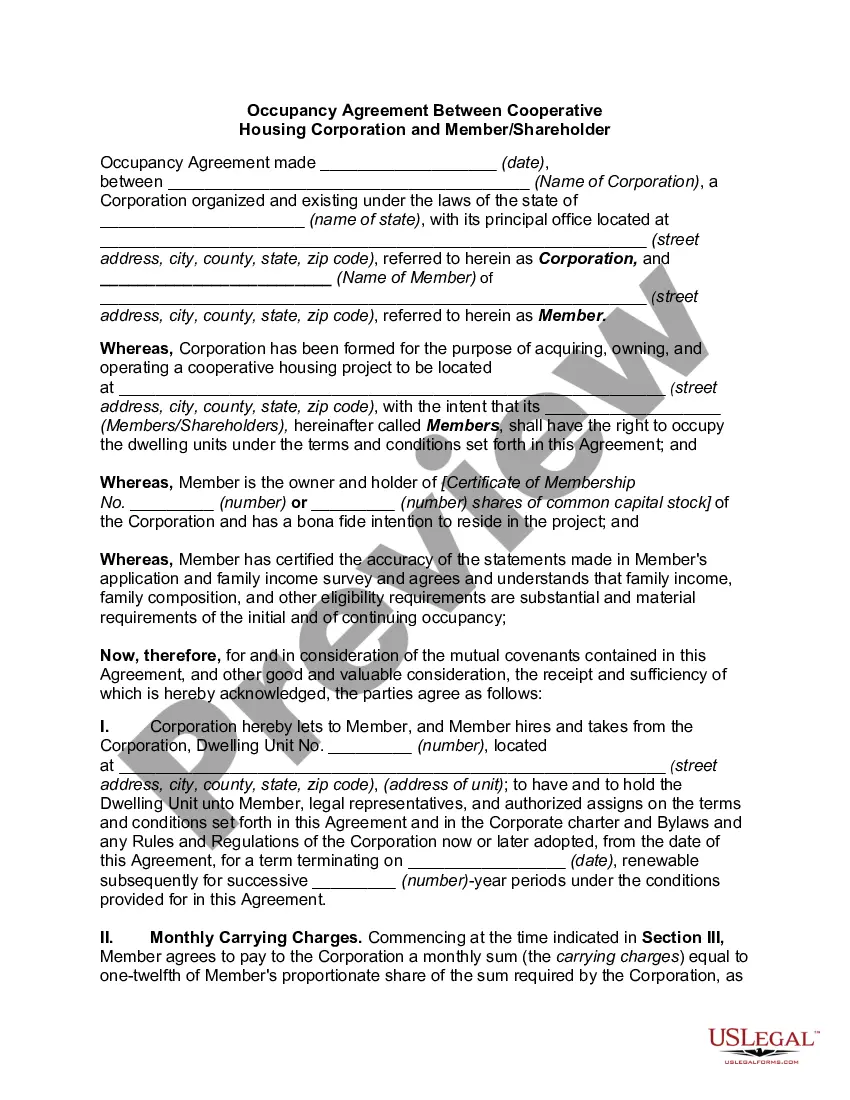
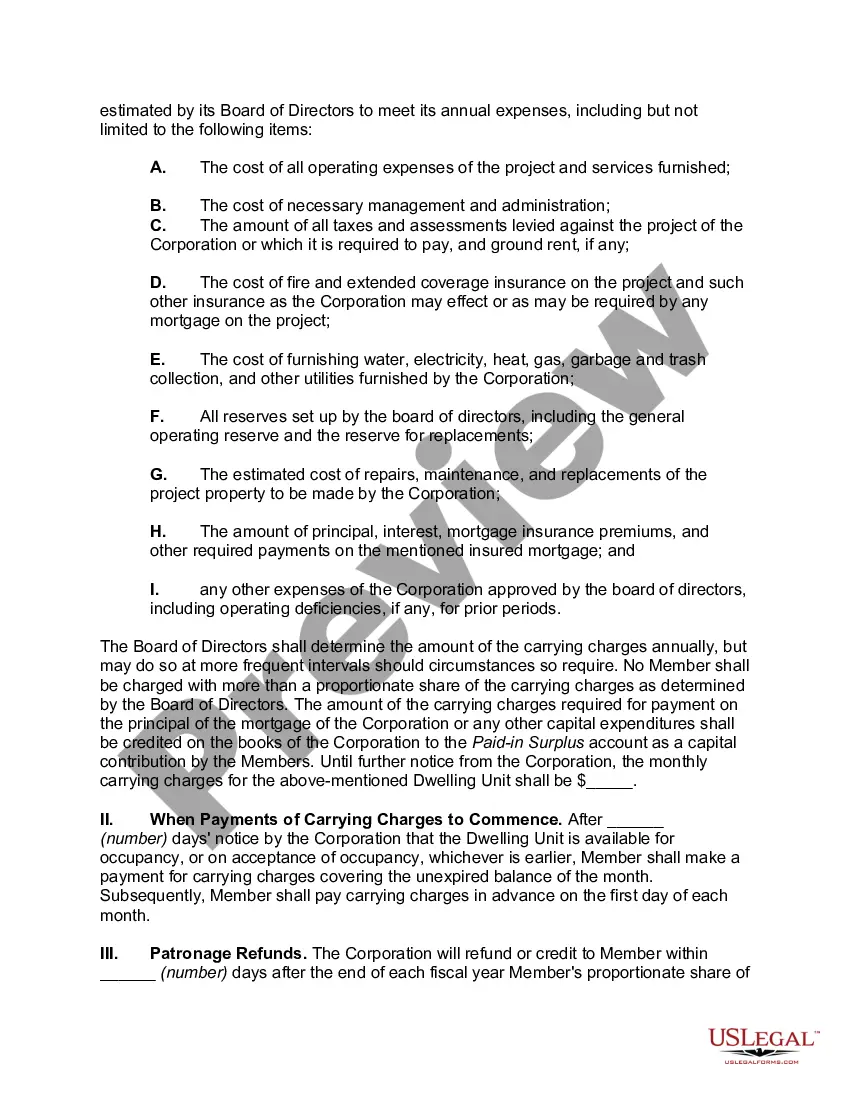
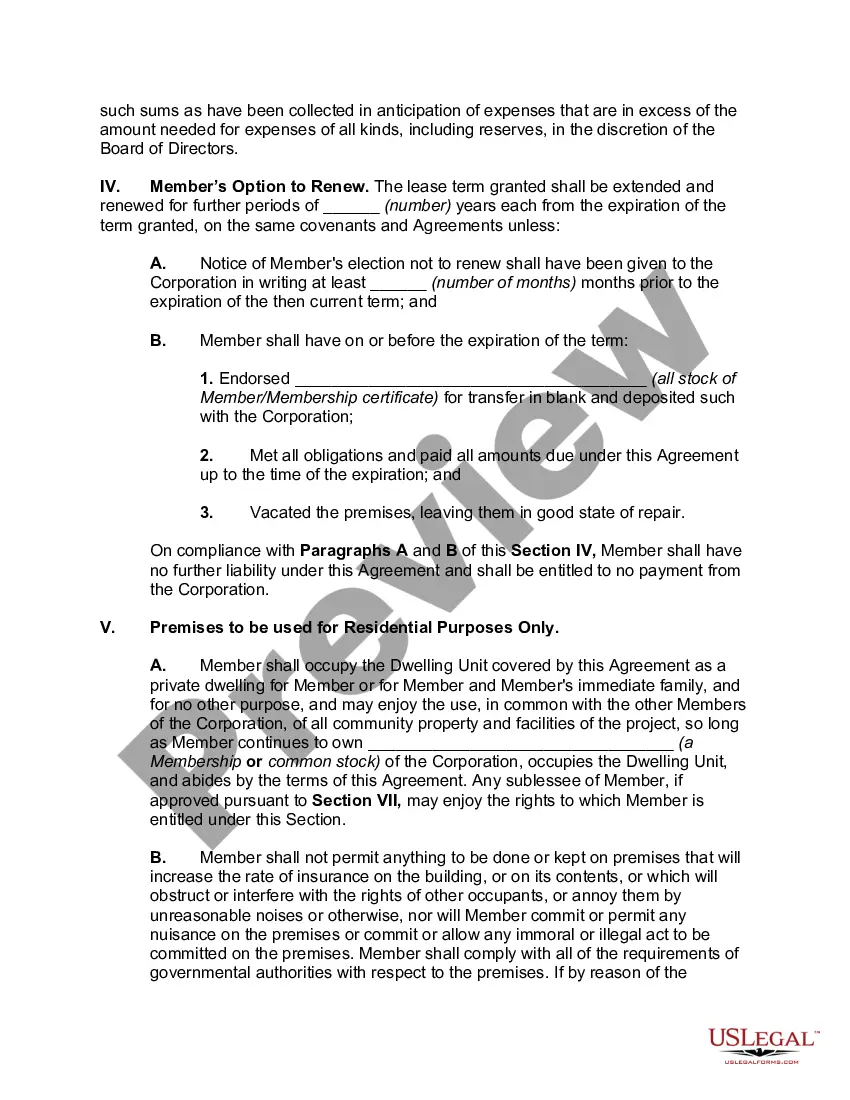
- You can preview the form using the Review option and read the form details to confirm it is suitable for you.
- If the form does not meet your needs, utilize the Search field to find the correct form.
- Once you are confident that the form is appropriate, click the Purchase now option to obtain the form.
- Choose the pricing plan you prefer and enter the necessary information.
- Create your account and process your order using your PayPal account or credit card.
Form popularity
FAQ
op is a home you don't exactly buy. Instead, you're buying shares in a corporation that allow you to live in that home. This can make financing a coop difficult, since it's not actually a real estate transaction.
The major difference between a condominium and a cooperative is that in a cooperative, each owner does not have outright ownership of any specific, identifiable unit. Rather, title to the entire property is held by the cooperative (usually a corporation), and the residents own stock in the corporation.
op, or housing cooperative, is a type of housing owned by a corporation made up of the owners within the coop. The corporation owns the interior, exterior and all common areas of the building.
Advantages of co-op living One of the main attractions of co-ops are lower expenses, as they operate on an at-cost basis, meaning they are not run for profit. Many co-ops, especially smaller ones are run and maintained by resident shareholders, further lowering expenses.
The co-op version is called such a blanket or master mortgage. A portion is allocated to each unit, assumed by the purchaser, and deducted from the seller's proceeds at the time of settlement. Real estate taxes and interest on blanket mortgages are paid by the cooperative, then allocated to owners/members.
A housing cooperative is a form of ownership in which a person purchases shares (or membership) in a cooperative corporation that was formed for the purpose of providing its members a place in which to live. The cooperative corporation owns the building, land, apartments and all common elements.
ConsMost co-ops require a 10 to 20 percent down payment.The rules for renting your co-op are often quite restrictive.Because there are a limited amount of lenders who do co-op loans, your loan options are restricted.Typically it is harder to rent your co-op with the restrictions that most co-ops have.
In a co-op purchase transaction, owners purchase shares of a private corporation which, in turn, owns and manages the property. By contrast, in a co-ownership transaction (or 'co-buying'), owners purchase an undivided interest in the property that is registered on title.
Owners of cooperative apartments in Washington, even if they own only a single unit, are subject to rent control, under a recent ruling by the D.C. Rental Housing Commission.