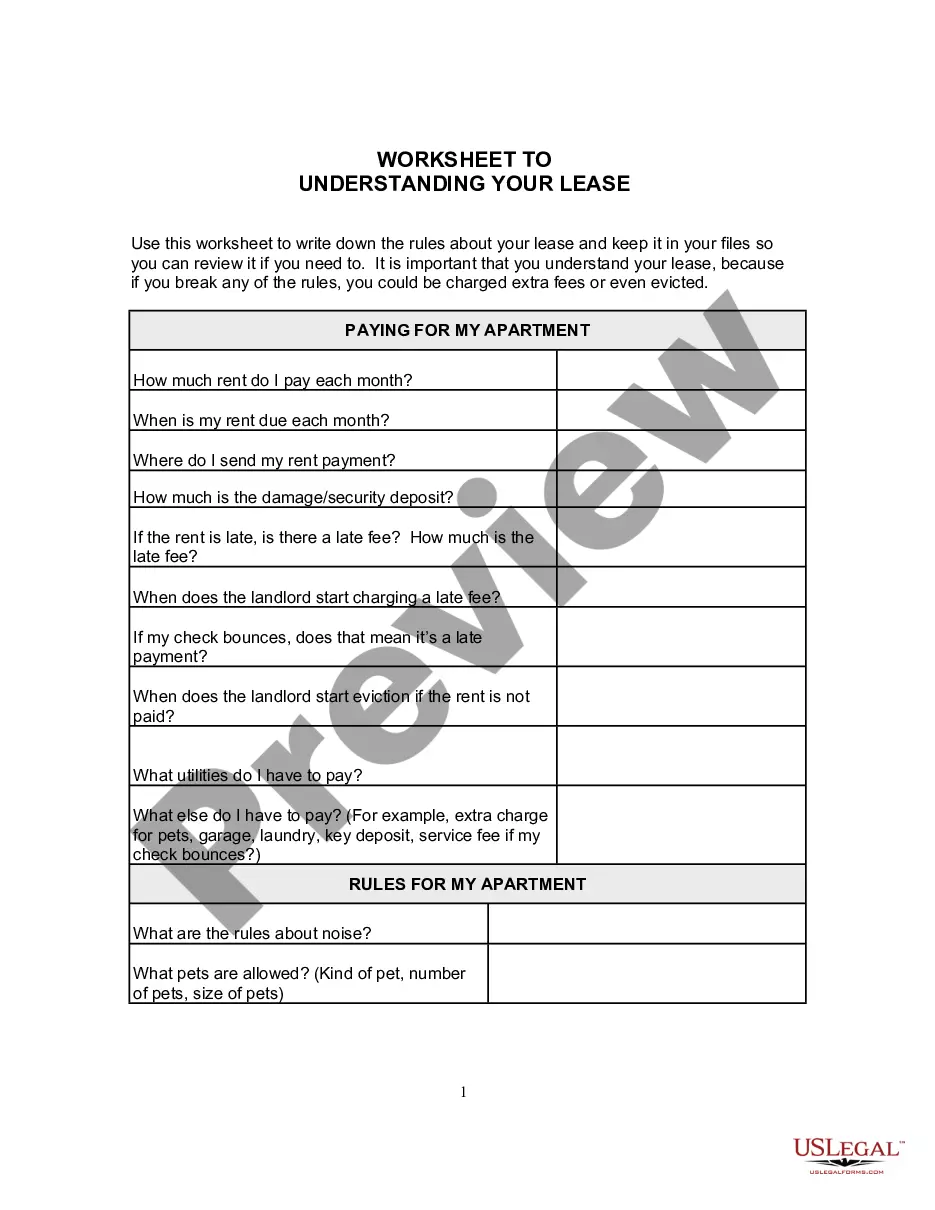
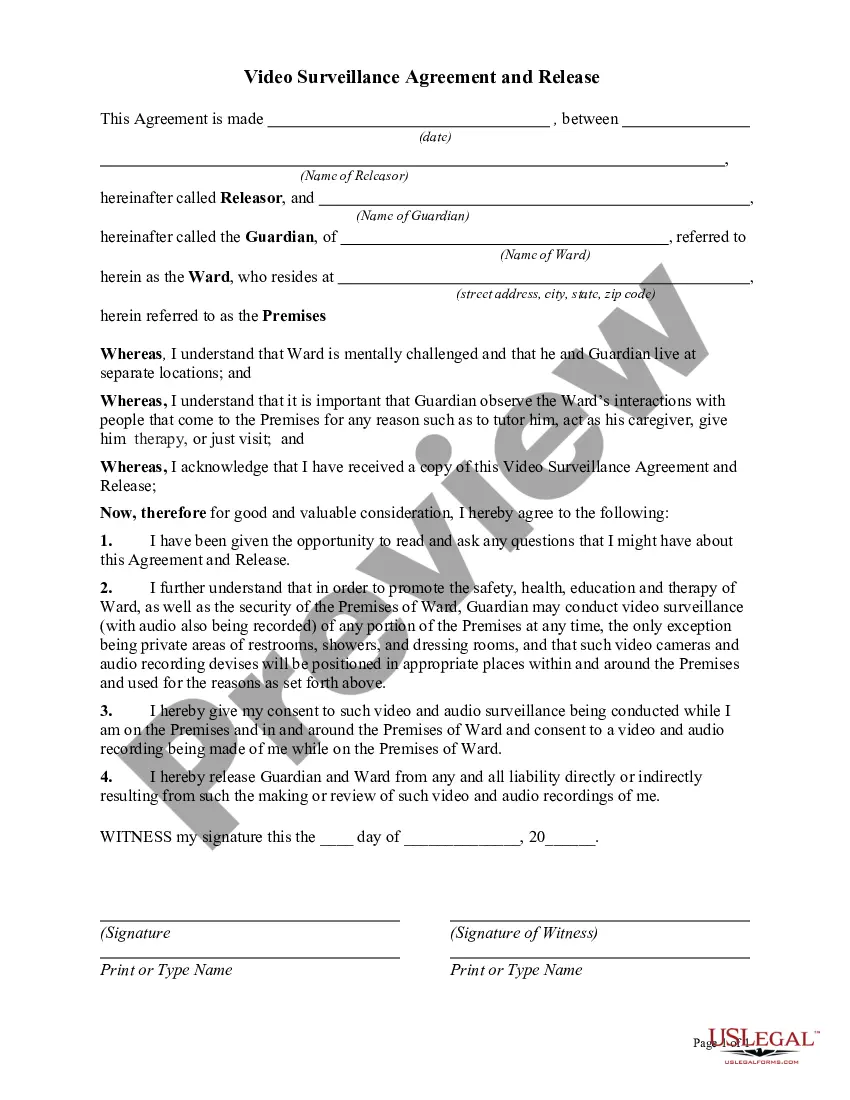
District of Columbia Video Surveillance Agreement and Release
Description
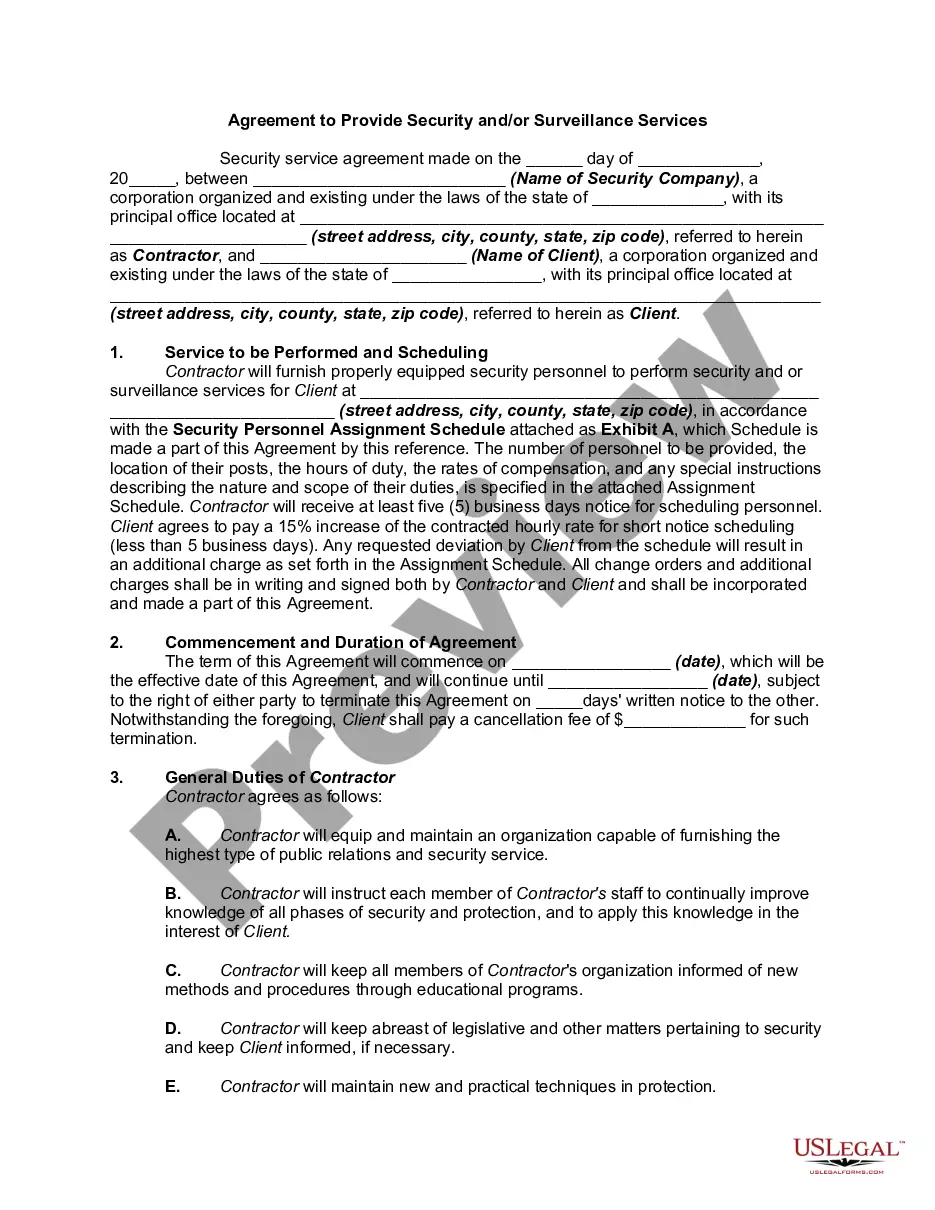
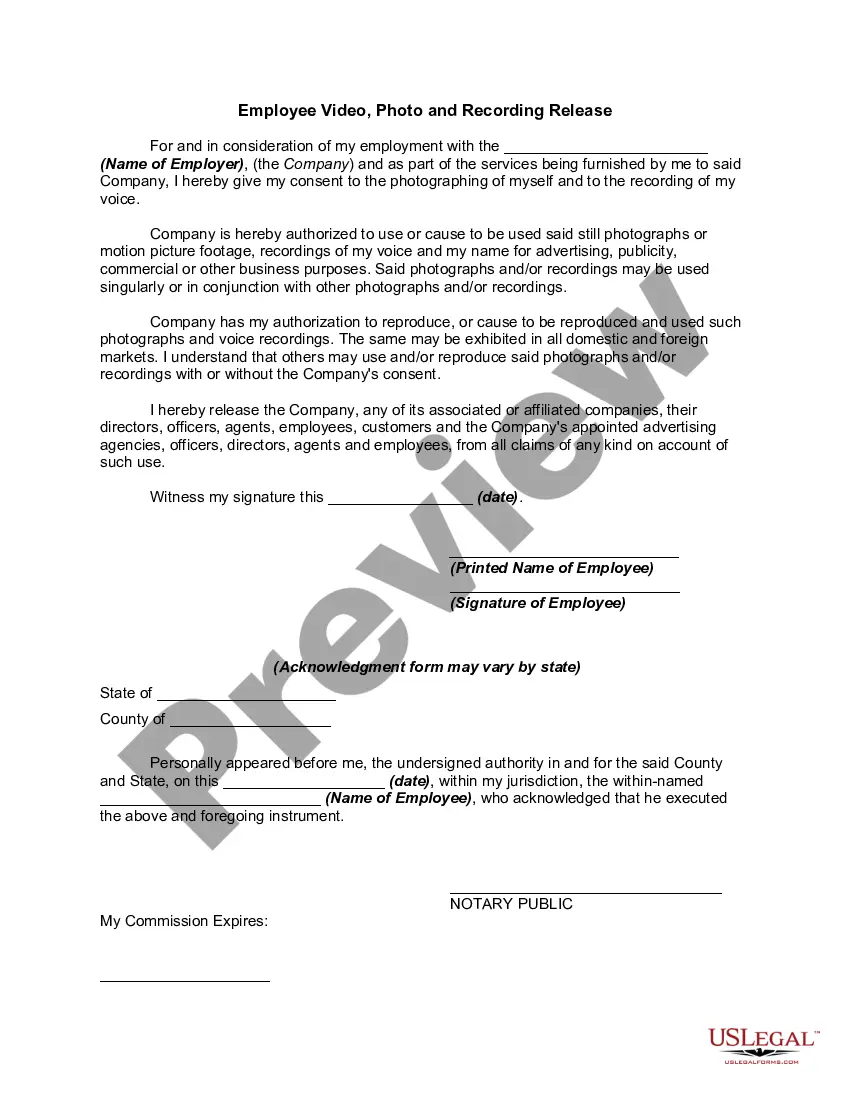
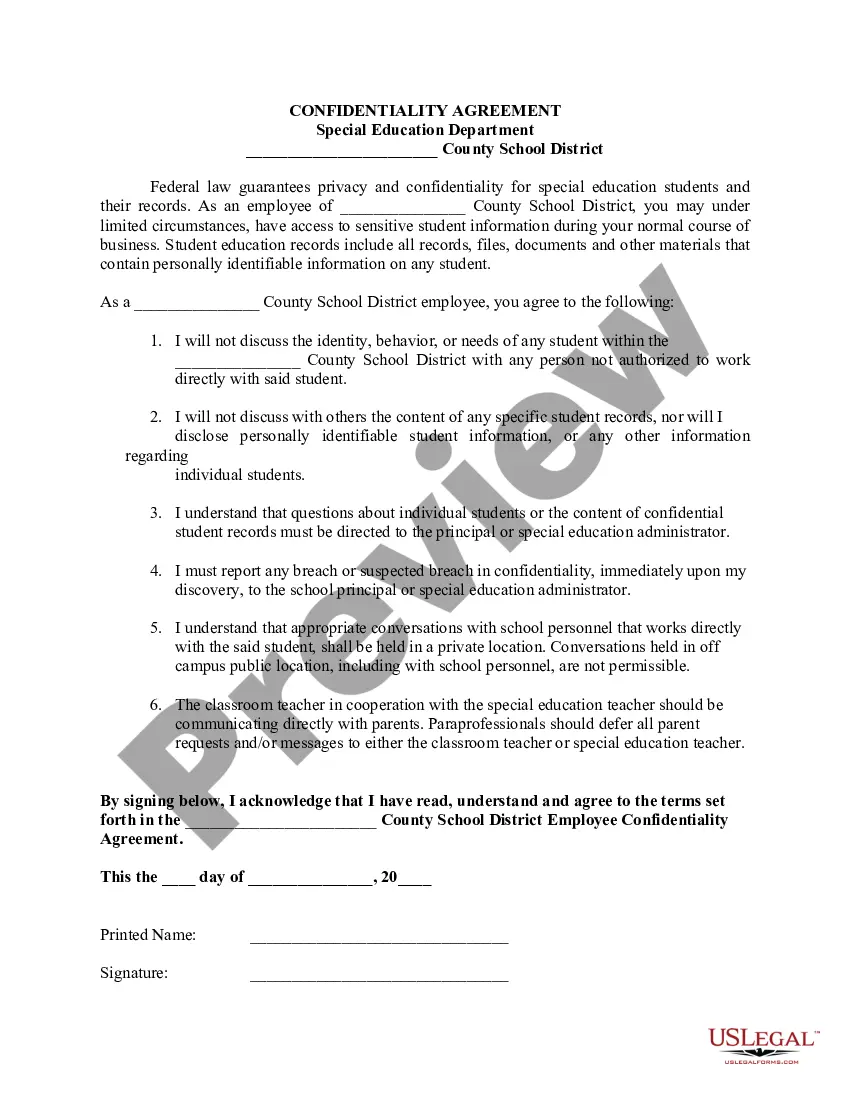
How to fill out Video Surveillance Agreement And Release?
Locating the appropriate legal document template can be quite a challenge.
Of course, there are numerous templates available online, but how can you find the legal form you require.
Utilize the US Legal Forms website. This service offers a vast array of templates, including the District of Columbia Video Surveillance Agreement and Release, which can be utilized for both business and personal purposes.
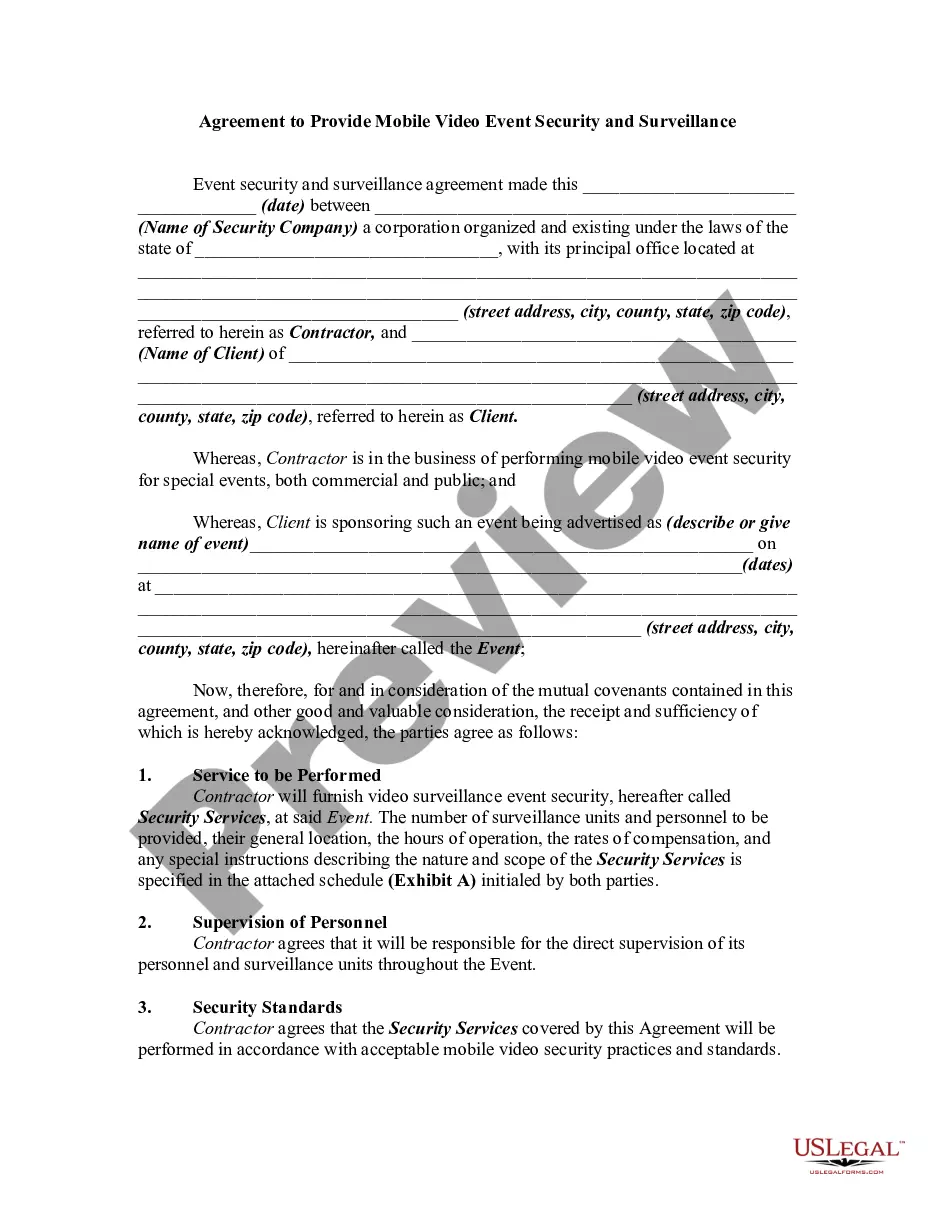
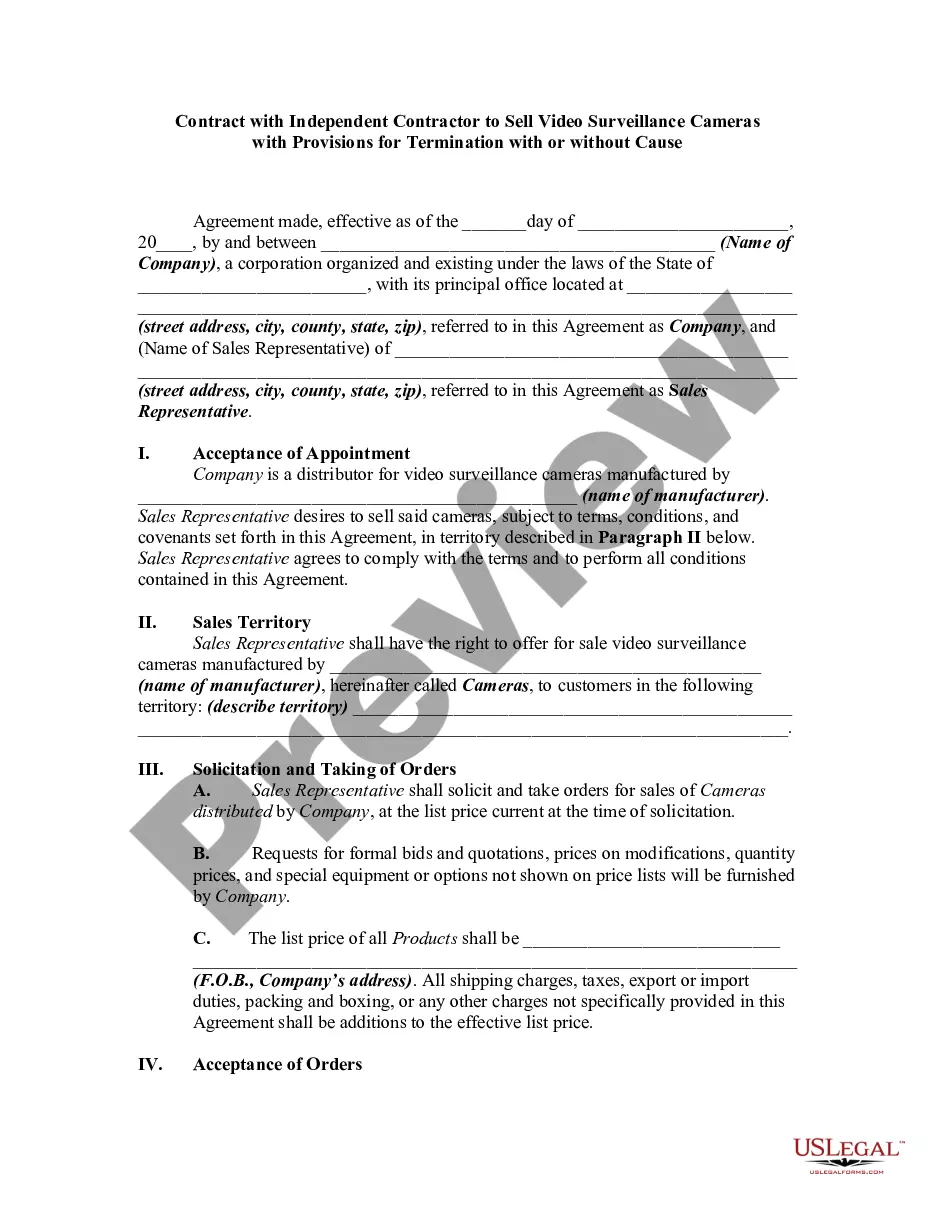
You can browse the form using the Preview feature and read the form description to confirm it is suitable for you.
- All forms have been reviewed by experts and comply with state and federal regulations.
- If you are already registered, Log In to your account and click on the Download button to obtain the District of Columbia Video Surveillance Agreement and Release.
- Use your account to review the legal forms you have previously acquired.
- Visit the My documents section of your account to obtain another copy of the document you need.
- If you are a new user of US Legal Forms, here are simple instructions you should follow.
- First, ensure you have selected the correct form for your region/state.
Form popularity
FAQ
The Montgomery County camera incentive program provides residents with support and financial incentives for installing outdoor security cameras. This initiative runs parallel to the objectives of the District of Columbia Video Surveillance Agreement and Release, aiming to strengthen neighborhood safety. Residents can apply for incentives that make it easier to set up surveillance systems, enhancing the collective security measures within the community.
WASHINGTON is considered an All-Party Consent State, in that all people involved in the recorded communication must give permission.
Installation and use of video surveillance cameras is a mandatory subject of collective bargaining and is an unfair labor practice if bargaining does not occur prior to their installation.
It depends on the amount of space available on your surveillance camera and your business's needs. For typical small retail businesses, hotels, and grocery stores, it's recommended to store footage for at least 30 days. Larger businesses might need to save footage for three months or more.
Washington recording law stipulates that it is a two-party consent state. In Washington, it is a criminal offense to use any device to record communications, whether they are wire, oral or electronic, without the consent of everyone taking part in the conversation.
All video recordings of coverage provided by the dedicated cameras or motion-activated dedicated cameras required by these standards must be retained for a minimum of seven days, per state law. And the rule extends that timeline to 30 days for recordings of detentions and questioning by security personnel.
For the most part, your neighbor is legally allowed to have security cameras installed on their property, even if those cameras are aimed at your property. However, your neighbor does not have the right to record you or anyone else without consent in areas with reasonable expectation of privacy.
In general, most security camera footage is kept for 30 to 90 days (1 to 3 months the most).
Short answer no. If you're in a public place, you have no reasonable expectation of privacy. Video surveillance is intended to protect people and property from harm. Video does not judge; it merely observes and records.
Washington state law requires that all parties to a conversation or electronic communication consent before a recording occurs.