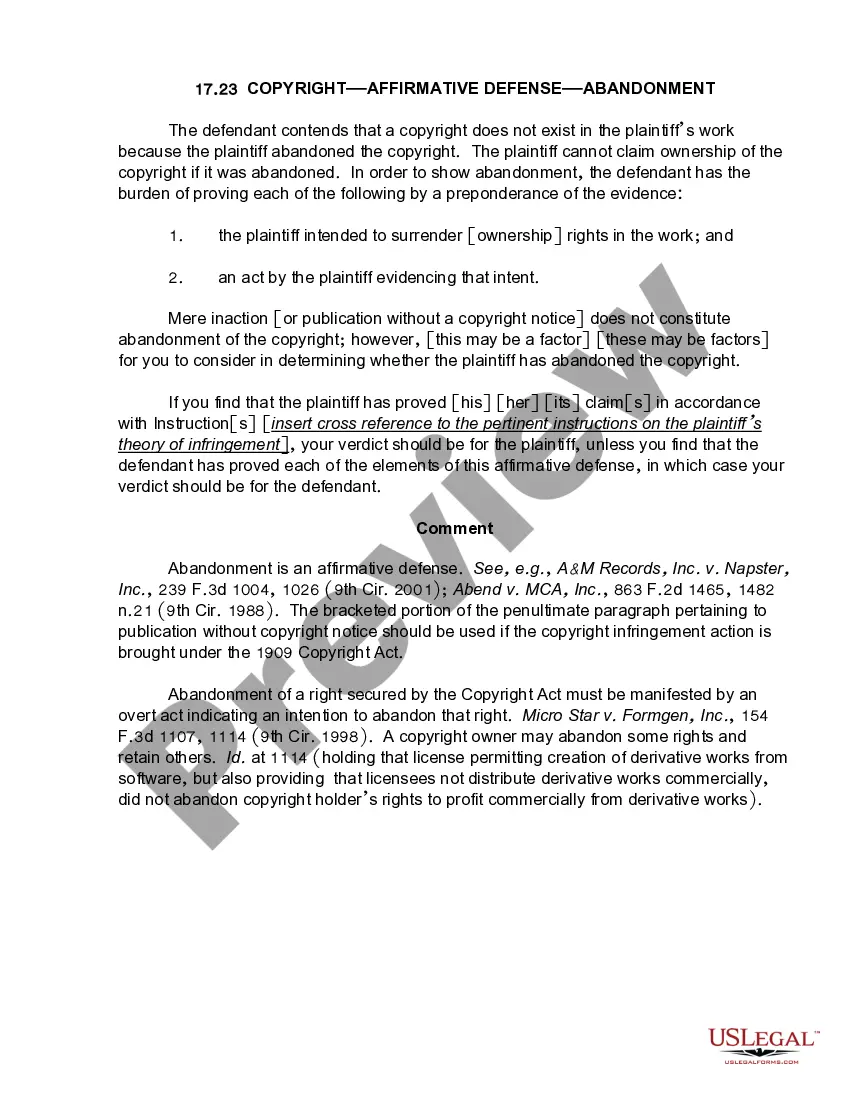
17.23 Copyright-Affirmative Defense-Abandonment
Notarization guidance
In most cases, this form does not require notarization. However, some jurisdictions or signing circumstances might. US Legal Forms offers online notarization powered by Notarize, accessible 24/7 for a quick, remote process.
Get your form ready online
Our built-in tools help you complete, sign, share, and store your documents in one place.
Make edits, fill in missing information, and update formatting in US Legal Forms—just like you would in MS Word.
Download a copy, print it, send it by email, or mail it via USPS—whatever works best for your next step.
Sign and collect signatures with our SignNow integration. Send to multiple recipients, set reminders, and more. Go Premium to unlock E-Sign.
If this form requires notarization, complete it online through a secure video call—no need to meet a notary in person or wait for an appointment.
We protect your documents and personal data by following strict security and privacy standards.

Make edits, fill in missing information, and update formatting in US Legal Forms—just like you would in MS Word.

Download a copy, print it, send it by email, or mail it via USPS—whatever works best for your next step.

Sign and collect signatures with our SignNow integration. Send to multiple recipients, set reminders, and more. Go Premium to unlock E-Sign.

If this form requires notarization, complete it online through a secure video call—no need to meet a notary in person or wait for an appointment.

We protect your documents and personal data by following strict security and privacy standards.
Looking for another form?

Form popularity
FAQ
Self-defense, entrapment, insanity, necessity, and respondeat superior are some examples of affirmative defenses.
An essential requirement of the abandonment defense to criminal attempt is that the defendant be persuaded to change his behavior by: a voluntary change of heart.
Of leaving the baby safely at a safe haven can be a defense to such charges. The States with an affirmative defense provision include Alabama, Arkansas, Colorado, Delaware, Indiana, Maine, Michigan, Mississippi, New Jersey, New York, Oregon, Utah, Virginia, and Wyoming.
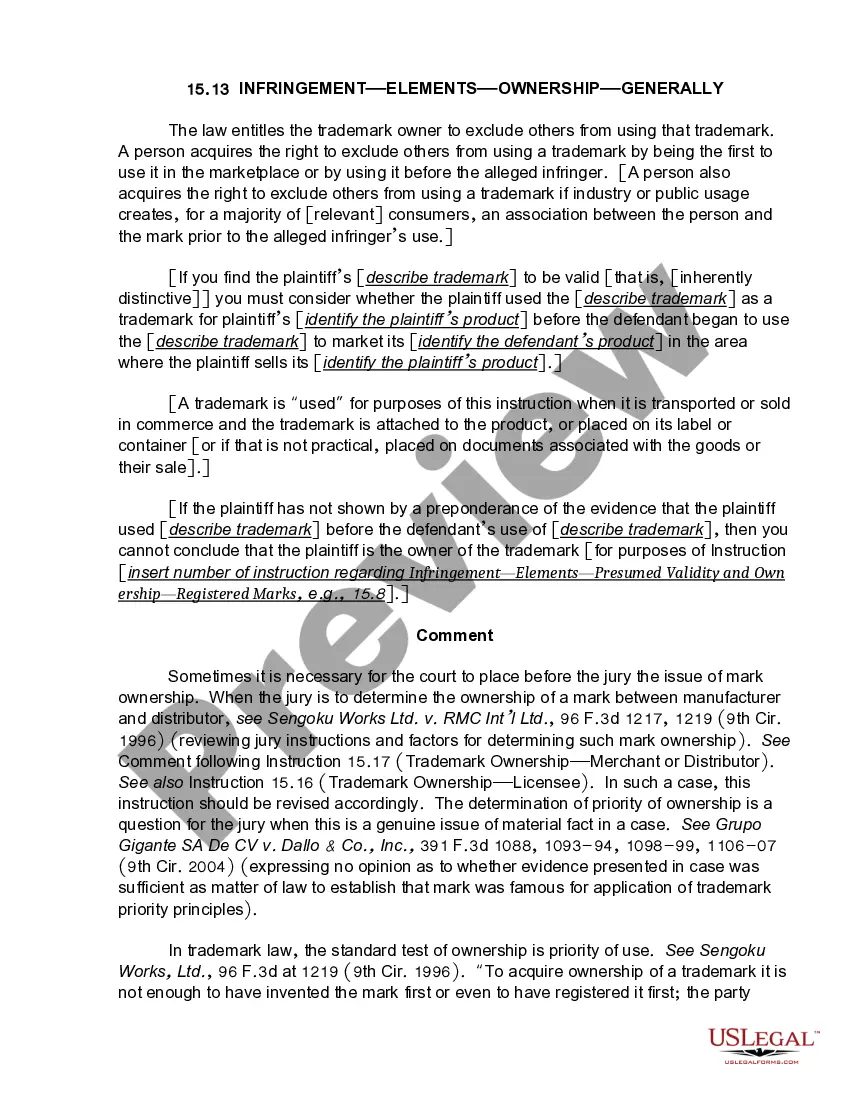
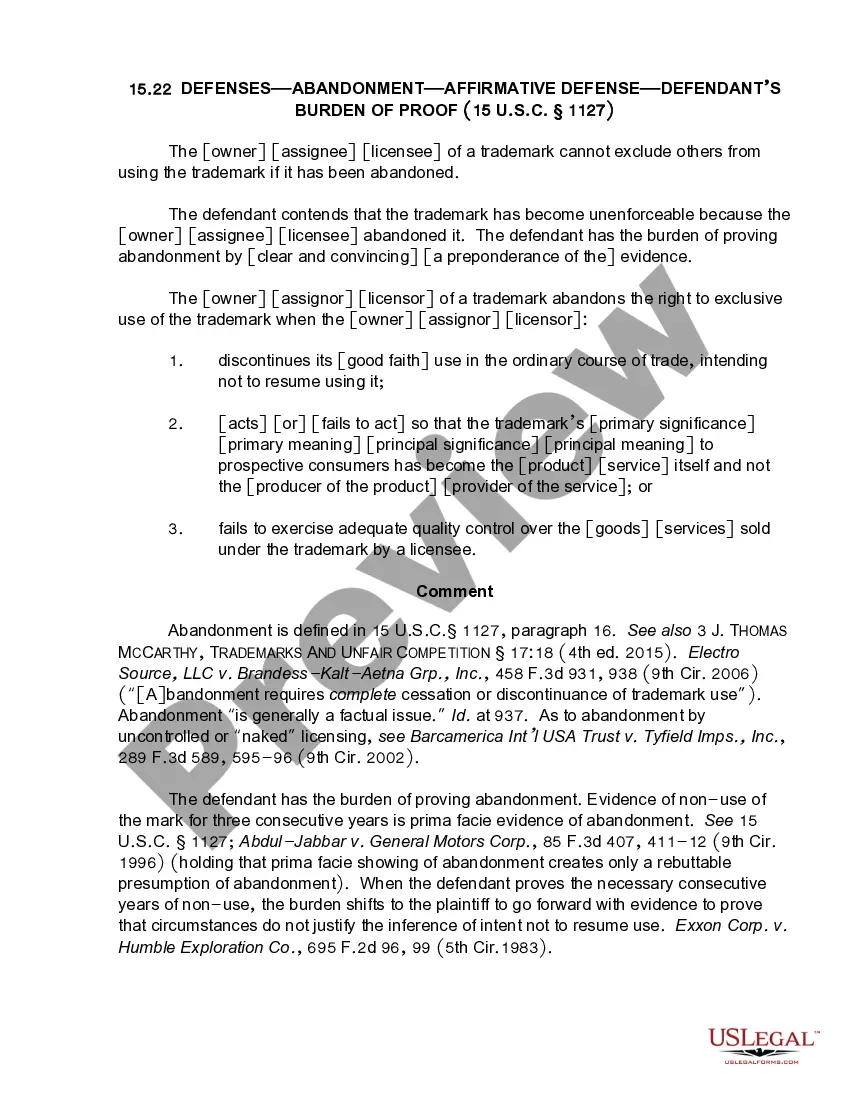
15.22 Defenses?Abandonment?Affirmative Defense?Defendant's Burden of Proof (15 U.S.C. § 1127) The owner assignee licensee of a trademark cannot exclude others from using the trademark if it has been abandoned.
Copyright abandonment refers to the voluntary and permanent relinquishment of an owner's rights in a copyrighted work prior to the expiration of the work's copyright term. In general, an author abandons her copyright by forming an intent to relinquish her rights and engaging in an overt act reflecting that intent.
15.22 Defenses?Abandonment?Affirmative Defense?Defendant's Burden of Proof (15 U.S.C. § 1127) The owner assignee licensee of a trademark cannot exclude others from using the trademark if it has been abandoned.
Some reasons for recognizing the abandonment defense are: (1) the abandoning person was not trying to violate substantive rules; (2) abandonment negates the dangerousness of the attempt; (3) abandoners are not culpable; (4) availability of the defense encourages attempters to abandon; and (5) abandonment negates the
§ 107) One who is not the owner of the copyright may use the copyrighted work in a reasonable way under the circumstances without the consent of the copyright owner if it would advance the public interest. Such use of a copyrighted work is called a fair use.