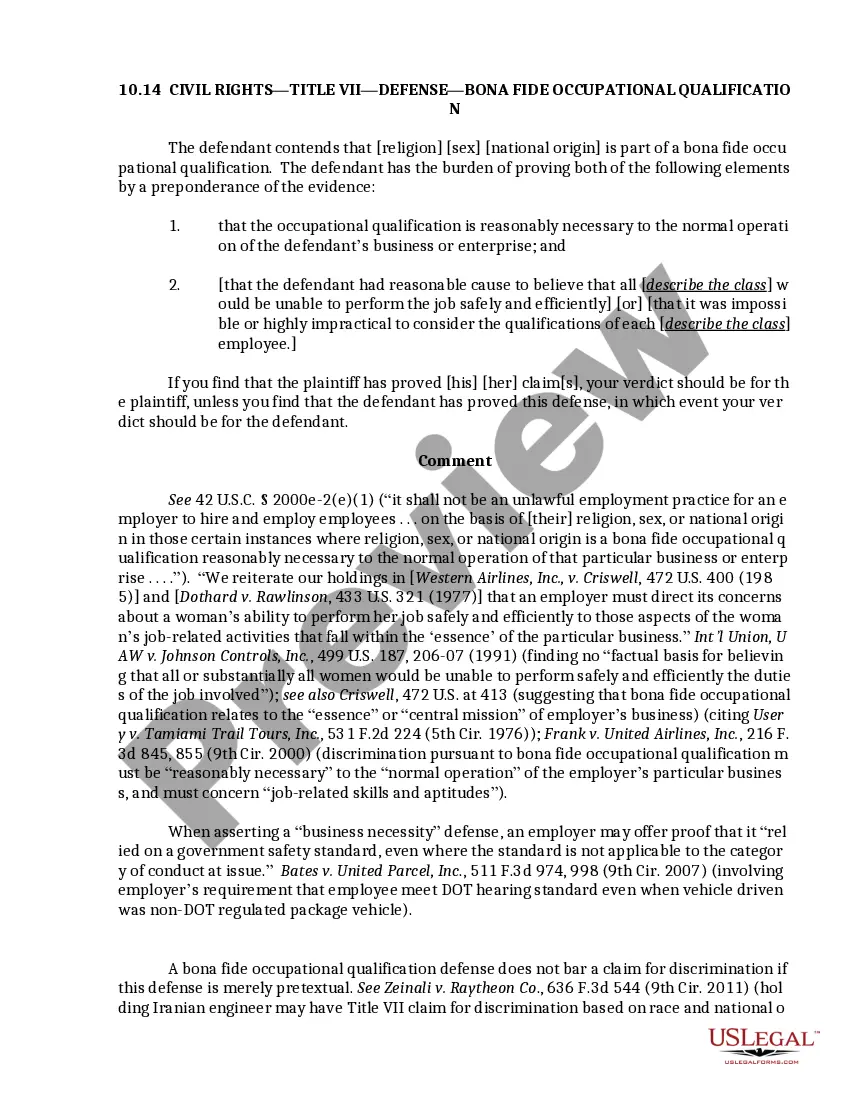
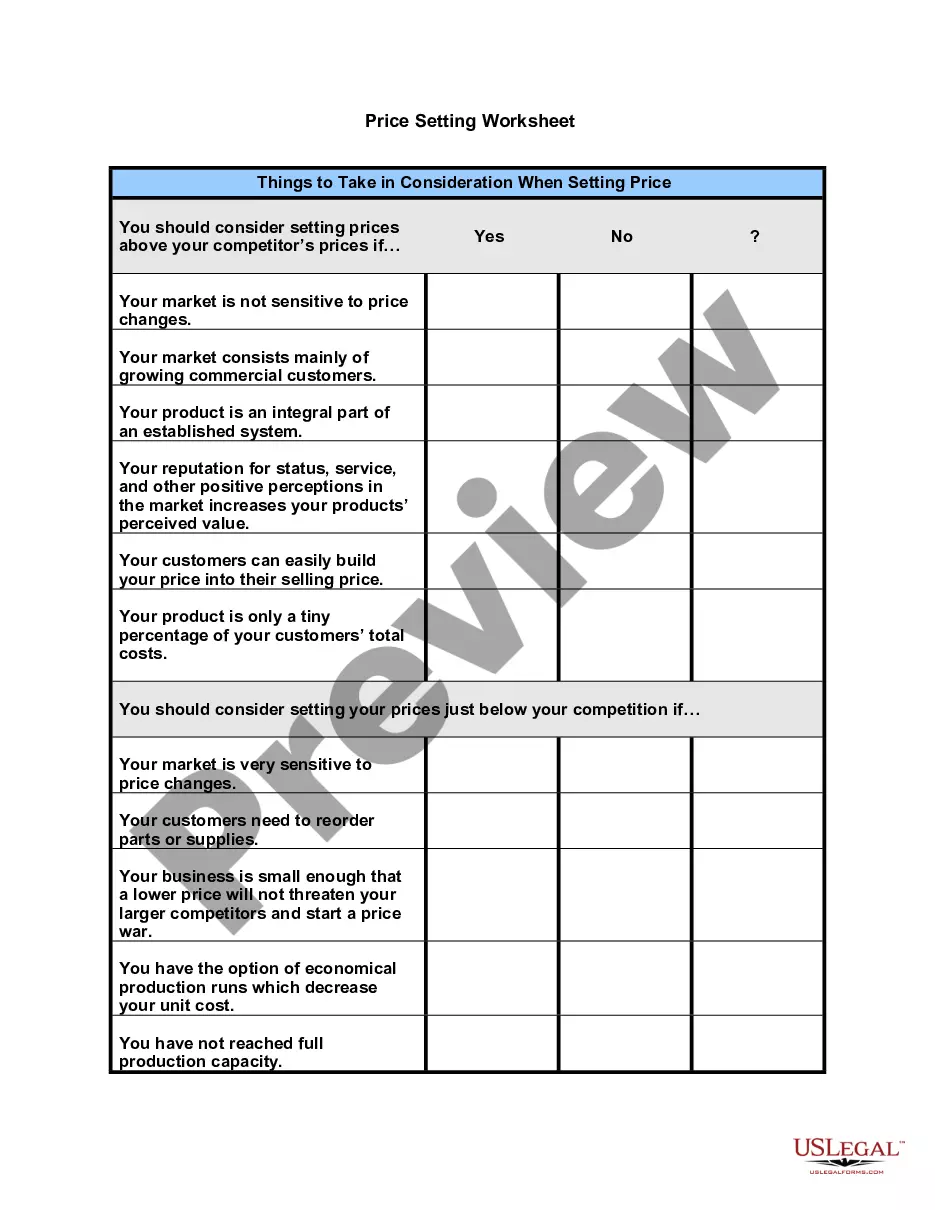
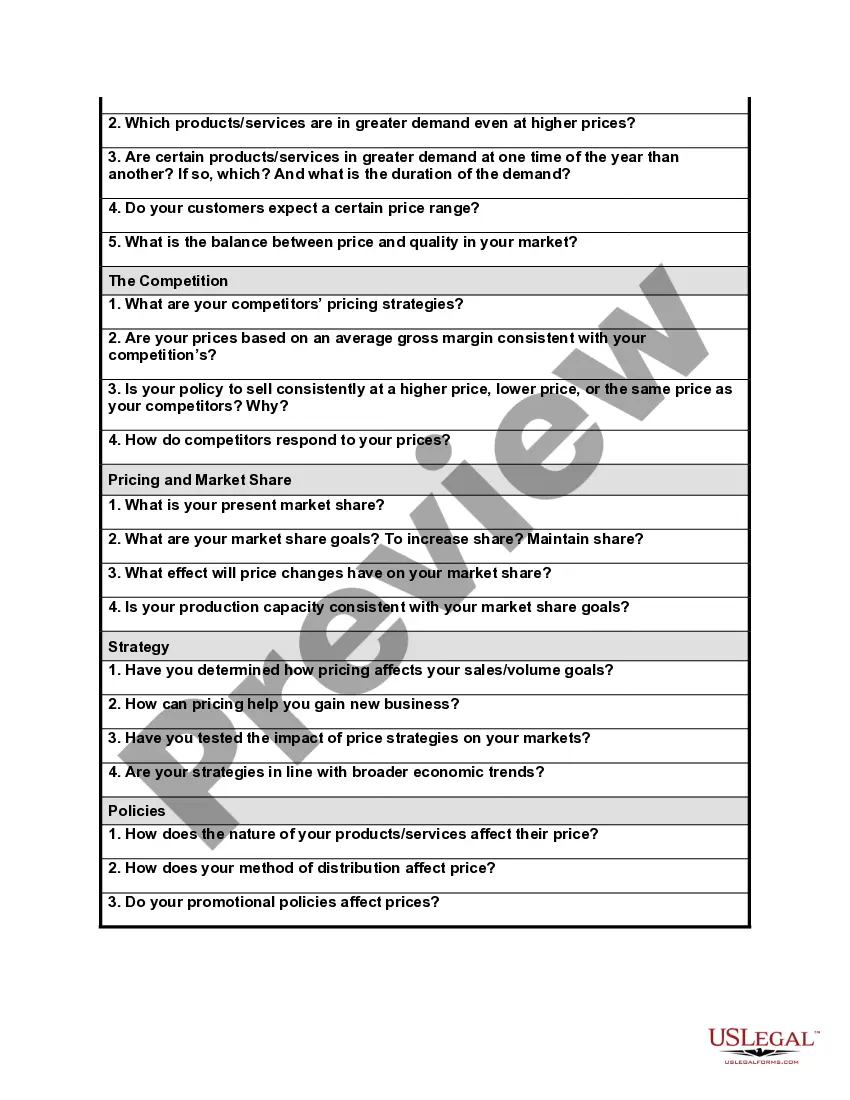
District of Columbia Price Setting Worksheet
Description
Get your form ready online
Our built-in tools help you complete, sign, share, and store your documents in one place.
Make edits, fill in missing information, and update formatting in US Legal Forms—just like you would in MS Word.
Download a copy, print it, send it by email, or mail it via USPS—whatever works best for your next step.
Sign and collect signatures with our SignNow integration. Send to multiple recipients, set reminders, and more. Go Premium to unlock E-Sign.
If this form requires notarization, complete it online through a secure video call—no need to meet a notary in person or wait for an appointment.
We protect your documents and personal data by following strict security and privacy standards.

Make edits, fill in missing information, and update formatting in US Legal Forms—just like you would in MS Word.

Download a copy, print it, send it by email, or mail it via USPS—whatever works best for your next step.

Sign and collect signatures with our SignNow integration. Send to multiple recipients, set reminders, and more. Go Premium to unlock E-Sign.

If this form requires notarization, complete it online through a secure video call—no need to meet a notary in person or wait for an appointment.

We protect your documents and personal data by following strict security and privacy standards.
Looking for another form?





How to fill out Price Setting Worksheet?
Have you found yourself in a circumstance where you require documents for either business or personal reasons nearly every working day.
There are numerous legal document templates accessible online, yet locating reliable ones isn’t simple.
US Legal Forms provides thousands of form templates, such as the District of Columbia Price Setting Worksheet, which can be customized to comply with state and federal regulations.
Once you find the correct form, click Buy now.
Choose the pricing plan you need, complete the necessary information to create your account, and finalize the purchase using your PayPal or credit card.
- If you are already familiar with the US Legal Forms website and have an account, simply Log In.
- Afterward, you will be able to download the District of Columbia Price Setting Worksheet template.
- If you do not have an account and wish to start using US Legal Forms, follow these steps.
- Obtain the form you need and ensure it is for the correct state/region.
- Use the Preview button to review the form.
- Check the outline to make sure you've selected the right form.
- If the form isn’t what you’re looking for, use the Search field to find the form that suits your needs and requirements.
Form popularity
FAQ
For bonus depreciation purposes, eligible property is in one of the classes described in § 168(k)(2): MACRS property with a recovery period of 20 years or less, depreciable computer software, water utility property, or qualified leasehold improvement property.
Corporate: The District of Columbia does not conform to the federal treatment of bonus depreciation.
A DC Resident is an individual that maintains a place of abode within DC for 183 days or more. If the individual is domiciled in the state at anytime, you are considered to be a DC resident. A DC Nonresident is an individual that did not spend any time domiciled in the state.
The filing of the D-30 is a requirement for operating or continuing to operate a motor vehicle for hire in the District by a non-resident. Minimum Tax. The minimum tax is $250 if DC gross receipts are $1M or less. Minimum tax is $1,000 if DC gross receipts are greater than $1M.
DC does not allow NOL carry backs. Therefore, you may not claim a NOL carry back for DC tax purposes.
Generally, an unincorporated business, with gross income (Line 10) more than $12,000 from District sources, must file a D-30 (whether or not it has net income). This includes any business carrying on and/or engaging in any trade, business, or commercial activity in DC with income from DC sources.
Special rules on depreciation and business expenses For federal tax purposes, businesses may deduct bonus depre- ciation and additional IRC §179 expenses. DC does not allow the bonus depreciation deduction nor any additional IRC A§179 expenses.
Form D-30 can be e-filed. Refer to this article for information on the date you can begin e-filing this form. Generally, an unincorporated business with gross income over $12,000 from D.C. sources must file a D-30, regardless of whether it has net income.
Bonus depreciation must be taken in the first year that the depreciable item is placed in service. However, businesses can elect not to use bonus depreciation and instead depreciate the property over a longer period if they find that advantageous.