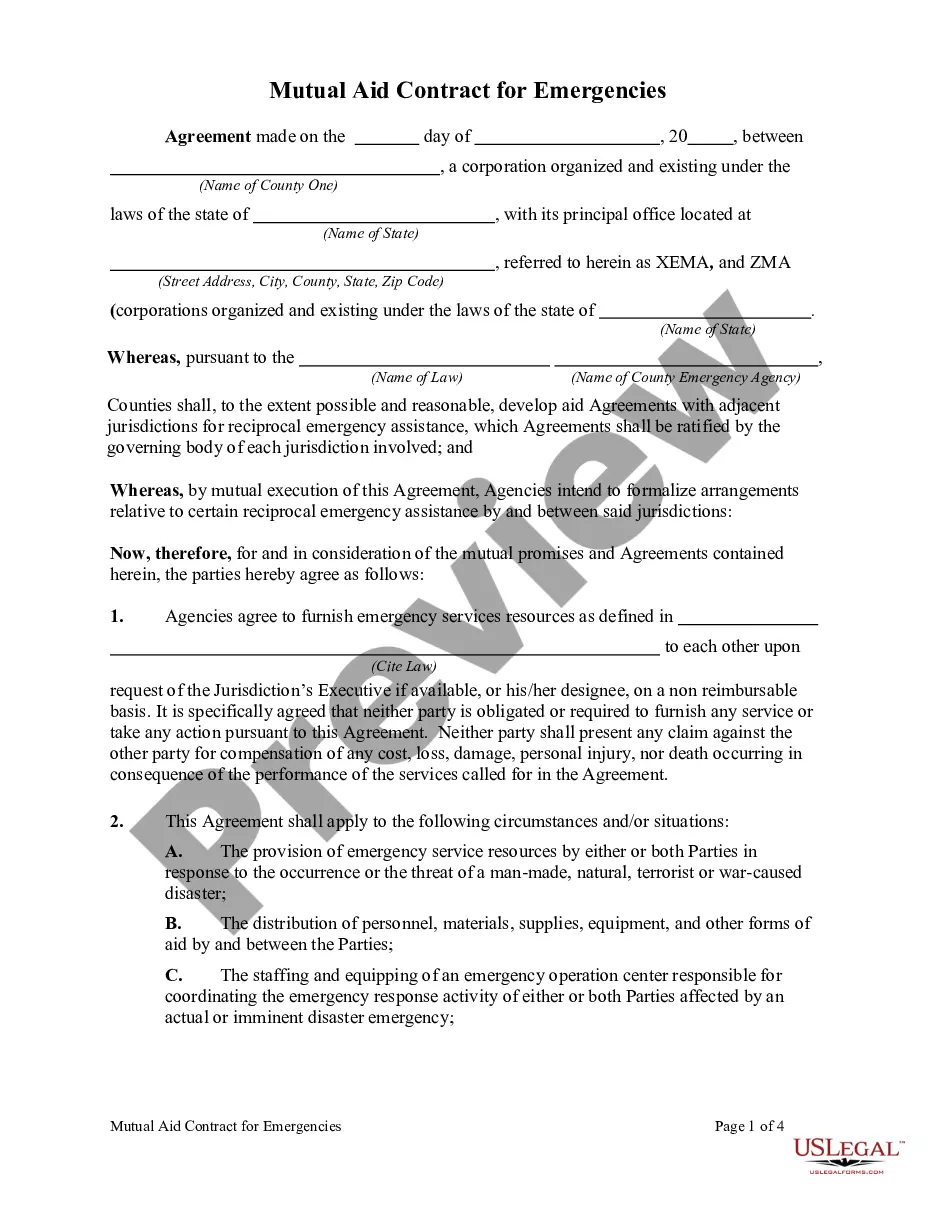
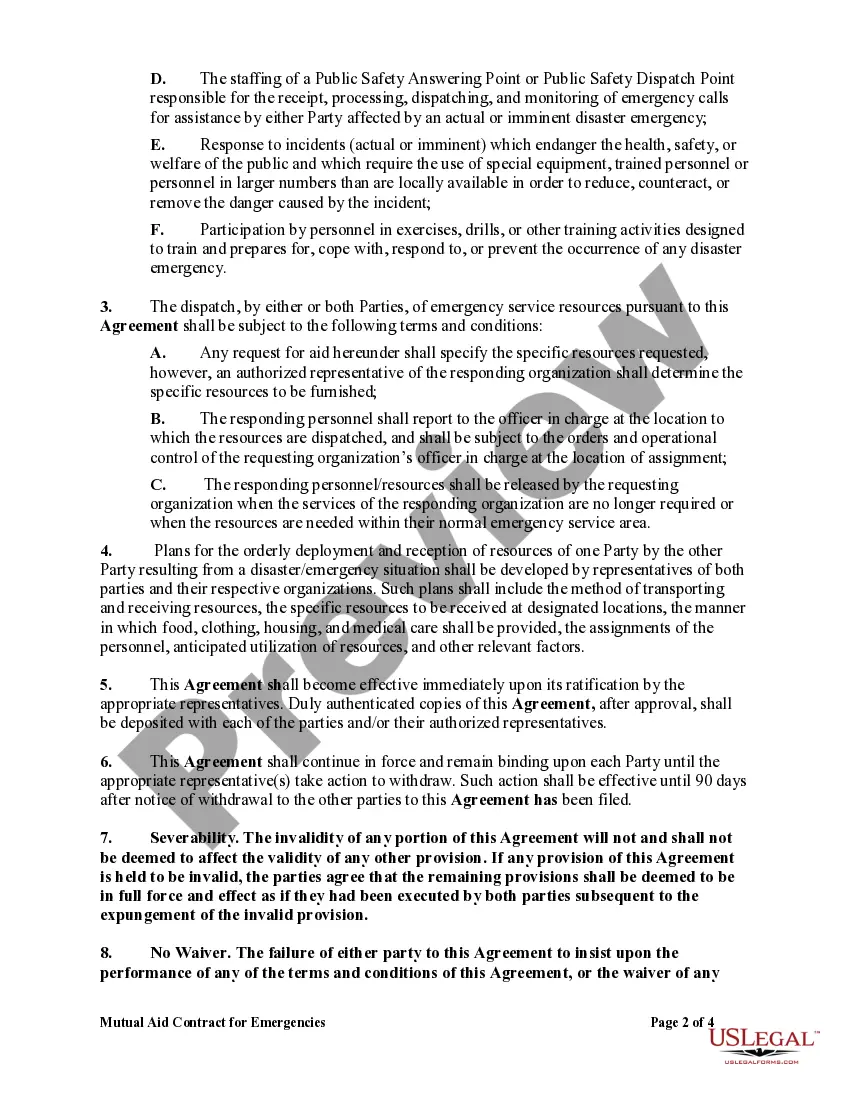
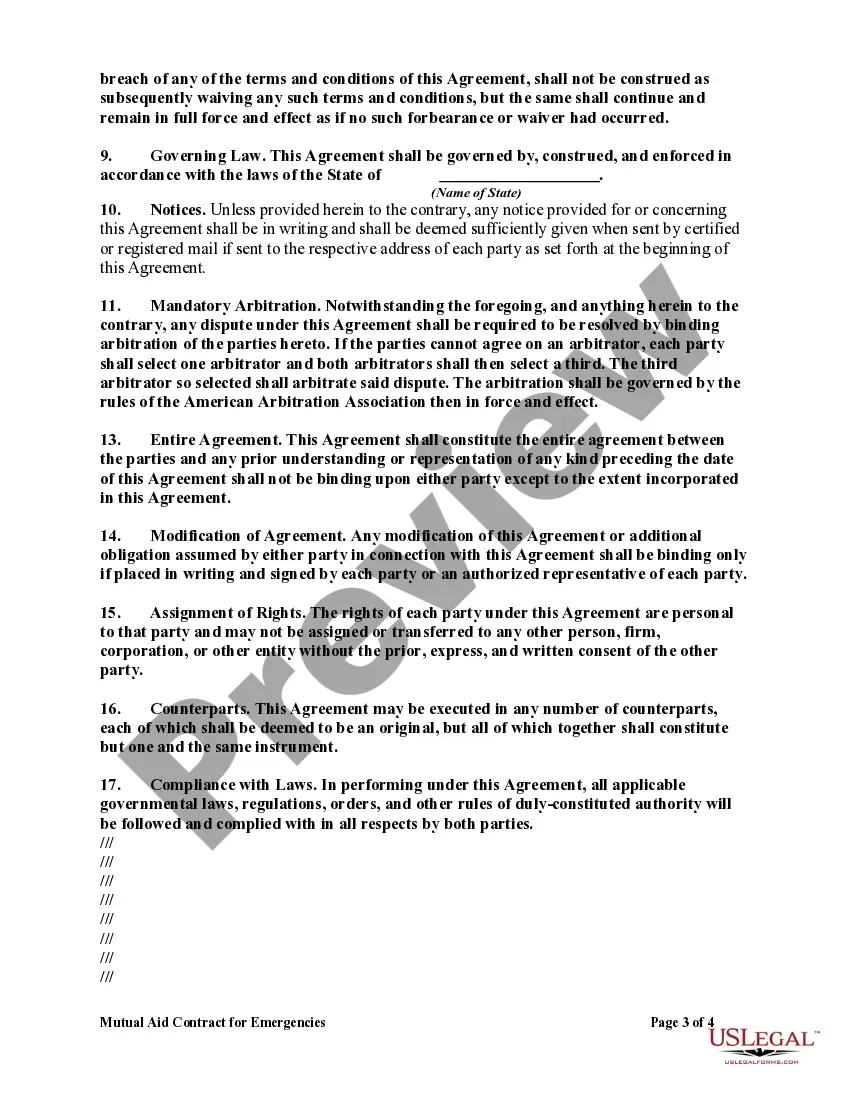
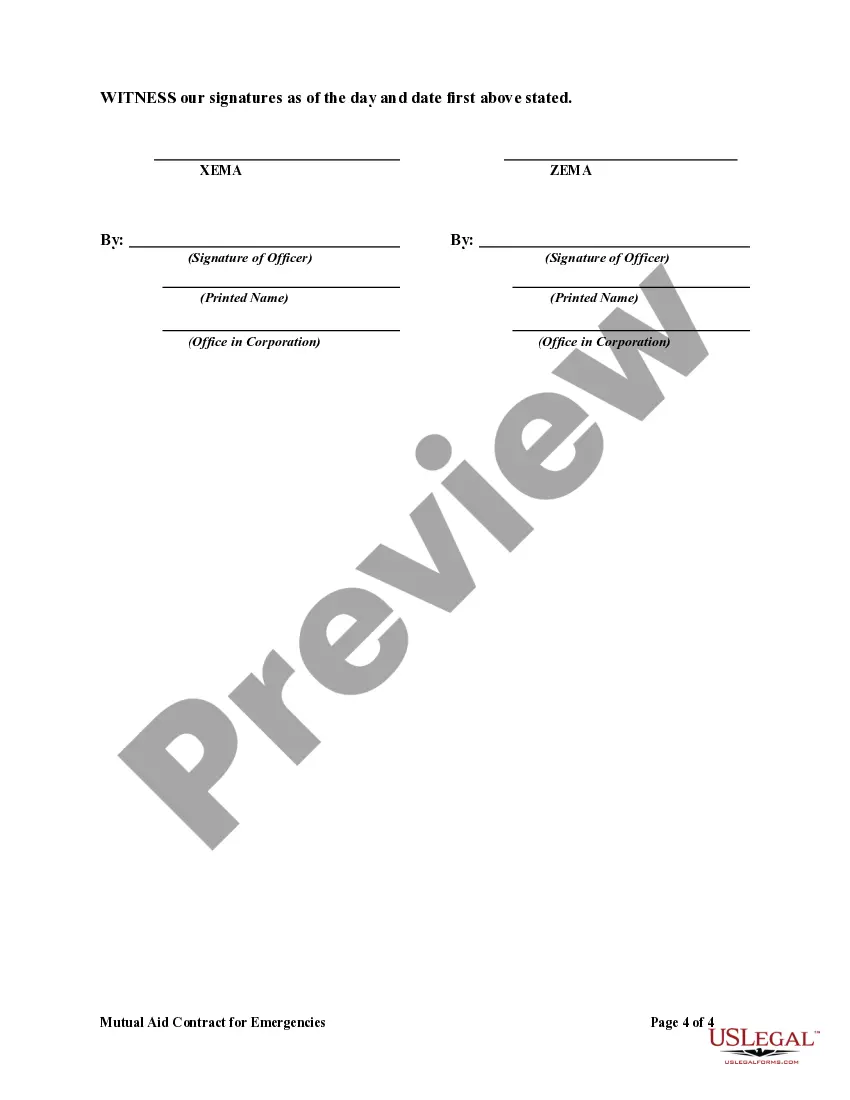
District of Columbia Mutual Aid Contract for Emergencies
Description

Get your form ready online
Our built-in tools help you complete, sign, share, and store your documents in one place.
Make edits, fill in missing information, and update formatting in US Legal Forms—just like you would in MS Word.
Download a copy, print it, send it by email, or mail it via USPS—whatever works best for your next step.
Sign and collect signatures with our SignNow integration. Send to multiple recipients, set reminders, and more. Go Premium to unlock E-Sign.
If this form requires notarization, complete it online through a secure video call—no need to meet a notary in person or wait for an appointment.
We protect your documents and personal data by following strict security and privacy standards.

Make edits, fill in missing information, and update formatting in US Legal Forms—just like you would in MS Word.

Download a copy, print it, send it by email, or mail it via USPS—whatever works best for your next step.

Sign and collect signatures with our SignNow integration. Send to multiple recipients, set reminders, and more. Go Premium to unlock E-Sign.

If this form requires notarization, complete it online through a secure video call—no need to meet a notary in person or wait for an appointment.

We protect your documents and personal data by following strict security and privacy standards.
Looking for another form?
How to fill out Mutual Aid Contract For Emergencies?
If you desire to finish, obtain, or print legal document templates, utilize US Legal Forms, the largest collection of legal forms, which is accessible online.
Take advantage of the website's user-friendly and convenient search to find the documents you require.
A selection of templates for business and personal purposes are organized by categories and states, or keywords. Utilize US Legal Forms to acquire the District of Columbia Mutual Aid Contract for Emergencies in just a few clicks.
Every legal document template you purchase is yours indefinitely. You have access to every form you have saved in your account. Go to the My documents section and choose a form to print or download again.
Compete and download, and print the District of Columbia Mutual Aid Contract for Emergencies with US Legal Forms. There are millions of professional and state-specific forms available for your business or personal needs.
- If you are already a US Legal Forms customer, Log In to your account and click the Download option to access the District of Columbia Mutual Aid Contract for Emergencies.
- You can also retrieve forms you previously saved in the My documents section of your account.
- If you are using US Legal Forms for the first time, refer to the instructions outlined below.
- Step 1. Make sure you have chosen the form for the correct city/region.
- Step 2. Use the Review feature to examine the form's content. Don't forget to check the description.
- Step 3. If you are not satisfied with the form, utilize the Search box at the top of the screen to find other versions of the legal form template.
- Step 4. Once you have located the necessary form, click the Get now button. Choose the pricing plan you prefer and enter your details to register for an account.
- Step 5. Process the payment. You can use your credit card or PayPal account to complete the transaction.
- Step 6. Select the format of the legal form and download it to your device.
- Step 7. Complete, edit, and print or sign the District of Columbia Mutual Aid Contract for Emergencies.
Form popularity
FAQ
The initial step in creating a mutual aid agreement is conducting a needs assessment among potential partners. Understanding what each agency can provide or requires is fundamental to the District of Columbia Mutual Aid Contract for Emergencies. This collaborative assessment lays the foundation for a successful partnership in responding to future emergencies.
Mutual aid processes involve planning, coordination, and execution during emergencies. The District of Columbia Mutual Aid Contract for Emergencies emphasizes the importance of pre-established procedures to facilitate quick responses. These processes ensure that resources are allocated efficiently, enhancing the collective response to crises.
Mutual aid agreements are typically established by government agencies, local authorities, and emergency management organizations. In the case of the District of Columbia Mutual Aid Contract for Emergencies, various stakeholders come together to draft comprehensive agreements that meet the unique needs of their communities. This collaborative effort enhances the overall effectiveness of emergency response capabilities.
To create a mutual aid agreement, start by identifying potential partners and assessing their willingness to collaborate. The District of Columbia Mutual Aid Contract for Emergencies guides this process by providing a framework for drafting agreements. Ensuring all parties are on the same page leads to effective cooperation during emergencies.
Mutual aid consists of essential elements such as resource sharing, operational coordination, and communication protocols. In the context of the District of Columbia Mutual Aid Contract for Emergencies, these components work together to enhance emergency response efforts. Each party is expected to contribute resources and expertise to effectively manage crises.
The District of Columbia Mutual Aid Contract for Emergencies outlines the specific terms and conditions that participating agencies must follow. This includes details on resource sharing, responsibilities during emergencies, and the types of support provided by each entity. It aims to ensure a clear understanding between parties, fostering collaboration in times of need.
Emergency mutual aid is a system where jurisdictions support each other during emergencies by providing personnel, equipment, or resources. This collaborative approach allows for faster and more efficient responses to crises, ultimately saving lives and mitigating damage. The District of Columbia Mutual Aid Contract for Emergencies exemplifies this practice, illustrating how neighboring regions can unite to tackle challenges together. It builds resilience within communities during unpredictable situations.
The purpose of the Emergency Management Assistance Compact (EMAC) is to provide a framework for states to collaborate during emergencies. This compact enables rapid response and resource sharing among states when local or state resources are overwhelmed. In relation to the District of Columbia Mutual Aid Contract for Emergencies, EMAC enhances collective preparedness and strengthens the emergency response system throughout the region. It is an invaluable tool for disaster management.
Every mutual aid agreement should include the scope of assistance, terms of reimbursement, conditions for deployment, and liability protections. These components clarify expectations and responsibilities, facilitating smoother collaboration. When addressing the District of Columbia Mutual Aid Contract for Emergencies, these aspects become vital in ensuring that all parties are prepared for effective action during a crisis. Clear agreements help to avoid confusion in challenging times.
Mutual aid is the practice of organizations or jurisdictions assisting one another during emergencies or disasters. This cooperative effort enhances preparedness and provides necessary resources to manage crises. In the context of the District of Columbia Mutual Aid Contract for Emergencies, mutual aid means fostering partnerships that benefit all involved parties during critical situations. It is about building a supportive network for effective disaster response.