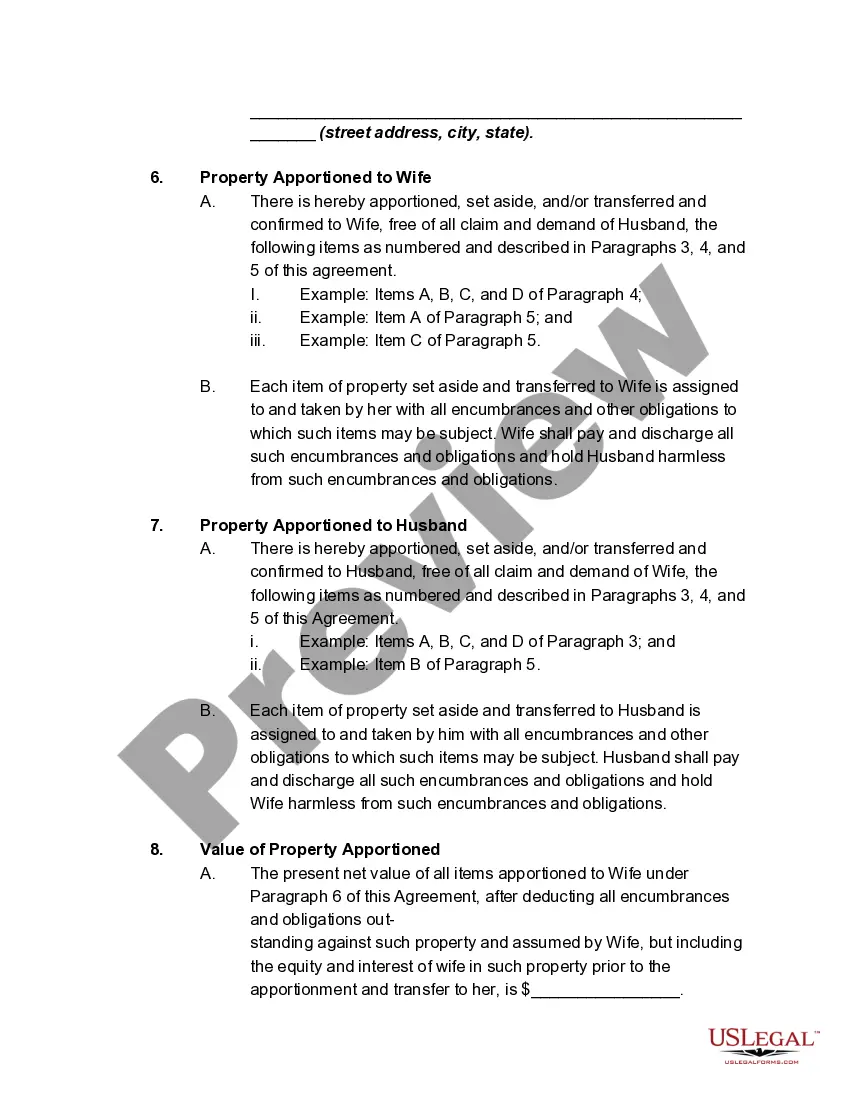
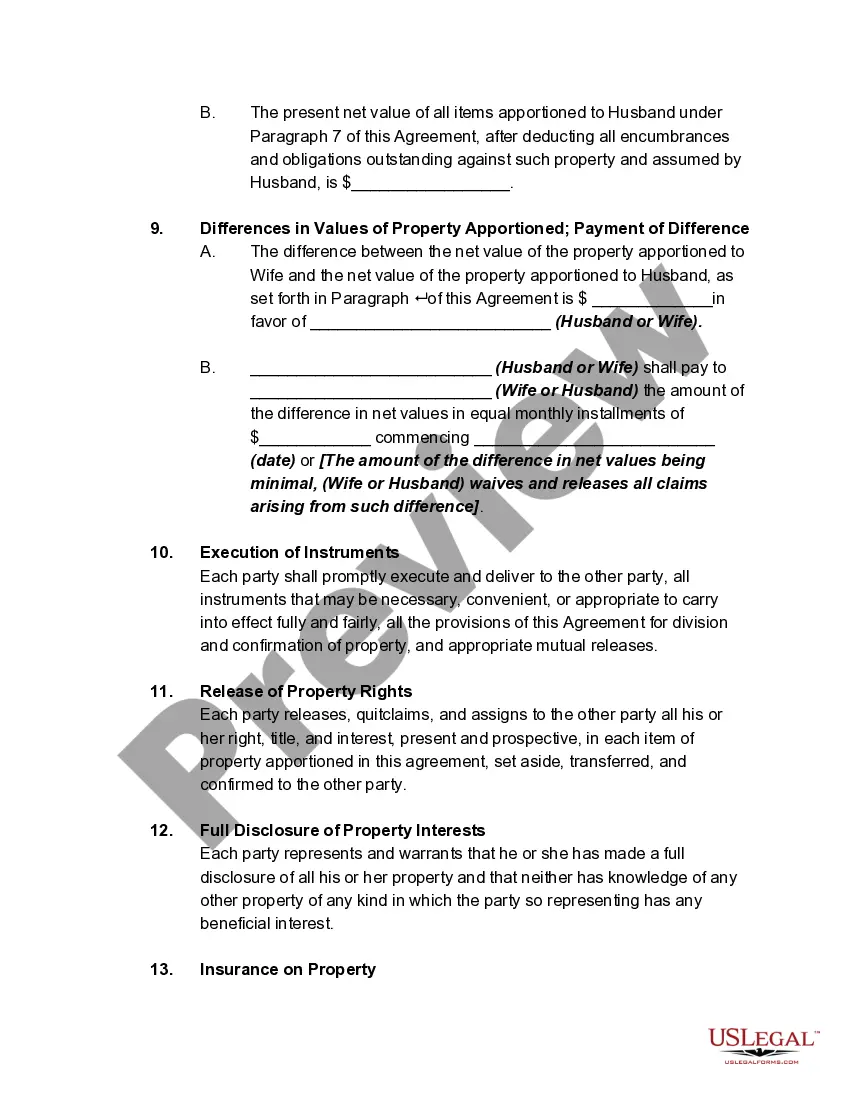
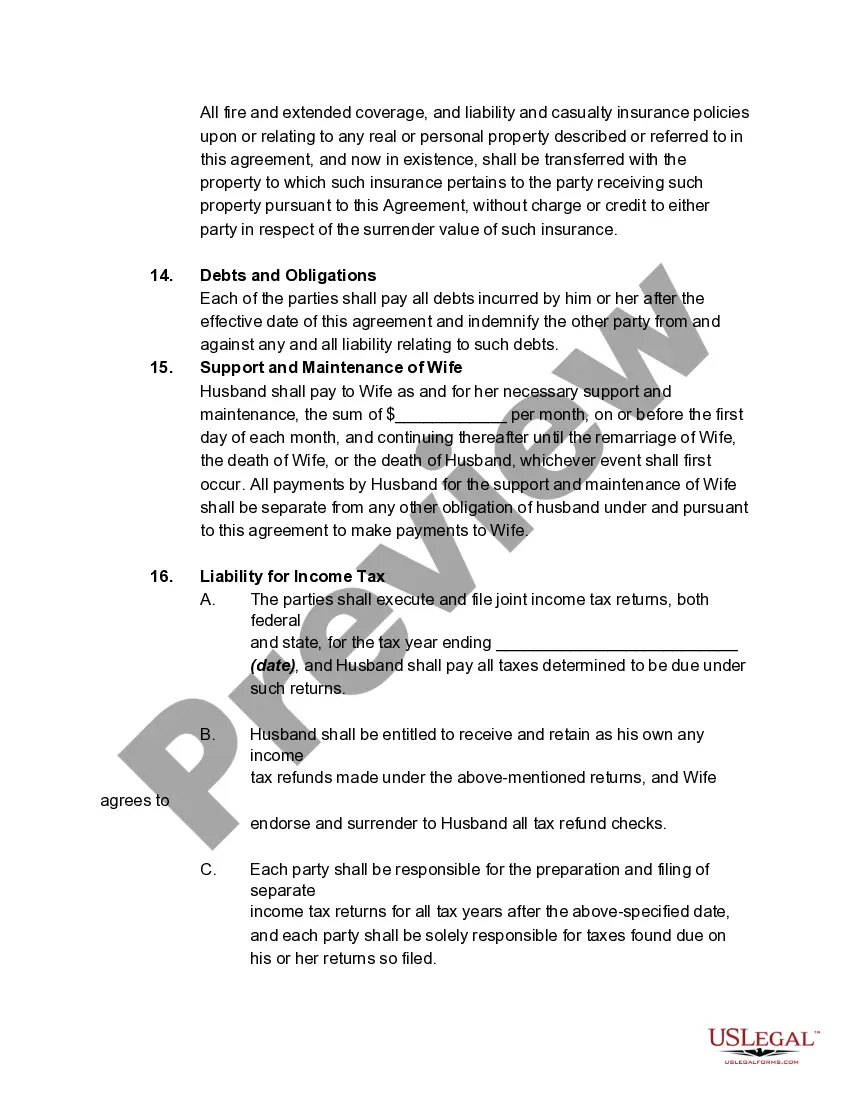
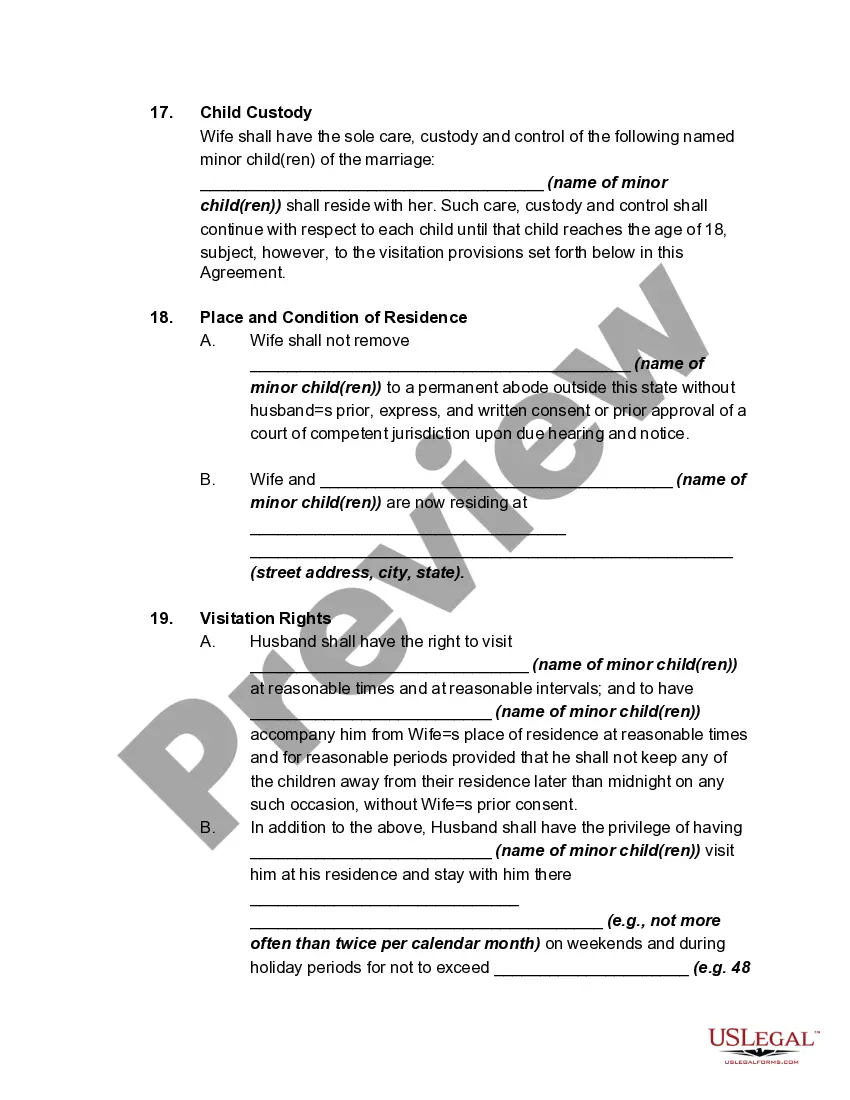
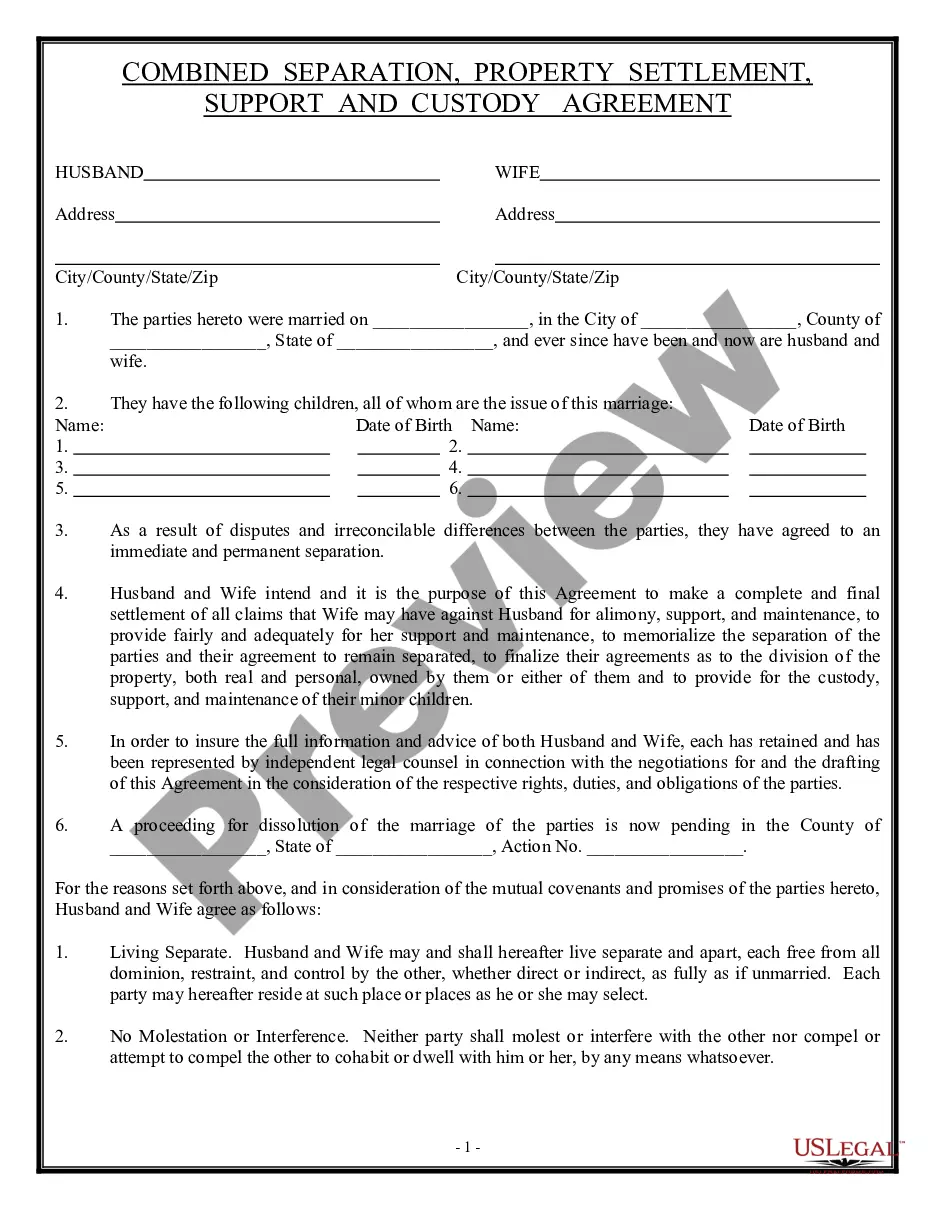
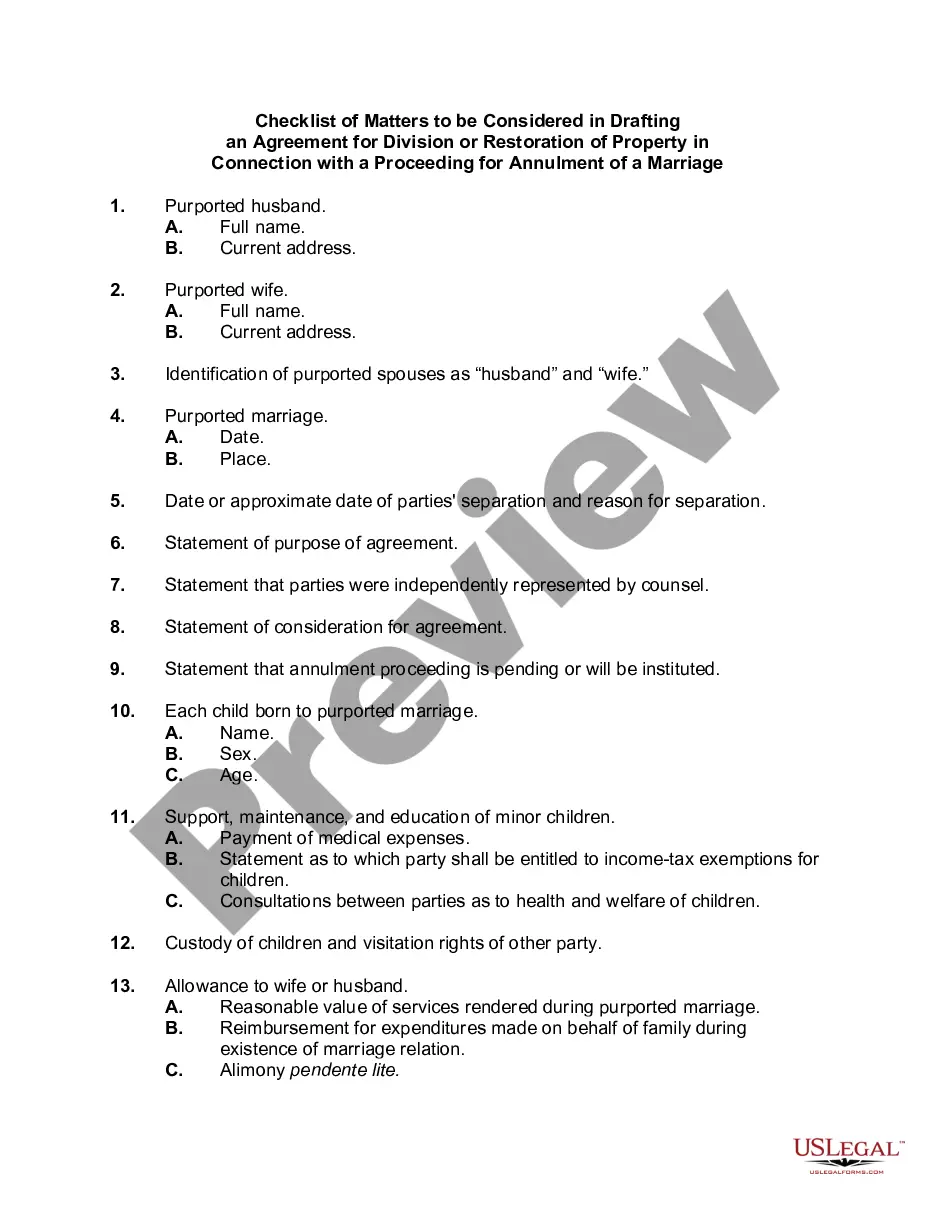
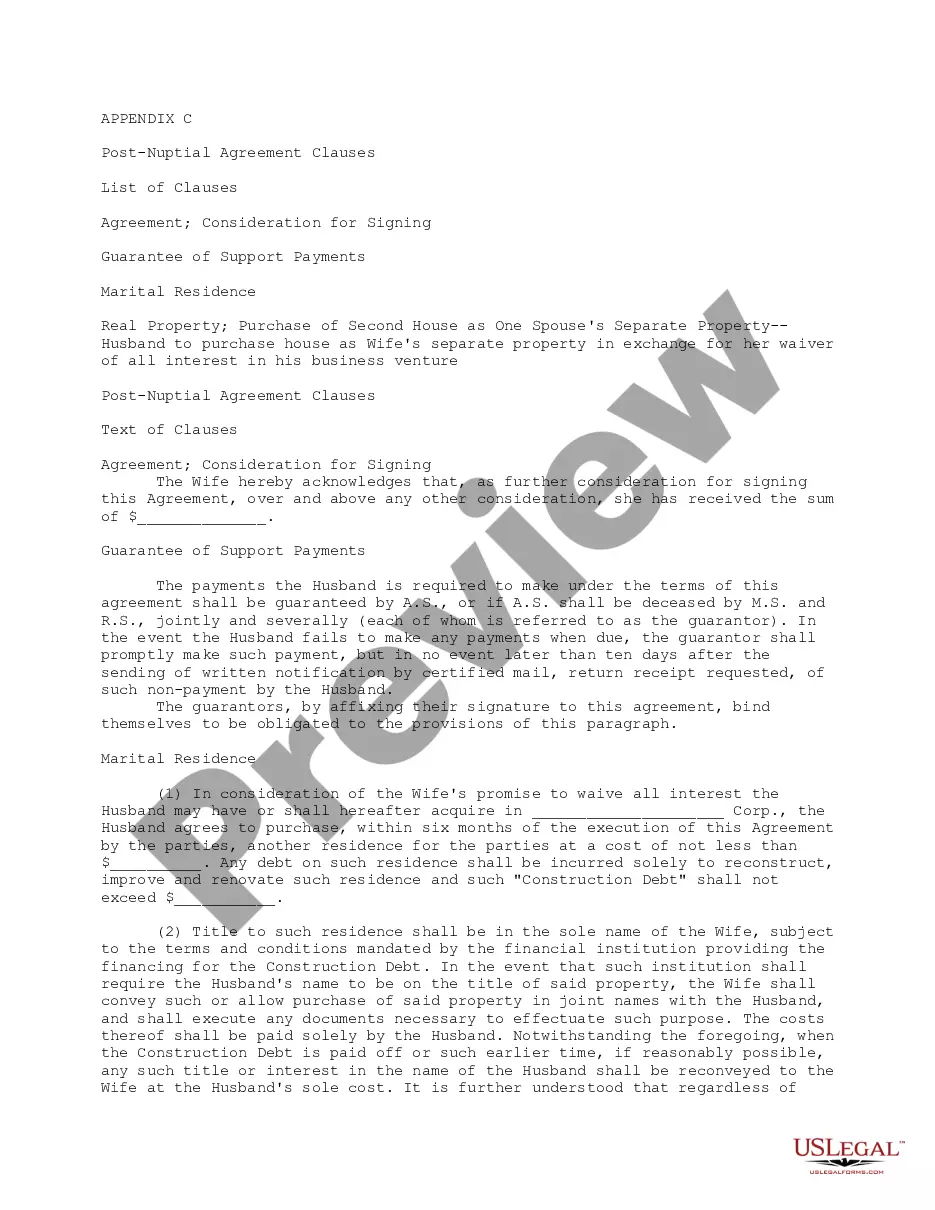
The following form is a Property Settlement Agreement including a Child Support, and Custody Agreement (which is somewhat unusual in an annulment situation).
District of Columbia Annulment Property Settlement, Child Support, and Custody Agreement
Instant download
Description
Free preview
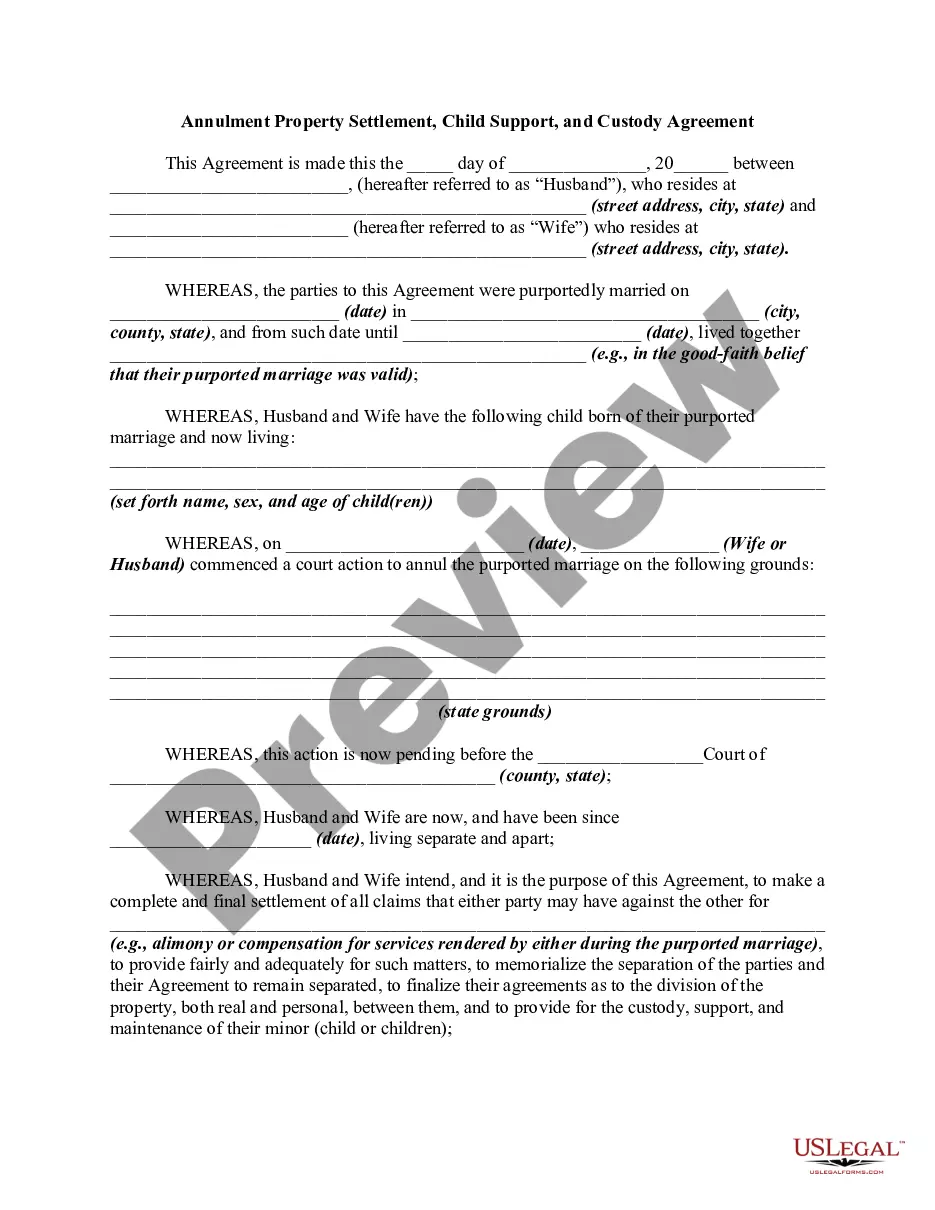
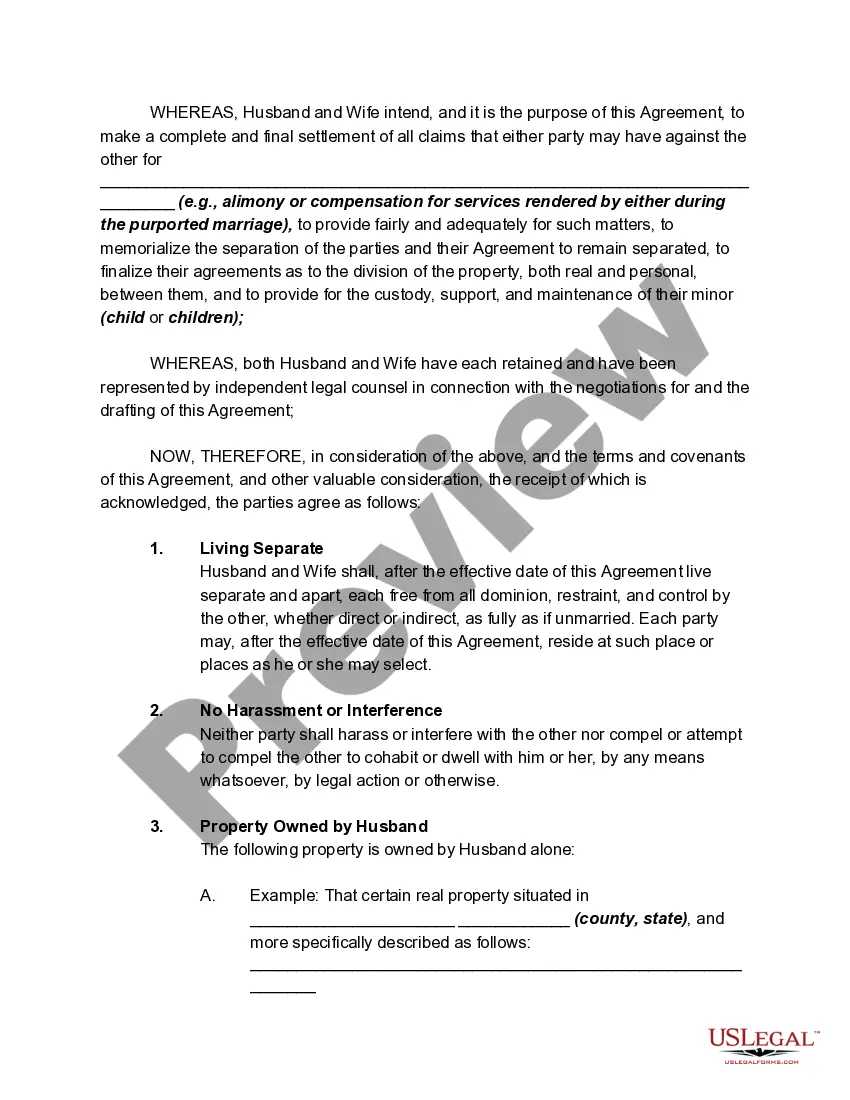
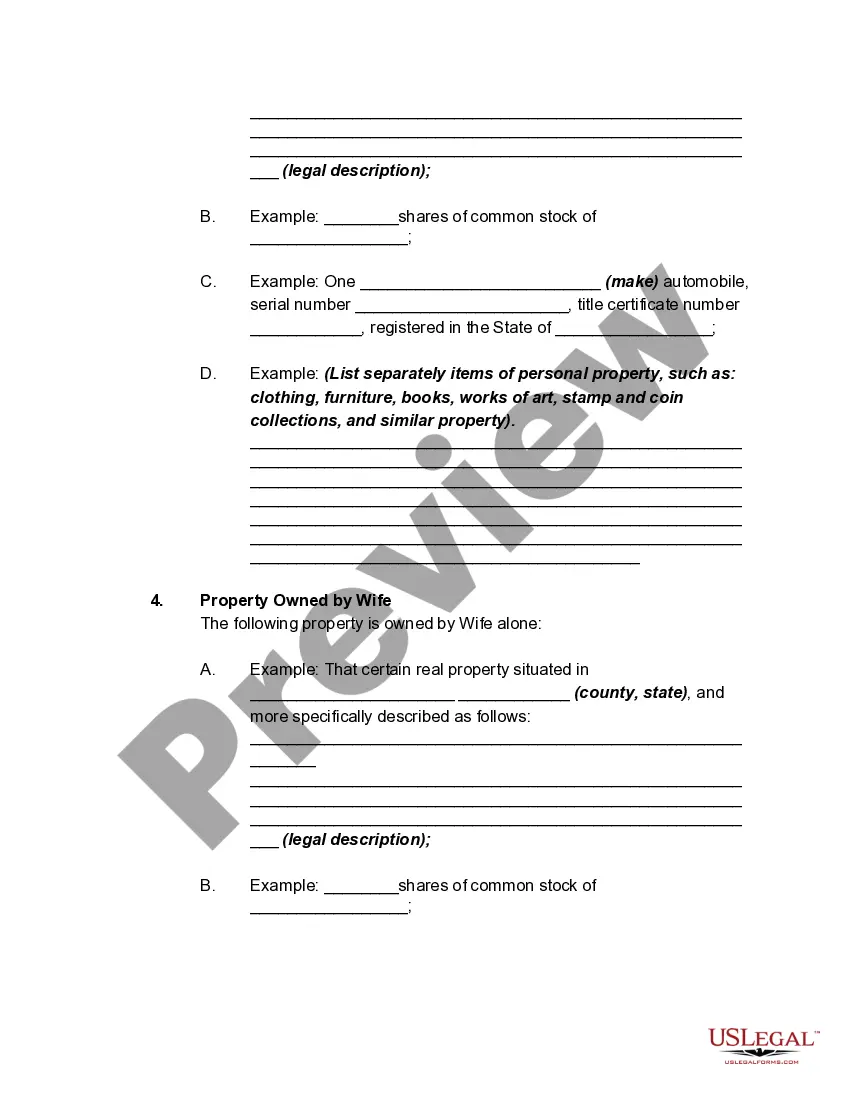
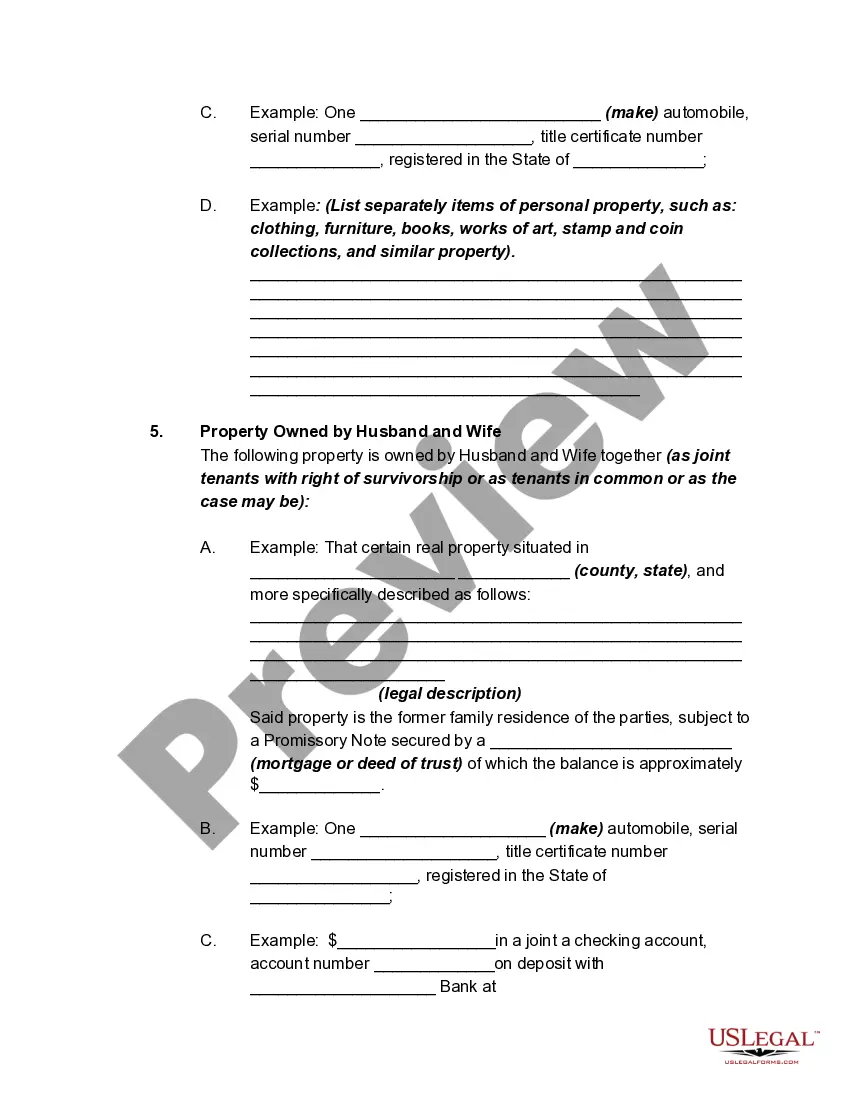
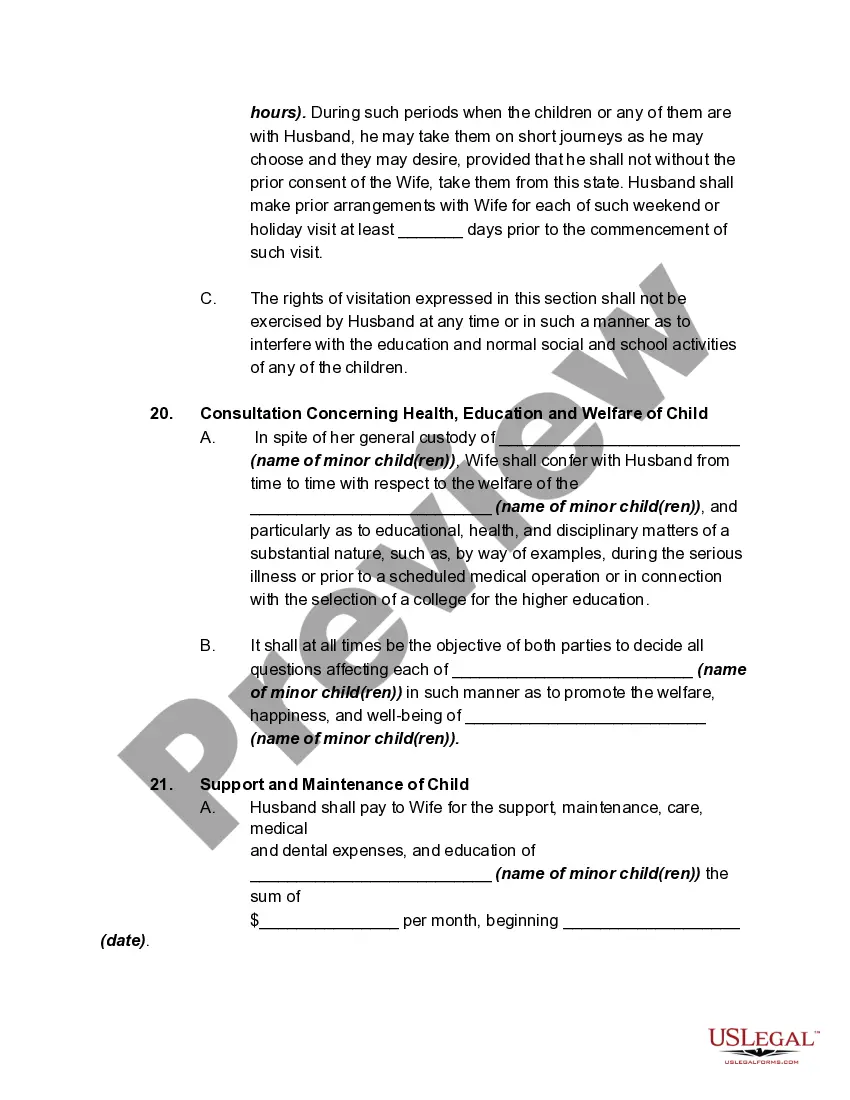
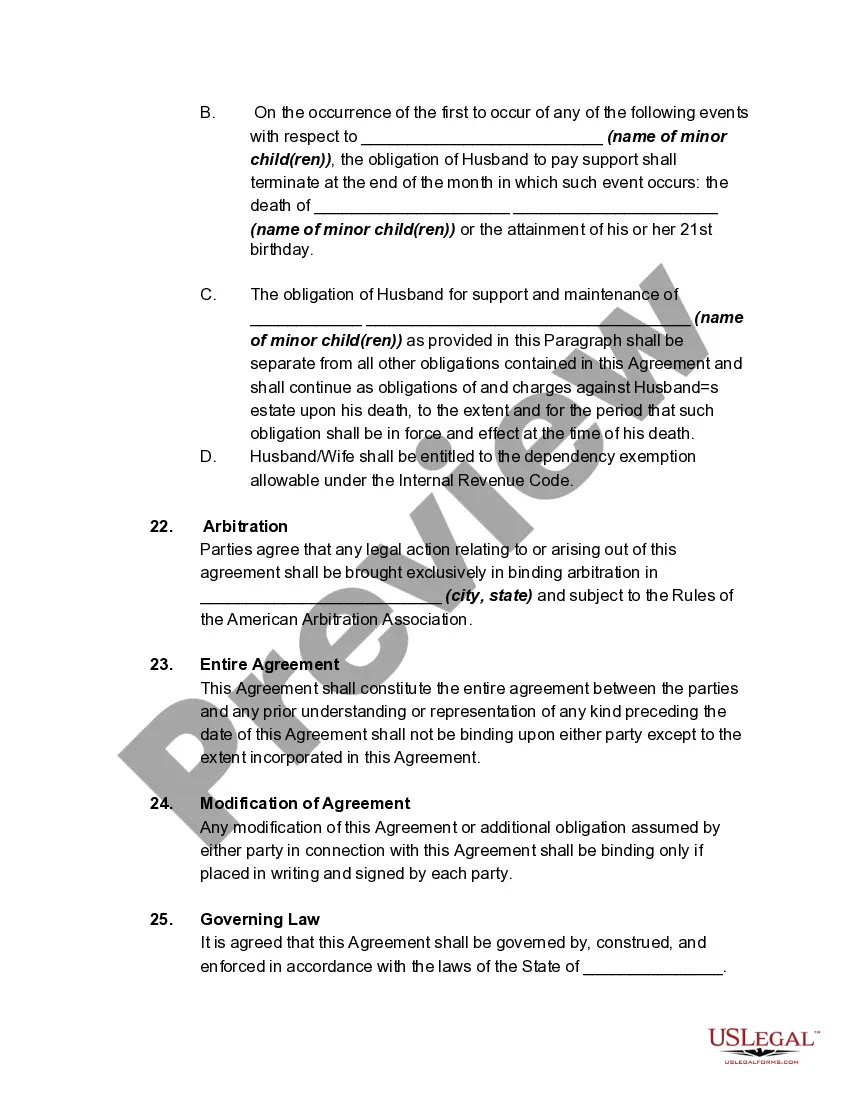

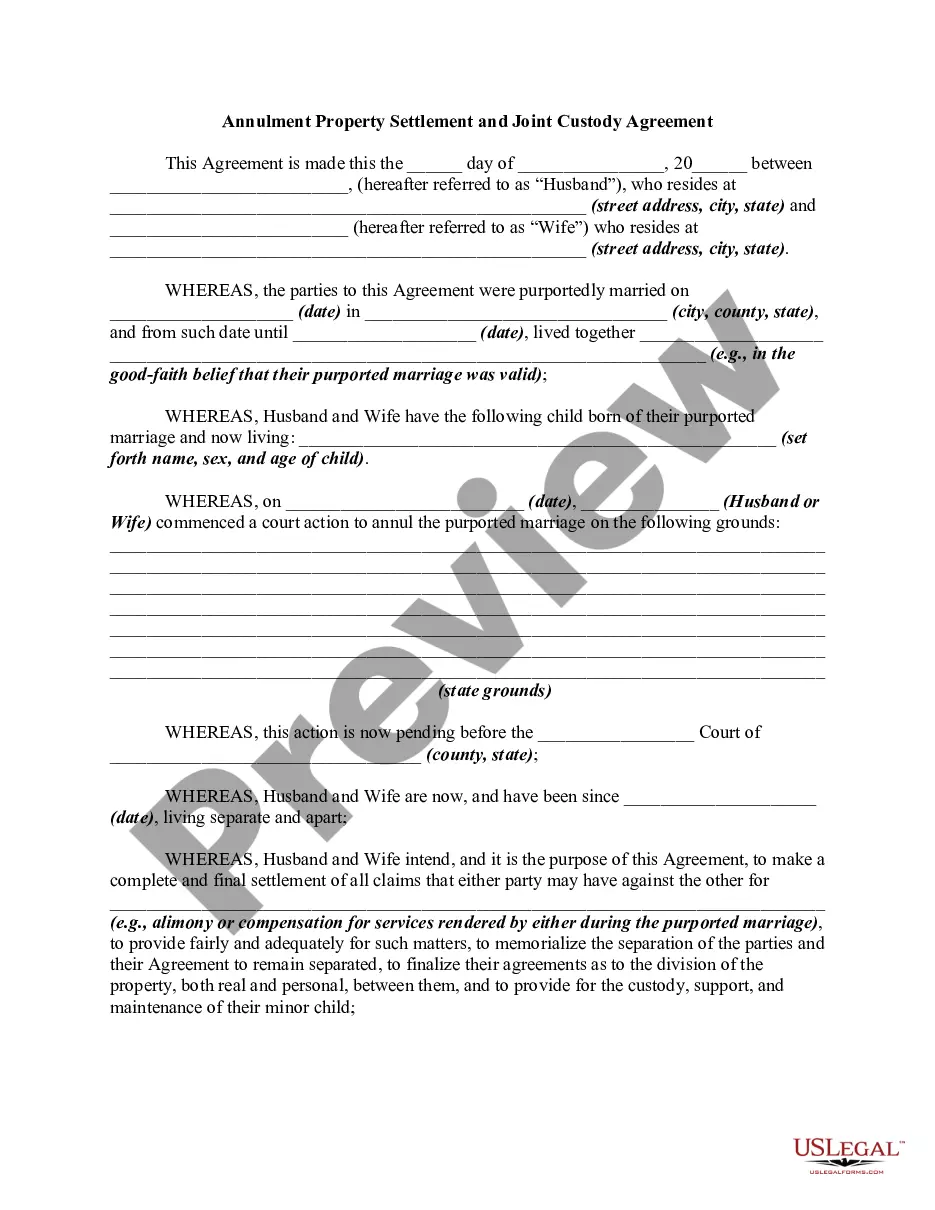
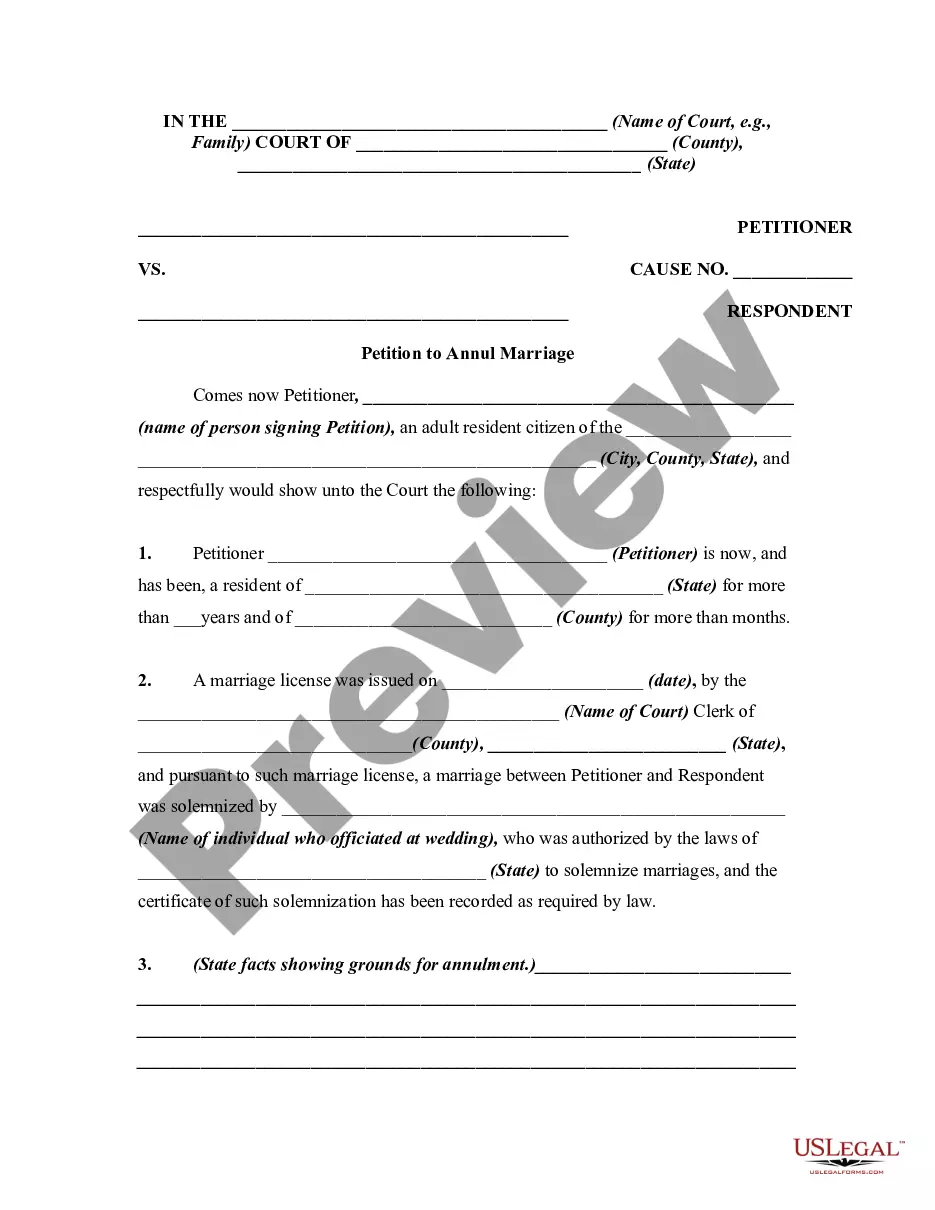
Get your form ready online
Our built-in tools help you complete, sign, share, and store your documents in one place.
Built-in online Word editor
Make edits, fill in missing information, and update formatting in US Legal Forms—just like you would in MS Word.
Export easily
Download a copy, print it, send it by email, or mail it via USPS—whatever works best for your next step.
E-sign your document
Sign and collect signatures with our SignNow integration. Send to multiple recipients, set reminders, and more. Go Premium to unlock E-Sign.
Notarize online 24/7
If this form requires notarization, complete it online through a secure video call—no need to meet a notary in person or wait for an appointment.
Store your document securely
We protect your documents and personal data by following strict security and privacy standards.

Make edits, fill in missing information, and update formatting in US Legal Forms—just like you would in MS Word.

Download a copy, print it, send it by email, or mail it via USPS—whatever works best for your next step.

Sign and collect signatures with our SignNow integration. Send to multiple recipients, set reminders, and more. Go Premium to unlock E-Sign.

If this form requires notarization, complete it online through a secure video call—no need to meet a notary in person or wait for an appointment.

We protect your documents and personal data by following strict security and privacy standards.
Looking for another form?




How to fill out Annulment Property Settlement, Child Support, And Custody Agreement?
Are you currently in a location where you require documents for either business or personal reasons almost every day.
There are many legal document templates available online, but finding ones you can trust is not straightforward.
US Legal Forms offers thousands of template forms, such as the District of Columbia Annulment Property Settlement, Child Support, and Custody Agreement, designed to meet both state and federal regulations.
Choose the pricing plan you prefer, fill in the required information to create your account, and place an order with your PayPal or credit card.
Select a convenient file format and download your copy.
- If you are already familiar with the US Legal Forms website and have an account, simply Log In.
- After that, you can download the District of Columbia Annulment Property Settlement, Child Support, and Custody Agreement template.
- If you do not have an account and wish to start using US Legal Forms, follow these instructions.
- Select the form you need and ensure it is for the correct city/state.
- Utilize the Preview feature to review the document.
- Check the details to ensure that you have selected the correct form.
- If the form isn’t what you’re looking for, use the Search field to find the form that meets your needs and requirements.
- Once you find the right form, click on Purchase now.
Form popularity
FAQ
The statute of limitations for child support debts in the District of Columbia is 12 years. After that time, ?the judgment . . . shall cease to have any operation or effect? and is no longer enforceable ?except in the case of a proceeding that may be then pending for the enforcement of the judgment.?
Washington D.C.'s standard statute of limitations period is three years. There are different exceptions for certain causes of action and where otherwise established by law, however. Cases to recover lands, tenements, or hereditaments can be filed up to fifteen years after the underlying action occurs.
Court Orders to Collect Child Support Together, the judge and CDU can: withhold income from a delinquent parent's paychecks as soon as a parent is 30 days behind. place liens on real or personal property owned by a delinquent parent.
(n) The child support obligation, including additions for health insurance premiums, extraordinary medical expenses, and child care expenses, shall not exceed 35% of the adjusted gross income of the parent with a legal duty to pay support.
(v)(1) When a case is brought to establish child support, the judicial officer may award retroactive child support for a period not to exceed the 24 months preceding the filing of the petition or request for child support, unless the parent to whom support is owed proves that the parent with a legal duty to pay support ...
In the District of Columbia, the marital estate is allocated by ?equitable distribution.? Equitable distribution means that a District of Columbia court will order a division of property that is fair under all the circumstances. Note that the term ?equitable? does not necessarily mean exactly equal.
In D.C., the duty to provide child support lasts until the child is 21 unless the child is emancipated. Emancipation can happen before age 21 if the child gets married, joins the military, or becomes self-supporting. The emancipation age is set by the state that issued the first child support order.
Ing to the Code of the District of Columbia §16-910, courts must make an equitable distribution of this property. If couples enter the divorce process without a marital agreement, the court has broad power to distribute this property as it sees fit.
