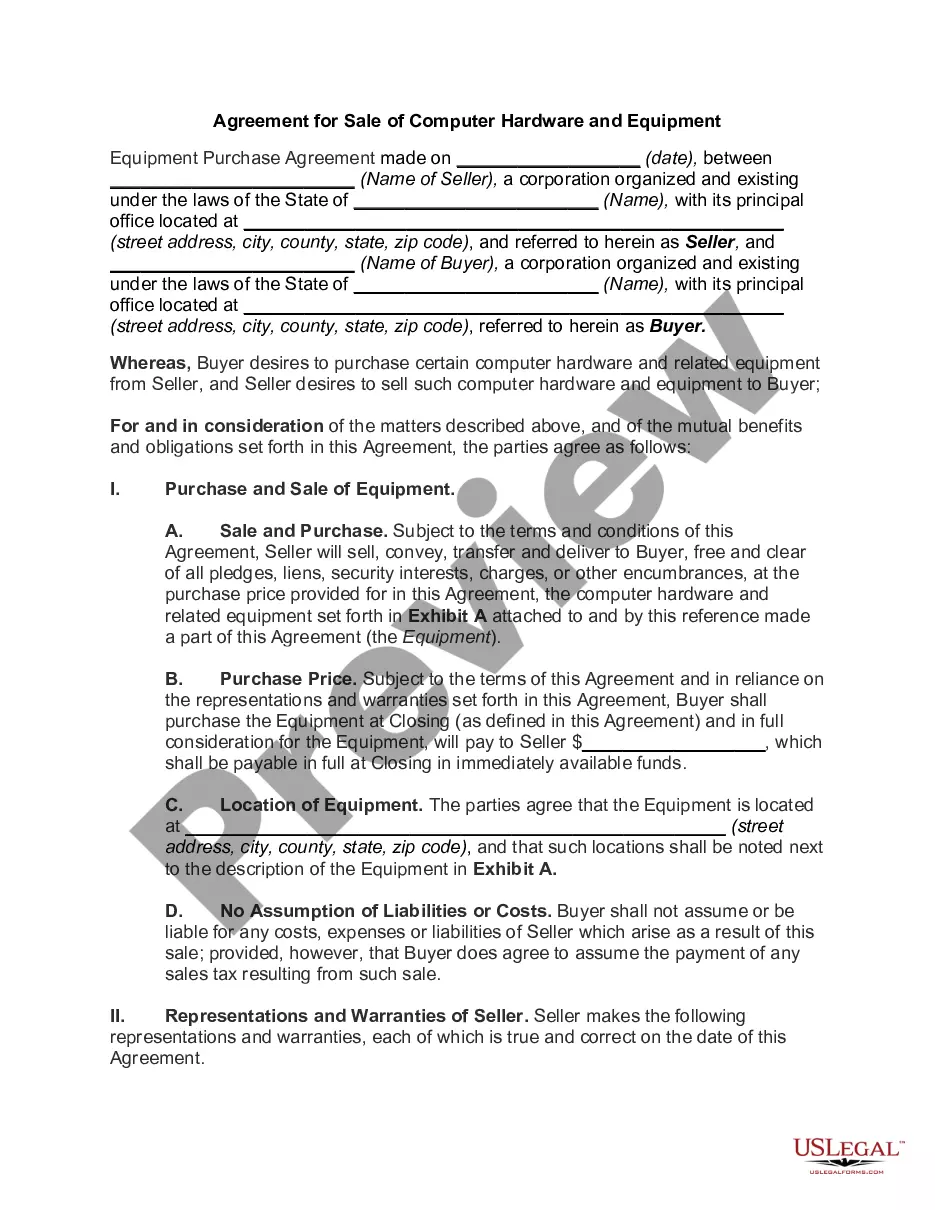
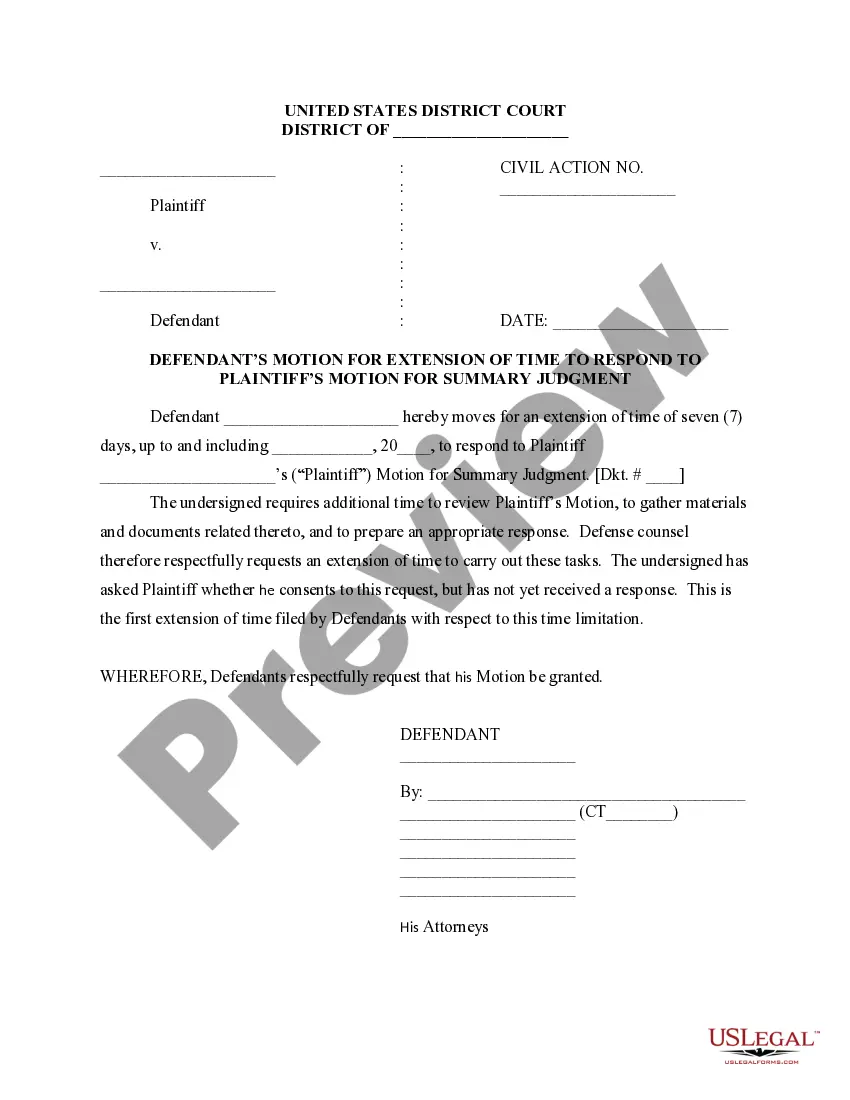
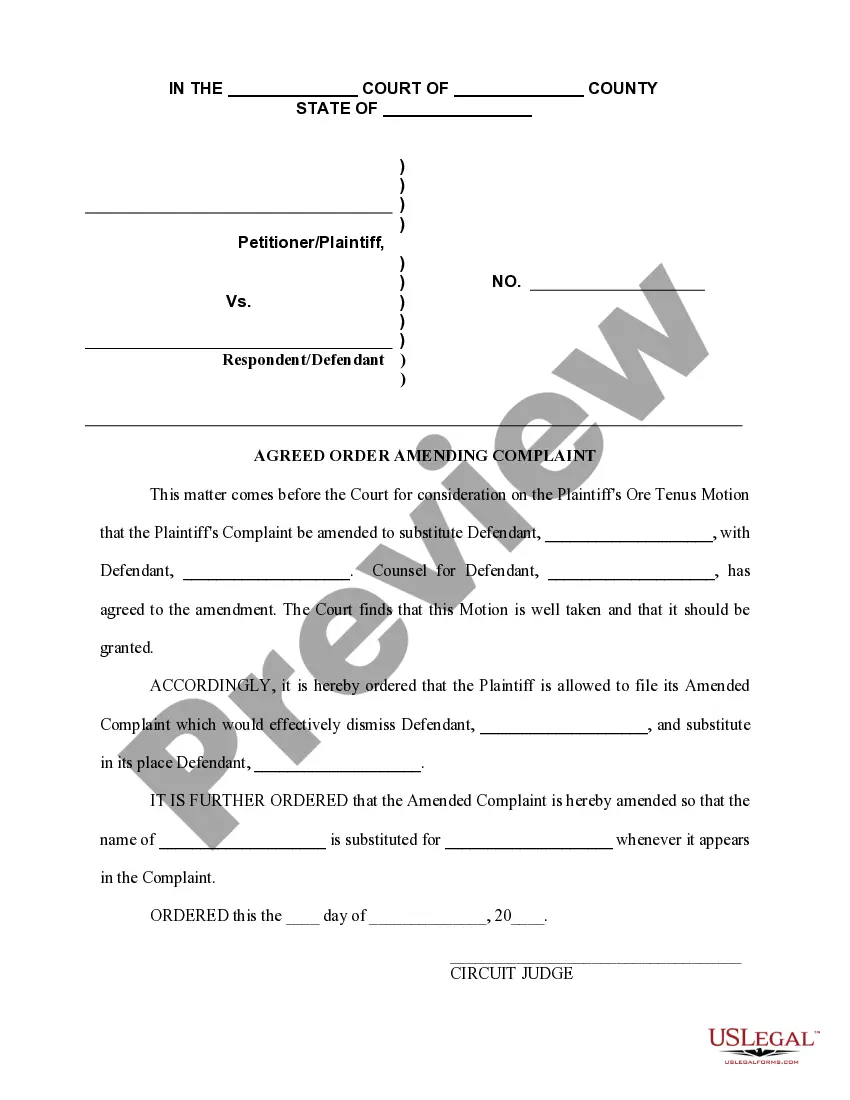
District of Columbia Agreed Order Granting Additional Time to Plead
Description
Get your form ready online
Our built-in tools help you complete, sign, share, and store your documents in one place.
Make edits, fill in missing information, and update formatting in US Legal Forms—just like you would in MS Word.
Download a copy, print it, send it by email, or mail it via USPS—whatever works best for your next step.
Sign and collect signatures with our SignNow integration. Send to multiple recipients, set reminders, and more. Go Premium to unlock E-Sign.
If this form requires notarization, complete it online through a secure video call—no need to meet a notary in person or wait for an appointment.
We protect your documents and personal data by following strict security and privacy standards.

Make edits, fill in missing information, and update formatting in US Legal Forms—just like you would in MS Word.

Download a copy, print it, send it by email, or mail it via USPS—whatever works best for your next step.

Sign and collect signatures with our SignNow integration. Send to multiple recipients, set reminders, and more. Go Premium to unlock E-Sign.

If this form requires notarization, complete it online through a secure video call—no need to meet a notary in person or wait for an appointment.

We protect your documents and personal data by following strict security and privacy standards.
Looking for another form?


How to fill out Agreed Order Granting Additional Time To Plead?
Are you in a situation where you frequently require documents for either professional or personal purposes? There are numerous credible document templates accessible online, but locating ones you can trust is challenging. US Legal Forms offers a vast array of form templates, including the District of Columbia Agreed Order Granting Additional Time to Plead, designed to meet federal and state requirements.
If you are already familiar with the US Legal Forms website and possess an account, simply Log In. After that, you will be able to download the District of Columbia Agreed Order Granting Additional Time to Plead template.
If you do not have an account and wish to start using US Legal Forms, follow these steps: Discover the form you need and ensure it is for the correct area/state. Utilize the Review button to examine the form. Read the description to confirm that you have selected the right document. If the form is not what you’re looking for, use the Search field to find the form that meets your needs and requirements. Once you find the appropriate form, click Get now. Select the pricing plan you prefer, provide the necessary information to create your account, and pay for your order using PayPal or Visa or Mastercard. Choose a convenient file format and download your copy.
Avoid altering or removing any HTML tags. Only synonymize plain text outside of the HTML tags.
- Access all the document templates you have purchased in the My documents menu.
- You can obtain another copy of the District of Columbia Agreed Order Granting Additional Time to Plead at any time, if needed.
- Click on the desired form to download or print the document template.
- Utilize US Legal Forms, the most extensive collection of legitimate forms, to save time and avoid mistakes.
- The service provides properly crafted legal document templates that you can use for a variety of purposes.
- Create an account on US Legal Forms and start making your life a bit easier.
Form popularity
FAQ
Rule 43 of the DC Superior Court addresses the taking of testimony by remote means, which has become increasingly relevant in today's legal landscape. This rule allows parties to present witnesses via video or other electronic methods, enhancing accessibility. In conjunction with the District of Columbia Agreed Order Granting Additional Time to Plead, this rule allows for greater flexibility in litigation, ensuring that you can gather necessary testimonies without unnecessary delays.
The Federal Rules of Civil Procedure (FRCP) provide mechanisms for parties to seek extensions of time to complete their filings or respond to pleadings. An extension can be crucial, especially when circumstances change unexpectedly. The District of Columbia Agreed Order Granting Additional Time to Plead can serve as a formal document that outlines the agreed-upon time extensions, helping to keep your case on track and reducing the risk of missed deadlines.
Rule 45 in the DC Superior Court governs the issuance of subpoenas for witness attendance and document production. It is essential for parties seeking evidence to support their case. When you combine this rule with the District of Columbia Agreed Order Granting Additional Time to Plead, you can effectively manage your litigation timeline and ensure that all evidence is gathered before making your pleadings.
Rule 15 of the Federal Rules of Civil Procedure allows a party to amend their pleadings within 21 days after serving them or, if a response is required, within 21 days after the response is filed. In the context of the District of Columbia Agreed Order Granting Additional Time to Plead, this rule provides a structured timeframe for parties to make necessary amendments without seeking court permission. Utilizing this rule can streamline the litigation process and ensure that all parties have the opportunity to present their best arguments.
Any party may file a motion, but when represented by counsel, an individual party may not file a motion or pleading except for a motion to discharge or vacate the appointment of counsel. The Clerk will transmit that motion to counsel of record for that party.
The court must decide every pretrial motion before trial unless it finds good cause to defer a ruling. The court must not defer ruling on a pretrial motion if the deferral will adversely affect a party's right to appeal.
Rule 12-I(a) provides that a moving party must seek consent of other affected parties prior to the filing of a motion, except with respect to Rule 11 motions for imposition of sanctions. In these instances, a good faith effort to resolve the disputed issues is required.
Section (b) requires that all unrepresented parties and counsel must attend a conference early in the case at which the judge will explore the possibilities of settlement or alternative dispute resolution and will then establish a firm schedule for completion of the litigation.
The court should freely permit an amendment when doing so will aid in presenting the merits and the objecting party fails to satisfy the court that the evidence would prejudice that party's action or defense on the merits. The court may grant a continuance to enable the objecting party to meet the evidence.
(A) A defendant must serve an answer within 21 days after being served with the summons and complaint. (B) A party must serve an answer to a counterclaim or crossclaim within 21 days after being served with the pleading that states the counterclaim or crossclaim.