District of Columbia Mutual Wills or Last Will and Testaments for Man and Woman living together, not Married with Minor Children
What is this form?
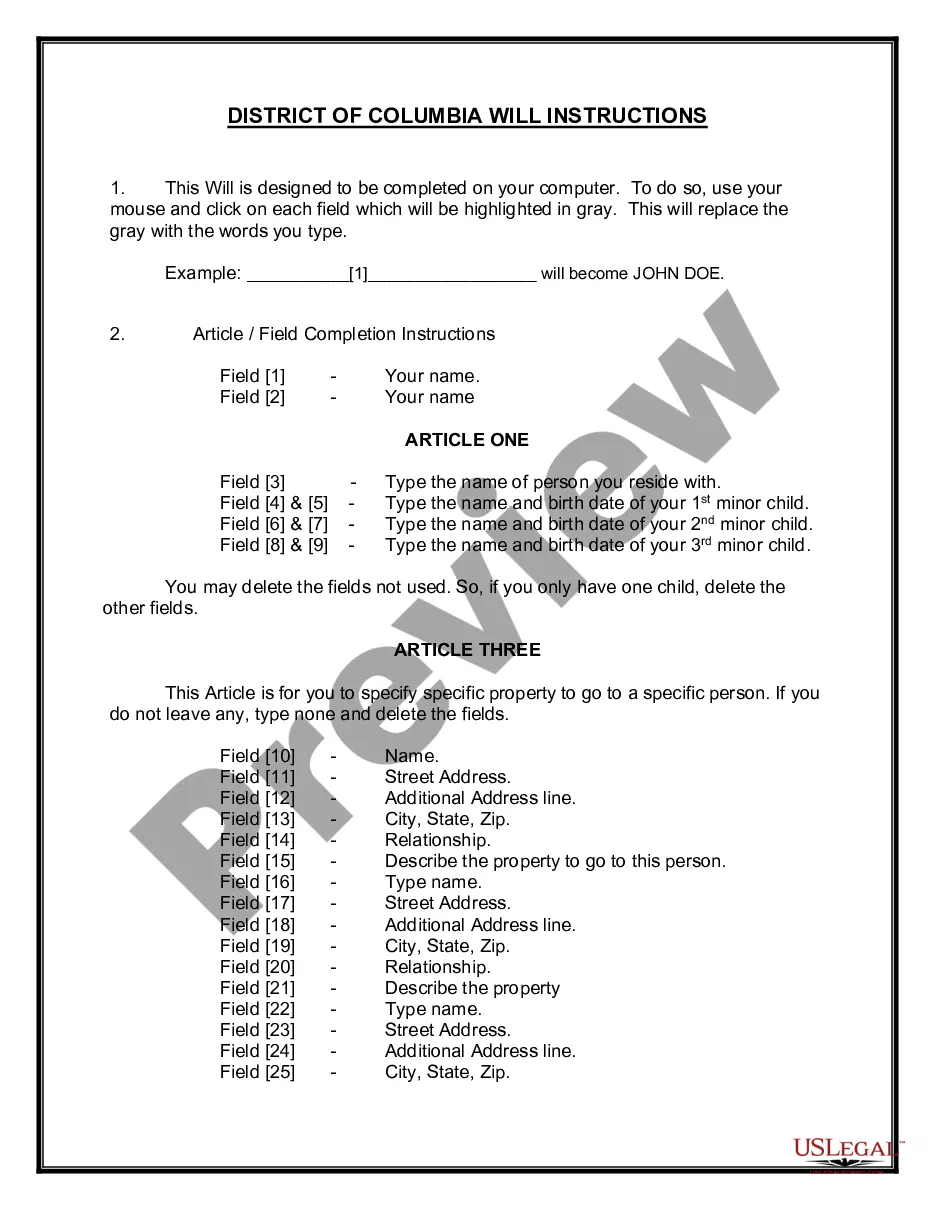
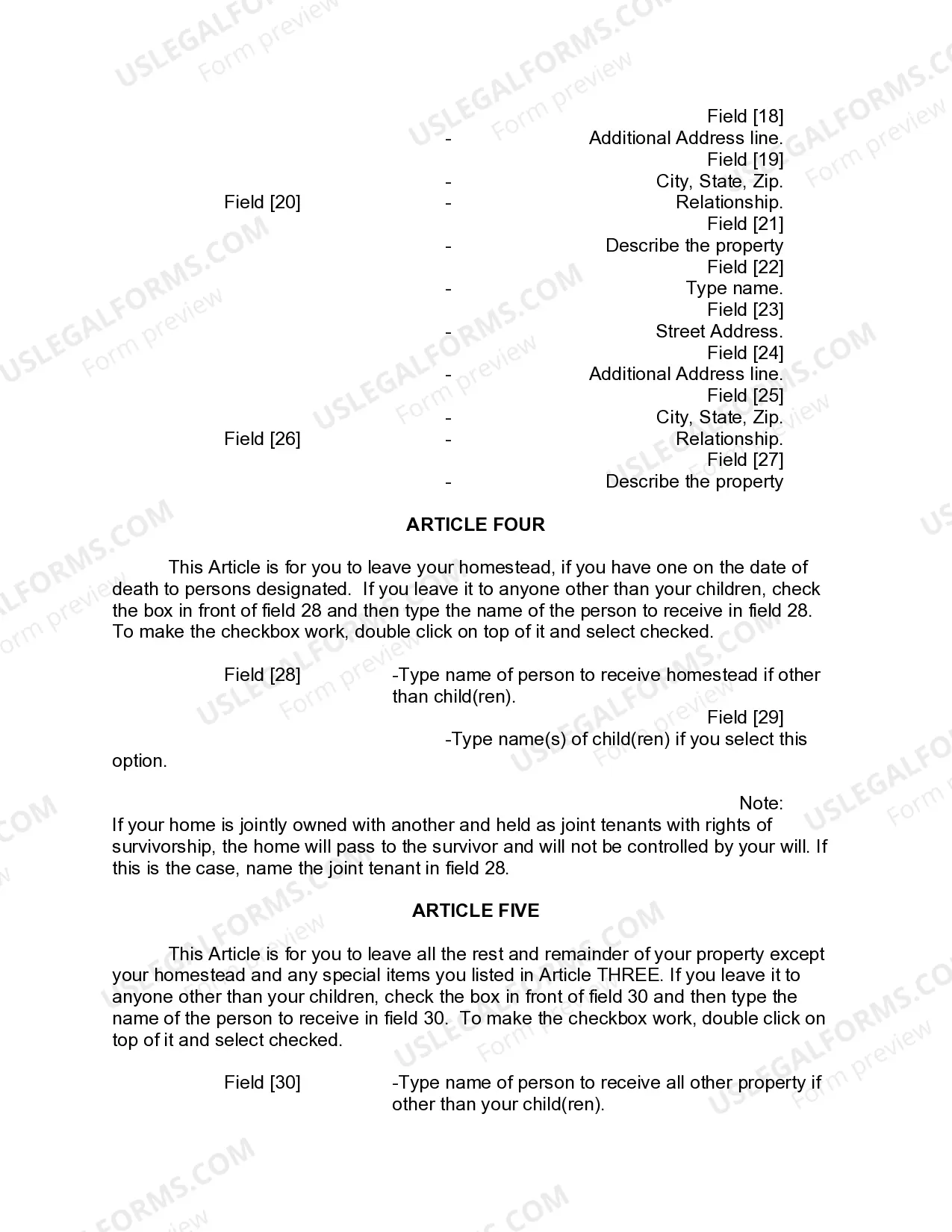
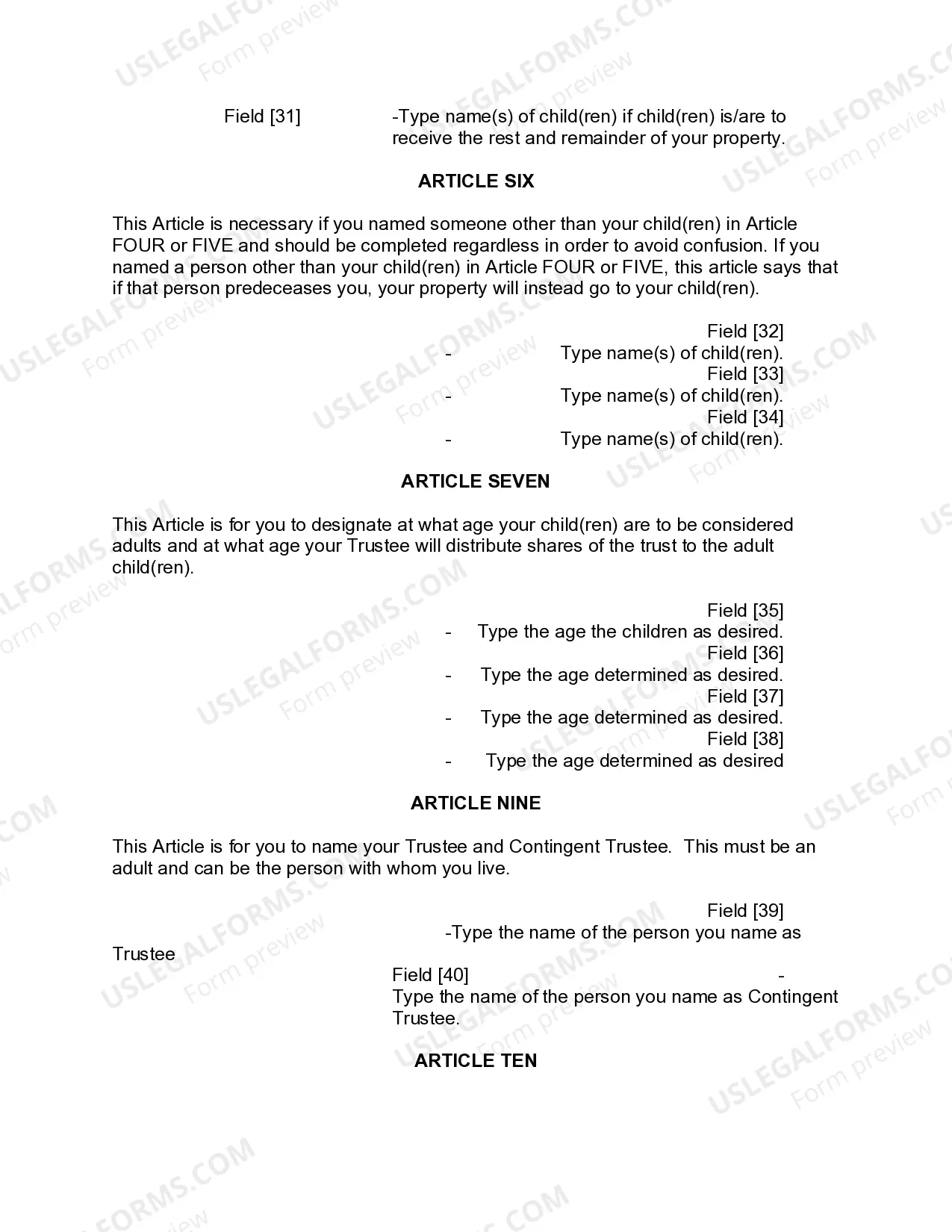
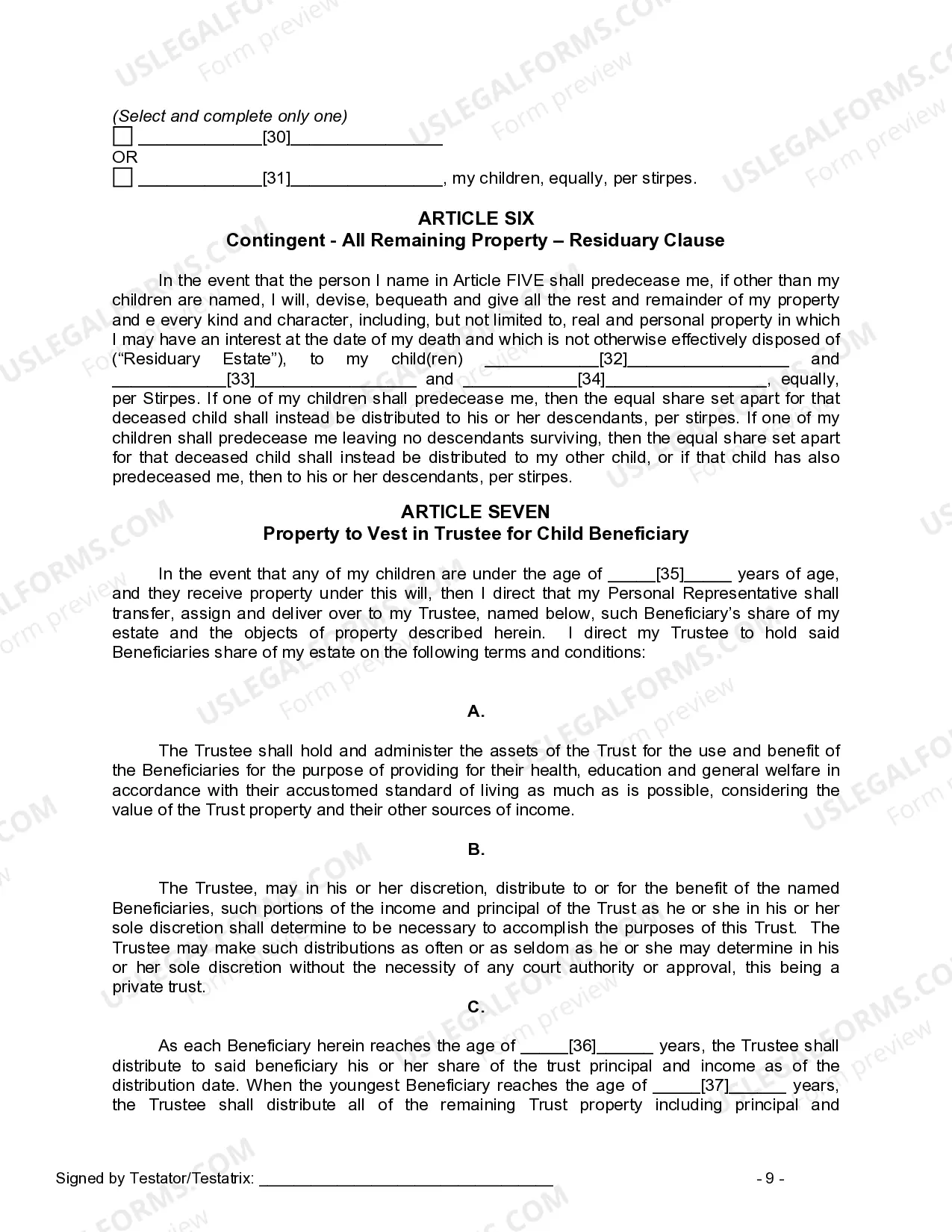
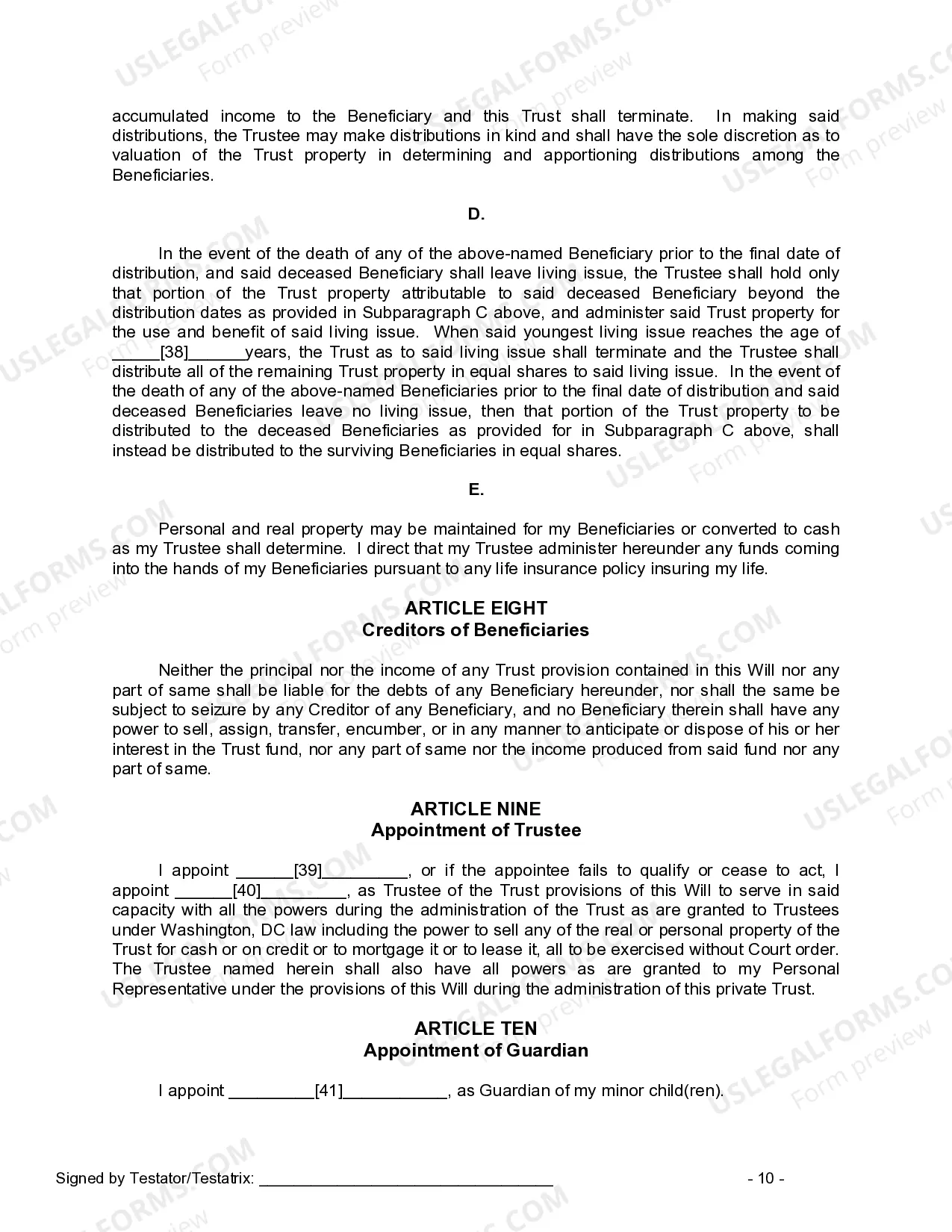
This form package includes mutual wills for a man and woman living together, not married, with minor children. It allows each partner to designate how their property will be distributed upon their passing, ensuring that mutual intentions are honored. Unlike single wills, these mutual wills focus on the shared relationship and responsibilities of partners, particularly those with children.
Form components explained
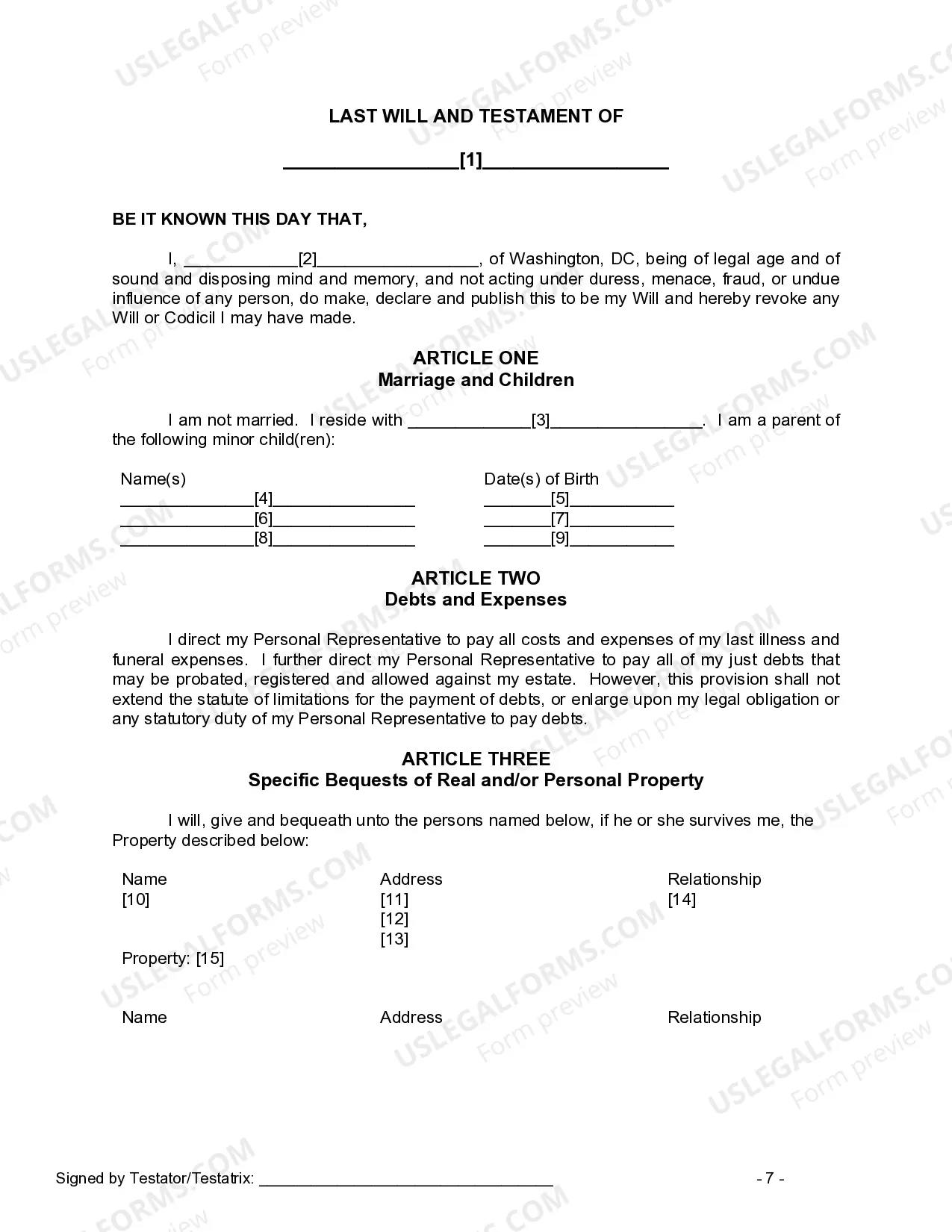
- Mutual designation of beneficiaries for each partner.
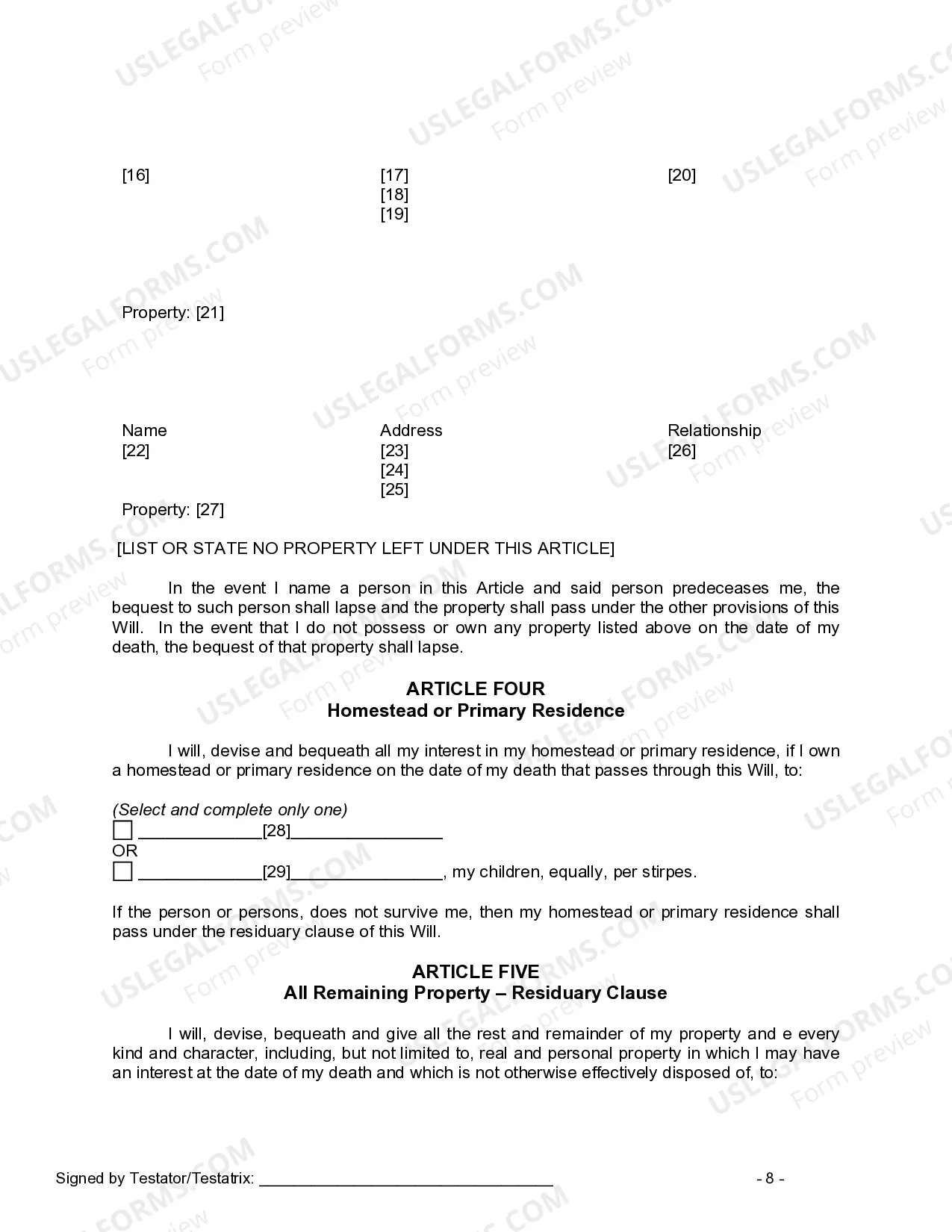
- Specific bequests of real and personal property.
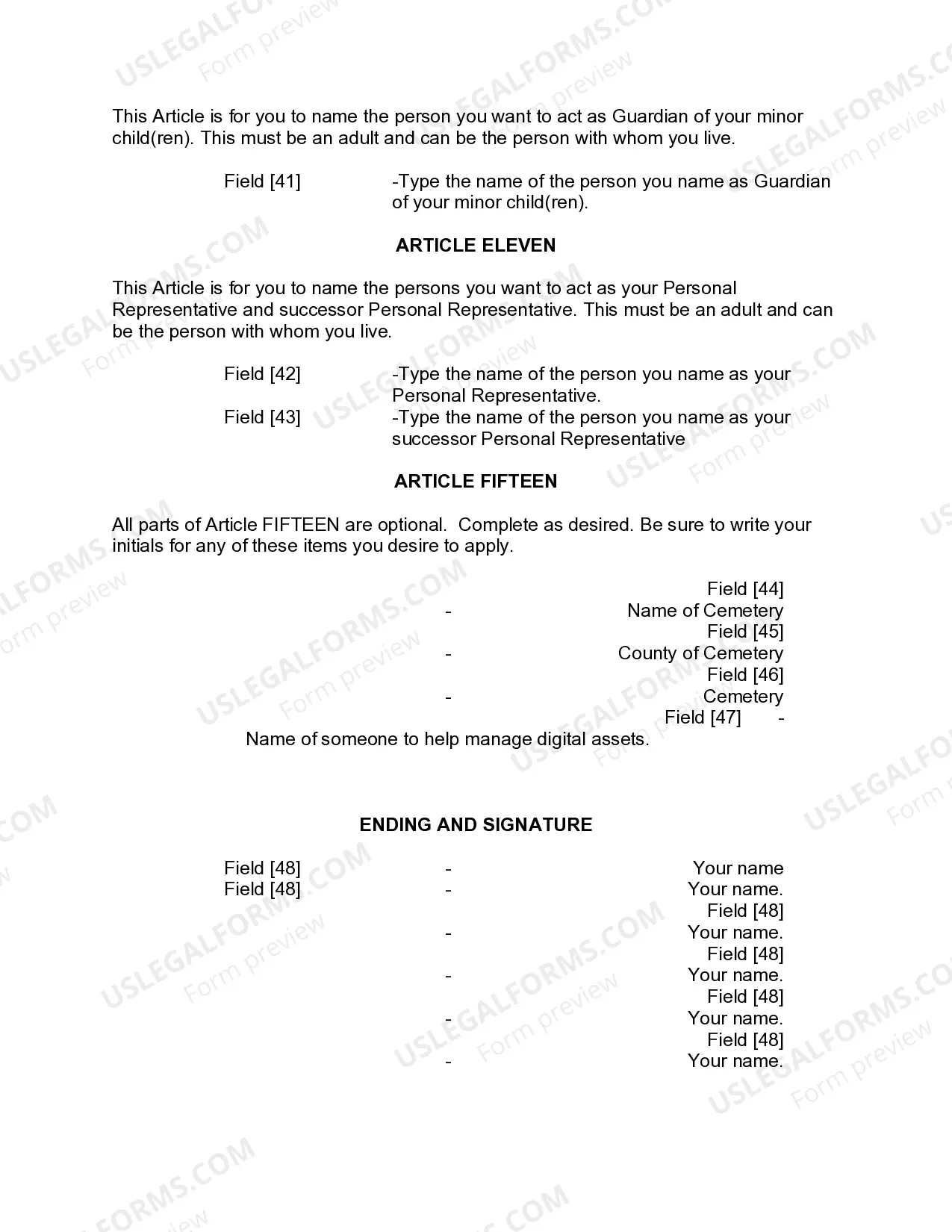
- Designation of guardians for minor children.
- Homestead distribution provision.
- Appointment of a personal representative to manage the estate.
- Contingent clauses if a beneficiary predeceases.




When this form is needed
This form is essential for couples living together who are not married but wish to secure each otherâs interests and provide for their minor children after death. It is especially useful in situations where partners want to ensure that their property is passed to the other and that their children are cared for according to their agreed wishes.
Who this form is for
- Cohabiting couples without a legal marriage.
- Parents with minor children who want specific provisions for their care and inheritance.
- Individuals wanting to outline property distribution among their partner and children.
Instructions for completing this form
- Begin by entering your name and the name of your partner in the designated fields.
- Provide the names and birthdates of your minor children.
- Specify any specific property bequests you want to make to individuals or groups.
- Designate a guardian for your children and a personal representative for your estate.
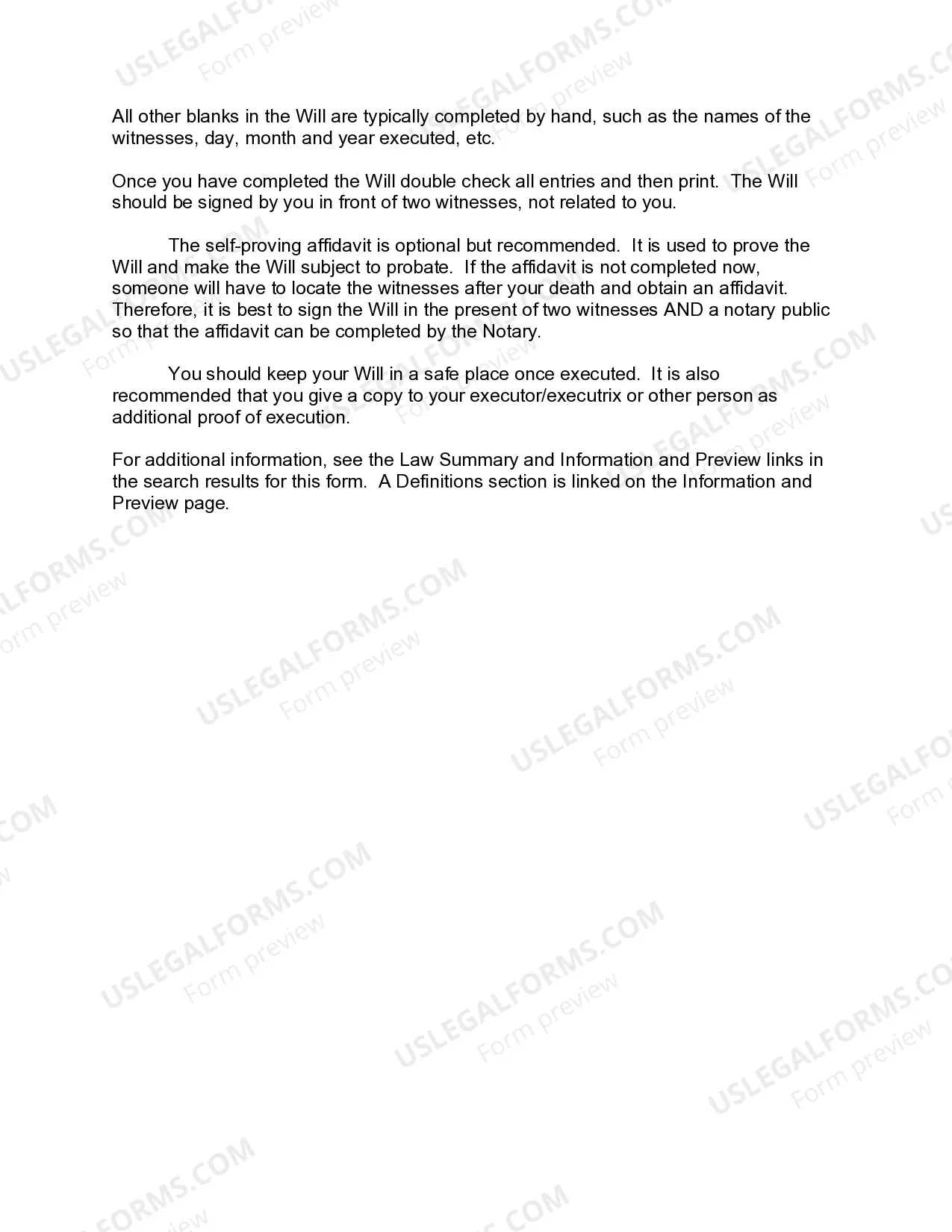
- Review all entries carefully, ensuring accuracy, before printing and signing the document in front of witnesses.
Notarization requirements for this form
Yes, this form must be notarized to be legally valid. A notary public will need to witness your signature and the signatures of your witnesses at the time of signing. US Legal Forms offers integrated online notarization services for your convenience, available 24/7 through secure video calls.
Get your form ready online
Our built-in tools help you complete, sign, share, and store your documents in one place.
Make edits, fill in missing information, and update formatting in US Legal Forms—just like you would in MS Word.
Download a copy, print it, send it by email, or mail it via USPS—whatever works best for your next step.
Sign and collect signatures with our SignNow integration. Send to multiple recipients, set reminders, and more. Go Premium to unlock E-Sign.
If this form requires notarization, complete it online through a secure video call—no need to meet a notary in person or wait for an appointment.
We protect your documents and personal data by following strict security and privacy standards.

Make edits, fill in missing information, and update formatting in US Legal Forms—just like you would in MS Word.

Download a copy, print it, send it by email, or mail it via USPS—whatever works best for your next step.

Sign and collect signatures with our SignNow integration. Send to multiple recipients, set reminders, and more. Go Premium to unlock E-Sign.

If this form requires notarization, complete it online through a secure video call—no need to meet a notary in person or wait for an appointment.

We protect your documents and personal data by following strict security and privacy standards.
Avoid these common issues
- Failing to have the wills signed by the appropriate number of witnesses.
- Neglecting to specify guardianship for minor children.
- Not updating the wills after major life events, such as the addition of children.
Benefits of completing this form online
- Convenience of completing the form from home at your own pace.
- Editability allows for changes without needing to start from scratch.
- Access to attorney-drafted content to ensure legal reliability.
Looking for another form?


Form popularity
FAQ
In the District of Columbia, a spouse cannot unilaterally change a will after the other spouse has died. The deceased spouse’s will remains as it was at the time of their passing. However, the surviving spouse may seek to amend or contest the will under certain circumstances. For those in unique situations, such as District of Columbia Mutual Wills or Last Will and Testaments for Man and Woman living together, not Married with Minor Children, it is wise to consult with a legal professional or services like US Legal Forms to understand your rights.
In the District of Columbia, you do not need to register your will while you are alive. However, it’s crucial to ensure your will is accessible to your loved ones after your passing. Once you pass away, your will must be filed with the probate court as part of the legal process. Utilizing platforms like US Legal Forms can guide you in preparing a District of Columbia Mutual Wills or Last Will and Testaments for Man and Woman living together, not Married with Minor Children, making this process smoother.
Yes, you can write your own will in the District of Columbia. However, it's important to ensure that your will meets all legal requirements for it to be valid. By using resources like US Legal Forms, you can find templates specifically designed for District of Columbia Mutual Wills or Last Will and Testaments for Man and Woman living together, not Married with Minor Children. This approach helps protect your interests and those of your minor children.
Yes, you can be a beneficiary even if you're not married. In the context of District of Columbia Mutual Wills or Last Will and Testaments for Man and Woman living together, not Married with Minor Children, the law allows individuals to designate anyone as a beneficiary. This means that you can include your partner or anyone else important to you, regardless of your marital status. It's essential to ensure that your wishes are clearly outlined in your will, helping to provide clarity and security for your loved ones.
A will does not take precedence over a beneficiary designation. Beneficiary designations are often direct transfers that bypass the will altogether. Understanding how to create and manage District of Columbia Mutual Wills or Last Will and Testaments for Man and Woman living together, not Married with Minor Children can help ensure your entire estate plan works harmoniously.
The biggest mistake in a will is failing to update it regularly. Life changes such as marriage, the birth of children, or changes in relationships can significantly impact your wishes. Using District of Columbia Mutual Wills or Last Will and Testaments for Man and Woman living together, not Married with Minor Children can help safeguard your intentions and accommodate your family’s evolving needs.
A last will and testament typically does not override a beneficiary designation. For example, if you have listed someone as a beneficiary on an insurance policy or bank account, that designation usually remains in effect unless you change it. It’s vital to understand how District of Columbia Mutual Wills or Last Will and Testaments for Man and Woman living together, not Married with Minor Children fit into your overall estate planning to avoid confusion.
In general, a will does not supersede designated beneficiaries on bank accounts. If you have specified a beneficiary for your bank account, that person will receive the funds upon your passing, regardless of what your will states. However, having a comprehensive estate plan that includes District of Columbia Mutual Wills or Last Will and Testaments for Man and Woman living together, not Married with Minor Children can ensure your wishes are clear and followed.
If a spouse dies while you are separated, the will primarily governs the distribution of assets unless otherwise specified. In the context of District of Columbia Mutual Wills or Last Will and Testaments for Man and Woman living together, not Married with Minor Children, it's wise to reassess your estate plan. Legal guidance can help clarify your position and ensure that your wishes are upheld despite the separation.
Yes, wills can vary significantly from one state to another due to differing laws and regulations. In the District of Columbia, Mutual Wills or Last Will and Testaments for Man and Woman living together, not Married with Minor Children should particularly align with local laws. It's vital to research state-specific requirements, and using uslegalforms can help you easily create compliant documents.