District of Columbia Mutual Wills containing Last Will and Testaments for Man and Woman living together not Married with No Children
What is this form?
The Mutual Wills containing Last Will and Testaments for Man and Woman living together not Married with No Children is a legal document designed for couples who cohabitate but are not married and wish to ensure that their assets are distributed according to their wishes after passing. Unlike standard wills, this form contains two mutual wills that complement each other, allowing both parties to provide for one another. It includes state-specific instructions for proper execution.
Key components of this form
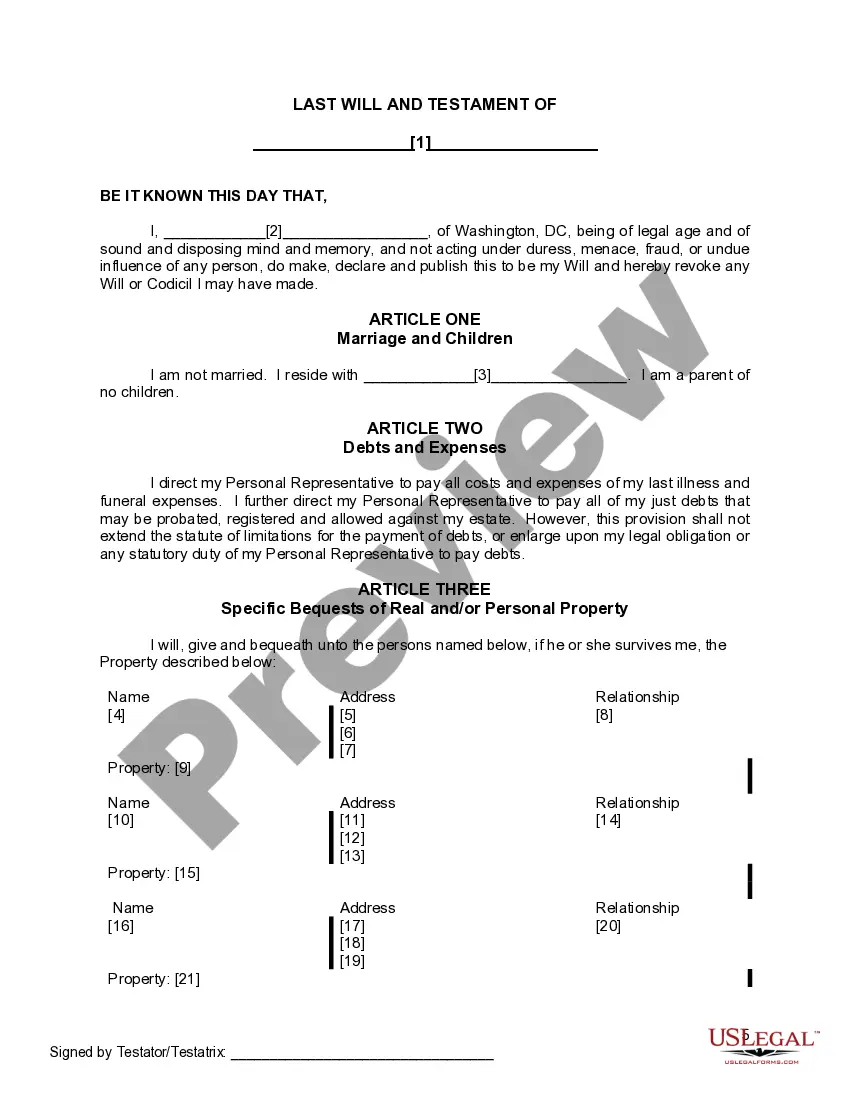
- Identifying Information: Spaces to enter names and addresses of both partners.
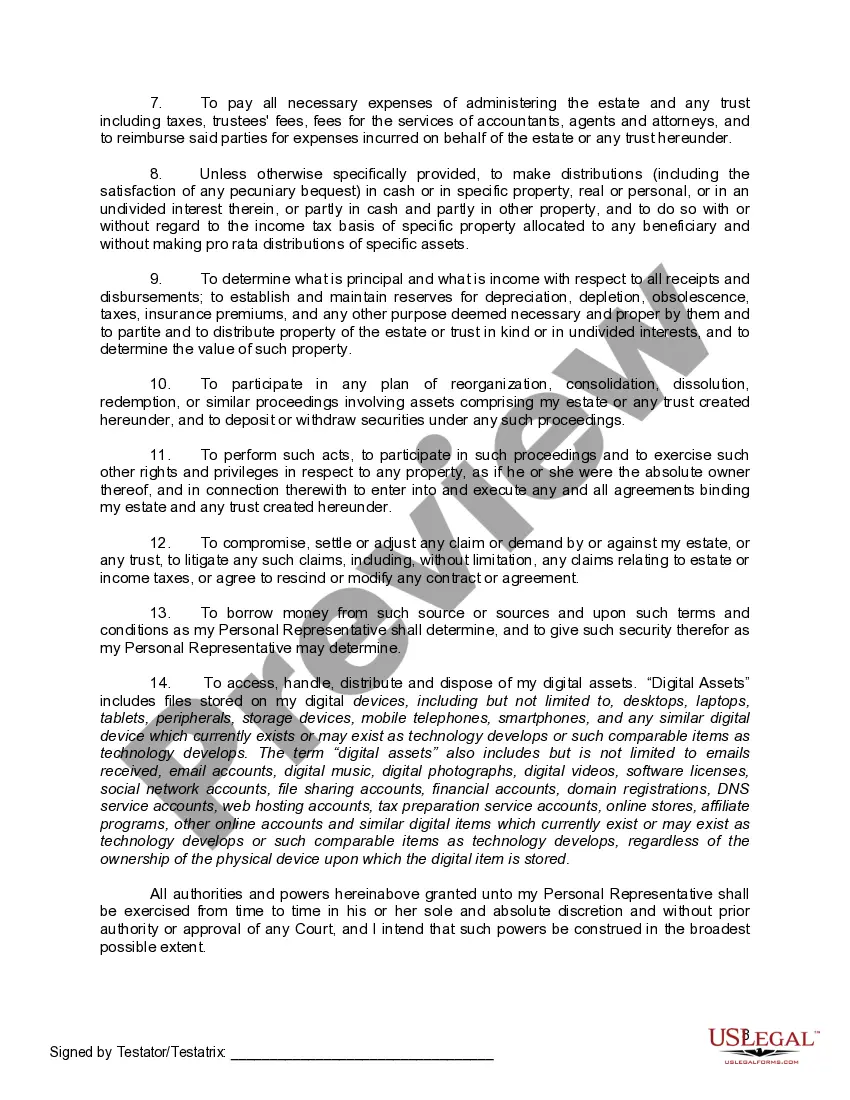
- Specific Bequests: Sections for detailing specific property and assets being left to each other or other individuals.
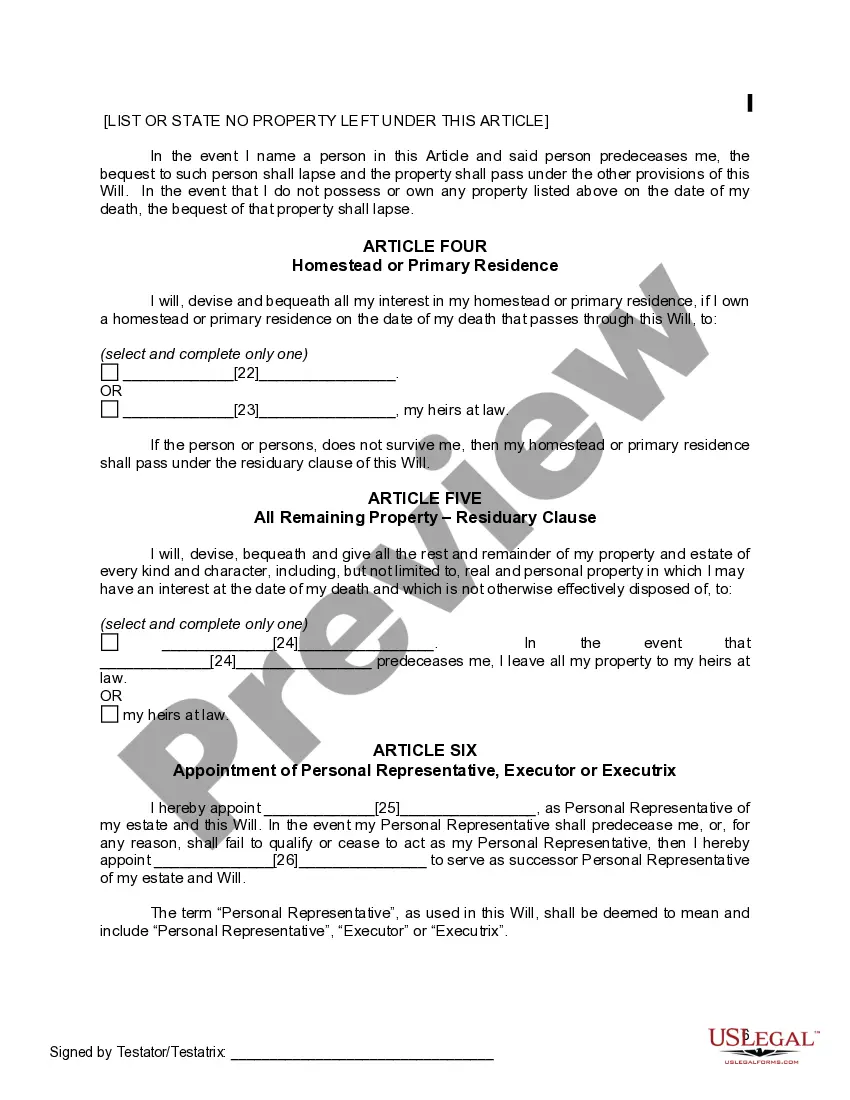
- Homestead Designation: Option to specify who will receive the primary residence.
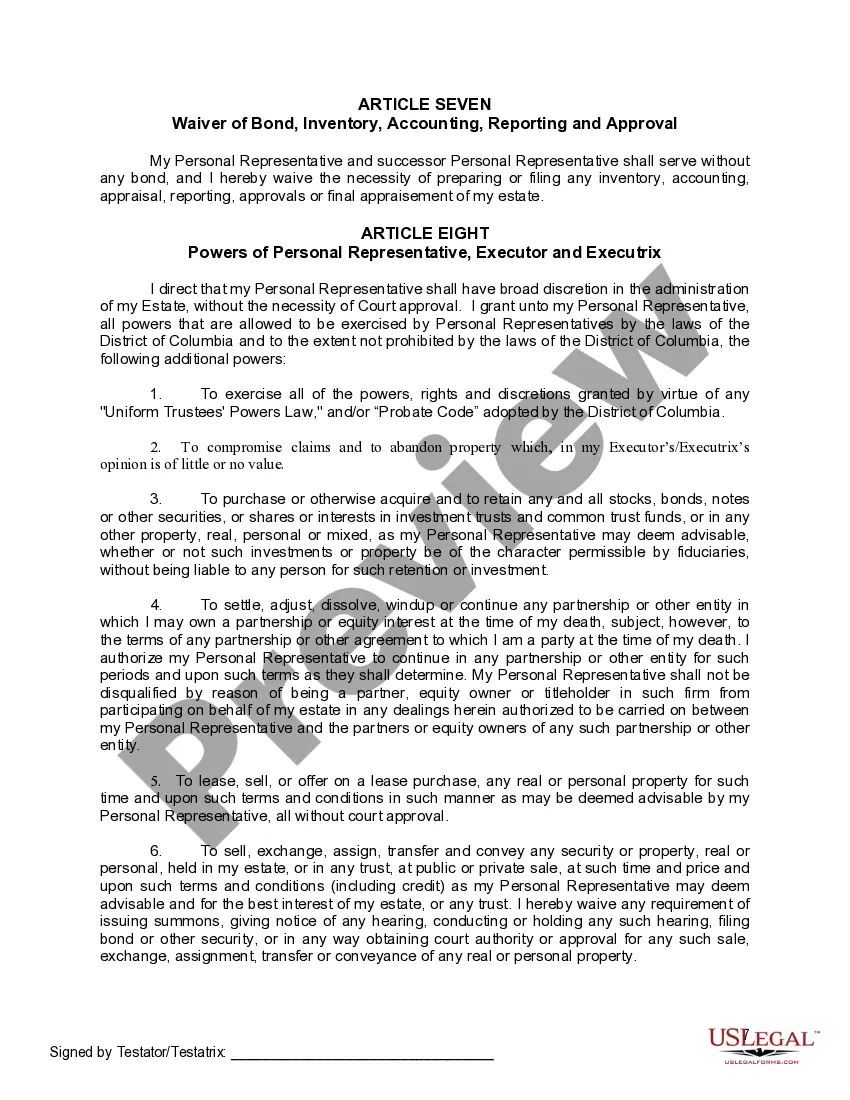
- Appointment of Personal Representative: Designate a trusted individual to manage the estate.
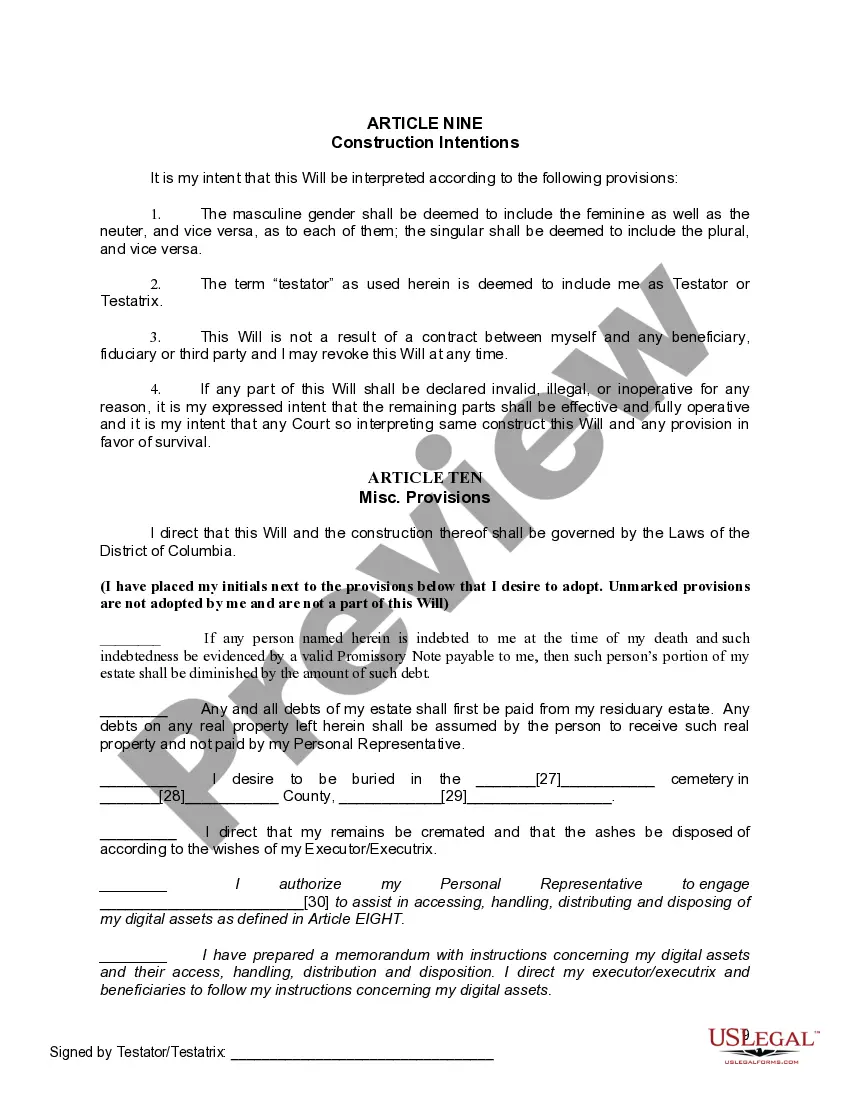
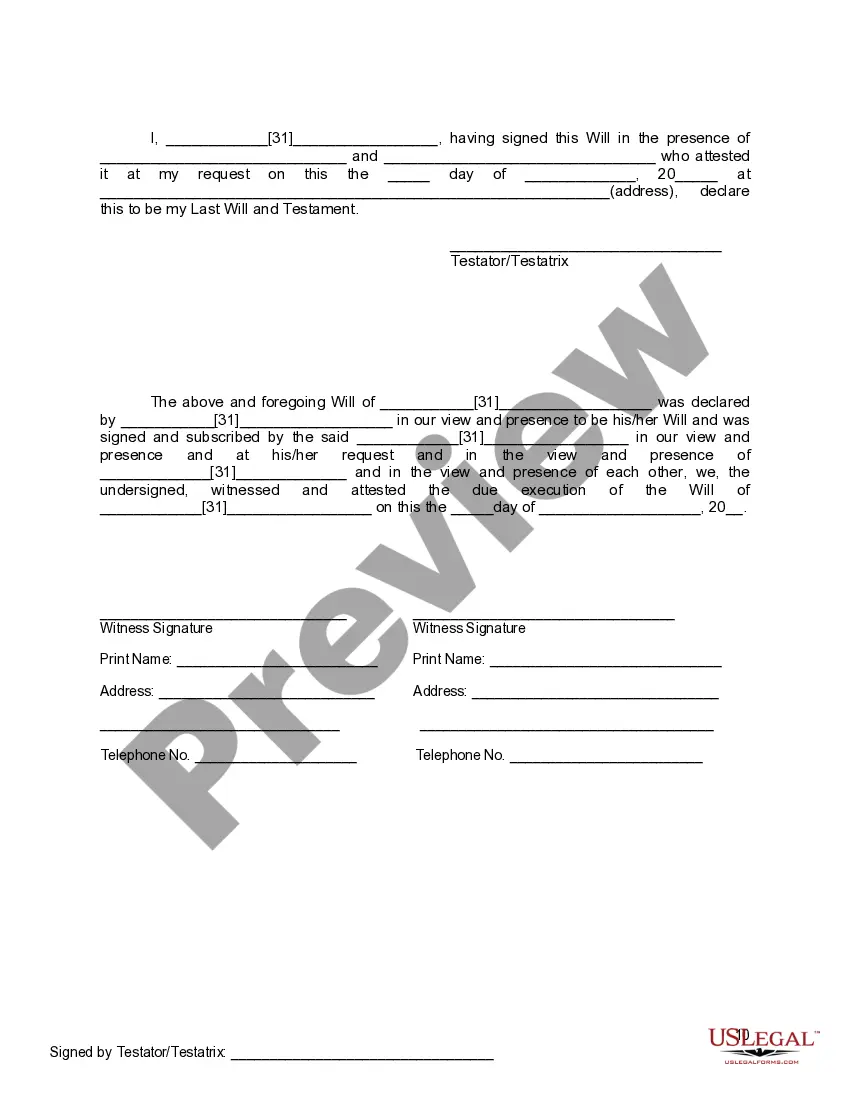
- Execution Requirements: Signature and witness instructions to ensure validity.



When to use this form
This form should be utilized when a man and woman living together wish to establish mutual wills to manage their estate planning. It is particularly beneficial for couples who want to protect each other's interests after death, especially when children are not involved, ensuring clarity and support for the surviving partner.
Who should use this form
- Couples who are cohabiting and are not legally married.
- Individuals who want to ensure their partner is taken care of after their passing.
- Persons with no children who would like to designate heirs other than family.
Completing this form step by step
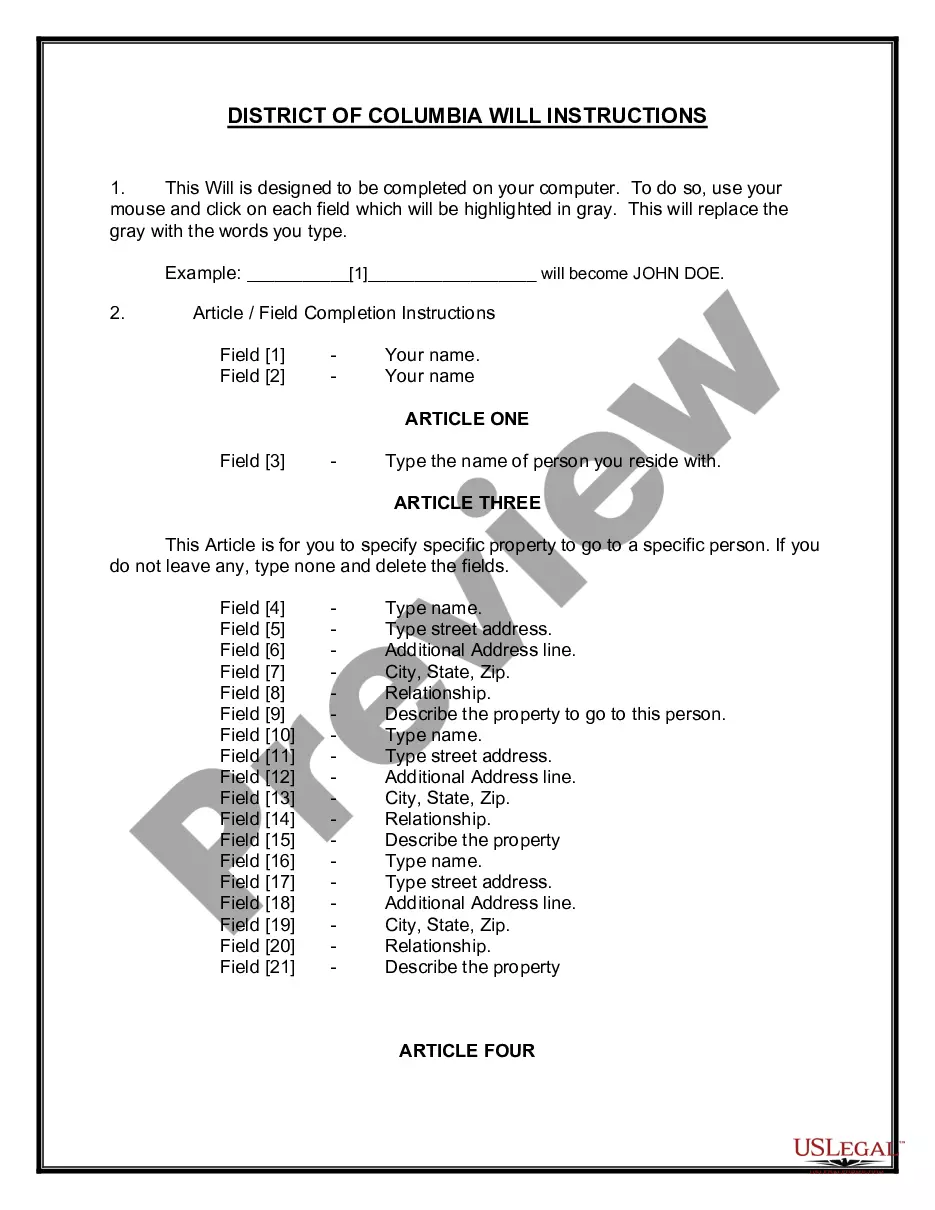
- Begin by entering your full name and the name of your partner in the designated fields.
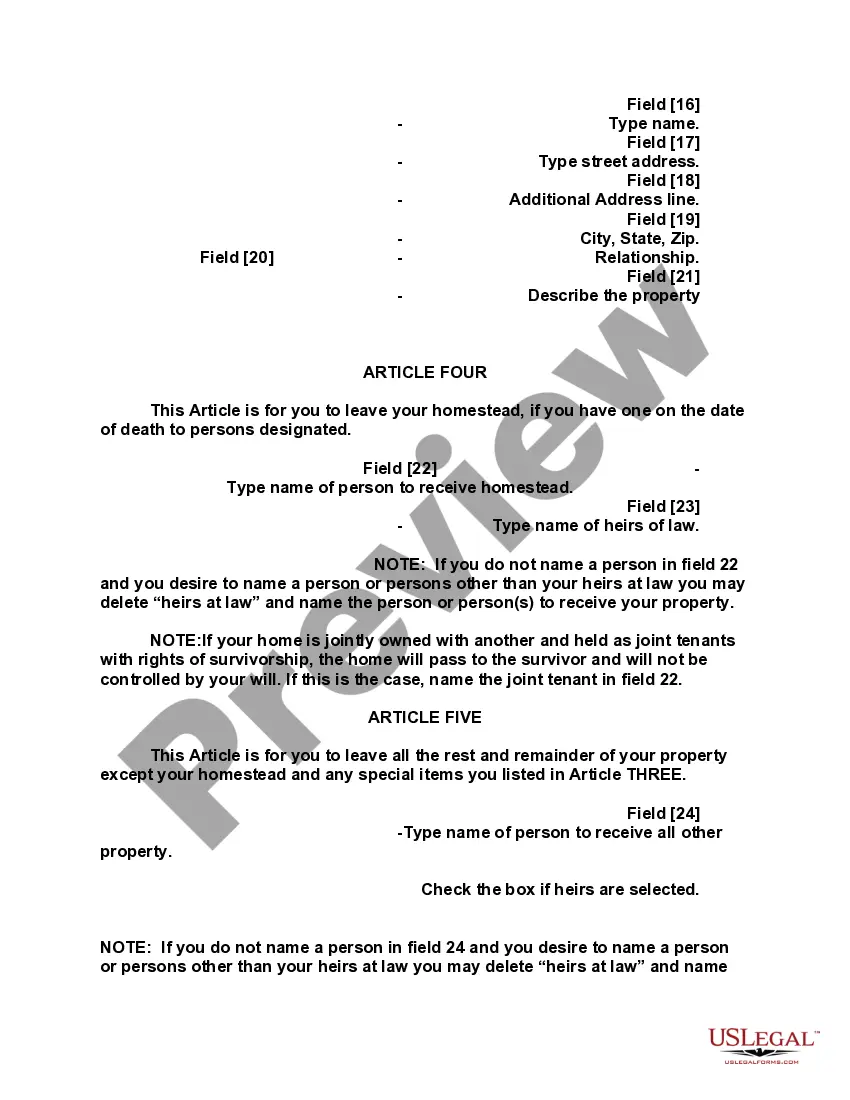
- Specify any property or assets you wish to leave to each other or to others in the fields provided.
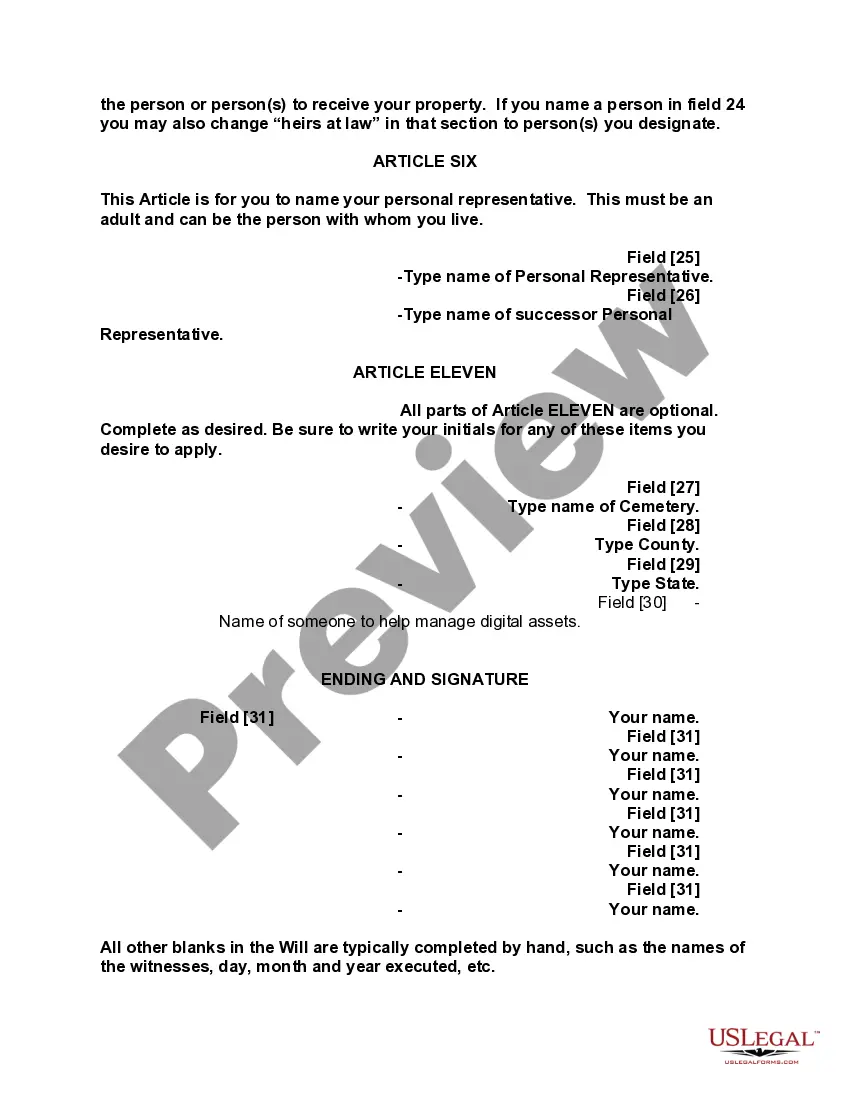
- Designate a personal representative who will administer your estate after you pass.
- Ensure you and your partner sign the documents in front of two unrelated witnesses.
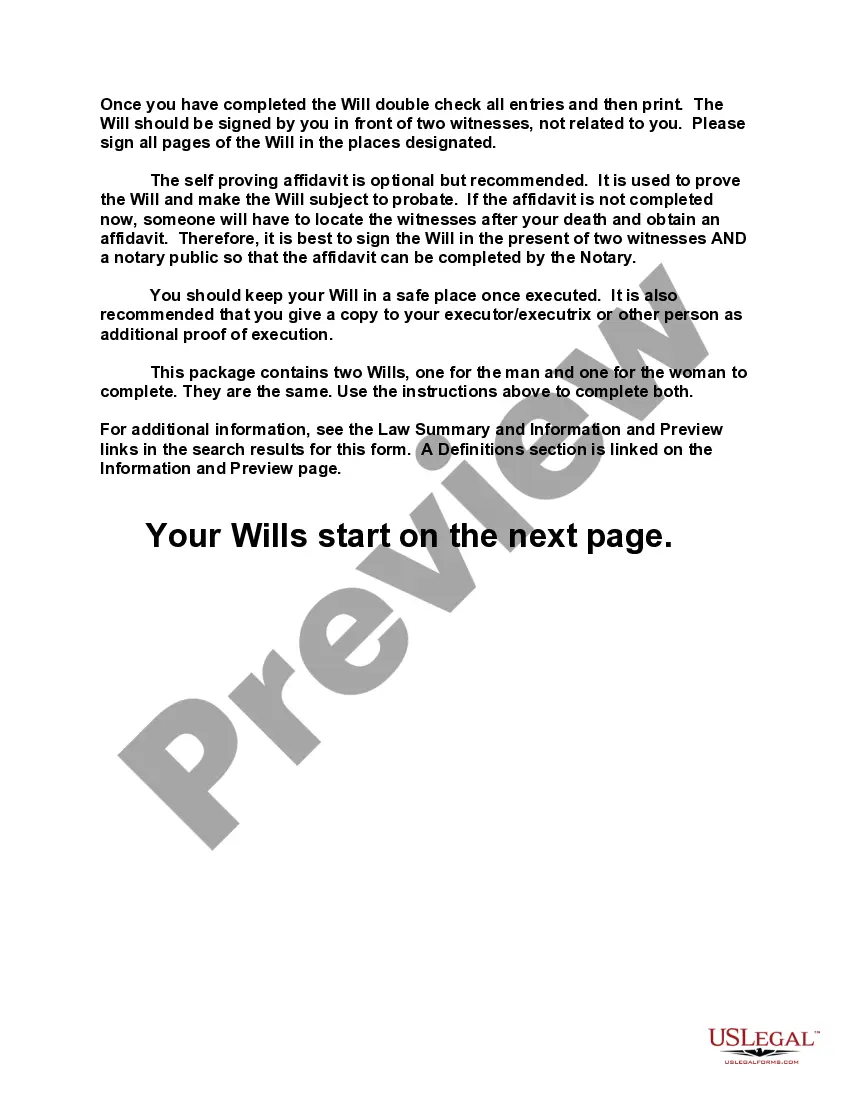
- If applicable, complete the self-proving affidavit and have it notarized for added legal validity.
Notarization guidance
This form needs to be notarized to ensure legal validity. US Legal Forms provides secure online notarization powered by Notarize, allowing you to complete the process through a verified video call, available anytime.
Get your form ready online
Our built-in tools help you complete, sign, share, and store your documents in one place.
Make edits, fill in missing information, and update formatting in US Legal Forms—just like you would in MS Word.
Download a copy, print it, send it by email, or mail it via USPS—whatever works best for your next step.
Sign and collect signatures with our SignNow integration. Send to multiple recipients, set reminders, and more. Go Premium to unlock E-Sign.
If this form requires notarization, complete it online through a secure video call—no need to meet a notary in person or wait for an appointment.
We protect your documents and personal data by following strict security and privacy standards.

Make edits, fill in missing information, and update formatting in US Legal Forms—just like you would in MS Word.

Download a copy, print it, send it by email, or mail it via USPS—whatever works best for your next step.

Sign and collect signatures with our SignNow integration. Send to multiple recipients, set reminders, and more. Go Premium to unlock E-Sign.

If this form requires notarization, complete it online through a secure video call—no need to meet a notary in person or wait for an appointment.

We protect your documents and personal data by following strict security and privacy standards.
Typical mistakes to avoid
- Failing to have the wills signed by two witnesses, which can invalidate the documents.
- Not including an appointed personal representative.
- Overlooking the importance of updating the wills after major life changes.
- Forgetting to discuss wishes with the appointed representative or beneficiaries.
Advantages of online completion
- Convenience: Download and complete the document at your own pace from home.
- Editability: Easily make changes or updates to ensure your wishes are accurately represented.
- Reliability: Legal forms designed by licensed attorneys ensure compliance with state laws.
Legal use & context
- The mutual wills establish a clear legal document that outlines the distribution of assets, minimizing disputes after death.
- These forms can help ensure that each party's wishes are legally recognized, reducing the potential for litigation among surviving family members.
- Benefits from the self-proving affidavit can streamline the probate process, making it easier for the executor to validate the will.
Summary of main points
- This form is ideal for couples cohabitating without legal marriage.
- Mutual wills provide a structured way to outline asset distribution.
- Proper execution is critical, including witness signatures and notarization.
Legal terms and meanings
- Mutual Wills: Wills made by two individuals that reflect their agreed terms regarding the distribution of their property.
- Personal Representative: An individual appointed to administer the estate of the deceased.
- Self-Proving Affidavit: A document that allows a will to be validated without needing to locate witnesses after the testator's death.
Looking for another form?

Form popularity
FAQ
A last will and testament generally does not override a beneficiary designation in accounts like life insurance policies or retirement plans. In the case of District of Columbia Mutual Wills containing Last Will and Testaments for Man and Woman living together not Married with No Children, it’s vital to understand that these designations can supersede your will. Therefore, you should review and coordinate your will and beneficiary designations. Utilizing tools from uslegalforms can help you ensure everything aligns correctly.
One of the biggest mistakes in a will is failing to clearly outline your wishes. In the context of District of Columbia Mutual Wills containing Last Will and Testaments for Man and Woman living together not Married with No Children, ambiguity can lead to disputes among potential beneficiaries. It's crucial to specify who receives what and under what conditions to avoid confusion. Using a formal platform like uslegalforms helps ensure that your will is detailed and legally valid.
Yes, a wife can create her own will without her husband’s involvement. This independence allows her to dictate how she wants her assets distributed after her passing. However, just like husbands, wives must be aware of spousal rights that may come into play. For women living together not married, utilizing District of Columbia Mutual Wills containing Last Will and Testaments for Man and Woman living together not Married with No Children can clearly outline their intentions and protect their interests.
Generally, a living spouse cannot change a will after their partner's death. Once a person passes, their estate follows the instructions laid out in their will. However, if changes are necessary, the surviving spouse may seek to alter any mutual agreements made, depending on the language of the wills. Thus, for those engaged in District of Columbia Mutual Wills containing Last Will and Testaments for Man and Woman living together not Married with No Children, it is crucial to understand the implications of these changes before it’s too late.
A joint will is a single document created by two people, usually married, expressing their final wishes. On the other hand, mutual wills are separate documents that reflect an agreement to distribute assets in a certain way after death. For those living together not married, establishing District of Columbia Mutual Wills containing Last Will and Testaments for Man and Woman living together not Married with No Children can simplify the estate planning process. It ensures that both partners' wishes align and are legally recognized.
In general, a husband can exclude his wife from his will, but there are legal considerations depending on state law. Most states grant spouses an elective share of the estate, which protects them from complete disinheritance. If a couple lives in the District of Columbia and seeks mutual wills, understanding these rights becomes vital when planning. Utilizing District of Columbia Mutual Wills containing Last Will and Testaments for Man and Woman living together not Married with No Children can help navigate these complexities.
Wills for married couples often reflect mutual agreements about the distribution of assets. Many couples opt for joint or mutual wills, ensuring each partner’s wishes are honored after one passes. It’s important to keep in mind that in some jurisdictions, a surviving spouse may have certain rights regardless of the will's contents. For example, District of Columbia Mutual Wills containing Last Will and Testaments for Man and Woman living together not Married with No Children can provide clarity in these situations.
Yes, a married man can create a will without his wife. However, it's essential to understand that any will made may be subject to laws regarding spousal rights. This means his spouse might have a claim to a portion of the estate, regardless of his intentions. For couples living together but not married, like those using District of Columbia Mutual Wills containing Last Will and Testaments for Man and Woman living together not Married with No Children, clear documentation can help clarify wishes.
For a will to be valid in Washington, D.C., it must meet certain criteria. It should be in writing, signed by the person making the will, and witnessed by at least two people who do not stand to benefit from the will. Understanding these requirements is crucial when creating District of Columbia Mutual Wills containing Last Will and Testaments for Man and Woman living together not Married with No Children to ensure your wishes are upheld.
Yes, you can list your girlfriend as a beneficiary in your will. This option is often utilized by those in the category of District of Columbia Mutual Wills containing Last Will and Testaments for Man and Woman living together not Married with No Children. It’s important to ensure that your intentions are clear, so your girlfriend receives the inheritance you intend for her.