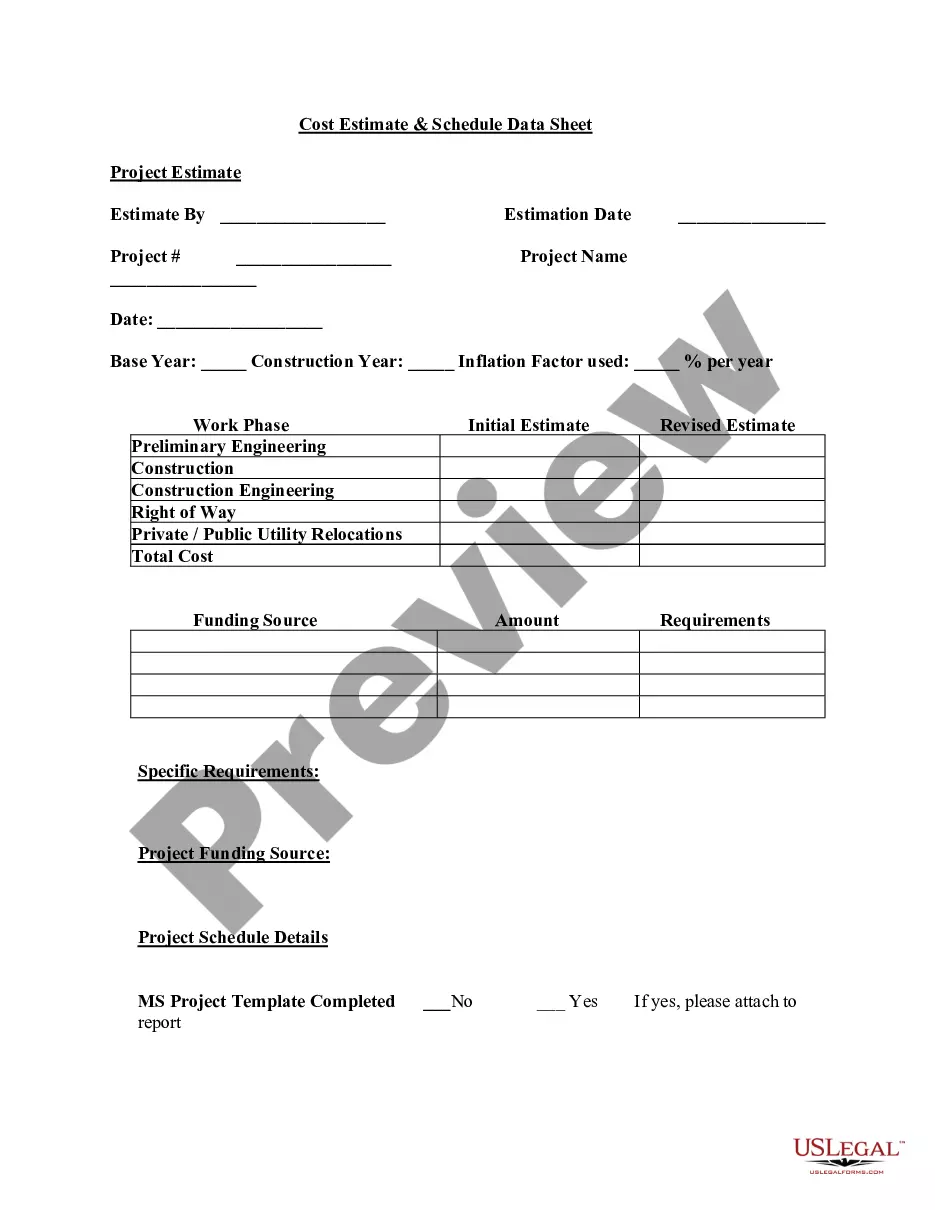
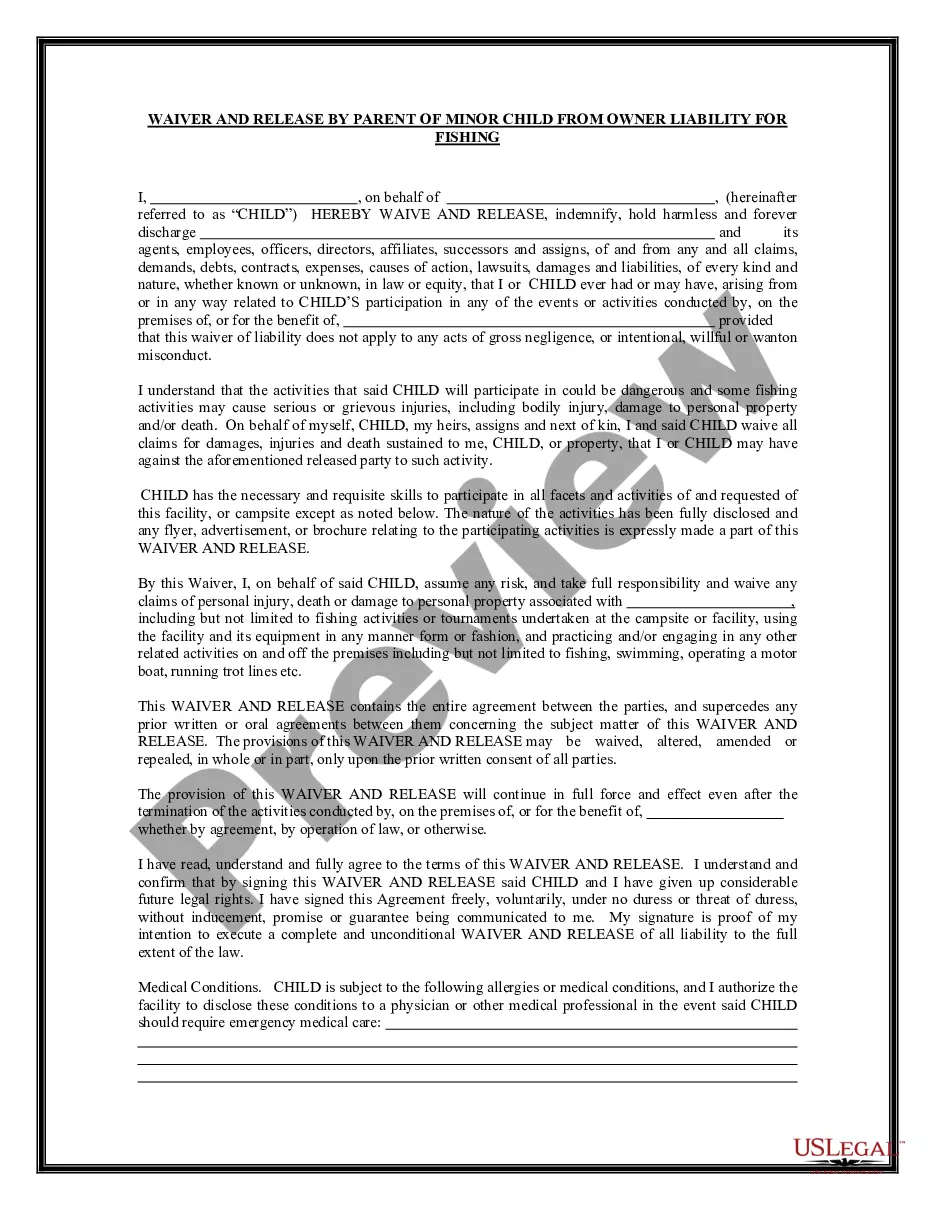
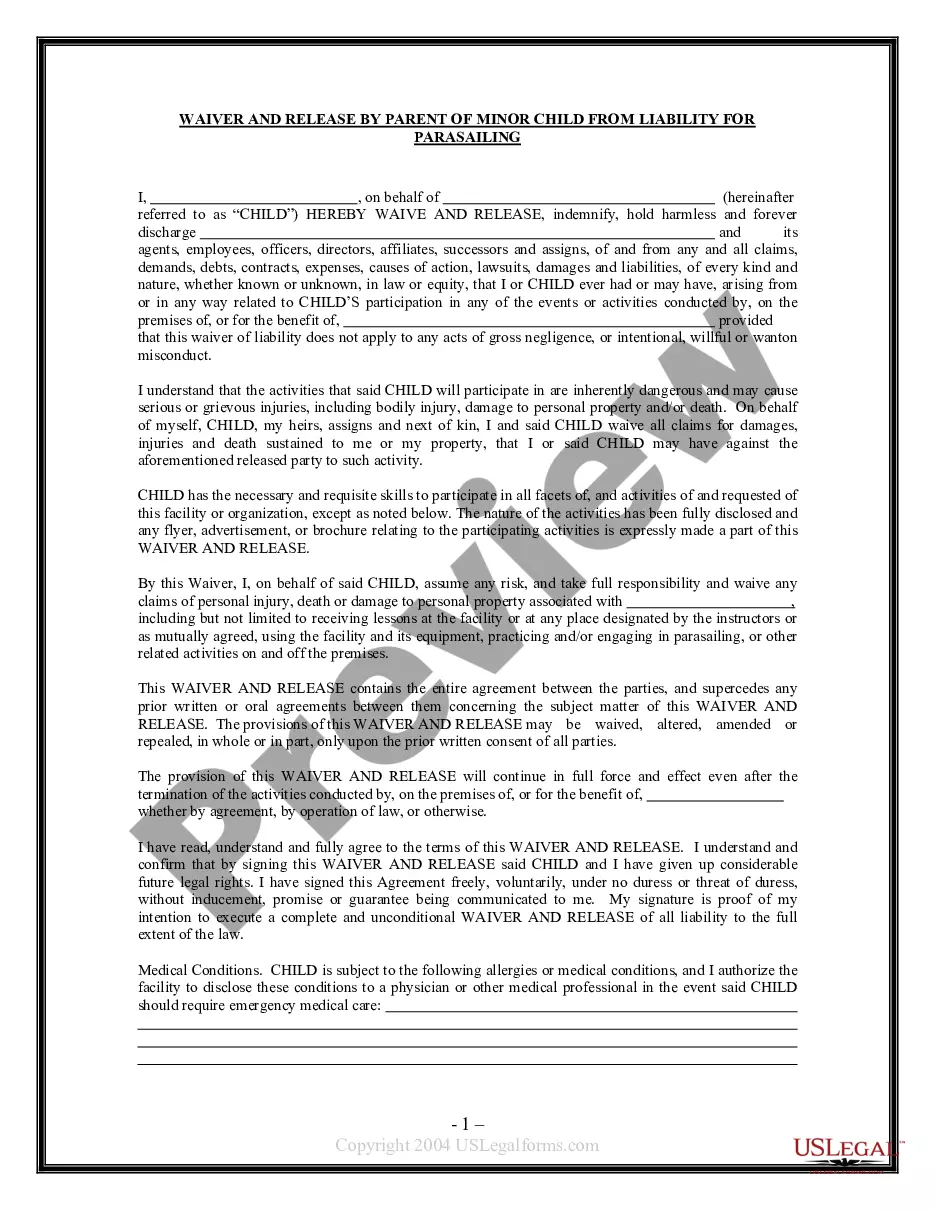
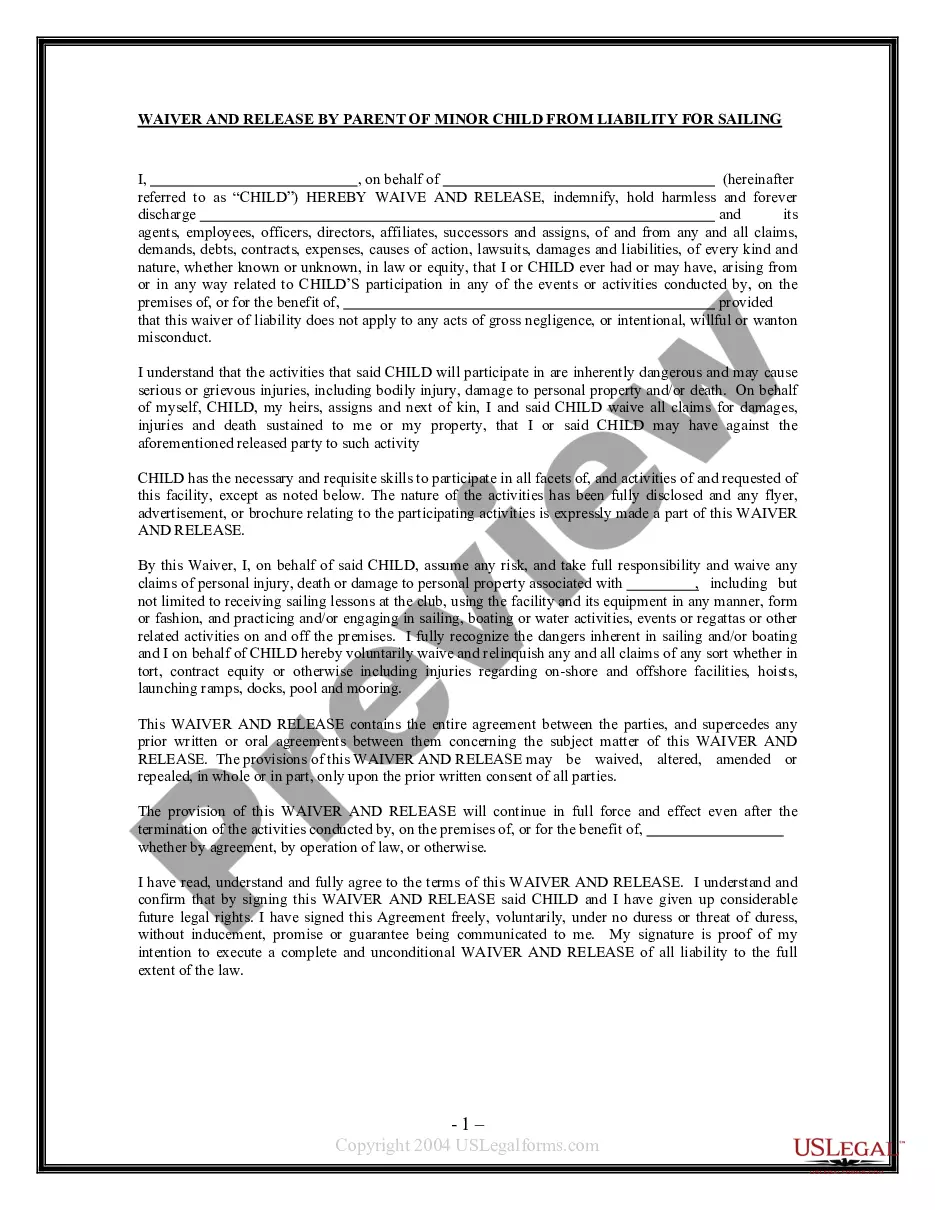
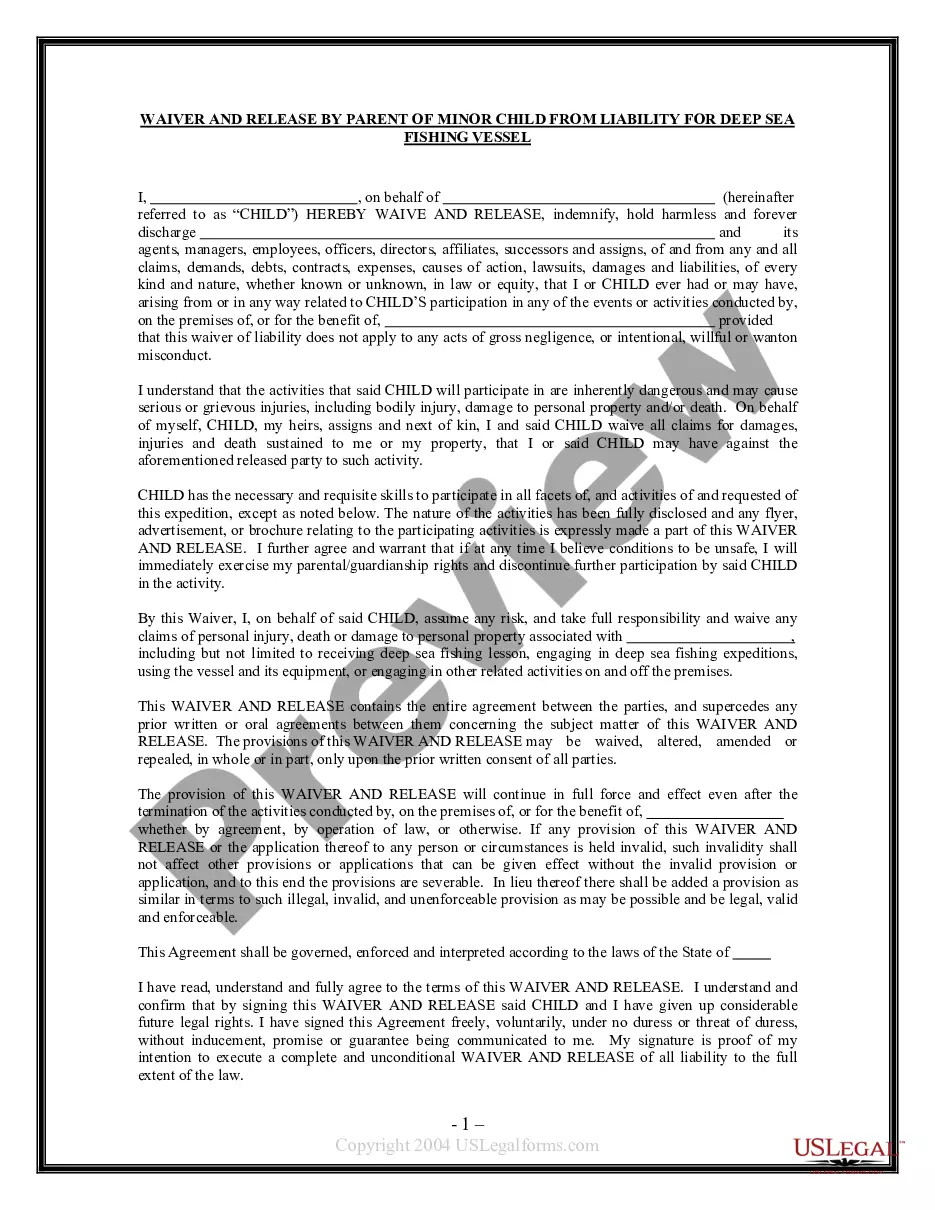
This form allows a parent or guardian to release a canoeing/kayaking facility from liability for injuries which may be incurred by a minor child while on the premises, taking part in activities, etc.
Connecticut Waiver and Release From Liability For Minor Child for Canoeing - Kayaking
Category:
State:
Multi-State
Control #:
US-WAV-43M
Format:
Word;
Rich Text
Instant download
Description
Free preview
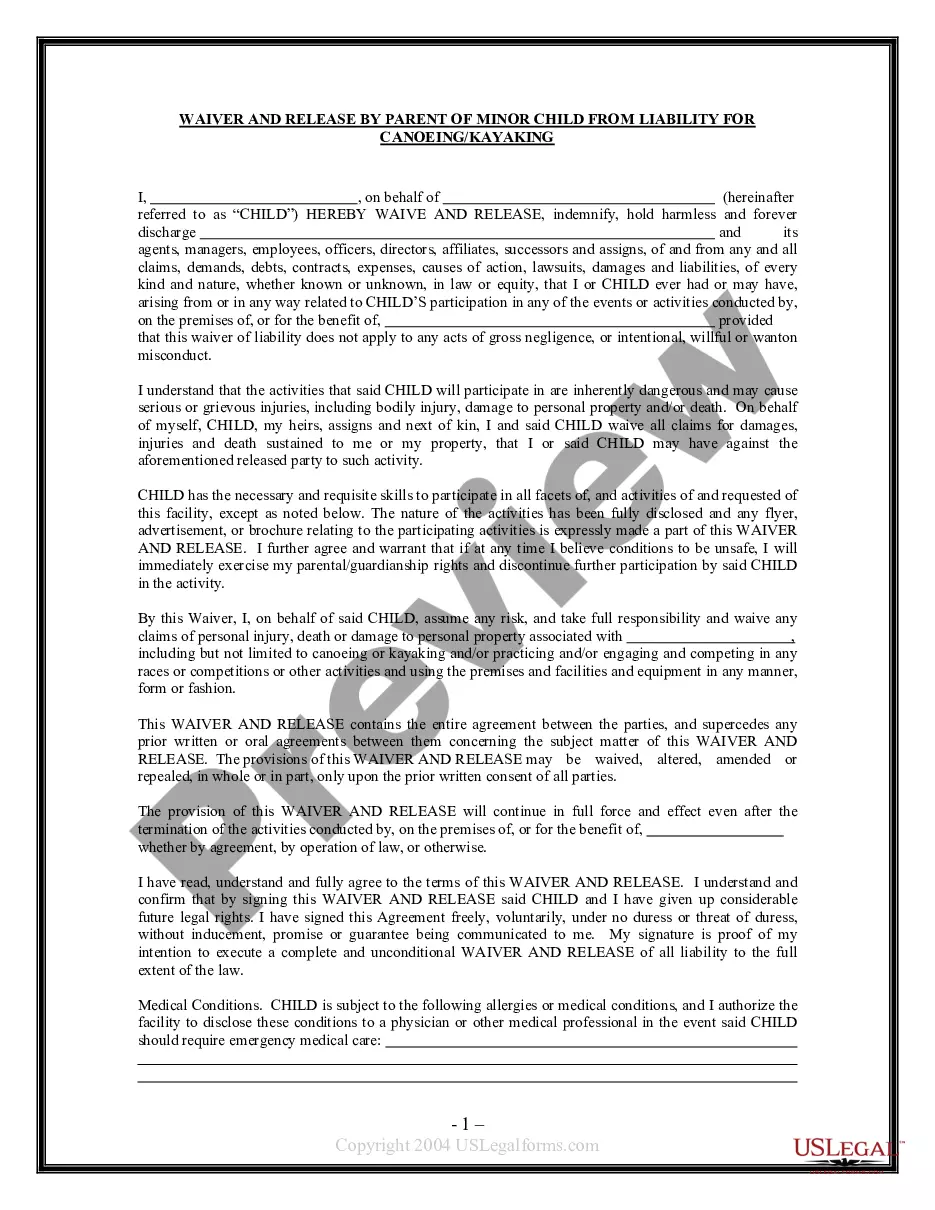
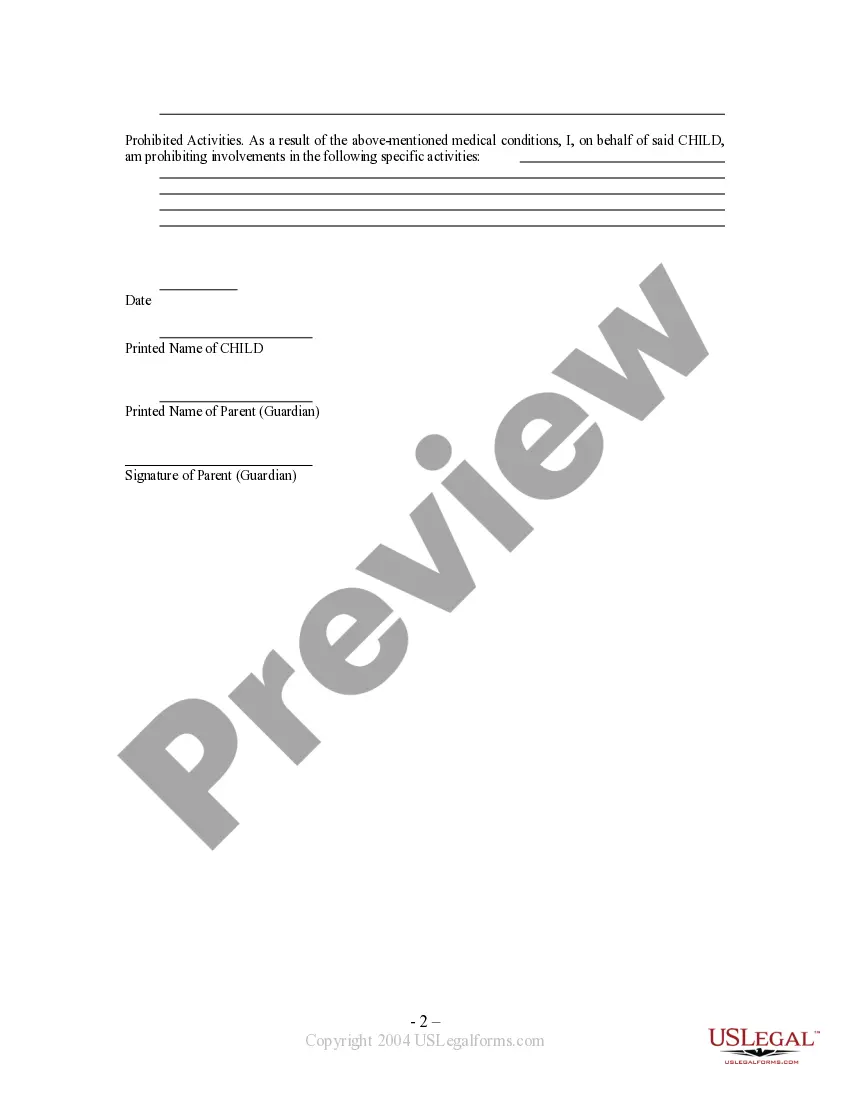
How to fill out Waiver And Release From Liability For Minor Child For Canoeing - Kayaking?
Finding the appropriate legal document template can be a challenge. Of course, there are numerous templates accessible online, but how can you locate the legal document you require? Utilize the US Legal Forms platform. The service offers thousands of templates, including the Connecticut Waiver and Release From Liability For Minor Child for Canoeing - Kayaking, which you can use for both business and personal needs. All the documents are reviewed by experts and comply with local and federal regulations.
If you are already registered, Log In to your account and click the Download button to obtain the Connecticut Waiver and Release From Liability For Minor Child for Canoeing - Kayaking. Use your account to search for the legal documents you have purchased previously. Visit the My documents section of your account to get another copy of the document you need.
If you are a new user of US Legal Forms, here are simple steps for you to follow: First, ensure you have selected the correct document for your city/region. You can browse the template using the Review button and read the document details to confirm it is suitable for you. If the document does not meet your requirements, use the Search field to find the appropriate document. Once you are certain that the document will work, click the Buy now button to obtain the document. Choose the payment plan you prefer and enter the required information. Create your account and pay for the order using your PayPal account or credit card. Select the file format and download the legal document template to your device. Complete, modify, print, and sign the downloaded Connecticut Waiver and Release From Liability For Minor Child for Canoeing - Kayaking.
- US Legal Forms is the largest repository of legal documents offering various templates.
- Utilize the service to download professionally crafted documents that adhere to state regulations.
Form popularity
FAQ
How to Fill Out a Hold Harmless AgreementThe date of the agreement.The name of the person held harmless or protected, with their address.The name of the other party to the agreement, with their address.Details about the activity or event the agreement is about, such as horseback riding or country club membership.More items...?
Liability waivers are enforceable in California solely to the extent they shift to the customer the risk of ordinary negligence.
A hold harmless agreement protects business owners from being sued when someone suffers damage, bodily injury, or financial loss on business property or while a service is being provided.
A hold harmless clause is used to protect a party in a contract from liability for damages or losses. In signing such a clause, the other party accepts responsibility for certain risks involved in contracting for the service. In some states, the use of a hold harmless clause is prohibited in certain construction jobs.
The Waiver must be clearly worded and unambiguous in its intent to relieve any and all legal liability, even liability for negligence. The Waiver should be prominent and not hidden in the fine print of a long contract. The Waiver must be signed by the person who it is being used against.
An example would be you hire someone to do some remodeling work on your house and you do not want to be held liable if they hurt themselves while on your property. You can ask them to sign a Hold Harmless Agreement to protect you should an incident occur.
4. When is a liability waiver enforceable in California? Liability waivers are enforceable in California solely to the extent they shift to the customer the risk of ordinary negligence. intentionally wrongful act.
You might think that since you signed a waiver acknowledging the risks of the activity, you have no legal leg to stand on to file a personal injury lawsuit. Waivers can make personal injury lawsuits more complex, but you can still seek damages for injuries that could have and should have been prevented.
Any hold harmless agreement should include a few key provisions, including: The party that will be held harmless or protected, including their contact information and address. The other party to the agreement, including their contact information and address. The date of the agreement.
A liability waiver, or release waiver, is a legal document that a company or organization requires members of the public to sign in order to protect their organization from being sued if you sustain an injury.