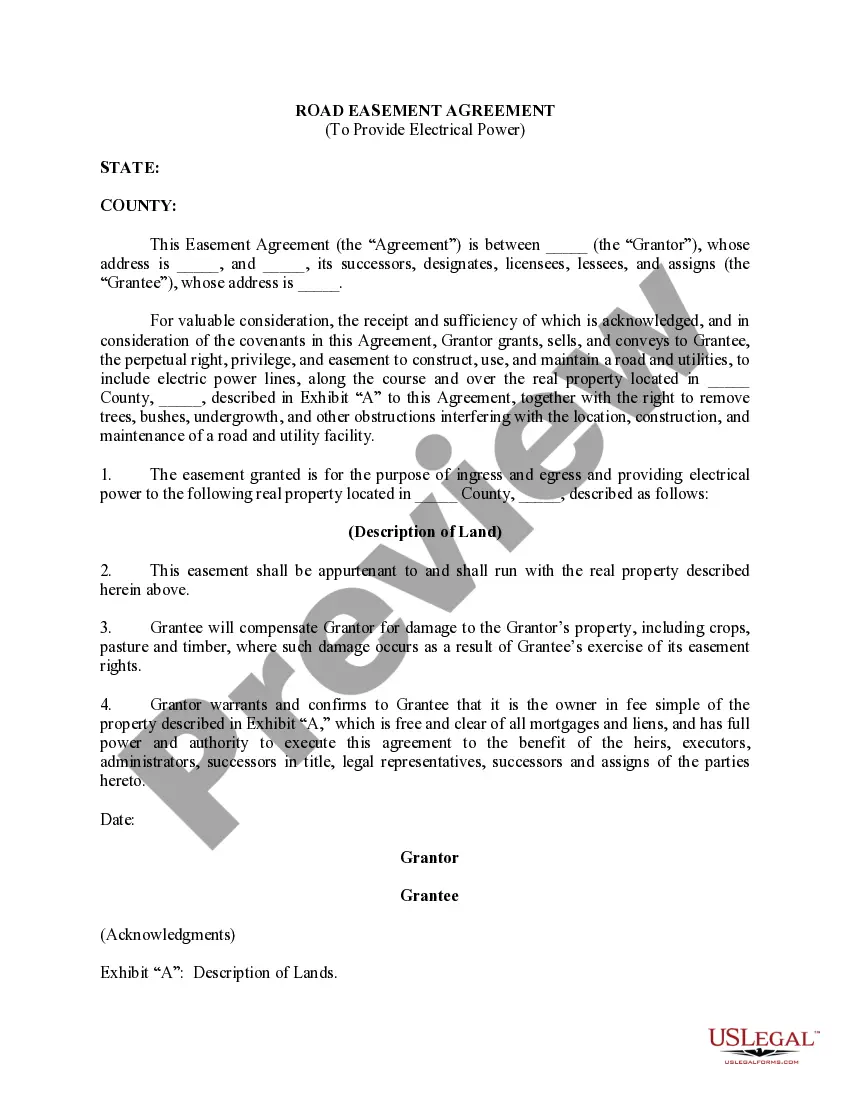
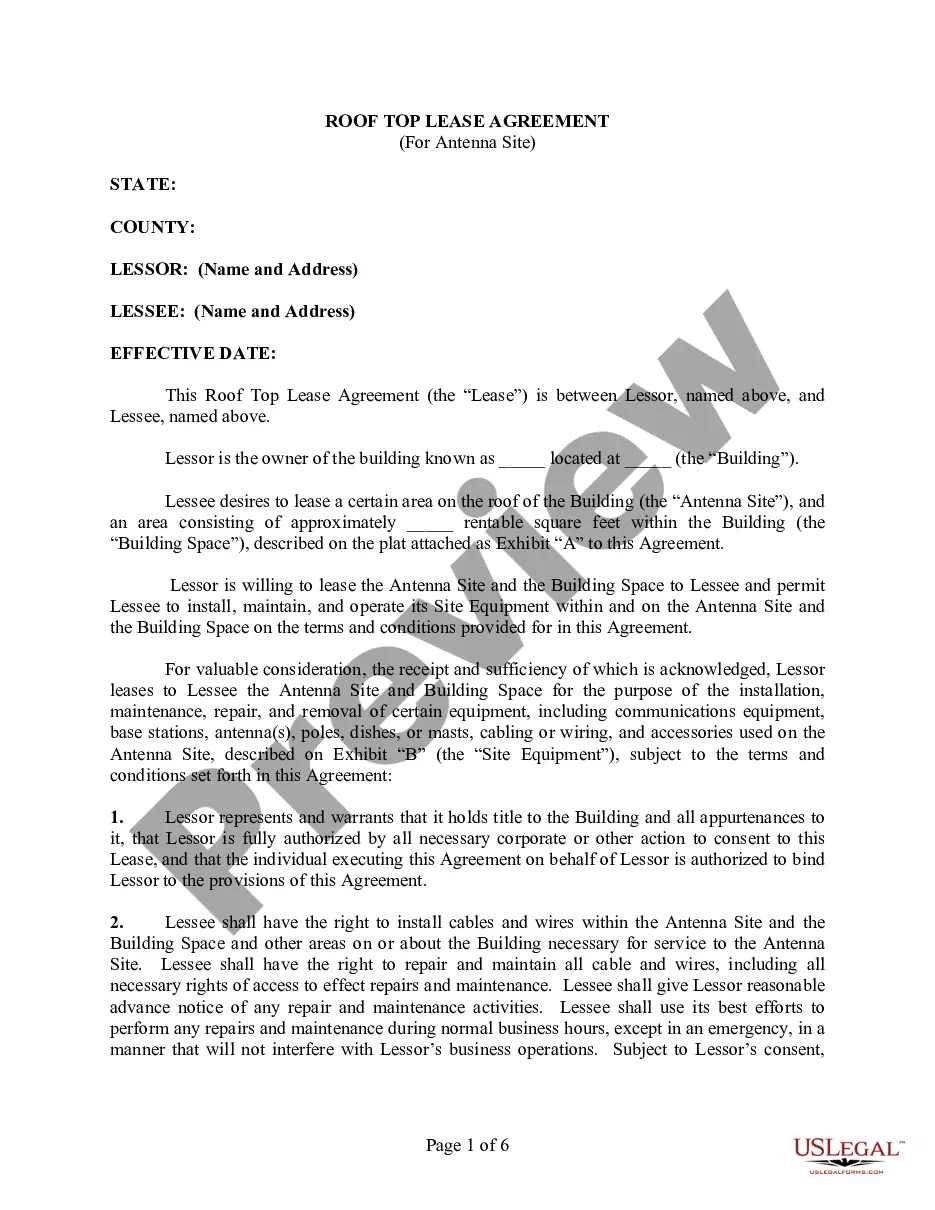
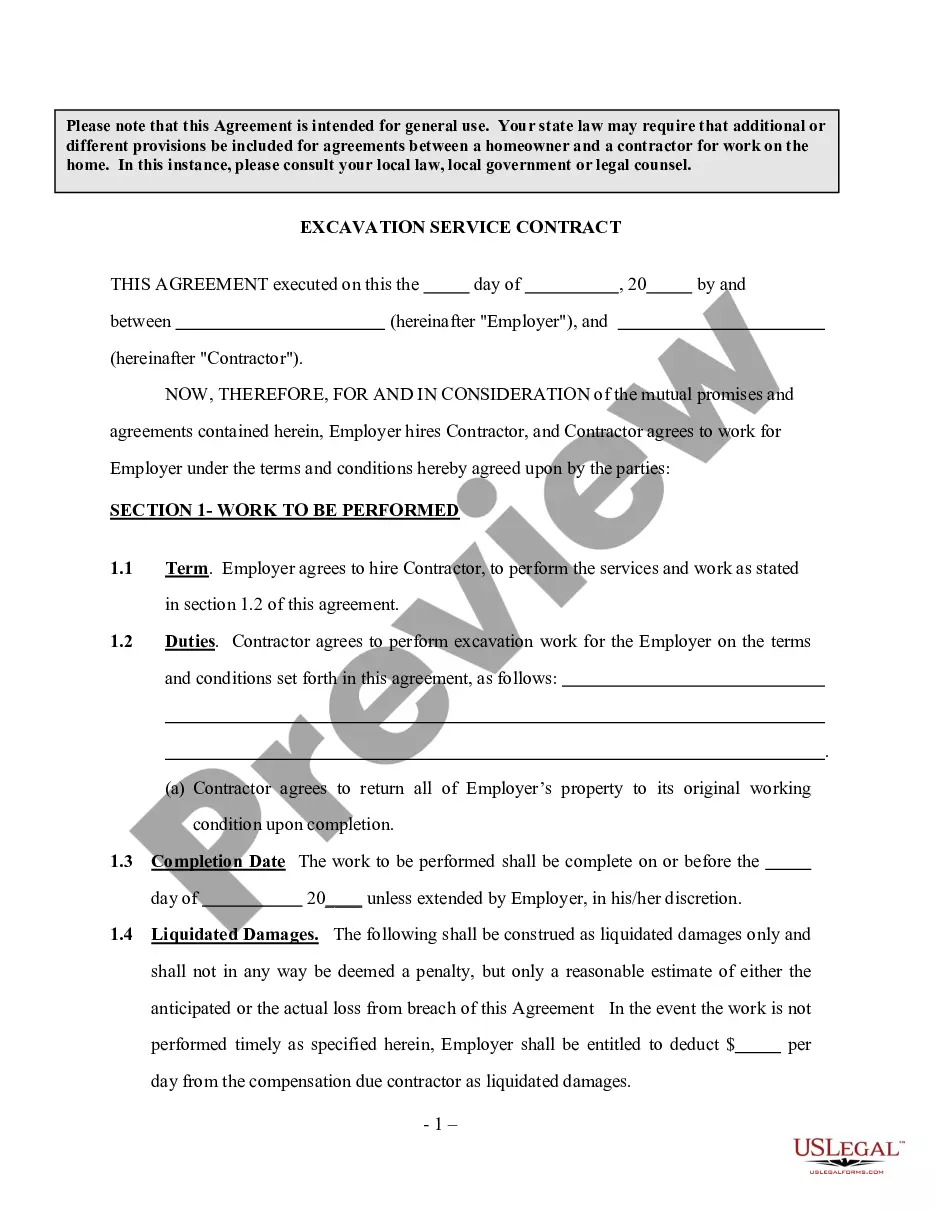
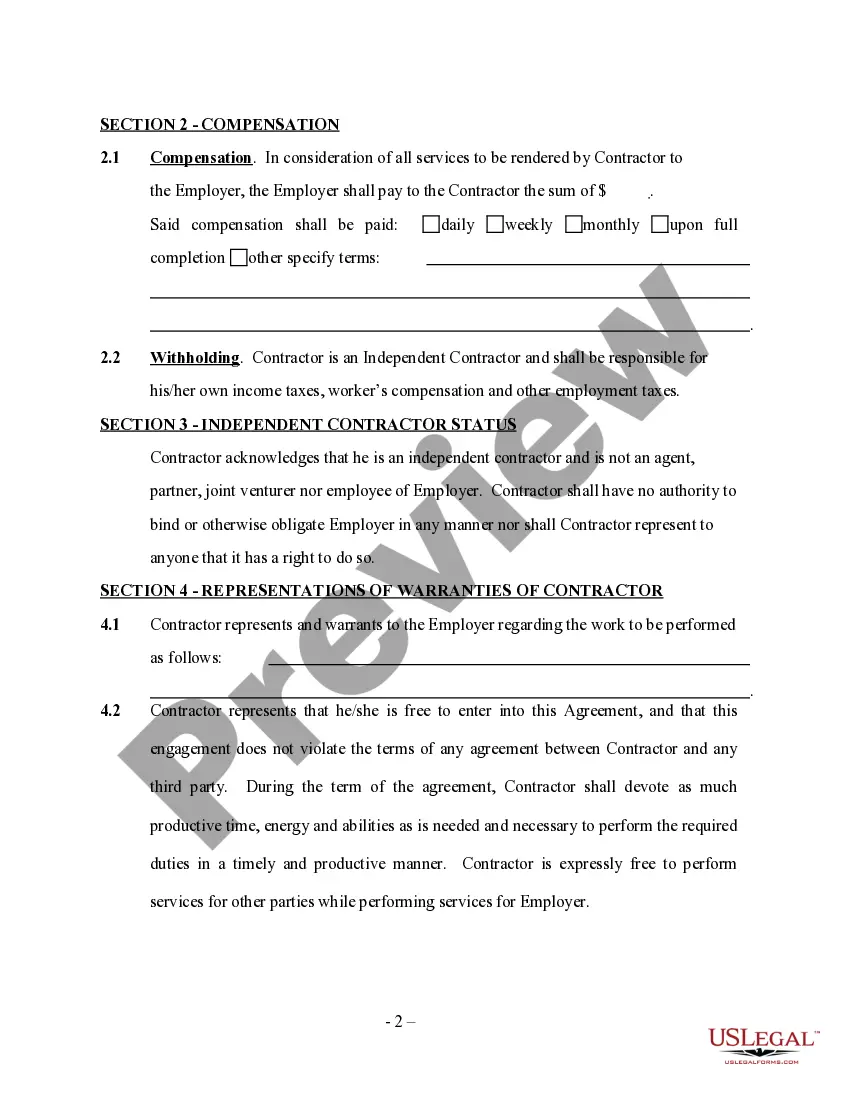
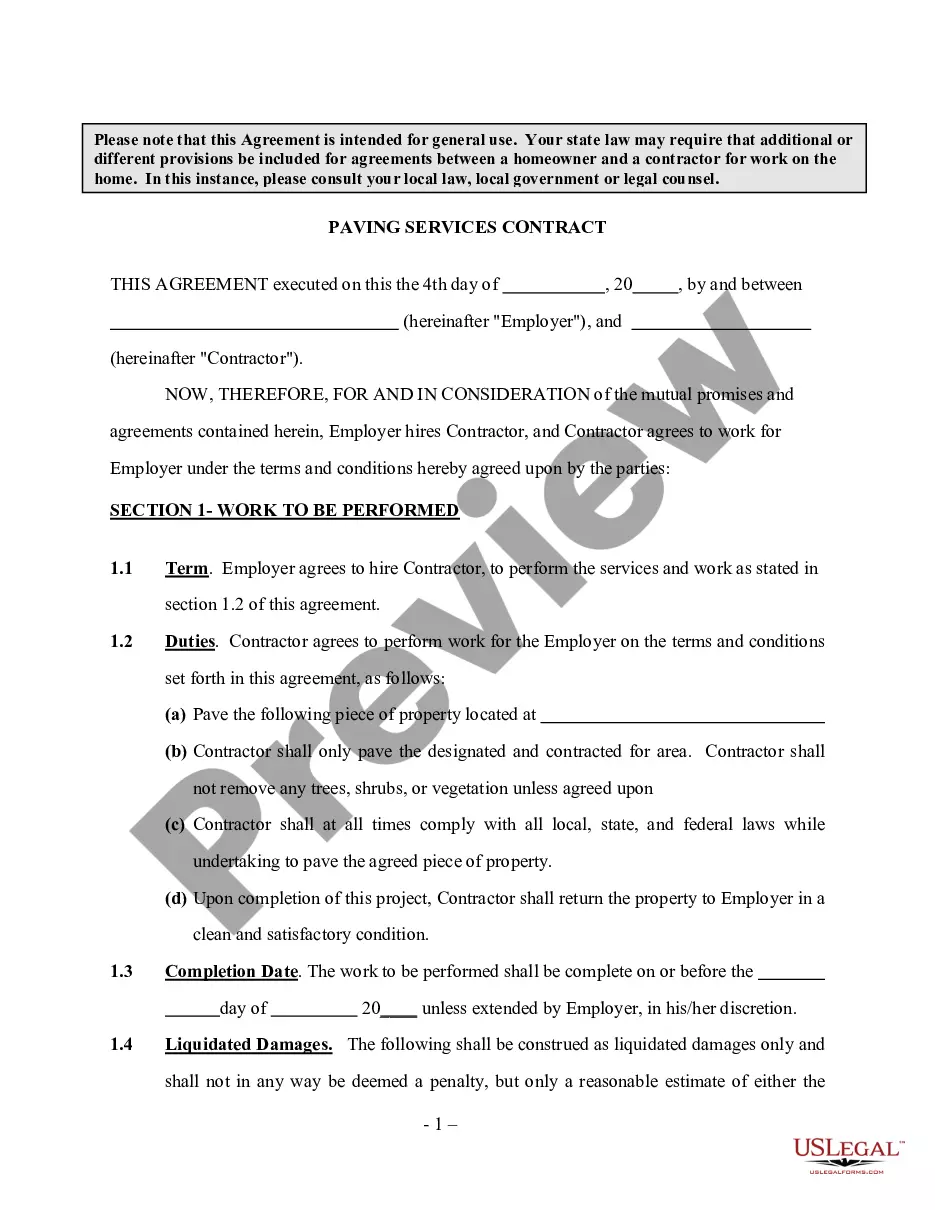
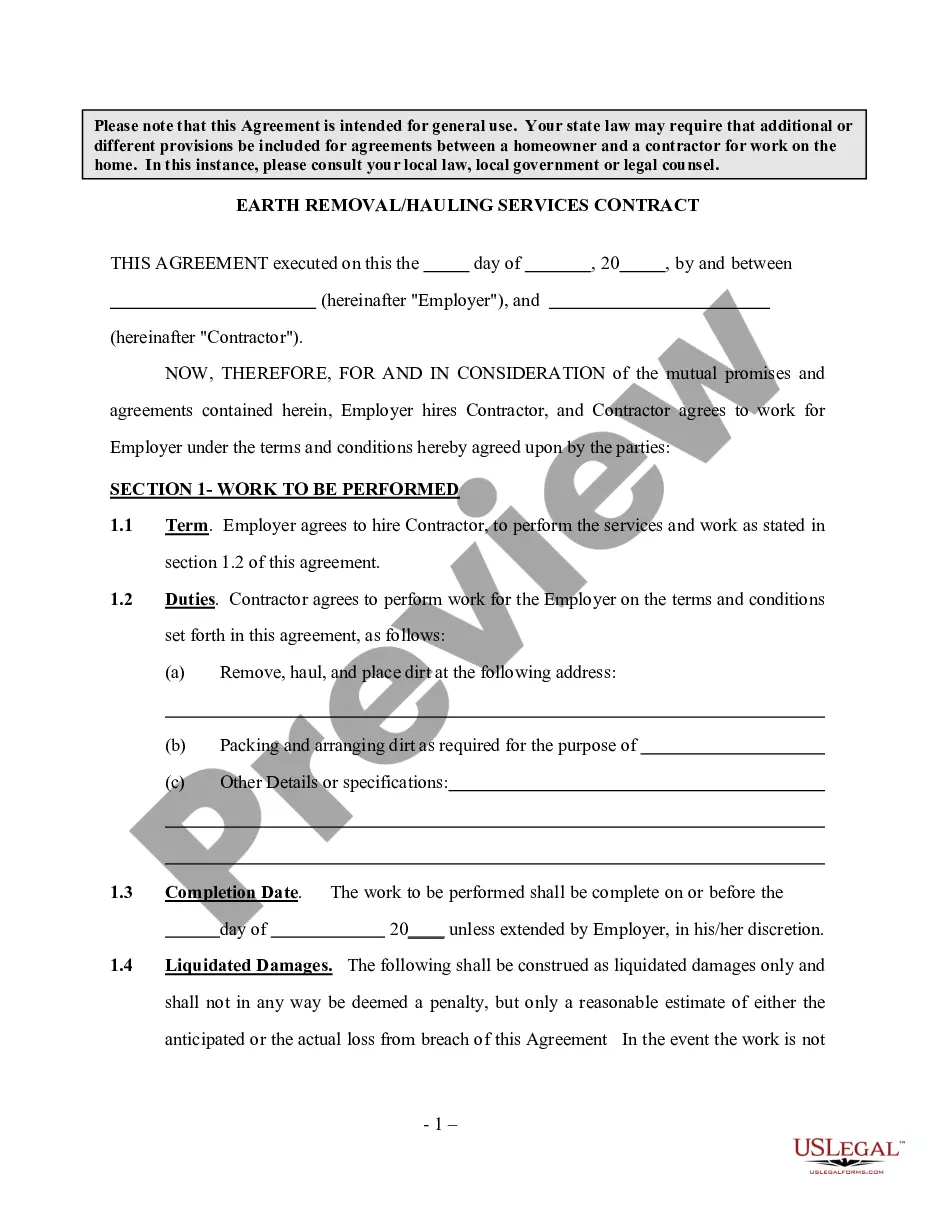
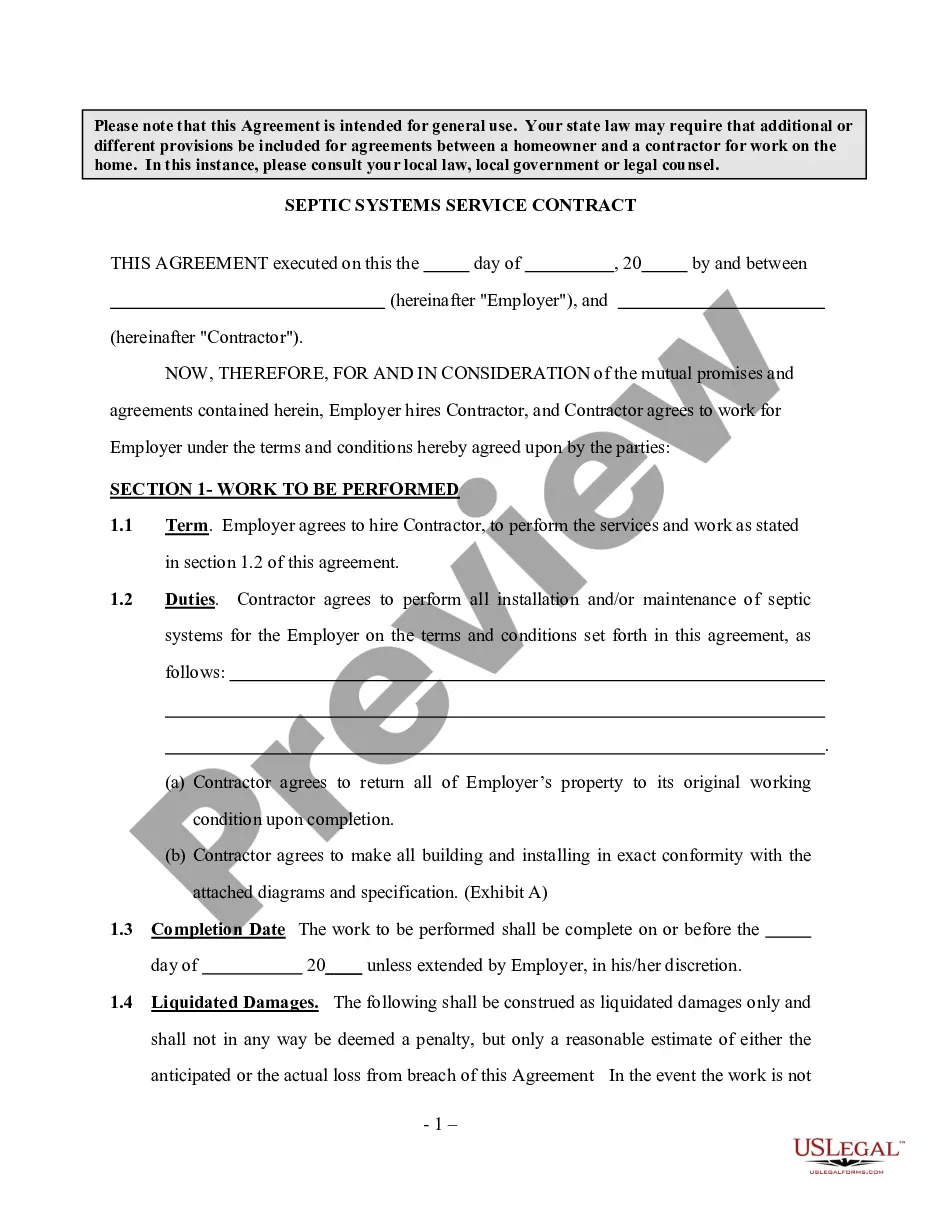
Employer contracts with an independent contractor to provide excavation services as specified and agreed upon in the contract. Please note that this Agreement is intended for general use. Your state law may require that additional or different provisions be included for agreements between a homeowner and a contractor for work on the home. In this instance, please consult your local law, local government or legal counsel.
Connecticut Self-Employed Excavation Service Contract
State:
Multi-State
Control #:
US-INDC-95
Format:
Word;
Rich Text
Instant download
Description
Free preview
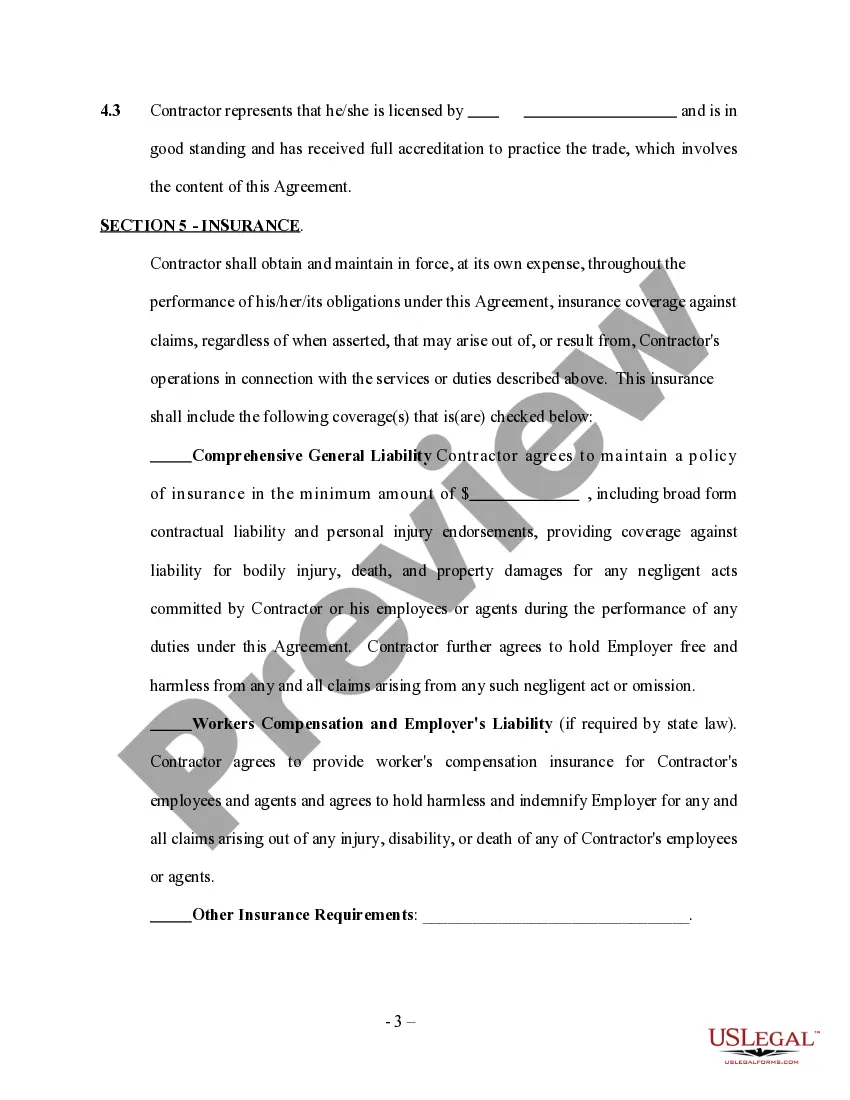
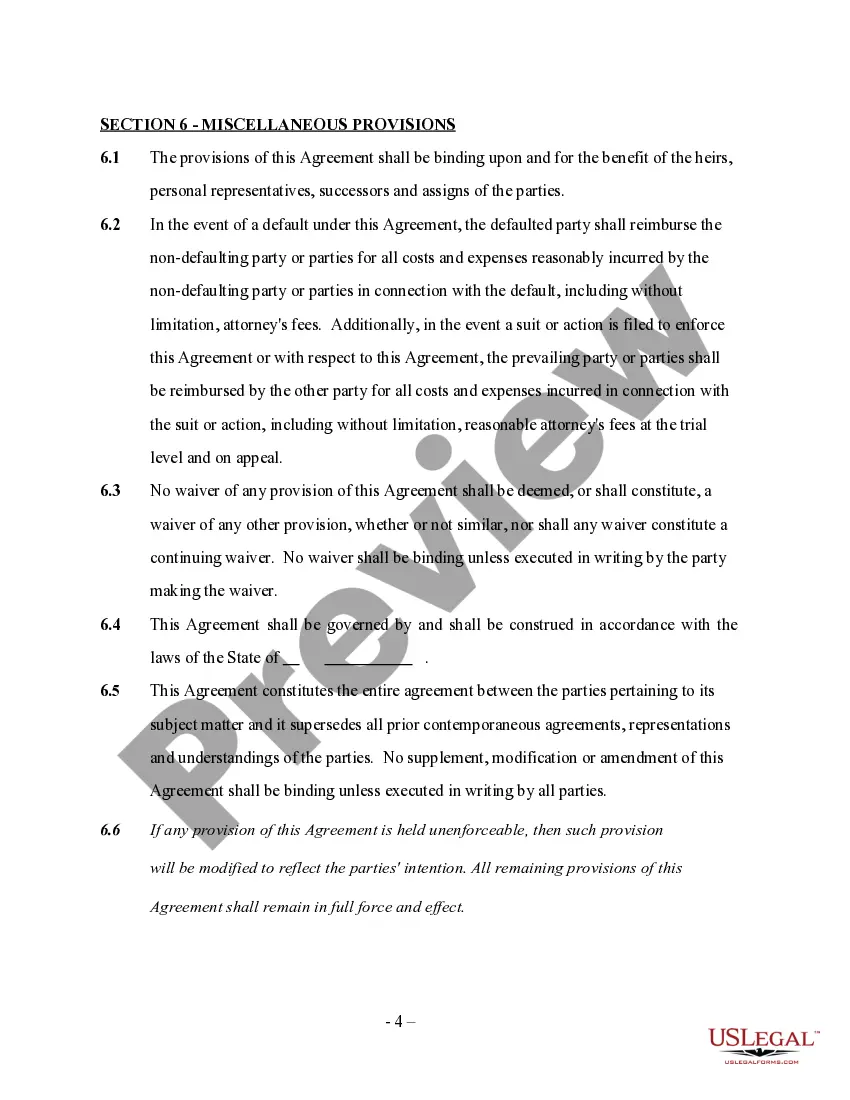
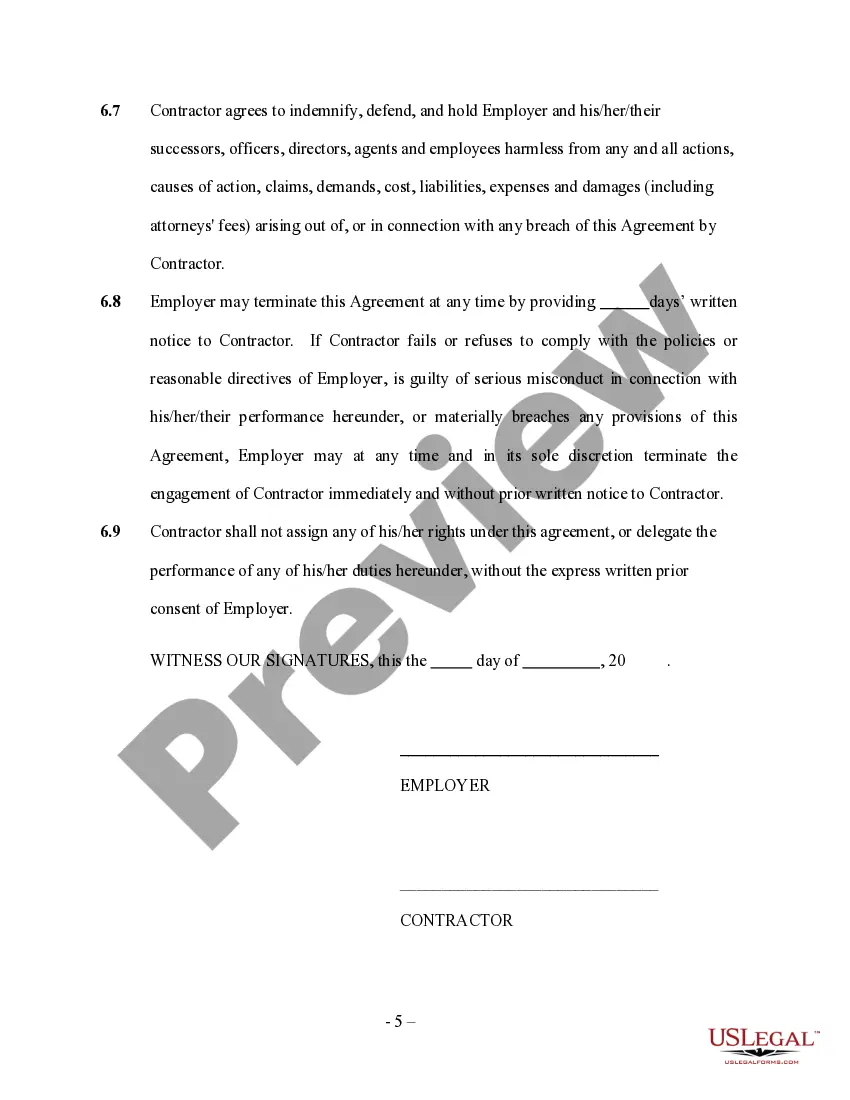
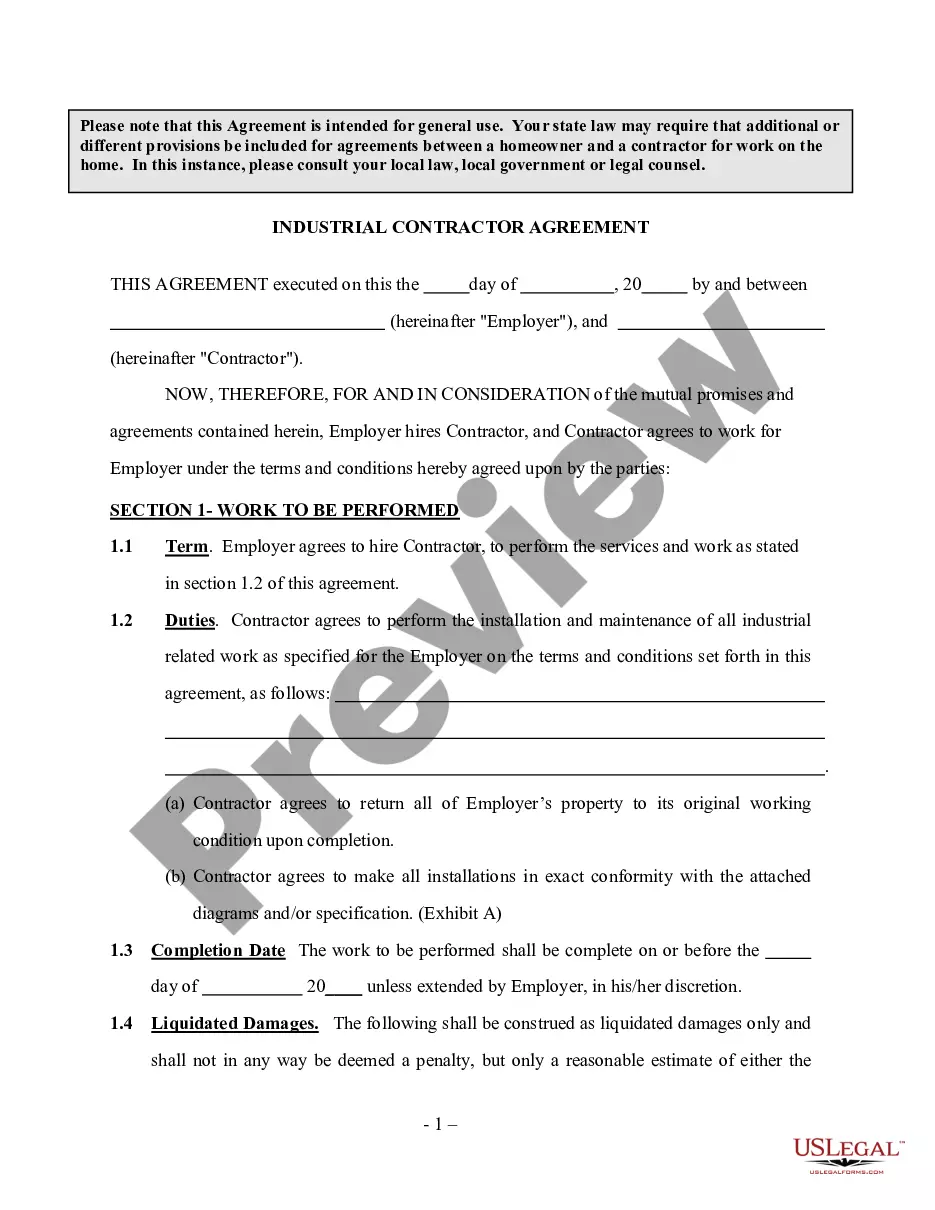
Get your form ready online
Our built-in tools help you complete, sign, share, and store your documents in one place.
Built-in online Word editor
Make edits, fill in missing information, and update formatting in US Legal Forms—just like you would in MS Word.
Export easily
Download a copy, print it, send it by email, or mail it via USPS—whatever works best for your next step.
E-sign your document
Sign and collect signatures with our SignNow integration. Send to multiple recipients, set reminders, and more. Go Premium to unlock E-Sign.
Notarize online 24/7
If this form requires notarization, complete it online through a secure video call—no need to meet a notary in person or wait for an appointment.
Store your document securely
We protect your documents and personal data by following strict security and privacy standards.

Make edits, fill in missing information, and update formatting in US Legal Forms—just like you would in MS Word.

Download a copy, print it, send it by email, or mail it via USPS—whatever works best for your next step.

Sign and collect signatures with our SignNow integration. Send to multiple recipients, set reminders, and more. Go Premium to unlock E-Sign.

If this form requires notarization, complete it online through a secure video call—no need to meet a notary in person or wait for an appointment.

We protect your documents and personal data by following strict security and privacy standards.
Looking for another form?

How to fill out Self-Employed Excavation Service Contract?
You can spend hours on the web trying to locate the official document template that satisfies the federal and state requirements you seek. US Legal Forms provides thousands of legal forms that are reviewed by professionals.
It is easy to download or print the Connecticut Self-Employed Excavation Service Contract from my service. If you already have a US Legal Forms account, you can Log In and click the Download button. Afterwards, you can complete, modify, print, or sign the Connecticut Self-Employed Excavation Service Contract.
Each legal document template you purchase is yours forever. To obtain another copy of any purchased form, visit the My documents tab and click the appropriate button. If you are using the US Legal Forms website for the first time, follow the simple instructions below: First, ensure you have selected the correct document template for the region/area of your choice. Review the form details to make sure you have chosen the right form. If available, use the Preview button to examine the document template as well.
Utilize professional and state-specific templates to address your business or personal needs.
- If you wish to find another version of the form, use the Search field to locate the template that meets your needs.
- Once you have found the template you require, click on Get now to proceed.
- Choose the pricing plan you want, enter your details, and register for an account on US Legal Forms.
- Complete the transaction. You can use your credit card or PayPal account to purchase the legal form.
- Select the format of the document and download it to your device.
- Make changes to your document if necessary. You can complete, modify, sign, and print the Connecticut Self-Employed Excavation Service Contract.
- Download and print thousands of document templates using the US Legal Forms website, which offers the largest selection of legal forms.
Form popularity
FAQ
Writing a contract for construction work involves specifying project details, timelines, costs, and payment schedules. Include clauses for change orders, warranties, and dispute resolution. For those in excavation services, a Connecticut Self-Employed Excavation Service Contract template can provide a strong foundation to ensure all important aspects are covered.
To become an independent contractor in Connecticut, you need to register your business and obtain the necessary permits and licenses. Familiarize yourself with state tax obligations and insurance requirements. Using a Connecticut Self-Employed Excavation Service Contract can help establish a professional relationship with clients and clarify expectations.
When writing a contract as an independent contractor, focus on clarity and detail. Outline the work you will perform, payment structure, and any deadlines. For an effective Connecticut Self-Employed Excavation Service Contract, make sure to address safety regulations and compliance with local laws to protect both parties.
A basic independent contractor agreement outlines the relationship between the contractor and the client, specifying the work to be done, payment terms, and responsibilities. It typically includes sections on confidentiality, dispute resolution, and termination of the contract. For those in Connecticut, using a Connecticut Self-Employed Excavation Service Contract template can simplify this process.
To write an independent contractor agreement, start by clearly defining the scope of work, payment terms, and duration of the contract. Include details such as project deadlines and responsibilities of both parties. For a Connecticut Self-Employed Excavation Service Contract, ensure that you specify any necessary licenses and insurance required for excavation services.
Yes, masonry work is generally considered taxable in Connecticut. This includes services provided under a Connecticut Self-Employed Excavation Service Contract, which may involve masonry as part of the overall project. It's important to consult with a tax professional to understand the specific tax obligations associated with such services. Platforms like uslegalforms can help you navigate the legal and tax implications of your excavation and masonry projects.
Yes, an excavator operates as a contractor when they provide excavation services for various projects. Under a Connecticut Self-Employed Excavation Service Contract, they assume responsibility for the work performed, ensuring it meets local regulations and standards. This contract typically outlines the scope of work, payment terms, and project timelines. Engaging with a qualified excavator guarantees that your excavation needs are handled professionally.
Yes, Connecticut requires certain contractors to obtain a license, especially for specialized work like excavation. Depending on the scope of your services, you may need to apply for a contractor's license through the state. Having a Connecticut Self-Employed Excavation Service Contract not only establishes your business but also ensures you comply with licensing requirements.
To qualify as an independent contractor in Connecticut, you must meet specific criteria set by the IRS and state laws. You typically need to demonstrate that you operate your own business, control your work schedule, and provide your own tools. Using a Connecticut Self-Employed Excavation Service Contract can help clarify your status and rights as an independent contractor.
The 7 minute rule in Connecticut refers to the legal guideline regarding work hours for independent contractors. It states that if a contractor works for a client for less than seven minutes, the time may not be billable. Understanding this rule can help you manage your time effectively and maximize your earnings, especially when using a Connecticut Self-Employed Excavation Service Contract.