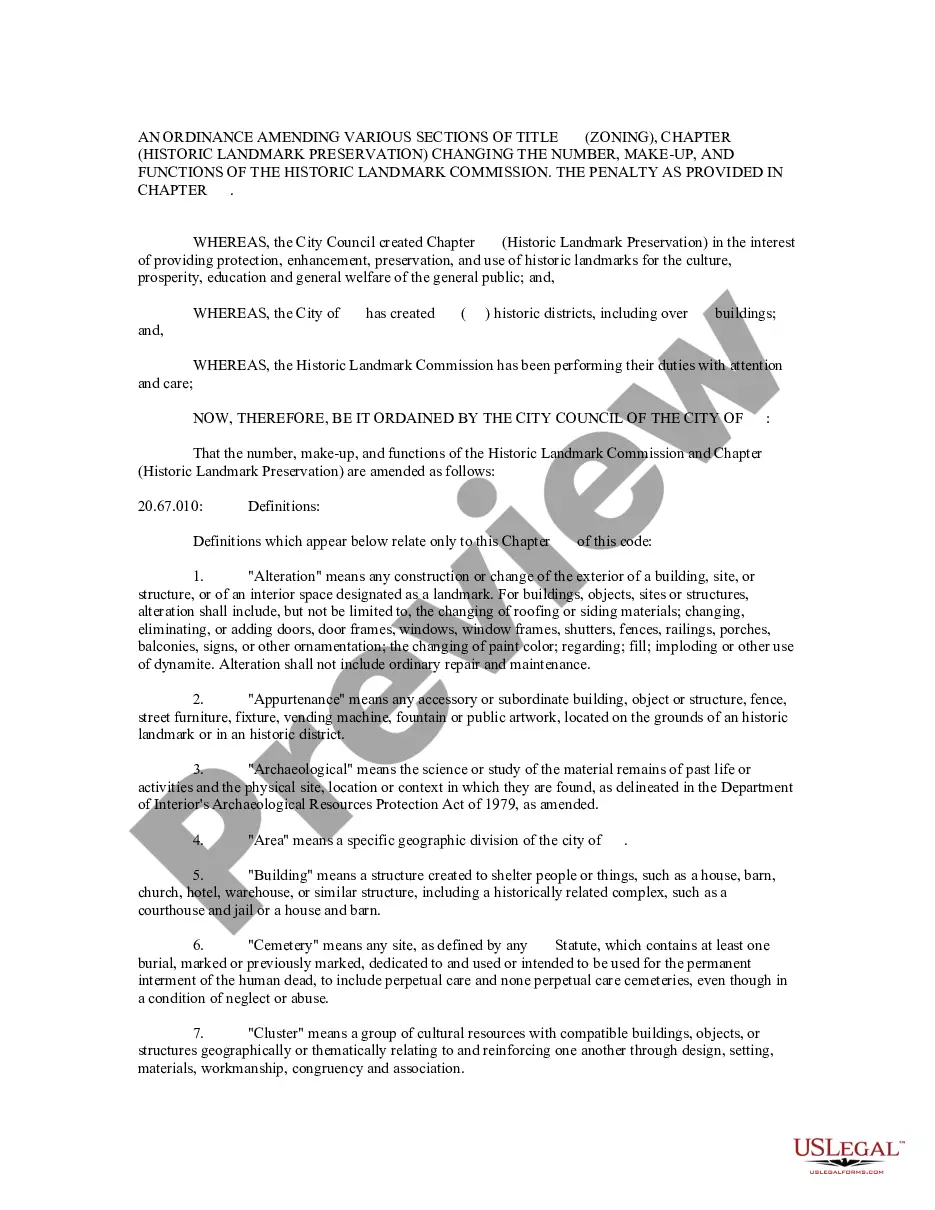
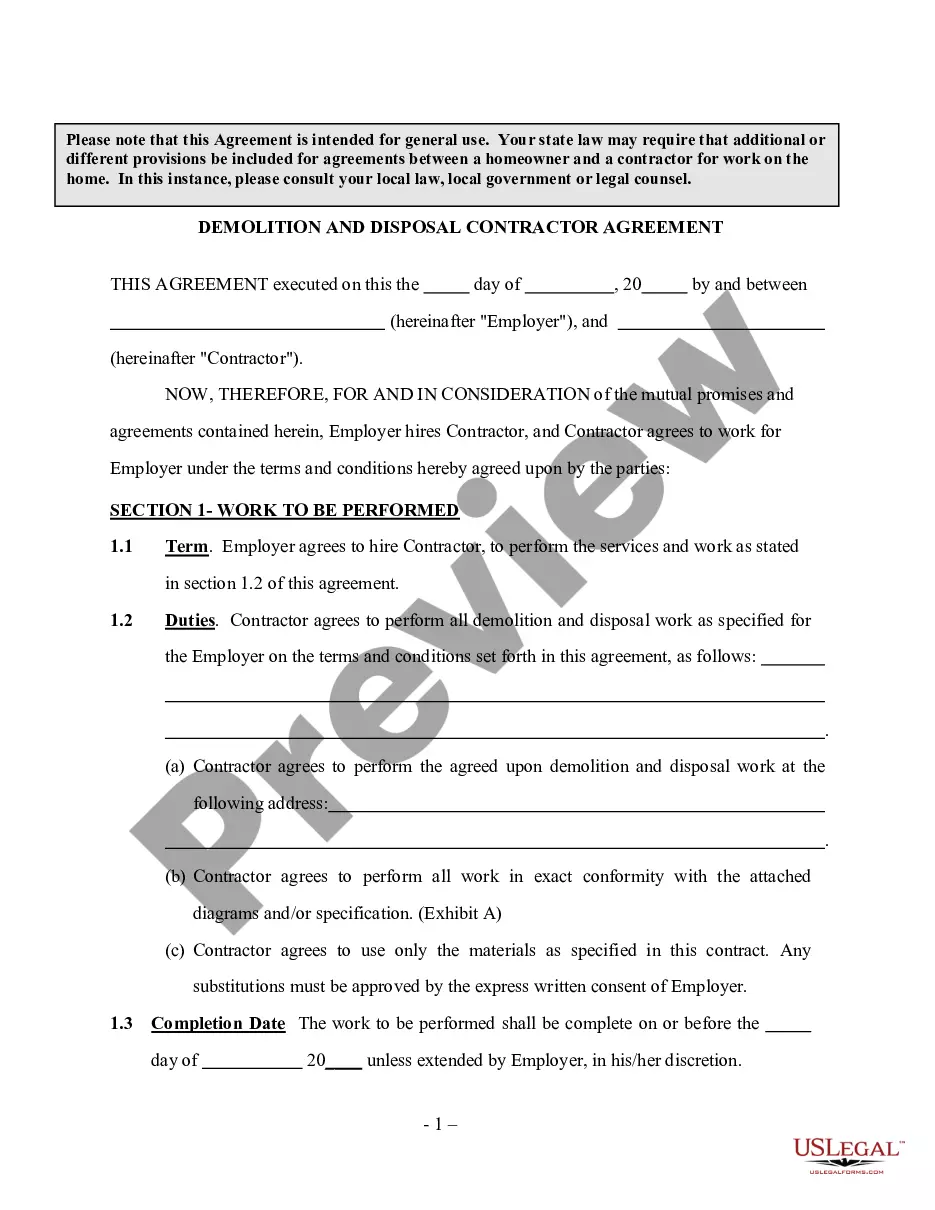
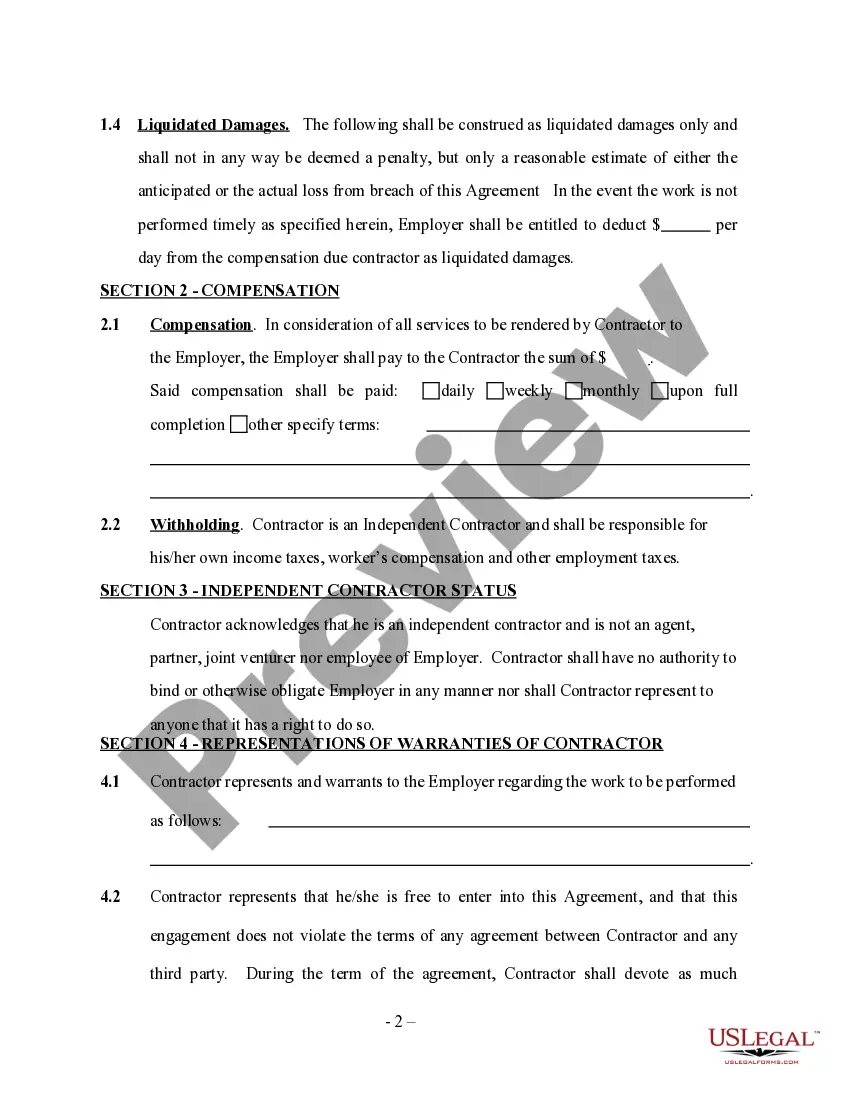
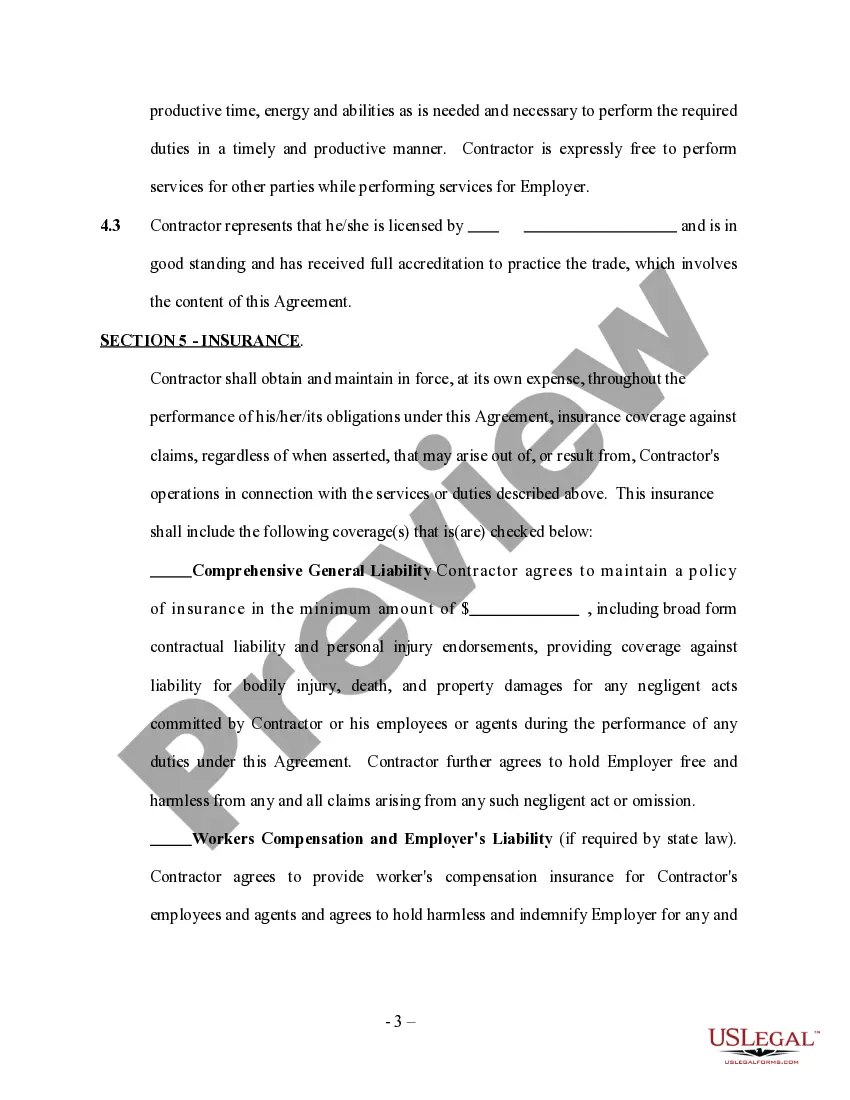
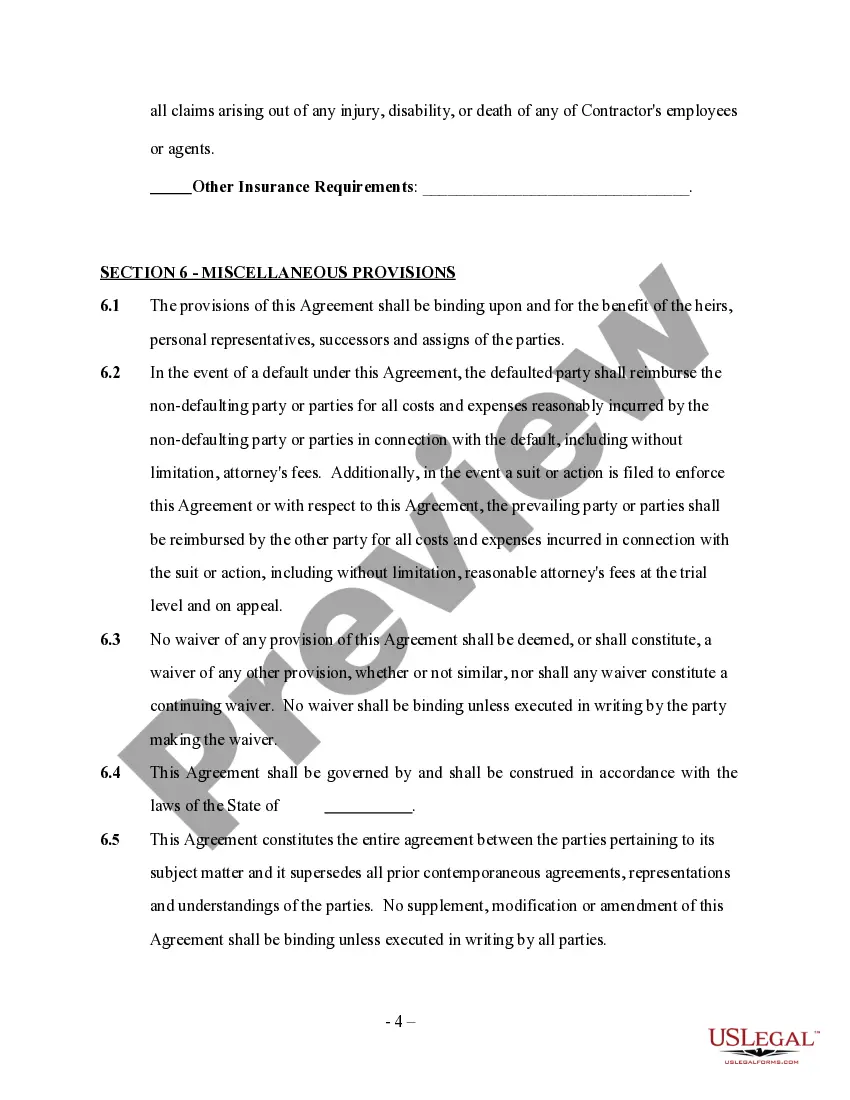
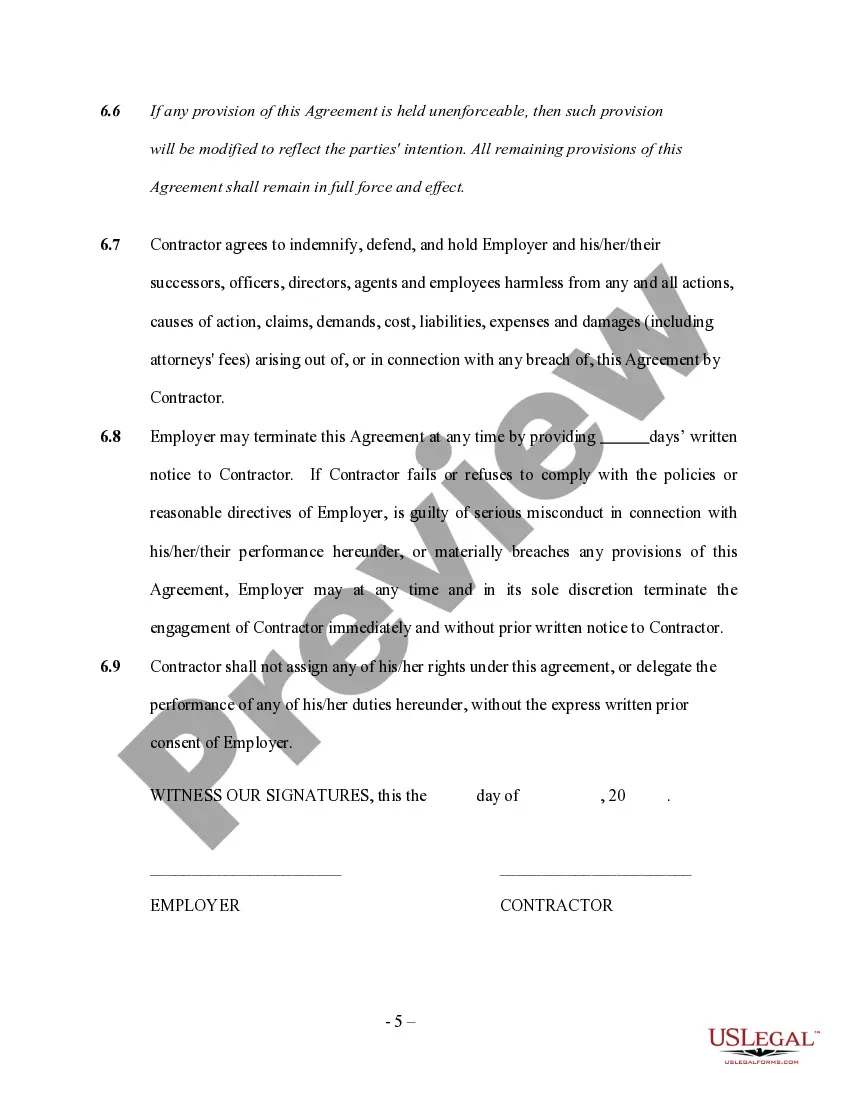
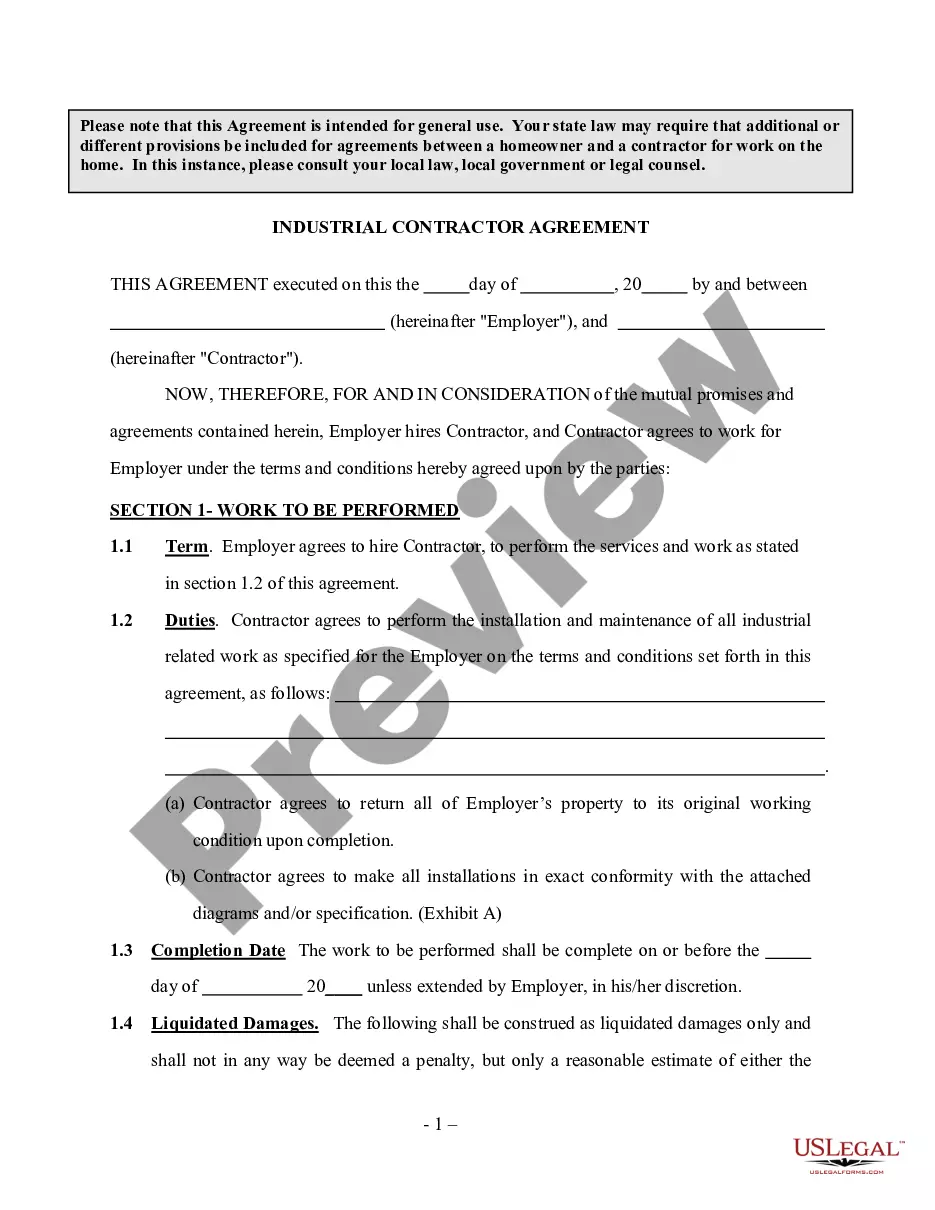
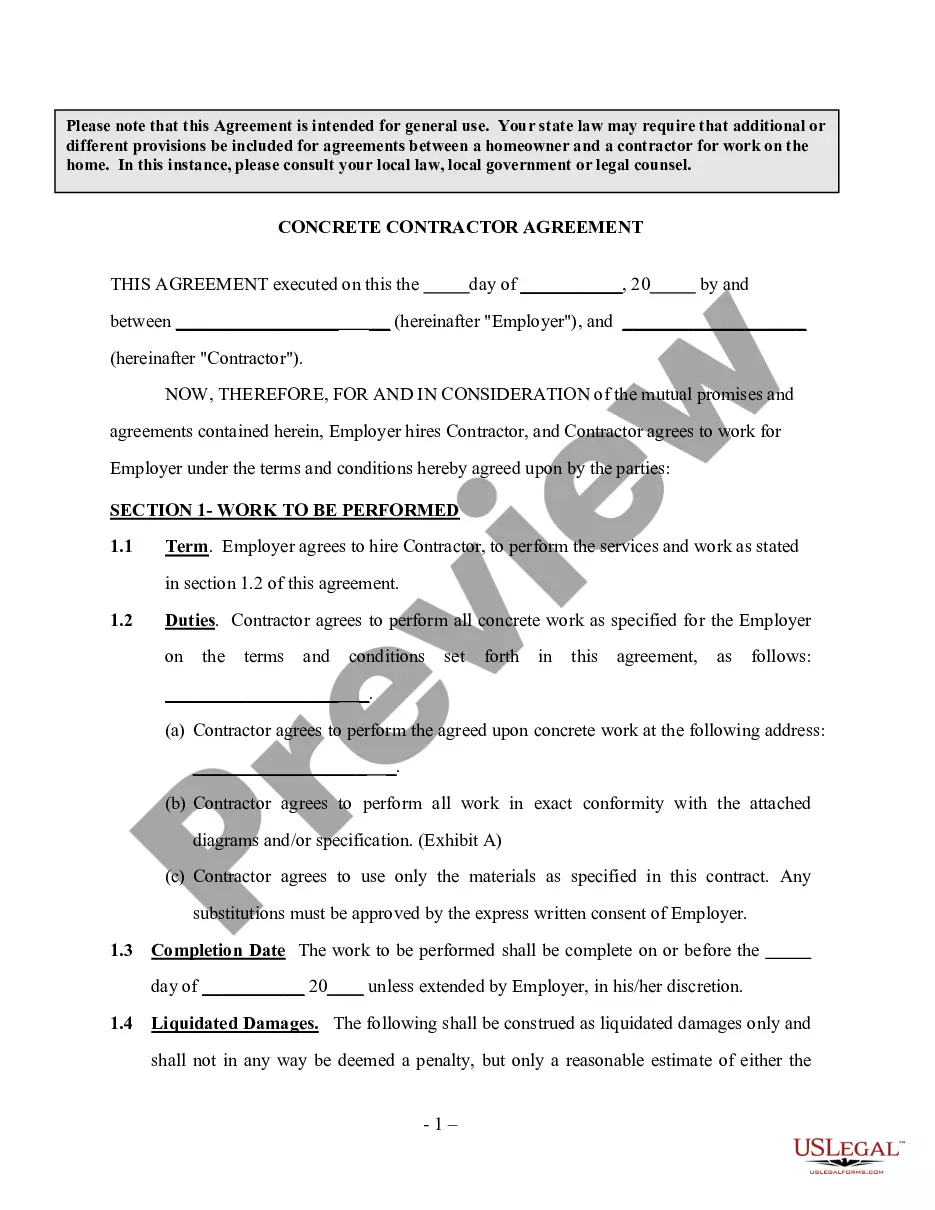
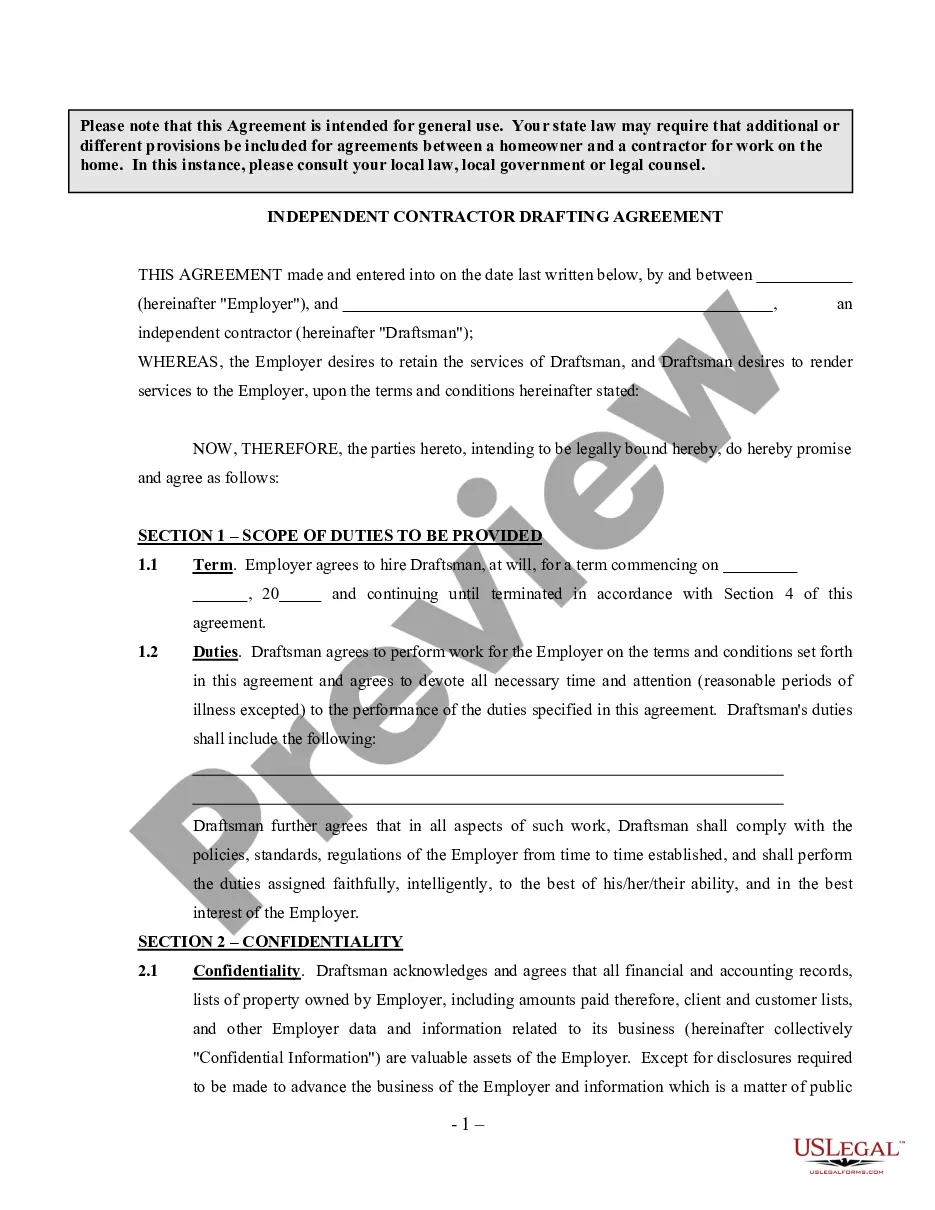
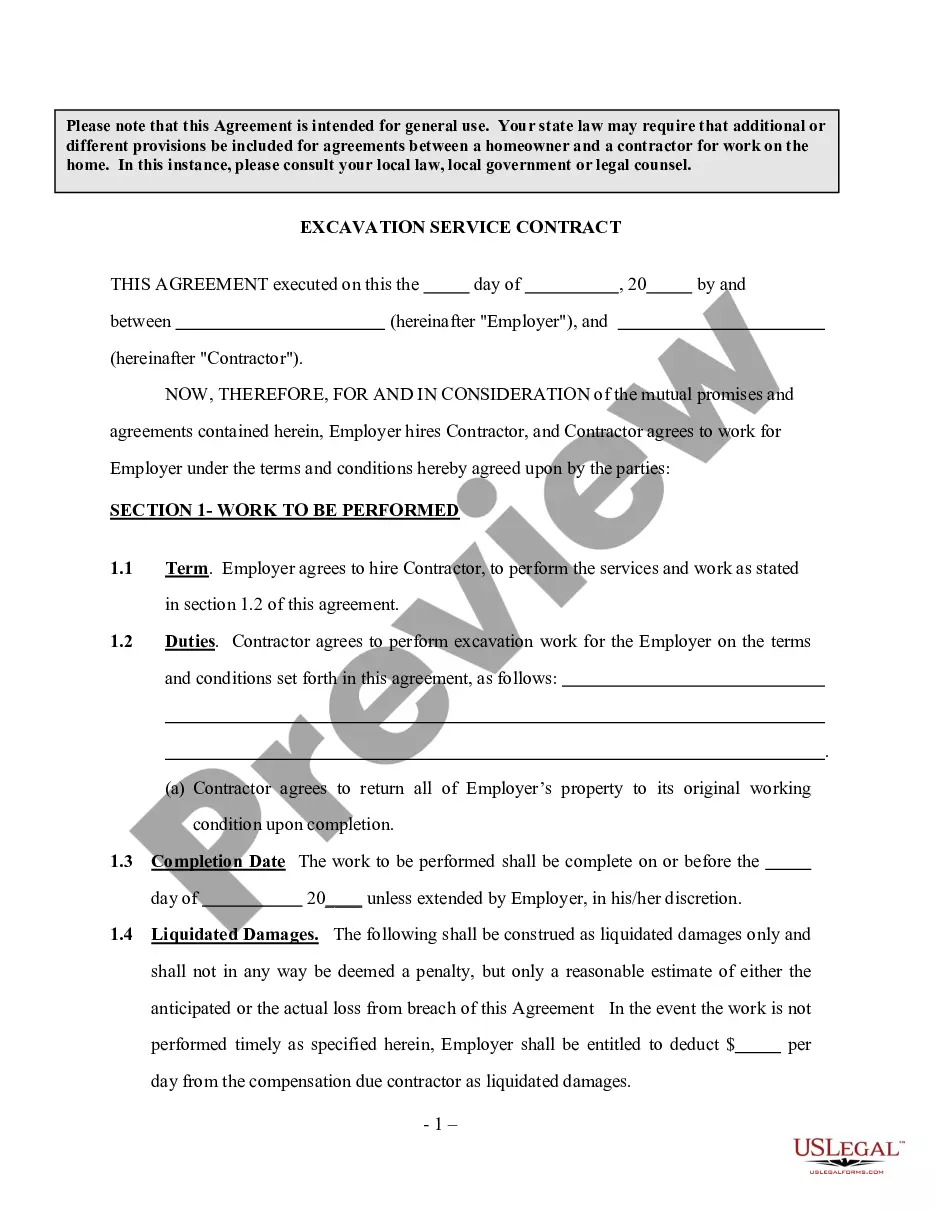
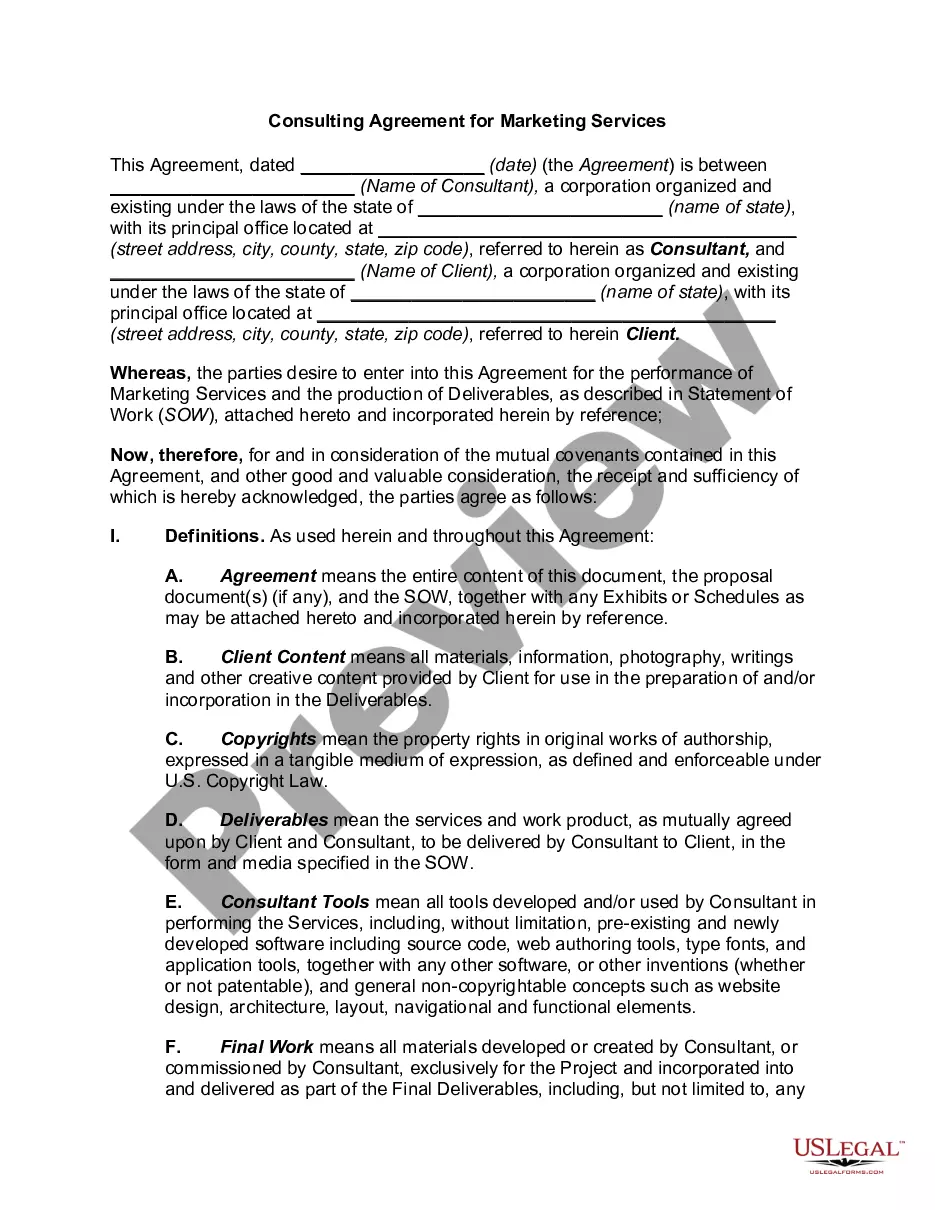
Employer hires a demolition and disposal expert as an independent contractor to perform demolition services as specified in the contract. Please note that this Agreement is intended for general use. Your state law may require that additional or different provisions be included for agreements between a homeowner and a contractor for work on the home. In this instance, please consult your local law, local government or legal counsel.
Connecticut Demolition And Disposal Contractor Agreement - Self-Employed
State:
Multi-State
Control #:
US-INDC-203
Format:
Word;
Rich Text
Instant download
Description
Free preview
Get your form ready online
Our built-in tools help you complete, sign, share, and store your documents in one place.
Built-in online Word editor
Make edits, fill in missing information, and update formatting in US Legal Forms—just like you would in MS Word.
Export easily
Download a copy, print it, send it by email, or mail it via USPS—whatever works best for your next step.
E-sign your document
Sign and collect signatures with our SignNow integration. Send to multiple recipients, set reminders, and more. Go Premium to unlock E-Sign.
Notarize online 24/7
If this form requires notarization, complete it online through a secure video call—no need to meet a notary in person or wait for an appointment.
Store your document securely
We protect your documents and personal data by following strict security and privacy standards.

Make edits, fill in missing information, and update formatting in US Legal Forms—just like you would in MS Word.

Download a copy, print it, send it by email, or mail it via USPS—whatever works best for your next step.

Sign and collect signatures with our SignNow integration. Send to multiple recipients, set reminders, and more. Go Premium to unlock E-Sign.

If this form requires notarization, complete it online through a secure video call—no need to meet a notary in person or wait for an appointment.

We protect your documents and personal data by following strict security and privacy standards.
Looking for another form?

How to fill out Demolition And Disposal Contractor Agreement - Self-Employed?
If you wish to complete, acquire, or print authentic document templates, utilize US Legal Forms, the largest collection of valid forms available online.
Employ the site’s straightforward and user-friendly search to acquire the documents you require.
Numerous templates for business and personal purposes are organized by categories and states, or keywords.
Step 4. Once you have found the form you need, select the Get now button. Choose your preferred payment plan and enter your details to register for an account.
Step 5. Complete the transaction. You can use your credit card or PayPal account to finalize the purchase. Step 6. Choose the format of the legal document and download it to your device. Step 7. Fill out, edit, and print or sign the Connecticut Demolition And Disposal Contractor Agreement - Self-Employed. Each legal document template you acquire is yours indefinitely. You will have access to every form you downloaded in your account. Select the My documents section and choose a form to print or download again. Stay competitive and obtain, and print the Connecticut Demolition And Disposal Contractor Agreement - Self-Employed with US Legal Forms. There are many professional and state-specific forms available for your business or personal needs.
- Utilize US Legal Forms to obtain the Connecticut Demolition And Disposal Contractor Agreement - Self-Employed in just a few clicks.
- If you are already a US Legal Forms member, Log In to your account and click the Obtain button to access the Connecticut Demolition And Disposal Contractor Agreement - Self-Employed.
- You can also access forms you previously downloaded in the My documents section of your account.
- If you are using US Legal Forms for the first time, refer to the instructions below.
- Step 1. Ensure you have selected the form for your appropriate city/state.
- Step 2. Use the Review option to inspect the form’s content. Don't forget to read the description.
- Step 3. If you are unsatisfied with the type, use the Search field at the top of the screen to find other versions of the legal form template.
Form popularity
FAQ
To fill out an independent contractor form, start by providing your personal information along with the details of the services you will render. Clearly state your payment terms, including when and how you expect to be compensated. Ensure that the form aligns with the requirements of the Connecticut Demolition and Disposal Contractor Agreement - Self-Employed. The U.S. Legal Forms platform provides easy-to-use templates to help you complete this form accurately and confidently.
The five essential elements of a construction contract include the project scope, timelines, payment terms, warranties, and termination clauses. Each element plays a vital role in protecting both parties involved. For those in need of a Connecticut Demolition and Disposal Contractor Agreement - Self-Employed, these elements ensure that the agreement is comprehensive and legally binding. U.S. Legal Forms offers templates that include these essentials to make your contract strong.
When filling out an independent contractor agreement, begin by entering the names and contact information of all parties involved. Next, outline the specific services to be provided, including any materials needed for the job. Don't forget to include payment schedules and terms that comply with the Connecticut Demolition and Disposal Contractor Agreement - Self-Employed. Utilizing U.S. Legal Forms can guide you through each section for clarity and accuracy.
To write an independent contractor agreement, you should start by clearly defining the scope of work. Include information such as project timelines, payment terms, and responsibilities. It's essential to address liability and compliance with local laws, including specifics related to the Connecticut Demolition and Disposal Contractor Agreement - Self-Employed. Using a template from U.S. Legal Forms can simplify this process and ensure you cover all necessary elements.
To qualify as an independent contractor in Connecticut, you need to demonstrate that you operate your business independently and provide services on a contractual basis. Understanding the nuances of the Connecticut Demolition And Disposal Contractor Agreement - Self-Employed is crucial in this process. Additionally, maintain records of your earnings and expenses, as they will help substantiate your independent status.
In Connecticut, licensing is mandatory for contractors in specific trades, particularly those related to home improvement. Before engaging in any agreement, including a Connecticut Demolition And Disposal Contractor Agreement - Self-Employed, verify the licensing requirements pertinent to your scope of work. Having the appropriate license not only protects you legally but also enhances your professional reputation.
Yes, Connecticut requires certain contractors to obtain a license, especially if they deal in home improvement or hazardous work. If you are considering signing a Connecticut Demolition And Disposal Contractor Agreement - Self-Employed, be sure to clarify whether your specific services require licensing. This compliance will help establish trust with clients and ensure smooth project execution.
The 7 minute rule in Connecticut refers to a guideline often used in construction and contracting to ensure that contractors stay on task and maintain efficiency during projects. Understanding this rule can help you manage timelines effectively within the framework of the Connecticut Demolition And Disposal Contractor Agreement - Self-Employed. Staying organized and accountable helps meet deadlines and improves client satisfaction.
In Connecticut, a home improvement contract must include essential details like the contractor's information, a complete description of the work, payment schedules, and completion dates. Utilizing a Connecticut Demolition And Disposal Contractor Agreement - Self-Employed can streamline this process. Always ensure your contract also includes terms related to warranties and dispute resolution.
To become an independent contractor in Connecticut, start by ensuring you have the necessary permits and licenses. Familiarize yourself with the Connecticut Demolition And Disposal Contractor Agreement - Self-Employed to understand your obligations. Register your business with the state and consider consulting with a legal expert to avoid common pitfalls.