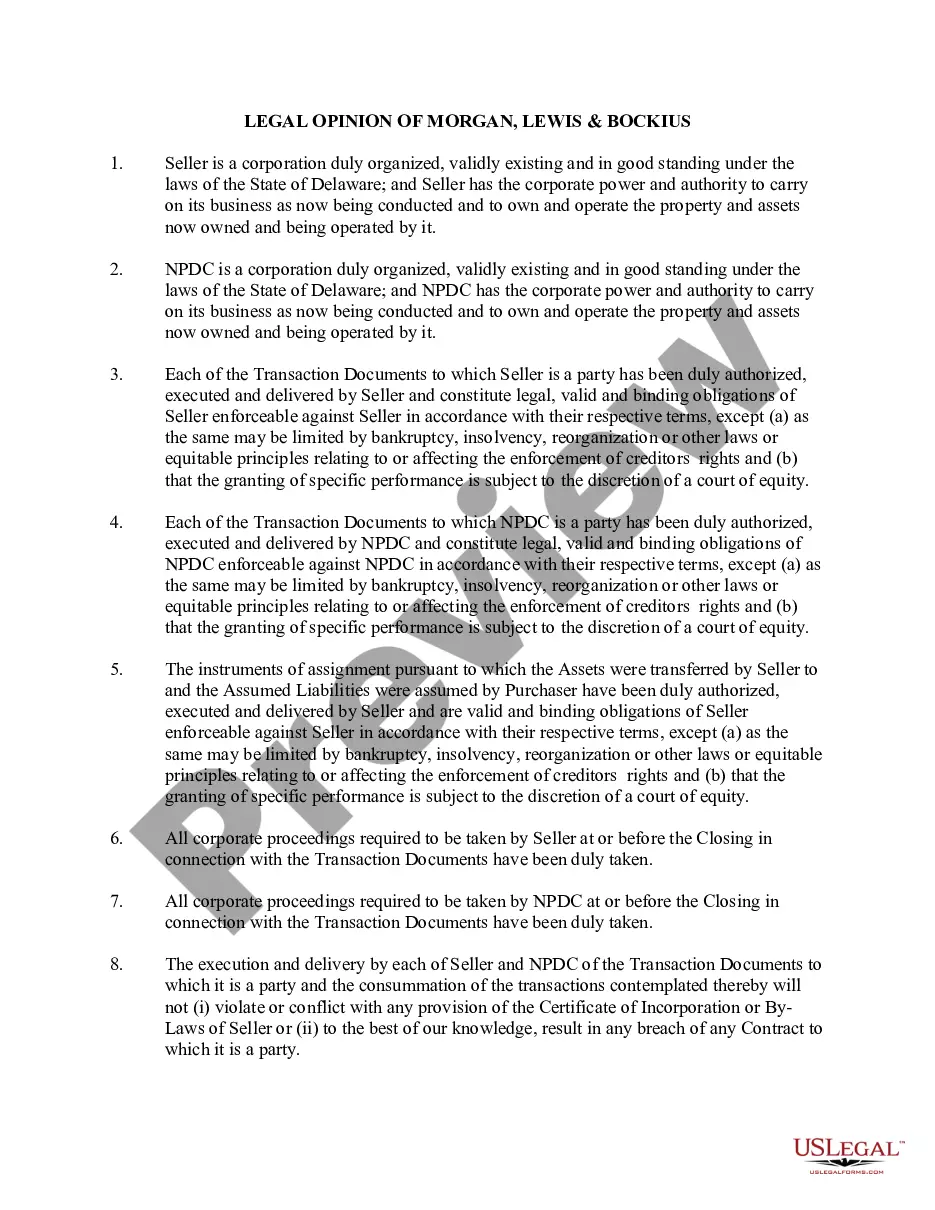
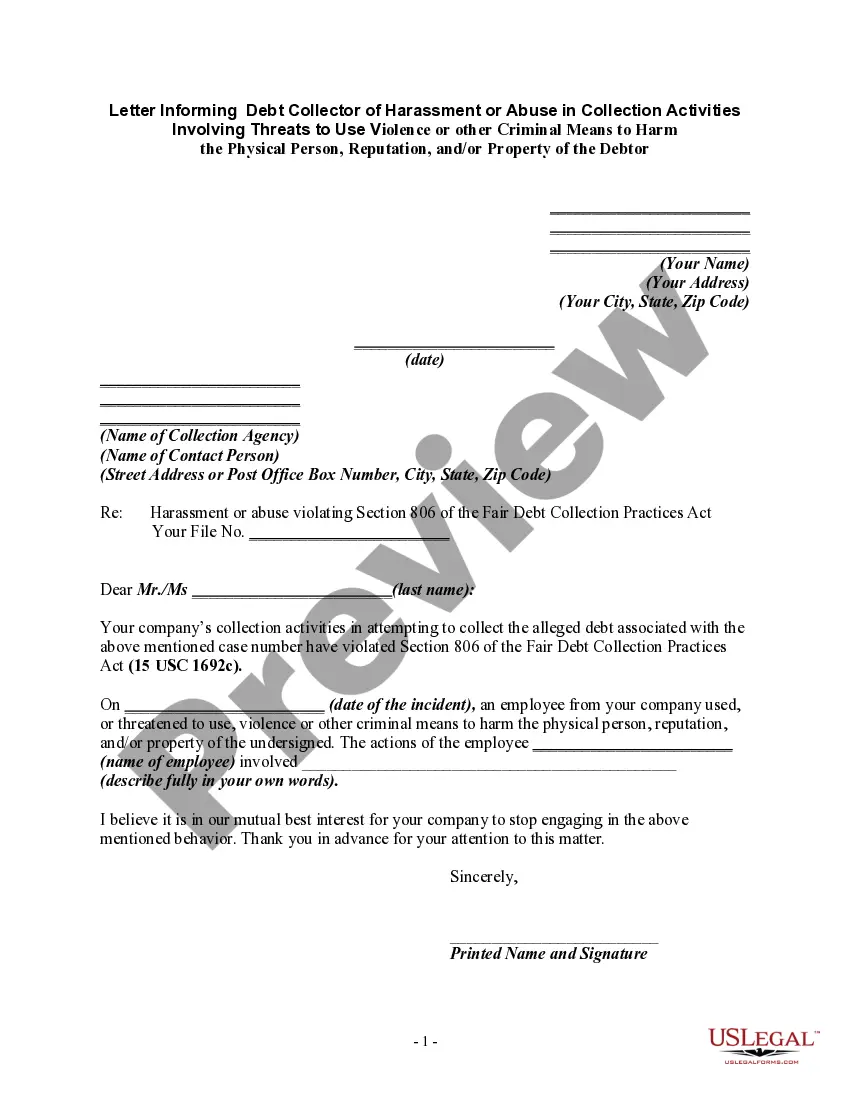
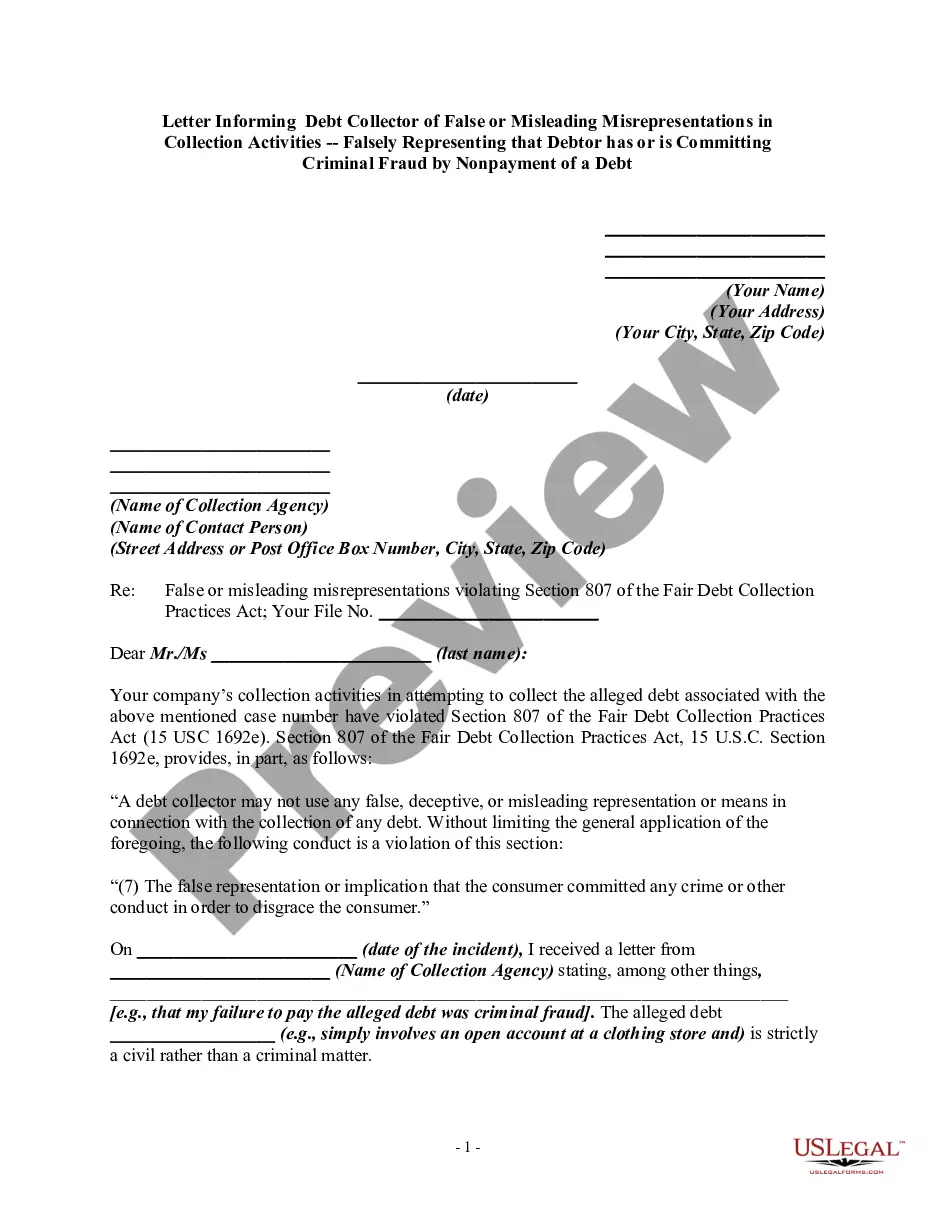
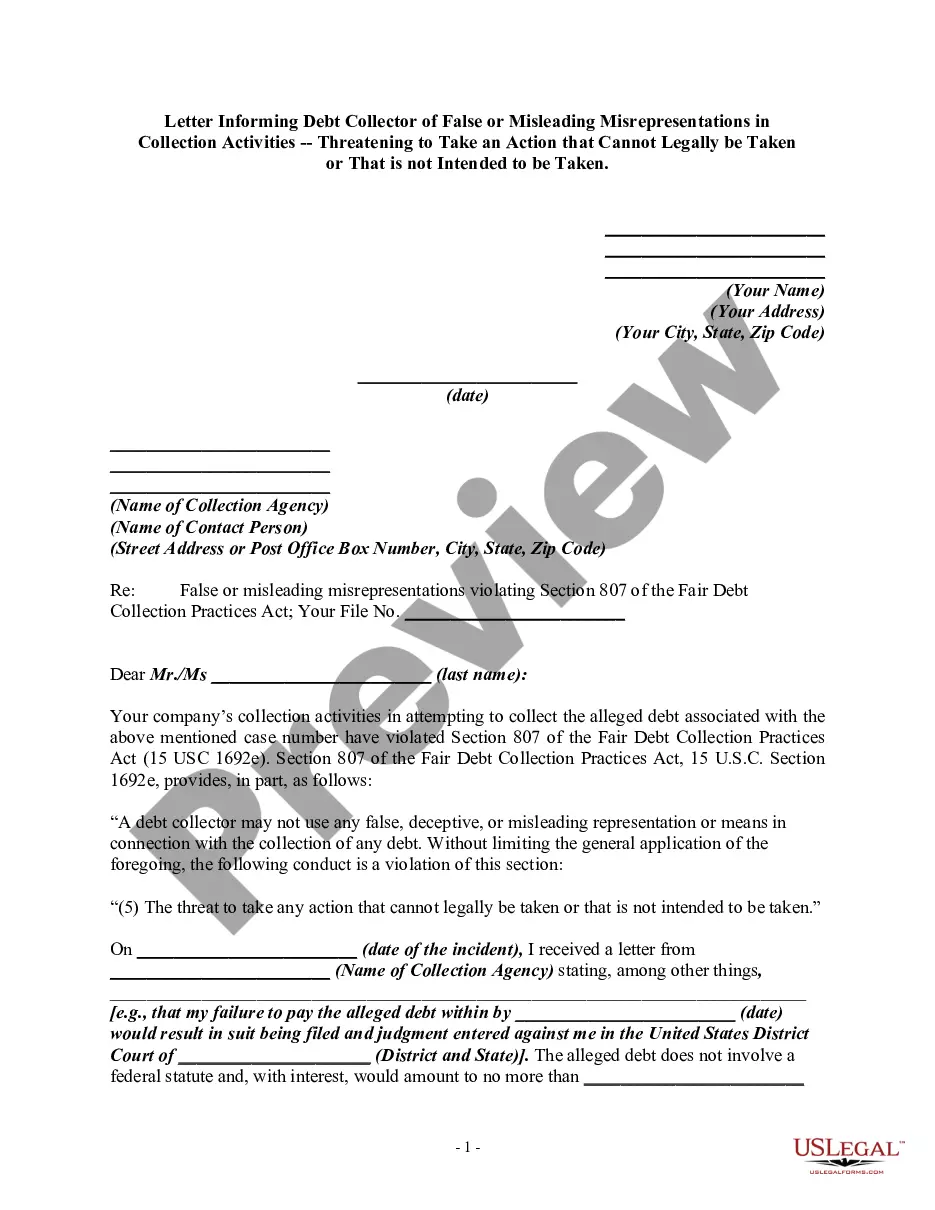
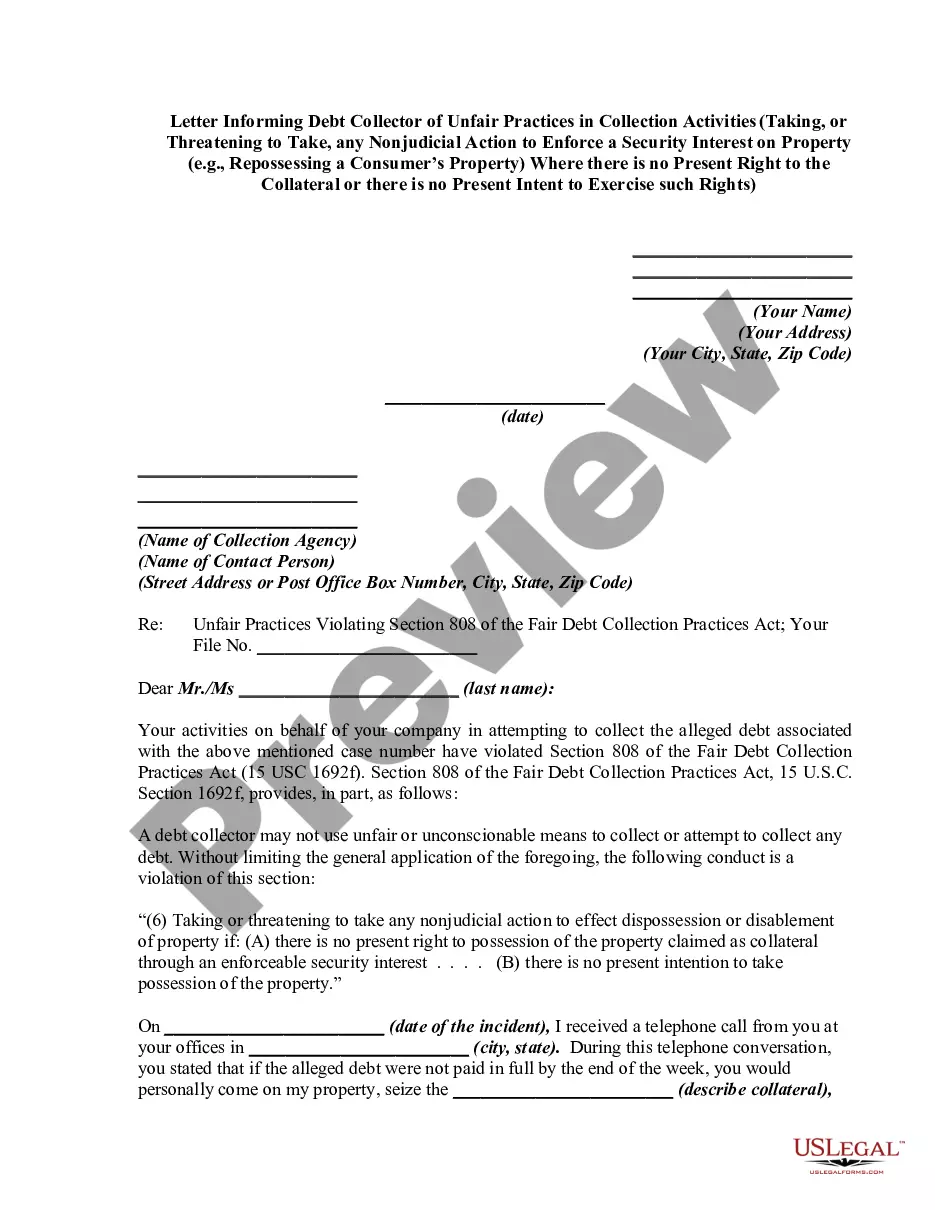
Section 806 of the Fair Debt Collection Practices Act states in part that a debt collector may not harass, oppress, or abuse any person in connection with the collection of a debt. One example of such activity involves using threats (including implied threats), violence, or other criminal means to harm anyone's reputation, property, or physical person.
Connecticut Letter Informing Debt Collector of Harassment or Abuse in Collection Activities Involving Threats to Use Violence or other Criminal Means to Harm the Physical Person, Reputation, and/or Property of the Debtor
Category:
State:
Multi-State
Control #:
US-DCPA-18.1BG
Format:
Word;
Rich Text
Instant download
Description
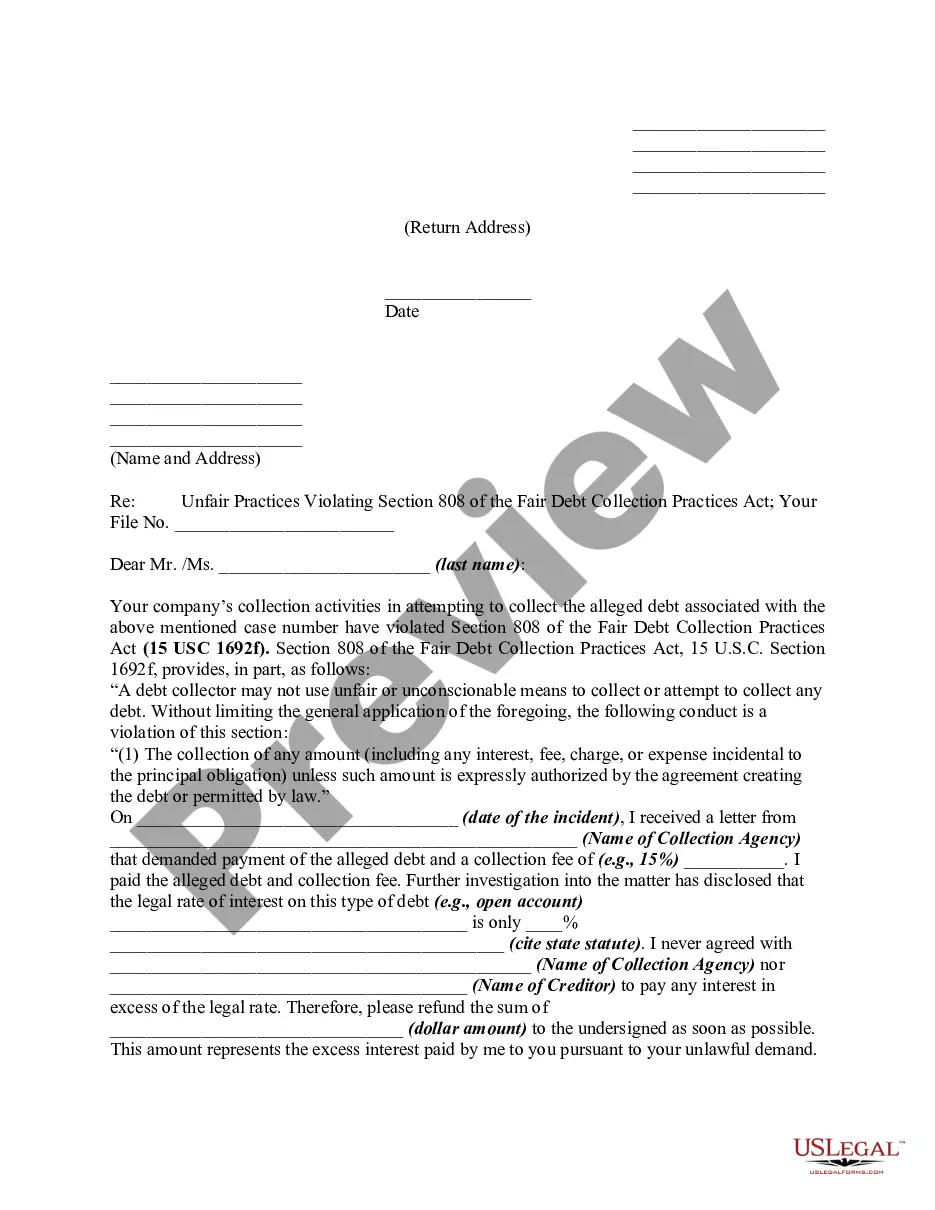
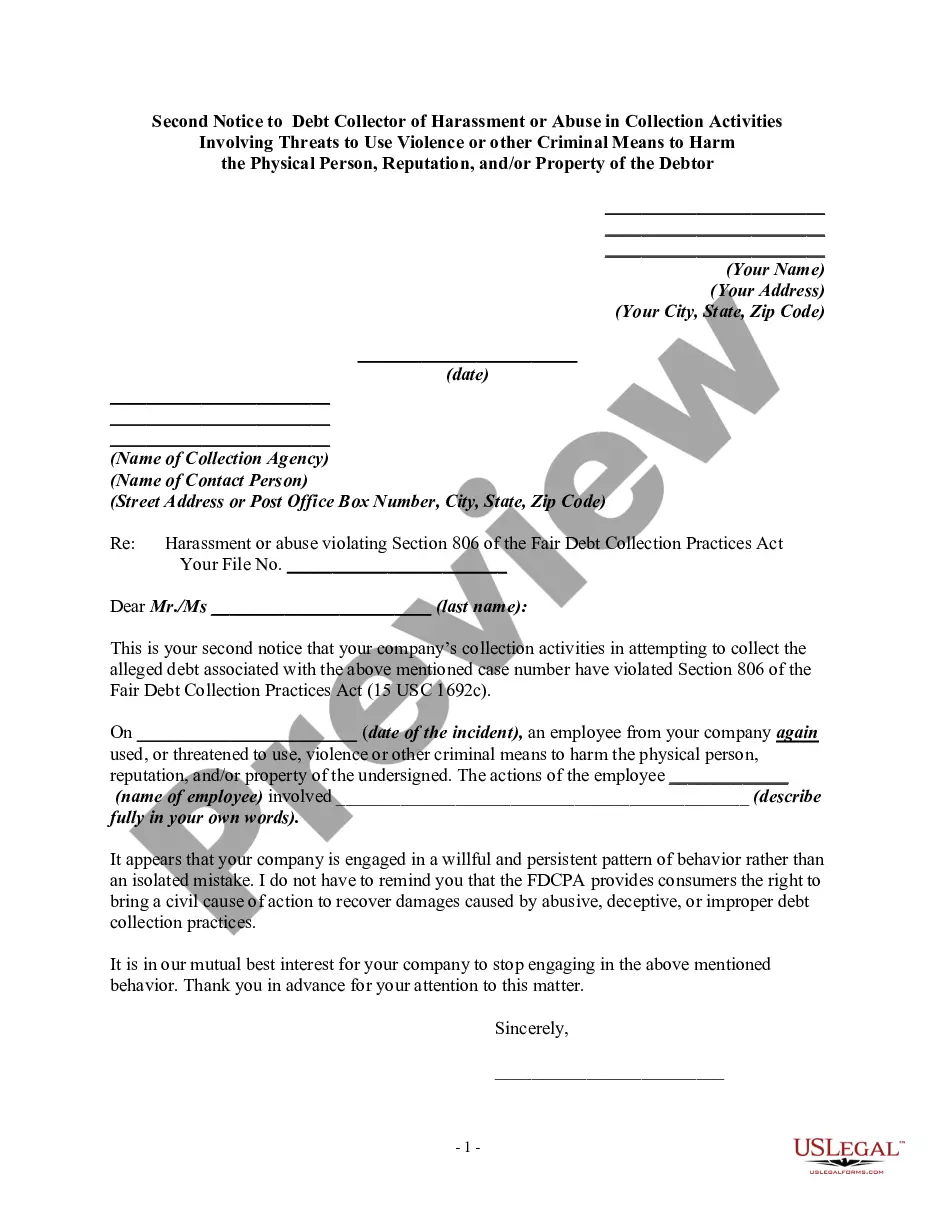

How to fill out Letter Informing Debt Collector Of Harassment Or Abuse In Collection Activities Involving Threats To Use Violence Or Other Criminal Means To Harm The Physical Person, Reputation, And/or Property Of The Debtor?
US Legal Forms - one of the largest collections of legal documents in the United States - provides a wide selection of legal templates that you can download or create.
Through the website, you can discover thousands of documents for business and personal use, categorized by type, state, or keywords.
You can obtain the latest versions of documents such as the Connecticut Letter Notifying Debt Collector of Harassment or Abuse in Collection Practices Involving Threats to Use Violence or Other Criminal Means to Injure the Physical Person, Reputation, and/or Property of the Debtor within moments.
If the form does not meet your requirements, use the Search section at the top of the screen to locate one that does.
When you are satisfied with the form, confirm your choice by clicking the Buy now button. Then, select your preferred pricing plan and provide your details to register for an account.
- If you already have a subscription, Log In and obtain the Connecticut Letter Notifying Debt Collector of Harassment or Abuse in Collection Practices Involving Threats to Use Violence or Other Criminal Means to Injure the Physical Person, Reputation, and/or Property of the Debtor from the US Legal Forms library.
- The Download button will appear on every document you view.
- You can access all previously downloaded documents in the My documents section of your account.
- If you want to use US Legal Forms for the first time, here are simple steps to help you get started.
- Ensure you have selected the correct document for your city/state.
- Click the Review button to evaluate the content of the form.
Form popularity
FAQ
Your dispute should be made in writing to ensure that the debt collector has to send you verification of the debt. If you're having trouble with debt collection, you can submit a complaint with the CFPB online or by calling (855) 411-CFPB (2372).
I am writing in regards to the above-referenced debt to inform you that I am disputing this debt. Please verify the debt as required by the Fair Debt Collection Practices Act. I am disputing this debt because I do not owe it. Because I am disputing this debt, you should not report it to the credit reporting agencies.
If you believe any account information is incorrect, you should dispute the information to have it either removed or corrected. If, for example, you have a collection or multiple collections appearing on your credit reports and those debts do not belong to you, you can dispute them and have them removed.
No harassment The Fair Debt Collection Practices Act (FDCPA) says debt collectors can't harass, oppress, or abuse you or anyone else they contact. Some examples of harassment are: Repetitious phone calls that are intended to annoy, abuse, or harass you or any person answering the phone. Obscene or profane language.
The definition of debt collection harassment is to intimidate, abuse, coerce, bully or browbeat consumers into paying off debt. This happens most often over the phone, but harassment could come in the form of emails, texts, direct mail or talking to friends or neighbors about your debt.
The debt dispute letter should include your personal identifying information; verification of the amount of debt owed; the name of the creditor for the debt; and a request the debt not be reported to credit reporting agencies until the matter is resolved or have it removed from the report, if it already has been
Fortunately, there are legal actions you can take to stop this harassment:Write a Letter Requesting To Cease Communications.Document All Contact and Harassment.File a Complaint With the FTC.File a Complaint With Your State's Agency.Consider Suing the Debt Collection Agency for Harassment.
Debt Collectors Can't Call You Repeatedly to Harass You This means that while the FDCPA doesn't place a specific limit on the number of calls debt collectors can make, it prohibits them from calling you multiple times just to harass you. (15 U.S. Code §? 1692d).
Even if you do, debt collectors aren't allowed to threaten, harass, or publicly shame you. You can order them to stop contacting you.
The Fair Debt Collection Practices Act (FDCPA) is a federal law that provides a mechanism for you to stop debt collectors from contacting you. You can do this by sending a Cease and Desist Letter. Federal law allows you to communicate with debt collectors to tell them that you want them to stop contacting you.