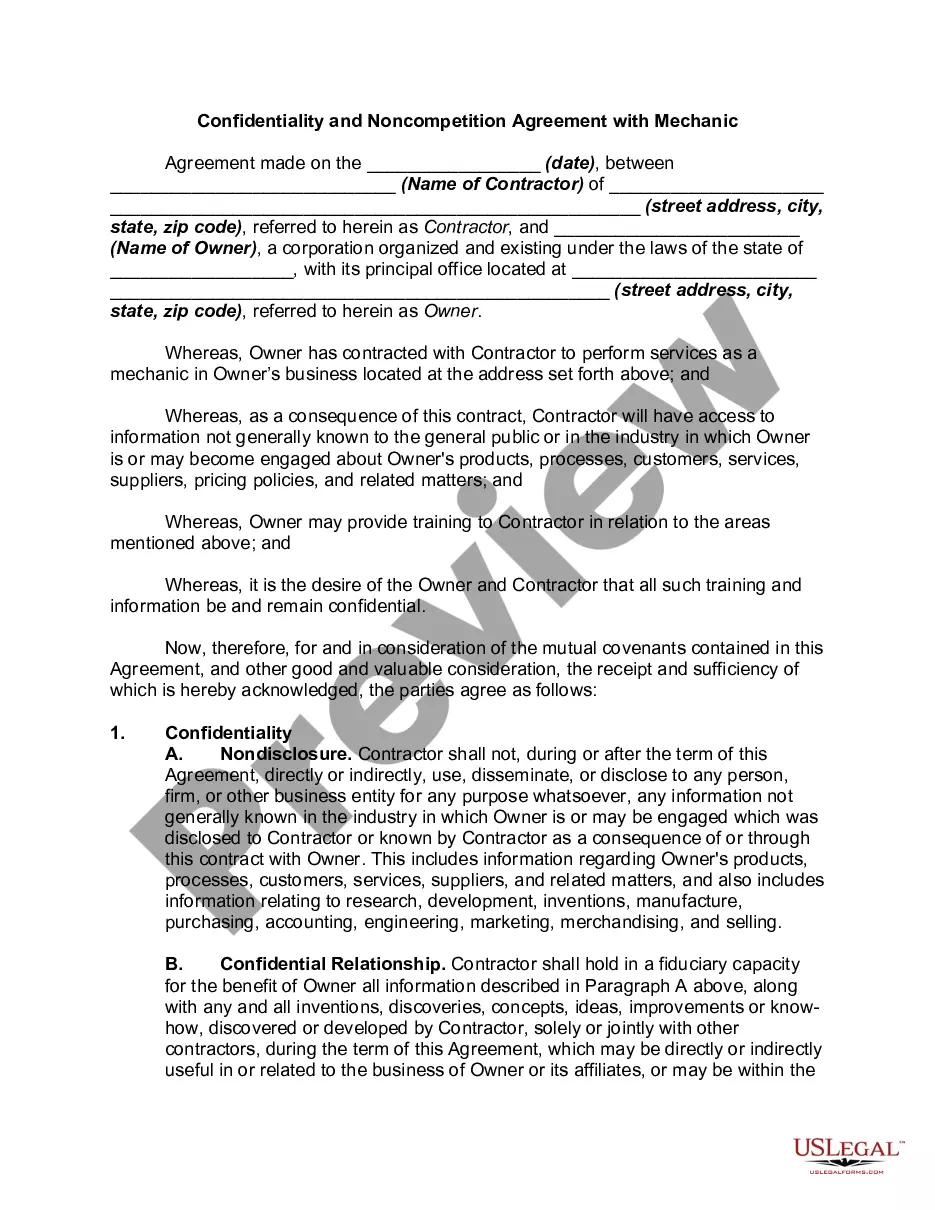
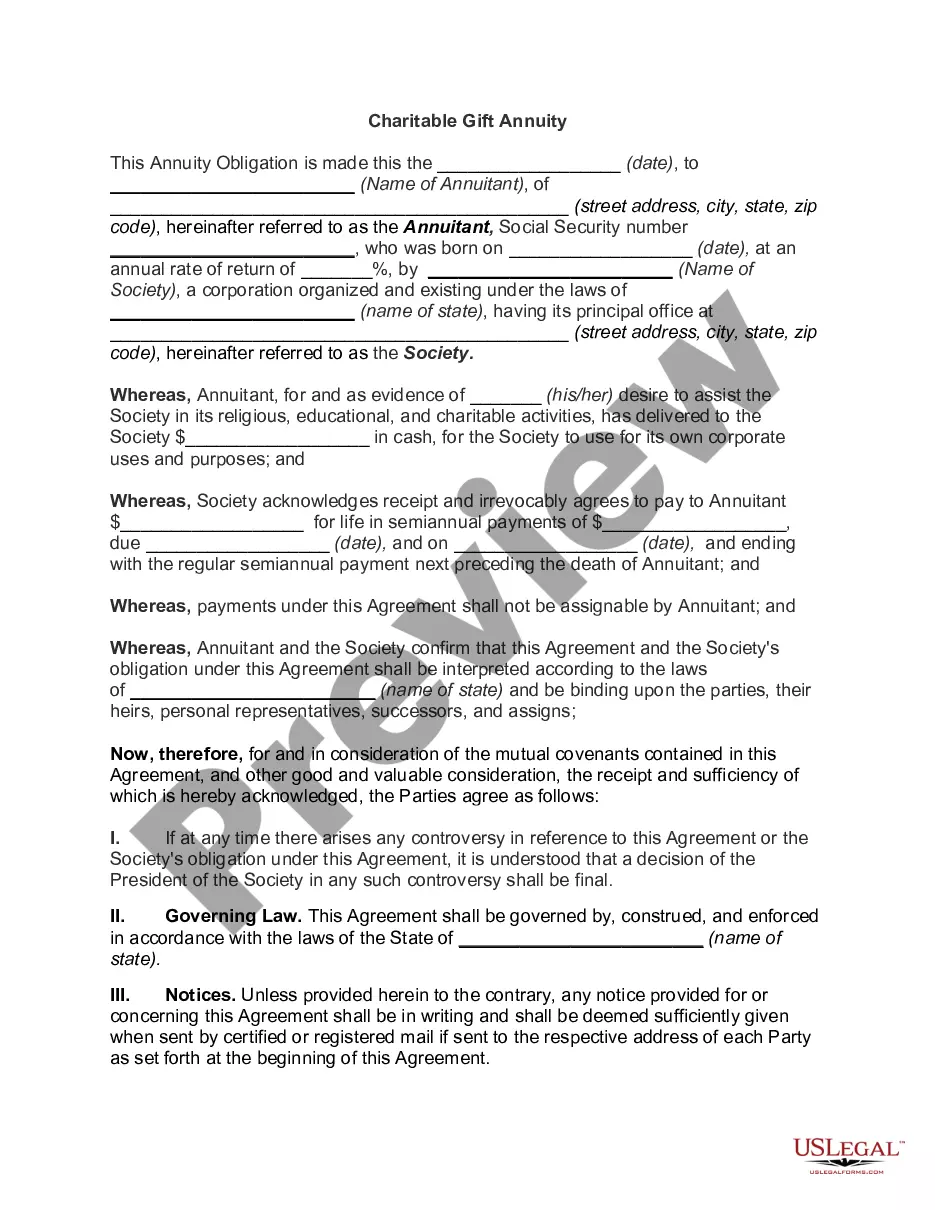
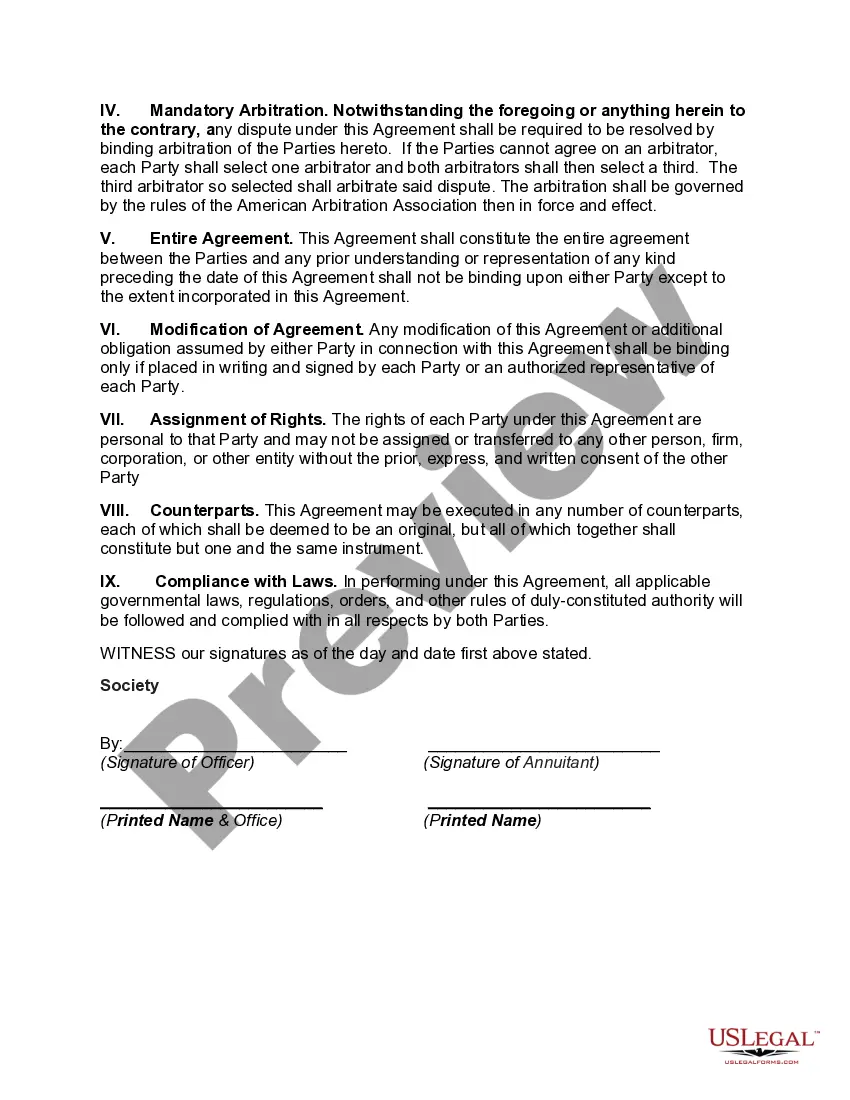
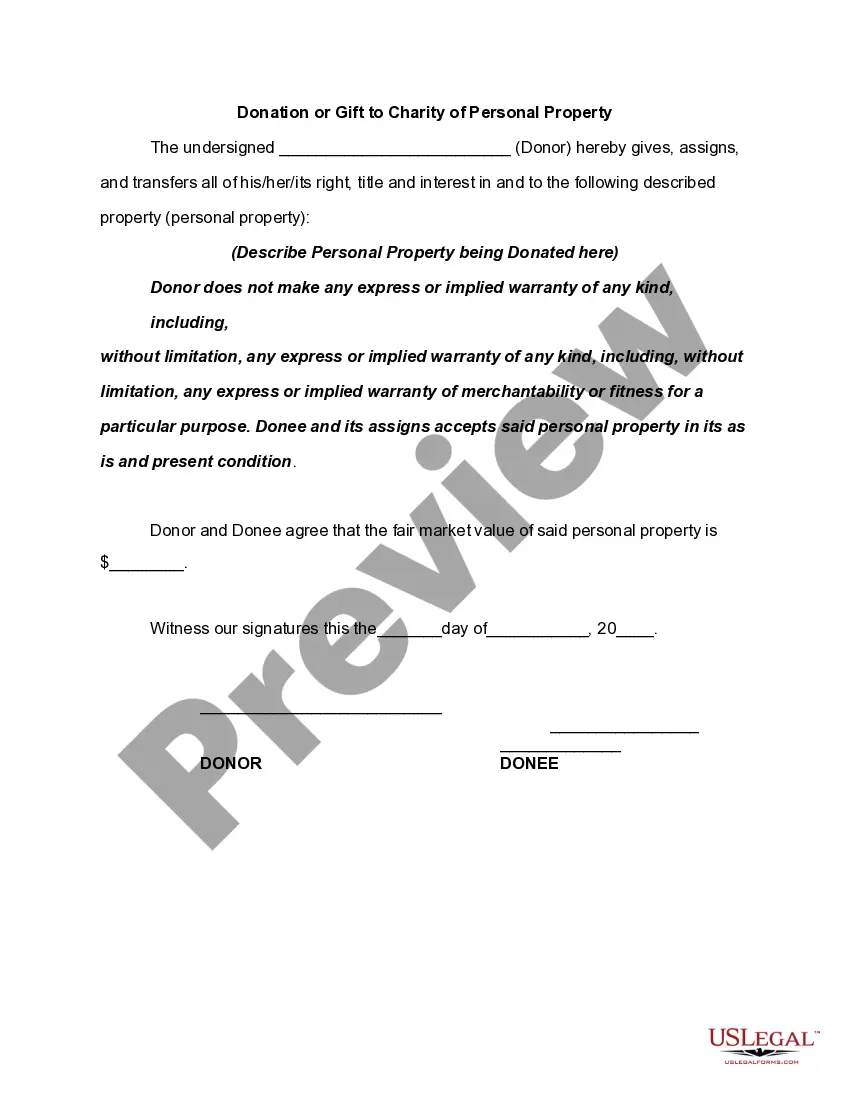
Connecticut Charitable Gift Annuity
Description
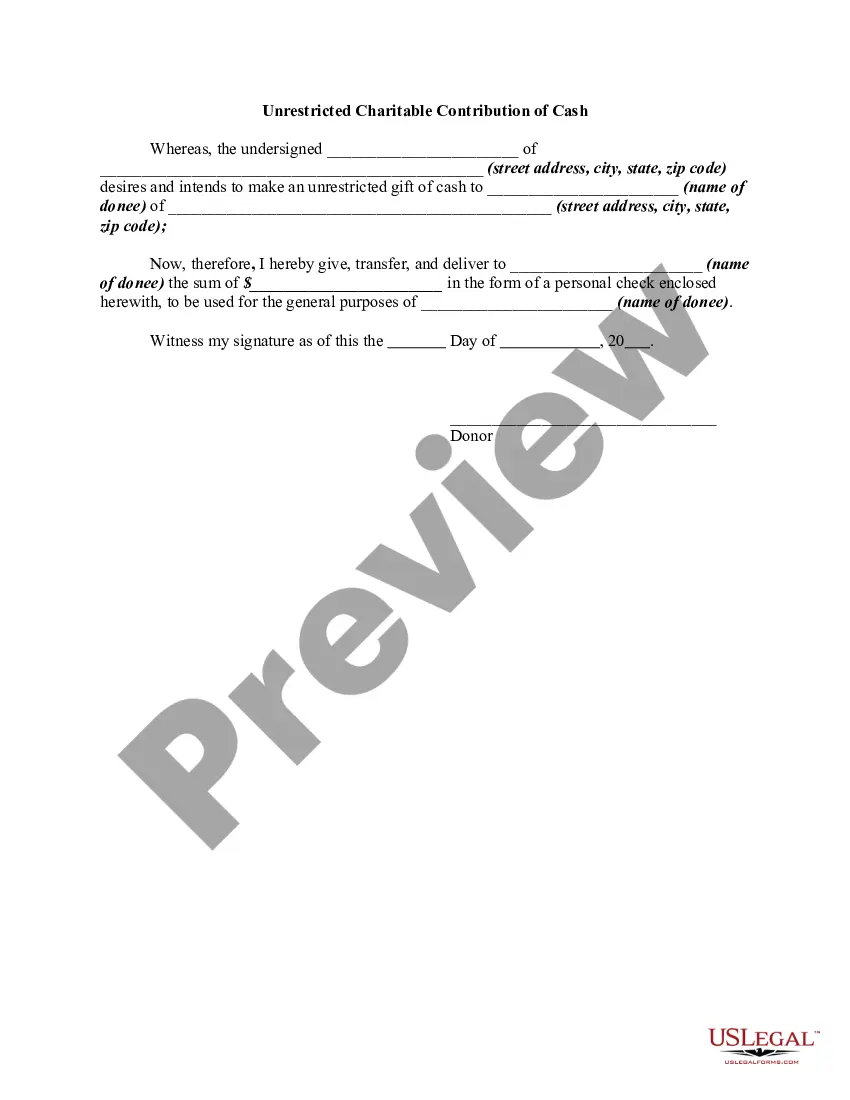
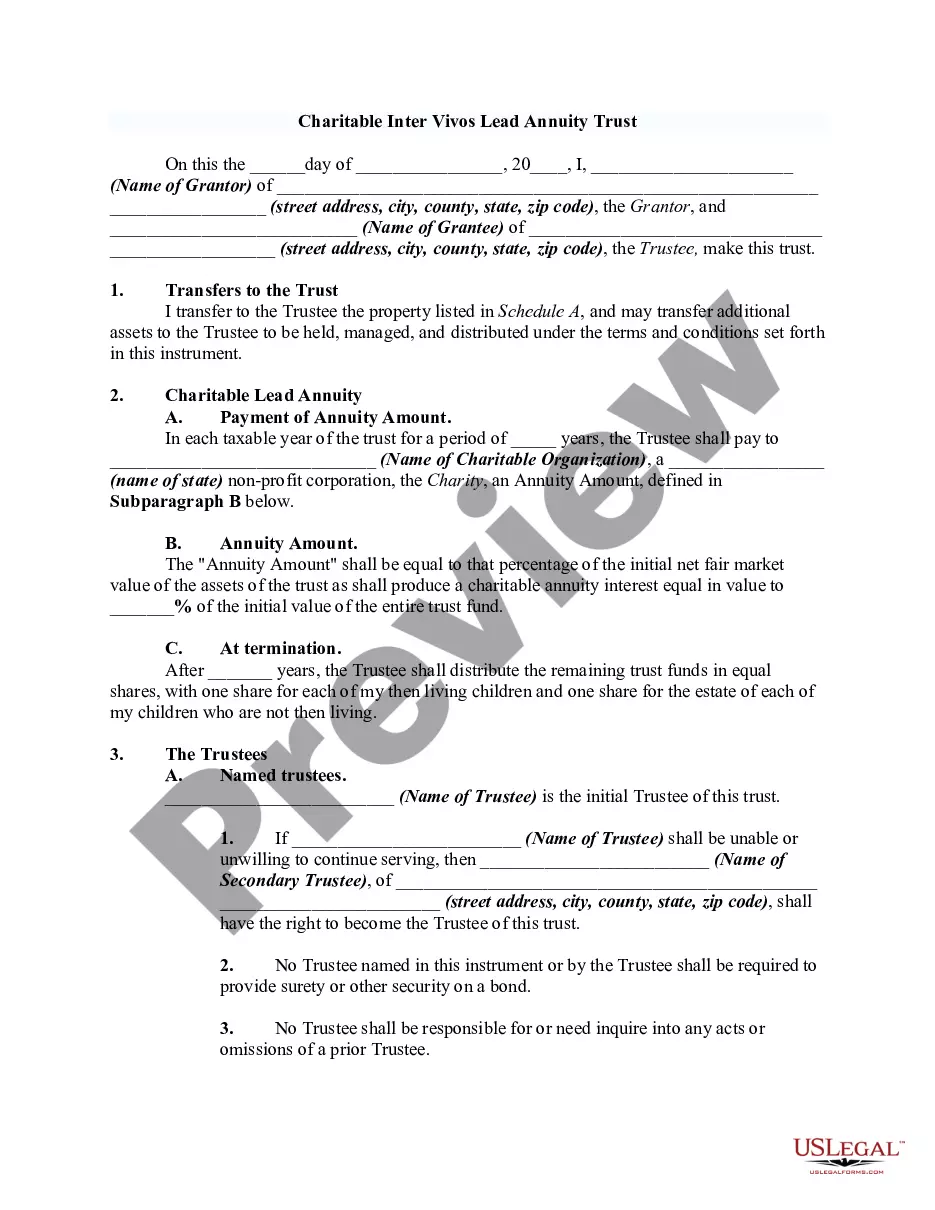
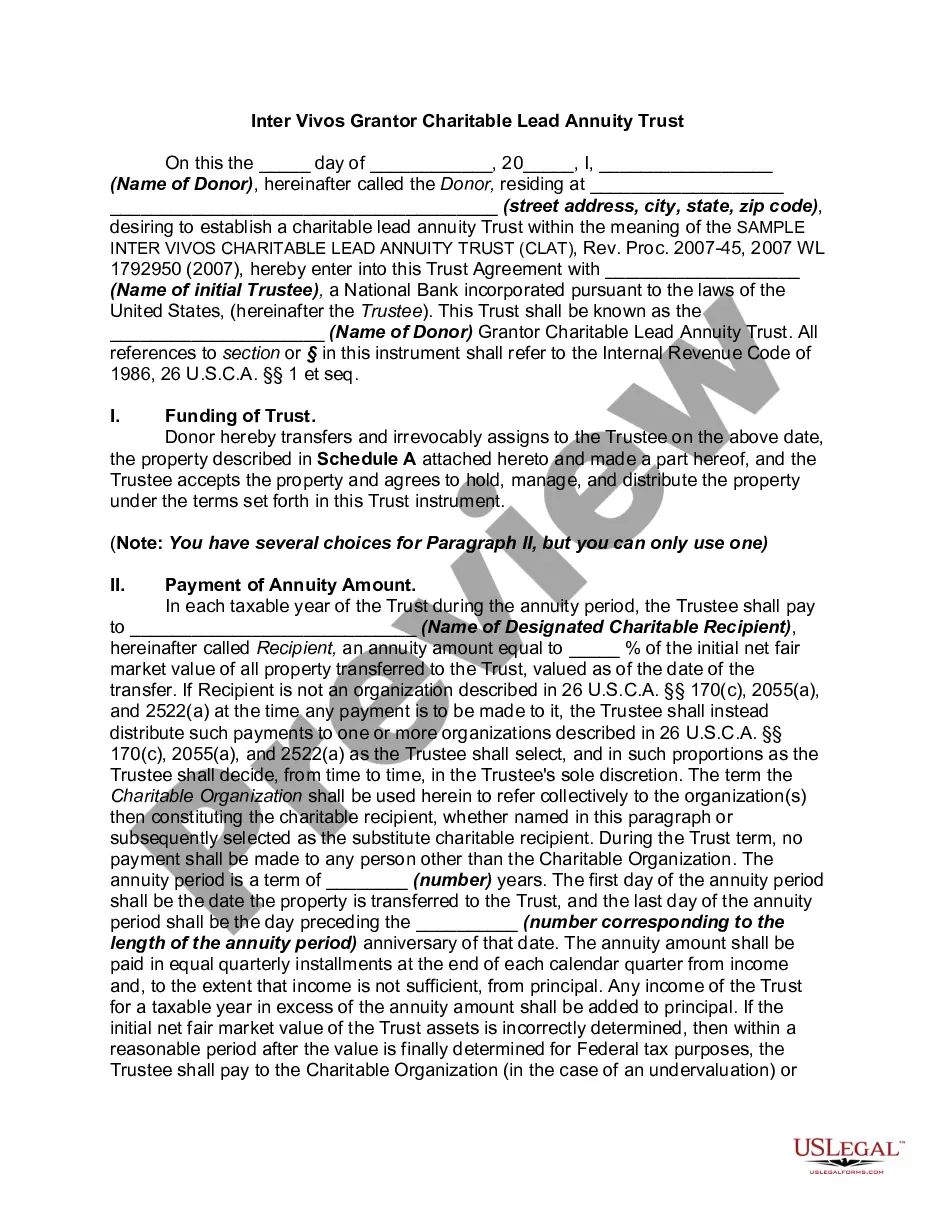
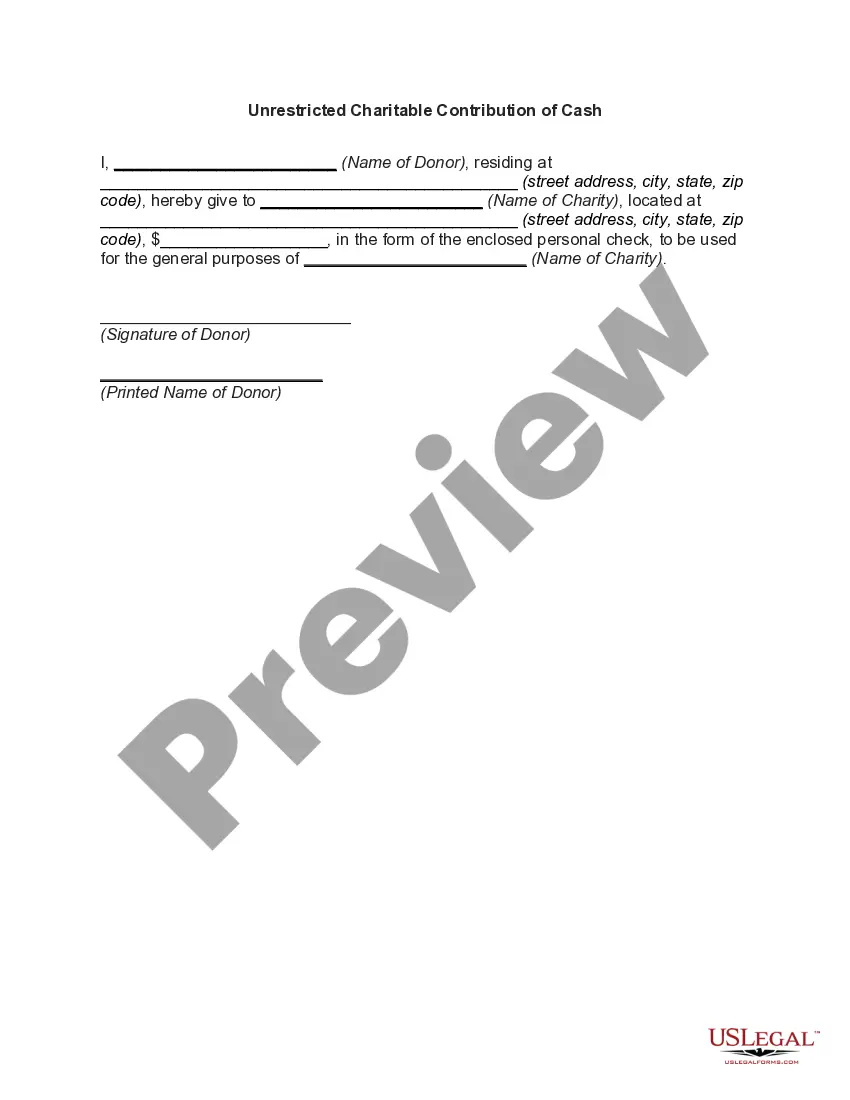
Get your form ready online
Our built-in tools help you complete, sign, share, and store your documents in one place.
Make edits, fill in missing information, and update formatting in US Legal Forms—just like you would in MS Word.
Download a copy, print it, send it by email, or mail it via USPS—whatever works best for your next step.
Sign and collect signatures with our SignNow integration. Send to multiple recipients, set reminders, and more. Go Premium to unlock E-Sign.
If this form requires notarization, complete it online through a secure video call—no need to meet a notary in person or wait for an appointment.
We protect your documents and personal data by following strict security and privacy standards.

Make edits, fill in missing information, and update formatting in US Legal Forms—just like you would in MS Word.

Download a copy, print it, send it by email, or mail it via USPS—whatever works best for your next step.

Sign and collect signatures with our SignNow integration. Send to multiple recipients, set reminders, and more. Go Premium to unlock E-Sign.

If this form requires notarization, complete it online through a secure video call—no need to meet a notary in person or wait for an appointment.

We protect your documents and personal data by following strict security and privacy standards.
Looking for another form?






How to fill out Charitable Gift Annuity?
Locating the appropriate legal document template can be a challenge.
Of course, there are numerous formats available online, but how can you acquire the legal document you need.
Utilize the US Legal Forms website. The platform offers a wide array of templates, including the Connecticut Charitable Gift Annuity, which can be utilized for both business and personal purposes.
First, make sure you have selected the correct template for your municipality/county. You can browse the template using the Review button and read the template description to ensure it is suitable for you. If the template does not meet your requirements, use the Search field to find the appropriate document. Once you are certain that the template works, click on the Buy now button to acquire the document. Choose the pricing plan you prefer and enter the necessary information. Create your account and place an order using your PayPal account or credit card. Select the file format and download the legal document template to your device. Finally, complete, modify, print, and sign the obtained Connecticut Charitable Gift Annuity. US Legal Forms is the largest repository of legal templates where you can find a variety of document formats. Take advantage of the service to acquire professionally crafted documents that comply with state regulations.
- All of the forms are reviewed by professionals and adhere to federal and state regulations.
- If you are already a registered user, Log In to your account and click on the Download button to access the Connecticut Charitable Gift Annuity.
- Use your account to check the legal documents you have previously acquired.
- Go to the My documents section in your account and download another copy of the document you need.
- If you are a new user of US Legal Forms, here are straightforward steps you can follow.
Form popularity
FAQ
It is possible to donate an annuity to a charity. Doing so requires adjusting either the owner or the beneficiary of the annuity; these are two of the four parties in an annuity contract. The insurance company issues the contract. The annuitant receives payments during his/her lifetime.
The Bottom Line. If you want to make a significant contribution to a charity you care about but also want the security of a fixed, reliable income for life a charitable gift annuity could be a great choice.
So long as you transferred ownership more than three years before dying, the value of the annuity won't go into your taxable estate. But if you give the annuity as a gift, you have to pay tax on any gain at the time of the transfer. Additionally, you might be liable for gift taxes depending on the value of the annuity.
Tax reporting requirements. The instructions say: If cash or capital gain property is donated in exchange for a charitable gift annuity, report distributions from the annuity on Form 1099-R. Report in box 3 any amount from a charitable gift annuity that is taxable as capital gain.
If you fund the gift annuity with appreciated securities or real estate owned more than one year, part of the payments will be taxed as ordinary income, part as capital gain, and part may be tax-free. In most instances, the payments will eventually be taxed as ordinary income.
The Charitable Gift Annuity is also attractive for the charity because, unlike a charitable bequest, a Charitable Gift Annuity is an irrevocable gift. The charity need not worry about last minute changes to the donor's plan by the donor or nefarious heirs, because the transfer is already complete.
As long as your total lifetime gifts and estate are below this amount, you don't have to pay taxes when you gift an annuity. However, the annual exclusion amount for gifts, according to the IRS, is $15,000. If you transfer an annuity worth more than $15,000, you must file a gift tax return, even though no tax is due.
If the gift annuity is funded with cash, part of the payments will be taxed as ordinary income and part will be tax-free.
The Bottom Line. If you want to make a significant contribution to a charity you care about but also want the security of a fixed, reliable income for life a charitable gift annuity could be a great choice.
Individuals or couples can set up a charitable gift annuity. (You are the annuitants, which is the specific name for beneficiaries of annuities and many insurance policies.) Depending on the charity, your annuity can be funded with cash donations, but potentially also securities and gifts of personal property.