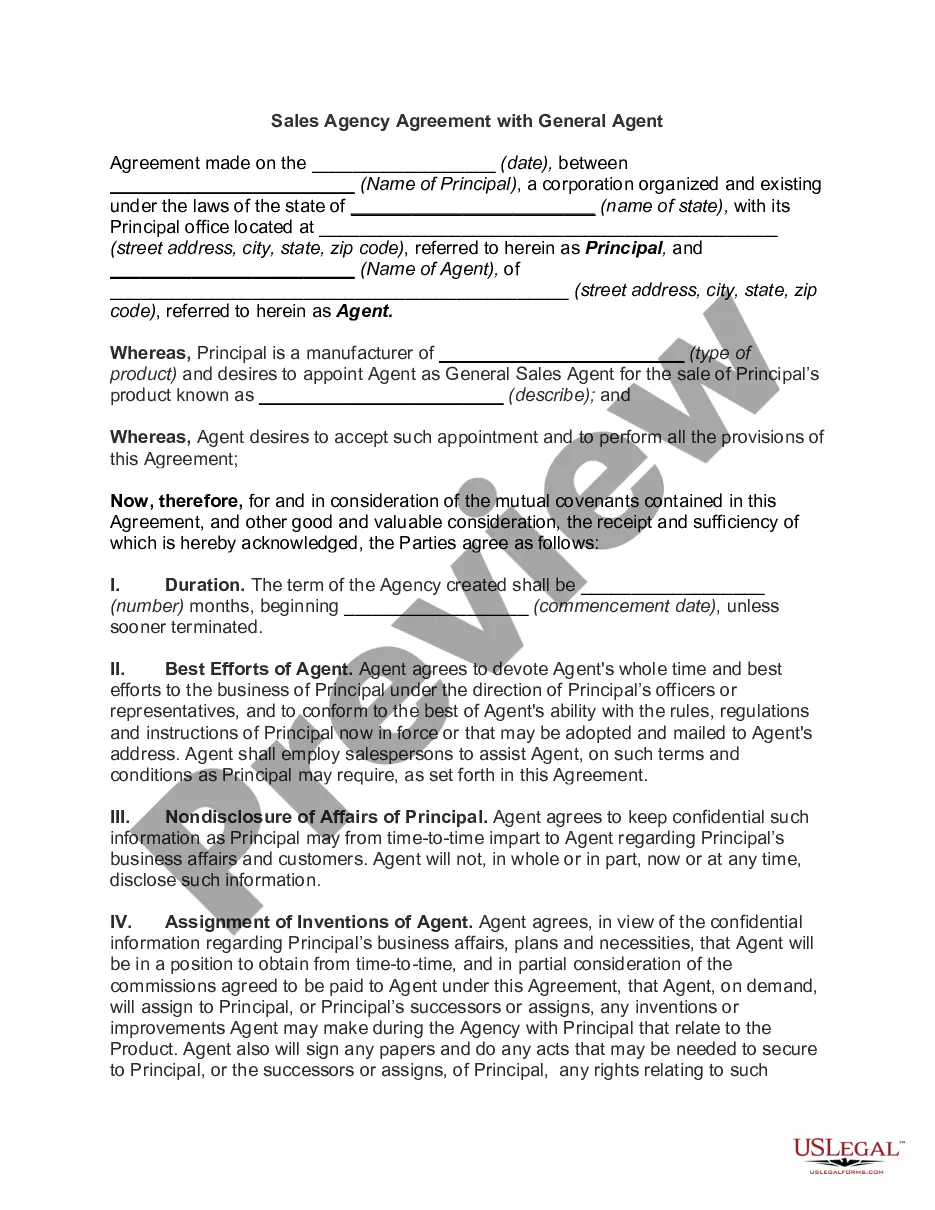
Connecticut Sales Consultant Agreement with Consultant Operating as Independent Contractor in a Defined Territory
Description
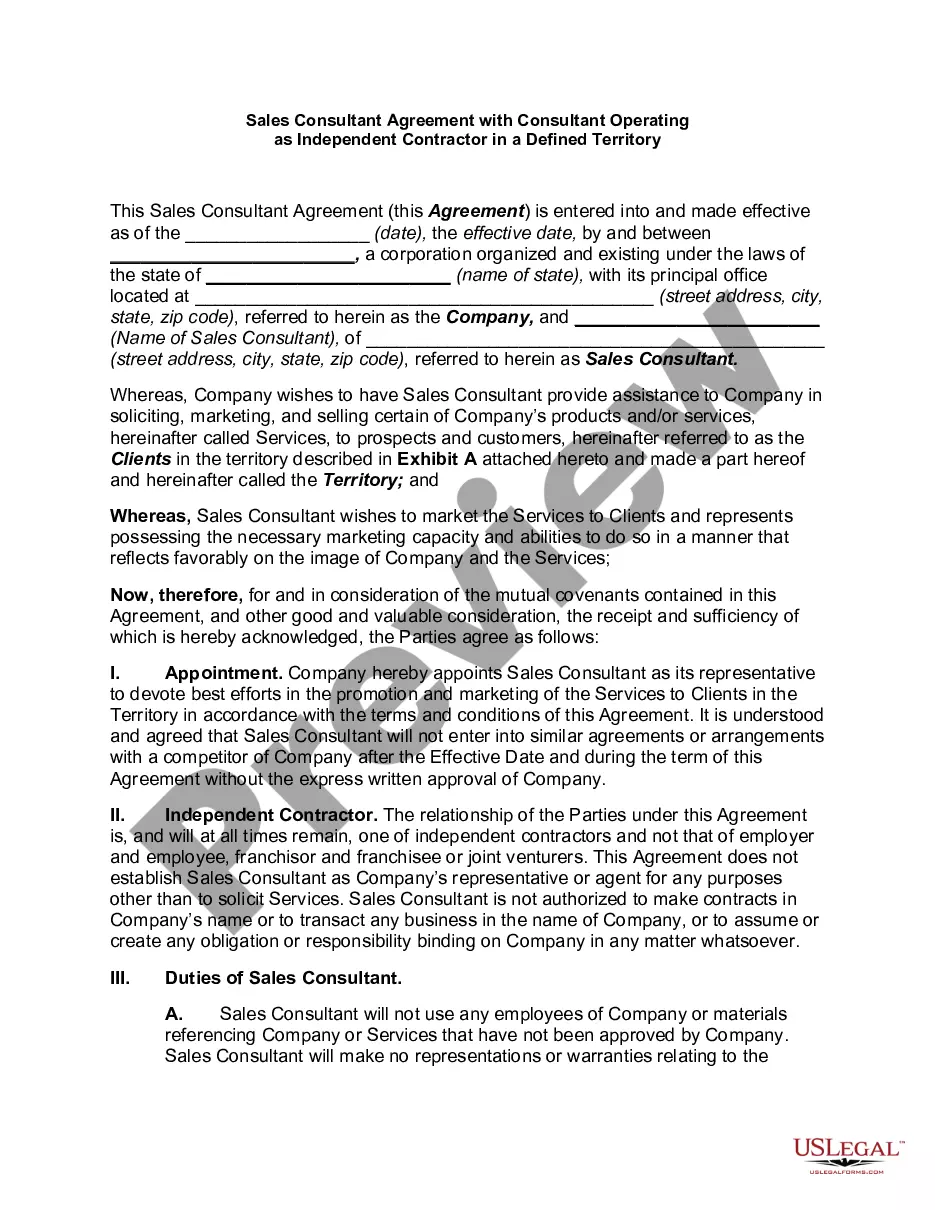
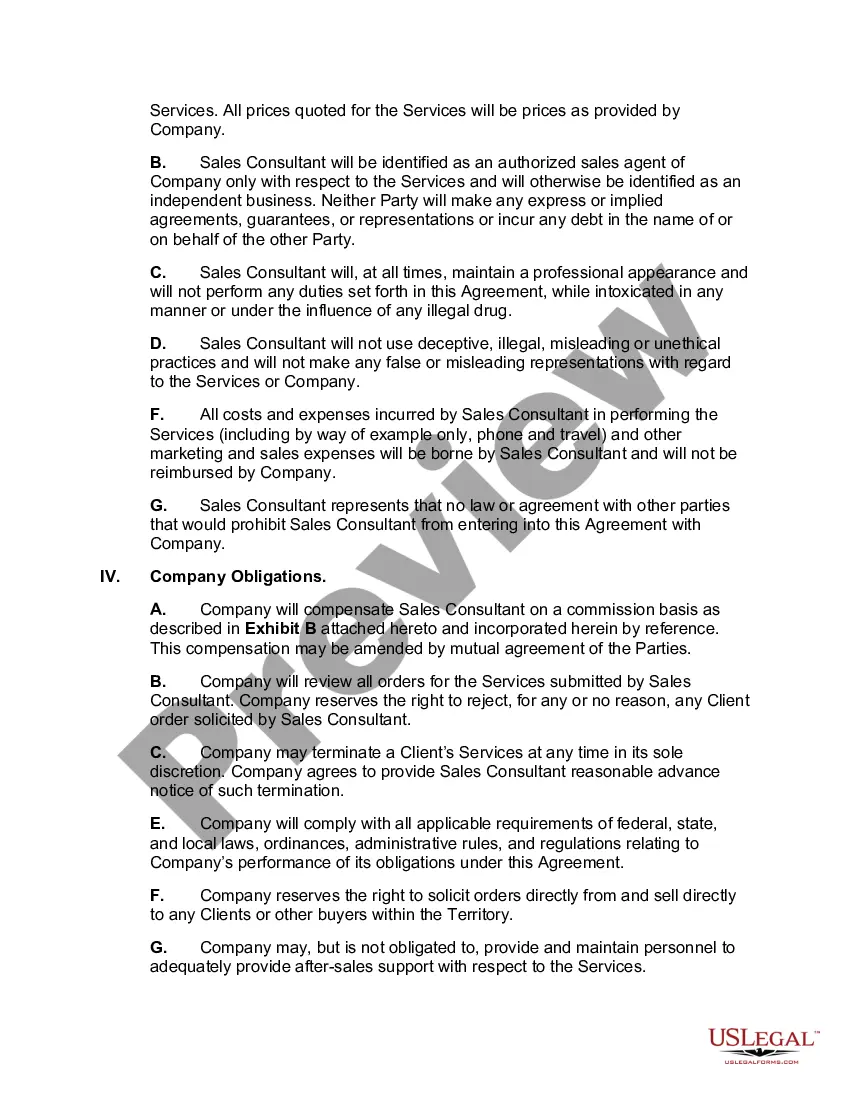
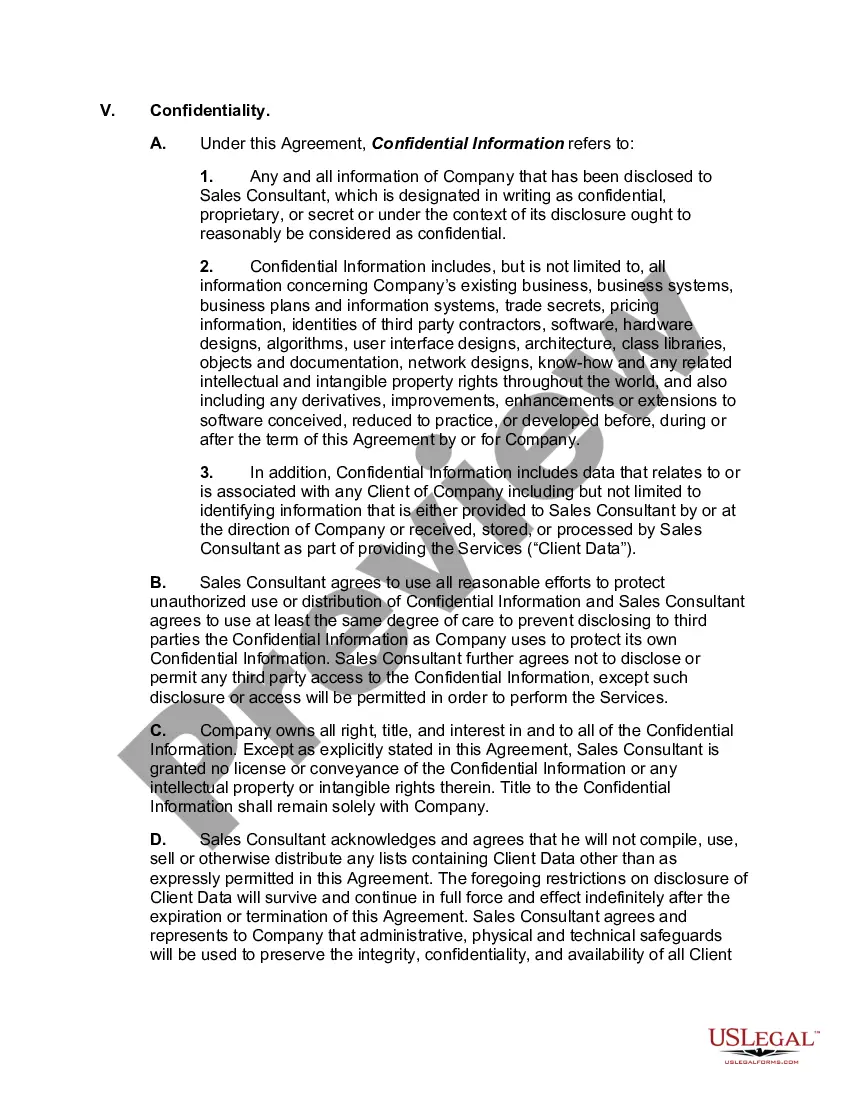
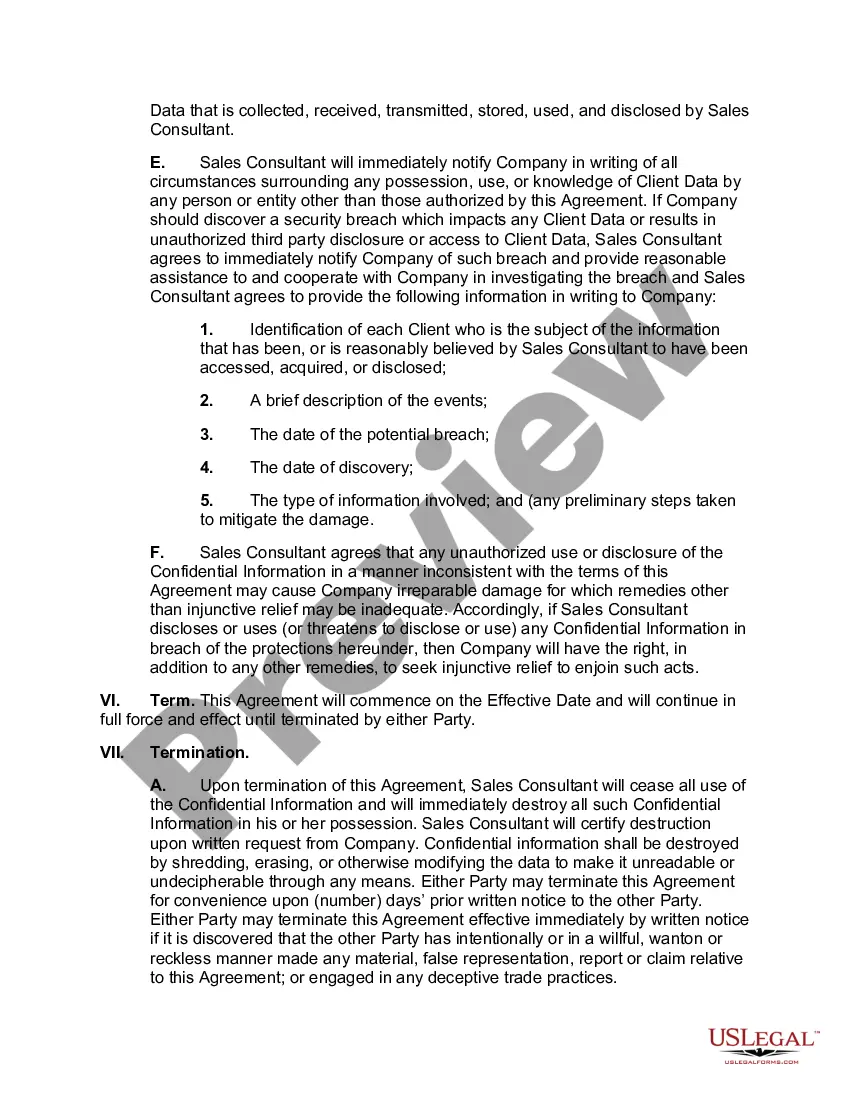
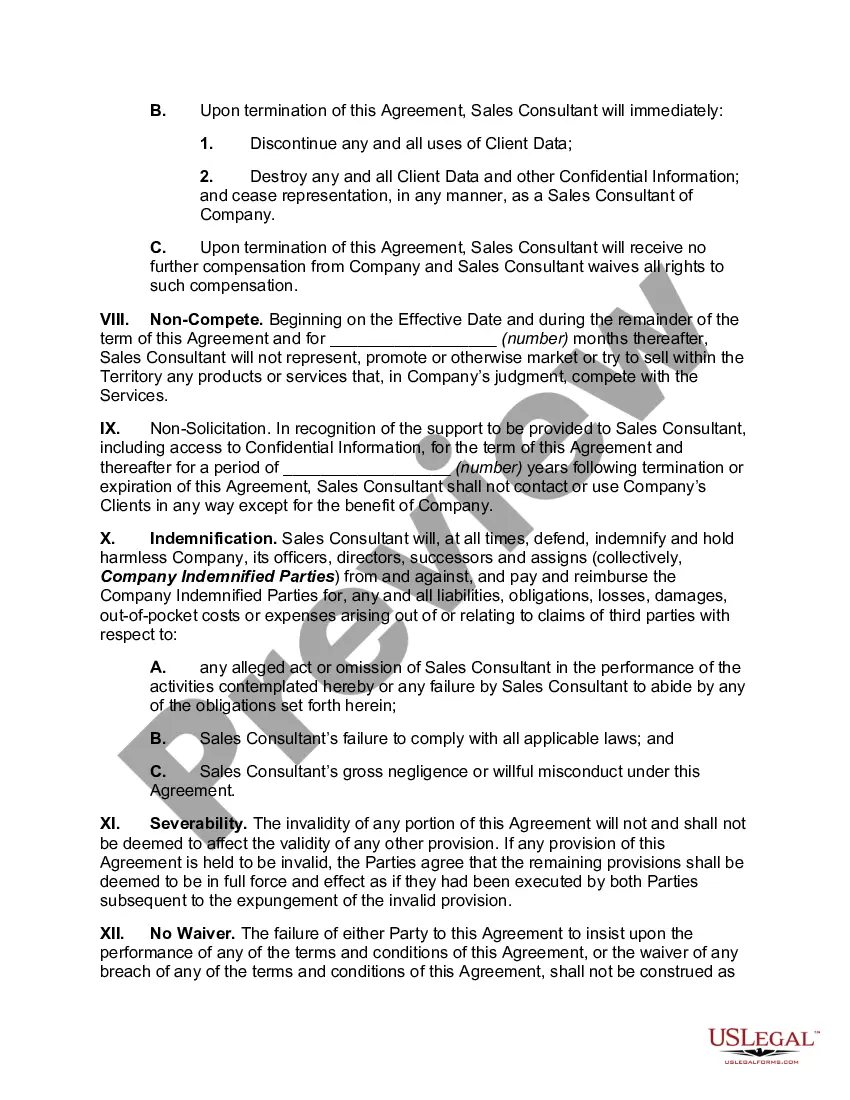
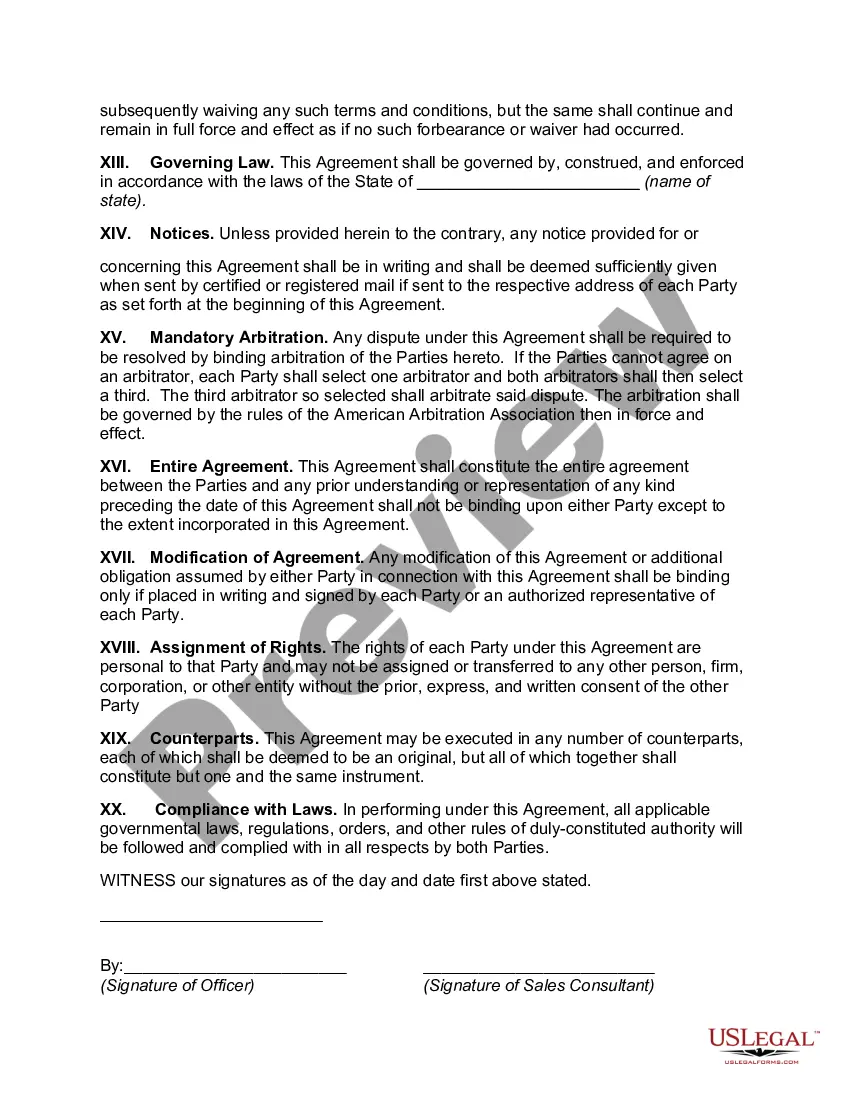
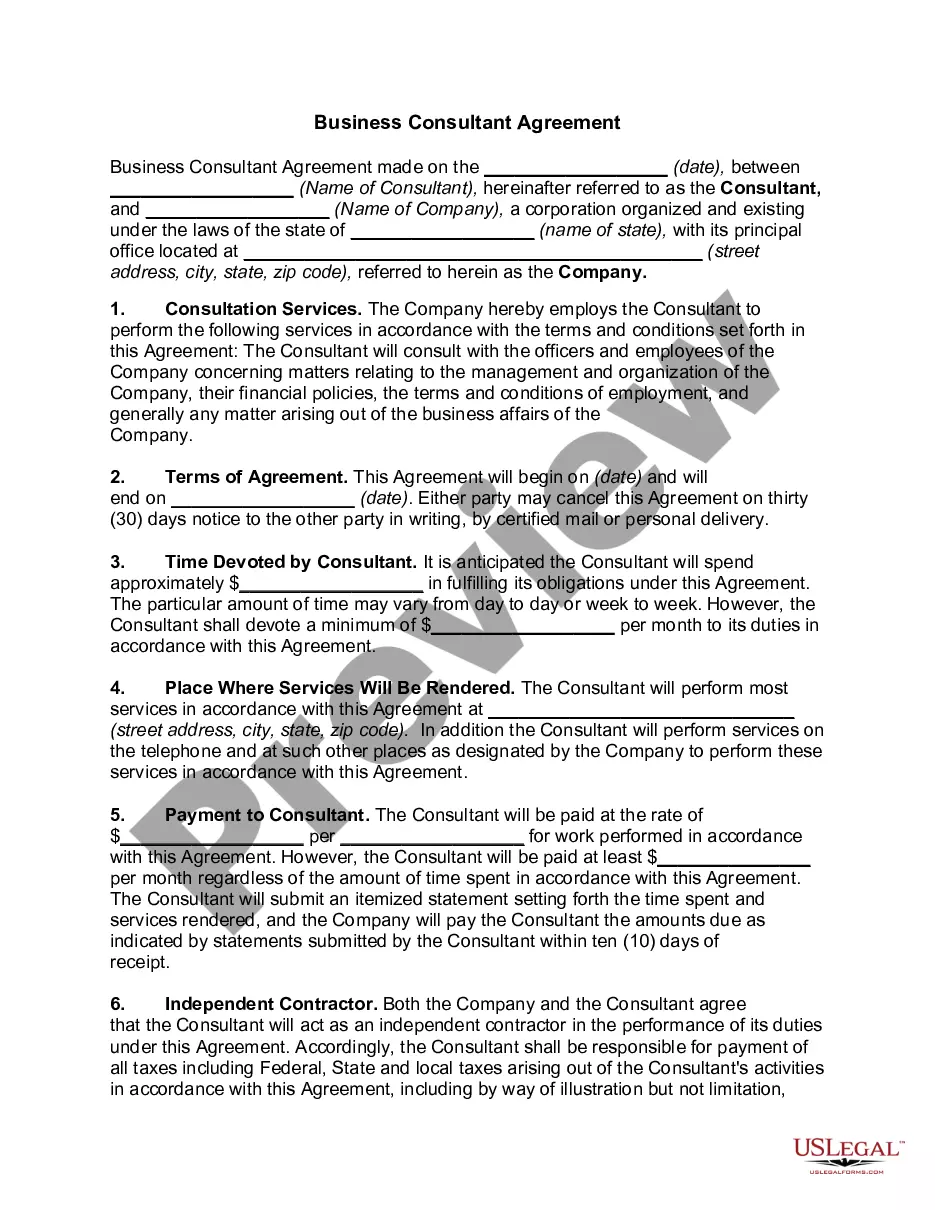
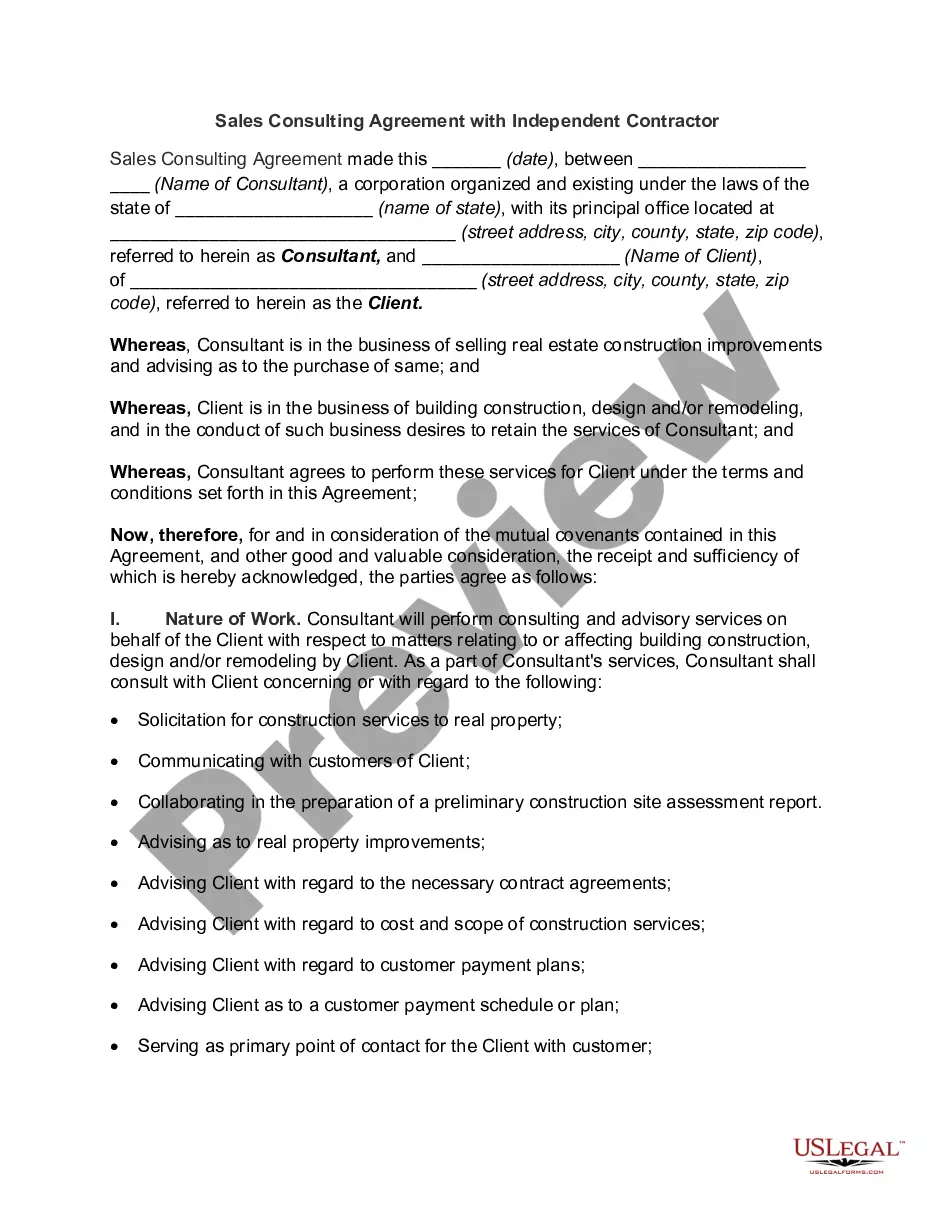
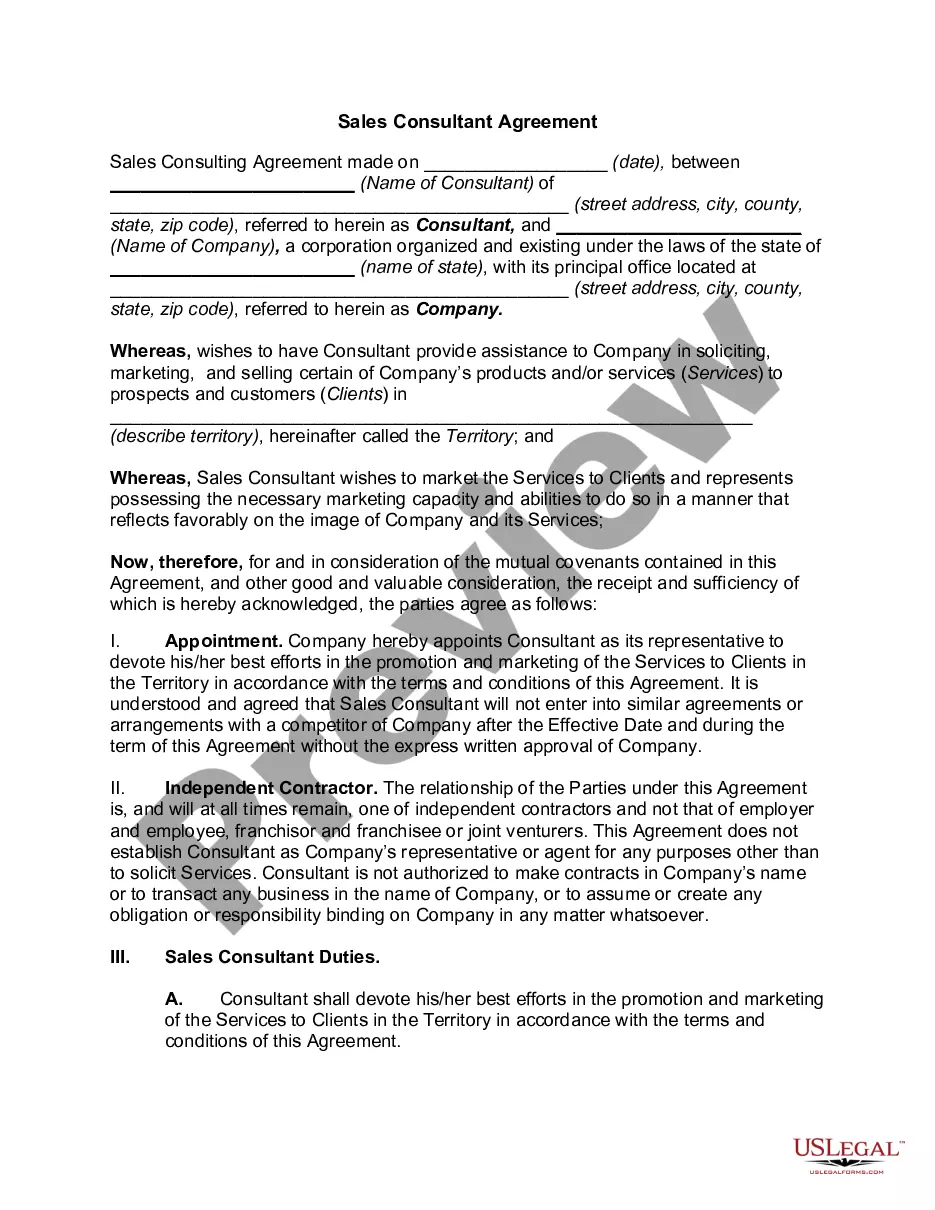
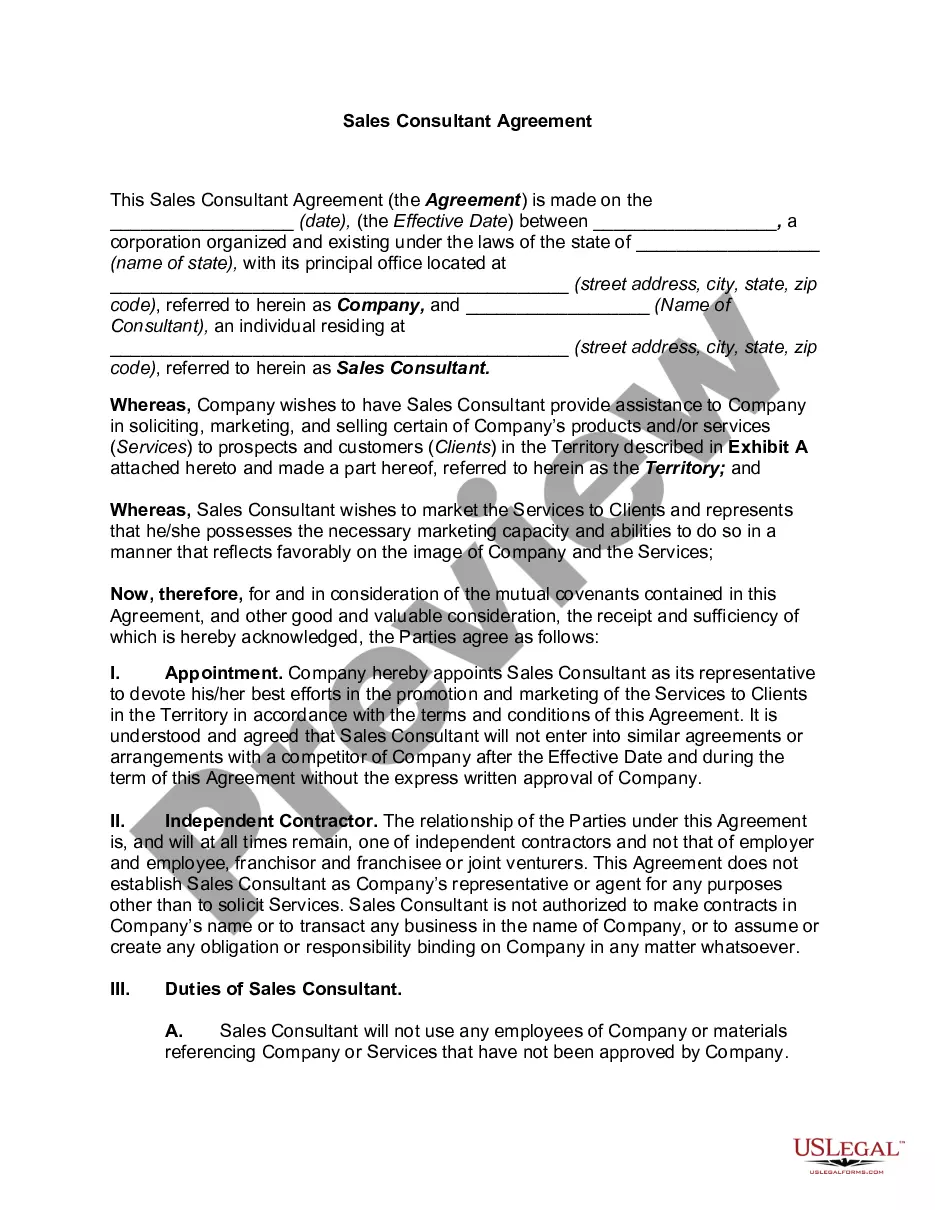
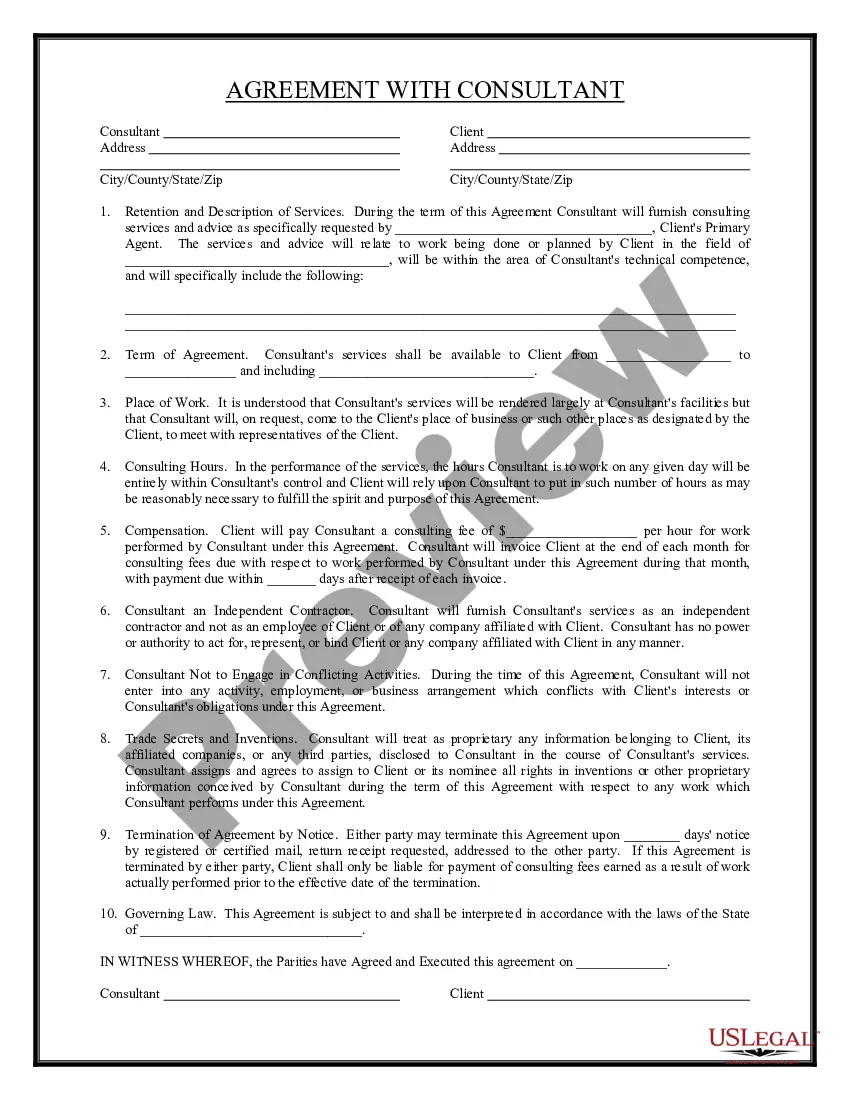
How to fill out Sales Consultant Agreement With Consultant Operating As Independent Contractor In A Defined Territory?
It is feasible to spend numerous hours online looking for the official document template that meets the state and federal criteria you require.
US Legal Forms offers thousands of valid forms that are reviewed by experts.
You can easily download or print the Connecticut Sales Consultant Agreement with Consultant Acting as Independent Contractor in a Specified Territory from our services.
Lastly, ensure you have selected the correct document template for your desired county/area.
- If you already have a US Legal Forms account, you may
- Then, you can complete, modify, print, or sign the Connecticut Sales Consultant Agreement with Consultant Acting as Independent Contractor in a Specified Territory.
- Every valid document template you obtain belongs to you permanently.
- To get another copy of the downloaded form, go to the My documents tab and click on the corresponding button.
- If this is your first time using the US Legal Forms website, follow these simple instructions below.
Form popularity
FAQ
In general, the difference is that the consultant's role is to evaluate a client's needs and provide expert advice and opinions on what needs to be done, while the contractors role is generally to evaluate the client's needs and actually perform the work.
Contracts play an essential role in the relationships that consultants have their clients. These legally binding documents tell a client what work you will perform, how long you expect the project to take, what compensation you expect, and more.
Consultants Are Usually Self-Employed According to the IRS, you're self-employed if you're a business owner or contractor who provides services to other businesses. To remain a contractor rather than an employee, you must: Have the right to direct or control the work you perform.
When you do consulting work in the U.S., you can be paid two different ways: as an employee on a W-2 tax basis, or on a 1099 tax basis as an independent contractor. As a consultant, being paid on a 1099 tax basis is a huge plus for two key reasons: You save more for retirement.
Freelancers and consultants are known as "independent contractors" in legal terms. An independent contractor (IC) is a person who contracts to perform services for others without having the legal status of an employee.
If you are an independent contractor, then you are self-employed. The earnings of a person who is working as an independent contractor are subject to self-employment tax. To find out what your tax obligations are, visit the Self-Employed Individuals Tax Center.
The contractor isn't an employee of the company but works independently. The contractor provides services to the client under an Independent Contractor Agreement.
Generally, a Consultant is a self-employed independent businessperson who has a special field of expertise or skill.
What is the difference between a Consultant and a Contractor? The short answer is that the Consultants role is evaluate a client's needs and provide expert advice and opinion on what needs to be done while the Contractors role is generally to evaluate the client's needs and actually perform the work.
Contractors, freelancers, and consultants are self-employed individuals who work alone or as part of other businesses. These terms cause a great deal of confusion because they are often used interchangeably when discussing self-employment.