Connecticut Sample Collaboration Agreement
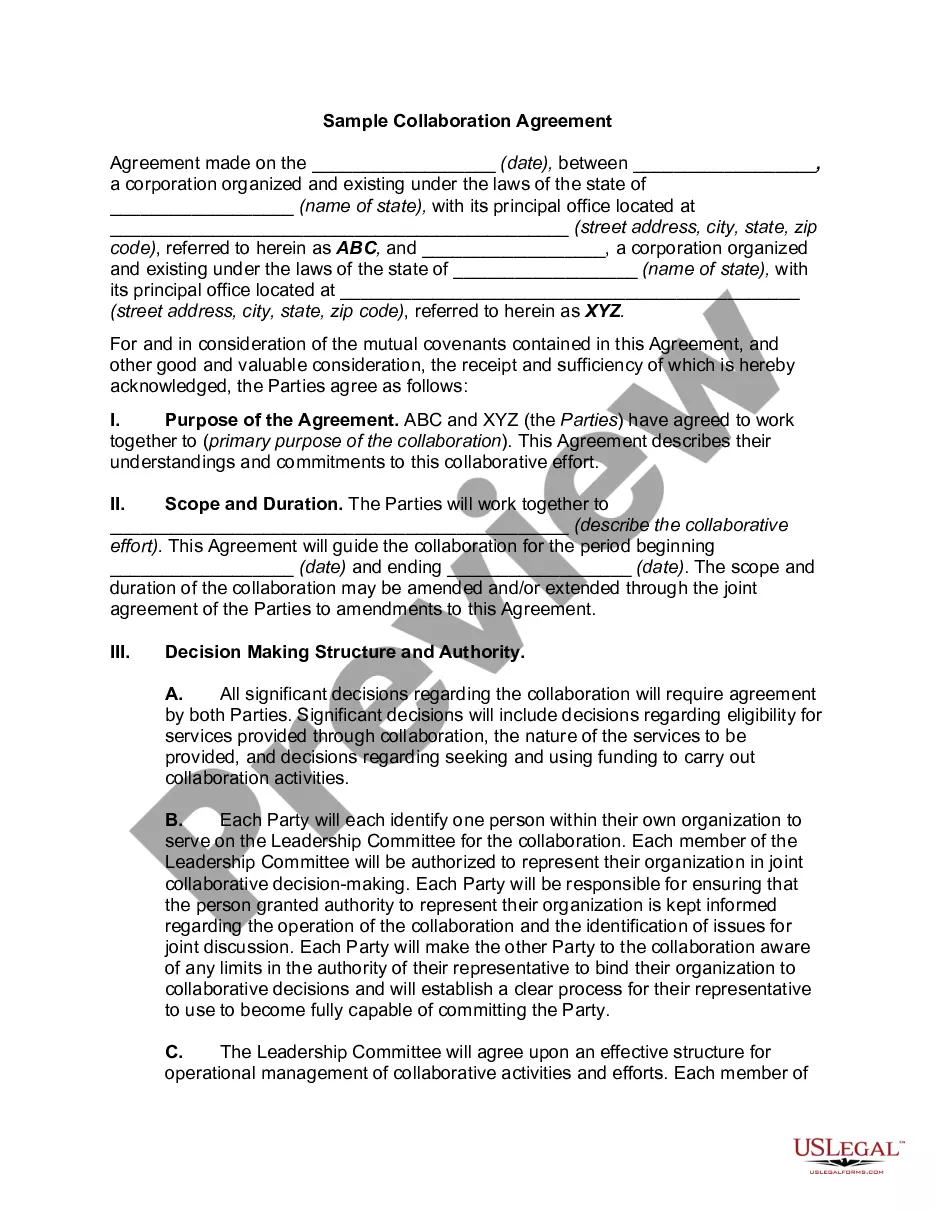
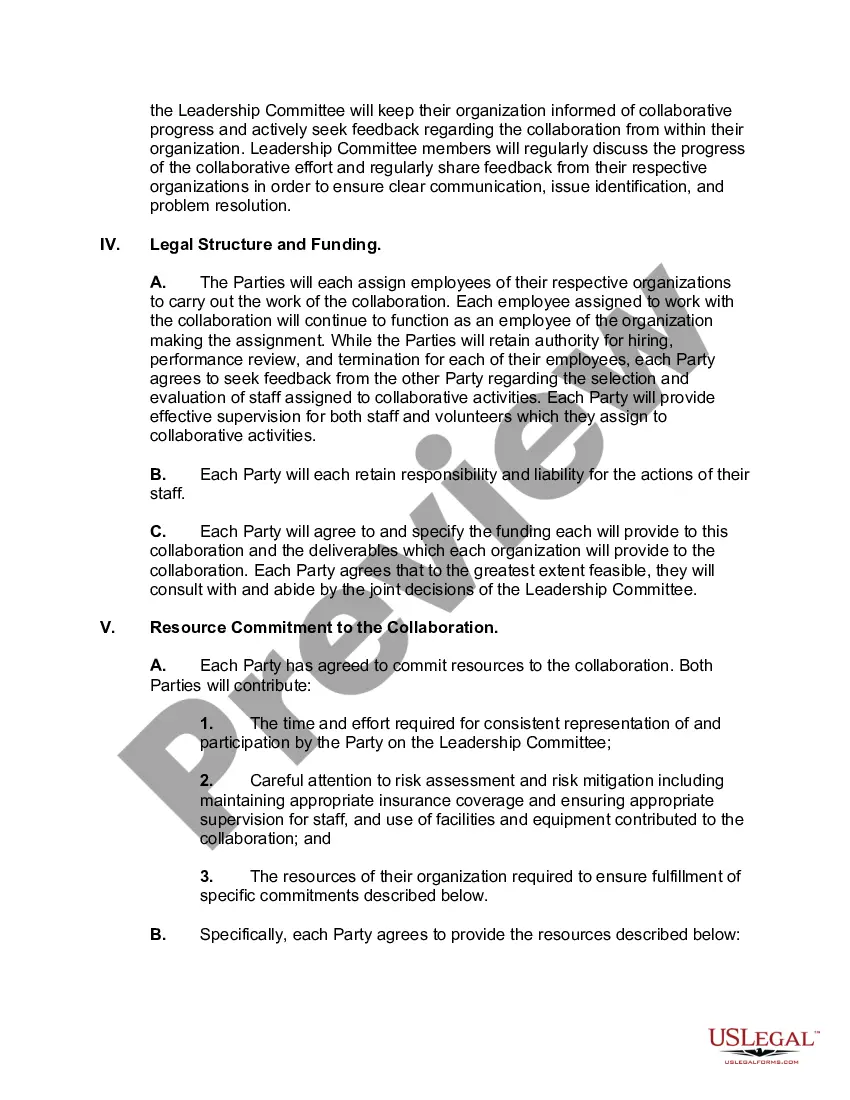
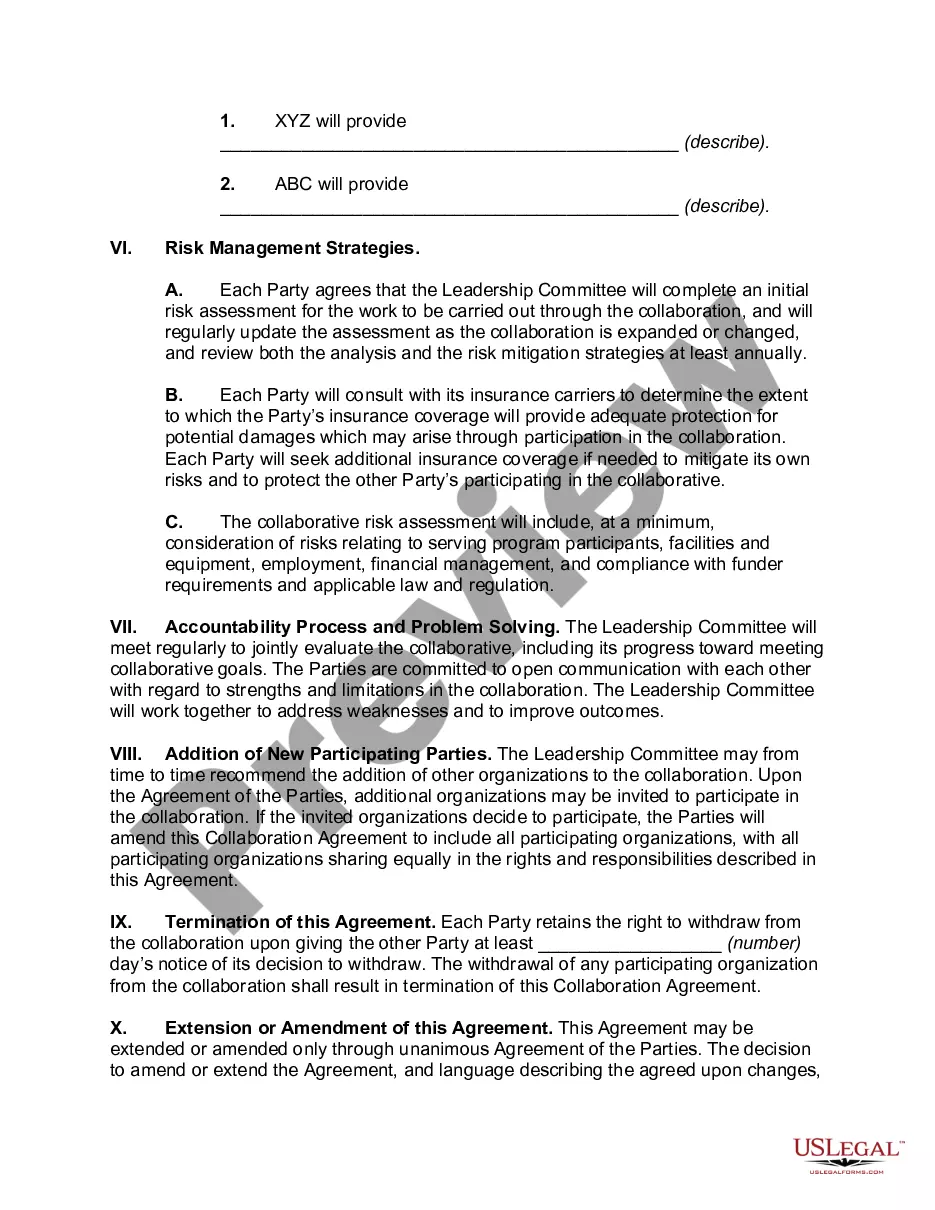
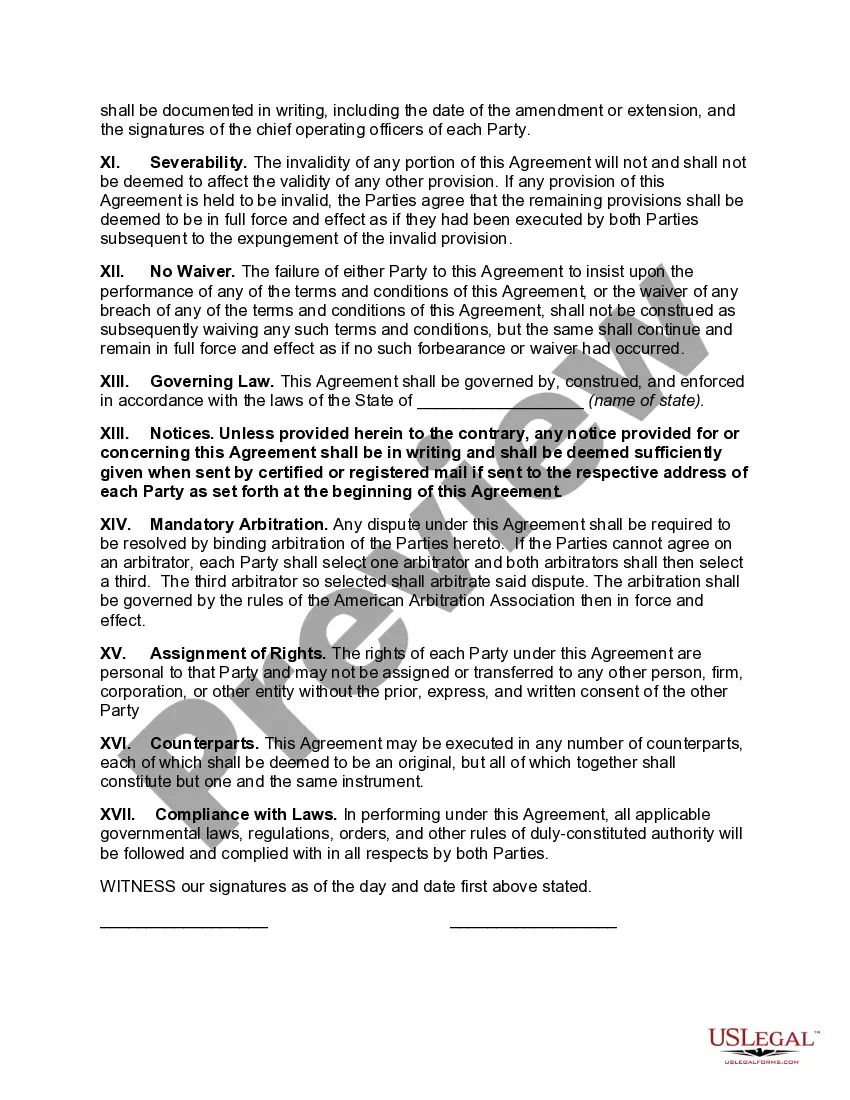
Description
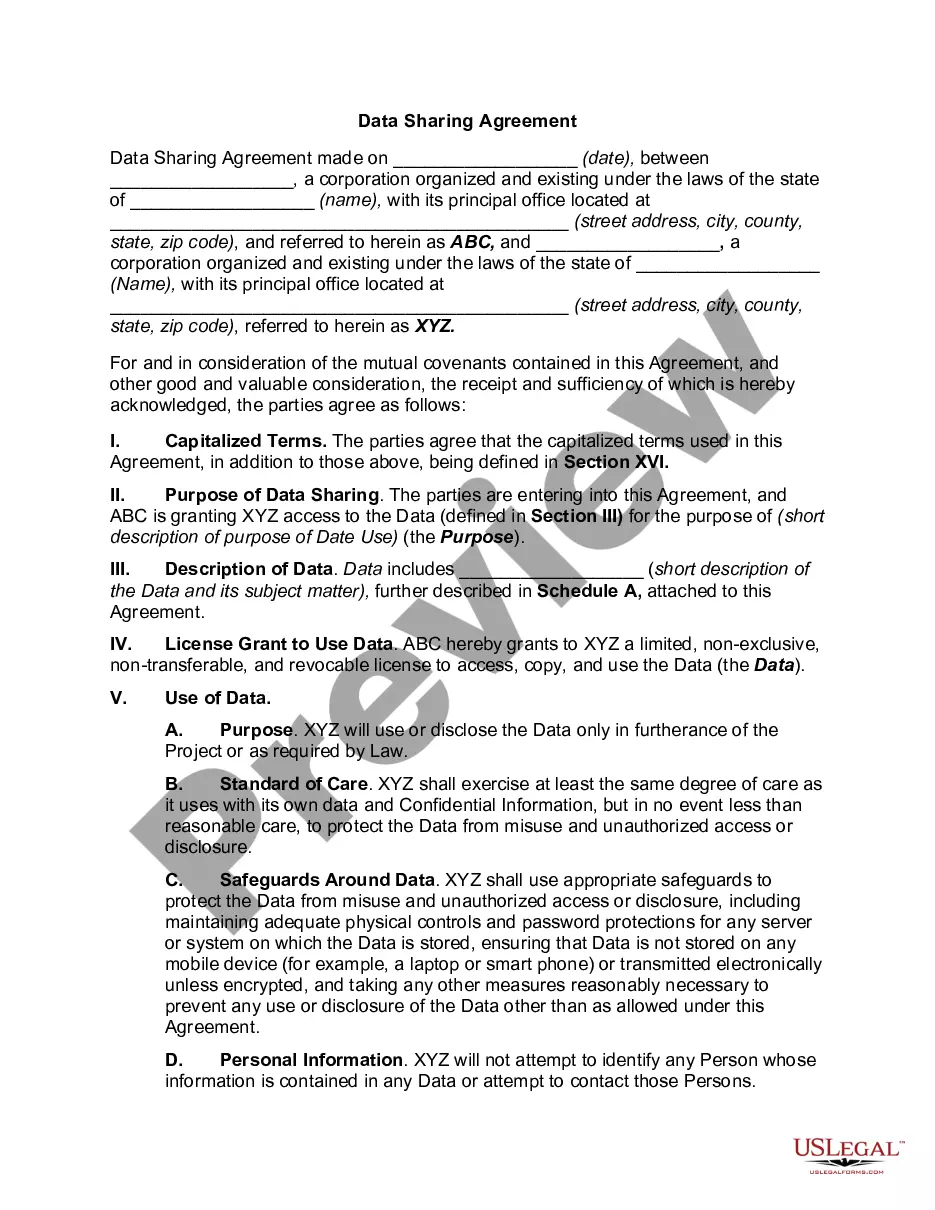
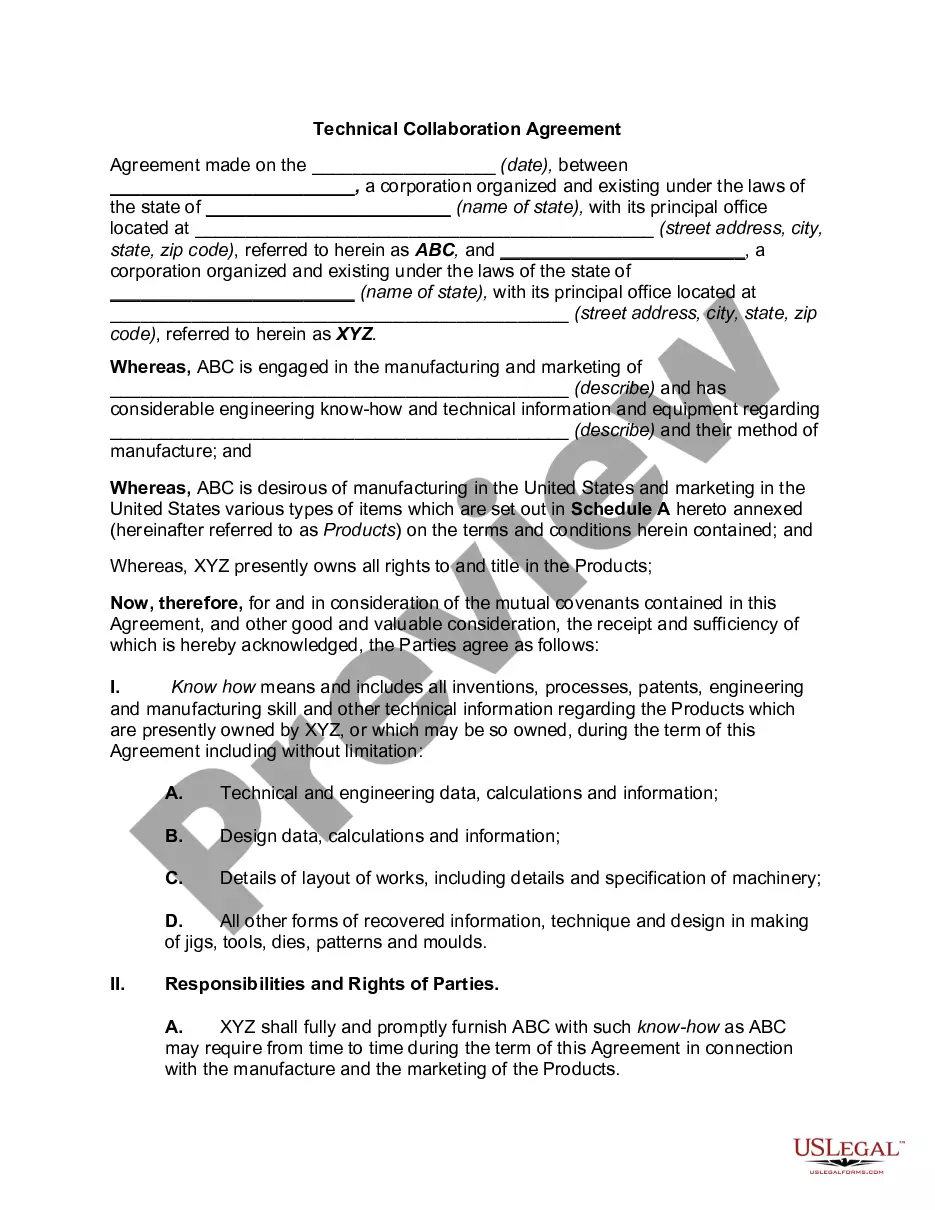
Get your form ready online
Our built-in tools help you complete, sign, share, and store your documents in one place.
Make edits, fill in missing information, and update formatting in US Legal Forms—just like you would in MS Word.
Download a copy, print it, send it by email, or mail it via USPS—whatever works best for your next step.
Sign and collect signatures with our SignNow integration. Send to multiple recipients, set reminders, and more. Go Premium to unlock E-Sign.
If this form requires notarization, complete it online through a secure video call—no need to meet a notary in person or wait for an appointment.
We protect your documents and personal data by following strict security and privacy standards.

Make edits, fill in missing information, and update formatting in US Legal Forms—just like you would in MS Word.

Download a copy, print it, send it by email, or mail it via USPS—whatever works best for your next step.

Sign and collect signatures with our SignNow integration. Send to multiple recipients, set reminders, and more. Go Premium to unlock E-Sign.

If this form requires notarization, complete it online through a secure video call—no need to meet a notary in person or wait for an appointment.

We protect your documents and personal data by following strict security and privacy standards.
Looking for another form?
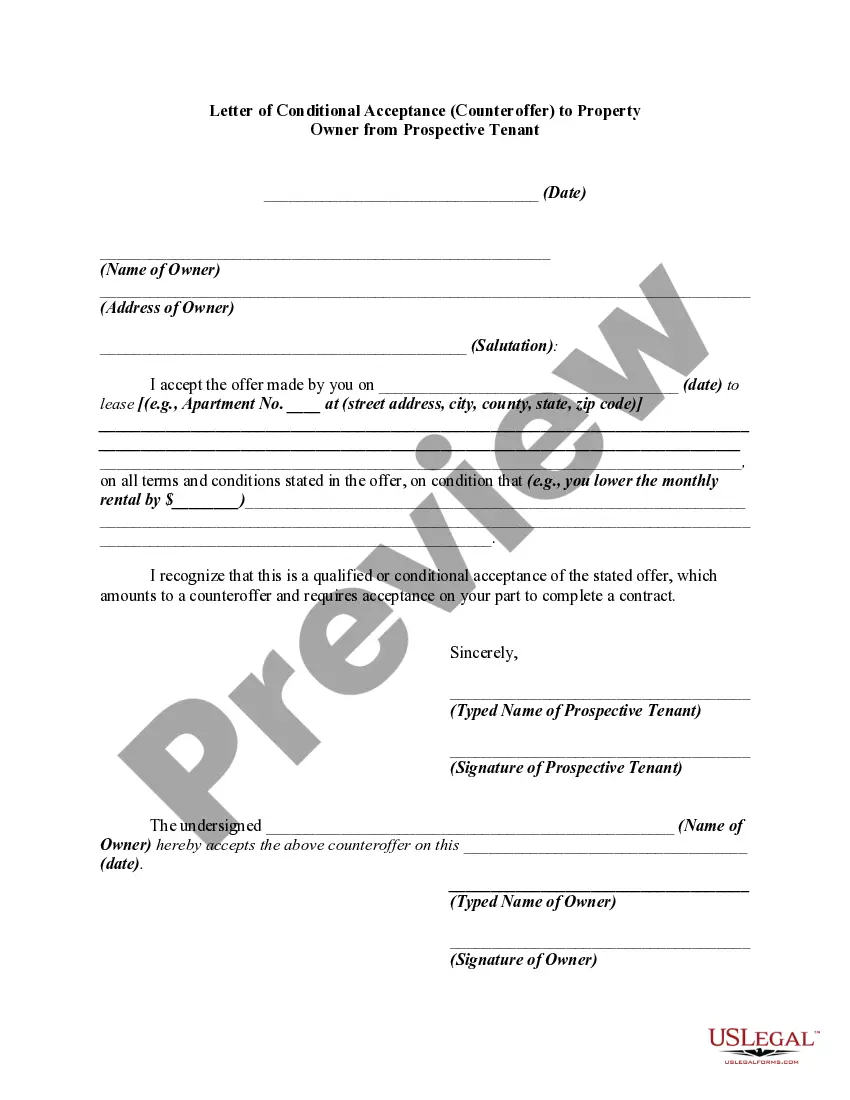

How to fill out Sample Collaboration Agreement?
US Legal Forms - one of the largest collections of legal templates in the United States - offers a variety of legal document templates that you can download or print.
By using the website, you can access thousands of forms for business and personal purposes, categorized by types, states, or keywords. You can obtain the latest forms such as the Connecticut Sample Collaboration Agreement within moments.
If you have a membership, Log In and download the Connecticut Sample Collaboration Agreement from the US Legal Forms library. The Download button will appear on every form you view. You can access all previously downloaded forms in the My documents section of your account.
Make modifications. Fill, edit, print, and sign the downloaded Connecticut Sample Collaboration Agreement.
Every document you added to your account has no expiration date and is yours indefinitely. Therefore, if you wish to download or print another copy, simply go to the My documents section and click on the form you need. Access the Connecticut Sample Collaboration Agreement with US Legal Forms, the most extensive collection of legal document templates. Utilize a vast number of professional and state-specific templates that meet your business or personal needs and requirements.
- If this is your first time using US Legal Forms, here are simple steps to get started.
- Make sure you have selected the correct form for your jurisdiction.
- Click the Preview button to review the form's details. Check the form information to ensure you have selected the right one.
- If the form does not meet your needs, utilize the Search field at the top of the screen to find one that does.
- Once you are satisfied with the form, confirm your selection by clicking the Download now button. Then, choose the payment plan you wish and provide your details to register for the account.
- Complete the transaction. Use your Visa or Mastercard or PayPal account to finalize the transaction.
- Select the format and download the form to your device.
Form popularity
FAQ
According to the CDC, a collaborative practice agreement should include these parts:Explanation of the purpose of the agreement.A list of the parties to the agreement.The patients who are included in the agreement (either a specific list of patients or a group of patients)Care functions authorized by the agreement.More items...?
States Where NPs Can Practice Independently. As of August 2021, 24 states and the District of Columbia have approved NP practice autonomy. Note that state regulations change frequently, and advanced practice nurses should check with state nursing boards for the most current regulations.
In the face of physician opposition, Connecticut lawmakers have passed a bill allowing nurse practitioners (NPs) and other advanced practice registered nurses (APRNs) to work independently after a 3-year collaboration with a physician there.
A collaborative practice agreement is a written statement that defines the joint practice of a physician and an APN in a collaborative and complementary working relationship. It provides a mechanism for the legal protection of the APN and sets out the rights and responsibilities of each party involved.
Collaborative practice agreements should include the activities that fall within the individual NP's scope of practice including: types of services that can be rendered, types of medical conditions that can be treated, which services and conditions require physician consultation, whether the NP can order perform or
FULL: NPs can prescribe, diagnose, and treat patients without physician oversight. Nurse practitioners who operate in full-practice states are also allowed to establish and operate their own independent practices in the same way physicians do.
A collaboration agreement is an agreement that regulates two or more people working together on a project. They work together or collaborate on something, like a painting, piece of software, app or game. They collaborate to make one thing that cannot be separated into parts.
Under the written collaborative agreement with their physician, NP's are able to prescribe, administer and dispense drugs. They can prescribe Schedule II to Schedule V medications as long as these classe distinctions are clearly stated in the collaborative practice agreement.
APRNs are defined as primary care providers and may be credentialed as allied staff for hospital privileges, but this credential does not grant admitting privileges. They may prescribe and dispense drugs or devices, including Schedule II to V controlled substances, according to BON rules.
An example of interprofessional collaboration would be a doctor, nurse, physical therapist, occupational therapist, and pharmacist working together to carry out an individualized plan of care in order to improve a patient's health status.