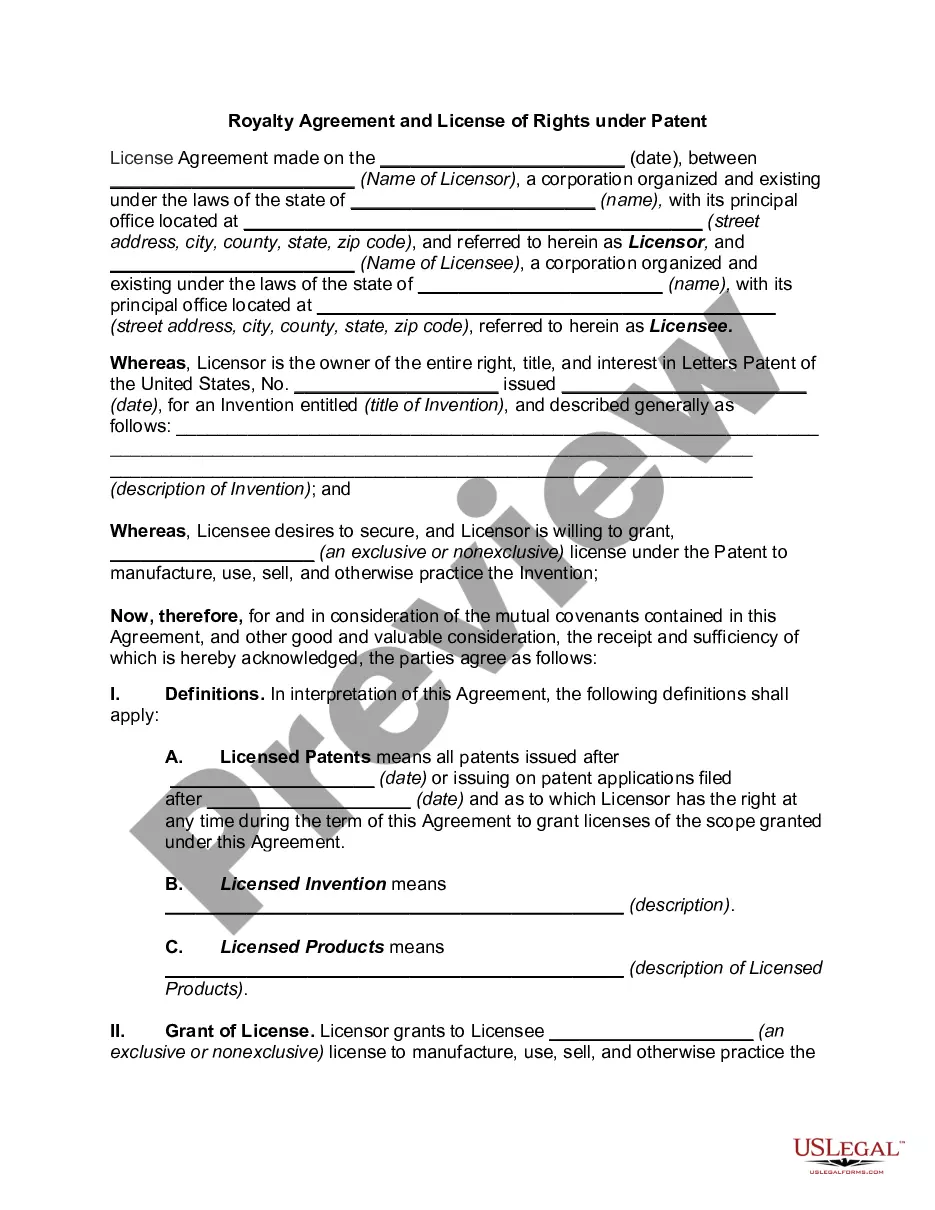
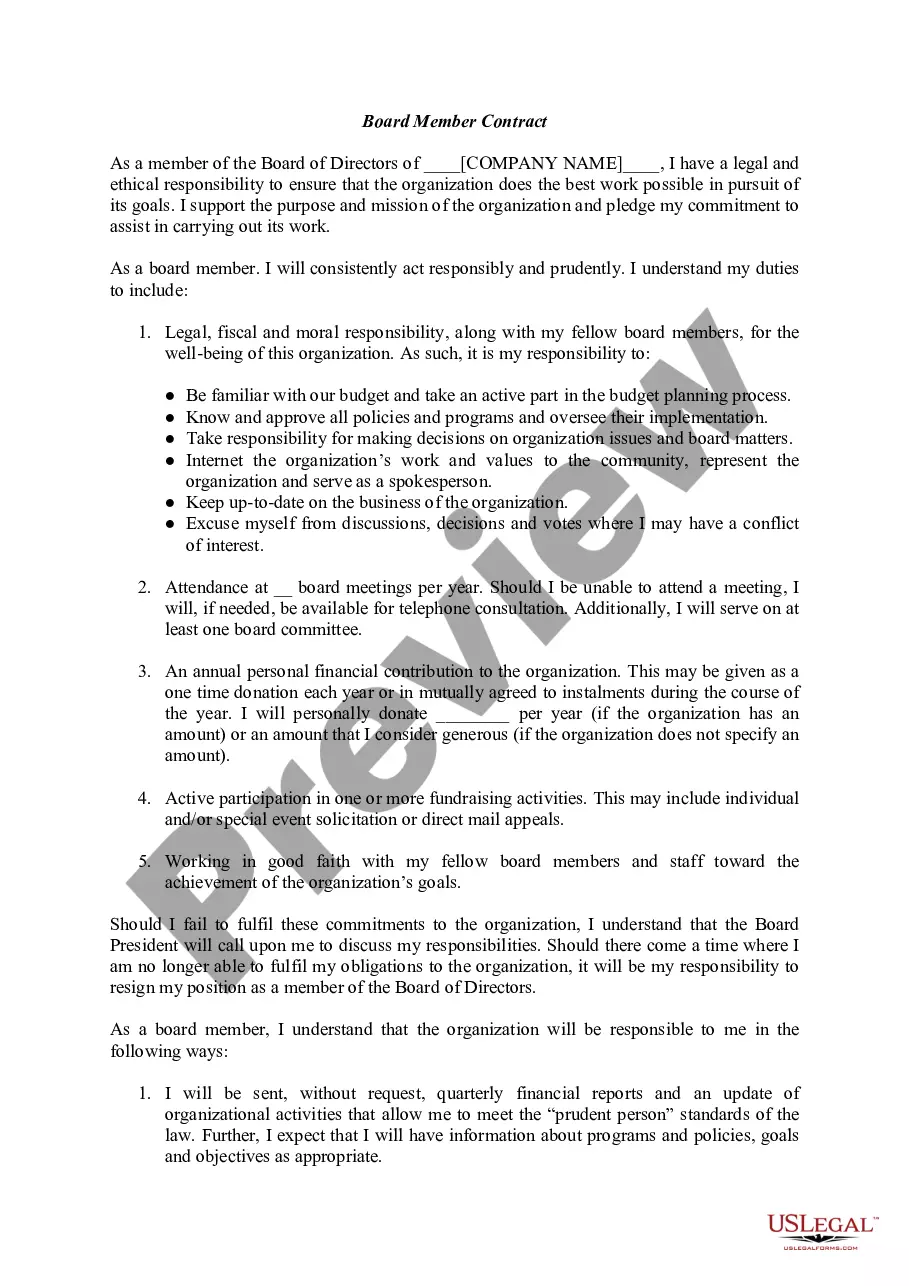
Connecticut Agreement Between Board Member and Close Corporation
Description

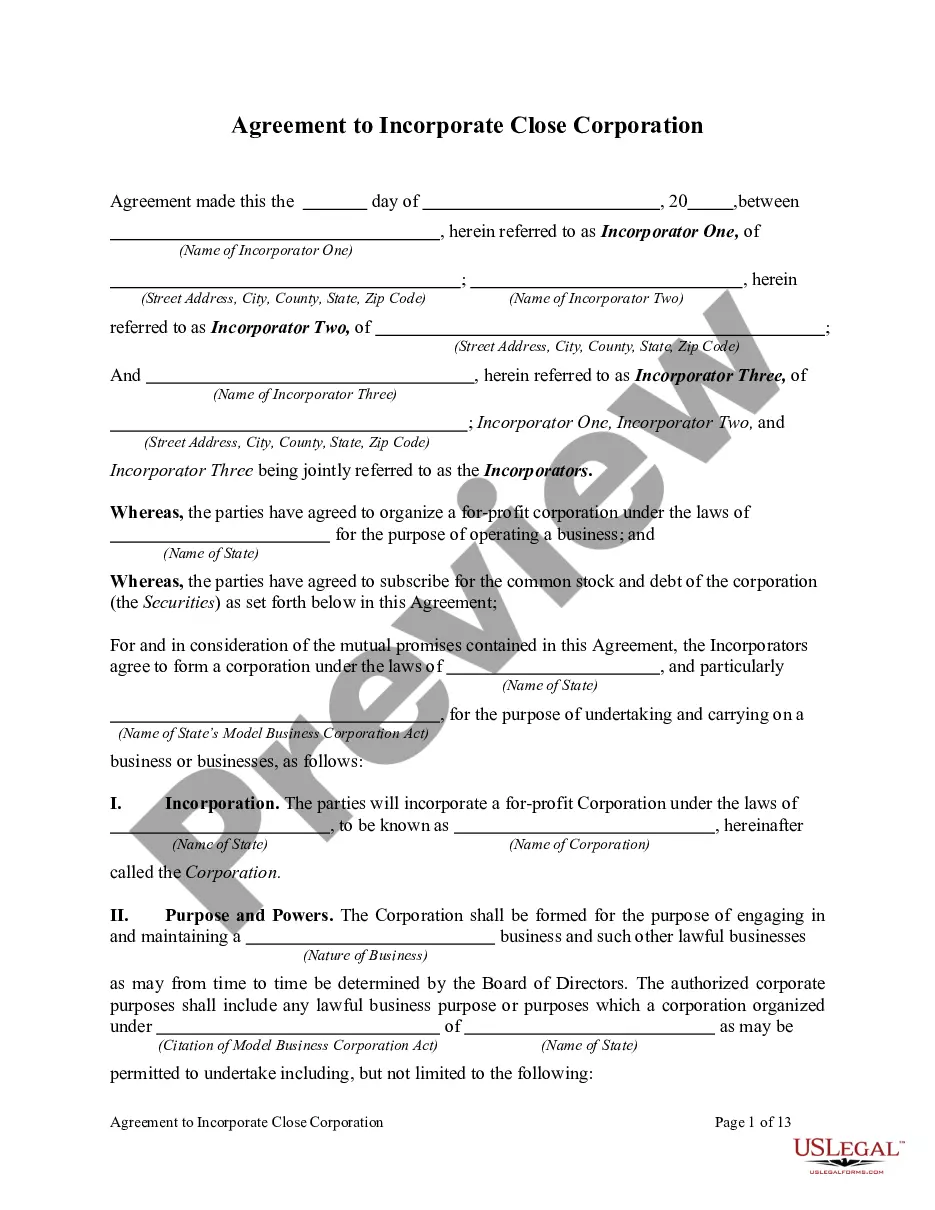
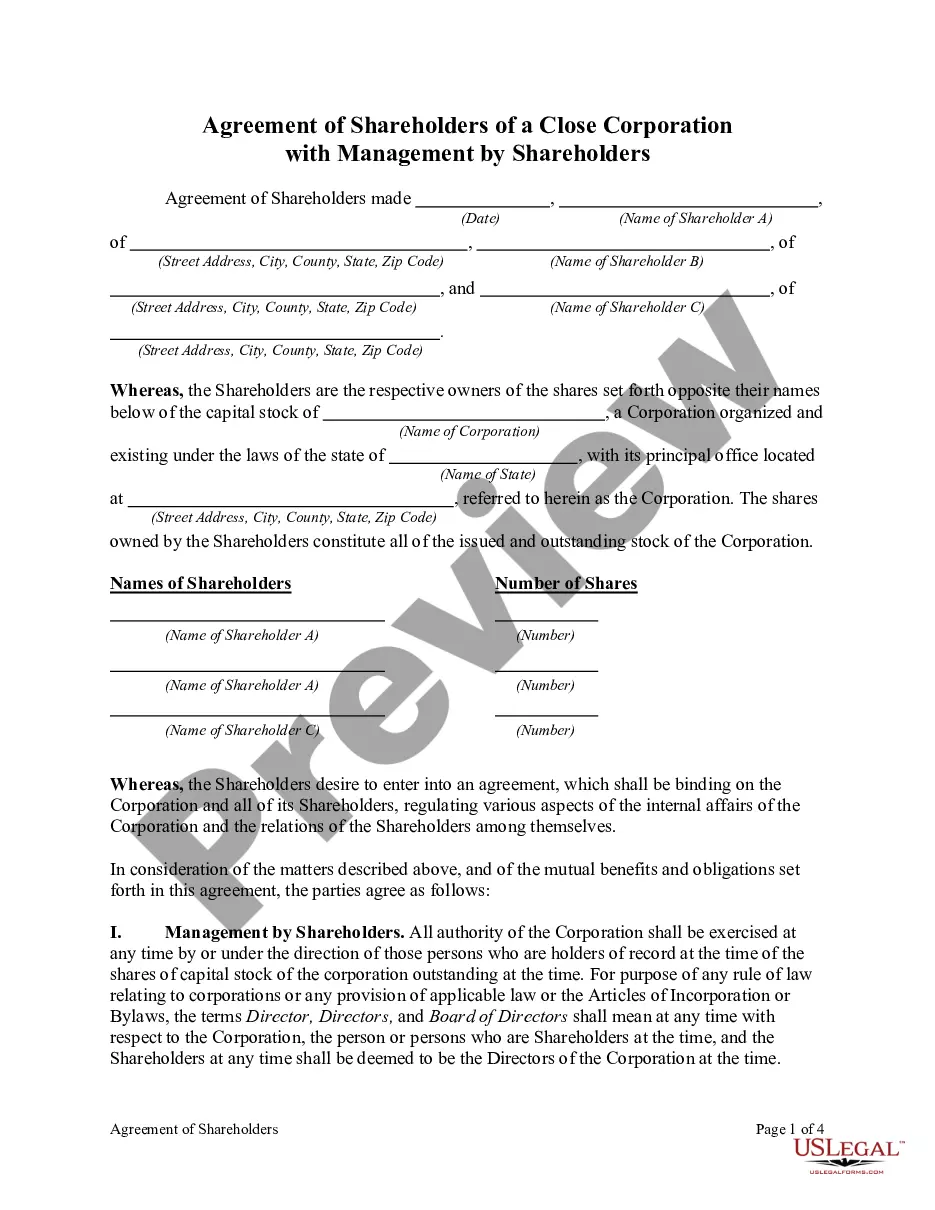
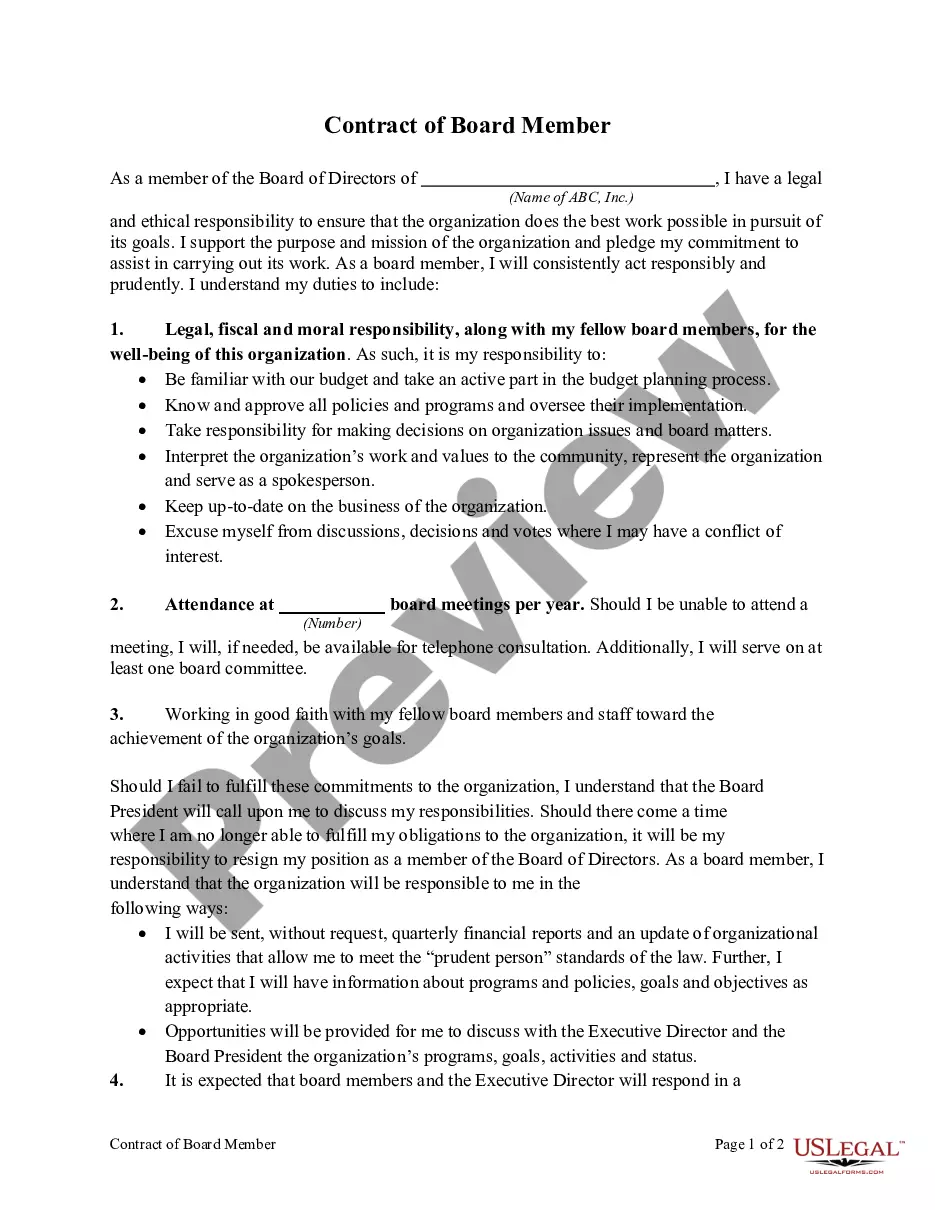
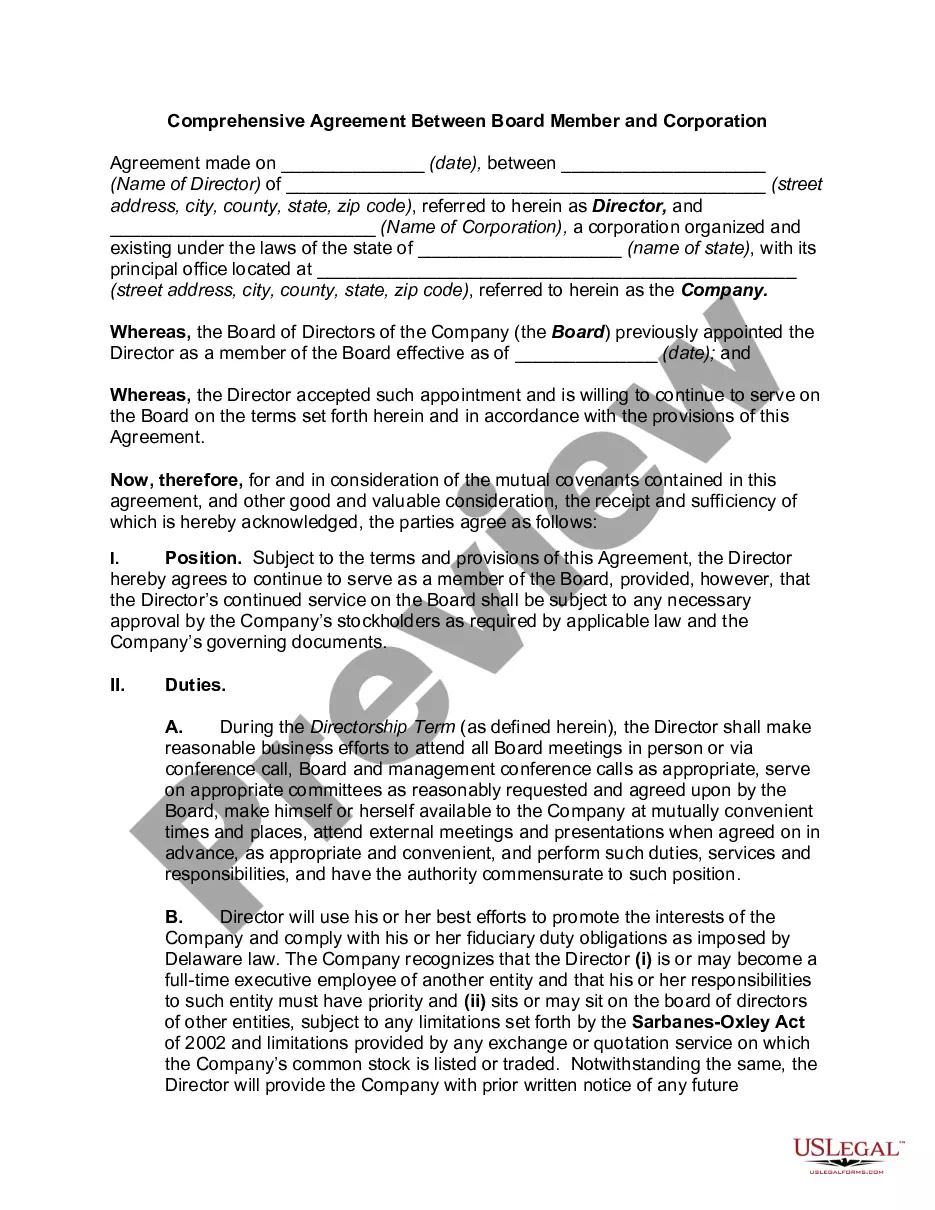
Get your form ready online
Our built-in tools help you complete, sign, share, and store your documents in one place.
Make edits, fill in missing information, and update formatting in US Legal Forms—just like you would in MS Word.
Download a copy, print it, send it by email, or mail it via USPS—whatever works best for your next step.
Sign and collect signatures with our SignNow integration. Send to multiple recipients, set reminders, and more. Go Premium to unlock E-Sign.
If this form requires notarization, complete it online through a secure video call—no need to meet a notary in person or wait for an appointment.
We protect your documents and personal data by following strict security and privacy standards.

Make edits, fill in missing information, and update formatting in US Legal Forms—just like you would in MS Word.

Download a copy, print it, send it by email, or mail it via USPS—whatever works best for your next step.

Sign and collect signatures with our SignNow integration. Send to multiple recipients, set reminders, and more. Go Premium to unlock E-Sign.

If this form requires notarization, complete it online through a secure video call—no need to meet a notary in person or wait for an appointment.

We protect your documents and personal data by following strict security and privacy standards.
Looking for another form?




How to fill out Agreement Between Board Member And Close Corporation?
You might spend a number of hours online looking for the legal document template that meets the state and federal requirements you require.
US Legal Forms provides a wide range of legal templates that are reviewed by professionals.
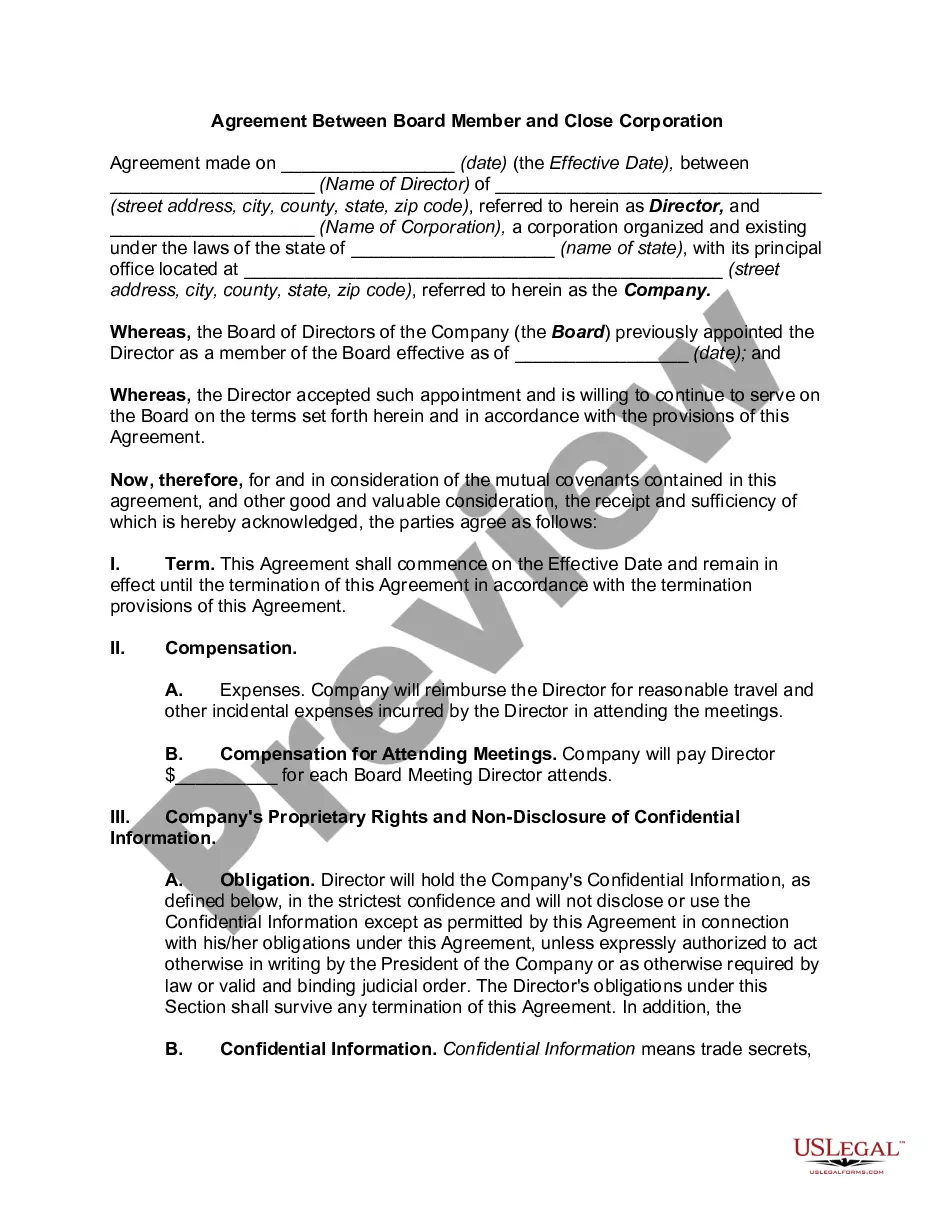
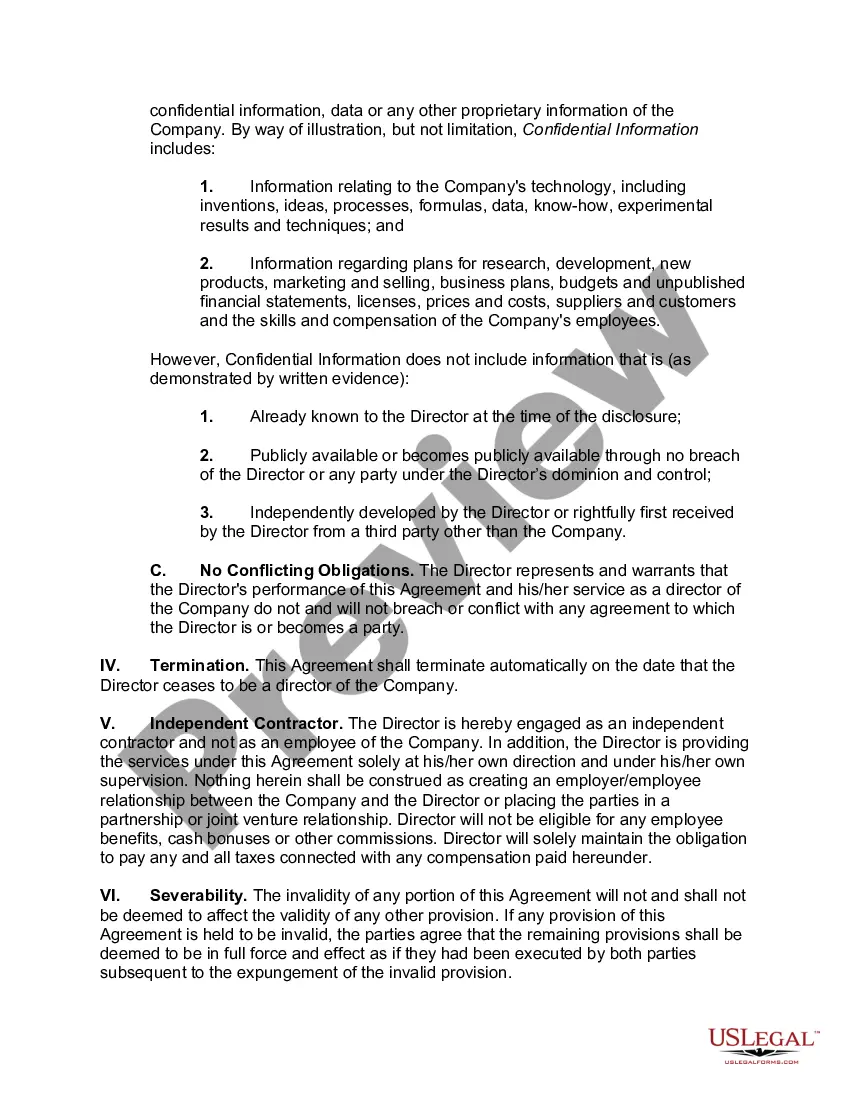
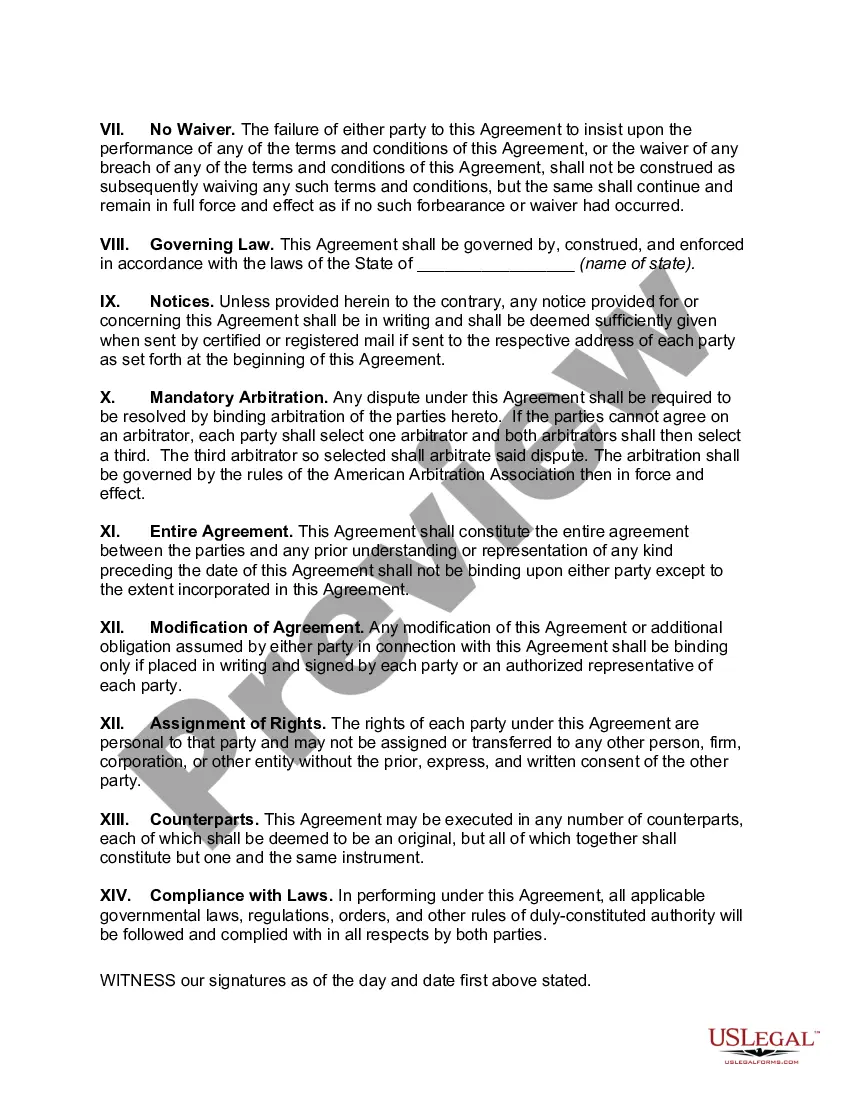
You can download or print the Connecticut Agreement Between Board Member and Close Corporation from their services.
If available, utilize the Review button to examine the document template as well.
- If you already have a US Legal Forms account, you can Log In and click the Acquire button.
- Then, you can complete, edit, print, or sign the Connecticut Agreement Between Board Member and Close Corporation.
- Each legal document template you purchase is yours forever.
- To obtain another copy of any purchased form, go to the My documents tab and click the appropriate button.
- If you are using the US Legal Forms website for the first time, follow the simple instructions below.
- First, ensure that you have selected the correct document template for the area/city of your choice.
- Check the form description to confirm you have selected the right form.
Form popularity
FAQ
A Close Corporation has members and a Company has shareholders and directors. The Close Corporation has its own estate seperate from its members.
A close corporation is a legal entity much like a company. A CC is run and administered by its members, who must be natural persons (i.e. not other legal entities). A close corporation's members are like a company's shareholders.
Different states have different rules for the organization of their S corporations and C corporations, but all for-profit and nonprofit corporations are required by law to have boards of directors. The rules of the state in which you incorporate determine when they must be named and how many directors are required.
The steps to form a 501(c)(3) nonprofit corporation in Connecticut. By Christine Mathias, Attorney. Most nonprofits are 501(c)(3) organizations, which means they are formed for religious, charitable, scientific, literary, or educational purposes and are eligible for federal and state tax exemptions.
Can a close corporation or a company be a member of a close corporation? No, only a natural person or a inter vivos trust/testamentary trust can become a member.
ORC § 1701.591 entitled Close Corporation Agreement provides a mechanism for shareholders of a close corporation to agree in advance on issues related to the internal management and business operations of their corporation and the relations between and among themselves as shareholders.
Non-stock corporations may be formed or organized for charitable, religious, educational, professional, cultural, fraternal, literary, scientific, social, civic service, or similar purposes, like trade, industry, agricultural and like chambers, or any combination thereof, subject to the special provisions of this Title
1. NAME OF CORPORATION (required) (Must include business designation, e.g., Inc., Co., Corp.): The corporation is nonprofit and shall not have or issue shares of stock or make distributions.
If your business is a corporation, then you are required by law to have a board of directors. Depending on your particular corporate structure and your state, one or two directors may be all that's legally required.
To dissolve a Connecticut corporation, you just need to file a Certificate of Dissolution with the Connecticut Secretary of the State, Commercial Recording Division (SOTS). Connecticut has forms available for use but you can draft your own articles of dissolution as long as they contain the required information.