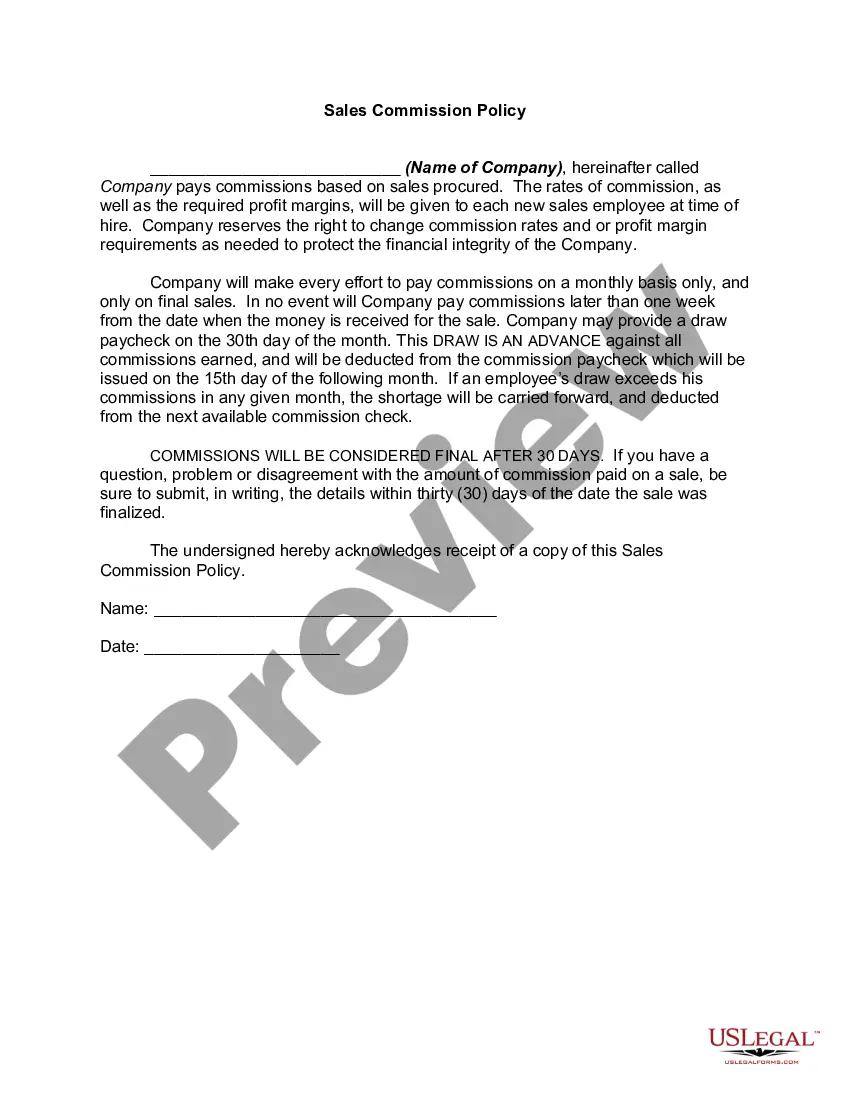
Connecticut Sales Commission Policy
Description
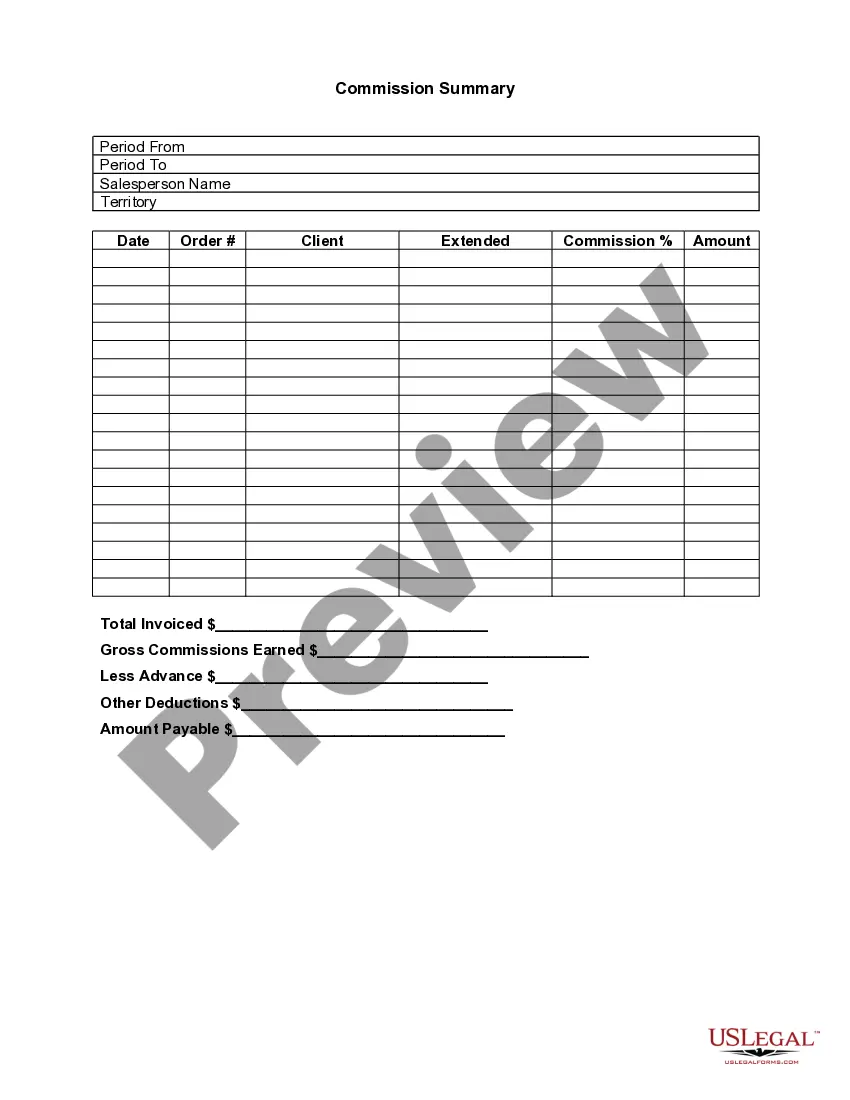
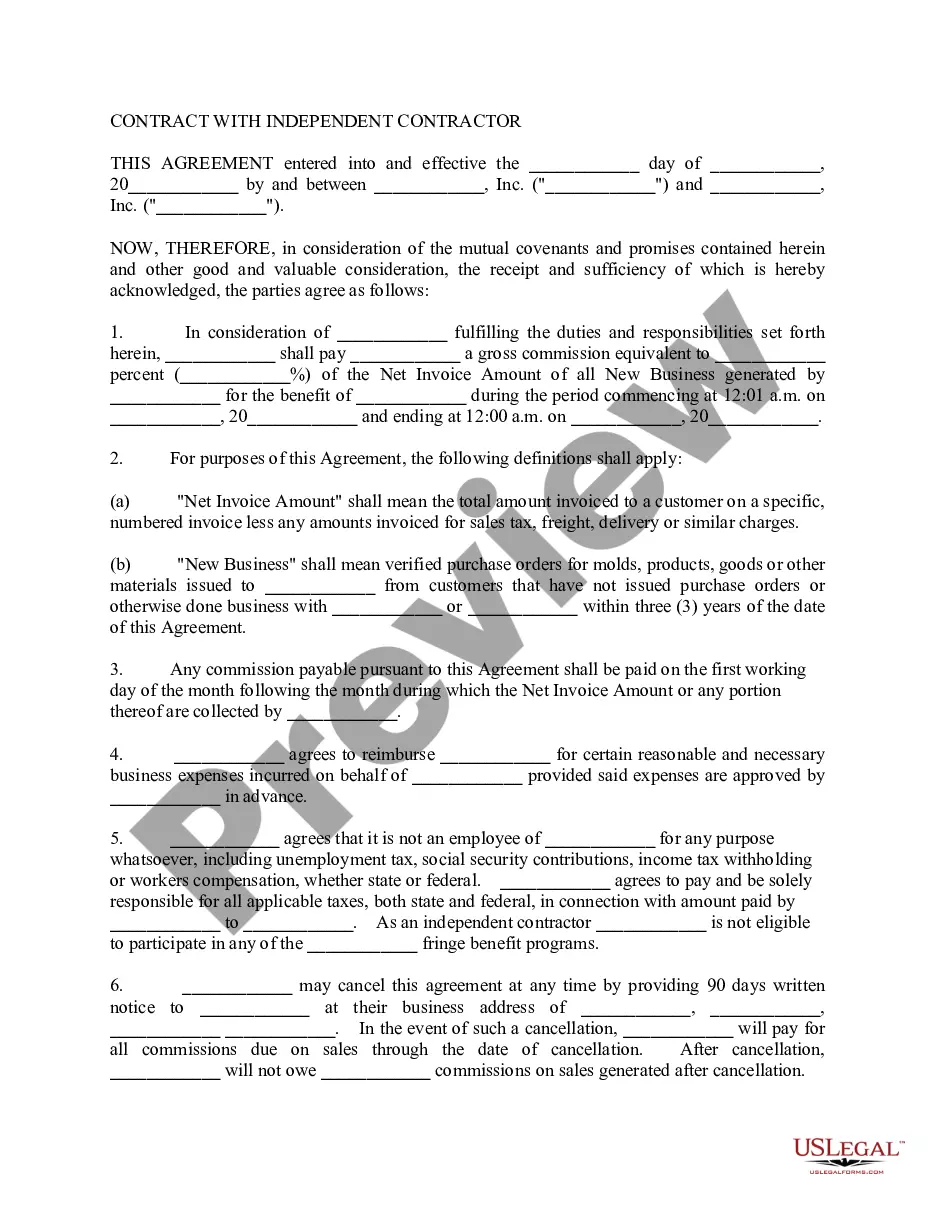
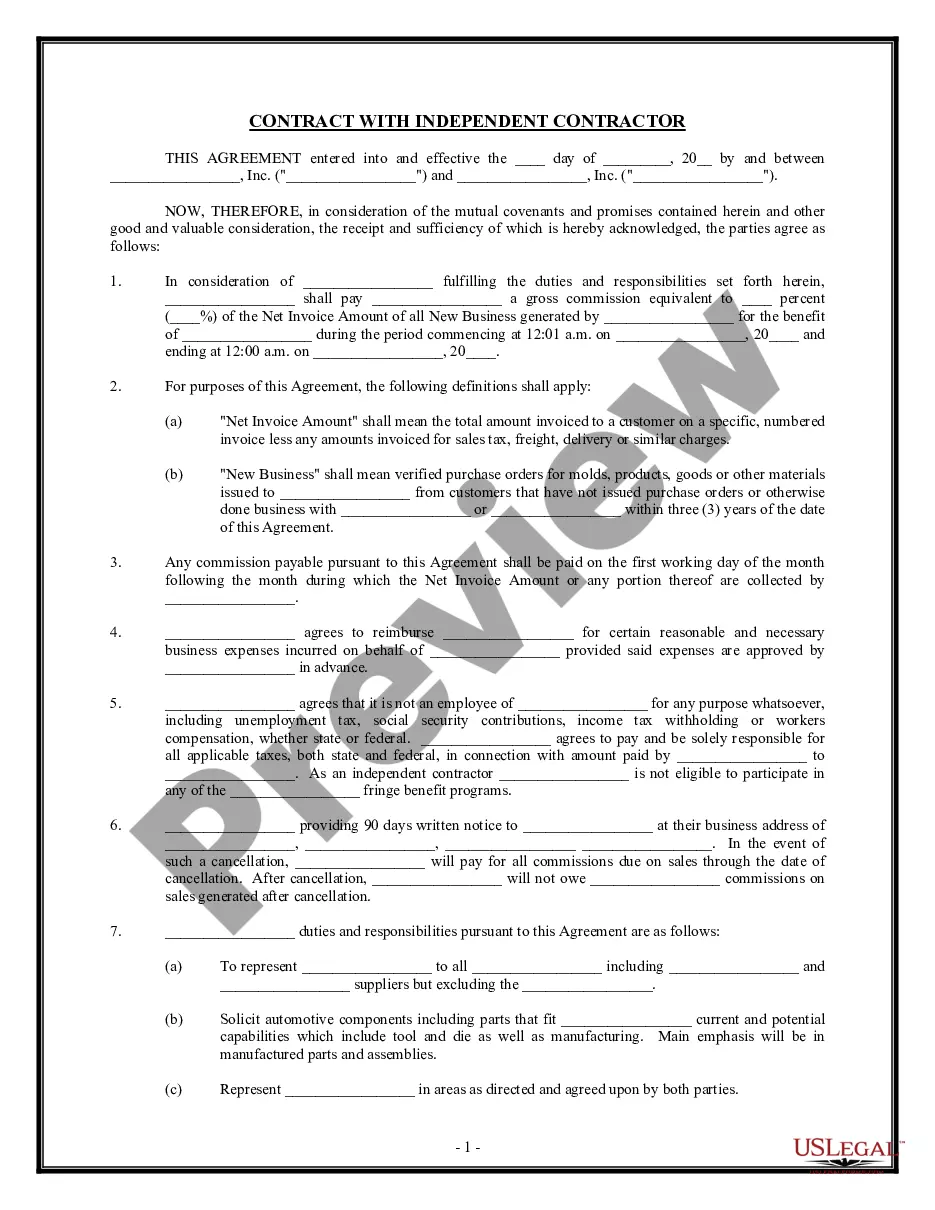
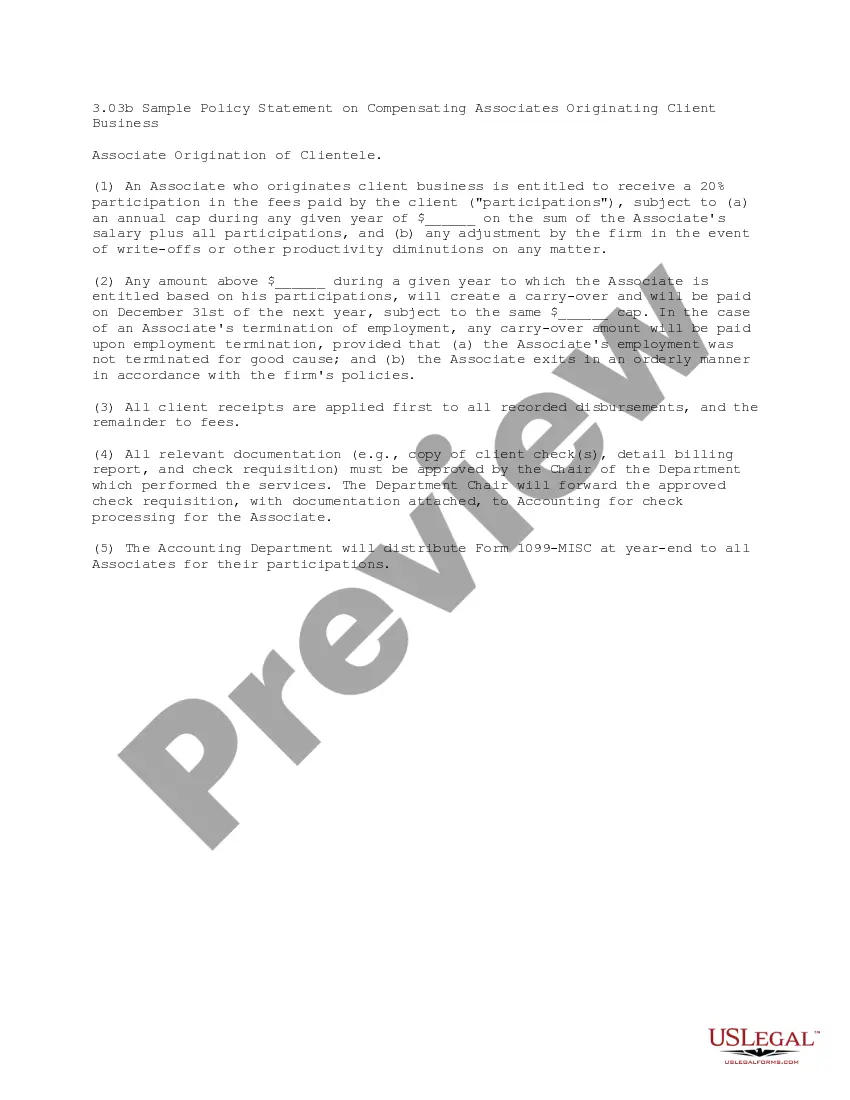


How to fill out Sales Commission Policy?
If you need to finalize, obtain, or create approved documentation templates, utilize US Legal Forms, the most extensive selection of legal forms available online.
Take advantage of the site's simple and user-friendly search feature to locate the documents you need.
A variety of templates for business and personal purposes are organized by categories and states, or keywords.
Step 4. After you have located the form you need, click the Acquire now button. Choose the pricing plan you prefer and input your credentials to register for the account.
Step 5. Complete the transaction. You can use your Visa or Mastercard or PayPal account to finalize the transaction. Step 6. Download the format of the legal form and save it onto your device. Step 7. Complete, modify, and print or sign the Connecticut Sales Commission Policy. Every legal document template you purchase is yours forever. You will have access to each form you acquired through your account. Click on the My documents area and select a form to print or download again. Complete and acquire, and print the Connecticut Sales Commission Policy with US Legal Forms. There are thousands of professional and state-specific forms you can use for your business or personal needs.
- Utilize US Legal Forms to access the Connecticut Sales Commission Policy with just a few clicks.
- If you are already a US Legal Forms customer, Log In to your account and then click the Get button to obtain the Connecticut Sales Commission Policy.
- You can also access forms you previously acquired from the My documents section of your account.
- If you are using US Legal Forms for the first time, follow the instructions below.
- Step 1. Ensure you have selected the form for the correct area/state.
- Step 2. Use the Preview option to review the form's content. Make sure to read through the description.
- Step 3. If you are not satisfied with the form, take advantage of the Search section at the top of the screen to find other versions in the legal form template.
Form popularity
FAQ
A reasonable sales commission rate often varies based on industry standards and specific company policies. In the context of the Connecticut Sales Commission Policy, typical rates generally range from 5% to 15% of the sales made by the representative. It is essential to consider factors such as the sales volume, the profitability of the product, and competition in your market when determining the right rate. By aligning your commission structure with the Connecticut Sales Commission Policy, you can motivate your sales team while ensuring sustainable business growth.
The 4 hour rule in Connecticut stipulates that employees who work a shift of 4 hours or more are entitled to a meal break. This rule is important when calculating total work hours and commissions under the Connecticut Sales Commission Policy. Knowing this can help both employers and employees manage their time and compensation effectively.
In Connecticut, employees generally can be terminated without warning due to the at-will employment policy. However, if termination violates the Connecticut Sales Commission Policy or any contractual agreement, employees might have grounds for legal action. Understanding this can assist workers in navigating their rights and potential claims.
In Connecticut, the shortest shift an employee can work is generally considered to be 2 hours. Employers must be aware of this stipulation under the Connecticut Sales Commission Policy to ensure workforce compliance and proper commission calculations. Knowing this helps workers understand their rights and aids in maintaining fair labor practices.
Setting up a sales commission plan involves defining clear objectives, commission structures, and performance metrics. Begin by understanding the needs of your business and aligning them with your goals. A well-defined Connecticut Sales Commission Policy will provide a roadmap, ensuring all parties are aligned and informed.
In Connecticut, subscription services can be subject to sales tax, particularly if they involve tangible personal property or certain digital products. It's essential to clarify whether your subscription service falls under taxable categories. The Connecticut Sales Commission Policy can help clarify your position and tax obligations.
Yes, your commission is typically taxed as ordinary income in Connecticut. This means both employees and independent contractors should report their commission earnings. It's wise to consult the Connecticut Sales Commission Policy as it can provide insights into your specific tax obligations and ensure compliance.
In Connecticut, several services, including the sale of most personal services, are not subject to sales tax. For instance, services related to education, healthcare, and certain consulting services often fall outside the purview of sales tax. However, reviewing the Connecticut Sales Commission Policy will provide further guidance on which services are exempt.
In general, commissions for services provided are not subject to sales tax in Connecticut. However, specific circumstances may apply, especially if the commission involves the sale of goods. Understanding these nuances within the Connecticut Sales Commission Policy can help you navigate your taxation responsibilities.
In Connecticut, commissions are considered ordinary income and are therefore subject to state income tax. This includes commissions earned by employees and independent contractors. It is important to understand your tax obligations, as the Connecticut Sales Commission Policy may impact how you report this income on your tax return.